Featured

Botho: All Our Names Are Here
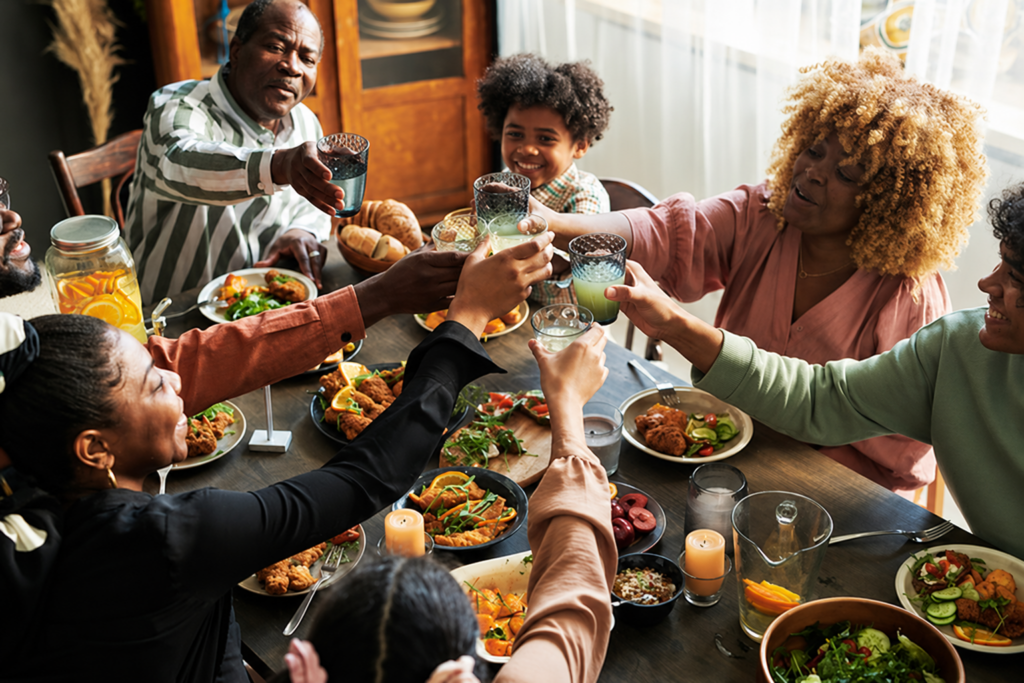
Botho: All Our Names Are Here is a hymn to Afrikan belonging, Black personhood and the sacred bonds between the living, the ancestors and generations yet to come. It reclaims Botho and Ubuntu from demands for endless welcome and forgiveness, affirming a community’s authority to set boundaries, demand restitution and cherish its own. Within this melanated cosmology, belonging requires no proof of wholeness: the wounded have a place, joy has room to unfold, and children inherit possibilities beyond repair.
Botho: All Our Names Are Here
Botho. Ubuntu.
Close the gate, beloved.
Entry was never a promise of belonging.
We have spent too many evenings
translating the meaning of home for those who would not stop
rearranging the furniture.
Tonight the family gathers.
Let the food stay warm.
Let the conversation go where it needs to go without explaining itself.
Our Blackness is sufficient
unto this gathering.
Botho. Ubuntu.
We withdraw the invitation.
Whiteness has mistaken the spoils of conquest
for a place in the family,
passed theft from hand to hand and called it inheritance,
called it belonging.
The invitation to the cookout is withdrawn.
Conquest gives you no seat at this table.
Take your hand from the latch.
There are things we must say in the company of our own.
We call ourselves home from the long labour
of making our humanity intelligible
to those who profited from its denial.
Our personhood precedes their question.
Long before the ships sailed,
we were.
Before the borders were greedily carved, we belonged.
Before the inventories of bodies, gold and stolen art,
someone knew exactly whose child this was.
That knowing lives.
It enters with the aunties, with the cousin returned after years,
with the one whose name the family is learning anew.
Pull up a chair.
You do not have to earn your place by being unbroken.
Come with what still aches.
Your place is already yours.
Motho: a person.
Batho: people.
Botho/Ubuntu: personhood—
our philosophy of becoming, the self growing spacious
in the keeping of its people.
The sacred obligations
through which we hold each other in the world.
Our humanity is already ours.
Our becoming is the work of learning how to honour it in one another.
Here is a theology of Blackness:
our bodies bearing sacred worth,
our dead remaining kin,
our children arriving into a creation where they already belong.
Here is our cosmology:
the living, the departed, those whose first breath
is still ahead of us-
a family larger than the visible world.
The earth holds our dead.
The waters enter our bodies.
What we wound returns through the lives we love.
Even those we shall never meet
have a claim upon our conduct.
We speak, and generations lean close.
Afrika is sufficient to begin the thought.
Our languages can carry the weight of existence.
Our elders have considered eternity.
Our children may ask questions for which we have no answer yet.
There is room for that.
There is room to become.
We reclaim Black personhood in its full and difficult life:
the mind, the body, the pleasure, the quarrel,
the right to rest, the right to decide
who crosses the threshold.
We will have our land.
We will have our dead returned.
We will have the wealth taken from our lives
restored to the living.
What is owed to the dead remains a claim upon this world.
What we recover must sustain those still to come.
We will also have an evening in which nobody asks us
to account for our joy.
Let the cousins laugh until the old grief loosens.
Let someone tell the story in the language it happened in.
Let the youngest fall asleep against a body they have never had to fear.
Botho. Ubuntu.
Bring your whole Black self.
The gate is closed.
The family is here.
We are enough to make a world,
and worlds within it,where Black life unfolds
at the full length of its dreaming,
where our names open doors into rooms we have imagined
for ourselves.
Botho. Ubuntu.
Our personhood deepens
in the lives we hold, each of us becoming
without disappearing into the whole.
Here, a theology of Blackness
rises in the family’s breathing:
the sacred taking flesh in these beloved bodies,
our many shades gathered in the evening light.
Let this be a hymn to Afrikanness, sung in the many tongues
through which we know creation, our breath carrying
what our people have known and what we are becoming.
A melanated cosmology:
our skin among the surfaces through which the universe
feels its own warmth;
our bodies holding waters that have travelled beyond memory;
our dead still moving through the names we give our children.
Worlds where they are home
in the earth, where the living have time
to love beyond endurance, where children inherit
more than the work of repair.
Let there be room for what we have yet to become,
for the thought still gathering, for the joy
that needs a larger language.
Botho. Ubuntu.
We belong deeply enough to make room for one another’s unfolding.
Our people are here.
The ones we remember.
The ones we are learning to hold.
The ones whose arrival will change the shape of the gathering.
We draw our chairs closer.
For our children’s children, we keep a place.
Botho. Ubuntu.
All our names are here. Batho ba botle. M’Afrika.
(By Liepollo Lebohang Pheko)
Cultural Resistance, Identity, and Afrikan Liberatory Praxis
Introduction: Music as Mirror, Hammer, and Liberatory Praxis Throughout history, music has been a powerful protest tool to challenge and confront societal norms and injustice. Intertwined with Black Political Thought, music has and continues to play an integral role in individuals and movements that espouse social progress. However, in the 21st century, hip-hop has […]

The cost of living is not the worth of being alive
The cost of living, he would argue, is not the worth of being alive. Richard Michelson, More Money Than God In the past few days, two articles have […]
The uncounted, discounted turmoil of eviction
And from this chasm, with ceaseless turmoil seething Samuel Taylor Coleridge In the Hampton Roads area of Virginia, a landlord targeted, harassed, and persecuted residents of his property. The residents were predominantly working class, Black women. He threatened them with eviction as part of a campaign of racial and sexual abuse. The women organized, went […]

Poem for Professor Arday: When Breath Becomes a Country
I wrote this in grief, but also in discomfort. There are deaths that ask us not only to mourn, but to reckon with what happened while a person was still alive: the hounding, the racialised scrutiny, the slow taking apart of a human being in public, and the silences that gather around it. When Breath […]

In an age of exile … this is not your home
In Cape Town, the Zeitz Museum of Contemporary Art Africa is currently showing an exhibition entitled A Protea Is Not a Flower, which considers the works of Gerard Sekoto, Bessie Head and Don Mattera, apartheid-era artists who struggled with various modes of exile. Zeitz describes the exhibit as follows: “A Protea Is Not a Flower […]
Afrikan Football Economy Subsidising the World
Scholarship on Afrikan football has increasingly moved beyond celebratory narratives of sporting success towards a more critical examination of football as a political and economic institution. Scholarship has increasingly located Afrikan football within wider histories of colonialism, labour migration, commercialisation and global governance (Akindes; Cornelissen; Darby). Yet most studies begin with migration or professional contracts. […]

Before the Transfer: Speculative Childhood and How Afrika Sustains the Global Football Economy
Introduction Football is not exceptional because it commodifies childhood; it is exceptional because it makes visible processes of anticipation that increasingly characterise capitalism more broadly. Like many extractive global industries, football systematically values the commodity while obscuring the labour, care and social infrastructures that produce it. Scholarship on Afrikan football has increasingly moved beyond celebratory […]
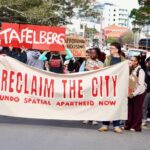
How do we, as a society, in a free, democratic dispensation, address the enduring legacy of spatial apartheid
On July 2, 2026, the Constitutional Court of South Africa issued a “landmark decision”, a decision that should be read by every housing, anti-eviction, labor activist as well as every city planner and elected official in Cape Town, across South Africa, around the world, dominated as the world is by the brutality and complexity, by […]

Why don’t you go back …
Stories change and yet remain the same, sometimes over time, sometimes in translation, sometimes just because, just because they’re haunting. Here’s an example, perhaps. In the 1950s, Baltimore, where my family lived, was deeply, though by that point largely “informally”, segregated. It was called “neighborhood charm”: White neighborhoods, Black neighborhoods. White neighborhoods were either Jewish […]

States of abandonment: In evictions, who abandons whom?
“Zones of abandonment … accelerate the death of the unwanted. In this bureaucratically and relationally sanctioned register of social death, the human, the mental and the chemical are complicit: their entanglement expresses a common sense that authorized the lives of some while disallowing the lives of others.” João Biehl, Vita: Life in a Zone of […]