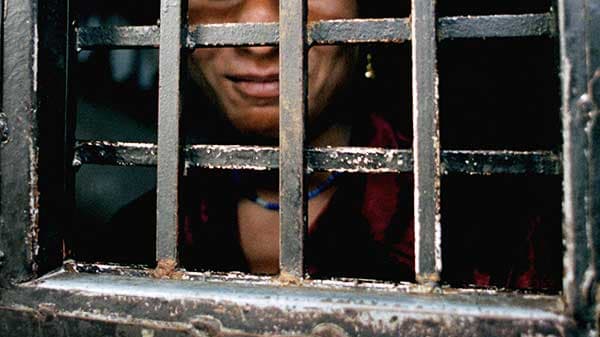
“There’s something really, really going on in that place for a 14-year-old to want to kill herself”

In the United States, children are routinely thrown into solitary confinement, often for the most trivial reasons and often for long periods of time. As of a study conducted last year, 28 states and the District of Columbia prohibit the use of punitive solitary confinement in juvenile correctional facilities. This list of 29 includes jurisdictions that allow up to four hours per day. Additionally, of these 29 states, 25 allow for solitary confinement for non-punitive reasons, such as so-called safety concerns. Of the 25, 12 allow for indefinite solitary confinement of juveniles … for their own good. These are the `good’ states. At the other end, seven states have no limits on solitary confinement of juveniles: Alabama, Georgia, Iowa, Kansas, Michigan, Texas, and Wyoming. The remaining 15 states offer a smorgasbord of juvenile solitary confinement offerings, ranging from six hours to 90 days. Four states allow for children to be thrown into the hole for more than 5 days. North Carolina and West Virginia allow for up to 10 days isolation. Until last year, California allowed for 90 days of isolation. As of January 1, 2017, new laws went into effect concerning California’s use of solitary confinement for children. With that change, Wisconsin became the winner of the race to hell, with its allowance of up to 60 days in isolation for children. This week, four children, and their attorneys, families, friends and supporters, said NO MORE, and filed a lawsuit. This is the story of Meranda Davis’ daughter, known as KD, currently held at Copper Lake School for Girls, one of two juvenile detention facilities in Wisconsin. It’s not a school, and it’s not for girls. It’s hell, and it has been so for a long time.

The lawsuit opens: “The State of Wisconsin operates the Lincoln Hills School for Boys and the Copper Lake School for Girls, which incarcerate approximately 150-200 youth who are as young as 14 years old, in remote northern Wisconsin. The State routinely subjects these youth to unlawful solitary confinement, mechanical restraints and pepper spraying. Prior to state and federal raids on the facility at the end of 2015, staff also regularly physically abused youth in the facility. Currently, Wisconsin’s juvenile corrections officials lock up approximately 15 to 20% percent or more of the facilities’ young residents in solitary confinement cells for 22 or 23 hours per day. Many of these children are forced to spend their only free hour of time per day outside of a solitary confinement cell in handcuffs and chained to a table. Officers also repeatedly and excessively use Bear Mace and other pepper sprays against the youth, causing them excruciating pain and impairing their breathing.”

While the situation is cruel and usual torture, the real point is that two years ago, the federal government put Lincoln Hills and Copper Lake Schools on notice, and not only did nothing happen, the situation actually worsened. As Laurence Dupuis, attorney for the ACLU of Wisconsin, noted, “Usually when the ACLU shows up, people start changing their habits and things get a bit better. We saw none of that here.”

Meranda Davis takes the story from there: “If you choose to steal cars, you deserve to wind up in a juvenile jail. I know that. But nobody deserves to be treated the way they treat people in there … She call me crying after getting out of solitary. They send kids for two weeks just for talking back in class. One time, they were punishing a girl in solitary, so they just fired a whole can of pepper spray into the unit. Everyone was coughing and crying. My daughter was coughing up blood … She said that they kept on throwing her in confinement and she basically lost her mind. She had a seizure. She just lost her mind and didn’t know what to do because she didn’t have any support. She just was like thrown in a room and nothing.” According to Meranda Davis, her daughter tried to kill herself, “There’s something really, really going on in that place for a 14-year-old, she was 14 at the time, to want to kill herself.”

There’s something really really wrong with a State and in a nation that drives children to suicide. Copper Lake School for Girls and Lincoln Hills School for Boys should be shut down, but that is only the beginning. We can’t continue to throw children into cages, we can’t continue to throw away their lives and the lives of their families and communities, and we can’t continue to condone and support torture. End solitary confinement of children now. End solitary confinement now. Without delay and without exception. As Meranda Davis said of her daughter, “She has big hopes and she is the reason I am standing here right now. I want her changed. I don’t want to see her come out a wicked person times 10.”


(Photo Credit 1: Kyle Rogers/Northwoods River News) (Image Credit: New York Times/Amanda Lanzone)
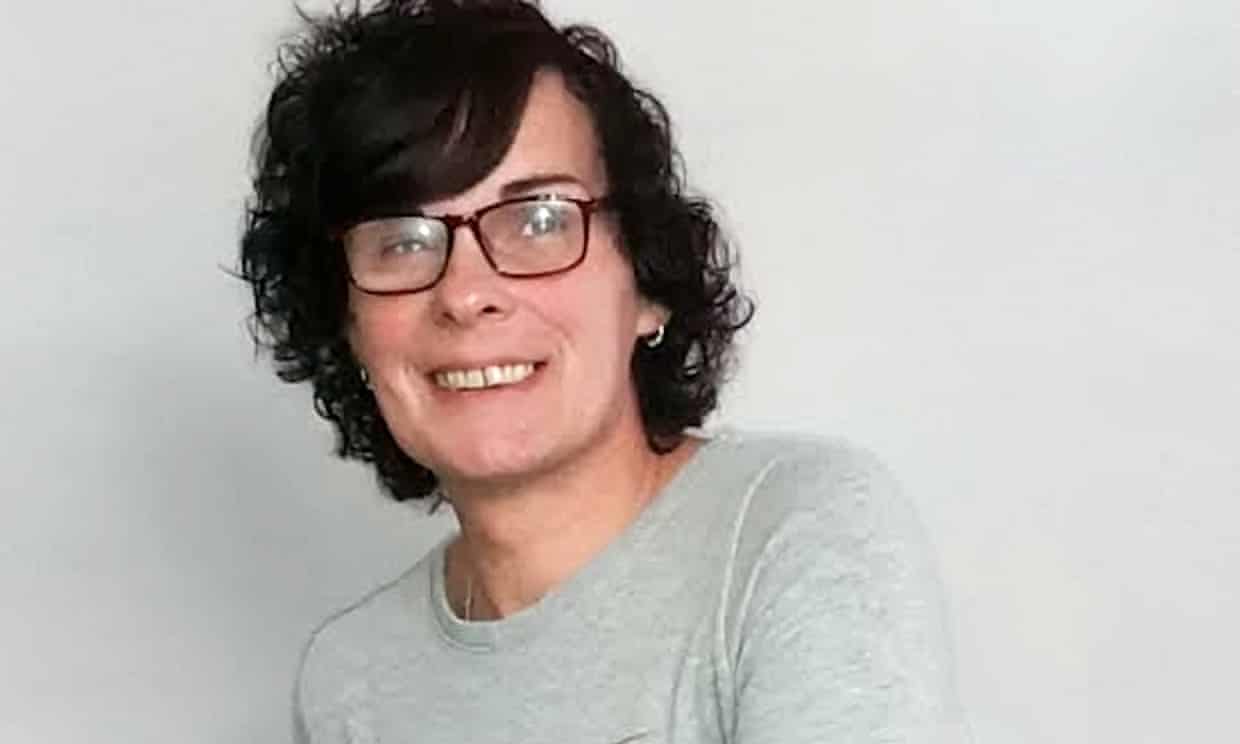
What happened to Jenny Swift? The routine torture of transgender women prisoners

Jenny Swift

On Sunday, January 22, as part of International Trans Prison Day of Solidarity and Action, 100 or so people gathered outside HMP Pentonville to give witness to transgender prisoners who committed suicide resulting from having been denied medical healthcare related to transition and from transphobic violence. In England in the past two years, three transgender women have been “found dead” in their cells: Joanne Latham and Vicky Thompson, in 2015, and Jenny Swift, on December 30, 2016. Despite their desperate pleas, all three were in all-male prisons. Joanne Latham, Vicky Thompson, and Jenny Swift didn’t succumb to despair. They were murdered in cold blood by the State.

When Vikki, or Vicky, Thompson died, she was twenty-one years old. Vikki Thompson, born male, identified all her adult life as a woman. Arrested for robbery, she was sent to a men’s prison. She said if she were sent to a men’s prison, she would kill herself, and she did. The State `investigated” … again. Vikki Thompson was released from all of that, however.

After the back-to-back suicides of Vikki Thompson and Joanne Latham, the English government put new policies and practices into effect … but too late for Jenny Swift. Those policies went into effect January 1, 2017.

Jenny Swift was sent to HMP Doncaster on November 17. Opened in 1994 and run by Serco. Doncaster hasn’t had a checkered career because it’s been bad from the start to the present. The chief inspector of prisons described the place as squalid, worrisome, and run with “institutional meanness.” At various times, Doncaster has had the highest prison suicide rate in the country. These are only some of the reasons people refer to Doncaster as Doncrataz.

HMP Doncaster is bad for everyone. It was fatal for Jenny Swift.

A friend of hers remarked, “She kept asking for the hormones and they said she would get them but she never did. I phoned up and explained that she needed them too. Jenny said that not having them was making her legs shake, making her feel sad and ill – she said it was like coming off drugs. It made her miserable.” She added, “She had been trying her best to keep her feminine side but she mentioned in prison that she could feel the testosterone in her body and she felt sick. It was making her cringe inside. If she had her hormones and the correct tablets she would still be here. I know that for certain … I want there to be a massive investigation because this happened twice before and it shouldn’t be happening.”

Jenny Swift’s death has at least three stories. There’s the story of a woman placed in a men’s prison and the story of a transgender woman placed in a men’s prison. These alone and together are enough to make one weep. Then there’s the third story. That story involves the staff and the State who knew that had Jenny Swift been arrested two months later, they officially would have had to take some kind of care of her, as a transgender woman and as a woman. But it wasn’t January 1 yet, and so they placed her in the deepest rung of hell where she would suffer and suffer and suffer. That story should make us howl.

Jenny Swift was killed, not by indifference but by brutality. She deserved better. We all do. Every single death is a death too many. Jenny Swift wrote, “I am Jenny Swift, I am proud to stand my corner anywhere I need to.” Jenny Swift should not have died. We should not have killed her.


(Photo Credit 1: The Guardian / SWNS.com) (Photo Credit 2: Liverpool Echo)

The Walling of the Women’s March in Washington, D.C.

I traveled with the NOW-NYC group to the march in D.C. on January 21. We felt exhilarated as we made our own signs and carried them up high for everyone to see. The colorful parade with its provocative banners against Trump and his team, signs that screamed out in protest of the new government violating our much fought for voter, reproductive, and civil rights, absorbed us and we were soon pushed toward the vicinity of the rally with its speakers lending their powerful language to further energize an already energetic crowd. The feeling of solidarity, the awfulness of the election of a President who was antithetical to every idea of justice Americans had fought for, the need to work together to handle this new beast—all of this was palpable.

As I was pushed into the thickest part of the crowd, I realized the crowd was sandwiched behind barricades on the corner of 4th and Independence to restrict them from flowing down Independence Avenue. Some of the women around me were fainting and had to be escorted by the national guardsmen into the medics’ tent. I focused on the speeches by Tammy Duckworth, followed by Black Lives Matter and Planned Parenthood, and I used all my willpower not to pass out when Alicia Keyes was speaking. It grew suffocating by the minute.

Some of us wove our way back toward C Street. The marchers reported that they were not allowed beyond 14th street. Why had Trump ordered us to be blocked away from the White House? As May Nazareno, one of the staff organizers for NOW-NYC said, “He is working for us. We need to take ownership of our democracy.”

Another thing many marching with me noted was the absence of helicopters and drones to maintain a count of the marchers. Why had Trump made this area a no-fly zone when only the previous day, drones and helicopters were making a tally of the number present at the inauguration?

As May Nazareno pointed out, not many reporters were present at the march compared with the barrage of media present at the inauguration. Why such a paucity of reporters?

So, we need to do the job of the media and post on Facebook, write blogs and articles of our eyewitness accounts of the march, become historians and document everything and respond to issues as they arise, because an authoritarian government’s main task is to curtail democracy and free speech and twist truth and replace reality with falsehoods.

What I witnessed was the immediacy of unity, peace, justice, awareness of issues, sensitivity, kindness, wit, humor, and love. And these we can build on to save the country from falling apart.

(Photo Credit: Chang W. Lee / The New York Times) (Audio interview with May Nazareno conducted by author)

Educate, Agitate, Organize!

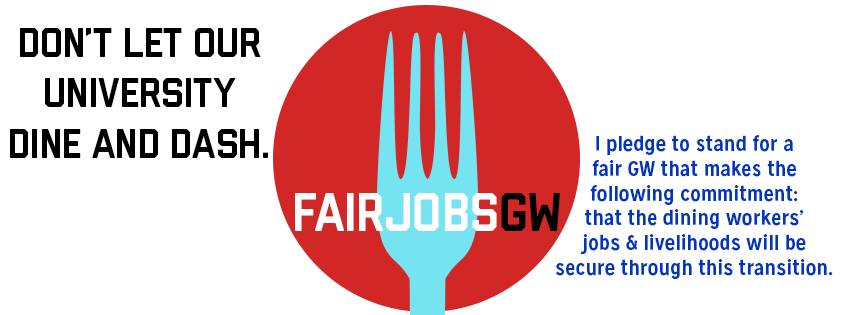
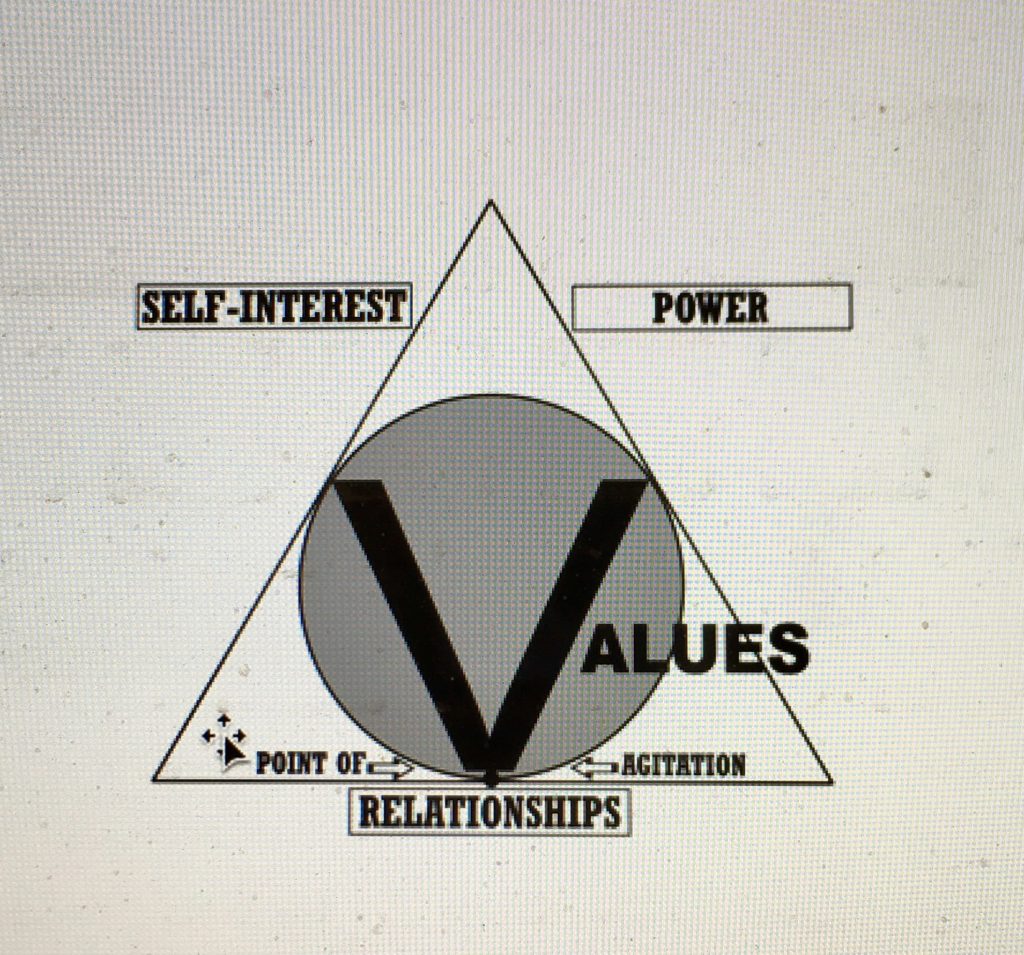
Dining hall workers have never had it easy at the George Washington University, but in September 2015, the University announced things were going to get worse for those workers. In response, George Washington University’s Progressive Student Union organized a Fair Jobs GW campaign, using the Jobs with Justice values triangle as an organizing tool.

First, we were clear on our values: we were an organization that worked to build student and worker power on campus, and valued dignity and respect for those who were working and learning at the university.

Second, we were building relationships with other people and organizations that shared our values: other students and student organizations, staff members, faculty members, university-employed workers, and workers in outsourced positions, faculty and staff associations and unions.

We were clear that it was in all of our collective self interests, the tangible manifestation of our values, to make demands that administrators commit to retention of workers, cease outsourcing, and stop the increasing precarity in staff and adjunct faculty employment.

Bringing together different groups — students, faculty, staff — built the power that we needed to make those demands of administration. If power is organized people and organized money, we didn’t have organized money, but we could organize people. Even so, we had nowhere near enough power to fight GW’s plan to lay off cafeteria workers.

So we went back to the values triangle. To build the necessary power, we had to use agitation to find others with shared values, and through accountable, reciprocal, and transparent relationships work to connect values to our broader self-interest, around specific events and issues. Effective one-on-one agitation meets people where they’re at.

We started agitating harder than we had before – reaching out to other students, understanding their values, and challenging them to take action in alignment with their self-interest. We tripled the size of our coordinating committee, going from seven or eight members to over 25 in order to effectively run a campus-wide campaign. We built relationships and connected those values of dignity and respect to others’ self interest. In addition to fighting for basic dignity and respect that was not being afforded to workers who had spent anywhere from ten to 50+ years as employees of the university dining program, this was a fight against the corporatization of higher education. As students, it was in our self-interest to ensure the jobs at the university – be they dining, facilities, staff, adjuncts, already outsourced or not – be high quality jobs that allow anyone in those positions to live fulfilled lives. This in turn impacts the quality of higher education as a whole, and the quality of jobs many students work as employees of the university as well. Allowing any position to be outsourced or restructured with little to no input from students sets a dangerous precedent, one that has emboldened administrators at GWU and elsewhere to make damaging cuts to programs like the Music Program or staff in the University Library with relatively little fear of pushback.

With an expanded coordinating committee to run the campaign, we were able to rally the support of over 2,000 students, staff, faculty, and workers at the university to demand full retention of all workers employed in the university dining program with the Fair Jobs GW campaign. Over 80 people marched on the administration building to deliver these demands along with the 2,000 signed pledges, including newly elected members of the Student Association. Ultimately, administrators at GW ran out the clock on students, holding their final closed-door meetings in late July to avoid mass protest. The company that was awarded the new dining contract – Restaurant Associates – made concessions to have GW dining workers placed in other locations of theirs around the city. Of the workers that weren’t placed at other positions within the university dining program, many were relocated to other positions throughout D.C. The campaign wasn’t a clear cut victory, but it did provide an indication to the university that the community would not idly watch as administrators pulled the carpet out from underneath those who work and learn there. It created lasting relationships between students, workers, staff, and faculty that endure and will be ready for the next fight. And it agitated people, allowing others to stop believing the myth of their own powerlessness, which served as a mask for our unwillingness to sit with thoughts and feelings that challenge us.

Agitation, ultimately, is about encouraging others to find the alignment of their values and their self interest – about being clear on their values to then inform where their self interests lie – thinking, how can we motivate ourselves and others in our community to take action to achieve a shared vision for a more just and inclusive future? Start with the values triangle and get organizing.

(Photo Credit: Fair Jobs GW / Facebook) (Image Credit: Jobs with Justice)

Women of Color Mark the Silver Lining in Bleak 2016 U.S. Election

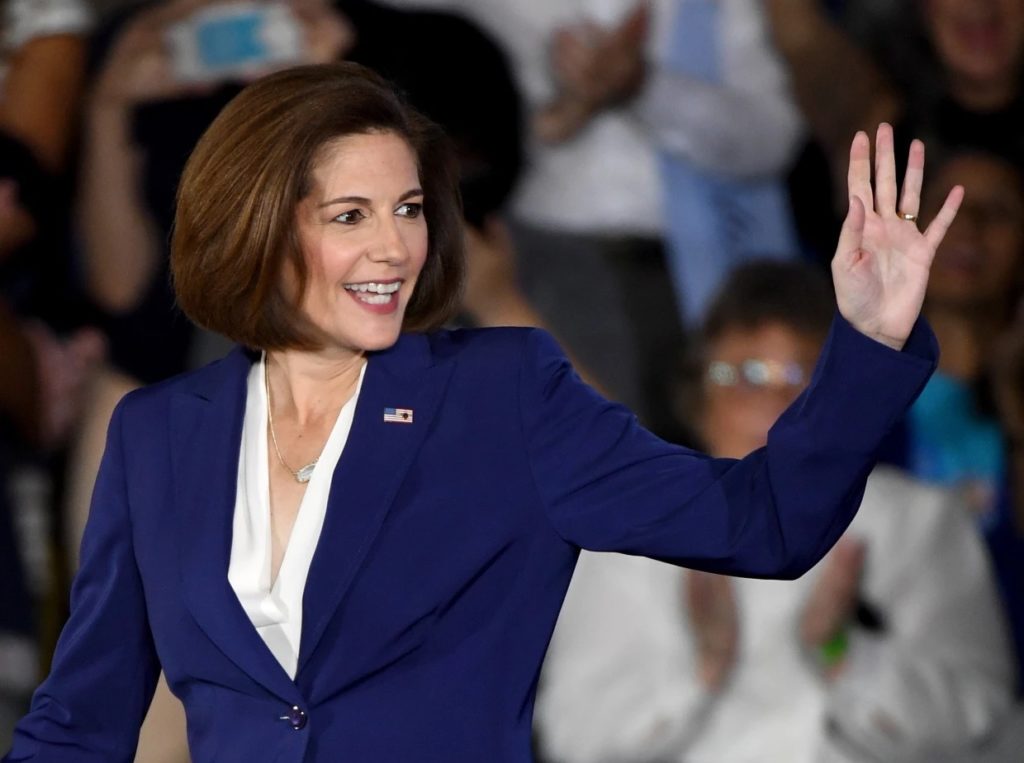
Catherine Cortez Masto

Four women of color make their mark representing Democrats in the national and state legislatures. They are Kamala Harris from California and Catherine Cortez Masto from Nevada, elected to the Senate; Pramila Jayapal from Seattle, elected to the U.S. House of Representatives; and Ilhan Omar from Minnesota, elected to the Minnesota House of Representatives.

Each of these women have a remarkable background. Kamala Harris, born of an Indian mother and a Jamaican father grew up in the working class neighborhood of Oakland. Pramila Jayapal emigrated to the U.S. from India and has traveled globally to widen her activist foundational knowledge. Ilhan Omar, who lived in a Kenyan refugee camp as a young girl, has her ear to the ground regarding immigrant concerns. Cortez Masto, third generation Mexican-American, is conscious of the immigrant journeys of her grandparents.

What special issues do these women bring to the floor? Both Harris and Cortez Masto, as Attorneys General, have done much work with citizen rights in relation to law enforcement. Harris, especially, was unafraid of taking unorthodox positions to support citizen rights but at the same time negotiating better relations with police. She will also be strengthening her work on anti sex-trafficking legislation. Cortez Masto, outspoken about Donald Trump’s rhetoric of divisiveness and misogyny, can be counted on to work for equal pay for women, immigrant rights, LGBT rights, and against human trafficking: “My grandmother was born in Las Cruces, New Mexico, and my grandfather came from Chihuahua, Mexico. They came to this country and brought their young family here for the same reason many families do: to have a good job, work hard, have every opportunity to succeed, make sure your children get a good education, and you can’t forget that. If I forgot everything that my grandparents went through so that my sister and I could be the first ones in our family to graduate from college, that wouldn’t be right. We don’t close the door behind us.” Ilhan Omar, a community organizer, brings her awareness of social and environmental justice that affects many people, including immigrants, Native Americans and African Americans. Upon winning, Omar said, “I hope our story is an inspirational story to many people.” Along with ensuring that minority women entrepreneurs receive the help they need to succeed, Omar said her priorities would be “closing the opportunity gap in our educational system, working on criminal justice reform, taking on policing reform.” Pramila Jayapal, a child of India’s process of decolonization, has paid close attention to immigrant rights, refugee rights, the fight for fair wages, LGBT rights, women’s healthcare and equal pay. Having built ties with many groups in Seattle, she is in touch with the pulse of different communities’ concerns.

While many voters have been dispirited by the 2016 election results, reading about the backgrounds, issues, and policy concerns of these four women can prove energizing for many of us who want the country to move in the direction of peace and justice.

(Photo Credit: NBC News / Ethan Miller) (Video Credit: YouTube / Buzzfeed)

Chibok: Why is our outrage so muted?


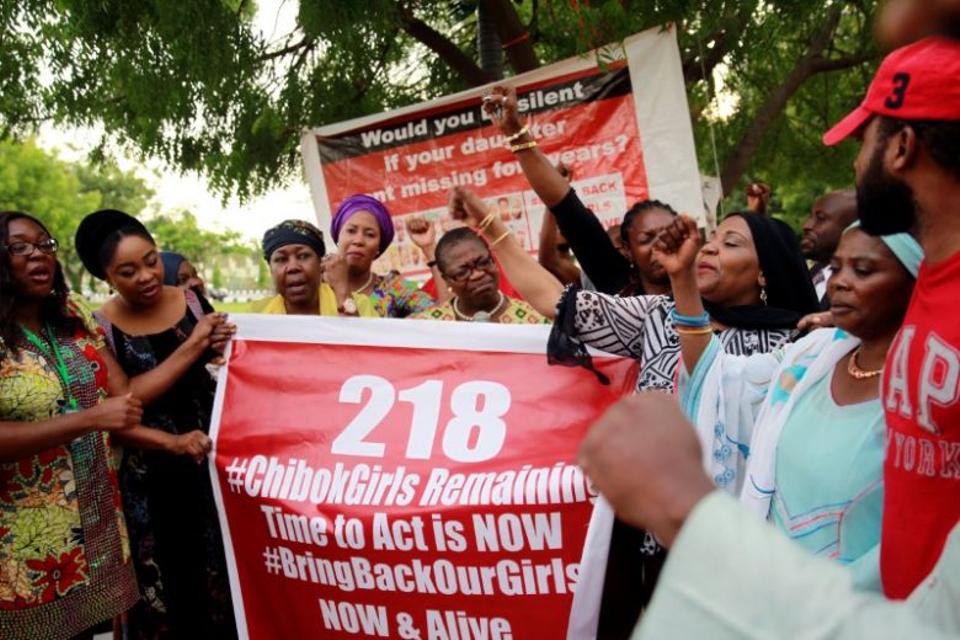
1001 days ago, at least 276 young women were kidnapped from Chibok. It is not the first instance of kidnapping in the area and their return in ‘dribs and drabs’ is an exercise in agony. I spent my birthday weekend surrounded by love, family, safety and assurance of my place and value in this world. Surely that is the bare minimum of life and existence? And yet about 200 of this last group of young women and girls remain captive not only to Boko Haram but also to our silence. Our shared inertia. Our disinterest in stories that do not have fast and happy endings. Our appalling attention span that is further diminished by tweeting and Instagram and yes…Facebook.

I am so frustrated by my own lack of ideas and inability to make a meaningful contribution to bringing these young women home. The state seems to be sleepwalking, the AU seems to be disinterested and ECOWAS has seemingly not yet found the means to do something that ought to have happened 1000 days ago – find these women. How many more days? A 1000 more? Do Black lives and Afrikan lives have so little value even to us? Do Women’s lives and Black women have such little currency? Is this why our outrage is so muted?

I watched as these women were paraded by President Buhari recently, many of them so disoriented, distant and deeply haunted. Many have lost their families who moved away from the volatile Chibok area. Others have been so dislocated that they are unable to re-adjust. Nothing can ever be the same again. One cannot unsee, unfeel and unremember.

Many have come back with children, the product of rape and coercive sex. Few of us want to speak of the stigma and shame that accompanies their return. Post Traumatic Stress Syndrome, nightmares, shame, STDs, fear, paranoia and so much more. A pretty dress and a visit to the President do not erase all this. I suppose this is my own attempt to make sense of such a senseless event and to find balance in such a bizarre and violent context. #1000daystoomany.


(Photo Credit: TRT World)

Children are disappearing into the night and fog of solitary confinement in jails and schools

A seclusion room in Horn Elementary School in Iowa City

Across the United States, we continue to torture children by throwing them into segregated, solitary confinement, and this happens as often in schools as it does in jails in prisons. Children are disappearing. That children are disappearing is not new. That we continue to disappear children is also not new, but it is shameful, and it’s a shame that reaches every day deeper and deeper into our collective spirit and individual souls.

Last week, the civil rights division of the United States Department of Justice gave formal support to a lawsuit filed last year against the Onondaga County Sheriff’s Office for its ongoing and regular practice of placing 16- and 17-year-olds in solitary confinement at the county jail. Last year, the New York Civil Liberties Union and Legal Services of Central New York charged that, between October 2015 and August 2016, the Onondaga County Justice Center dumped 80 teens, mostly youth of color, into solitary confinement. The Department of Justice endorsement of the case noted, “The Civil Rights Division has previously exercised the United States’ authority under CRIPA and Section 14141 to address issues related to the use of solitary confinement on juveniles in jails, including in the Jefferson County Jail in Alabama, the Hinds County Jail in Mississippi, the New York City Department of Correction Jails on Rikers Island, and the Baltimore City Detention Center in Maryland. The Division also has addressed the use of solitary confinement in juvenile detention facilities, including in the Scioto and Marion Juvenile Correctional Facilities in Ohio and the Leflore County Juvenile Detention Center in Mississippi.”

According to Donna Lieberman, NYCLU Executive Director, “The Department of Justice’s involvement shows that what is happening to children at the Justice Center is not simply a tragedy for Syracuse, but it is a national disgrace. Children must be protected from the tortures of solitary confinement.”

The disgrace is not limited to prisons and jails. Last month, a complaint was filed against the Iowa City school district, charging that the district’s use of seclusion rooms violates Federal law, primarily because parents don’t know that the seclusions rooms exist and are being used and because the use of seclusion rooms is broader and more `ordinary’ than the law allows. During the 2013-14 school year, most of the students dumped into solitary confinement were students with diagnosed disabilities and individualized education plans. Half of the students with education plans who were sent to seclusion rooms were Black. Other than students with education plans, ALL of the students dumped into seclusion rooms in the 2013 – 2014 were Black. Black students comprise about 19% of the school population.

The good news, such as it is, is that these dismal mathematics are being challenged, and that occasionally something like decency wins. Torturing children is wrong. Children do matter. So do the adults who surround them. At the same time, consider how much energy, labor, work, investment is required to protect children, our children, your children, their children, from torture, every single day. Every single day, across the United States, children are disappearing, forgotten children who haunt the days and ways of our world.

(Photo Credit: The Gazette)

Must we as feminists love microfinance and leaning in? No!

Why do we love the concept of microfinance? For the same reasons we embraced Lean In, Sheryl Sandberg’s “how-to” corporate guidebook sold under the auspices of feminism, with open hearts. In a capitalist society, money equates power. And, with recent increases in awareness of the patriarchal capitalist structures that disproportionately disadvantage and harm women, there has been a resulting push for economic solutions, quick fixes meant to help women lift themselves out of poverty. This desire for straightforward solutions, coupled with an individualist view of poverty-eradication, has led to an embrace of microfinance for women in developing countries around the world.

At first glance, microfinance seems like a quick, clever solution. The rush of donating $25 to microfinance donor websites like Kiva.org provides the illusion that you are doing good works, without the strain of a larger donation of money, time, organizing power, etc. Muhammad Yunus, who won the Nobel Peace Prize in 2006 for his work as the founder of Grameen Bank, the first major microfinance institution, is a compelling figure, one providing solutions that seem entirely doable and possible, to solve a problem that seems unconquerable.

But how could microfinance be the solution when, just like Sheryl Sandberg’s trickle down feminism, it embraces a capitalist structure and places the onus on the individual? Microfinance has been presented as the method through which we can “solve” poverty; in Sandberg’s vision of feminism, telling women to lean in and close the ambition gap in order to better their work and financial lives can be seen as the Western, middle- and upper class equivalent to microfinance. In Microfinance and Its Discontents: Women in Debt in Bangladesh, Lamia Karim explains the ills of microfinance:

“By giving loans to people who could not invest the money properly, and by telling them that they would materially improve their condition, the NGOs induced poor people into risk taking that often had…unforeseen consequences on their lives. The problems faced by [a microfinance loan recipient] reflected the unregulated and rapid growth of the microfinance programs in Bangladesh that emphasized an increase in member enrollments, loan disbursements, and installment collections over training and social investment in the lives of the borrowers”.

The capitalist market is considered more important to those in power than ending the problems microfinance claims to be solving. Lifting women out of poverty, helping them build a steady career, and guaranteeing a woman’s own agency are cast aside in favor of a return on investments.

Academia and the media have lauded both microfinance and Sandberg’s trickledown feminism, respectively, but when you dig into them, whom are they helping? Microfinance and Lean In are simply buying into the individual view of success for women in a capitalist society, and as such, both benefit the capitalist market.

In Lean Out, Dawn Foster responds to Sandberg’s consumer/capitalist/individualized feminism and calls instead for direct political and protest action that challenge oppressive systems, rather than individual focus on ambition or profiting from the use of feminist rhetoric or identity.

Foster urges us to lean out of the corporate capitalist model that systematically exploits women: “‘Leaning out’ of the capitalist model is far more effective at securing attention, provoking change, and ensuring demands are met than ‘leaning in’. Few people ever get anything radical accomplished by continuing to play the game”. Microfinance continues to ‘play the game’. Microfinance will never challenge the oppressive structures of power that perpetrate and maintain women’s oppression, nor will Sandberg’s brand-name feminism. Lean out!


(Image Credit: Repeater Books) (Video Credit: Heinemann Media / YouTube)

All that is human drowned in the sea

This year, all that is human drowned in the sea, all that is holy has been profaned, and we are at last compelled to face with sober senses our real conditions of life, and our relations with our kind. In 2016, at least 5000 migrants drowned in the Mediterranean. Last Friday, two boats capsized, and “about 100 people are missing and feared dead.” Who fears them dead? No State and no amalgam of nation-States fears them dead. Rather, in this the deadliest year ever for migrants trying to reach Europe, the year’s epitaph is simple: “2016: The year the world stopped caring about refugees”. We are the world, and we turned the sea into a graveyard. This year, the women, child, man of the year lies on the bottom of the Mediterranean, and we do not know their names, and we do not much care. If we did, they would be alive today. So here is a poem for the unknown refugees who lie in the cemetery that we have made of the Mediterranean. See you next year.

Home
by Warsan Shire

no one leaves home unless
home is the mouth of a shark
you only run for the border
when you see the whole city running as well

your neighbors running faster than you
breath bloody in their throats
the boy you went to school with
who kissed you dizzy behind the old tin factory
is holding a gun bigger than his body
you only leave home
when home won’t let you stay.

no one leaves home unless home chases you
fire under feet
hot blood in your belly
it’s not something you ever thought of doing
until the blade burnt threats into
your neck
and even then you carried the anthem under
your breath
only tearing up your passport in an airport toilets
sobbing as each mouthful of paper
made it clear that you wouldn’t be going back.

you have to understand,
that no one puts their children in a boat
unless the water is safer than the land
no one burns their palms
under trains
beneath carriages
no one spends days and nights in the stomach of a truck
feeding on newspaper unless the miles travelled
means something more than journey.
no one crawls under fences
no one wants to be beaten
pitied

no one chooses refugee camps
or strip searches where your
body is left aching
or prison,
because prison is safer
than a city of fire
and one prison guard
in the night
is better than a truckload
of men who look like your father
no one could take it
no one could stomach it
no one skin would be tough enough

the
go home blacks
refugees
dirty immigrants
asylum seekers
sucking our country dry
niggers with their hands out
they smell strange
savage
messed up their country and now they want
to mess ours up
how do the words
the dirty looks
roll off your backs
maybe because the blow is softer
than a limb torn off

or the words are more tender
than fourteen men between
your legs
or the insults are easier
to swallow
than rubble
than bone
than your child body
in pieces.
i want to go home,
but home is the mouth of a shark
home is the barrel of the gun
and no one would leave home
unless home chased you to the shore
unless home told you
to quicken your legs
leave your clothes behind
crawl through the desert
wade through the oceans
drown
save
be hunger
beg
forget pride
your survival is more important

no one leaves home until home is a sweaty voice in your ear
saying-
leave,
run away from me now
i dont know what i’ve become
but i know that anywhere
is safer than here


(“Home” by Warsan Shire appeared here.) (Photo Credit: Electronic Intifada /Oren Ziv/Active Stills)

In Syria, women as weapons of war is a crime against humanity!

After the tragic end of East Aleppo and the displacement of hundreds of thousands of survivors from horrific bombings, that included hospitals and typical civilian’s landmarks such as schools, who would pay attention to the violence inflicted on women in Syria? With the insurrection and the rebellion against the authoritative regime of Bashar al-Assad, women have served as weapons of war as has been increasingly the case in the many places torn apart by conflicts.

The sexual abuses committed against women from Da’esh/Isis are notorious and exposed under the antiterrorism narrative, but the strategically organized sexual violence against women set up by the regime of Bashar al Assad against the opposition has not been narrated as such. Some few have identified “rape” as Bashar’s secret weapon or weapon of mass destruction.

Once again, women’s bodies are the stakes of political violence while women see their participation as full citizens with rights to political and social debate systematically impugned or rendered impossible. Additionally, religious and social patriarchal discrimination against women have put women in a position of intensified vulnerability.

During the conflict that partitioned Yugoslavia Bosnia in the 1990s, sexualized violence against Muslim women became a strategy of war. In the middle of the killing, “rape camps” were established in which women were raped, had their breasts cut if they resisted or slaughtered. Women’s bodies instrumentalized by elite strategists were tortured by Serbian militias, soldiers; the goal was to make them forget that those bodies were/are women beings. Margot Wallström, the UN Special Representative on Sexual Violence in Conflict, estimated that about 60 000 women suffered sexualized violence in Bosnia and Croatia.

Today, one wonders yet again about the international community’s position.

UN resolution 1820 of 2008, entitled Women and Peace and Security, was described as a “step in the right direction.” The expectations with this resolution were that sexual violence during conflicts would be recognized as a weapon of war violating the rules of war and therefore could be punished in a tribunal. This resolution raised the question of the impunity of the perpetrators of these atrocities that typically left deep scars and pushed women to commit suicide. As a former UN peace keeping forces major general declared, “It has probably become more dangerous to be a woman than a soldier in armed conflict.”

And still after this resolution, rape and humiliation of women has remained a formal strategy, as we have seen in Syria. Moreover, the impunity with which some atrocities have taken place underlies the failure of the UN Security Council to refer the regime of Bashar to the International Criminal court.

Annick Cojean, who exposed the sexual abuses in Gadhafi’s circles, has investigated the Syrian case. She explains that women have been arrested in great numbers for various reasons for demonstrating peacefully or for being related to an opponent to the regime, simply because the regime has been dictatorial and brutal. Being in custody means that sexual torture. A teenage girl recalls that during her time in a detention center, she along with all the women there would be raped and sexually tortured, burned and more everyday but every day a doctor would give her a pill and check her periods. One day she was late and received another pill that triggered strong pain in the abdomen; she wouldn’t be pregnant despite the numerous rapes. Some witnesses claim that the guards and soldiers receive “performance enhancing” stimulants.

In this patriarchal environment, women who are being humiliated and shown and sometimes filmed naked and raped in their own communities in front of their children and husband are being utilized “to dishonor” their family or community. They often face rejection instead of compassion and support.

They become the culprit instead of the victim. They are crushed under this double threat. Annick Cojean emphasizes that for them to come forward and testify is sometimes an impossible task. She met some of them in Jordan in a refugee camp or in Lebanon; each time the stories were more horrific.

It is hard to know how many women have faced this ordeal. The Syrian representative of the human rights league now estimates that about 100 000 women have been thrown in jail or in detention centers. A great number of them have been sexually tortured. But do we need the number to know that this is a crime?

The ruthless economic and political order followed by many world leaders is an alibi to humiliate and rape women and establish this practice as a normal war strategy along with bombing starving civil populations and targeting and bombing hospitals.

After the ordeal that women went through in Bosnia, many Bosnian leaders and some Imams recognized that women had been victim of war crimes, breaking the patriarchal code of silence that surrounds the mistreatment of women because of religious and “cultural” definitions of honor. That probably helped in getting The International Criminal Tribunal for the Former Yugoslavia working. It was “the first international criminal tribunal to enter convictions for rape as a form of torture and for sexual enslavement as crime against humanity.”

Will it be possible to move to this type of resolution for the women of Syria? When the mechanisms of power associate themselves with hyper-masculinity, making the sword work with sexual domination, life has no value. Only domination to serve vested interests remains.

When is the dignity of women going to be restored in a world of forceful leaders showing their unabashed machismo, while making their little patriarchal arrangements between themselves keeping the defense of corporate power and financial interests in mind? Women must be included in peace resolutions.

(Photo Credit 1: The Daily Beast / Nordic Photos / Alamy)