Stop sending mothers and children to prison!


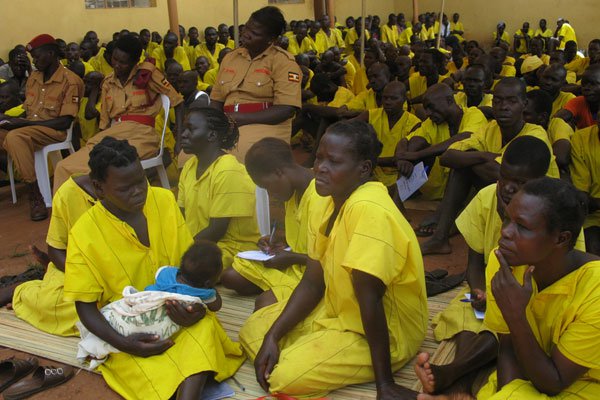
Today in Uganda, a leading headline reads, “24 children in prison with their mothers”. The article opens, “About 24 children are locked up in the seven prisons of Lira, Oyam, Kole, Alebtong, Otuke, Apac and Dokolo districts with their only crime being born to mothers suspected of breaking the law. Currently, there are 228 female inmates in the seven prisons.” The article concludes, “The prison population in Uganda is said to be growing at a 10 per cent rate annually. Currently, there are 284 children living with their mothers in 21 female prisons.” While Uganda’s prisons are notoriously overcrowded, with a recorded occupancy rate of 293% as of October 2016, more than half of whom are pre-trial or remand prisoners, the situation of mothers and children in prison is a global phenomenon. The global gulag has produced a global prison crèche and nursery. Children are the future.

While the issue of mothers behind bars has garnered increased attention, as witness this year’s Mother’s Day National Mama’s Bail Out Day campaign, the ever increasing global population of mothers with children in prison has not. In Uganda, the population of mothers incarcerated with children has grown steadily for the last ten years. According to the Turkish government, 560 children are in Turkish prisons along with their mothers. The children age just born to six years old. In 2014, 334 children were living with their mothers in Turkish prisons. Incarcerating innocent children is a major growth industry. In Kenya, hundreds of children under four live with their mothers in prison; in Bolivia over 1000 children do. In Cambodia, two years ago, the Prime Minister wanted to find a “solution” to children in prison with their mothers. Thus far, none has been found. Quite the opposite.

Around the world, where do children live? Increasingly, in prison. In 2008, the International Centre for Prison Studies reported that the following countries kept mothers and children together … in prison: England and Wales; Australia; Brazil; Canada; Denmark; Finland; Germany; Greece; Italy; Netherlands; New Zealand; Russia; Sweden; Switzerland; and the United States. Spain kept mothers and children together in “family” cells. No information was available for France, Japan, or, curiously Turkey. Of the 20 nation-states surveyed, only Norway said, NO.

In 2014, the Law Library of Congress’s Laws on Children Residing with Parents in Prison expanded the survey to 97 countries. Here’s their list of those who keep mothers and children together in prison: Algeria, Argentina, Australia, Belgium, Benin, Bolivia, Botswana, Burma/Myanmar, Burundi, Cambodia, Cameroon, Canada, Chile, Colombia, Côte d’Ivoire, Cuba, Denmark, Egypt, El Salvador, England and Wales, Ethiopia, Fiji, Finland, France, Greece, Guatemala, Haiti, Honduras, Hong Kong, Iceland, India, Indonesia, Iraq, Ireland, Israel, Italy, Jamaica, Japan, Jordan, Kazakhstan, Kenya, Kiribati, Kuwait, Libya, Luxembourg, Malaysia, Malawi, Mali, Mexico, Morocco, Namibia, Nepal, New Zealand, Nicaragua, Nigeria, Oman, Pakistan, Papua New Guinea, Peru, Philippines, Portugal, Qatar, Russia, Samoa, Saudi Arabia, Sierra Leone, Singapore, Solomon Islands, South Africa, South Korea, South Sudan, Spain, Sri Lanka, Sudan, Swaziland, Sweden, Switzerland, Taiwan, Tanzania, Tonga, Trinidad and Tobago, Tunisia, Turkey, Tuvalu, Uganda, Ukraine, United Arab Emirates, Uruguay, Vanuatu, Venezuela, Yemen, Zambia, Zimbabwe. From A to Z, babies behind bars are everywhere.

None of this is surprising. Skyrocketing rates of incarceration for women, and especially younger women, means incarcerating more and more infants and children.

But it’s not inevitable: “Norway does not allow children to stay with their parents in prison. Instead, a new mother is housed outside of the penitentiary in a mødrehjem (home for mothers) until her child is old enough to be separated from her, generally around nine months of age. Mothers with young children and short sentences may serve their entire sentence at the home for mothers …. In general, the Norwegian prison policy reserves prison sentences for the most heinous crimes and attempts to avoid sentencing criminals to prison. Courts have also chosen to transform certain sentences from prison sentences to community service, generally in cases where mothers are convicted of drug offenses but have since been drug free and are caring for a small child. At the start of 2012, 255 women were incarcerated in Norway, of whom 187 were serving out the sentence in an alternative institution.”

Norway is taking this approach beyond its border, funding, for example, an `open prison’ for women and children in Lithuania. It’s not perfect, but it’s a step.

The State alibi for caging innocent children is the good of the child. What does that say about the world outside the prison, if the best place for an infant or young child is behind bars? What is justice, if sending a child to prison is fine and dandy, no matter how minor or negligible the mother’s so-called offense? Want to keep children out of prisons and jails? Imagine a world in which close to 75% of women convicted of criminal offense do not end up in prison. Imagine Norway.

(Photo Credit: Daily Monitor / Bill Oketch)
In elections from the State of Mexico to the councils of Cambodia, women are on the move

Delfina Gómez Álvarez

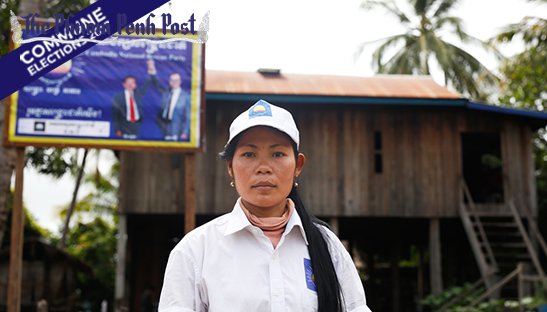
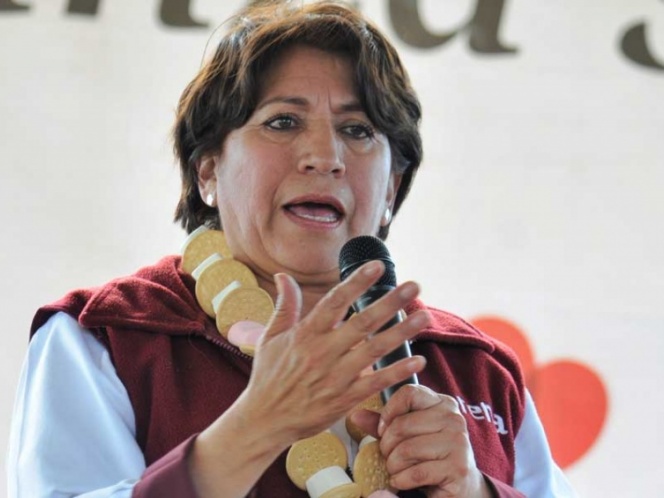
This weekend saw three major elections. In Lesotho, people went to the polls to elect a Prime Minister … for the third time in three years. Despite a heavy presence of military at the polls, generally reports are that everything was orderly and reasonably fair and free. The other two elections, for the Governor of the State of Mexico and for council and commune seats in Cambodia, the electoral story is all about women: Delfina Gómez Álvarez in Mexico, and in Cambodia, Mu Sochua, Tep Vanny, Preah Vihear, Jen Juri, Kem Tola, Sok Da, Khum Rany, Nget Chan Dara and countless others. While the particularities from Mexico to Cambodia my change, the story of the insurgent ascendancy of women in response to neoliberal models of so-called development that tally women as so many disposable bodies is the same. From Mexico to Cambodia, women are saying NO!

In the State of Mexico, known as Edomex, Delfina Gómez Álvarez, of the relatively new leftist Morena party, has been running a fierce campaign against a candidate who is president Enrique Peña Nieto’s cousin and whose party has ruled Edomex for 90 years. Additionally, his father and grandfather were governors of Edomex. So, it was a done deal, right? Wrong. Delfina Gómez covered the state, from one end to the other and all points in between, and the State of Mexico is Mexico’s most populous and most densely populated state. Not a member of an illustrious family, Delfina Gómez had spent most of her adult life as a teacher. When she entered politics, in 2012, she ran for Municipal President of Texcoco, and won. Delfina Gómez Álvarez was the first woman to win a municipal election in Texcoco. Now she’s taking that to the State level. It’s unclear, as of now, who won the election. Both sides are claiming victory, and the margins are narrow. What is clear is Delfina Gómez Álvarez, standing loud and proud, and urging the people onward.

In Cambodia, women –  like Yorm Bopha, Tep Vanny, Phan Chhunreth, Song Srey Leap, and Bo Chhorvy and thousands of others – have led the campaigns against land grabs, mass evictions, and other forms of `urban development.’ With the elections coming up, many activists – such as Jen Juri, Kem Tola, Sok Da, Khum Rany, Nget Chan Dara – decided to join Mu Sochua and the opposition Cambodia National Rescue Party. Woman after woman told a version of the same story. They had had enough of both the patriarchal national form of so-called development AND the patriarchal forms of opposition. Despite the difficulties of moving up in any Cambodia party bureaucracy, they decided the time is now. They had pushed for so long, and still the bulldozers came, whole communities were removed, and if there was any public outcry, it was short lived and then forgotten.

As in Edomex, the results of the elections are not altogether clear. The national ruling party seems to have won at the national level, but in many regions, the CNRP did well, and women candidates did well.

Winning an election is important, terrifically and often terribly important, but so is entering the race, and in Mexico and Cambodia this weekend, that’s what women did. Where are the women? They’re in the garment factories and, like activist Tep Vanny, in the prisons, and they’re in the polling booths, on the election posters, on the platform and dais, in the meetings, and soon, very soon, they will be in the governor’s estate, in the council and commune bodies, and beyond. Soon, very soon, and not just in Cambodia and Mexico.

Khum Rany

(Photo Credit 1: Excelsior / Cuartoscuro) (Photo Credit 2: Phnom Penh Post / Pha Lina)

Where are the tears for the dead of Kabul and Baghdad?

The Eiffel Tower went dark to honor the victims of a bomb attack in Kabul.

The Eiffel Tower went dark last night, Thursday night, in solidarity with the victims of this week’s bombing in Kabul. Anne Hidalgo, Mayor of Paris, explained, “Après Bagdad, c’est Kaboul qui a été la cible d’un attentat barbare. Solidarité et pensées aux victimes et à leurs proches.” After Baghdad, Kabul was the next target of a barbaric assault. Our solidarity and thoughts are with the victims and their loved ones.” On Tuesday, bombs went off in Baghdad. On Wednesday, a massive bomb went off in Kabul. In Kabul, people are grieving, mourning, stunned, and angry. Today, many are protesting the lack of security in the capital city. But otherwise, around “the world”, the incident of close to 100 dead and 500 injured has raised little interest. Why is that?

The Guardian editors noted: “There are no `I heart KBL’ signs. No #jesuisbaghdad hashtags. No one is paying tribute to the rich cultural heritage and resilience of the targets. It is unlikely that we will come to recognise the names and faces of most victims.”  Washington Post foreign affairs reporter Ishaan Tharoor began his reflection in a similar vein, “It’s a truism that the world has grown numb to terrorist attacks outside the West. When the Islamic State set off a car bomb on Tuesday outside a popular ice cream shop in Baghdad, killing 13 people and wounding dozens more, no candlelight vigils took place in Western cities. No imperial monuments were lit up in Iraqi colors in European capitals. When militants set off a devastating explosion in Kabul’s diplomatic enclave on Wednesday, killing at least 80 people and injuring hundreds more, no CNN anchor uploaded the flag of Afghanistan on social media. No pop stars organized solidarity concerts.”

That truism is not good enough. “The world” has never paid attention to terrorist assaults beyond its borders, and those borders are the borders of Europe and the United States. Remember Garissa? Remember April 2, 2015, when gunmen entered the Garissa University College, in Kenya? Remember how they killed close to 150 people and injured close to 100? Remember the world response? At the time, I wrote, “As in the aftermath of the assault on the Westgate Mall, the world performs mourning, and world leaders and their messengers claim `We all stand with,’ and now will say, `Je suis Kenya.’ It’s not true. We do not mourn, and we are not Kenya.”

I was wrong. “The world” did not even perform mourning, and “world” leaders and their messengers remained pretty much silent. The silence is not because of any “distance” nor is it the result of repeated violence. It’s the division of the world between us, who inhabit the space we call “the world”, and them, who, being outside “the world”, don’t merit much attention, and certainly don’t merit the work of mourning.

Initial reports suggested that many, maybe a majority, of the dead were women and children. Not even that elicited much response. Why? Why is the blood shed in Garissa, Kabul, Baghdad less than that of Manchester or Brussels or Paris? Where are the tears for the dead of Kabul and Baghdad? We do not mourn, and we are not Baghdad or Kabul. We are “the world”.


(Photo Credit 1: CGTN / VCG) (Photo Credit 2: The Washington Post / Stefan Warmth / Reuters)

No safe status for immigrants and refugees

Patrick Young is an attorney for the Central American Refugee Center, CARECEN, in Hempstead and Brentwood, Long Island, New York. We asked Patrick Young, “What are the options for organizations, such as CARECEN, to act in protecting the people who are under threat of deportation?”

In addition, deportation is also a threat to people living legally in the United States under the Temporary Protection Status, TPS, as this program is up for renewal. The latter is decided by the President only. The production of temporary status is certainly problematic in making the fate of people at the mercy of one “man” such as the president of the United States. We discussed the issue of TPS with Patrick Young as well.

This continues our series of interviews with Patrick Young. Along with being an attorney for Central American Refugee Center, CARECEN), Patrick is also an immigration law professor at Hofstra University, co-director of the Law School’s Immigration Clinic, a policy analyst for New York State Immigration Action Fund, and a writer for Long Island Wins, a website geared toward Long Island immigration community.

We talked with Patrick Young about the increasingly alarming issue of deportation for many living in the United States.

(Photo Credit: Long Island Wins) (Interview by authors)

#NotMyPresident: We need both a HateWatch and a PeaceLoveandUnderstandingWatch

Since the November elections, across the United States, from middle schools and high schools to colleges and universities, people of color, women, LGBTIQ persons, Muslims, Jews and others report outbursts of intimidation, threat, and abuse. To no one’s surprise, a campaign based on white supremacy, racism, xenophobia, misogyny, homophobia, ableism, anti-Semitism, Islamophobia, sutured by lies, hatred and violence, has engendered intensified and expanded violence, but violence against people of color, women, immigrants, LGBTIQ persons, Jews, Muslims, people with disabilities, workers, others, is not the whole story. Individuals, organizations and communities across the country are engaging in acts of kindness and campaigns for inclusive justice. Here’s the story of what happened over the weekend in the leafy Del Ray neighborhood of Alexandria, Virginia. Call it a verse of the Parable of Memorial Day 2017.

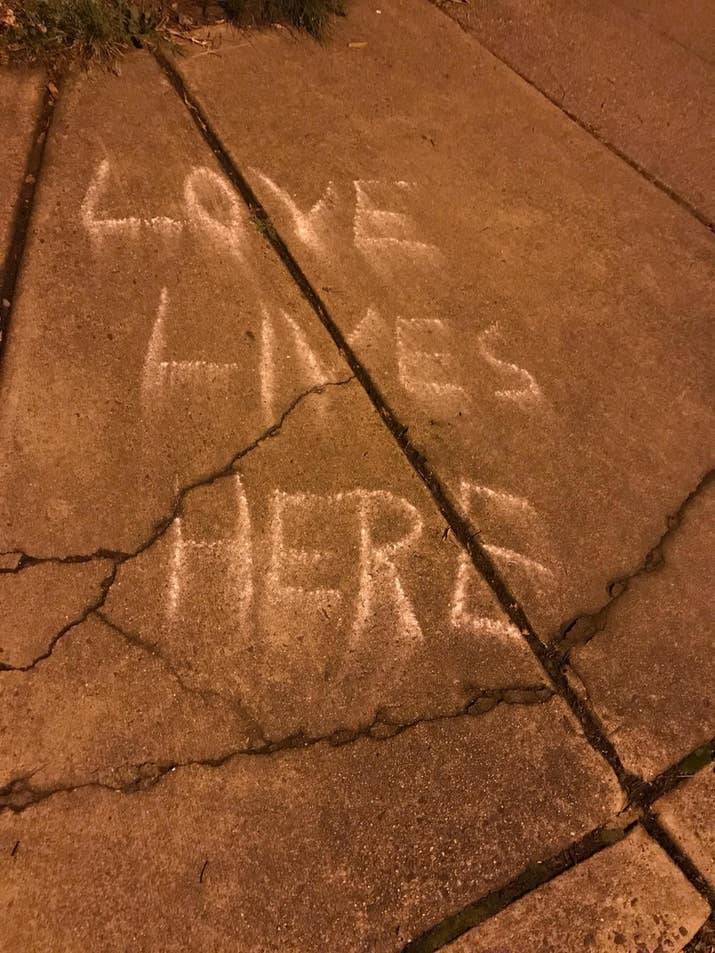
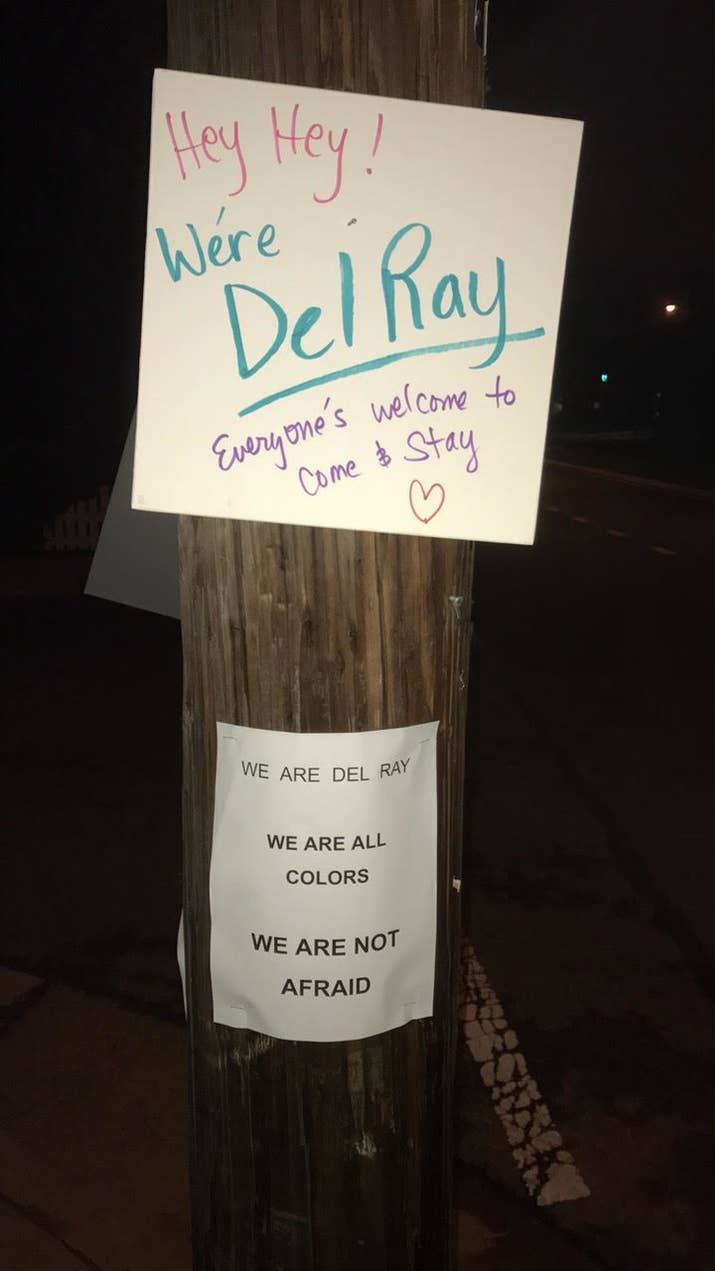
On Saturday, May 27, self-described white supremacist, white nationalist, neo-fascist posters appeared on trees and utility poles in the Del Ray neighborhood. Some of them targeted C. Christine Fair, who had taken on a white supremacist at a local gym. The posters were taken down immediately. That’s the hate crime part. But there’s more; there’s the peace, love and understanding part. Residents pulled out crayons, markers and paper and produced posters of welcome, calling for mutual respect and dignity.

These homegrown posters now sit next to the more formal posters gleaming from shops in Del Ray and the adjoining predominantly Latinx Arlandria neighborhood. Those posters read, EVERYONE IS WELCOME HERE TODOS SON BIENVENIDOS AQUI. They’re part of the Hate Free Virginia Campaign, and in Del Ray that campaign was organized by the Tenants and Workers United, a chapter of New Virginia Majority; Grassroots Alexandria; and Indivisible Del Ray. Individuals, communities and organizations are on the move.

White supremacy and racism are baked into our history, as is violence. Peace, love and understanding may be more aspirational, and may take more work and labor, and may demand more light, but the work of welcome is happening, across the country, in this climate of terror and fear mongering. We need a HateWatch; we need groups like the Southern Poverty Law Center. But we also need a PeaceLoveandUnderstandingWatch, and we need it now. Remember, there is nothing funny about peace, love and understanding.

(Photo Credits 1,2: Buzzfeed / Eric Wagner)

Who cares that the State abandoned Caroline Ann Hunt?

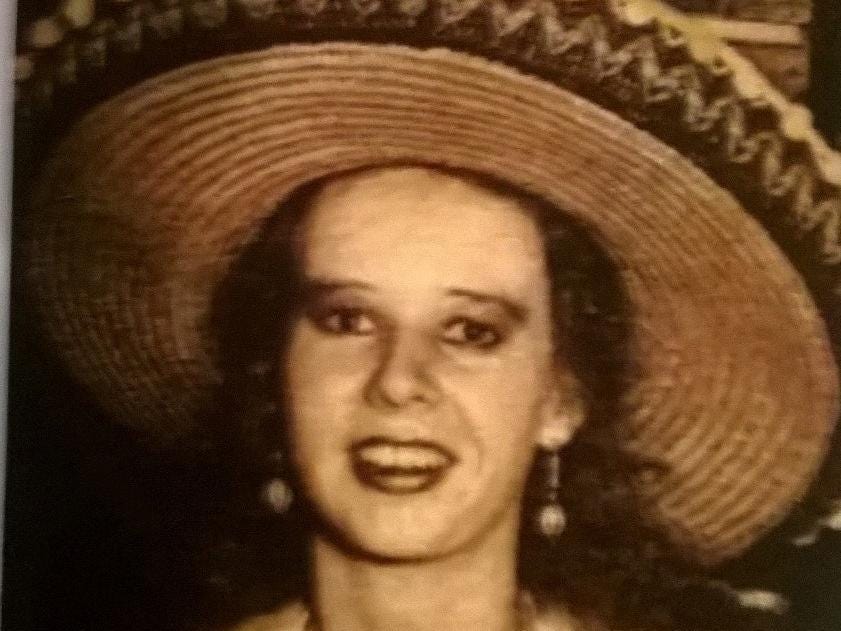
Caroline Ann Hunt

On September 29, 2015, Caroline Ann Hunt, 53 years old, a mother, was found dead in her cell at HMP Foston Hall, Derbyshire. Caroline Ann Hunt was found hanging in her cell. In 2015, four women killed themselves at Foston Hall. In 2015, seven women killed themselves in prisons in England and Wales. In 2016, two women killed themselves in Foston Hall. For the last few years, more and more women prisoners have killed themselves, or better, have been placed in situations where suicide seems like the only available option. Last year, 12 women prisoners are reported to have committed suicide. Does anyone care? Yes. Family, friends, supporters care. Does the State care? Absolutely not. If it did, Caroline Ann Hunt would be alive and even thriving today.

Caroline Ann Hunt had never been arrested. In prison, Caroline Ann Hunt repeatedly talked of suicide, and tried to suffocate herself the night before her death. Fellow prisoners reported their concern. The staff largely ignored both the concerns and protocol, placed her in a single cell, and pretended to monitor her. An inquest that ended this week notes, with great concern, the staff failings. Others note the State failings. Of course, the government says it will do something, but it won’t.

Caroline Ann Hunt’s daughter said, “On 29th September 2015 my mother, Caroline Hunt, passed away aged 53. She was found hanging by a bedsheet in a cell in HMP Foston Hall.  Since then my life has been a whirlwind of difficult decisions and emotions. I have learned some very sad truths about life inside prison, and just how difficult prison is for the most vulnerable people in society.

“My mother was a very kind person, who cared deeply for her friends and family members. I believe she was sadly blighted with various mental health issues throughout her lifetime, which led directly to the circumstances surrounding her committing an offence, the first she ever committed. In prison, she felt hopeless and frightened about her future.

“Tragically for my mother, there were many missed opportunities to protect her from the obvious risk she posed to herself, including concerns raised by other prisoners about her risk to herself, and to provide the support she clearly needed. Had the opportunities been taken my mother would probably be here with us all today.

“My mother was the fourth person to die while in custody in HMP Foston Hall in 2015. I hoped that her death would be the last, and no other family would have to go through what I have. I was very saddened to hear that in 2016 a further two women took their lives there: six women in two years who ended their lives. These deaths leave families with endless pain and countless what ifs.”

How many deaths will it take till we know that too many people have died? The State does not care if the tower of cadavers is ten or ten thousand, and, if history is any guide, Caroline Ann Hunt’s story, life and death will soon be forgotten by most of us. This is who we are. We are the citizens and builders of the State of Abandonment. This is how we will be remembered. We all abandoned Caroline Ann Hunt, and we continue to do so, day in and day.

(Photo Credit: Independent / Inquest)

#FreeBresha: Bresha Meadows is in prison for saving her family from domestic violence

A specter haunts the United States, and she is a 15-year-old Black girl named Bresha Meadows, who sits in an Ohio prison today for having saved her mother and two siblings. Bresha’s mother, Brandi Meadows, calls her daughter a hero. Martina Latessa, Bresha’s aunt on her mother’s side and also a Cleveland police officer who specializes in domestic violence cases, says that Bresha was “born into a nightmare” and that Bresha had come to her aunt begging for help from the extreme violence of her father, Jonathan Meadows. Bresha’s cousin, Ja’Von Meadows-Harris, reports that when, as a child, he lived with the Meadows, he was severely, regularly beaten by Jonathan Meadows. In July 2016, then 14-year-old Bresha Meadows ended the violence when she took her father’s gun and fatally shot him. She was arrested that day, and charged with aggravated murder, which could have resulted in a life sentence. She has spent the last ten months in the Trumbull County Juvenile Detention Center. Her family and friends think she’s a hero; the State throws her into a cage, potentially for life.

On Monday, Bresha Meadows “pleaded `true’ — the functional equivalent of a guilty plea — to a charge of involuntary manslaughter, accepting the terms of a settlement deal that her lawyer said will allow her access to psychiatric treatment and the eventual possibility of a clean record.” Bresha Meadows will not be “allowed access to psychiatric treatment.” She will be institutionalized for six months, treatment for which her family will have to pay. That “eventual possibility of a clean record” only occurs after two years of probation.

While the family and Bresha’s lawyer are relieved, they also recognize that this plea deal means two more months in jail and then six months in a different sort of confinement. As Mariame Kabe, one of the organizers of the #FreeBresha campaign, explained, “What’s important is how they’re feeling and how she’s feeling … The position of the #FreeBresha campaign is that plea deals are coercive and they’re a violent means of social control … We’re committed to supporting Bresha’s freedom, and she’s not free yet.” The #FreeBresha campaign stated, “The #FreeBresha campaign is infuriated that 15-year-old domestic violence survivor, Bresha Meadows, has been forced by Ohio prosecutors to submit to a plea deal that would keep her in juvenile detention for a full year (which includes 10 months of time served) and an additional 6 months of incarceration in a `treatment facility.  Though an earlier version of the plea deal would have released Bresha to the `treatment facility’ today, the final plea deal has increased Bresha’s time in juvenile detention for another two months. Prosecuting Bresha, including the pointless punitivity of adding time in juvenile detention, should be condemned by all who care about the well-being of children.” The State just couldn’t let Bresha Meadows out immediately, and that inexplicable two months is criminal justice for Black girls and women in this country.

After a lifetime of enduring and witnessing excruciating and extreme violence, of begging for help from family, friends, the State and strangers, a Black girl-child stood up and on her own saved her family. Language matters, and we should tell Bresha Meadows’ story in the language her family uses. She is a hero. News media have continually headlined and framed Bresha Meadows’ story as one of “fatal shooting.” That is not the story. The story is Bresha Meadows’ saved her mother and her two siblings and herself. “The #FreeBresha campaign will continue to push for Bresha’s freedom until she is truly free.” We should all do the same. We should treat our children and our heroes with dignity, reverence, and love. #FreeBreshaMeadows

(Photo Credit: Verso Books)

Responding to the first President of the United States elected on an anti-immigrant platform


Patrick Young marches with CARECEN

Patrick Young is an attorney for the Central American Refugee Center (CARECEN), located in Hempstead and Brentwood, Long Island, New York. He is an immigration law professor at Hofstra University, co-director of the Law School’s Immigration Clinic, a policy analyst for New York State Immigration Action Fund, and a writer for Long Island Wins, a website geared toward Long Island immigrant communities.

CARECEN is working with immigrants, offering them legal assistance with TPS, DACA, application for green cards and renewal and adjustment of status, as well as other kinds of legal advocacy, citizenship classes, and English language instruction.

Immigration is a vexed issue in the United States, heightened by an election marked by racism and political alliances. In 1948, President Truman signed the Displaced Persons Act, which included many restrictions. This was the first attempt toward a standard refugee entry policy. 1967 saw the UN Protocol Relating to the Status of Refugees. The US signed the protocol and passed enabling legislation in 1980, but it was not enforced until 10 years later. The selection of refugees was arbitrary. People coming from the Eastern Bloc, for example, would be protected, whereas people coming from Haiti, El Salvador and Honduras would not.

The following series of interviews draws attention to many aspects of immigration under the current president who is the first president elected on an anti-immigrant platform.


(Photo Credit: Long Island Wins) (Interview by authors)

For students living with disabilities, segregation in integration must end!

In schools around the United States, there are classrooms specifically designed to obscure disabilities such as autism from other students and faculty in K-12 schools. Public education is a right of all students. It became mandatory in the late nineteenth century to end child labor and cultivate obedient citizens.  In the case of developmentally disabled students, schools have to meet the requirements of the law to educate students in the least restrictive environment (LRE).  However, in many cases, schools “integrate” disabled students only in name while effectively segregating them from the general education population.

This segregation often occurs by placing disabled students in the margins by locating them in seclusion rooms and spaces that have little or no commerce with other students.  The danger of such practices are: receipt of an inferior education, social isolation, and further deepening of publically held stigmas.  Thus, one experiences segregation in the midst of fulfilling requirements for integration.  Special education classes have increasingly turned into forms of incarceration for those with undesirable disabilities. These rooms are used to humiliate and shame students into thinking they are unproductive members of society and are automatically criminalized because they have a disability.

Segregation of this kind often leads to the school-to-prison pipeline where disabled students find themselves apart of the penitentiary system at some point in their lives. Not only are students with cognitive disabilities affected by segregation but those with physical disabilities as well,  making the schools in question a part of a system of eugenics by selecting students based upon definitions of productive citizenship.  Once declared “unfit to be a citizen”, they are subjected to constant surveillance not only by special education staff, but also by administrators, other teachers, counselors, and even other students.

The freedom of educational pursuit intended to occur in public schools has increasingly become the source of oppression for participants with disabilities. This chain of abuses needs to come to an end by refusing to call segregation “integration,” in relation to the treatment of many disabled students.  Confinement and surveillance need to stop as instruments of compliance without access to the further benefit of a substantive education.  Schools need to be made accountable for their mistreatment.


(Image credit: New York Times / Ward Zwart)


In India, school girls go on strike for education and respect … and win!

On May 10, 86 school girls decided to upset the sleep of the “sleepy hamlet” of Gothra Tappa Dahina in the Rewari district of the Haryana state, in India. Fed up with administrators and parents who thought less than nothing of the sexual harassment the girls endured every day on their way to and from school, the girls decided to go on strike, with 13 of them going on hunger strike. A week later, the administration gave in to the girls’ principal demands. Since then, other school girls have started similar strikes. As with the school girls in Malawi, the school girls of Rewari know that they deserve a decent education, and that that includes the trip to and from school. With that knowledge, they may have started a school girls’ movement that will do more than disrupt the sleep of many. It may be an awakening.

The story is straightforward. The local school stops at 10th grade. That means for 11th and 12th grades, the girls must walk about 3 kilometers to the next village. According to the girls, they complained about the abuse they received on their walk to and from school. They petitioned the administration to upgrade their local school to include 11th and 12th grades. They received no response. They urged their parents to push for upgrading the local school. Some told the girls it’s better to be quiet; sexual harassment of girls and women has been going on forever. Others were more supportive but couldn’t offer much else. And so, the girls took action. As Sheetal, one of the hunger strikes, explained, “Almost every day, we face eve teasing. Should we stop studying? Should we stop dreaming? Are only rich people and their children allowed to dream? The government should protect us or open a higher-secondary school in our village.” Parents joined the strike, laying down their work tools and protesting outside the school. On May 17, 10 of the hunger strikers were sent to hospital, as the Haryana state government agreed to upgrade the school.

In the subsequent days, this big win for the Rewari girls has been followed by similar strikes by school girls in Gurugram and Palwal districts, both in Haryana state. Sapna Kumari, one of striking students in Gurugram, explained, “Some girls have to drop out after Class 10th because their parents do not want to send them to school afar, fearing their safety. Those who manage to convince them face problems of eve-teasing everyday. Be it buses, autos, the problem does not end.” Her school is 4 kilometers away. Anjali, one of the striking students in Palwal district, asked, “How can daughters study when there was no government school up to senior secondary level in their village?”

These school girls know the meaning of education, and they know they deserve it. Period. They know that a state that creates unsafe conditions for girls on their way to and from school has no commitment to girls’ education. They also know that they have the power to move the State and change the world, and now the school girls of Haryana are teaching that lesson to the rest of the world.


(Photo Credit 1: Hindustan Times) (Photo Credit 2: Times of India)