What made Gauri Lankesh so dangerous?

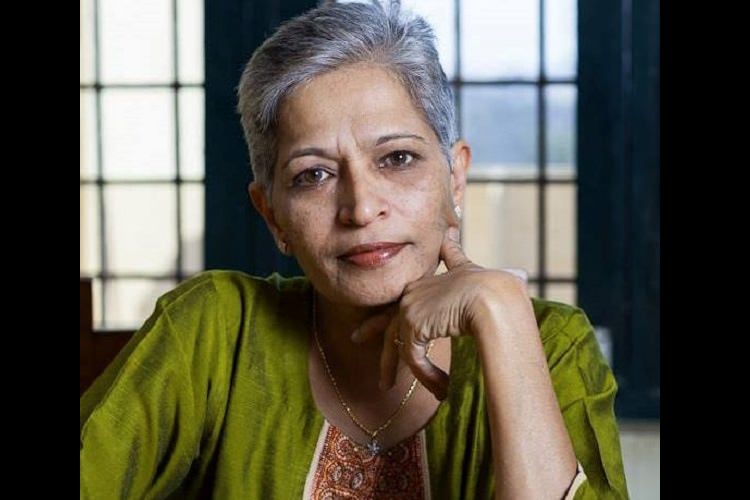
Gauri Lankesh

Recently, India has experienced a spike in violence against journalists, women and critics of the increasingly dominant religious right.  On Tuesday, September 5, that violence claimed the life of feminist activist and journalist Gauri Lankesh as she entered her home, in Bengaluru, in the south of India. Protests exploded across India, partly because of the murder of Gauri Lankesh herself and partly because of its familiarity. Men on motorcycles drove past and fired seven shots, three of which hit and killed Gauri Lankesh. That was exactly the fate of three other prominent so-called secularists: Narendra Dabholkar in 2013, Govind Pansare and M.M. Kalburgi, both in 2015. What made Gauri Lankesh so dangerous?

Gauri Lankesh was 55 years old, the editor and publisher of Gauri Lankesh Patrike, a Kannada-language weekly paper which served, and roused, the local populations across the state of Karnataka. A “feisty leftist” and “staunch and vocal critic of the ruling BJP government and of Hindu right-wing extremism”, Gauri Lankesh “raged like a fire”. “Known for her vocal stand against India’s growing right-wing ideology, communal politics and majoritarian policies”, Gauri Lankesh was “one of India’s most outspoken journalists.” She was “fearless” and “fearfully courageous.” Gauri Lankesh was an “imperfectly perfect feminist icon – courageous, independent, contradictory, inspiring … to always do what is right; an inspiration in otherwise tiring, scary times.”

Gauri Lankesh railed against the rise of fascist, communalist, right wing religious zealots as she insisted on the centrality of building inter-caste and inter-faith unions rather than walls. In “Highest Good and Lowest Lives”, Gauri Lankesh described the lives of those who clean sewers: “According to estimates, there are about one million manual scavengers in India. Needless to say most of them – if not all – are ‘untouchables’. They live and work in shit for a measly monthly pay of about three or four thousand rupees. Because of their jobs, they suffer from skin and organ infections. In order to overcome the horror of their ‘profession’, they find succour in alcoholism. They cannot form a union to fight for their rights since these days most city corporations or municipalities have outsourced scavenging jobs to private contractors.”

The feudalism of caste embraces the neoliberalism of outsourcing, and the result is 20,000 “scavengers” die every year in the manholes of India. And the response? Silence. Where is the uproar? Where is the concern? Why does no one care? Gauri Lankesh made her readers ask those questions and then act in response.

In writing about the rising tide of violence against women, in her home town of Bengaluru, or the long history of attacks on freedom of the press, in her home state of Karnataka, Gauri Lankesh pointed to the intersection of modernity’s toxic masculinity of the Big Man at Home and the colonial legacy of the Big Man in the State House, and in each instance, her verdict was straightforward: “This … should not even exist in a democracy.”

The murder of Gauri Lankesh was not surprising. She had received death threats every day, and she persisted. She was attacked by the State, and she persisted. In a world built increasingly on rising violence against women, journalists, and critics, martyrdom has become our daily bread. Gauri Lankesh was a woman who chose to write, speak, dissent, analyze, research, and believe in democracy. Gauri Lankesh chose to work locally and regionally, chose to write primarily in Kannada rather than English, and chose to believe that democracy comes up from the sewers and is a song sung by the chorus of little voices: “Little voices, like that of a Gauri Lankesh, will not be allowed to defy. That is why she had to be killed.” This should not even exist in a democracy.

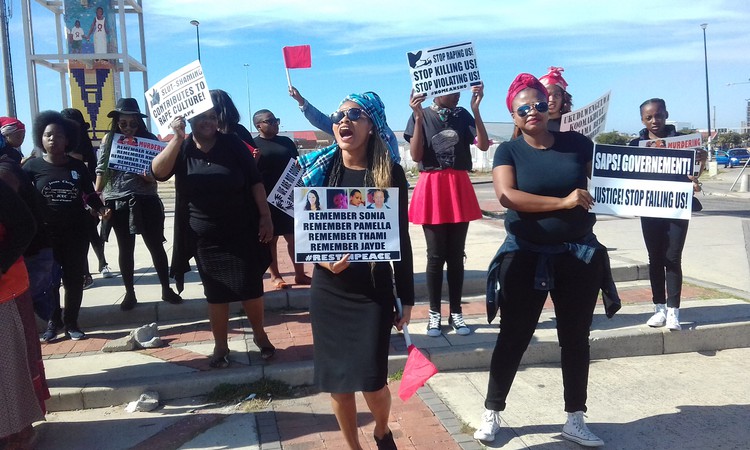
Protest in Karnataka


(Photo Credit 1: FeminismInIndia / Facebook) (Photo Credit 2: The Wire / PTI)
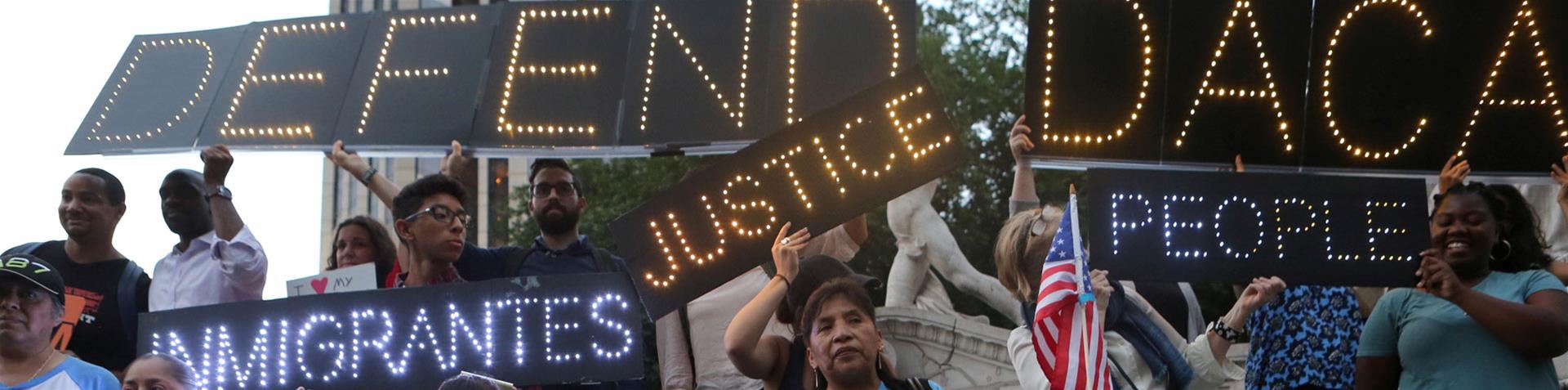
The Parable of DACA: Living in the shadows

“This clandestine war of denial would thus be waged in the shadows, in that twilight space of what is called mourning.”
Jacques Derrida, “By Force of Mourning

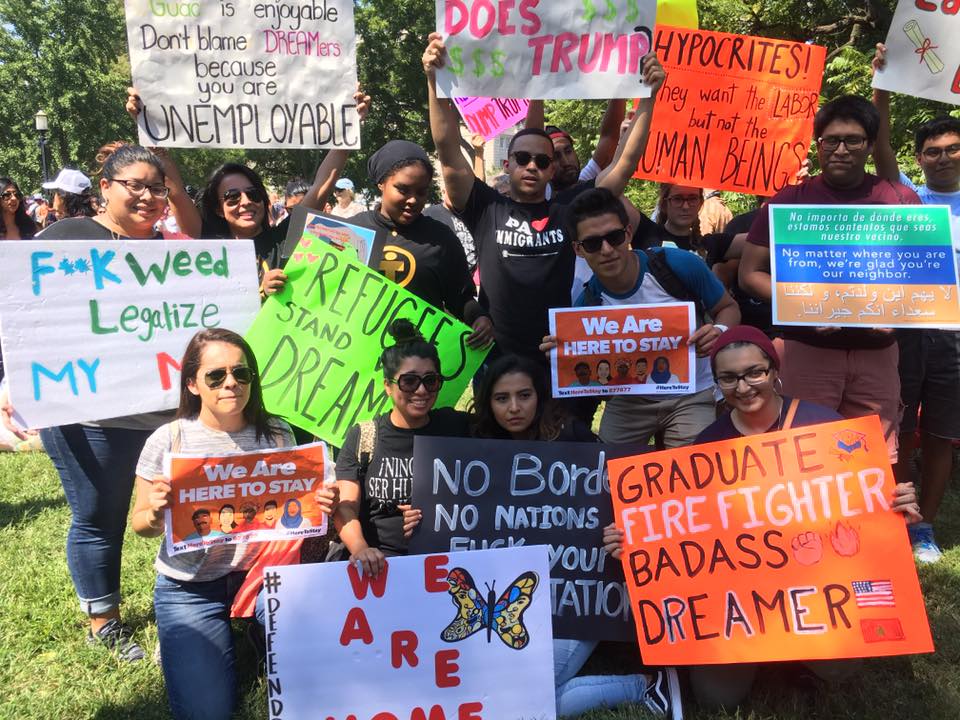
For the past week, leading up to yesterday’s announcement concerning what many predicted would be the closure of the Deferred Action for Childhood Arrivals and then after the fateful announcement, the language of the day has been “living in the shadows.” DACA recipient after DACA recipient has explained what living in the shadows meant and what it will mean. Today, an “immigration hardliner” Congressman explained that forcing people back into the shadows is justice: “They continue to live the objective that they sought to achieve when they illegally entered America. Live in the shadows. Live in the shadows and if you get crossways with the law, then the law requires they be placed in criminal proceedings and go home. I think there’s justice there, but we need to provide justice.” We need to provide justice.

DACA recipient and Rhode Island resident Rodrigo Pimentel explains, “Living in the shadows means declining legitimate job offers, as I would be unable to work lawfully. Undocumented people that work “off the books” risk employer exploitation such as wage theft. My father was a victim of this when he first came to the US: he found a job in Maryland soon after arrival, but after two weeks of work, he was laid off without pay and no legal recourse. Like many undocumented people, I fear that I may have to move from job to job, without a sense of knowing where I will be working next week or even whether I will be paid.”

Ivy Teng Lei adds, “`Living in the shadows’ is a very accurate way of describing our way of life. We never caused trouble, never asked for more than what we were given, and were perpetually afraid to attract anyone’s attention.”

We will not go back to living in the shadows. We are here to stay, in the light and as part of the sunlit world.

In The Republic, Plato provides the parable, or allegory or myth, of the cave, in which prisoners are chained and bound from birth and can only look forward. They see reflections of a fire behind them, they hear the voices of men carrying objects, whose shadows they see, and they believe, they know, the shadows are real people. Then one prisoner is yanked into freedom. When he looks at the fire, he is temporarily blinded but continues out of the cave into the sunlight and sunlit world. Being a person of compassion, the prisoner returns to the cave to free his fellow prisoners. As he returns, he is again blinded, this time by the darkness of the cave. When he reports the wonders of the sunlit world, the perpetual prisoners mock him, blind man that he is. If they could, they would murder him. This is the foundational parable of living in the shadows.

Here is today’s version of that parable: The President, who says he has “great love” for DACA recipients, hides in his own shadows while his Attorney General uses bald-faced racist, xenophobic, White Nationalist lies in order to demonstrate that his vicious act of cruelty is actually a commission of compassion. Their supporters applaud and explain that forcing the young to live in the shadows is justice. The real crime of those threatened with being forced to live in the shadows is that they are human, all too human, and that they have seen the light and the sunlit world. Their crime is their humanity. For the others, the ones who impose and enforce the State of Shadows, their crime is murder, murder of the soul, murder of the dream. They do not know that, while living in the shadows is impossibly hard, mistaking human beings for shadows is a crime against humanity. The work of mourning must wait until we finish the work of justice and freedom.


(Photo Credit 1: Al Jazeera) (Photo Credit 2: Facebook / Sammie Moshenberg)

Why does Australia hate pregnant and abused women asylum seekers?

Nauru

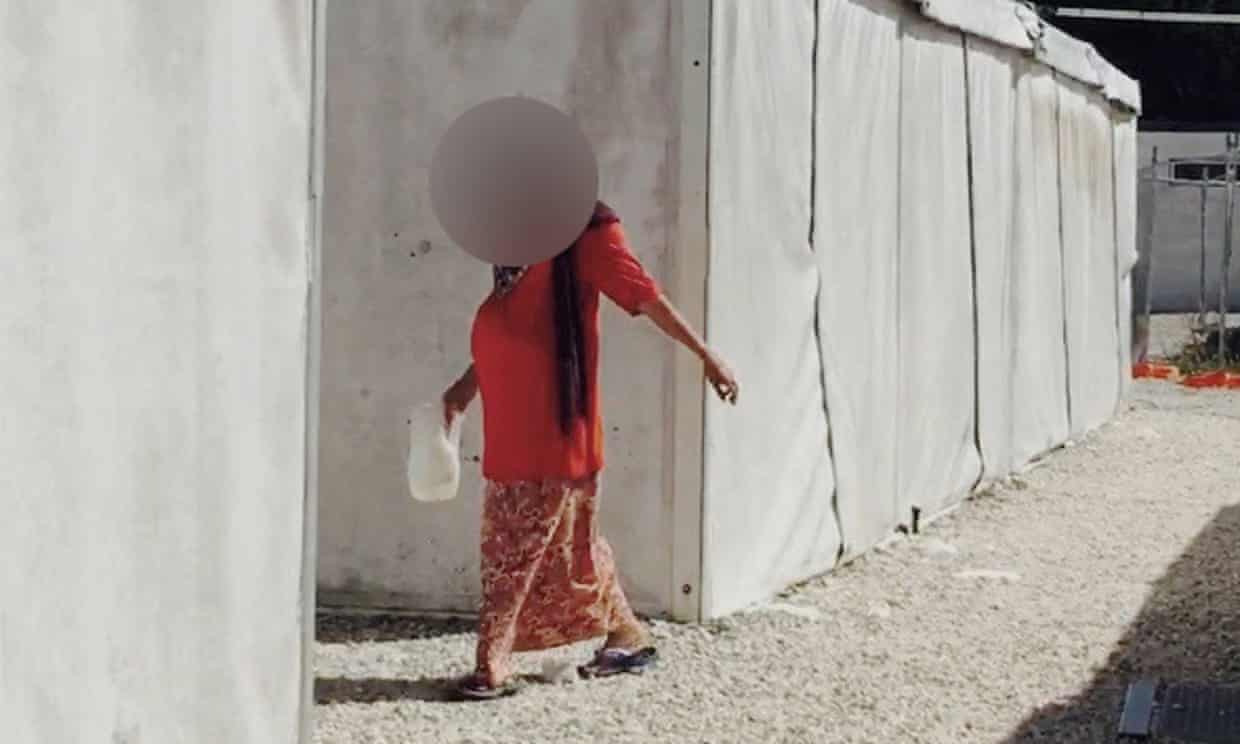
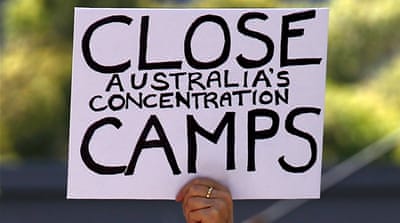
Why does Australia hate pregnant women asylum seekers? August began with a report that three pregnant women asylum seekers on Nauru had applied for termination of their pregnancies and were being denied medical transfer. This denial of medical transfer is typical on Nauru. An additional 50 asylum seekers who need medical care that they cannot receive on the island have also been denied medical transfer. This week, to close August off, 100 asylum seekers currently in Australia have been informed that they are about to lose … everything. Money, housing, the works. On Monday, August 28, about 40 men and women met with immigration officials and were informed of the new regime. Among the women are pregnant women and women who had come to Australia for treatment after having been sexually assaulted on Nauru. Meanwhile, the Immigration Minister thinks that the attorneys who represent asylum seekers, and in particular those in medical distress, are “unAustralian”. UnAustralian. What is the opposite of a commonwealth? Australia.

Yasaman Bagheri is 19 years old. She is from Iran. She has been detained on Nauru since she was 15 years old, and harsh living conditions and bleak prospects for the future are causing her to lose all hope: “They don’t care about people. They are willing to sacrifice innocent people, women and children to make their political point.” Why has this girl-child, now a young woman, been held in such dire and inhumane circumstances? No doubt because she is unAustralian.

The Australian medical profession’s position on those seeking medical care is clear. They must be transferred to Australia, immediately. Australian Medical Association President, and obstetrician, Dr Michael Gannon explained, “The ethical principles are very clear. People seeking the protection of the Australian government are entitled to healthcare standards the same as Australian citizens. So, that’s a matter of ethics and that’s a matter of law … I am not an immigration expert. But I like to think I am expert in medical ethics and I’ve stated our position very clearly as to the health standard that is we would expect.” Royal Australasian College of Physicians President Dr Catherine Yelland agreed, “We are very concerned by reports that asylum seekers are being refused medical transfers to hospitals in Australia where they would be able to get the care they need. The Australian government has a responsibility to ensure people in detention have access to the same level of care in Australian hospitals. It’s abundantly clear that they can’t receive the quality healthcare they need in these facilities. Doctors’ advice in these instances must be followed. We’ve too often seen the tragic outcomes that can occur when this advice is ignored.”

Australia recently changed the process for medical transfer from Nauru to Australia, and Nauru staff claim that this change, which requires going through Nauru hospital’s overseas medical referral committee, has meant no transfers. The committee seldom meets, keeps no records, and is altogether unreliable. The one Nauru hospital is a small operation. Nauruan women with complicated pregnancies are usually sent to Australia, Fiji or Singapore. Furthermore, Nauru prohibits abortions. The new medical non-transfer policy is a catastrophe generally, and it is an explicit assault on women, on women’s bodies.

Why does Australia hate pregnant women asylum seekers? Earlier this month, New York Times columnist Roger Cohen offered an answer, “Australia has reduced the men, women and children on the islands to namelessness, referring to them by registration numbers. Asked their names, kids often give a number. It’s all they know. At least the digits are not tattooed.” At least the digits are not tattooed … yet.

(Photo Credit 1: The Guardian) (Photo Credit 2: Al Jazeera)

Reading the Hurricane Harvey safety page from Lagos: Dignity and emptiness at once

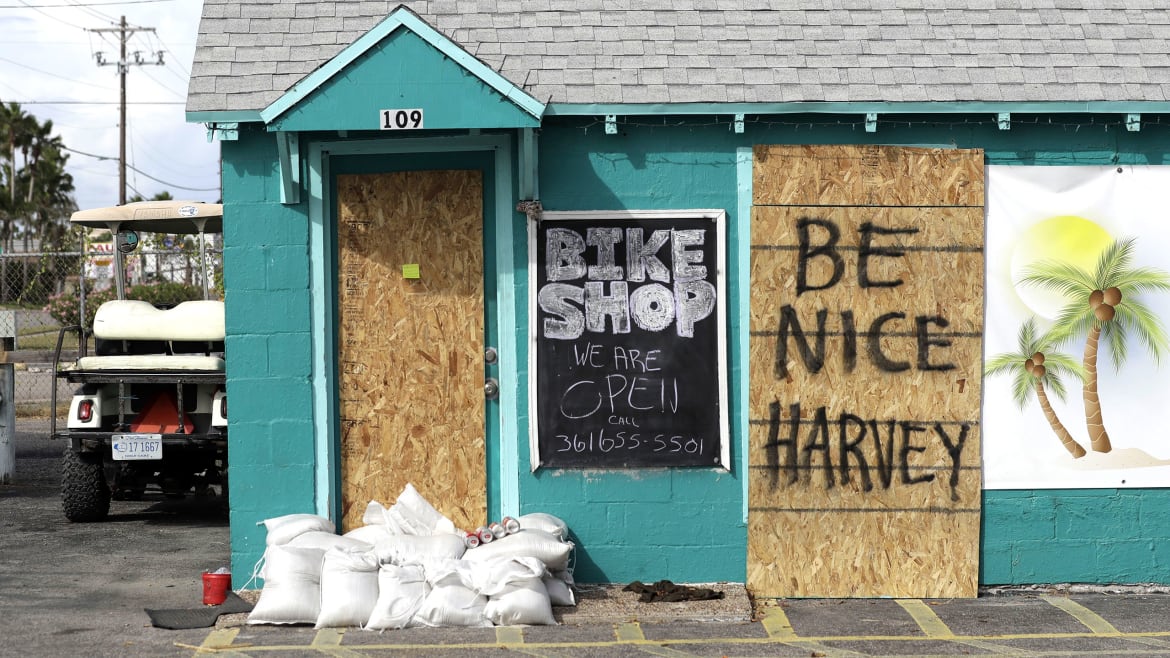
Reading the Hurricane Harvey safety page and finding so many people turning to Facebook, pleading for a rescue because 911 isn’t working. Or they are looking for missing ones. Or they have run out of baby formula. Or they are stuck with a medical emergency and can’t get help. Some are offering to get to those in need. One person is pissed that they weren’t told to evacuate (because the state/governor still doesn’t know how to handle a 6.5 million person exodus). I am grateful that friends are weathering the storm. But I’m feeling the chaos and the urgency.

Yesterday I met with a documentary photographer here in Lagos. He showed me an unpublished series of black and white shots (hauntingly gorgeous) of the stretch of shore that moves east from Lekki/Lagos. As I took these involuntary deep hesitant breaths with each image, he told me that what I was seeing no longer exists. Climate change – in the intense form of hurricanes or the more subtle forms or littoral erasure – brings repeated losses, which is what I was seeing in these images. And with the final disappearance of the shore and the homes/communities that once stood on it, you could feel a kind of fractionated sense of being in those who remain. I don’t mean that people were broken but transformed into something else out of these climate change losses. Dignity and emptiness at once. Or something far deeper and out of my field of understanding.

I have to wonder about the stories of repeated loss that lead to a final disappearance. I think this is the one commonality across sites where climate change makes itself most visible to us humans. There’s plenty to say about sustained willingness to endure life like this but that needs a lot of qualification.


(Photo Credit: The Daily Beast / AP)

Who today remembers Marikana? Who today remembers Heather Heyer?

“This silence calls out unconditionally; it keeps watch on that which is not, on that which is not yet, and on the chance of still remembering some faithful day.”
Jacques Derrida, “Racism’s Last Word”

August 16, 2017, marked the fifth anniversary of the massacre of Marikana, in which 34 protesting miners were killed by the police, in the single most lethal use of force by South African security forces since the March 21, 1960 Sharpeville massacre, when security forces killed 69 people. August 16 2017, people gathered in Charlottesville, and around the world, for the memorial service for Heather Heyer, murdered by a white supremacist in Charlottesville, Virginia, Saturday, August 12. Both commemorative and memorial events were marked, in social and news media, with injunctions to never forget and to always remember. We will not forget you. #RememberMarikana #RememberHeatherHeyer #NeverForget. Will we remember Marikana? Will we remember Heather Heyer?

We may have a trace of memory within, but that is not remembering. If we remembered, meaning if we held the moment or the event or the person(s) present in their absence, five years would not have passed as they have, and, five years from now, who will `remember’ Heather Heyer? I don’t mean that last question as a condemnation, but rather something to study and engage with, as those memories and remembrances will engage with us … or not.

34 miners were killed by bullets on a hill in South Africa. Their names are Tembelakhe Mati, Hendrick Tsietsi Monene, Sello Lepaaku, Hassan Fundi, Frans Mabelane, Thapelo Eric Mabebe, Semi Jokanisi, Phumzile Sokanyile, Isaiah Twala, Julius Langa, Molefi Ntsoele, Modisaotsile van Wyk Sagalala, Nkosiyabo Xalabile, Babalo Mtshazi, John Kutlwano Ledingoane, Bongani Cebisile, Yawa Mongezeleli Ntenetya, Henry Mvuyisi Pato, Ntandazo Nokamba, Bongani Mdze, Bonginkosi Yona, Makhosandile Mkhonjwa, Stelega Gadlela, Telang Mohai, Janeveke Raphael Liau, Fezile Saphendu, Anele Mdizeni, Mzukisi Sompeta, Thabiso Johannes Thelejane, Mphangeli Thukuza, Thobile Mpumza, Mgcineni Noki, Thobisile Zimbambele, Thabiso Mosebetsane, Andries Motlapula Ntsenyeho, Patrick Akhona Jijase, Michael Ngweyi, Julius Tokoti Mancotywa, Jackson Lehupa, Khanare Monesa, Mpumzeni Ngxande, Thembinkosi Gwelani, Dumisani Mthinti and Mafolisi Mabiya. Heather Heyer was killed by a car in the streets of the United States.

Today is Friday, August 26, 2017. Who today spoke the names of these 35 martyrs? Who stopped what they were doing, today, and “remembered”. Who re-membered them, who re-called them, who conjured them … today?

In November 1983, an exhibit entitled “Art contre/against Apartheid” opened in Paris. Jacques Derrida contributed an essay, “Racism’s Last Word” to the catalogue. Derrida hoped that Apartheid would be the name “for the ultimate racism in the world, the last of many.” He saw the purpose of the exhibition as creating a memory of the future: “A memory in advance: that, perhaps, is the time given for this exhibition. At once urgent and untimely, it exposes itself and takes a chance with time, it wagers and affirms beyond the wager. Without counting on any present moment, it offers only a foresight in painting, very close to silence, and the rearview vision of a future for which apartheid will be the name of something finally abolished. Confined and abandoned then to this silence of memory, the name will resonate all by itself, reduced to the state of a term in disuse. The thing it names today will no longer be. But hasn’t apartheid always been the archival record of the unnameable? The exhibition, therefore, is not a presentation. Nothing is delivered here in the present, nothing that would be presentable-only, in tomorrow’s rearview mirror, the late, ultimate racism, the last of many.”

The unnameable showed up on that hill in 2012 as it did in the streets of Charlottesville in 2017. The late, ultimate racism, the last of many, has not yet ended; it is alive and killing, taking lives, threatening entire populations. When we speak the names of the martyrs, we speak their names in a raging ocean of unconditional silence, the silence of the massacred, and we cannot yet claim to remember them. That faithful day has not yet come, and we are not yet at racism’s last word. Instead of promising to remember and to never forget, let us try as best we can to speak the names in the hope that someone might hear, might understand, and might, might, just carry it on.

[Read more…]

Women’s Month 2017: Victories for women in Chile, Lebanon, Jordan, India

Wafa Bani Mustafa

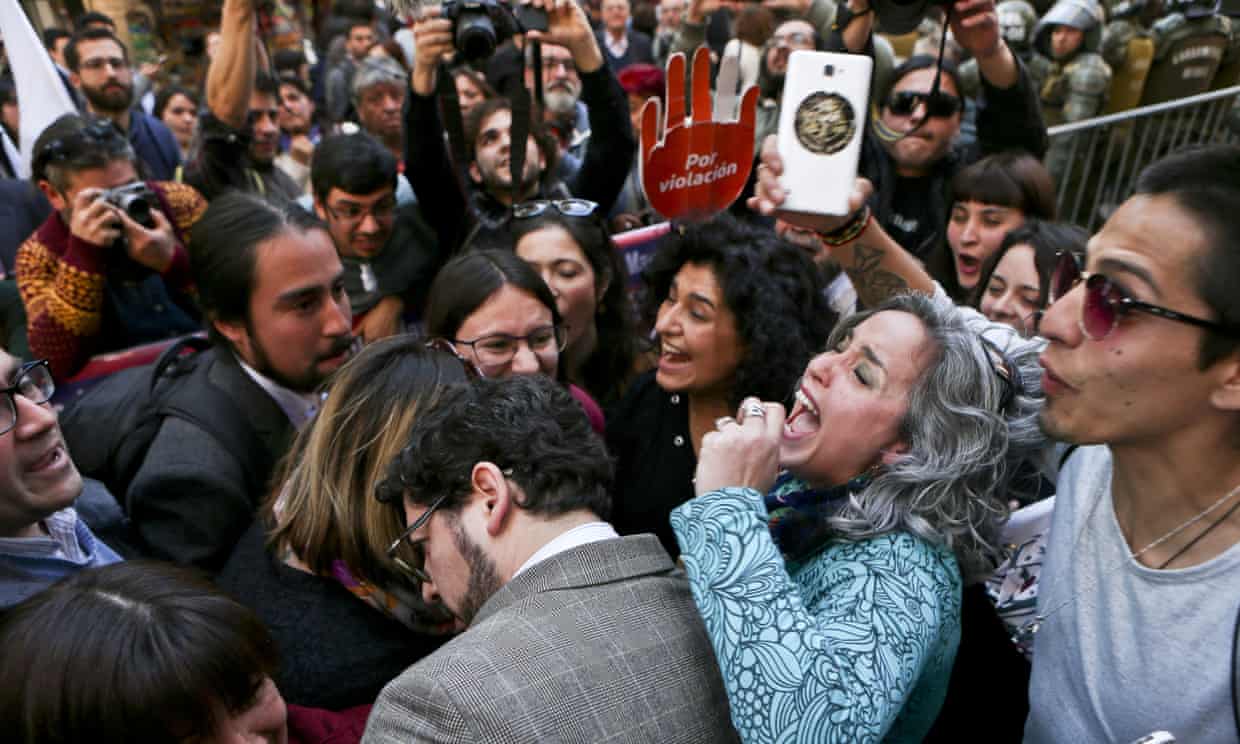
In South Africa, August 9 is Women’s Day, a national holiday that commemorates the 1956 women’s anti-pass march on the Union Buildings in Pretoria: “Now you have touched the women you have struck a rock: you have dislodged a boulder: you will be crushed.”Wathint’ abafazi, Strijdom! wathint’ abafazi,wathint’ imbokodo,uza kufa!” The women, 20,000 strong, sang that song on that historic day, and it has inspired, and continues to inspire. August is Women’s Month in South Africa and so, with that in mind, globally this month, and along with bad and terrible news, there’s still much to celebrate, especially in Jordan, Lebanon, Chile and India. Within 48 hours this week, Chile eased its ban on abortion and India eliminated the triple talaq instant divorce. Earlier in the month, building on the passage of a progressive law in Tunisia, both Jordan and Lebanon repealed laws that allowed rapists to avoid criminal prosecution by marrying their victims. From Asia to Africa to South America, women are on the move.

On August 4, 2017, Jordanian lawmakers voted to repeal Article 308 of the Jordanian Penal Code. This article was one of the many “marry-your-rapist” laws around the world. Tunisia abolished its version of that law in late July. While many women mobilized over years to end the law, the current leader of the movement to abolish Article 308 has been Wafa Bani Mustafa, a lawyer and Member of the Parliament, head of the Women’s Caucus and Chairperson of the Coalition of Women MPs to Combat Violence against Women. According to Wafa Bani Mustafa, “Article 308 has its roots in French and Latin laws. European countries only fairly recently abolished similar clauses. In France, that happened in 1994; in Italy, 1981. The introduction of such laws in the Arab world happened largely through a mix of colonialism and through the experiences of other countries in the region. Many of the countries used Egypt as an example, which got its laws through the Ottomans and the French colonial involvement in Egypt. But in essence, it is a European product. The important thing to focus on is that such articles have no religious or societal justification – they only discriminate against women.”

For Wafa Bani Mustafa, abolition of Article 308 is part of a multinational feminist decolonization project. Two weeks after the Jordanian lawmakers’ vote, on August 16, 2017, Lebanese lawmakers abolished Article 522 of Lebanon’s penal code, which also allowed a rapist to escape prosecution and punishment if he married his victim.

On Monday, August 21, 2017, a Chilean court ruled that a law easing restrictions on abortion is Constitutional. Michele Bachelet had promised and worked hard to pass the law. According to Bachelet, who had introduced the first version of the law in 2015, “Today, women have won, democracy has won, all of Chile has won.” The law allows women to seek abortions if the fetus is not violable, if the woman’s life is in danger, or if the pregnancy is the result of rape.

The next day, August 22, 2017, India’s Supreme Court ruled that the so-called triple talaq, which allowed men the power to instantly divorce their wives, unconstitutional. Five women brought this case forward. One of them, Shayara Bano, said, “Finally, I feel free today. I have the order that will liberate many Muslim women.”

From Jordan to Lebanon to Chile to India and beyond, women pushed the State to revoke prohibitions that endangered women’s lives. In every instance, the victory this month is both landmark and partial. As Wafa Bani Mustafa explained, “This issue isn’t specific to Jordan or to the Arab world. There are countries around the world that continue to stigmatise women. There are countries that have very developed legislation, yet in practice do not treat women equally. There are countries out there where women suffer way more than they do in the Arab world in similar crimes.” The struggle continues, and women are taking it forward. Now you have touched the women you have struck a rock: you have dislodged a boulder: you will be crushed … in all the languages of the world.

Celebrations in Chile


(Photo Credit 1: Al Jazeera / Wafa Bani Mustafa) (Photo Credit 2: Guardian / Esteban Felix / AP)

Justice, redress and restitution for the widows of Marikana


(Speaking Wounds: Voices of Marikana Widows Through Art and Narrative)

(Image Credit: The Journalist)

#Charlottesville: And again, Black pain and tears and suffering at the hands of white supremacy

After the car rammed into the crowd of peaceful protesters

And again, Black pain and tears and suffering at the hands of white supremacy is approved and legitimated by whites saying that “they saw it”, and “yes, it definitely was racism”. Perhaps now, people who insisted on replying to the plea that ‘Black Lives Matter’ with ‘All Lives Matter’ and ‘Blue Lives matter’ will understand the depths of white supremacy in this country.

Would the average American–the ones who voted for Trump because they “just wanted a change”– listen to the Black, law abiding, incredibly restrained counter protestors who narrated the racism and Hate and Evil they experienced at the hands of white supremacists if white counter protestors didn’t confirm their stories?

Did the average white American believe Chaney’s murder was motivated by white supremacy and racism only because Goodman and Schwerner were murdered at the same time, for the same reasons, and in the same way?

So, this time, the publicized terror is in Virginia. Maybe for a week or so I won’t be accused by some of my fellow Americans of ‘playing the race card’ when I speak up about, protest against, and survive each day despite our country’s not so secret love affair with white supremacy. Just maybe….

(Photo Credit: Washington Post / AP / Steve Helber)

Gentle Justice


Gentle Justice

justice
awaits
victims wait
for some

whilst Special Ones
and the blindly faithful
get their way
and get away

Gentle Justice
an escape
from the glare
of the public

Gentle Justice
is what you get
when you are

well-known
well-resourced
well-connected
(pockets well-lined too)

(this in spite of our
Constitution lauded
and our Bill of Rights
and the like
on paper)

Gentle Justice
a higher-up gets
during Women’s Month

his just reward
for knowing
his place

(no shoot first or
fight fire
with fire)

justice awaits
and victims wait

A legal NGO’s spokesperson on morning SAFM radio has it that our Rainbow Nation’s night-clubbing higher-up deputy-male has gotten himself “gentle justice”.

(Photo Credit: Joseph Chirume / GroundUp)

On Women’s Day, who sings for Brenda Sithole? And tomorrow?

August 9, 2017. It’s Women’s Day in South Africa, a national holiday that commemorates the 1956 women’s anti-pass march on the Union Buildings in Pretoria: “Now you have touched the women you have struck a rock: you have dislodged a boulder: you will be crushed.”Wathint’ abafazi, Strijdom! wathint’ abafazi,wathint’ imbokodo,uza kufa!” The women, 20,000 strong, sang that song on that historic day, and it has inspired, and continues to inspire. Inspirational as it is, it is a song of survivors, of those who lived to attend. Two weeks ago, in Gauteng not too far from Pretoria, 17-year-old Brenda Sithole committed suicide, or was killed, because she didn’t have proper papers to attend school, and so … she’s dead. She was not a rock. No boulder was dislodged. Brenda Sithole is dead. There was little notice at her death, and, today, August 9, 2017, who sings for Brenda Sithole?

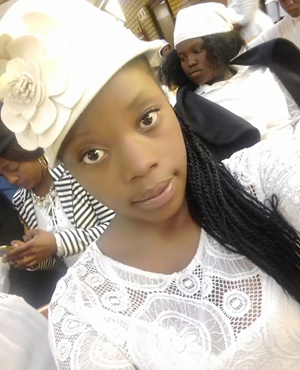
Brenda Sithole’s personal story is brief. When Brenda Sithole was three months old, her mother left. Her mother died before registering her daughter’s birth. Brenda Sithole was raised by her aunt, Terry Sithole, and her father. Only recently was it discovered that Brenda Sithole didn’t have a birth certificate. When they were about to sort things out, Brenda’s father died. Brenda Sithole returned to school, explained the circumstances, and the school replied. According to Terry Sithole, “When school opened last Monday, she was told that the school wanted a birth certificate by the next day or she shouldn’t come back.”

That night, Brenda Sithole, by all accounts a happy child, a good student, a young girl with dreams for the future, went home, cut a piece of paper into the shape of a heart, wrote a note on that heart, and ended her life. The note reads: “”Am sorry. I do not mean to hurt anyone. Am sorry. I had loved and respected you all. I give my best to everyone but I felt like I did not belong here with you. I am only an embarrassment to you my family. I did not have a future even [though] I had big dreams that I wanted to see them come true but that was not going to happen because I was going to go to be kicked out of school because I did not have the rights like having an ID to show where I belong. I was just a normal person living my life at the [mercy] of God but yet that didn’t pay up. Am just useless.”

This is what happens in the state of abandonment. The State says that students must have birth certificates, and if a student doesn’t, she’s out. That’s it. Brenda Sithole was seventeen years old, a child. She had big dreams. For her, there was no rock, there was no boulder. Today, on Women’s Day, who sings for Brenda Sithole? And tomorrow?

(Photo Credit: News24)