No one is free until we are all free!

Children are dying at detention centers on the border. ICE detention centers, which line the pockets of counties like Essex, New Jersey, with millions of dollars each month, have been reported with disgusting health and safety code violations, violating the cushy contracts. Undocumented immigrants in detention at the border have finally won their right to continue protesting with hunger strikes without the fear of nasal tube force feedings. In New Jersey, a Guatemalan toddler died in a state hospital, after being detained by ICE.  Her 104-degree fever was ignored before she was reunited with her family in the Garden State. a record number of babies are in detention, raising concerns about the children’s health and wellbeing; and the list goes on and on. 

We have reached a crisis moment in the United States when we can ignore the violence and the othering of people, denying them their humanity and justifying carceral violence as a penalty of illegality. Babies and children should not be in detention. Women fleeing violence should not be incarcerated; people should not be put behind bars.  

The bubbling incarceration rates of all people in this country, the ties to private prisons that give stockholders millions or billions for putting people behind bars for nonviolent crimes, drug crimes, crimes of self-defense, tickets, misdemeanors, children incarceration: all of this should not be. The crime of being poor and being black or being brown should not be. The lists of should-not-be are endless.

We have more in common with undocumented immigrants in our community, working hard to raise and provide for their families each day, than we do with the billionaires sitting in the oval office and the capitol buildings. We have more in common with the incarcerated than we do with Jeff Bezos, Bill Gates and Betsy Devos. We have more in common with the impoverished and homeless than we do with Donald Trump and Hillary Clinton. The threat of homelessness looms over many in this country, including those who claim to be members of the middle class. I have known the certified letters from mortgage companies, threatening foreclosure and homelessness. Many can relate to earning the bare minimum and working until our bodies have deteriorated. For someone whose entire political career involves an obscene amount of “executive time”, he does not understand the calloused fingers and sore feet of working twelve, fifteen hour shifts and then waking up the next morning to do it again. 

We will not become a nation for the people, until we understand that we are all together, all people, all humans, deserving of dignity and humanity, and that we deserve not bars but homes and healthcare, rehabilitation and not violence and felony charges. Prisons give those in power the ability to de-humanize and then justify no one deserving basic human rights: why should the criminal get healthcare when you work for it; why is Narcan for the drug addict free but my medication prices will kill me?

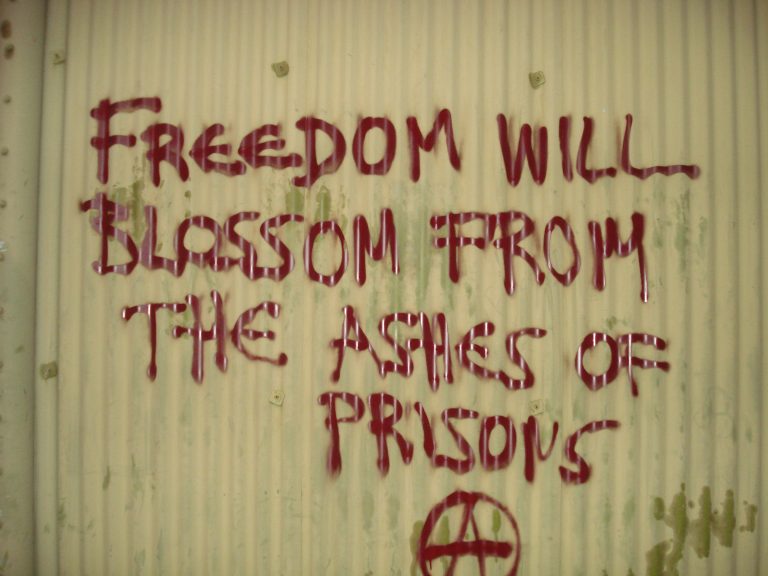
When you realize that the politicians won’t save you, but your common man and women will, then one must organize to demand an end to the inequality and inhumanity in this country and the world. To begin, we must destroy the prison industrial complex.

(Photo Credit: Dialectical Delinquents)

What happened to Brianna Beland? Just another death in the Charleston County Jail

Brianna Beland

In August 2017, 31-year-old Brianna Beland “died” in the Charleston County Jail, the same jail in which Joyce Curnell “died”, in July 2015. What happened to Brianna Beland? The same thing that happened to Kellsie Green, in Alaska; Jessica DiCesare, in Massachusetts; Madaline Christine Pitkin, in Oregon, and so many other drug dependent women who needed help and got jail. Brianna Beland is just another day in the life of the cruel and usual treatment of women in jails across the United States, where women go to jail and die.

The story of Brianna Beland’s death is almost as short as her life. In April 2017, Brianna Beland was arrested for shoplifting a pack of coloring pens, worth $3.94. Brianna Beland had no previous convictions. She did have a debilitating heroin habit. She also had a four-year-old daughter and a partner. Brianna Beland was given a May court date, which she missed. Her partner died in June “while fishing off the coast of Virginia.” Brianna Beland worked cleaning vacation rentals and was studying to become a paralegal. On Monday August 14, she was picked up on a bench warrant and given a choice of 25 days in jail or paying a fine of $1,030. Brianna Beland “chose” jail. On August 16, Brianna Beland started vomiting and feeling nauseous. On August 17, she passed out in the yard. On August 18, Brianna Beland was moved to the infirmary. Brianna Beland kept falling out of bed; she couldn’t walk or move. She said she felt that she was burning up and asked for help. The nurse left Brianna Beland to attend to other patients “because it took priority over a patient being hot.” The nurse returned an hour or so later, and “found” Brianna Beland “unresponsive”. On August 19, a little while after midnight, Brianna Beland was pronounced dead. In December 2018, her family sued the Charleston County Jail, the doctor, and the medical service.

Brianna Beland’s story mirrors that of Joyce Curnell, who also “died” in the Charleston County Jail two years earlier. Joyce Curnell also was arrested for shoplifting, also had no prior record, also was picked up on a bench warrant. Given the “choice” between jail or paying $2200, Joyce Curnell chose to pay, monthly. She couldn’t keep up the payments, and so “chose” jail. Joyce Curnell struggled with alcoholism. Her son believed that in jail Joyce Curnell would get help.  Joyce Curnell went into the jail, vomited time after time, told the staff she needed help, was given a garbage bag, and, within 27 hours of entering the jail, was “found” dead.

Both Brianna Beland and Joyce Curnell lived in trailers. For working poor women, and especially those who live and struggle with alcohol and drug addiction as well as with mental health issues, the contemporary architecture of the United States is simple and direct: take a trailer, overlay it with a jail, and overlay the two of them with a graveyard. The families sue, and generally win, but there’s neither justice nor peace nor resolution therein. There is no justice nor peace in a land in which a woman life is worth the same as a $3.94 pack of coloring pens.


(Photo Credit: Live5News)

A New Jersey probation officer is arrested for assaulting a child in his charge: Why are local news making her seem older?

A state probation officer from Wall, New Jersey has been charged with sexual assault of a probationer under his supervision. The officer, Henry C. Cirignano is facing two counts of second-degree sexual assault, one for, “allegedly coercing the victim and the other related to his position of power over the victim as her probation officer.” Cirignano has been suspended with his access to court facilities revoked.

Though early in the investigation, that Cirignanohas not been terminated from his high-paying position ($88,266 per year) is telling for how the state of New Jersey is willing to compromise to protect the accused child molester. Consistently the survivor is called a “woman” even though, according to the official misconduct charges from Monmouth County, Cirignano’s conviction would subject him to provisions of Megan’s Law:

“If convicted of Official Misconduct, Cirignano faces a mandatory minimum sentence of 5 years in a New Jersey state prison without parole and a lifetime ban on public employment in the State of New Jersey.

“If convicted of Sexual Assault, Cirignano faces up to 10 years in a New Jersey State prison on each county, subject to the provisions of the ‘No Early Release Act’ (NERA) requiring him to serve 85 percent of the sentence imposed before becoming eligible for release on parole. He would also be subject to the provisions of ‘Megan’s Law’ and Parole Supervision for Life requiring a minimum of 15 years of parole supervision following his release from prison.”

The Megan’s Lawsex offender registration was signed into law in 1994 in New Jersey, after 7-year-old Megan Kanka went missing from her home in Hamilton Township, having been kidnapped, raped and murdered by sex offender Jesse Timmendequas. Her body had been located nearby less than 24 hours later. Megan’s Law requires communities to be notified when sex offenders move into their neighborhoods. 

That bit of information in the press proves two problems with how New Jersey incarcerates and monitors youth; and then how those youths are portrayed when people in positions of power use said power to abuse them. 

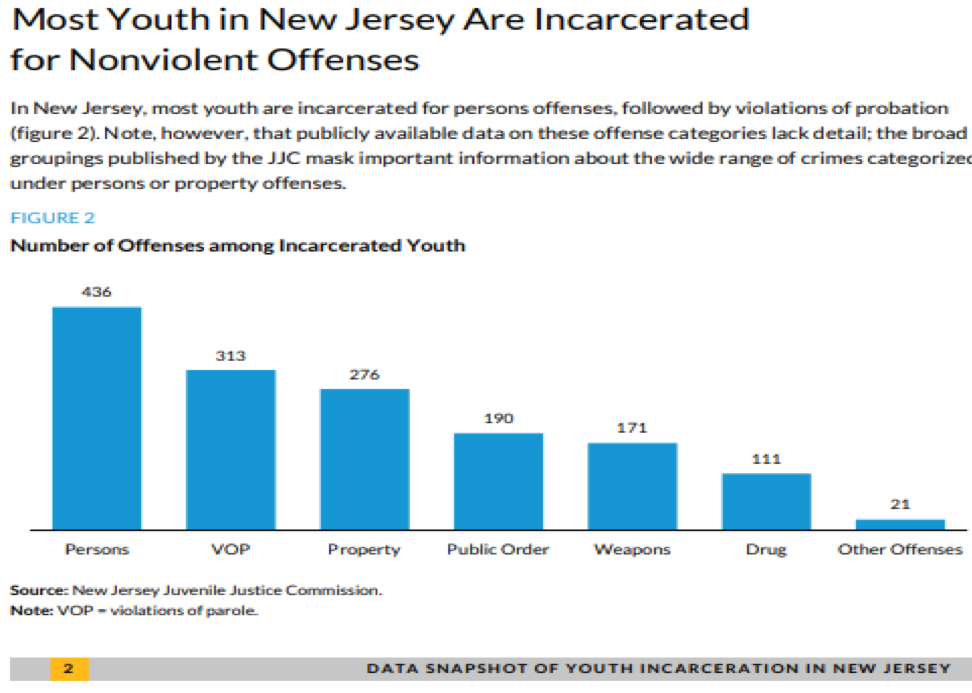
In New Jersey, despite the decline of in care facilities, 274 youths are currently committed to those facilities. Most youths are incarcerated for nonviolent offenses; the second reason youth are in juvenile justice is parole violations. 

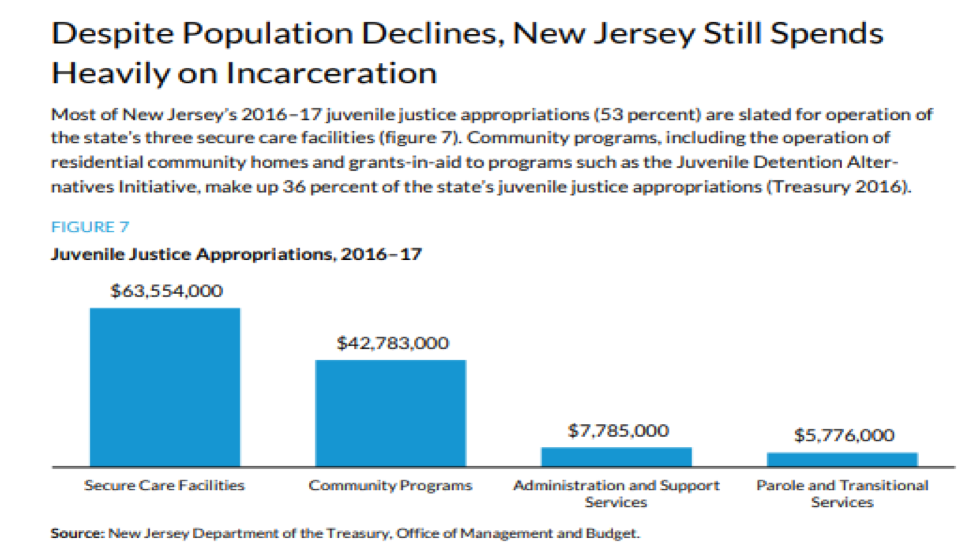
According to the Urban Institute, New Jersey disproportionately incarcerates Black youths over White youths; despite being only 14 percent of the youth population, Black youths make up 73 percent of those committed to secure juvenile facilities. Even more nefarious, after release, those youths are supervised constantly by the state either through probation or aftercare treatments. The Garden State is a high spender on making sure youths are incarcerated and under control.

Second, when probations officers are accused of abusing their positions of power, news and press outlets, including press releases from the county itself, look to hide the extent of the abuse. Cirignano’s abuse would have been terrible because he sexually assaulted someone he could send back to prison if they had fought back. The person he was monitoring and abusing was a child, who could have easily been sent back to juvenile corrections. Given the population and problem of youth in incarceration, media outlets and the state have decided that children in New Jersey, children who might be in need of mental health services or actually care and consideration, are not allowed to be children.  

(Infographic Credit: Urban Institute)

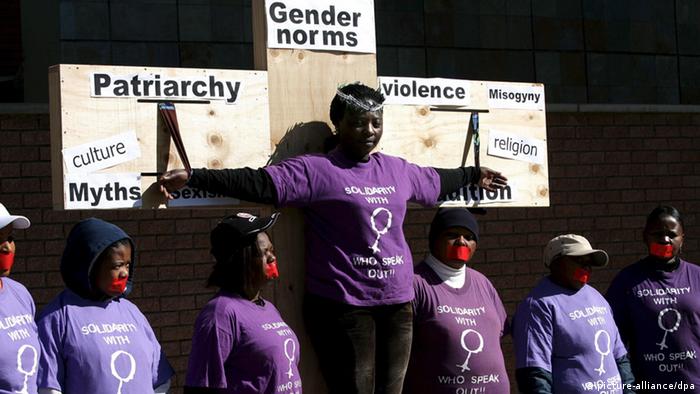
Yet again we learn how inept at dealing with rape culture we are as a patriarchal, rapey society

So, yet again, we’re learning how inept at dealing with rape culture we are as a patriarchal, rapey society. Each time has become an opportunity to expose just how entrenched we are as reproducers of this rape culture. 

Womxn’s organisations and survivors fought for the right of survivors to be believed before we are criminalized while the rapist gets the benefit of the doubt (as is always the case and is the case with this Zizi situation). Oh and don’t ask me what it was to be at varsity on a Friday and witness our leaders (I could name some names indeed) back then already, coming for their Friday pick-ups of the fresh and fleshy beauts and no that was for no cadre political education sessions. And we all know the hand that lingers too long during the fake handshakes and the midnight knocks in your door by some envoy of some leader to check some nefarious thing in those all too important conferences with those all too important leaders. Yes, I know it and you know it!The complex dynamics of sexual relations, power and interactions on consent within such a context means the very premise of the law as it’s designed is wholly incapable of being an instrument of justice for the many survivors whose stories are a lot more “complex”, which is in fact the majority of survivors.

Whilst it helps no one to have our pain instrumentalised for extortionist or any such intentions, why is it that the default place for our response is they are extortionists?

It’s exactly because this is our default response that our suspicion, which may or may not turn out to be right, says more about us than it does about whether the accusers may in fact be extortionists. If this becomes an issue for you, in a context like South Africa where rape is a norm, that’s really just exposing your rape culture agent status. 

If justice means you pay me money for violence and trauma you’ve inflicted on me, whose bloody damn business is it to say what I want isn’t right? After witnessing how the criminal justice system ravages survivors, why would anyone with pure intentions question why a survivor may exercise her agency to protect themselves from that secondary trauma and victimization which is what this unjust system has come to symbolize? 

Who appointed you arbiter of survivors’ truth and justice! How about castigating the fact that women get raped exactly because the criminal justice system means a survivor has lost even before they enter the court’s door? The complexity of the truth of rape doesn’t fit in legal statutes, even with impeccable investigation. Why don’t you talk about who do we need to become for us to be capable of advancing justice for survivors instead? We have to reinvent ourselves to become capable of ending impunity. We have to learn a whole new way of seeing, analyzing, asking and articulating questions, a whole new set of questions, a whole new lens. And you can’t do that if you’re so caught up in your own privilege (the privilege to tell a survivor what justice they can ask for and prescribe timing for reporting and how they must feel), that’s unchecked privilege usurping the agency of the survivor. To end the culture of impunity, we need to do the hard work of changing ourselves, our lenses, and journeying to stop being agents of impunity. To those who want to do this, I’m right there, masambe Comrade! 

We’ve all made mistakes we wish we could erase, but it’s those mistakes that demand of us to be and to do different. We may not have the formula, but it won’t emerge like a pill from some rat experiment in a laboratory. It will emerge from active work we do to unlearn being agents of rape culture, intentionally and not. 

As for the rest, must be nice to have a right to appoint yourself judge and jury as it pleases. A real nice life problem!


(Photo Credit: Deutsche Welle)

In India, women forest dwellers saved the trees, lost the woods, saved the woods, lost the forest

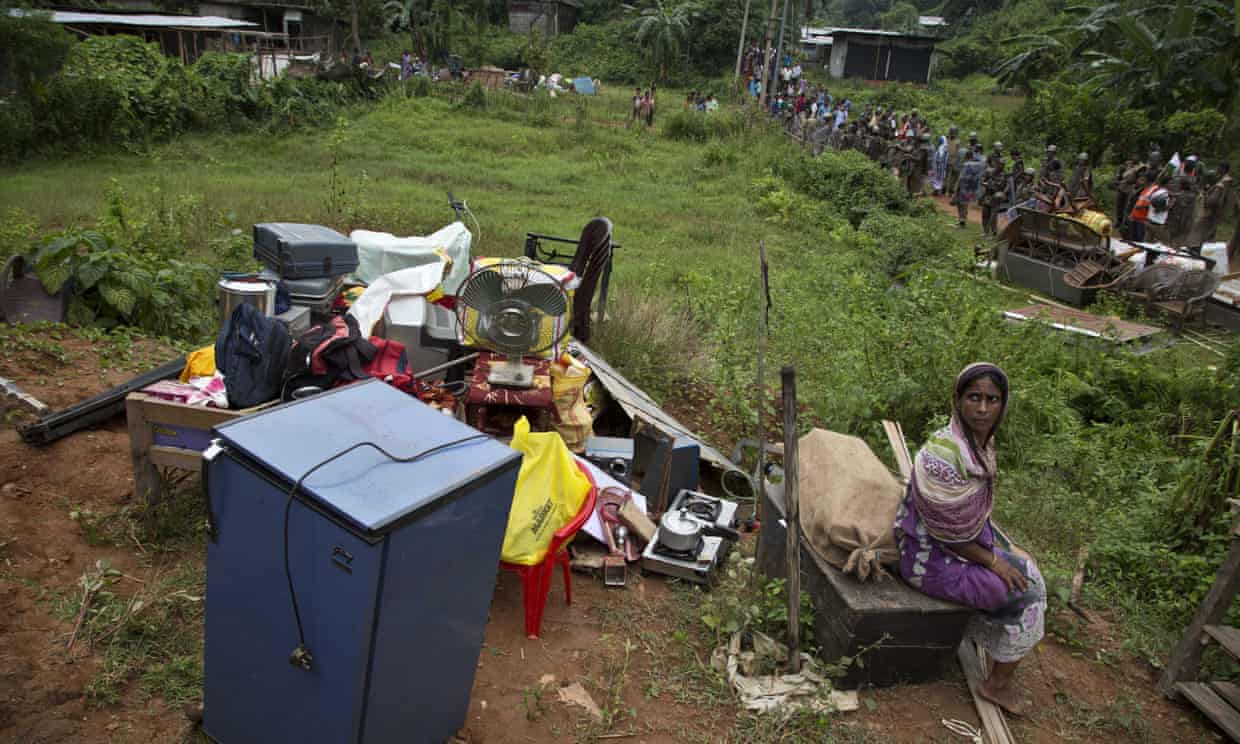
In 2006, India passed The Scheduled Tribes and Other Traditional Forest Dwellers Act, known as the Recognition of Forest Rights Act. While not perfect, the Act was a step in the right direction. It was “a weapon for democracy in the forest”, because, for the first time, the State recognized and secured community and individual rights over common property resources; rights in and over disputed land rights concerning land use; right to protect, regenerate or conserve or manage the forest; right to intellectual property and traditional knowledge related to biodiversity and cultural diversity; rights of displaced communities; and, finally, rights over developmental activities. That act came after decades of struggle by forest dependent communities. Women were at the core of those struggles. This week, with one court decisionmillions of forest dependent communities, often called the most vulnerable of thevulnerable, were informed that they were to be evicted by July 24. It is estimated that as many as 2,300,000 families will ultimately be affected by this decision. Who are the most vulnerable of the vulnerable? Women and children.

From the moment its inception, the Act was challenged by mining, agricultural and so-called development interests. More recently, some conservationists argued that the forests were dwindling and that the forest dependent populations had to be moved to save the forests. In the case decided this week, the key was the provision of the act by which forest dependent families had to formally lay claim to land. This proved difficult given low levels of formal literacy and often impossible bureaucratic processes. For women, the issue of land titles was complicated by even lower levels of literacy and local traditions that precluded women having title to land. The State colluded with those local traditions. For example, many, if not most, forest households are women-led, because male partners have left, for work or just because, or have died. The State never addressed the particularities of women-headed forest households.

While the conditions for women forest dwellers have been particularly harsh, with increased industrial and State violence against forest-dependent women, women have consistently engaged in individual and collective direct action and mobilization for tribal rights and for tribal women’s rights. From Odisha to Chhattisgarhto Rajasthanand beyond, women self-organized to defend their commons. They carry the legacy of the women’s Chipko movement, from the 1970s in Uttarakhand. On March 25, 1974, Gaura Devi, the leader of the Chipko movement, led local women to confront logging companies about to chop down the trees. Calling the forest her mother’s home, Devi wrapped her body around the trees. The women persisted, and the loggers left. That was the early 1970s. In 2013, a reporter returned to the site and saw that the women had saved the trees … but lost the woods. Now only elders, women, and children live there, since the men have gone, either to find work or just because. Six years later … 

Forty five years, almost to the day, after Gaura Devi and the women of Reni village stood up for the dignity of Niluribhur forest, those women, their daughters and granddaughters have been informed they have five months to vacate. While the world press is paying some attention to this crisis, thus far almost none have noted, or wondered, “Where are the women?” 

Feminist activist scholar Swarna Rajagopalan has asked and answered: “What does it really mean to be an internally displaced person—or a refugee, for those who cross borders in flight? … As a woman, you did not get to go to school for long and you studied another language. How are you to navigate this state’s administrative offices and claim the paperwork, the food and medical assistance and other entitlements that are your due? You fled to survive, but now you have to fight to survive each day … As a woman, maybe stepping out of the house for the first to find employment, you can do domestic or care work. Sometimes you beg; sometimes you trade sexual favours to feed your family. Living on the margins, crowded by strangers, you are visible and vulnerable in so many ways—on the way to a communal toilet; to fetch water; to earn a living; and in your interactions with officials and house-owners. But disadvantaged as you are as a woman, you are not weak. You and your sisters asked questions, protested and stood your ground until the ground itself shifted. Now, after one… two… three displacements, the fight is going out of you …. Some women will miscarry en route; some will give birth in camps. Those children may grow up as ‘IDPs’ or ‘refugees,’ living in camps or IDP settlements all their lives. Small gardens will be planted, rangolis drawn, makeshift temples and churches set up. But they will always remember home. They were once from somewhere else—a lost forest home where they belonged and which truly belonged to them.”

Where are the forest dependent women in the Indian Supreme Court’s decision, in national and regional policies, in press accounts? Everywhere and nowhere. The Forest Dwellers Act recognized the rights of over 200 million individuals living in more than 170,000 villages. This week’s decision is a step in the removal of all 200 million. At every step of that plan and at every instance of resistance, ask, and demand to be answered, “Where are the women?” Everywhere and nowhere is not good enough.

(Photo Credit: Guardian / Anupam Nath / AP)

In Sudan, women demand freedom … again!

On December 19, 2018, in Sudan, people took to the streets to protest a precipitous rise in bread prices. Since then, the protests have persisted and grown. As so often in food uprisings, the price of food was the visible spark that revealed an undergrowth of fire, and, again, as so often, women of Sudan set and sustained the spark. Remember June 2012, when women students responded to astronomical increases in transportation and food prices? A few university women students took to the streets, shouting “Girifna!” “Enough is enough!” Within days, their small demonstration inspired a sandstorm, which was met with severe State repression. Remember the Sudanese women of June 2012? Remember September 2013, when, again in response to austerity measures this time involving gasoline prices, women took to the streets? This time the protests started in rural areas and then moved to the cities. Then others joined in and, again, the protests turned into a national crisis, which, again, was met by severe repression. Remember the Sudanese women of September 2013, and the Sudanese Women’s Union of the 1950s and 1960s, and the Sudanese who have organized continually from the 1950s on, for women’s autonomy and national dignity? Remember them? They’re back.

While the world press has only fitfully noticed the ongoing protests across Sudan, it has taken note of the leading role of women in those demonstrations. On Friday, December 28, across Sudan, people protested in the streets and were quickly met with force: “The demonstrations were the most widespread since the protests began in the city of Atbara on December 19 in response to the government raising the price of bread from one Sudanese pound to three. They were also notable for the large number of women taking part, including one led by women in the Tuti Island area of Khartoum.”

As the demonstrations grew and persisted into January, more and more women joined in, despite or because of the government’s increasingly violent response: “Dressed in headscarves, they can be seen in nearly all the footage shared on social media, which in turn has helped to convince even more women to take to the streets.” Twenty-six-year-old Aseel Abdo explained, “I will continue to protest, even if it takes years to bring down this regime … This regime has some of the worst laws against women. You could be arrested for wearing trousers or if your scarf is not covering your hair properly.”

As the demonstrations grew and persisted into February, women took to the frontlines of the demonstrations. They organized in prison, they organized on the streets, and they called for revolution. That was not a surprise. As women’s rights activist Hala Al-Karib noted, “The price of bread was a trigger for protests, but it’s not about bread, it’s about equality. It’s about dignity, it’s about freedom. The government has an Islamic militant ideology which at its core aims to exclude women from the public space. For 30 years, women in Sudan have fought against this oppression, so it’s no surprise they are out in significant numbers now … I am very hopeful and I haven’t been this hopeful before. There is such a strong demand for change and, as women, we have played a very strong role in opposing this regime. There’s no turning back now.”

Women have marched to women’s prisons to protest the incarceration of their sisters, demanding freedom, chanting, “Long live the struggle of Sudanese women!” When the security forces attacked women, they used all-women Facebook websites to identify the perpetrators and demanded justice.

Today marks the beginning of the third month of persistent, sustained and expanding protests in Sudan. Call it a wave, a revolt, a revolution, a sandstorm, whatever you call it, remember that women are setting and sustaining the momentum. Long live the struggle of Sudanese women! It’s about freedom. Remember the Sudanese women of 2018 and 2019?


(Photo Credit: News24 / AFPTV / AFP)

ICE created a fake university, charged students, and then arrested them … For what?

ICE detained 146 students and 8 recruiters in a sting, where it “created” an accredited university, the University of Farmington, to lure international students into attending classes. Federal prosecutors allege that more than 600 students enrolled in the University of Farmington knew that the university was fake. 

The sting was part of a “pay to stay scheme” where, “foreign students could remain in the U.S. while working.” The scheme would have allowed students to stay in the United States as a result of foreign citizens falsely asserting that they were enrolled as full-time students in an approved educational program and were making normal progress toward completion of the course of study. But for many of the students, the university was very real. Students paid tuition to the university, hoping to receive an education, and, when they found out there would be no classes to attend, they unsuccessfully attempted to transfer. 

The University of Farmington portrayed itself as a “nationally accredited business and STEM institution to prospective students.” While nefarious, the ICE scheme is not illegal, nor is it a new low for ICE. In 2016, the DHS created the University of Northern New Jersey to charge 21 people with student and work visa fraud. Many of the students detained are from the Telugu-speaking region of India. India’s government is urging the U.S. to release the 129 students who have been arrested on immigration charges, while the 8 recruiters have been detained on criminal charges. 

According to defense attorneys, the students enrolled in the university with the intent to obtain jobs under a visa program known as CPT (Curricular Practical Training) that allows students to work in the U.S. Those programs are legitimate; the U.S. tricked students into joining the University of Farmington. The website and media was so developed for the University that there was a LinkedIn page for the “President” of Farmington, Ali Milani, and a Facebook page with a series of events hosted on the calendars. The website also claimed the university had been authorized to enroll international students by the U.S. Department of Homeland Security. 

Attorney Prashanthi Reddy said that the students were told that they were following immigration laws: “The students paid them for tuition fees and were trapped once they realized that classes were not being held, as some didn’t have the money to transfer and pay tuition at another university. Some did transfer out, some said they called and emailed the university and asked for SEVIS to be transferred but did not get a response, some other said they were reassured by the fact that the University was accredited and listen on the ICE website.”

While this is not considered a sting operation, but baiting, students were assured that they were doing the best they could to obtain higher education in the United States and doing so legally. How well the website had been developed and the fact that students paid for such education is even more sinister. To assume the intention of the international students had been to abuse a system wherein they would be able to work is just that, an assumption. Students saw a university that promoted the teaching of business and STEM, and they wanted to continue their education. ICE used that to prey on them. For what?


(Photo Credit: ThisIsInsider)

Today’s witch-hunt: Caroline Mwatha and Evelyn Beatríz Hernández Cruz

“The witch-hunt, then, was a war against women; it was a concerted attempt to degrade them, dehumanize them, and destroy their social power. At the same time, it was in the torture chambers and on the stakes on which the witches perished that the bourgeois ideals of womanhood and domesticity were forged. In this case, too, the witch-hunt amplified contemporary social trends. There is, in fact, an unmistakable continuity between the practices targeted by the witch-hunt and those banned by the new legislation that in the same years was introduced to regulate family life, gender and property relations.”            
Silvia Federici, Caliban and the Witch: Women, the Body and Primitive Accumulation

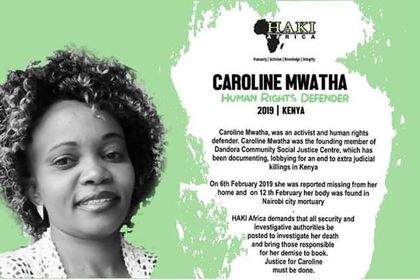
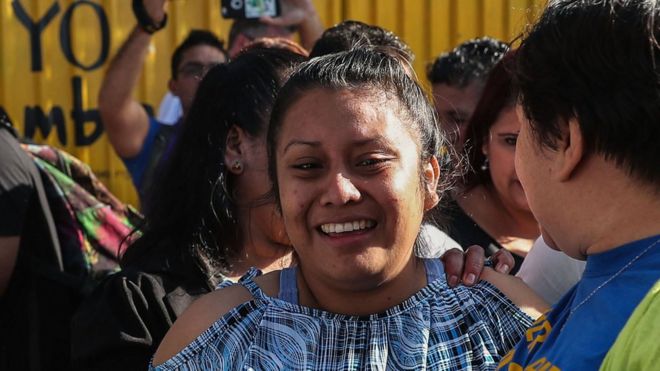
The news this week reminds us that the witch hunt is thriving and in process. In Kenya, human rights defender Caroline Mwatha disappeared and then was found, dead. Police quickly determined that the cause of Caroline Mwatha’s death was a “botched” abortion. While questions abound concerning that report, not in question is the severity of Kenya’s restrictions on abortions and on women’s access to reproductive health care and justice. In El Salvador, yesterday, Evelyn Beatríz Hernández Cruz walked out of the hellhole of Ilopango Women’s Prison, where she had been held for almost three years for “aggravated homicide”, which judgment was based on Evelyn Beatríz Hernández Cruz not having sought prenatal care while she was pregnant. We live in the world that spins between Caroline Mwatha and Evelyn Beatríz Hernández Cruz.

On February 6, Caroline Mwatha was reported missing. Caroline Mwatha lived and worked in the Dandora neighborhood of Nairobi, where she had founded the Dandora Community Justice Centre. Caroline Mwatha was well known for her investigations into extrajudicial killings, specifically, and police abuses more generally. She was a fierce and dedicated human and women’s rights defender and warrior. At the same time, she was a pregnant woman living in Kenya. According to certain reports, Caroline Mwatha chose to terminate an unwanted pregnancy. According to all reports, Kenya is an especially dangerous place in which to make that choice. That danger is caused by especially harsh restrictions as well as by government political policies. In November 2018, Marie Stopes Kenya, the single largest provider of safe abortions in the country, was forced to close its abortion operations. Meanwhile, also last year, the government reported that every year in Kenya about 2,600 women die from unsafe abortions. That’s seven women every dayWhat killed Caroline Mwatha? Evelyn Opondo, Africa director at the Center for Reproductive Rights, put it simply: “Caroline did not have to die. Her death was preventable. She is just one of so many women who are killed needlessly due to unsafe abortion in clinics run by ‘quacks’.” Caroline Mwatha did not have to die, but she was executed by state policy.

In July 2017, Evelyn Beatríz Hernández Cruz was found guilty of aggravated homicide. Evelyn Beatríz Hernández Cruz was a high school student at the time, who was repeatedly raped by a gang member. She became pregnant. She didn’t know she was pregnant. She knew that she had stomach pains, but, because she also was bleeding, she thought she wasn’t pregnant. Then In April 2016, she gave birth in the bathroom of her family’s home. She passed out. When she regained consciousness, she was arrested. At the trial, medical experts couldn’t ascertain whether the fetus died in utero or after the birth. The prosecution maintained that Evelyn Beatríz Hernández Cruz had not sought prenatal care because she didn’t want the child. The judge agreed, and sentenced Evelyn Beatríz Hernández Cruz to thirty years in prison. After a little less than three years in the hellhole of Ilopango Women’s Prison, Evelyn Beatríz Hernández Cruz was granted a new trial. Evelyn Beatríz Hernández Cruz can stay out of prison until a new trial, April 4. Mariana Moisa, of Agrupacion Ciudadana por la Despenalización del Aborto, or Citizen’s Group for the Decriminalization of Abortion, noted, “In 2019 we shouldn’t be fighting for the presumption of innocence when a woman loses a pregnancy. We shouldn’t have to be proving that motherhood is not related to crime. We should have full human rights as Salvadoran women.”

Kenyan activists mourn the death of Caroline Mwatha. Salvadoran activists celebrate the release of Evelyn Beatríz Hernández Cruz. These are pages in the history of the witch-hunt. While both Kenya and El Salvador explain their anti-abortion policies as a consequence of their being “religious”, the tie that binds the two is the marriage of patriarchy and capitalism at whose altar the power and knowledge of autonomous, self-aware women is demonized and criminalized. Caroline Mwatha wanted help, and instead she was given a death sentence. Evelyn Beatríz Hernández Cruz needed help, and instead she was given a 30-year-sentence, which is akin to a death sentence. That’s the modern witch-hunt, and it must end now. It’s time, it’s way past time, to demand justice for Caroline Mwatha, Evelyn Beatríz Hernández Cruz, and all the women subjected to the witch-hunt. Shut it down … now!

Evelyn Beatríz Hernández Cruz 


(Image Credit: Hivisasa) (Photo Credit: BBC / AFP)

When your prison location dictates the services you do and don’t receive

In North Dakota, in 2003, a women’s prison was moved from Bismarck to the farming town of New England. In 2019, the governor is considering moving the women back to Bismarck, predominantly because of claims that it is focusing on the economic impact to the struggling town. For women, the impact would be obvious since they are not receiving the same treatments and rehabilitation as the men currently incarcerated in Bismarck.

The move would have a large impact on the treatments women could receive, especially in comparison to men. For example, incarcerated men receive a wider variety of rehabilitation services unavailable to women incarcerated in New England. These include medical and rehabilitative services; access to medication assisted treatment to help overcome addictions; community access to medical or dental services; care coordination and peer support.

Governor Burgum has contended that the need is obvious, and that the state has the responsibility to treat men and women inmates equally. Responding to problems of wide disparity between inmates’ care, Burgum has instituted a series of reforms addressing corrections and behavioral health services, all of which are meant to improve the women’s prison, a key to the Governor’s desire to transform North Dakota government. 

On the other hand, the incarcerated women have been at the center of a controversy, in which New England residents have protested moving the inmates because of the economic toil it would have on the town. State lawmakers have yet to approve the move. Those opposed to the move are mobilizing; former inmates have spoken out in favor of the move. Townsfolk are not pitted against women inmates clamoring for better services that will take care of them and help prevent their re-entry into the criminal justice system.

Meanwhile, the care they have received out in New England has been inadequate, at best. A pregnant woman receiving methadone treatment for an opioid addiction was about to be moved to the women’s prison, when her doctor intervened to keep her in the county jail, where medication-assisted addiction treatment is available. Without the treatment, methadone withdrawal could have put the fetus in peril and caused a miscarriage. 

90 percent of the women in the Dakota Women’s Correctional Center, in New England, come from communities in central and eastern North Dakota. They come from towns hundreds of miles from New England, and there is no bus service to New England. Three in four of the women have children under the age of 18; more than half of the inmates reoffend as well, continuing a cycle of recidivism for them and harm for their children. 

The Dakota Women’s Correctional Center provides New England with a grand total of 56 jobs, while, according to the Governor, the surrounding southwestern North Dakota has between 800 and 1,000 job offerings. “If it’s about jobs in southwestern North Dakota, we’ve got a lot of unfilled jobs,” Burgum has noted. Governor Burgum insists that the move is about better rehabilitation, giving women the chance to lead better and more productive lives through rehabilitation: “That’s what the focus has to be. It’s not about how we make better prison jobs.” 


(Photo Credit: Chris Flynn / The Forum)

Ending solitary confinement, the problem that doesn’t “exist” in New Jersey

Nafeesah Goldsmith

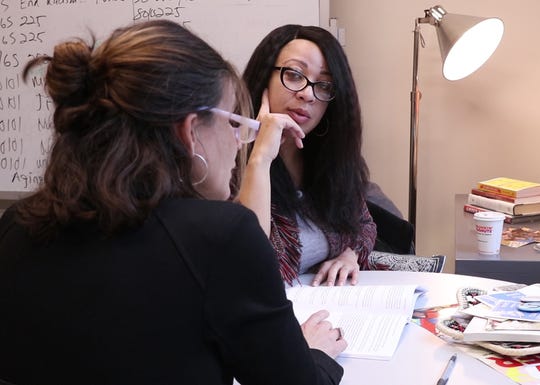
Nafeesah Goldsmith is a community organizer with the nonprofit organization Jersey City Together. She graduated Rutgers University with a bachelor’s degree and is working towards a Master’s in Criminal Justice at Monmouth University. She has been working to curtail the practice of solitary confinement in New Jersey, as she has had first hand experience of its abuse. For nearly 13 years, Nafeesah Goldsmith was incarcerated for at the Edna Mahan Correctional Facility and was forced to spend nearly 60 days in solitary confinement—in the New Jersey State Prison in Trenton, a male inmate facility since Edna Mahan did not have its own isolation ward (now, it does).

There Goldsmith spent two months of isolation, “with the exception of 45 minutes of recreation time, most days, in the prison yard. She said she sometimes went without showering, depending on the mood of the guards. To pass the time she spoke with isolated prisoners through the vents and the toilet, sometimes playing a makeshift version of hangman.” 

For inmates in segregation, the most traumatizing aspect is the dehumanizing treatment they face while in solitary confinement. Goldsmith is still reminded of the anguished cries from the other solitary cells: “You hear nothing but screams and it’s loud and there’s banging. You have people having mental episodes and people having medical emergencies. You have people with seizures and you have people attempting suicide.” That is only some of the horror that people suffer in solitary, or as New Jersey calls it, administrative segregation.

Seizing on the nomenclature of the term for solitary confinement, in 2016 former Governor Chris Christie vetoed a bill to restrict the practice to 15 or 20 consecutive days over a two-month period. The bill would have also sought to exempt mentally ill or pregnant inmates and require daily medical evaluations for those in isolation. His excuse? The piece of legislation, “seeks to resolve a problem that does not exist in New Jersey.”

But the problem very much does exist in the Garden State. Of the roughly 80,000 inmates in the United States currently in isolation, New Jersey holds 1,500. New Jersey ranks fourth in the country in the amount of time it places people in isolation. As far back as 2011 the United Nations claimed such punishment amounts to torture or cruel, inhuman and degrading treatment.

Today, however, there is a turn of opinion in the Garden State, and another bill is back on the table. A-314/S-3261 would have similar exemptions as the bill Christie vetoed, and expand it to include people over 21 and young and 65 and older, and people with developmental disabilities and serious mental conditions. Survivors are telling their stories and forcing others who would not have interacted with the criminal justice system to examine the uses and abuses of solitary confinement. It is forcing the citizens of New Jersey to recognize that we are not treating other people with respect and dignity the moment that they are labeled “prisoner.” 

Nafeesah Goldsmith’s bravery and willingness to come forward with her story, along with those of others, is helping to make significant and positive changes in New Jersey as regards our treatment of incarcerated human beings. She is willing to tell her story at schools, at coalition events, and to anyone who will listen. It’s time we started to listen. 


(Photo Credit: Asbury Park Press / Doug Ford)