In Tanzania, Rebeca Gyumi fought to end `child marriages’, won, and then had to win again … and did!

Rebeca Gyumi

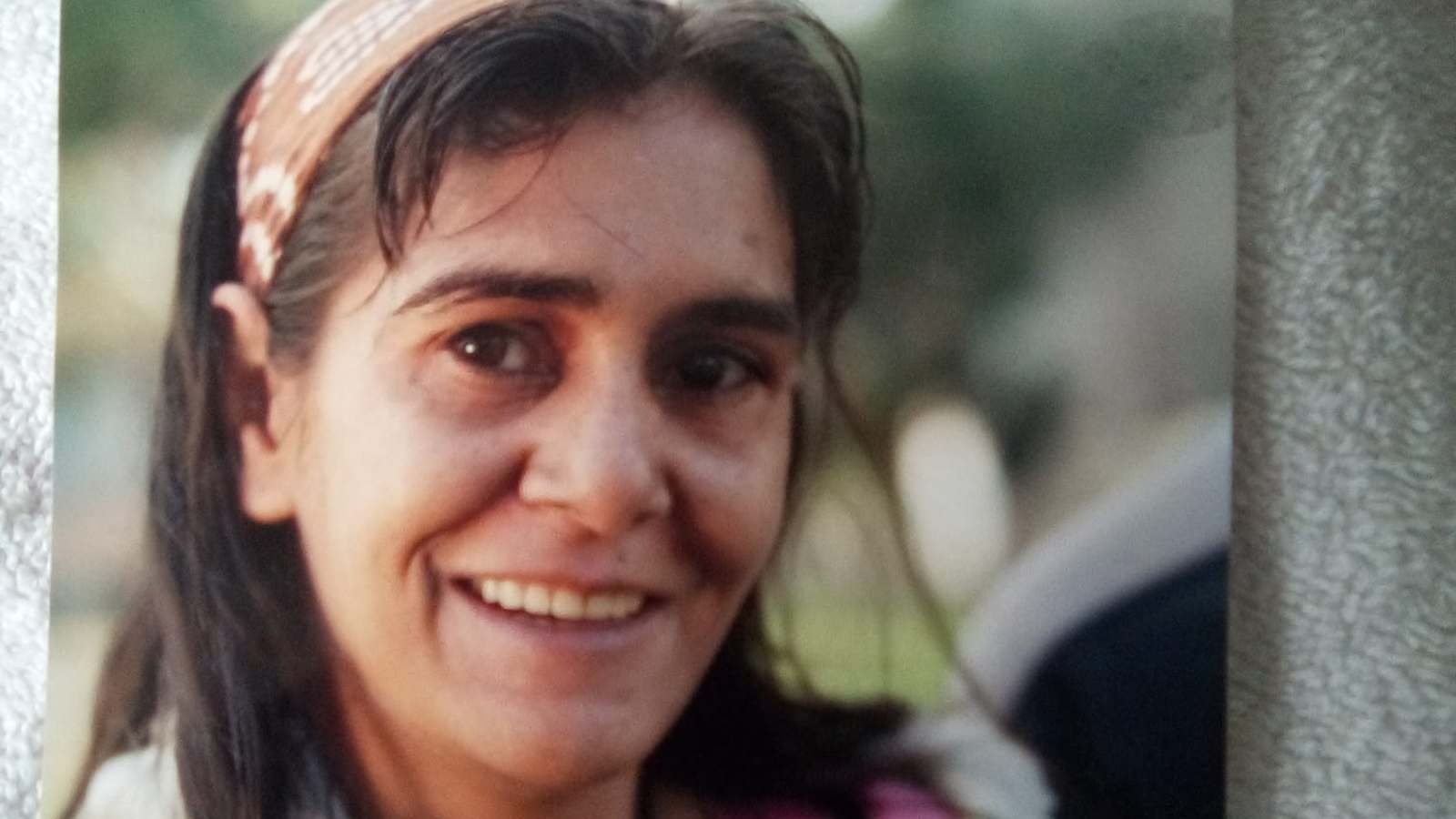
On October 23, 2019, Tanzania’s Court of Appeal ruled that child marriage is illegal … period. The Court ruled that the marriage age for both girls and boys must be [a] the same and [b] 18 years of age. In so ruling, the Court of Appeal upheld a similar decision by Tanzania’s High Court, reached July 2016. At the center of this momentous and landmark victory is Rebeca Gyumi, feminist organizer extraordinaire. A caption for this story could be, “She persisted.” Where have we heard that before? Everywhere!

Here’s the story, in brief. In 1971, Tanzania passed the Law of Marriage Act, which set the age limits for marriage as 18 for boys, 14 for girls. In 1986, Rebeca Gyumi was born in Dodoma, the official national capital of Tanzania, where, according to her own recollections, she saw girls expelled from school because they were pregnant, and she saw the catastrophic consequences of that policy. At a young age, Rebeca Gyumi decided to do something about the situation of girl children in Tanzania. 

Rebeca Gyumi attended and graduated from law school. She founded the Msichana Initiative, whose mission is to advocate for girl child right to education in Tanzania and to make Tanzania a model for other countries in that right. Then, in 2016, Rebeca Gyumi pulled together a team to challenge the Law of Marriage Act. They showed that, at the time, two of every five girls in Tanzania married before the age of 18, making Tanzania one of the “leaders” in rates of child marriage. Despite quite a bit of opposition, Rebecca Gyumi and her colleagues persisted, and, in 2016, the High Court ruled that the Law of Marriage Act was unconstitutional, and the government had one year to fix it. This was a landmark decision and victory … 

And yet … 

In September 2017, Tanzania’s Attorney General formally filed an appeal. Much of the ensuing argument was, predictably, about “Western values corrupting” Tanzania, and in particular Tanzanian girls who were somehow especially vulnerable to, again, “Western values.” That Tanzanian girls might be even more vulnerable if married and denied access to education and other opportunities seemed somehow beside the point.

Rebeca Gyumi persisted, on all fronts. She waged a social and political campaign to both counteract the corruption arguments and to promote a public discussion about the significance of gender equality in Tanzania. Concurrently, she honed the legal arguments, amassing more evidence of the impact of differential limits on marriage for girls across Tanzania. Meanwhile for two years, the government has railed against Gyumi, the High Court decision, and, more generally, gender equality. Remember, this is the same government that has sworn to keep pregnant girls out of school permanently.

This year’s Court of Appeal decision is, again, landmark. Where the High Court left some discretion to the government, now the terms have been set. Additionally, it points to the power of women organizing, organizing, organizing. In that lesson, Rebeca Gyumi has given all of us an important lesson. In 2016, Rebeca Gyumi said, “Changing the law is not the ultimate end to child marriage. Changing mindsets and trying to trigger the shift of customs and traditions is the next thing we are planning to do.” The time is now!


(Photo Credit: Face2Face Africa)

On the abuses of consent

I write the following because I am reflecting on different conditions of romantic relationships. In addition to extreme versions of these abuses taking place when I was raped after my father’s funeral in 2011, there are relatively subtler but also in effect brutal and damaging versions that happen far too often to both me and other people in my life who are in (cis-het and sometimes non imperial) relationships.

1) Having sex with someone when you think you are likely to imminently change the social contract with them but have not told them you have feelings of ambivalence is an abuse of consent. Some people may only desire touch and intimacy if they know what the relation is and have agreed to it and will not have sex (or maybe even desire) if the emotional context does not feel safe enough. Knowing what the relation is and deciding whether it is agreeable is the necessary ground for vulnerability and consent for many people, and trauma and rape survivors in particular. It needs to be understood that consent is not only about people and acts but also about conditions and agreements. If you do not express that you are about to change the agreement you had made with each other, you are robbing the other of their capacity to make an informed decision. Consent taken by stealth is not consent.

2) If you both have agreed to a particular form or style of touch, and you suddenly change it, and the other is upset by this, the act will have trouble converting back into consent unless you discuss and agree retroactively. For instance, telling someone you were feeling elsewhere or overwhelmed, and that’s the reason you clutched or grabbed a part of their body they had specified is sensitive, is not enough. If the other is upset by it, you have to take responsibility for the fact that you violated their trust, and try to figure out why you would engage sexually during overwhelm or elsewhere-ness unless you had together agreed this would be ok. It is also necessary to figure out why or how whatever it was you were feeling took on the form of being violating, inconsiderate, abusive (etc). Furthermore, removing yourself from the sexual relationship, ie “breaking up” or ending the relation, as a response to being confronted is unlikely to get that consent granted. If anything, it will deepen the sense of violation, and worse still, give the message that you had assumed control over the conditions of touch while the other is silenced.

3) Making decisions about how the relationship will change without communicating with the other is to steal their autonomy from them. How can the other accept new conditions you impose if they do not know what that new agreement is? If, for example, you communicate daily, but you wish to not communicate for some period of time, it has to be accounted for with some kind of statement. The other does not exist to play a complicated sleuth game in order to determine your hidden wishes: that is an abuse of their time and mental health. To not communicate changes in the tempo of communication is to impose domination on the other, and to treat them as a lesser being. To not communicate is to impose domination. To withhold feeling is to impose domination. These are triggering and exploitative. They force the other to boil over into emotional excess because the other is now tasked with being the one who feels and expresses for both of you and is then charged with the emotional labor of both of you without having volunteered or signed up for it.

4) If you have hurt the other, but then impose on them your own problems, needs or demands, and you only want to talk about yourself, you force the other to do your emotional work while avoiding the work you need to do to restore them after hurting them. Going into a hole of misery and self-loathing is a self-involved and narcissistic response that costs the other not only by withholding substantive accountability to them but by making them feel worse via revoking their freedom to respond to the pain you inflicted. It is thereby also a silencing tactic. Your self-focus in such circumstances privileges your discomfort and life above theirs, giving them the message that their value, trauma and pain is less important than yours. It is also not the other’s responsibility to protect you from your fallen ideals about yourself.

5) In most collaborative contexts, if you make a creative decision that hurts the other with political implications that violate their positions, and then distract by interrogating them on their political views about creativity, art (etc.), you are neutralizing their capacity to decide whether they want to continue being in association with you based on the grounds of that decision. If, for example, you choose to collaborate with someone who has supported a rapist or been complicit in rapist behavior, you should be very clear that this is your intention so that the other can choose if they wish to continue their work or personal relation with you. Grilling the other on their views about art, putting them on the defensive, suggesting that they are ‘too political’ is an aggressive and controlling approach to you dropping alliances and changing loyalties. It obfuscates and confuses the issues so as to “trick” the other into a complicity they may not choose.

6) To those (usually cis men) who feel “overwhelmed” by the subtleties of emotional demand by the other, or remain shut down and refusing of effort, and feel they would rather find someone ‘like’ them, for example White, complicit, willing to steamroll themselves to be with you: whether or not you end the relation, the other is under no obligation to shut up because you have outlawed or marginalized their feelings whether that’s via you being too ‘sensitive’ to deal with them or for another reason. The other does not need to stop feeling or expressing that feeling because it makes you uncomfortable. If you invoke culture, nationalism or norms to justify regulating communication because you cannot let otherness in, it’s you who have a shadow psychology of the alt-right and/or vocel/incel movements. It’s vital for a social reality against xenophobia that you do your own work with regards to allowing the autonomy of the other to be other, to be expressive or emotional as, when and where they need to be, and, very importantly, until they feel heard. Emotional and expressive people should not be made to feel that cold, distant, objectifying ways of thinking are superior, more legitimate or more rational, nor should they be made to apologize for criticisms of you that you find to be “too much”. Unless the other is actually making things up (which rarely happens), treating their responses as excess or something that needs to be kept at a distance is a form of gaslighting. In this respect wanting to stay in contact only under conditions that communication remains simple or uncomplicated is an act of domination and amputation, and also superiority and arrogance. Making the other fight to express feeling as if they are ‘beneath’ a rational gaze or ‘too brutal’ for an overly sensitive one are strategies for gaining power. They further induce the attachment of the emotional other because they are not only fighting for the right to communicate and be heard, but also to exist as feeling people. With you or without you in the room, this is a form of casual violence that can, over time, break down the other’s sense of equality and viability in the world.

7) The gendered manipulation of what (usually) men refer to as “ultimatums” is a means for diminishing the other’s needs. In few circumstances does anyone willingly sign up for a relation in which their needs will be ignored. If they stress that they cannot remain in contact without particular needs being met, constructing this as an ultimatum is to diminish that importance in order to fabricate a tragedy of you having to do something to make your relation habitable for them. 

8) If you are more interested in preserving your ideals about the self than your impact on the other, you are throwing a human under the bus for an egotistical abstraction. This is even worse and more toxic if you posture as a person who deeply cares about the other’s suffering. Under such circumstances, you are using a false presentation of yourself to gain the other’s trust when you are not trustworthy.

9) If you agree to a contract with the other but materially break it at the last minute, you are stealing the other’s right to pull out of that contract or negotiate as an equal party. For instance, if you agree to a face to face meeting with the other under specific conditions they lay out, but you show up to that meeting with zero intention of meeting those conditions, you have manipulated the terms of the meeting and excised and disrespected the other’s needs.

10) Manipulating situations to avoid your own vulnerability in such a way as to force the other to be vulnerable is an abuse of their consent to be mutually vulnerable together. For instance, not lifting a finger to restore or maintain friendship and then claiming you didn’t know if your attempts would be unwelcome is to create a risk free environment for yourself in which the other has to assume all risk to get anything from you, even closure. If you have already abused their consent in other ways, then their undertaking of that risk damages and degrades them.

This list is by no means exhaustive.

**

In discussions of institutions and bureaucracies, communities of critical discourse have for decades referred to the idea of “casual violence.” In such contexts, formal agencies such as universities, health facilities, housing regulators, intentionally or unintentionally, have few if any procedures in place to engage human needs. Such agencies often use statements about being unintentional and overwhelmed to claim that their actions that have caused human casualties, suffering and pain, are neutral, without agent, or could not have been helped. 

While psychoanalysis has traditionally placed a high proportion of focus on the caretaker or family of a given subject, the family is only one of many institutions to which the subject is exposed. Many of us are born in hospitals, educated in schools, dependent on various infrastructures, and later in life continue to inhabit a large portion of the day in institutional or corporate places of work while navigating other agencies during leisure or down time. As a result, thinking, feeling, being is at least, if not more, ‘born’ and composed by institutional practices that are not the family.  Humans internalize agencies and institutions. In navigating the bureaucracies of the self we must be watchful of how, where and when we use correlate personal forms of casual violence to control others, how we make the other more convenient, justify ill using them, become unaccountable when confronted by them, or get them to meet the needs of the self without reciprocating.

I reject the social reality wide campaign of casual violence that demands that the other should learn more resilience for ignoring her own needs, or accept the confusion of imperial genders that stipulates that violence meted out via “innocence,” unintentionality, lack of precedent or procedure, must be tolerated. Rather it is the imperial genders, often especially White men, who need to strengthen their resilience in the service of being able to deal with being confronted or called out, to aid and listen in conflicts that produce equality, and to recognize that their own situation with the world’s bureaucracies has enabled them to internalize a machine that reduces the other to mere material for their own fulfillment. If one form of toxicity is a masculine rage that habitually refers to enslaving, torturing or killing the other, using the language of military prisons or a brutal history of Catholic discipline and its cinematic derivations, its correlate is the language of the absent bureaucrat who was elsewhere and had nothing to do with a violence that ‘happened.’

How can there be social change if you relegate the other to wandering your own internalized dark labyrinths of inhumane hospitals, disciplinary schools, prison-industrial complexes and churches of rape? The response that says “my damage to you was unintentional, I felt overwhelmed, I had no procedure in place” is both inadequate and structurally violent. If you damage the other, and they have to take on a complex, living and likely painful process that requires them to rebuild, then so must you. You, like them, should desire to undertake in its fullness the invention, difficulty and creativity that healing requires, with the other if they allow it, and by yourself if they do not. 

There may be reasons for a survivor to use a bureaucratic approach, to turn the lights out, to collapse into absence or lack of procedure, to speak through scripts with condescension, in order to fully remove herself from the toxic. It’s a viable and efficient form of protection against abuse and domestic violence. However, the same tactics become a sickening and toxic form of control when the imperial use it against the other in order to maintain for themselves a position of power, to extract the other’s labor, emotions, vulnerability, pliability, agreement or sexuality. 

The bureaucracies of the self that produce “toxic” behavior may be arrived at via means other than malicious intent. To make the net effect not the same, these issues must be dealt with, addressed, reflected on, and fully encountered, not written off with more of the same.

As the author of this piece, I do not claim to have always considered well enough those who were other to me in every instance of my life, or suggest that I make this critique from ‘above.’ Rather, I write this to hold myself to a higher standard, to abstain from practicing the formulaic self-forgiveness that permits imperial violence in order to support my own right to it, a cycle that reproduces an endless sadomasochism of despair, the coldness and cruelty of maintaining narrowed, controlling, mechanical, manipulated and/or starved social bonds. The particular forms of self forgiveness that support the bureaucracies of the self, and its right to exploit and abuse, do not create liberty. 

I write this because I learn. It is when the learning process of relations is refused, toxic behavior and masculinity go from being transient moments to being fixed laws that break down and destroy the other. 

Many of us who are being exploited would like to protect our relationships from these criticisms. In Lacanian psychoanalysis, specifically in the work of Marie-Helene Brousse, the other degrades themselves in order to protect the status of the Master under the conditions of being abused. This means that many of us will try to dig ourselves in deeper with the one who has taken the position of dominance in order to give him the time and space and means to heal the wound and reverse course, if not because he has narrowed our world and broken our self esteem such that alternatives appear far away or unfeasible. It should not be assumed that this further entrenchment, or fear of sustaining further forms of damage, means that damage has not been done and/or is not ongoing.

It should also be stated that bureaucracies of the self need to be attended and scrutinized not out of fear of a lawsuit or a bad reputation, but out of desire to be a full participant in a non-violent social reality, living social bonds, and the possibility for any kind of love as that which founds growth and enables and respects the autonomies of otherness. Social bonds of all kinds, the way we engage, love, fail to consider, casually (or in any other way) violate or abuse others, are our contribution and link in the chains or freedoms of social reality. They are the legacies of the self that will outlast our living and dead presences.

Lastly, the importance of ‘consent’ needs to be extended from the conversation about rape. Rape, as the devastating violation of the life and being of the other, is the flesh and blood of the notion of consent and should not be ignored as its conceptual site of nurture. It’s because of this context, not in spite of it, that consent should be at the foreground of how social relations are thought, and how autonomies are lived. Consent is at the center of any possibility of autonomy because it grants the energy of possibility and limit at every level, radiating from the body outwards. With every abuse of consent, from the officers who steal life, to the hospitals that create more illness under the promise of creating health, to the wars that promise peace, to the lover who uses abuse or control to hide his incapacity to love, comes the further withering of the possibility of collective freedom.

(Image Credit: Firestorm Books)

The heartless in power: Targeting head scarfed women downgrades selected citizens

The first story takes place in France in the regional council of Bourgogne Franche-Comté, a region in the east of France. School children are invited to witness how democracy works. They embark on a fieldtrip. In need of chaperone for the field trip, the school teacher solicits the help of the mother of one of her students. She probably explained that it will be an interesting experience to attend a parliamentary session for the children and for the chaperones as well.

Once seated in the public gallery, she hears a representative from the extreme right wing Rassemblement National, National Rally (RN) Julien Odoul address the speaker of the council demanding the chaperone to remove her “Islamic veil.” She does not need to look around to know that she is being targeted since she is the only one who is wearing a headscarf. He erupts that it is the law of the republic and it is in defense of secularism or even in respect for the women who are fighting for their rights in Islamic nations. His rowdy fellow FN representatives shout at the speaker that it is the law. It is not the law, and, further, his party has never defended secularism and has no track record of defending women’s rights. Blinded by his own fundamentalism and drunk on his own power and authority he creates an environment of humiliation. Humiliation of a woman who is fully part of French society, humiliation for her young son who starts crying and humiliation for the entire school and community.   

The speaker of the parliament, Marie Guite Dufay shocked, retorts: “Are you done yet? cool off now.”

The Preamble of the Constitution states, “The French Republic is secular, (…) it protects all beliefs.” This means the Republic does not favor any religion but relegates all beliefs to the private sector. This also means that under the French law, no one must be discriminated based on their religion or their atheism. This guarantees freedom of conscience and freedom to manifest one’s religious affiliation. Religious freedom presupposes the freedom of everyone to express their religion, to practice it and to abandon it, while respecting public order. This requires for the Republic, and the representatives of the Republic, neutrality in the face of all religions and beliefs. This does not apply to citizens who are free to express their beliefs in the public space in the respect of the public. 

Women facing constant inequality in the west like elsewhere have to be saved by the men of that same society that based its colonial enterprise on a patriarchal view of domination and of redistribution of territories. This event made headlines, and rightwing politicians went on to demand restrictive laws for women who are involved in public life, directly targeting Muslim women. Julien Odoul’s comments were able to put in public space hatred of women’s right to be full citizens and hatred of Muslims, two of their favorite targets!

The second story occurred in the south west of France in the city of Bayonne. An 84-year-old man, a former National Rally member, attacked the city’s mosque, injuring two men who happened to be there. He felt that he had the mission of avenging the destruction of Notre Dame. A high-ranking member of the National Rally (RN), Jean Messiha, disseminated his poisonous question “Notre Dame didn’t burn by chance, the Islamic involvement hasn’t been explored enough.” His allegations are completely false and are part of the war path that has been developed against one group identified racially and attacked. Have we already seen this before? How many more déjà vu before the Global North learns its lesson from history? The city of Bayonne known for being an inclusive municipality immediately expressed its support of its Muslim community. 

The third story takes place in the United States. On October 19, 2019, high school cross country runner Noor Alexandria Abukaram, found out that she was not on the list after she had finished her fastest 5K at the Division 1 Northwest District meet. Abukaram was disqualified on account of her hijab. As Abukaram told Sports Illustrated, “My race is supposed to be under my control, but that control was taken away from me because of my hijab, something I hold so close to my heart. I felt so let down by the sport that I had trained so hard to run in. It was humiliating and embarrassing and upsetting.” Rules have been changed by major sports organizations, including the Olympics, to include the diversity of participants. Why then does the Ohio High School Athletic Association enforce an outdated rule about headgear? Abukaram is asking precisely that, “I’m running just like everyone else. Why should you have to sacrifice your religion and a part of who you are to run, to do another thing that you’re very passionate about?”

Are the United States government’s current policies, such as the travel ban for Muslims and surveillance of Muslim families, now reaching their long arm into the arena of sports by attempting to exclude Muslim athletes who wear the hijab? This is not paranoia, but policy that is destructive of democracy.

These rightwing attacks on Muslim women are part of a war machine to impede a targeted community from living as full citizens in their countries. Targeting women in order to rally for some nationalist ideal has become the de facto line among right wing groups. If the chaperone had been a man wearing a beard, would the RN representative have articulated insulting comments? Imagine the result if an RN representative shouted, “Man with beard, shave it at once! It is against the law!”Destabilizing civil society is always a way to keep neoliberalist doctrine controlling the world. According to theorists Gilles Deleuze and Felix Guattari, “Fascism is when a war machine is hidden in every niche, when in every nook and in every cranny of daily life a war machine is hidden. This is fascism.”

Instagram / Twitter

(Photo Credit: Luis Galvez)

In the Streets of Chile, the People are Singing: El Derecho de Vivir en Paz

Under the military dictatorship of Pinochet in the 1970s, economic austerity was placed on the people of Chile. Under the guise of reform, neoliberalist measures on the people of Chile were implemented, resulting in widespread economic hardship and massive wealth inequality. For thirty years, the working class and indigenous populations in Chile suffered under Pinochet’s market-driven economic model, which privatized pensions, health and education. Unions were decimated as was the public education system, and public services were shifted to private enterprises. Chile remains a country with the highest cost of living in South America and is considered one of the most unequal in the Organization for Economic Cooperation and Development group of nations. 

The recent uprising occurring in the country began as a protest against a hike in metro ticket prices and quickly escalated into a massive revolt against the significant income inequality in the country. The proposed transit fare rate would have risen to nearly 1.20 a ride, a 4% increase; a significant burden placed on low-income families who spend 13% of their budgets on transportation, and retirees who are forced to survive on a pension that is below the minimum wage. 

The response to the simmering anger over the rising cost for the poor and old? That they just get up earlier and leave for work before seven in the morning to avoid paying the rush hour rate. Now after a million people took part in a demonstration on October 25th, thousands of other protests from poor, young, students, indigenous populations, and union workers, the government has finally realized that squeezing more money and work and time out of the poor may not be the most competent economic model. 

Piñera has walked back on the neoliberal policies that have entrenched inequality in Chile, but they are not enough. As the last nail in the coffin of Pinochet’s cruelty, his constitution is echoes the continuing destruction of working people and the elderly in the country. While Piñera has moved to raise the minimum wage and pensions, demand pay cuts from government officials, and fired his entire cabinet, many see these gestures as token and symbolic at best – Pinochet’s constitution is still in play – and have demanded a truly democratic society, where the power is not vested only in the hands of the wealthiest and the out of touch. And the people are not backing down, even after the president’s paltry promises.

Meanwhile, how are American citizens reacting to our overwhelming inequality; where are the uprisings that should have been in place after the NYC’s fare enforcement? Where is the anger when poor men and women are tackled and tased for not paying $2.00 while the city employees four cops at almost $80,000 a year to brutalize them? Will we ever be as revolutionary, or will it happen too late?


(Photo Credit: CanalC)

Tell me why (Moody’s)

Tell me why (Moody’s)

Tell me why
we are to join
the dubious ranks 
of the downgraded

(I mean the country
has just been upgraded
to number 1 as it beat
England in a little game)

Tell me why
we seem to be 
your whipping boy
responsible for all
the ills of planet earth

We are not after all
bombing invading
or waging war 
against any country 

(we are only at war
with ourselves and
our women and children
not to mention those
who don’t look like us)

there is concern in Soweto
about Marathon runners’ safety
was the Ethiopian winner at risk
what with an politician waxing on 
about different cultures and races

and an amnesiac sports presenter 
says at the end that the rugby win 
was for the whole of Africa
(where has she been most recently)

Tell me why
Moody’s

is it the economy
stupid

Domestic workers organized, and the Philadelphia City Council passed a Domestic Workers’ Bill of Rights!

On Wednesday, October 31, 2019, the Philadelphia City Council unanimously passed a Domestic Workers’ Bill of Rights. Officially, the City Council amended a chapter in its “Fair Practices Ordinance: Protections Against Unlawful Discrimination.” The Council amended the chapter entitled “Promoting Healthy Families and Workplaces,” by adding a new chapter, “Protections for Domestic Workers,” “all to provide protections for domestic workers and to establish remedial and enforcement provisions, all under certain terms and conditions.” 

As the City Council put it, this “landmark” legislation “provides protections and rights for domestic workers that will give the city one of the strongest laws in the country.” The bill’s principal sponsor, City Councilwoman Maria Quinoñes-Sánchezexplained, “The women have bravely told their stories about non-payment and sexual harassment, and despite their challenges whether they are undocumented or not, they have helped us put together not only the best piece of legislation, but a task force that is going to ensure the implementation with a comprehensive education campaign.” Director of the Pennsylvania Domestic Workers Alliance, Nicole Kligerman, added, “Domestic workers have been excluded from all labor protections in the history of the U.S. Today, for the first time, Philadelphia domestic workers have won the same rights and protections that all other workers have in Philadelphia. We’re the largest city to do so and it’s the best law in the country.”

Nine states have passed versions of Domestic Workers’ Bills of Rights: Oregon, California, Connecticut, Illinois, New York, Massachusetts, Hawaii, and Nevada. This year, Seattle also passed a Domestic Workers’ Bill of Rights. Each version is more expansive, more specific. In July, Senator Kamala Harris and Representative Pramila Jayapal introduced the federal Domestic Workers Bill of Rights Act. From coast to coast, state by state, city by city, the racially based exclusion of domestic workers from the dignity of labor protections is being challenged and overturned. 

At each turn, domestic workers have exhibited organizational prowess and extraordinary courage and bravery, as Councilwoman Quinoñes-Sánchez noted. While domestic workers’ courage and bravery is admirable, why must they be heroic in order to attain the basic rights workers are meant to have? What is the regime of intimidation and, at times, terror that blankets the work and labor of care givers, nannies, and housekeepers? How will we pay for the decades of pain and suffering inflicted on mostly women of color, all in the name of “economic growth”, all the while chanting the “our” domestic workers are treated “like one of the family”?

These are questions for down the road. But for now, it’s time for celebration. In October 2019, South African domestic workers won a major victory in the courthouse, and Philadelphia domestic workers won a major victory in the City Hall. Both of these victories are landmark events that expand and deepen domestic workers’ rights, dignity and power everywhere. The struggle continues.


(Photo Credit: (Tim Tai / Philadelphia Inquirer)

Apartheid gentrification haunts Cape Town and the world

Last Monday, Reclaim the City reported, “Reclaim the City has been approached by a woman (who wishes to remain anonymous) whose rent has been increased by the City of Cape Town (‘the City’) by more than 2000%. She has rented a City council home in Salt River from the City of Cape Town since 1995. When her and husband moved in, they signed a lease agreement with a rental of R220 per month. The house was an uninhabitable mess. Over the years, they improved, fixed and maintained the property at their own expense. Due to minor rental increases, her rent is now R243.81. She has never defaulted on her monthly payments and has lived happily in her home for the last 24 years. In August 2019, the City of Cape Town sent her a letter saying they are increasing her rent to R5 500 per month. This is an astronomical increase from the R243 she is currently paying.” For millions across the globe, this is an all too familiar story, but what exactly is the story? In what world is it acceptable that anyone receive a rental increase notice of more than 2000%?

1995, Cape Town. Apartheid is officially ended, and, across the country, the new South Africa is on everyone’s lips, minds, and hearts. Reconstruction and Development Programme community flora are meeting everywhere … or almost everywhere. There’s a new President, a new Parliament, and a new dispensation.  A rainbow hovers over the nation and over the Mother City, as Cape Town is called.

While some of this picture is accurate, missing are the plans to “re-develop” Cape Town, to turn Cape Town into a thriving “global city”, replete with a metropolitan economy largely driven by real estate development. In the midst of all this, a couple move into public housing, twenty-four years ago, in the working class neighborhood of Salt River, a neighborhood known largely for second-hand shops, a diverse array of working class communities, and Community House, a center for community and labor organizing. It’s also known for the empty textile and garment factories that closed during the 1980s, when the apartheid regime invested heavily in Export Processing Zones that gutted the vibrant garment and textile economies of the Western Cape.

So, this couple moves in, signs the lease, fixes the place up (at considerable expense to themselves), never misses a payment, makes a home for themselves and for their neighbors. This couple survives and makes a life of dignity and self-respect. For their great labors and contributions to the municipality’s well-being, they are rewarded with amounts to an eviction notice. 

The couple have appealed, Reclaim the City and their supporters are organizing to help them remain in their home, the City continues to threaten eviction. Given the recent pattern of “spiraling” evictions in the Cape Town region, this comes as no surprise. As Reclaim the City notes, “If anyone needs more proof that the City is anti-poor and anti-black, this woman’s exorbitant rent hike is case and point.”

Anti-poor, anti-Black and committed to growing inequality as the key to urban development. For millions across the globe, and especially those living in so-called urban cities driven by service sector economies and predatory real estate development, this is an all too familiar story. But what exactly is the story? Remember, this working-class couple in Cape Town live in public housing. Their landlord is the City. The City raised their rent by over 2000 percent. When they responded and asked for help, the City threatened them with eviction. In this instance, eviction is exile, because a couple seeking to pay less than 300 rand a month won’t find anything anywhere near livable in Cape Town. 

What is public housing, if this is how the State acts? What is the public, if the State has committed to exploiting, oppressing and, if all else fails, assaulting the working populations who make it possible for the Public to function? What exactly is the story? That question has been answered recently in the streets of Ecuador, Sudan, Chile, Lebanon, Hong Kong and beyond. This story is not yet over, neither the local one in Cape Town nor its global counterpart; the struggle continues. Apartheid gentrification, gentrification that condemns working people to forced removals to distant regions, haunts the world. In what world is it acceptable receive a rental increase notice of more than 2000%? Our world. Another world must be possible.


(Photo Credit: Twitter)

The heartless and immigrants: Blindness about the reality of healthcare in the United States

Let’s examine what the heartless are doing. From his position of power, Trump made a de facto decision, issuing a proclamation, on October 4, 2019, that immigrants coming to the United States will have to purchase private health insurance or prove that they have enough funds to pay for their healthcare cost. Taking effect on November 3, this will concern visa applications.

Trump’s position about making immigrants and asylum seekers pay for their health insurance is based on the Republicans’ view of discriminating between who lives and who dies, which life is valued and which life is not. He tweeted, “Let’s take care of our own instead of paying for the undocumented.” But that’s wrong. Let’s look at the numbers of Americans who have been neglected by the health care system: the poor, African Americans, youth, the aged, people who work multiple jobs without benefits, the homeless, the unemployed and precaritized women. Since the health care system in the US is based on private policies that are profit driven, health itself is the casualty. What’s more, there is a false notion harbored by many Republicans that the United States would receive an influx of medical tourists if we offered healthcare to all immigrants entering the country. The reality is that the outrageous health costs force many American citizens to seek care as medical tourists in countries like Mexico, Thailand, India and many others.

So why pit immigrants against citizens and residents? 

Trump’s decision fuels the anti-immigrant sentiment and rhetoric that have permitted the most cruel actions against people looking for safer ground. Between 2016 and 2019 under the Trump administration the number of immigrant deaths detention centers has increased due to ICE’s poor medical standards. As Human Rights Watch has described:  “ICE has proven unable or unwilling to provide adequately for the health and safety of the people it detains.”   These detention centers are expanding across the country. This part of the business of controlling bodies at the border is based on violence, humiliation and redefinition of bodies, as children are put in cages and babies are snatched from their mothers’ arms. Achille Mbembé has developed the concept of borderization to address the treatment that has been randomly applied to undesirables, to immigrants’ bodies, in our world of quantification and digitalization, leading to division between immigrants and citizens who are as a result oblivious to their own deprivation of rights and health care. 

It is crucial to note the heartlessness of the Trump administration’s treatments of immigrants at the border. Although ICE declares that its medical care in detention centers has in fact improved under the Trump administration and provide statistics to support their claim, many organizations including Human Rights Watch provide different detailed accounts that show the rise of immigrant deaths, children and adults, as the result of untimely and poor medical care. Meanwhile, the Trump administration seeks to expand immigration detention centers, which will put more people at risk.  

This dehumanization of the undesirable migrants is occurring around the world. While in France, under the “Fight against Exclusion” program the state provides free health care, Aide Medical d’Etat (AME), to undocumented immigrants with immediate coverage for minors, the conservatives have been calling this program into question. The Health Minister immediately declared that this program is “an absolute necessity”; nonetheless, the President agreed on an audit of the program that can open it to lowering the level of coverage. France is one of the rare if not the last country to provide health care to undocumented immigrants. 


(Image Credit 1: Immigration Impact) (Image Credit 2: Mitch Blunt / Human Rights Watch)

South African domestic workers win in court, expanding domestic workers’ rights everywhere!

Sylvia Mahlangu, Maria Mahlangu’s daughter, in court

Great news from South Africa! Yesterday, October 17, 2019, the Gauteng High Court ruled that domestic workers injured on the job in the past can claim damages, under the Compensation for Occupational Injuries and Diseases Act, COIDAThis ruling includes the family of Maria Mahlangu, a domestic worker who had worked for the same family for twenty years. While washing windows, Maria Mahlangu slipped, fell into the pool, and drowned. Her family received no compensation. More the point, the family offered no compensation and the State, at that point, excluded domestic workers from COIDA. On May 23 of this year, the North Gauteng High Court ruled that that exclusion was unconstitutional, but they did not rule on those who had been injured prior to the ruling or in past jobs. Yesterday’s ruling clears all that up. The Court ruled that the Constitutional invalidity of the exclusion of domestic workers means that all domestic workers are due unlimited retrospective COIDA compensation. The case now goes to the Constitutional Court. Today, we must celebrate, support and give thanks to all those domestic workers and domestic worker organizers, past and present, who brought the Court to make a decision. They refused to bargain with the State, and said, simply and directly, “Our rights are non-negotiable.”

Founding member of the United Domestic Workers of South Africa (Udwosa), Pinky Mashiane, said, “This is a victory for us and we will now approach the Constitutional Court with confidence that it will also rule in our favour. Government had denied domestic workers their right for a long time as it discriminated against us. We will move forward with the confidence that those injured on duty and the families of those who had died, will at long last receive compensation.”

In July, Myrtle Witbooi, the President of the International Domestic Workers Federation and General Secretary of the South African Domestic Service and Allied Workers’ Union, explained, “The government ratified International Labour Organisation Convention 189 (dealing with the rights of domestic workers worldwide) in June 2013, which meant that they had a year to include domestic workers in COIDA. We had several campaigns, but all we got were promises. In 2016, the government told the ILO that COIDA would be extended to domestic workers, and it was gazetted in 2018. It is now 2019, and we are still waiting … While we have been fighting for domestics to be included in COIDA, many women have lost their lives or have been injured while on duty and have received no compensation at all.”

Pinky Mashiane and Myrtle Witbooi have called for expanded and deepened support for their campaign from all social justice sectors in South Africa. Hopefully, many will heed and respond to the call. At the same time, this is a case that crosses beyond the borders of South Africa and beyond the African continent. Many countries across the globe, including the United States, continue to exclude domestic workers from labor laws and from labor law protections and rights. That time is coming to an end. Domestic work is decent work, and domestic workers demand recognition, formal recognition, of the dignity of their labor. Tell your family, friends, colleagues and neighbors about Maria Mahlangu and about this week’s decision. Remind them that the struggle continues, and as it does, it expands the horizons. Amandla!


(Photo Credit: Zelda Venter / IOL)

Mots Écrits: déterrer les mots des femmes, archives de femmes, histoire de femmes: les féminicides (2)

La poétesse Pramila Venkateswaran écrit des poèmes féministes qui avec humour et rigueur parlent de la vie des femmes et de leurs batailles pour leur émancipation et leurs droits. Pour elle son travail n’aurait que peu de sens si elle ne pouvait pas le lire à voix haute ce qui lui permet d’entrainer son audience dans l’expérience du poème en faisant vivre le texte.

Pour Mots Écrits il importe de donner vie aux archives de femmes, histoire des femmes qui étaient emprisonnées dans des cartons d’archives. Le son des voix donne à ce texte venu d’outre-tombe une vie sans filtre tel qu’il est. Sophie Bourel explique «on tire le bouchon de la lampe du génie et d’un coup il y a quelque chose qui surgit; c’est ce parfum-là, cette vie-là, cette trace et c’est cette trace qui va réveiller l’imaginaire des spectateurs qui ne font qu’écouter ce que la personne lit. Les archives deviennent vivantes!» 

Mais avant de pouvoir lire à haute voix, il faut constituer le corpus de textes. Quand nous l’avions rencontré un matin, c’était une belle journée pour elle, elle venait de recevoir des documents d’un département français. Elle nous accueillit avec un bonjour de joie comme si elle venait de découvrir un trésor. 

Ce qui l’avait réjoui était l’arrivée d’une archive anonymisée comme elles doivent l’être lorsqu’elles viennent de fonds d’archive de moins de 75 ans. Il s’agissait d’un crime sur une femme survenu après des années d’alertes et comme encore aujourd’hui une femme qui se retrouve seule devant son agresseur qu’elle ne connait que trop bien. Le 16 septembre 2019, la 105ème victime de féminicide de l’année, a été frappée par son ex conjoint de 14 coups de couteau, au Havre en plein jour dans un supermarché devant ses enfants de 2, 4 et 6 ans. Elle s’appelait Johanna. Elle avait déjà déposé deux plaintes dont la dernière en aout 2019 toutes deux classées sans suite. 

Les femmes victimes de féminicide ont prévenu, appelé à l’aide, et elles sont restées seules, elles sont mortes, abattues avec un fusil de chasse, une arme à feu, poignardées, étranglées, battues à mort. 

Au début de son travail Sophie Bourel voulait mettre en relation toutes les femmes tuées de façon similaire à travers les temps. Elle avait créé une liste de tombeaux, comme elle l’avait appelée, de femmes tuées, il y en avait 78 puis 80 et cela ne s’arrêtait pas. L’idée était de former une sorte d’écho, entre la femme tuée il y a cinquante ans ou avant et la femme décédée de la même manière en 2019, elle voulait les relier dans la mort par le mode opératoire, par le lieu où elles avaient été trouvées, etc. Et puis son projet a évolué. Sans renoncement, elle l’a transformé en raison de l’inévitabilité des meurtres de femmes, du caractère inexorable du décompte des corps tombés sous les coups des hommes. L’artiste constate que la liste des femmes féminicidées en 2019 ne s’arrête jamais.

En poursuivant sa recherche dans les archives, elle s’est aperçue que les assassinats de femmes au 19ème siècle étaient si nombreux que les mises en relation entre femmes féminicidées auraient été incommodes et « de toute façon cette liste n’a ni commencement ni fin» précise-t-elle.

La composition du corpus est la vraie difficulté du projet; il faut une diversité d’archives, de matériaux, pour que 50 minutes de performance de lecture à voix haute ouvrent les consciences, les réflexions sur l’omerta qui a si longtemps régnée sur la vie des femmes, leurs histoires invisibles. 

De ce travail de puzzle elle veut montrer que les morts sont chargées de signaux sociétaux qui en disent long sur le silence entourant la subjectivation des femmes. L’artiste se demande pourquoi nous en sommes toujours là. Ce qui lui est intolérable c’est ce système qui consiste à faire d’une différence une hiérarchie ; suivant les mots d’Édouard Glissant, elle ajoute, «je cherche donc à agir dans mon lieu et à penser avec le monde dans lequel je vis.»