When the neoliberal and globalization creed meets the virus

Did we see it coming? In the United States there was a presidential campaign taking place along with social unrest, immigration unrest and wall building. In Europe, countries were passing laws either to exclude people in exile, or people in vulnerable position, with no alternative! Then the novel coronavirus came to life creating Covid 19. We call it now a corona virus crisis. A new crisis in the series of crises that capitalism has been feeding itself from. At the beginning it was a Chinese made virus. But China is the iconic representation of globalization and all a sudden everything was in shambles. 

One should make the connection between globalization and the development of neoliberal economic dogma. However, this dogma initiated after WWII as the colonies were engaged in a struggle for independence from the imperial war mongering West, did not always exist. The response to the independence of former colonies was the creation of this new dogma of globalization, based also on the Western yearning for universalism. Toni Morrison reminds us that globalism “understands itself as historically progressive, enhancing, destined, unifying, utopian”. That is how it forms its delusional promise to allow itself to create a dehumanized system of deregulation, globalization and total competition. 

In the mid 1980s, Structural Adjustment Programs, SAPs, were imposed on poor countries, sometimes former colonies of the rich countries, often rich in natural resources needed in the rich countries. These SAPs were designed according to the logic of the Washington Consensus (growth at all cost and at the expense of public social services) to justify globalization. The IMF and the World Bank provided loans to poor countries under the aegis of development, but these loans came with conditionalities that required repaying these high interest loans in priority rather than developing social and health services. This complete overhaul of social structures with the development of competition for markets undermined women’s economy and women’s position.  

The Ebola virus outbreak in the 2010s shed light on the cruelty of these programs. By the same token, the austerity measures following the same neoliberal economic orthodoxy similarly stoked the elimination of public services in richer countries. The current pandemic, with the risk of infection as a common denominator, has reunited every social class and gender, with some variation according to age; therefore, it has become an international source of anxiety especially that the rich countries have become the epicenter of the epidemics. 

The national responses are different, as, for example, when the contamination of the virus is progressing rapidly in the US due social factors such as lack of a public-run health care system, lack of protection for workers under US labor laws, lack of social services, lack of access to medications. Only now is the US government considering paid sick leave for a number of people who are quarantined and whose jobs are on hold. The US hospital system has the fewest number of beds per 100 among the developed world.  The US pharmaceutical industry depends on its products and ingredients from companies in India and China. Tests for coronavirus are not widely available to identify people affected by this highly contagious disease. In the US only 11 000 tests were administered in the past few days whereas South Korea uses 20 000 tests every day.

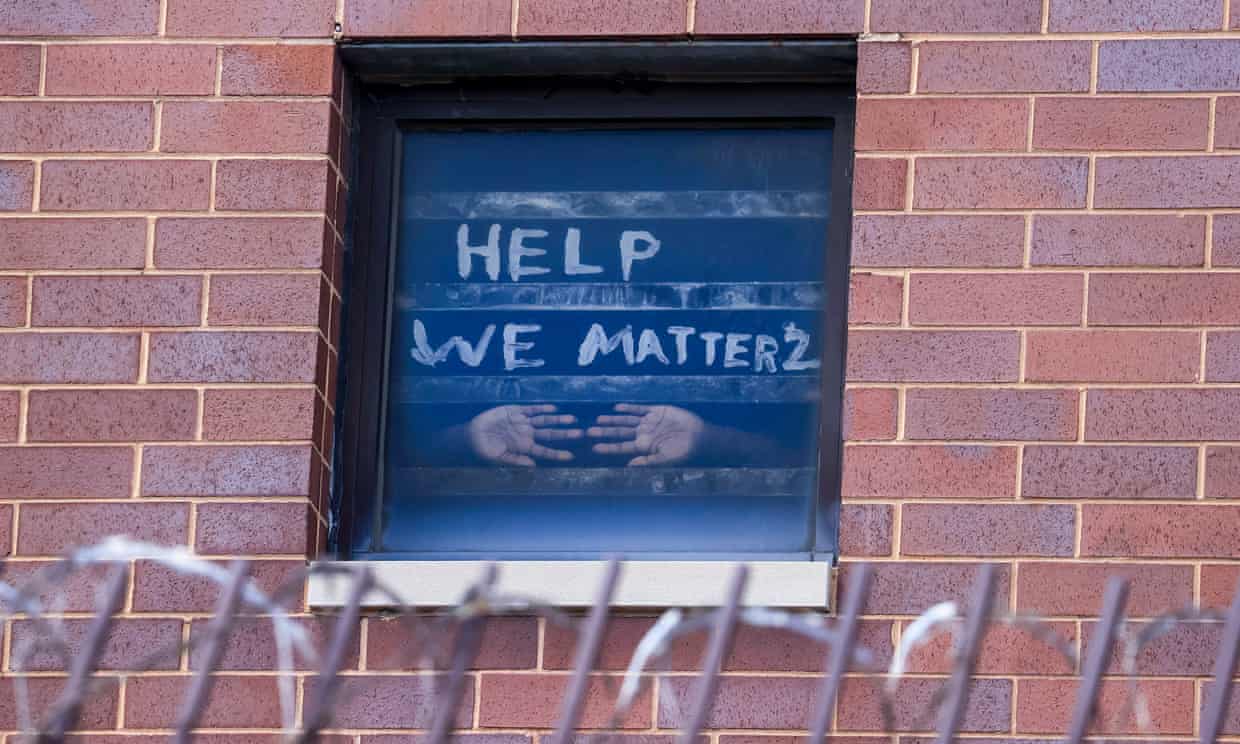
If one wants to measure inequality concerning access to health care, one should look at the prison and immigration detention systems. “From a public health perspective, prisons [are] so dangerous because they’re overcrowded and their systems of care provision, such as they are, have intentionally gone from bad to worse”

This coronavirus pandemic reveals how a government’s callous disregard for human life and the environment relies on its “capacity to decide who may live and who must die.” Only this time the powerful are caught in their own game.


(Photo, image credit: Robert Metz and Matteo Paganelli)

Seclusion rooms, prisons, jails: The empire strikes back

In schools across the United States, seclusion rooms exist as a “last resort” practice for educators to restrain and lock “misbehaving” children in isolated rooms. This practice criminalizes behavior at an early age and normalizes the use of solitary confinement. Data on the use of seclusion rooms is often underreported or nonexistent, making them hard to regulate. In Wilmington, North Carolina, for example, there were over 930 reported instances of seclusion reported in Hanover County in 2019. The school district failed to include protocols for these seclusion rooms as well as a crisis management plan on how to meet the needs of children in their yearly handbook. A lack of accountability accompanies these failures. How often does absence of data excuse action? 

With seclusion rooms currently under the spotlight, there have been efforts across the United States to control their use through legislation. On March 4th, Missouri legislature made strides in a House Bill (HB 1568) that would establish a ban on seclusion and restraint rooms “except in cases where there is imminent danger to the student or others”. Who decides the exception?

Recently, it was reported that high schools in Leeds, England place students in isolation rooms for doing as little as forgetting books or wearing earrings. How does punishment for actions as minor as this in the education system set a precedent for how individuals are treated by the state as adults? 

While legislation to address the use of seclusion rooms is a step in the right direction in terms of initiating conversations and setting precedent, it does not ensure they won’t continue to be used and abused. This exception is seen in cases facing the courts in the United States right now that impact women, such as the recent prosecution of Harvey Weinstein. His sentencing may have shed light on the issues of sexual harassment and misconduct, but it isn’t a cure-all for the deep rooted problem of why it exists and persists. Loopholes and justifications of abuse will continue, especially against women and people of color. How can we make sense of that and move forward knowing that most women behind bars have been victims of physical and sexual violence or other trauma? 

How much persistence does it take to dismantle structures and systems? 

The Atlanta City Detention Center, a Georgia jail for minor violations such as walking in the roadways or shoplifting, was shut down in May 2019 following years of organizing efforts by Women on the Rise. Led by women impacted by the criminal justice system, Women on the Rise spent years organizing to prevent and repeal legislation that funneled many into the jail. Built in 1996, the jail was intended to hide undesirable residents including the homeless during the Olympics, a testament to how individuals in the city were/are grouped and deemed disposable. 

Across the country, 75% of people housed in jails aren’t convicted of a crime and are awaiting trial. If women are the fastest growing populations behind bars, and women of color make up approximately two-thirds of that population, what impact does that have?

The prison system doesn’t function like a recycling center, but a garbage dump. Actions and behaviors of individuals are not assessed for mitigation but deemed unworthy of salvaging. Even short jail time puts individuals, particularly women of color, at risk of losing the security of their jobs and their homes both in the present and the future. It’s a branding that lingers through the presence of the checkbox on job applications and federal documents that accompanies the question: “Do you have a criminal record?”

Why is it okay to uproot someone from their community without justifiable means, assuming their life is expendable? So many individuals with low income jobs worked their way to be where they are. They can’t afford to spend time in jail, and they can’t afford to miss work. 

Now in a sudden global health crisis with the novel coronavirus outbreak, it is predicted that the lack of paid sick leave in the United States will make the epidemic even worse. What happens to single moms with multiple jobs and lower incomes that can’t work remotely or afford to take off work? These systemic issues are manifesting into health concerns, but it isn’t anything new. Roughly 25 percent of workers in the United States do not have paid sick leave. On top of that, no federal legislation has ever been passed for paid family leave. What impact does that have on women? Job security in the hands of the employer leaves workers with little or no choice.

It’s almost as if these issues are being brought to light not out of concern for those impacted by them, but out of concern for the well-being of the rest of the population. They are a threat. It’s as if the argument is being raised that in a wealthy democracy, there should be a mandate for paid leave…but not because it’s the right thing to do, but for the public safety of everyone else. It’s a protection of the empire. 

(Photo Credit: Workers World / Women on the Rise) (Image Credit: Communities Over Cages: Close the Jail Atlanta)

Do you (wash your hands)

Pilate washing his hands

Do you (wash your hands)

Do you 
wash your hands
in these trying times

of the politricking
not just from those
financially ahead
at the royal feeding trough

there are soothsayers
and clever-dicks and all
those who phone in
incessantly to radio stations
and pen social media epics

Do you 
wash your hands

You who are
Unemployed and Unwashed
(even Poor and Unshaven)
Malnourished and Starving
Unhoused and Landless
and Illiterate too to boot

Do you
wash your hands
of Gender-Based Violence 
and all that goes with it
(is there a Gender Audit)

Are you stocking up
on toilet paper and batteries
and baked beans and the like
perhaps even travelling points

as you daily go
from your dark place
to light

as you daily go
from the ghetto
of your mind
to that of others

Do you
wash your hands
of all of this

and look at yourself

Pilate Washing his Hands

(Picture Credit 1: The Metropolitan Museum of Art) (Picture Credit 2: The Tate Gallery)

Covid Operations: What happened to a half century of mass incarceration? Covid-19

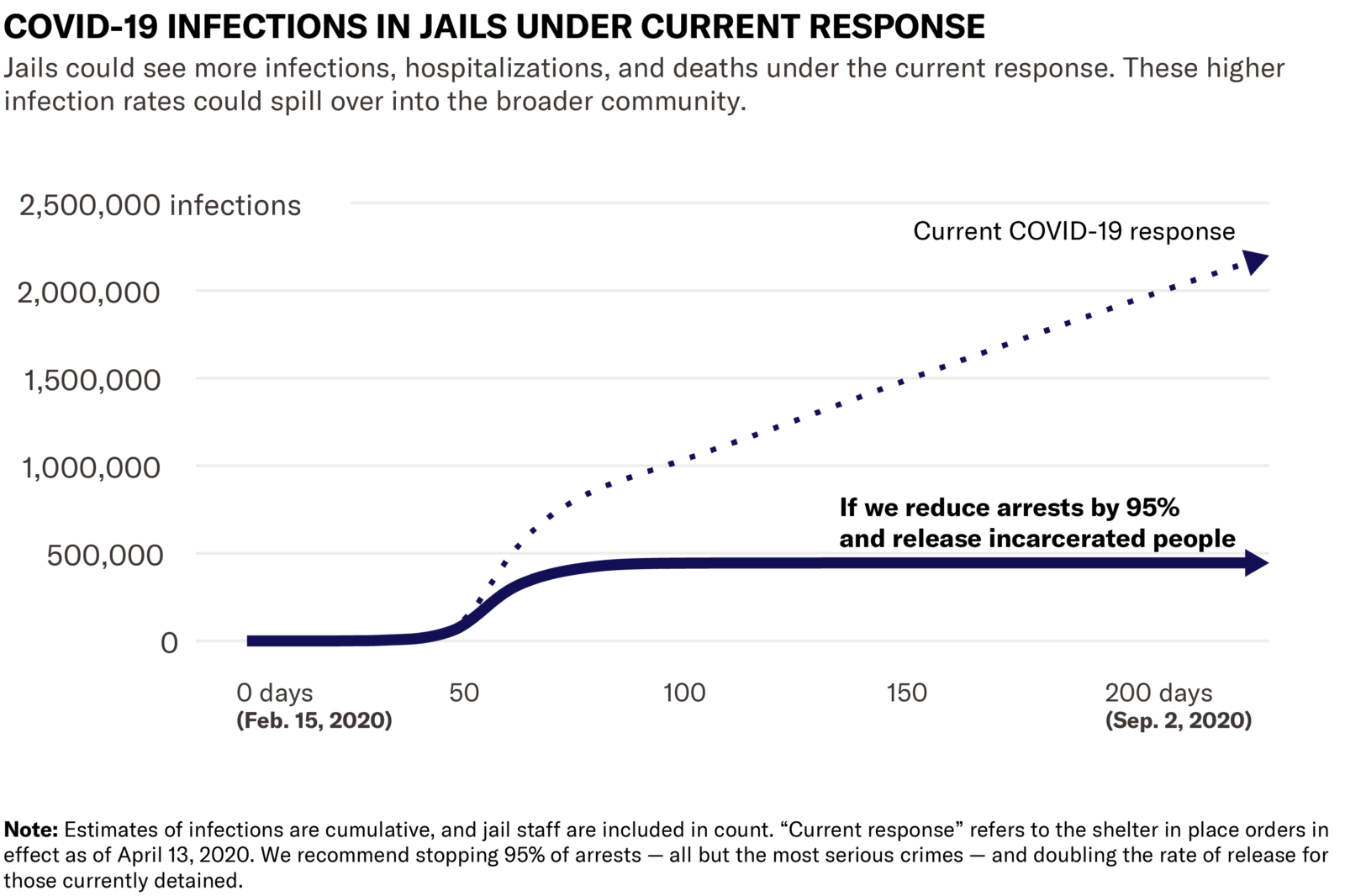
In the past week, news agencies and advocacy organizations have discussed the role of prisons and jails in spreading the novel coronavirus. Some are longstanding advocates for just solutions to the incarceration crisis; others, especially news agencies, are just now `discovering’ that prisons, jails and immigration detention centers form an archipelago of infectious morbidity and mortality. Headlines from the past three days include: To Arrest the Spread of Coronavirus, Arrest Fewer People.  Visits halted in federal prisons, immigration centers over virusHow Coronavirus Could Affect U.S. Jails and PrisonsPrisons And Jails Worry About Becoming Coronavirus ‘Incubators’Our Courts and Jails Are Putting Lives at RiskTo contain coronavirus, release people in prison. In Virginia, the Legal Aid Justice Center noted, “Adults and youth held in Virginia’s prisons, jails, and detention centers are particularly vulnerable to the spread of disease and deserve to be protected with adequate sanitation and medical care or, if possible, be released.” England and Wales developed “emergency plans to avoid disruption” in their prisons. Also in England, immigrant advocates called on the government to release hundreds of immigration detention center detainees, noting, “There is a very real risk of an uncontrolled outbreak of Covid-19 in immigration detention”. In France, prisoners, supporters, staff, and advocates are concerned and see no way out of coronavirus running rampant through the prison system.

While this attention is welcome, the question that lingers, and haunts, the current carceral controversy is, “Why now?” Public health researchers have long documented prisons’ role in the spread of infectious disease. From a public health perspective, prisons so dangerous because they’re overcrowded and their systems of care provision, such as they are, have intentionally gone from bad to worse. A half century of mass incarceration married to a global programme of austerity has left us with prisons waiting to pump out HIV and AIDS, TB, Ebola, SARS, opioid addiction, and now Covid-19. 

Earlier this year, a special issue of The Lancet began as follows, “About 11 million people are currently being held in custody across the globe and more than 30 million individuals pass through prisons each year, often for short but disruptive periods of time .… The health profile of the detained population is complex, often with co-occurring physical and mental health disorders, and a backdrop of social disadvantage. Detention can also expose people to new and increased health risks, yet the profiles of the population behind bars and their health needs have often been neglected.”

Last year, The Lancet editorial board noted, “The sheer scale of imprisonment in the USA and its unequal burden on people from minority and poor backgrounds raises concerns about its impact on the health and wellbeing of the national population …. Being in prison worsens several health outcomes and might even drive the spread of disease.” Elsewhere, medical researchers noted, “There is a growing epidemic of inadequate health care in U.S. prisons. Shrinking prison budgets, a prison population that is the highest in the world, and for-profit health care contracts all contribute to this epidemic.”

Inadequate health care in prisons across the globe is the growing pandemic that preceded the current pandemic. Where are the women in this pandemic scenario? Women are the fastest growing prison population. What does that “growth” look like? “As adults, women who are incarcerated have enduring reproductive health issues such as unintended pregnancies, adverse birth outcomes, cervical dysplasia and malignancy, and sexually transmitted infections. Women who are pregnant or parenting a newborn during their incarceration are at high risk for poor outcomes, and just like individuals in the community they need prenatal care, supports with labor, postpartum bonding, and breast-feeding support. Women who have returned to the community or are under community supervision face similar health issues as women who are incarcerated and may lack access to care.”

Repeatedly, public health researchers have described the situation in prisons and jails as a crisis. For women – and especially women of color and poor women – that crisis stretches across their lifespan in two ways. First, the health consequences of even short stays in detention endure a lifetime. Second, detention itself lasts a lifetime: “Over 1.2 million women in the United States were on probation, parole, or incarcerated in jail or prison facilities at the end of 2015, the most recent year for which data are available.”

The decades of mass incarceration, in which women have consistently been the fastest growing prison population, are built on systemic neglect. While the current pandemic is in no sense an opportunity, it is a moment in which we can turn that neglect on itself and pay attention, not only to this particular instant but to the decades that prepared the ground, toxically, for it. Immigrant detentionjailprison are always bad for health. The only route to a healthy world is decarceration.

(Image Credit: Prison Policy Initiative)

When will you show your documents?

When will you show your documents?

Those to the gallows went smiling for freedom
refusing the martyr’s fame,
their history pages you tear,
When will you show your documents!?

Of Taj-Mahal-Char-Minar domes
Red-Fort-Qutub-Minar minarets,
their proofs you demand
When will you show your documents!?

Bootlickers of the British rule,
in their intoxicating hate, you –
a Goebbel’s breed – drink blood
When will you show your documents!?

Men lived selling pakoda
and chai in my city, humanity
they didn’t sell, dignity they didn’t
sell, a concoction of lies they didn’t brew.
Tell us, when will you show your documents!?

When thorns pierced, tore, ripped
tyres, tubes which he mended and pumped air
the puncture-man did not sell his identity.
You who sold this country
Tell us, when will you show your documents!?

You who swindled the nation
to whom fake documents mean a trifling
matter must attest at least to humanity.
When will you show your documents!?

— Translated from the Kannada by Dhanya Gopal

(Poem first published on Scroll) (Image Credit: Times of India)

Will Florida and South Carolina stop shackling women (prisoners) in childbirth?

State legislatures in both Florida and South Carolina are considering bills that would outlaw shackling of women prisoners in childbirth. On one hand, it’s about time. On the other hand, which is the same hand, prison is so deeply imbedded into the fabric of the United States that questioning, much less transforming, any aspect of carceral practice requires a radical change in vision. As Angela Davis noted, in 2003, “The prison is considered so natural and so normal that it is extremely hard to imagine life without them.” So natural and so normal have prisons become in the national social landscape and consciousness that it is necessary to debate, at length, whether or not women in childbirth should be shackled. And so we wait attentively for the good news from both Florida and South Carolina.

Although federal law prohibits shackling pregnant prisoners, that law does not cover state and local prisons and jails, not to mention immigrant detention centers. Currently, 23 states allow for shackling women in childbirth. In a recent study of perinatal nurses who had cared for pregnant and postpartum women prisoners, nurses explained that the reason given for shackling women in childbirth was “adherence to rule or protocol.” When the nurses advocated for the shackles to be removed, the number one reason, by far, for denial was “rule or protocol.” In other words, the prison system has rules and protocols that say it’s ok to shackle women in childbirth, and so women prisoners in childbirth must be shackled. Period. 

A different recent study of pregnancy outcomes in U.S. prisons from 2016 to 2017 concludes, “Being in prison or jail during pregnancy can be a difficult time for many women, fraught with uncertainty about the kind of health care they might receive, about whether they will be shackled in labor, and about what will happen to their infants when they are born. Some pregnant women in custody may experience isolation and degradation from staff and insufficient pre-natal care … Data from our study can be used to develop national standards of care for incarcerated pregnant women, advocate for policies and legislation that ensure adequate and safe pregnancy care and childbirth, develop alternatives to incarceration for pregnant women, pro-mote reproductive justice, and encourage broader attention to the reproductive health needs of marginalized women and their families.” As of now, there are no national standards of care for incarcerated women, and there is no requirement to collect data from prisons and jails, much less immigrant detention centers. In a world of intensive and extensive surveillance, prisons and jails constitute a black hole archipelago of opacity. For women, that means a world of pain and suffering.

Florida’s legislature is considering the Tammy Jackson Healthy Pregnancies for Incarcerated Women Act. Last year, Tammy Jackson gave birth, alone, in a cell in the North Broward Jail, in Pompano Beach. The law would ban shackling pregnant women prisoners; invasive body cavity searches; and the use of solitary confinement. It would also require medical examinations at least once every 24 hours. 

South Carolina’s legislature is considering a bill that would ban the shackling of incarcerated pregnant women who are in labor. Additionally, the new law would restrict restraint of pregnant women prisoners to handcuffs only: “A person officially charged with safekeeping of inmates, whether the inmates are awaiting trial or have been sentenced and confined in a state correctional facility, local detention facility, or prison camp or work camp shall not restrain by leg, waist, or ankle restraints an inmate with a clinical diagnosis of pregnancy. Wrist restraints may be used during any internal escort or external transport. The wrist restraints shall only be applied in the front and in a way that the pregnant inmate may be able to protect herself and the fetus in the event of a fall. This provision also applies to inmates not in labor or suspected labor who are escorted out for Ultrasound Addiction Therapy for Pregnant Women or other routine services.” When State Sen. Dick Harpootlian, D-Richland, heard that women in South Carolina are shackled in childbirth, he said, “I think this is a shock that we continue to still shackle pregnant women”.

This is us. We cannot be shocked or surprised at the shackling of women in childbirth. In both Florida and South Carolina, dignity is invoked, specifically dignity for incarcerated women. Think of how far we have fallen that not shackling women in childbirth is considered dignity. I hope that both Florida and South Carolina do pass their respective bills into law, and I hope that we will work for a better understanding of dignity. 

(Image Credit 1: Radical Doula) (Image Credit 2: New York Times / Andrea Dezsö)

How many children die as a result of a parent, and especially a mother, being incarcerated?

Last week former New York Mayor Mike Bloomberg made claims as part of his 2020 presidential campaign to tackle racial bias in the criminal justice system and lower the prison population. In his plan, released on February 18th, Bloomberg promised to “end the era of mass incarceration, ensure fairness and equality in our criminal justice system, and shift its focus from punishment to rehabilitation.” At the same time, he received criticism for his previous support of stop-and-frisk policing that disproportionally targeted people of color during his tenure in New York City. 

If going through the courts is a necessary step to address the criminal justice system, what do these alleged promises mean in a time when the Trump administration has worked to appoint conservative judges? Bloomberg states that as President he would support legislation to make changes for federal officers, pledge money to reforms, and end federal cash bail. While he’s getting pushback for his positions on social issues, it’s worth noting that he spent more than $41 milliontowards campaigns in the 2018 midterm election that would later help elect 21 Democrats to the House. 

Bloomberg’s allocation of wealth raises the question: if wealth and positions of power created the unjust systems that exist today, is wealth also needed to dismantle them? Is it enough to have people with good morals taking initiatives on criminal justice reform, or do you need to have accomplices in positions of power of wealth? In the case of Bloomberg, his contradictory actions bear assessment

Bloomberg claims he will invest $1 billion in programs to support young men of color, but what about young women of color?

This past week, a California lawmaker proposed bill AB 732, also known as the “Reproductive Dignity for Incarcerated People Act” to improve treatment of incarcerated pregnant women. This followed a 2016 ACLU report exposing the abhorrent conditions for pregnant women in jails, and a class action lawsuit after there were three miscarriages and inmate Candace Steel was left alone for hours in her isolated jail cell without care during the labor and delivery of her child in 2017. The Alameda County Sheriff’s Office disputed her account, but a federal judge believes otherwise. Steel was one of 28 other women since 2014 who sued for civil rights violations, medical malpractice and emotional distress. This is just one example of an incident that could have been avoided if proper attention was given to the needs of women. 

Surveillance video released this past week reveals Damaris Rodriguez, a mother of five, suffering from starvation and psychological behavior in a Washington state jail cell before dying from a treatable metabolic condition. 

What is wrong with this sentence: “Since this incident, our employees have received comprehensive training in crisis intervention”. It is all too common: proposed action after a lawsuit. Why? Because we are living in a carceral world where mental and physical health is policed before it is assessed and treated. Will this ever be corrected if poor training is used as a loophole for the state? 

Last week, in Phnom Penh, Cambodia, local rights group Licadho asked prison officials to investigate the death of a five-month-old baby living with its incarcerated mother during her pre-trial detention for possessing $2.50 of methamphetamine. According to a statement issued, the baby had been taken to the hospital for a hip fracture in late January of 2020, where it was denied the ability to spend the night for observation. Upon returning to prison with its mother, it began experiencing medical complications. Only after the baby’s condition worsened was it taken back to the hospital, where it eventually died from pneumonia and severe malnutrition. 

A Prison Department official blamed the child’s death on the mother and denied the baby suffered from malnourishment. Since 2017, there has been mass incarceration of Cambodians as part of the country’s “war on drugs”. The local rights group is bringing this to light in the hope that all pregnant women and mothers in prison with their children serving pre-trial detention will be granted bail before International Women’s Day on March 8, 2020. 

Would this sort of promise be possible in the United States? How many children die as a result of a parent, and especially a mother, being incarcerated?


(Image Credit: Johns Hopkins Medicine)

In response to proposed pension changes, people in France are learning what solidarity means

Once again, the way the government presents a new law perpetuates gender/class disparity. Government officials use communication techniques to render this disparity invisible. Women’s unpaid domestic work, and women and men’s precarious work are marginalized and rendered invisible. French President Emmanuel  Macron and his government have been pushing neoliberal policies hidden behind the rhetoric of public policies made for the public good to save the country from imaginary disaster. France is still a rich country whose elite pulls the strings of a postcolonial world, and the goal of its market-oriented president is still to serve the market and move the wealth of public goods to private markets.

Since his election, Macron has undertaken “to reform” French public services, diminishing the publicly funded safety net. A safety net is of special importance for women who have typically had very little control over their career because of lower wages and interruptions to their careers because of family responsibilities: women receive an average of 42% less in pension money than their male spouses. Among the 10% of couples who have the lowest level of revenue, one finds the highest proportion of women with either no revenue at all or unemployed or working part time. 

Most recently, President Macron took on reforming the French system of pensions, which is based on solidarity and includes 42 exceptions according to levels of difficulty of work, replacing the solidarity system with a system based on points in which everyone can claim the same point regardless of their social conditions and difficulty of work. The French public noticed the discrepancy between the discourse of universality of the proposed system and the reality of growing economic disparities. The new so-called “universal” plan only pretended to be universal, failing to account for social and gender differences. In the difference of life expectancy between a factory worker and an executive, the latter may enjoy up to 10 more years in retirement because of life expectancy difference. Meanwhile, women’s unaccounted reproductive and domestic work were underrepresented in the 42 special schemes based on work difficulty.

While the reform purported to be more for women, some of the basic protections that widowed and/or divorced women could count on were removed. 

The pension reform triggered complete mayhem in the public transportation services and other services such as distribution of electricity and public education, with the longest strike ever. France has been known for its integrative public transportation, the jewel of the country. And still nothing is more fragile at this time of restrictive funding and austerity measures than challenges to publicly funded services. 

The scam of privatization was hidden in many reform proposals by then candidate Macron. He has changed many of these proposals for the worst claiming that he had been elected on the promise to change French society and to make the country more competitive. Actually, he won elected in the second round with a large number of votes from people who wanted to bar Marine Le Pen, an extreme right candidate who almost won. 

Many economists criticized the proposed pension reform plan, arguing that the system is not financially failing and does not require such an ill-prepared, unfair plan that might bring more privatization than social solidarity. Even the “Conseil d’Etat” declared that the plan was amateurish and opposed it. 

What was unforeseen, however, was the level of support from the general public for the strike and the social movement against this reform, despite the fact that it made going to work a real struggle. 

I had the experience several times of going to work in Paris, having to take my car (which I almost never do) and leave in the early morning (around 4:30), then find a parking space near the city line, then take the subway that would work only during rush hours (a few hours in the morning, a few hours in the evening). The platform was always overcrowded and a few trains passed before I could get on. But the conversations were lively, with people talking about the parts of the reform that were unacceptable. Despite being squeezed to a level I had never experienced before, the conversation on the train was all about the importance of fighting for our rights and the future of our children as well as the importance of remaining in solidarity with the movement. We were squashed in a friendly atmosphere, sharing humorous political jokes and helping each other, a rarity for Parisians. 

Although the current system is in financial equilibrium, that the government decided to rush to design this reform raised suspicion. While the pension system could have been improved and made more just, the government chose to ignore unions’ and economists’ proposals. The goal of this hastily proposed reform was not to gather consensus. The hidden piece concerns the incentive to subscribe to private retirement insurances for the higher revenue bracket, while encouraging feminization of poverty among older people. The Swedes, who passed a similar reform two decades ago, know that women getting older have lost rather than gained the comfort of retirement. 

Some American asset-manager firms, such as BlackRock, were identified as having lobbied the government to open the pension system to the marketplace and more business opportunities for their French branches. In January, when the head of the French branch of BlackRock was tapped to receive a Medal of Honor for service to the nation, there was an immediate outcry. Olivier Faure, the head of the socialist party, declared, “It is anything but anecdotal, BlackRock, it is quite simply the dark side of the pension reform”.

The government is currently introducing its reform to Parliament while the opposition brings thousands of amendments to the floor to block the process. Throughout this process, women are used as an adjusting variable; gender disparity between classes and ethnicities are systematically ignored. Yet again, women lose. Meanwhile, on subway trains they regrouped and talked about their unstable careers, the lack of consideration for their invisible yet crucial work. Women in the global south have done that for a long time and now that the neoliberal and pseudo adjustment programs are reaching the north, people in France are learning what solidarity means.

Solidarity in the French Alps

(Photos by Brigitte Marti)

Stella Nyanzi: “Teach the nation poetry” #FreeStellaNyanzi

Stella Nyanzi

On Thursday, February 20, Ugandan queer and women’s rights feminist activist and founder of the Pads4girlscampaign Stella Nyanzi walked out of Luzira Maximum Security Prison for Women, after having served fifteen months of an eighteen-month sentence. Stella Nyanzi had a question: “Why was I in court for all these months? Why is the current regime of Uganda oppressing Ugandans who are expressing their constitutional rights? I am the voice for the opposition of Uganda. Museveni must go. Yoweri Museveni you are on notice. I give you notice, Museveni. You can do whatever you want. We are ready for you, Museveni. We are tired. Stop oppressing Ugandans. It’s important for us the opposition to find bases of unity that are going to help us in our solidarity against the current regime. Why was I in prison because I wrote a poem? Because I expressed my deep disinterests and disgust of the NRM [National Resistance Movement] regime? Is it because I told the current illegal president of Uganda that I really want him to go? Museveni is sending so many opposition activists to prisons – for what?” 

In 2017, when Stella Nyanzi spent 33 days in prison for a Facebook post, we asked “Where is the global outrage at Uganda’s abuse of Stella Nyanzi?” We continue to ask. Stella Nyanzi was able to walk out of prison because a judge ruled that her earlier trial was improper and improperly conducted, because thousands of supporters inside Uganda and some outside rallied, and because Stella Nyanzi refused to submit. While inside, she organized, protested, wrote poems, shared insights, worked towards freedom. As she did upon leaving Luzira, every day Stella Nyanzi posed the questions, and the crisis, of freedom, equality, justice, for all and in particular for women. 

Now that Stella Nyanzi is out of prison, and who knows how long that will last, now, as before, is the time for organizing. People should write to their newspapers and call in to their radio stations and make sure the word gets out and around. Those who teach should teach … teach the story and lessons and name of Stella Nyanzi. Those who read should read … read the words Stella Nyanzi has written, listen to her speeches, and share them. And those who hear and listen and read and share must (learn to) write poetry. 

While in Luzira women’s prison, Stella Nyanzi wrote poems which have been collected in a volume, entitled No Roses from My Mouth: Poems from Prison, available here. Here’s one:

TEACH THE NATION POETRY

Teach the nation poetry. 
Deployments of anti-riot police 
Cannot shoot tear-gas at rhymes 
Nor disperse the rhythm of our poems. 

Teach the nation poetry. 
Forgotten masses will pack our pain in stanzas 
That will pierce the core of the tyranny.
Raw poems hit harder than your platitudes. 

Teach the nation poetry. 
Handcuffs cannot contain the potency of poems. 
Arrest warrants cannot disappear memorised verse 
Poetry can never be detained in gaol. 

Teach the nation poetry. 
Investigating detectives and crime solvers 
Cannot decipher metaphors, similes or symbols 
Their charge sheets will never make sense. 

Teach the nation poetry. 
To write, recite and interpret it.
Poems of the oppressed will oppress the oppressor. 
Poems will transport us to freedom.

Poems of the oppressed will oppress the oppressor; poems will transport us to freedom. Teach the nation poetry … to write, recite and interpret. #FreeStellaNyanzi


(Photo Credit 1: The Guardian / Reuters) (Image Credit: Brittle Paper)

He said he didn’t know

He said he didn’t know

There are many
who are there
right here
out Africa-way

Knowing
knowingly
and not knowing

in denial
and denying

they are beyond too
on the rest
of Planet Earth

He said he didn’t know
the little enclave’s last
does as many have done
and many will continue to do

Might Ladysmith Black Mambazo’s
haunting Homeless
be a reminder
a little hint

that the system 
he oversaw
had been declared
a crime against humanity

some even have it
that it was 
an unfortunate past
a glitch on the horizon
of the planet’s timeline

like the Little Troubles
over in (Northern) Ireland
like the fall of Saigon
(and not the people’s struggles
against various imperialisms)

He said he didn’t know
notwithstanding the scars
the scarred and the scared
still


(Image Credit: African Activist Archive)