The Legend of Jocko Graves: The [I] Wonder [where we were] Years

The Legend of Jocko Graves: The [I] Wonder [where we were] Years

In my Summer of Soul I listed to the Keats-ian Grasshopper
Of sweet soul music that would become the soundtrack of my life

That was the same week Woodstock was held

And that Americans landed on the moon

We were singing in Harlem in spite of all

And everything

Contrary to popular belief
James Brown did not teach us that we had Soul

But he definitely confirmed it
And he had a lot of co-signers

Now in my Keatsiian autumn I listen at the crickets
In the resounding silence coming from America’s second political party
As they Whitewash 1/6/2021
That sees the attempted coup as just another day in our country
America

And maybe it was
just business as usual
From the usual American suspects

I juxtapose the Pulitzer Prize winning 1619 Project
To Ahmaud Aubrey’s dead murdered body with sock less feet
And “long dirty toenails”

To an 18 year old White boy made a spokesman for The Right

Embedded with the conservative press

And offered jobs in congressional offices
Shown more deference and respect than an adult Black man

First running for his health
Then running for his LIFE

Not given the benefit of doubt
Had he resisted, three murderers
Would have gone free

People like to tell me that things have changed a lot since my summer of soul

Because we’ve had a Black-ish President
And a Black-ish Vice President

What they mean is
that it has changed for them

I’ve always had Black He-roes and Black she-roes

(and I’m looking at you here PAM GRIER)

They didn’t just show up
It’s just that now
They are widely seen
And others are aware of them, too

I have always been able to “say to myself what a wonderful world”

And I didn’t learn that at a mindfulness meditation retreat

Or from a Jungian analysts either

A nation of millions can’t hold us down
Nor COVID-19
Nor Neo-Nazis
Nor gerrymandering
Nor voter suppression

Will it all be better now just because
The Rolling Stones will no longer sing and play Brown Sugar?
Without asking the question:
Why were they singing in it so loudly and for so long?

How come it tasted so good?

Is Sir Paul MacCartney right?
Were The Rolling Stones just a Blues cover band?

Yeah, yeah, yeah — OOOOOOOOOO!

Cause representation matters.

I’m to old to swing
And so I sing
Sing to younger people with stronger arms and more nimble minds

So that you can swing for me
And swing for yourselves

Representation matters

Growing up we wondered how many times Charlton Heston could save the world:

Free the slaves from Pharaoh

Conqueror the Moors while dead on horseback

Set off the Alpha and Omega bomb on a planet of apes

And be the last man standing in the Omega Man

Until they would pry his gun from his cold dead hands
As he lay in a fountain dying like sci-fi Jesus

Like Rocky, I guess 75,000,000 American voters thought that
That bullshit was real

Ali, boma ye
Ali, boma ye
Ali, boma ye
Ali, boma ye
Ali, boma ye
Ali, boma ye

Shaft came just at the right time,
Just when everybody needed him

Smooth, Leather clad and funky
With his own theme song
Righting all the wrongs
Saving Hollywood and movie theaters
Because no one was believing Charlton Heston’s bullshit any more.

Sing  of Urban Myths and the reclamation of Jacko Graves

The inspiration for lawn jockeys

Teenage hero of the revolutionary war who froze to death
Faithfully holding George Washington’s horse
As the pre-first President crossed the Delaware River
To ambush and murder Hessian soldiers in their sleep

It was a myth that became so pervasive, That our neighbors painted their lawn jockeys white in protest

That is
Before the White flight made them move out of the city
And into the cloistered suburbs
To hide behind gated communities

This poem is for
The Legend of Jacko Graves
and
“The  [I]  Wonder [Where We Were] Years” between my Summer of Soul
And my contemplative autumn

But before my winter of discontentedness

‘Cause everyone wants to go to Heaven
It’s just that nobody likes to die.


(By Heidi Lindemann and Michael Perry)

(Image Credit 1: Betye Saar, The Liberation of Aunt Jemima. The Berkeley Revolution)

(Image Credit 2: Chase Hall, Jocko Graves (The Faithful Groomsman), Jenkins Johnson Gallery)

“…As a child I spoke as a child

“…As a child I spoke as a child

Thought and understood as a child

But when I became a woman

I put away childish things

And I began to see though a glass darkly…”

Joni Mitchell’s adaptation of Corinthians

With apologies to Jasper John’s Mirror.

I think that we all are looking into “dark mirrors” as we enter the third year of the pandemic and growing American polarization.

And I’m lookin’ at you Texas Synagogue terrorist and MAGA NATIONALIST!!!!!

(By Heidi Lindemann and Michael Perry)

(Image 1: Amanda King, (Untitled) Prayer Rug, commemorating the 16th Street Baptist bombing. Credit: Cleveland.com / Rustin McCann)

(Image 2: Jasper Johns, In Memory of My Feelings—Frank O’Hara. Credit: Whitney Museum of Art / Art Institute of Chicago / Jamie Stukenberg)

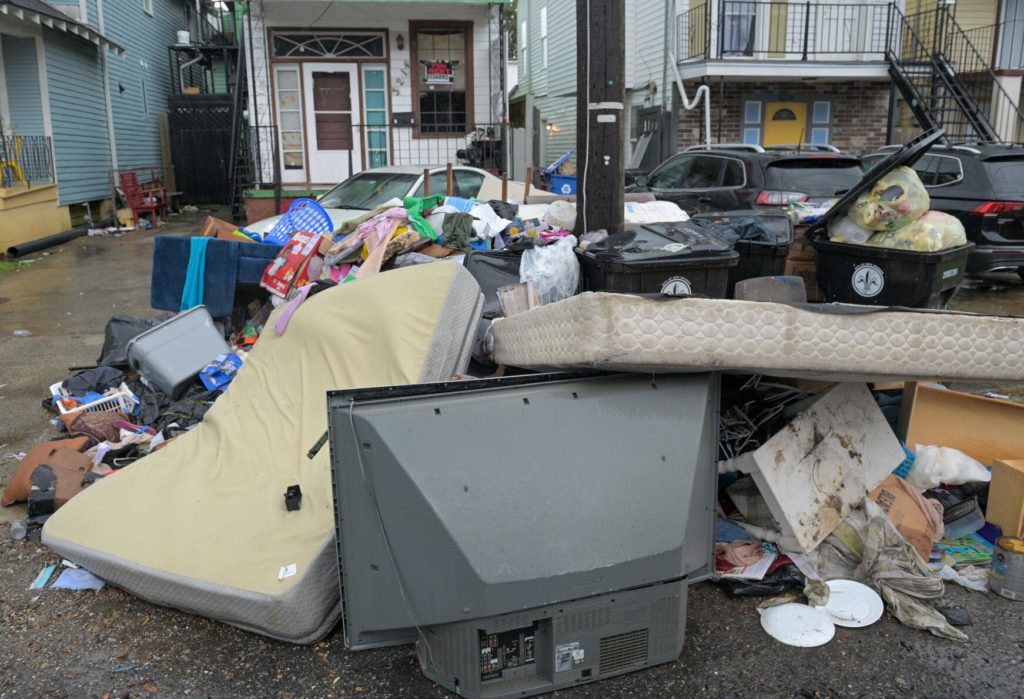
From Grenfell Tower to Philadelphia and New York to … the fire next time

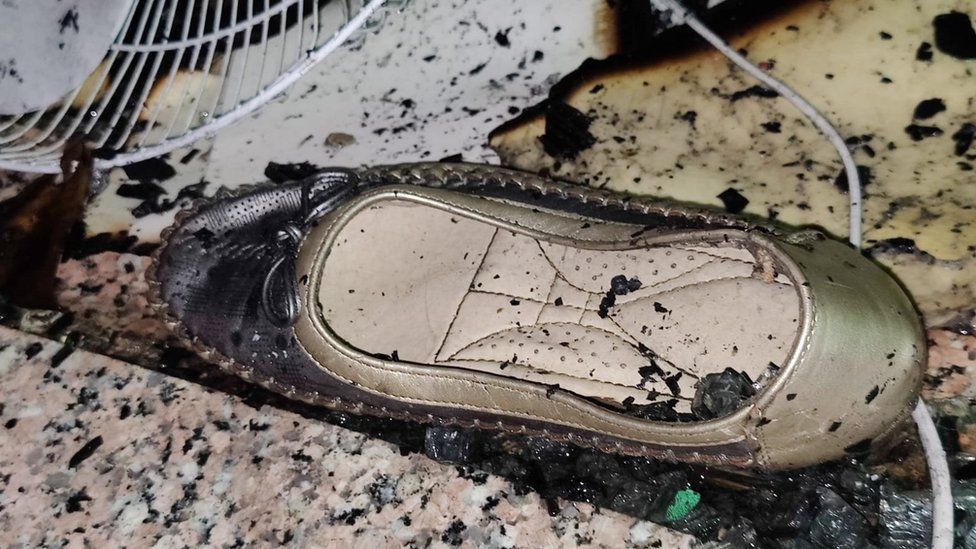
In 2017, 72 people died and 70 others were injured in the Grenfell Tower fire.  Afterward the British government extended benefits to the injured and displaced, terminated the management company’s contract, and began addressing similar flammable cladding hazards at other buildings. The British government’s response to Grenfell may not have been enough, but it was at least something.  And it should have been a wakeup call to the United States, which has neglected its crumbling public housing infrastructure for decades. Estimates of the cost to fix up our existing public housing stock now exceed $70 billion after prolonged disinvestment.  Much of the needed funds would have been included in the Build Back Better Act that Senator Manchin torpedoed just before the holidays. Now we have seen two fires in HUD-subsidized properties within a week.  12 perished in the Philadelphia fire and 19 died in the fire in the Bronx, in New York City.

Mass-casualty are extreme examples but substandard housing kills constantly.  Often it’s the child electrocuted by bare wires or the elderly person whose lungs can’t handle the mold or the fall from the porch that finally gives way. This is to say nothing of the untold numbers of non-fatal, yet serious injuries that unsafe housing causes.

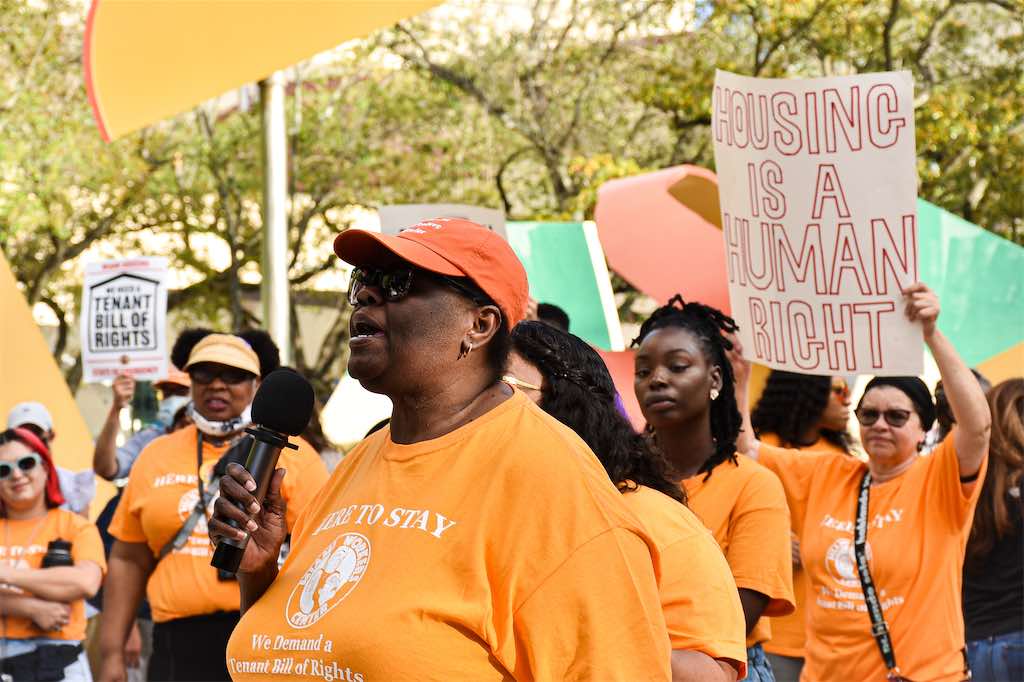
The dangerous condition of much U.S. housing stock in the 1920s and 1930s was a major catalyst for the original development of public housing.  Now we are seeing it again – dangerous housing for lower-income households, whether publicly-owned or private.

If some good came come out of these fires, perhaps we will finally see the much-needed investments in public housing capital improvements that we have needed since the 1980s.  And perhaps building inspectors will start taking their duties more seriously. But if we do nothing, then the next fire is on you, Senators Joe Manchin and Kyrsten Sinema.


(By Eric Dunn) (Eric Dunn is Litigation Director at National Housing Law Project. He writes here in his own capacity)

(Infographic Credit: National Low Income Housing Coalition)

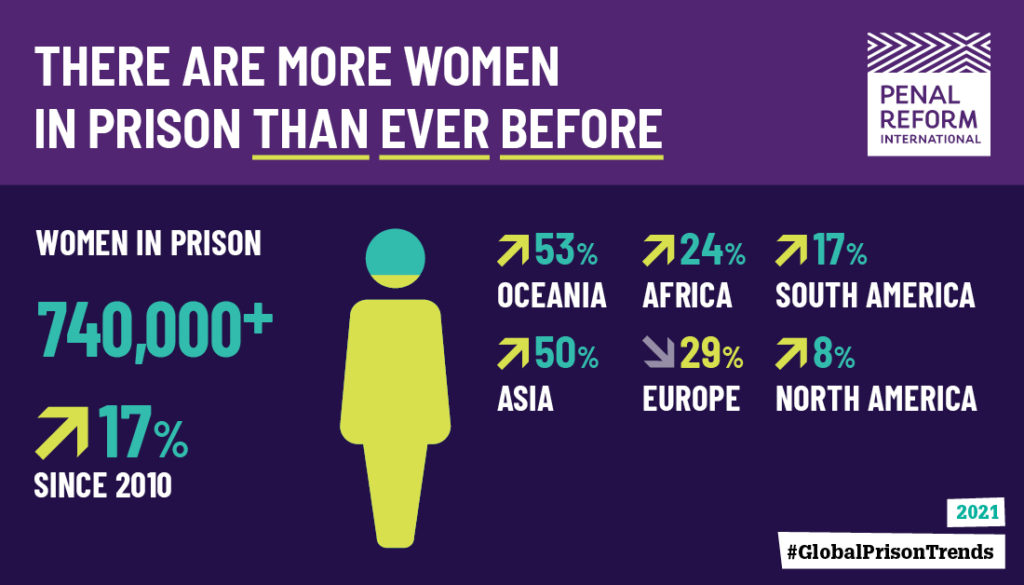
In the Nova Institution for Women, Canada’s special hell for women, COVID runs rampant

In 1995, Canada opened the Nova Institution for Women, in Truro, Nova Scotia, and it’s been a hellhole for women ever since. In 2015, Veronica Park died of pneumonia, after begging for days for health care, to no avail. Three months later, Camille Strickland-Murphy, after a series of incidents of self-harm and suicide attempts, none of which were attended to, killed herself. Earlier, in 2006, Nova Institution was the first station in Ashley Smith’s journey into suicide. In 2019, Samantha Wallace-Parker died of pneumonia, after begging for days for health care, to no avail. In 2020, Lisa Adamsexperienced Nova’s dry cell, a cell without running water or toilet, for 16 days. These are just the best known stories, all of which end up in court. But that was all `prepandemic’. 2022 opens with COVID running rampant through the Nova Institution for Women, and the thing is, all of this was predictable, everyone in charge knew, and they did nothing, worse than and less than nothing.

Today, Martha Paynter, who is “a registered nurse who researches prisoner health, and as a community advocate for people in prisons for women”, wrote, “The news that 49 people (24 prisoners, at least 25 staff) have now tested positive for COVID-19 at the Nova Institution for Women, a federal prison in Truro, brings a nightmare we foresaw … into reality … Federal prison is a $2.4 billion/year operation. We need to stop throwing money at this system and redirect it to meaningfully address the trauma and poverty that drives criminalization. The horror of mass infection at the Truro prison must finally change our thinking.”

Again, all of this was foreseen. In 2020, Martha Paynter wrote, “Prisons are petri dishes. Hundreds of people are under one roof with poor ventilation, barriers to health services, substandard nutrition, limited participation in exercise and time outdoors and inadequate information provision.”

What else is there to say? The petri dish has done what it’s designed to do. Advocates, like Martha Paynter, are calling on the State to release the women. The State has responded with lockdown. In one day, the cases jumped from 8 to 38. There’s less testing in federal prisons than in the general population, to no one’s surprise. In 2020, a study found the following: “There were 59 cases of COVID-19 in women’s penitentiaries. These represented 31% of all cases in federal penitentiaries, suggesting that women, and women’s penitentiaries, are over-represented among COVID-19 cases inside federal prisons. COVID-19 prevalence was 8 times higher among women’s prisons (8% prevalence) than prisons for men (1% prevalence) and 80 times higher than in the general Canadian population (0.1%).”

COVID-19 prevalence was 8 times higher among women’s prisons than prisons for men and 80 times higher than in the general Canadian population. That was two years ago. Today, the situation for women held in prison is worse. This is not failure, this is petri dish public policy, designed for incarcerated women. Don’t fix it, shut it down.


(By Dan Moshenberg)

(Photo Credit: Saltwire / Chelsea Gould)

Domestic work and the global: Sri Yatun’s story

Sri Yatun cooking at home

The story of Sri Yatun illustrates the resilience and courage of domestic workers, while revealing the corrupt global networks of shared reproductive labor that harm low-income female migrants and make their lives increasingly precarious. It also demonstrates how ‘the global’ facilitates the exchange of migrant domestic labor as the underpinning of a globalized capitalist economy; in doing so, it suppresses the voices and experiences of migrant domestic workers. To understand the experiences of domestic workers we must ask: Why are their experiences rendered invisible? How is this invisibility intentional and constructed? Sri’s story is equally devastating, instructive, and revolutionary. The details of her life demonstrate how the ‘global’ leverages migrant domestic workers’ state of precarity to silence them. Experiences like those of Sri are not unintended side-effects of State Department programs; rather they are intentionally crafted, sociopolitical notions of whose lives matter and whose do not.

For migrant domestic workers, like Sri, precariousness is an embodied state of being through their experience of liminal legality: they are aware their residency in the US is fragile and potentially fleeting. As such, they embody a liminal space and a physical precarity that colors their everyday interactions, duties, and behaviors. Notions of belonging, as codified through national identity, enforce precarity in the lives of migrant domestic workers. The fear of deportation places them in an incredibly vulnerable position in employer-employee relationships, promoting their silence in the face of exploitation. For Sri, the interplay between her status of liminal legality, the powerful status of her elite diplomatic employers, and the invisibility she faced in the home, obscured the abuses she faced at the hands of Cicilia and Tigor. She was afraid to speak out, depowered by the very system that relies on her labor to function.

Sri is a survivor of mental and emotional abuse at the hands of her employers. Despite caring for their family–raising their child–Cicilia and Tigor treated Sri as a slave, frequently beating her and verbally berating her. The house in which Sri lived and worked was also the sight of a daily war, one in which she was depowered, vulnerable, and exposed. Sri was an outsider in the home she maintained. She had no way to protect or defend herself, an especially violent social existence, akin to Mbembe’s concept of the death-world. The article notes harrowingly that, “Wearing [Tigos’s] son provided a measure of protection against his outbursts.” Even this limited sense of security, however, dwindled throughout the years as the son became less reliant on Sri’s care. This utilization of the body and mind as the tools of labor, also left significant consequences for Sri’s health. She notes in the article that she “has pain in her back and knees. ‘Little things to remind me,’ she says.” Her body, then, is a tangible reminder of the verbal and physical abuse she faced at the hands of her employers–each ache, sore, and crack, a remnant of her years of exploitation.

Sri was a caretaker for many years, raising children who were not her own. Given that experience, one may assume she would be an expert in all forms of caring. Sri was not prepared, however, to be a caretaker for someone she knew affectionately and intimately. Sri’s experience caring for ‘mama’ in her old age illustrates a divide between caring as a profession and caring for your family. Her multi-faceted experiences of giving and receiving care elaborates upon the grief and loss inherent in every step of her life. As excerpted from the article:

“Sri had taken care of so many people, but it felt different to look after Mama. She’d started her career in caregiving with strangers who had felt entitled to extract what they wanted from her; she’d also cared for kind and generous people, and everyone in between. She’d mastered the domestic worker’s art of invisibility: the ability to take in everything in a home and render her own self unseen to avoid disrupting her employers’ perception of their privacy. So none of her experiences could prepare her for what it was like to care for — and potentially lose — the woman who had found her, who had truly seen her, at a gas station 14 years earlier.”

Grief shapes the lives of domestic workers in many ways: grief for elders who pass, grief of a child who moves on, grief of the family you thought you were a part of. Some workers grieve alternate employment prospects, or a stable wage. Others experience grief as they care for children a world away from their own. Many grieve the life they should have had. As such, grief cannot be disentangled from domestic work. For years, Sri’s desire to grieve–her jobs, dreams, the children she cared for a long the way–was suppressed in favor of economic survival. She had to keep going, working, and fighting for a better life. Finally, after years of this precarious struggle, Sri found someone to take care of her in her grief–the community–a radical act of communalized care in an undervalued community.

(By Alex Groth. Alex Groth believes everyone should be cared for.)

(Photo Credit: Washington Post / Barbara Davidson)


Mass tragedies involving migration have increasingly become normalized

Thousands of family members continue to search for a missing migrant.

This is how 2021 ends. A boat filled with 120 Rohingya Muslim women, children, men – 60 women, 51 children – was on its way from Myanmar to Malaysia. Those in the boat hoped that when they reached Malaysia, they would be given sanctuary. On Sunday, the boat engine failed and the boat started to leak, off the coast of Indonesia. At first, the Indonesian government wouldn’t let the refugees in. Finally, after days of international and local pressure, on Wednesday, the government relented and gave permission, but, they explained, only because the situation on the sinking, overcrowded boat was “severe”. Today, Friday, the boat was towed into harbor, and people began to disembark. The rescue, in heavy rain and high seas, took a grueling 18 hours. Why does a government have to explain rescuing people from a sinking boat? Because they are refugees, women, Muslim, Rohingya, and the list goes on. This is how 2021 ends, much as the previous ten and more years.

On December 25, in three separate incidents, three boats filled with refugees capsized. At least 31 people died, and, as of now, scores of people on those boats are still missing. It is the worst Aegean death toll since October 2015.

The next day, December 26, close to 30 people washed ashore in Libya, refugees who had tried to cross the Mediterranean, just so much flotsam from another shipwreck. These corpses capped a week in which at least 160 people, migrants, drowned in shipwrecks off the coast of Libya.

A month earlier, a boat filled with migrants sank somewhere in the English Channel. At least 27 people died. That is the single biggest recorded loss of life in the English Channel. One witness, a refugee who was in another boat that happened into the same waters soon after the first boat sank, recalled, “Our boat was surrounded by dead bodies. At that moment my entire body was shaking.”

The UN High Commissioner for Refugees that from January to November more than 2,500 people have died in the Mediterranean or in the Atlantic, on their way to the Canary Islands. The International Organization for Migration reports that, as of early December, the 2021 death toll for migrants during migration journeys had surpassed 4,470. They assumed the final tally would be considerably higher, given the lag in time between deaths and the reports thereof. The death toll last year was 4,236. The death toll at the Mexico – U.S. border was already 651, higher than in any year since they started recording, 2014. More migrant deaths were recorded in South America than in any previous year. Europe saw historical highs in migrant deaths. The Atlantic route to the Canary Islands saw the highest death toll in over a decade. According to the IOM, “Mass tragedies involving migration have increasingly become normalized.”


(By Dan Moshenberg)

(Image Credit: IOM / Salam Shokor) (Photo Credit: Al Jazeera / Twitter)

Abuse is not normal. Harassment is not normal.

The women who took down Larry Nassar

As the year ends, I find myself frequently turning to my own experiences in gymnastics, particularly being so proximal to Larry Nassar’s practice. Within the last few weeks, a settlement was reached for the survivors of Larry Nassar’s sexual abuse. At this point in time, there are over 500 women who have come forward about their assault and abuse at the hands of Nassar. For more than 14 years, USA Gymnastics was aware of Larry Nassar’s abuse of young female athletes. Complaints were made at every level—to parents, club, college, and olympic level coaches, and even to the association itself. On every single level, these young athletes were shut down and denied, made to believe they had misconstrued his care for them as abuse. Not only did USAG turn a blind eye to Nassar’s sexual abuse, but through the FBI’s slow response time, they also failed these athletes. This harrowing display of strategic inefficiency, as Sara Ahmed discusses in Complaint! as one of the causes for the long periods of time where complaints receive no response, resulted in the abuse of hundreds more young women at the hands of Nassar. In their non-responsiveness, those in power chose the side of the oppressor and failed these young women.

It was not just those who failed to adequately respond to the complaints at fault. It is all members of the system—particularly coaches, that instill to their gymnasts that abuse (verbal, emotional, and physical) is normal. Abuse is not normal. Harassment is not normal. Whether it be in the sport of gymnastics or in academia, the normalization of violence against women is causing immeasurable harm.

(By Jordan Dopp. Jordan Dopp, from Ann Arbor, Michigan, was a competitive gymnast in her hometown for 14 years.)

(Photo Credit: Glamour / Jason Schmidt)

The world is ruled by women who fight: The Sudanese women’s revolution continues

Yesterday, December 25, hundreds of thousands of protesters, led and impelled by women and youth, took to the streets of Khartoum, demanding freedom, full democracy, a revolution. This was the tenth major demonstrations in the past two months. These protests have gone on, lled and impelled by women and youth, for the past thirty years, demanding full democracy, freedom, a revolution. Women and youth, leading, demanding, grasping freedom and justice: this is what democracy looks like. The government cut communications, blocked roads, fired tear gas, arrested scores, injured who knows how many.

In Sudan, on December 19, 2018, women took to the streets to protest a precipitous rise in bread prices. Those protests persisted and grew. As so often in food uprisings, the price of food was the visible spark that revealed an undergrowth of fire, and, as so often, women set and sustained the spark. Three years later, Sunday, December 19, 2021, women led protests of hundreds of thousands to commemorate the 2018 uprising, the spark they set, and to demand much more than a `return to civilian control’. Women in the streets of Khartoum and beyond demanded full rights, equality, freedom and justice for women, youth, everyone. They government responded with live bullets and sexual violence against women. According to numerous reports, security forces raped 13 women and girls that day. In the following days, women returned to the streets to demand justice. Actually, they had never left the streets.

Shaihinza Jamal explained, “We are here to put pressure so that this could stop happening. We will not allow such things ever to happen, and we can stop them.” Women protesters chanted, “They won’t break you! They won’t break us!” Jihan el-Tahrir, longtime Sudanese feminist activist, added, “Because women’s role in mobilising the Sudanese society is well-known, one approach long adopted by the regime has been breaking the society by breaking women.”

These are the daughters of a long line of Sudanese women demanding freedom and democracy. RememberJune 2012, when women students responded to astronomical increases in transportation and food prices? A few university women students took to the streets, shouting “Girifna!” “Enough is enough!” Within days, their small demonstration inspired a sandstorm, which was met with severe State repression. Remember the Sudanese women of June 2012? Remember September 2013, when, again in response to austerity measures this time involving gasoline prices, women took to the streets? Again, those protests turned into a national crisis, which, again, was met by severe repression. Remember the Sudanese women of September 2013, and the Sudanese Women’s Union of the 1950s and 1960s, and the Sudanese who have organized continually from the 1950s on, for women’s autonomy and national dignity? Well, they’re back, and they remember. They remember every detail of their history; they are the guardians of the revolution.

In a mass demonstration in late October, women carried signs reading, “Total civil disobedience. The decision of the people.” In a recent smaller, silent protest in Khartoum, Rayan Nour held a sign that declared, “The world is ruled by a woman who fights”. She explained, “My mom always taught me to not let anyone take my rights away from me and for me to get that by my hand if I had to and not wait for anyone to get it for me …. The first protest was called in the newspaper protest of the whores and the gays. And I was like, OK, whores, gays, let’s go.” Mothers, daughters, whores, gays, OK, let’s go. They’re back and they remember not only the past but the future. The world is ruled by women who fight.


(By Dan Moshenberg)

(Photo Credit 1: BBC) Photo Credit 2: New York Times / AP  / Marwan Ali)

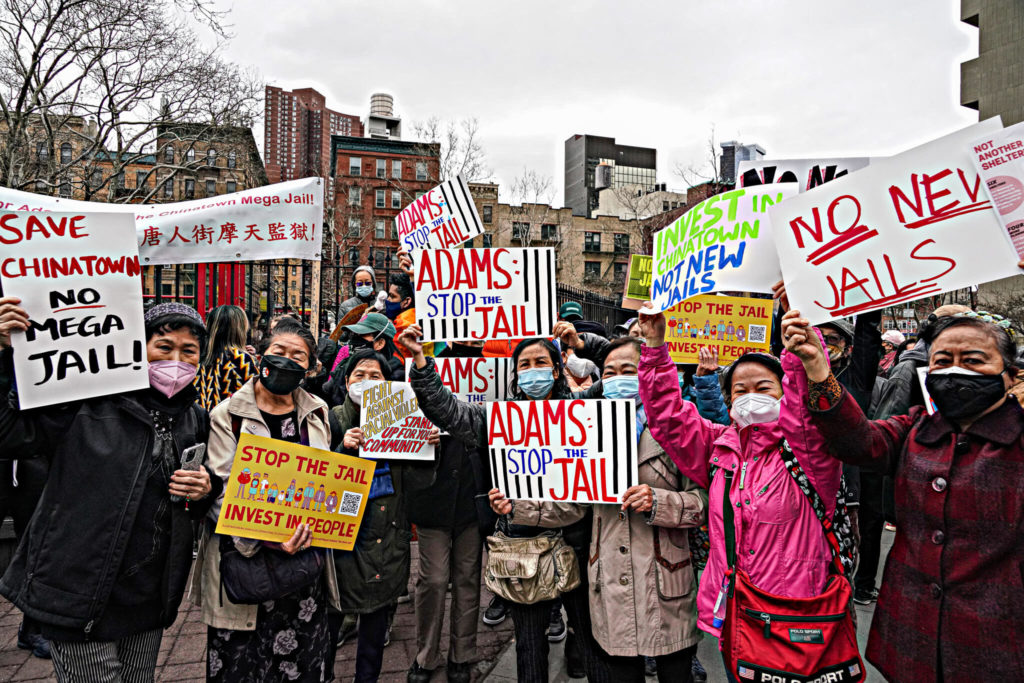
No end to the torture: Throw the children into solitary, lock the door, walk away

A seclusion room in a Cedar Rapids elementary school: padded walls, a window, a door that locks from outside

Another year ends with stories of children, young children, being thrown into `seclusion rooms’, solitary confinement chambers, in schools across the country. What exactly are children meant to learn, the ones thrown into solitary, the ones watching their classmates and friends go into solitary? What’s the lesson plan, the educational goal? Why are we so invested in seclusion and restraint of children, generally, and of children living with disabilities, particularly? What terrible crime have these children committed that entire systems invest so much in maintaining practices that clearly constitute torture?

In November, U.S. Department of Justice investigators conducted on-site inspections of schools in Cedar Rapids, Iowa. They also demanded thousands of documents. This story begins in 2017, when a parent complained at the abuse her daughter suffered. Apparently, the girl wouldn’t stop crying, and so she was placed in a seclusion room. In the 2019-2020 school year, elementary school children were tossed into seclusion 237 times. In October, 2020, the Department of Justice notified the Cedar Rapids School District that they were opening an investigation.

In 2018, the U.S. Department of Education released a report on school climate and safety for 2015 – 2016. It found that Iowa rates had doubled. For example, in 2013, 23 school districts in eastern Iowa had 2514 reported instances of seclusion or restraint. In 2015, that number rose to 4,904. A 2018 Iowa State report described Davenport as in “systemic non-compliance” of Federal laws concerning the education of students living with disabilities. According to the report, the situation for students of color in Davenport was particularly dire, systemically so. Both of Iowa’s U.S. Senators called for a Federal investigation into the use of seclusion rooms. Davenport’s U.S. Representative Dave Loebsack called for a ban on seclusion rooms.

In 2017, a complaint was filed against the Iowa City school district, charging that the district’s use of seclusion rooms violated Federal law, primarily because parents don’t know that the seclusions rooms existed and were being used and because the use of seclusion rooms is broader and more `ordinary’ than the law allows. During the 2013-14 school year, most of the students dumped into solitary confinement were students with diagnosed disabilities and individualized education plans. Half of the students with education plans who were sent to seclusion rooms were Black. Other than students with education plans, ALL of the students dumped into seclusion rooms in the 2013 – 2014 were Black. Black students comprised about 19% of the school population.

Cedar Rapids is no outlier, not in Iowa, not in the United States. December 31, 2020, the Department of Justice settled with North Gibson School Corporation in Princeton, Indiana, where “students as young as five years old were secluded and restrained improperly and repeatedly, resulting in days, and sometimes weeks, of lost instructional time.”

On October 24, 2021, the U.S. Department of Education and the Saco School District, in Saco, Maine, reached agreement to resolve restraint and seclusion compliance. Saco’s not a big school district, but it boasts big seclusion numbers. From 2017 to 2020, Saco schools engaged in 392 incidents of seclusion. Of that number, 324 involved children in K-2. 83% of those thrown into solitary were children 5 to 7 years old. After extensive investigation and negotiation, they `reached agreement.’

On November 24, 2021, Fairfax County Public Schools, in northern Virginia, reached a settlement with parents of children living with disabilities and advocacy groups to ban all seclusion in all its schools by the beginning of school year 2022 – 2023. This ends a suit that was filed in 2019, after a local news station reported that the county routinely put children with disabilities in seclusion rooms and routinely failed to report the incidents.

A week later, on December 1, the U.S. Department of Justice reached a settlement with the Frederick County Public School District “to address the discriminatory use of seclusion and restraint against students with disabilities …. The investigation, opened in October 2020, revealed thousands of incidents of seclusion and restraint in just two and a half school years. Although students with disabilities make up only 10.8% of students enrolled in the district, every single student the district secluded was a student with disabilities.” When the settlement was reported, many expressed shock, demanded answers, called for responsibility. The county’s school superintendent resigned quickly, and was given $800,000 in compensation. In 2017, that county superintendent was named Superintendent of the Year by the state association of school superintendents.

Every report, every agreement and settlement, evokes shock. How can people be shocked when there are thousands of incidents, as many as ten a day, in small towns and big counties? That the government has returned to some sort of vigilance concerning the systematic abuse and torture of children is welcome, inasmuch as it’s better than inaction. But the real need here is a soul searching, no holds barred transformation. We torture children. We cannot be shocked by that. We send children into days, weeks, of solitary confinement because … they can’t stop crying. And we call that education.

A seclusion room in another Cedar Rapids elementary school


(By Dan Moshenberg)

(Photo Credit 1:  KCCI / Liz Martin/The Gazette)) (Photo Credit 2: KCRG / (Josh Scheinblum)


The de-coercion of care work

The COVID-19 pandemic has brought an onslaught of irrepable damage to individuals and society as a whole. Additionally, the pandemic also exposed gaps in society that can no longer be ignored. One such gap is the role of labor unions on the workforce. Labor unions have been on the decline in recent decades in the US. But, amidst the recovery from the pandemics, more and more workers are demanding fair wages, comprehensive benefits, and better working conditions.

Recent headlines on the unionization of the first Starbucks in the US sparked a conversation on the politicization of care work. The act of caring, being a caregiver, and care in itself is hyper political. Care, for the welfare state, is a means to sustain the system of capitalism. As concerns the investments of the capitalist state in the act of caring, feminist economist Nancy Folbre explains, “Capitalist institutions create powerful incentives to maximize short run profits by exploiting unpriced public goods crucial to the sustainability of the social and natural environment.” Capitalism exploits workers to sustain itself, with the promise of providing care for them in return. Care workers – from Starbucks employees that serve us the coffee to start our days to the teachers that educate the next generation of leaders to the domestic workers that maintain our homes – are severely underpaid and ignored in the grand scheme of the political economy. Service industry carers, from companies like Starbucks, Kellogg’s, and Amazon, are rejecting the forced silence imposed on them by the welfare state and are fighting to de-coerce the hyper politicization of their existence by unionizing. Despite capitalist backlash, these care workers are changing the game for carers across the world.

These service industry carers are exposing a truth that feminist migration experts have been grappling with for decades, how to gain workers’ rights for domestic workers. In the United States, labor laws and constitutionally protected rights have explicitly excluded agricultural workers, prison laborers, and domestic workers. This has complicated domestic workers’ fight for de-coercion, but it does not make the fight impossible.

Care workers face coercion through the welfare state that traps them in a system of exploitation. To solve this issue, care work must be de-coerced. Undoing the ties of coercion allows care workers to tackle the politicized nature of care work and demand their own rights. The process of de-coercion can mean many things for the multiple intersectional identities and populations that make up care workers. But all in all, they must all center care workers. South African sociologist Shireen Ally has described how South Africa’s landmark legislation Sectoral Determination Seven for the Domestic Worker Sector gave domestic workers rights and privileges that they never had before, but it all came in vain because the legislation was not passed with domestic workers at its core. De-coercion must be centered around the day-to-day realities of domestic workers throughout the world and incorporate their opinions and beliefs. As political scientist and sociologist Emma Dowling states, “Care workers are experts. Their experience, knowledge and skill are crucial to designing and developing better care infrastructures that give care workers more control over their work. This requires a real democratization of workplaces and a voice for care workers.” The domestic workers that raise our children, clean our homes, and sustain the capitalist economy deserve a seat at the table of their own lives. They deserve to proclaim their wants and needs and feel like the world at least hears them. While the welfare state has shown it does not care, the rest of us should.

(By Evelyn Boateng-Ade)

(Photo Credit 1: Red Pepper / The Voice of Domestic Workers) (Photo Credit 2: Women’s Strike)