How the Oil Spill Affects our Perception of Women and Water

Over a month ago BP’s Deepwater Horizon oil platform in the Gulf of Mexico exploded, killing 11 people and beginning a month long flow of gallons of crude oil into the Gulf of Mexico.  Responses to the disaster were slow at best, with BP’s solutions never succeeding in capping the flow of oil into the ocean.  The result is that people all along the coast of the Gulf who are dependent on the Gulf for food or livelihood are losing out, and the wildlife population that exists in the Gulf is hurt by the crude oil.

For myself, and for many other I’m sure, the outrage at this spill comes primarily from the inability to act and the inability to connect this oil spill with the dangers of both depending on oil reserves and dumping things into the ocean.  The apathetic attitude of people toward the dumping of gallons of crude oil into the ocean is the most alarming part of the disaster.  In my last post, I talked about some of the connections between women and water.  This oil spill displays more of those characteristics.

Before discussing the implication of the oil spill on gender, I should first discuss a little bit about the feminizing of the ocean itself.  The ocean or the sea is referred to as a ‘she,’ like when the sea is referred to as a mistress to sailors, or when religions include a goddess of the sea.

This connection is not so far out of the blue.  The characteristics attached to the sea are often ones similar to those attached to women.  The sea in many religions is considered to be a birthplace of life – similar to viewing women as life-givers.  The ocean is often perceived as having a calming effect – similar to the idea of a mother’s comfort.  And finally, the ocean is said to have a fury and a power that is hidden and to be feared – ‘hell hath no fury like a woman scorned,’ or a fear of women’s power.

Secondly, there is a belief that the ocean has a religious power of sorts to wash away all sins  — the sea can contain or take all that we do to it.  A group of people in Denmark decided to thank the ocean by sinking a huge metal statue filled with bread in the ocean as a sacrifice.  In order to thank the ocean, they had to literally dump more problems into it.  This is similar to how we talk about women, especially women in developing countries or those who have just been through a trauma of sorts – we comment on how strong they are, and how wonderful that they can take so much.

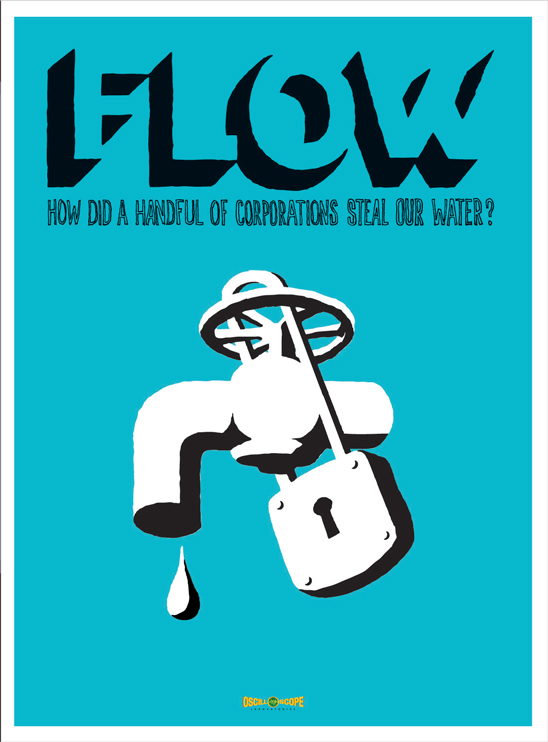
Water is a resource that is essential for all forms of life, yet we privatize it and sell it for immense profits.  The documentary FLOW discusses not only the effects of privatization on water but the similarities between the so-called ‘water industry’ and the oil industry – mainly that both are driving prices up at the expense of people who can’t afford it and the profit of those who don’t need the money.

So what does this mean for the oil spill in the Gulf? The spill happened in the ocean – a ‘feminine’ body of nature.  As such, it can take all that we do to it – like the ideal strong woman who can ‘take’ all that life throws at her.  The ocean can take the gallons of crude oil that are rushing into the waters destroying marine life and coming closer and closer to shore (in fact, it has already hit some islands off the coast of Alabama).  I believe that the driving force behind the fact that BP executives are so slow to act is that they believe that the ocean can take this abuse.  BP CEO Tony Hayward was quoted as saying “The Gulf of Mexico is a very big ocean. The amount of volume of oil and dispersant we are putting into it is tiny in relation to the total water volume.”

The sea is tied to feminine ideas, or the feminine principle as Vandana Shiva puts it.  When something is so closely tied to femininity, it is not immune from the reach of patriarchy, in particular the idea of control over the ocean’s resources (which include the crude oil beneath the ocean’s surface).  Not only can the ocean take all that we do to it, but it also is there to be controlled and manipulated by us as humans.  Moreover, the people running BP are predominantly men, making it a situation where men are controlling/manipulating the feminine for their own profit and use.

The BP oil spill in the Gulf is a disaster in so many ways, but it does give us a clear picture of the value that we place on our oceans, and by extension on women.  Perhaps the reason why there is less outrage from the general population about the oil spill is that we don’t place enough value on it – it is expendable in the name of profit, much like the patriarchal view of women.

(Image Credit: Flow)
Those who recall the future were never meant to survive

Marta Candeloro was abducted on June 7, 1977 in Neuquen. She was then taken to the Secret Detention Centre “La Cueva.”

On January 30, 1972, British soldiers opened fire and killed thirteen men in a peaceful civil rights march in the Bogside neighborhood of Derry. That day is called Bloody Sunday. Next Tuesday, thirty eight years later, the British government will release a report that states the killings were unlawful.

Thirty eight years is a long time. Ask the survivors. Ask those who remember.

Ask Kay Duddy. Kay was 25 years old then. Her brother Jackie was 17, a textile worker. He was shot dead as he fled across the Rossville Flats car park. He was the first person killed on Bloody Sunday. “We put Jackie’s 50th birthday in the paper and I thought, `That’s all we can do for you now, a wee memorial in the paper, people will say a prayer for you on your 50th birthday when we should have been out partying with you’. It is the everyday things, the wee family things that get you.”

It is the everyday things, the wee family things that get you.

Ask Regina McKinney. She was the third child of Gerry McKinney, 35, a wrought-iron worker and dance hall manager. He and his wife had eight children. On that Sunday, he blessed himself and put his hands in the air when confronted by soldiers. Then, one of them shot him dead: “Mammy never got over it. It took 25 years for her to even start to come to terms with it.…These men took away everything….My daddy was shot with his hands  up. I was proud the way my father died, that he had his hands in the air, that he had nothing in his hands, that he did not retaliate. To me he was a hero….The only thing I want out of the report now is for the men who were shot to go down in history as innocent. I think that is the only truth we need. The soldiers are going to have to stand before God.”

And ask Kate Nash, now 60 years old. She was the oldest daughter in a family of 13 living in Creggan on Bloody Sunday. Her 19-year-old brother William was shot dead at the Rossville Street barricade. Her father Alex went to comfort his dying son. He was shot and wounded. According to Kate, her mother laid the blame on her father’s shoulders: “She blamed my father because he survived. She wanted my brother back, not her husband. My father accepted that blame and carried it until he died.”

It is the everyday things, the wee family things that get you. Thirty eight years is a long time. Ask those who have waited, ask those who wait. Ask those who remember and those who cannot forget.

Ask Paula Luttringer. On March 31st 1977, Paula Luttringer was 21 years old and pregnant. She was kidnapped by the Argentine police and held, for five months, in a secret prison. While there, she gave birth to a daughter. She was then abruptly released and forced to leave the country immediately or face further violence. She fled to Uruguay and then to France. That was thirty three years ago. Thirty three years is a long time.

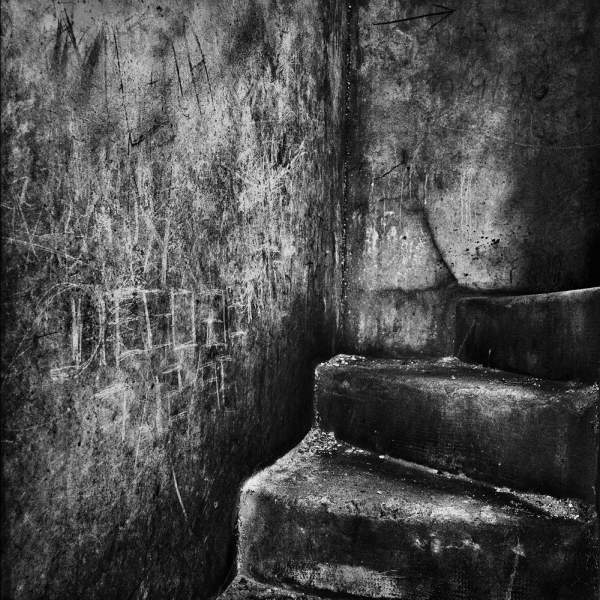
In 1995, Luttringer returned to Argentina and began to use photography as a way to explore the memories of the State violence committed against her and other women. El Lamento de los Muros (The Wailing of the Walls) emerged, a photographic essay, an archive of memories. Pete Brook, who has interviewed Luttringer, notes: “I have twice heard people urge Paula happiness in that she survived. Paula is unequivocal; having survived does not make her happy, living in a world in which people didn’t have to be survivors would make her happy. The violence once it is done, cannot be undone.”

The violence, once it is done, cannot be undone. Happiness would emerge from living in a world in which people didn’t have to be survivors, in which people don’t have to remember they were never meant to survive.

Estella Jackson remembers she was not meant to survive. Estella Jackon is 60 years old, a convicted killer, and a prisoner in Mabel Bassett Correctional Center in Oklahoma, the largest women’s prison in the state. Oklahoma incarcerates more women per capita than any other state in the United States.

Estella Jackson chose when there was no choice: “I didn’t have a choice in what I did. It was either kill or be killed. And I chose to live”. Now the hardest thing now is explaining her life to her grandchildren. She says it’s hard to explain to children that she took a life because there were no choices and because she chose to survive. For Estella Jackson, the hardest thing is the painful memory of her grandchildren’s future, a memory in which it’s not clear they will know she chose to survive.

Herbert Murray remembers he was not meant to survive. Herbert Murray was a young man convicted by a jury for having robbed and murdered a blind man in New York City. The judge thought Murray was innocent, but had no choice, according to the mandatory guidelines, and so sentenced Murray to prison for 15 years to life. That meant after 15 years, Murray could come up for parole. He was denied repeatedly. Why? Because he claimed his innocence, he could not demonstrate remorse and so remained in jail. This is called “the innocent prisoner’s dilemma”.

And what of those who cannot remember?

New York’s Fishkill Correctional Facility has the first prison unit for the cognitively impaired. The average age of its residents is 63. Everyone suffers from dementia. Many, maybe most, live with Alzheimer’s. Dr. Edward Sottile directs the center. Recently he was asked how prisoners with dementia, who don’t remember their own histories, can be rehabilitated. Dr. Sottile smiled a Hippocratic smile and replied that he had the same question and his solution is to do the best he can, to provide humane and compassionate care.

Remorse, remorse of conscience, remorse of mind is grief, sorrow, torment, painful memory. Ask those who remember, and those who cannot, they were never meant to survive, for they recall the future.


(Photo Credit: Prison Photography / Paula Luttringer, The Wailing of the Walls)


More than Jamaica is haunted

The burnt-out room at the Armadale Juvenile Correctional Centre in St Ann

Jamaica is haunted by the memories of charred prisoners’ bodies. More than Jamaica is haunted by their ghosts.

About a year ago, May 22, 2009, seven girls died in a fire in Armadale Juvenile Correctional Centre in Jamaica. On May 22, 2010, people around the world gathered to commemorate their deaths and to commit themselves to improving the conditions and situations of State child-care in Jamaica. Those seven girls haunt Jamaica and haunt more than Jamaica. They are part of a global story of the wasting of children and of children’s lives through incarceration, in prisons, detention centers, and `reception centers’, in impossibly overcrowded cells and solitary confinement, in adult prisons and in juvenile detention, in interminable remand or permanent lockdown or else caught in a never ending choreography of revolving doors.

But now another charred body appears to publically haunt Jamaica, that of Lester Coke:

“Wherever Christopher (Dudus) Coke is hiding in the heavily fortified neighbourhood and fief known as Tivoli Gardens, whether he’s surrounded by armed henchmen, ducking in a crawlspace, or peering from a rooftop at the police officers in flak jackets below, Jamaicans are sure of one thing: He’s thinking of his father’s charred corpse. The late Lester Coke, who went by the alias Jim Brown, and his Shower Posse gang ruled Tivoli Gardens with an iron fist – along with the steadfast support of then-prime-minister Edward Seaga – throughout the 1980s. But when he was finally arrested in 1992, and set to be extradited to the United States, a bizarre thing happened in his cement jail cell. He burned to death, despite the absence of flammable materials.”

The stories unfolding in the streets of Tivoli Gardens and across Kingston and beyond, that of the violence by State and by others, that of the bullets and bodies that haunt the nation, and all the rest of the stories, interpretations, diagnoses and critiques, meet in the story and in the ghost of the charred remains of Lester Coke, a violent man, a bad man, a prisoner of State in a global War on Drugs directed from Washington, DC, who met an impossible death.

Memories of those impossibly charred remains of his father haunt not only Christopher Dudus Coke, not only Tivoli Gardens, not only Jamaica. They haunt a world order whose War on Drugs relies on extrajudicial violence in the streets and phantom executions in the prisons. Eighteen years ago, Lester Coke burned to death in a room where no fire could occur. Impossible fires produce eternal smoke. A fire that never happened cannot be extinguished. This is the magical realism of the prison state, and it haunts the world.

Whatever happens next in Jamaica, whatever happens to Christopher Coke, whatever happens to the US government that forced all of this on the Jamaican people, nothing substantive will have happened until the magical realism of the prison state is shut down and replaced with a better story. The story of the lives of the seven girls who died in the Armadale fire is not the same as the story of the life of Lester Coke, but the story of the flames that consumed them is. We must do better than continually raking ashes.


(Photo Credit: The Jamaica Gleaner)

(Re)Producing Gender: The Lavender Menace

Apparently, lesbians in China are less threatening. But less threatening than what? Lalas, the Chinese equivalent of lesbian, are less threatening to conceptions of gender and sexuality than gay men.

Lalas are apparently less threatening because the government has approved a reproduction of a 19th century play featuring two women who fall in love with each. Such approval does not confer acceptance. Just ask the organizers of a recent gay pageant. They had permission, but the police shut it down. Ask the organizers of the Beijing Queer film festival. For years, they would get the necessary permits only to have them eventually revoked.

According to Eli Zaretsky, a psychoanalytic historian of Capitalism, contemporary sexual identities are rooted in corporate Capitalism and the corresponding rise of “personal life,” that is, sections of life that are not connected to the production of value. As far as those interests are concerned, what you might do in your free time does not matter as long as you continue to produce value – which can be generated either through labor or consumption. This represents a rupture from earlier methodologies, which sought to control every aspect of the worker’s life in order to achieve maximum productivity.

Deregulated identities are not unregulated identities. It is simply cheaper for people to internalize  regulations and enforce the ethic themselves. The contradiction between prevailing cultural norms and the interests of Capitalism forms the boundary that separates personal life from production. An identity too far from what is deemed acceptable cannot produce and thus cannot consume. An example of this can be found in a recent survey conducted in the US, in which 6,450 transgender identified individuals found “near universal harassment on the job.” This assumes, of course, that they could even find a job.

While certain identities may have been able to distance themselves from the requirements of productivity, there has been nowhere near the same success in the realm of reproduction. Indeed many of the Chinese queer economies of desire seem to be defined almost exclusively through heteronormative means.

Lala couples are expected to be comprised of a “T” and a “P.” “T” stands for the adopted English term  ‘tomboy’ while “P” is a derivation of laopo, or wife. T is supposed to be more masculine in presentation and thus to take a more active sexual role. P is expected to exist through her femininity and passivity. In this particular economy of desire, a feminine identity is the most sought after.

While there may be a hierarchy of desire amongst lalas, their spaces are not subject to extreme regulations of desire and presentation that seems to be present within the gay male, also known as tongzhi, communities. There, men who display any form of femininity are immediately ostracized as being “not right”. Most will reply that this is because they want to be with men who act like “real” men. Of course, if they really wanted to act like “proper” men they would sleep with women. While the prevalent position on “feminine” men is mired in misogyny, it is also a reaction against a larger cultural misogyny that would feminize and ostracize them simply because to be attracted to a man is to be automatically feminized.

This same ideology carries through what in the U.S. would be called transgender identities. (I refer here only to trans-women as I have no experience with Chinese trans-men.) Their extreme marginalization makes these liminal identities even more resistant to reductive and categorical definition. The difficulty of definition is compounded by the fact that there does not seem to be any sense of cohesive community. Some might secure employment in a legitimate hair salon. Others find work as drag queens. Or they might be self employed, going to popular clubs looking for `foreign investment’. In the case of the last two, any revenue depends on their status as male-bodied women.

One such woman told me that if she were to really be a woman she would have to kill herself, because, otherwise, she would be excommunicated from the collective tongzhi, who already mistrusted her. On the other side, she could never tell her future husband of her past for fear that he would leave her. Not all feel exactly this way, but all distinctly feel the contradiction between their desires and their realities. And so they do what they can, (re)claiming spaces of resistance wherever they are able.

None of this is to say that their desires or their genders do not reflect authentic positions, only that they also reflect social expectations. To this end each identity is defined by the politics of “passing,” being perceived as belonging to the dominant (i.e. heterosexual) group. Gender presentation or identity aside, they are all able to achieve this social ideal through reproduction. Most talk of marriage as a shield from stigma. The difference is that this shield comes in the form of a performance of heterosexuality through the production of a child – a commodity all the more imperative to produce since the advent of the one child policy.

While Capitalist ideology may have opened the space needed to express these identities, it brought with it the imperialism of queer identities native to an English-speaking world. Often, these identities impose categories on the way that these other identities are supposed to behave and how they are supposed to work within the global framework of reclaiming gender diversity from colonialism.

Nevertheless, these are identities struggling to create authentic spaces of existence. That the lalas are somehow less threatening is ridiculous. Even though their identities may fit within the heteronormative paradigm, the space is still subverted through the reclamation of gender diversity. The master’s tool may not be able to completely dismantle the structures of oppression, but his sledgehammer might still be useful to knock down a few of the walls.


Child-ghosts in the society of the spectacle

In November 2008, La Promesse, a school in Port-au-Prince, collapsed. Three stories came crashing down, at least 84 children and staff were killed, over 150 injured. It was not an earthquake that brought death to those children. It was shoddy construction, it was greed. Immediately afterwards, the mayor of Port-au-Prince stated that over half of Haiti’s building were poorly built and unsafe.

Michele Voltaire Marcelin tried to understand, to live with, the calculations that leave children suffering and dead under the weight of preventable destruction. She tried to understand the promise we make to our children:

The Promise
— For the Haitian schoolchildren who 
died under the rubble of “La Promesse”

children die
do not talk to me about prayer
or paradise
talk is cheap
children die
and my anger supercedes my grief
remember
it was a november morning like any other
when the plaster the brick the mortar
came crashing down
children die
under the rubble of the promise
women cry
the air is heavy as lead
the air is filled with dust
we live in heartless times
and children die
looking for paradise

Children die. We live in heartless times and children die. Those children become child-ghosts. We live in an age of spectacle in which children die and living children are treated as dead. Both are child-ghosts.

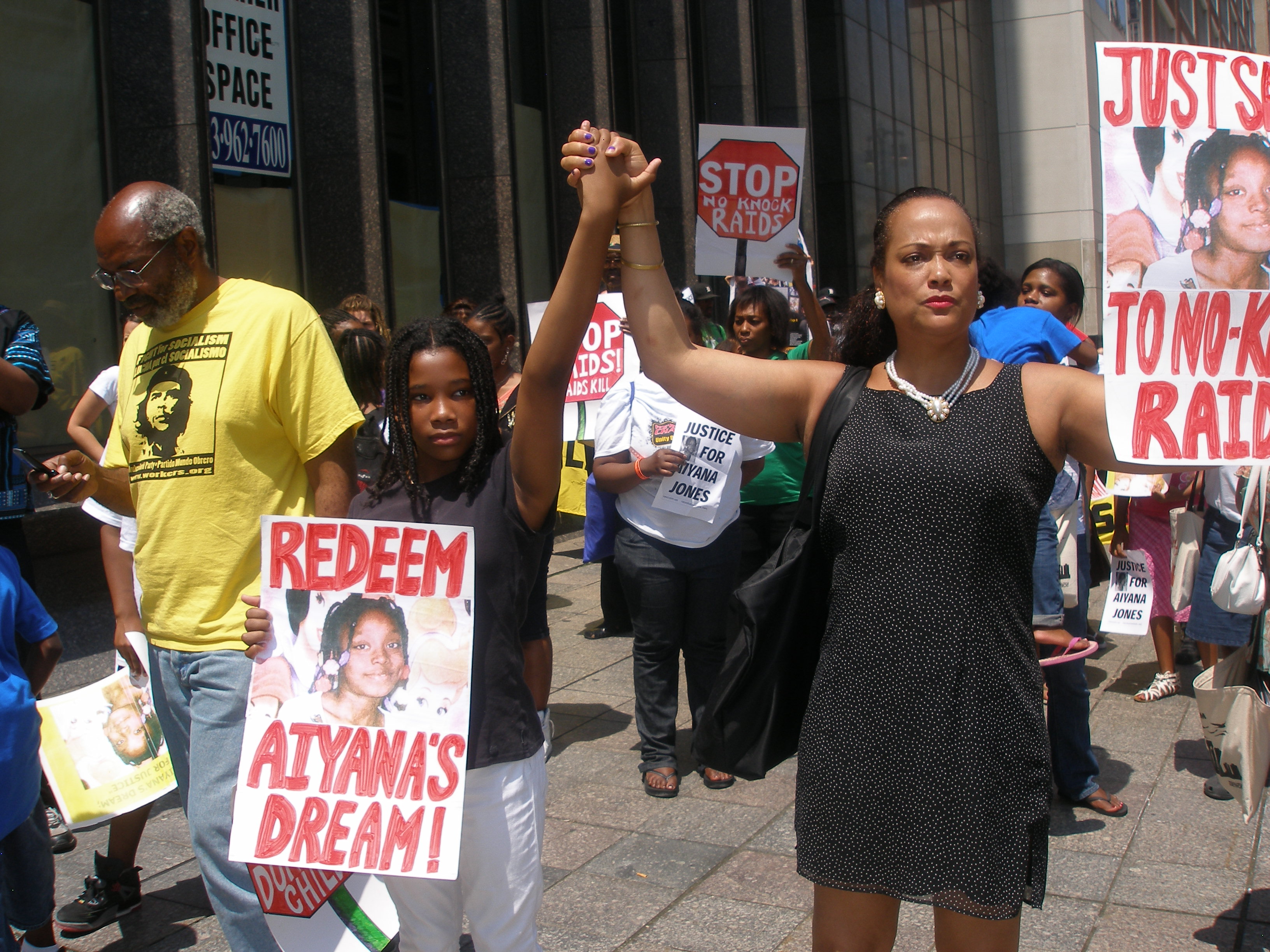
Sunday morning, May 16, seven year old Aiyana Stanley-Jones lay asleep in her bed, when Detroit police rushed in with guns drawn and, quickly, blazing, and killed her. An accident, they said, in apology, as explanation. `A Tragedy in Detroit, With a Reality TV Crew in Tow’, according to The New York Times. The police were participating in an A&E reality show, The First 48. For some, this is an issue about reality shows, for others police violence, for others the value of the lives of people of color, of girls of color. These are all worthy lines of lines of inquiry.

At the same time, Aiyana Stanley-Jones is precisely not a tragedy because her story is too familiar and too often repeated. She is one with the girls of La Promesse, young, Black, dreaming, and killed. A ghost-child.

The next day, Monday, the US Supreme Court decided that “juveniles who commit crimes in which no one is killed may not be sentenced to life in prison without the possibility of parole.” “An incredibly important win for kids who’ve been condemned to die in prison”? Perhaps. A step in the right direction, but not a long enough nor a strong enough step? Probably. A ruling that addresses neither the inequities of life without parole nor the cynical inequalities of the parole system? Most likely.

Sentencing a child to life without the possibility of parole turns that child into a child-ghost. Once he or she, and the majority are he (and he of color, at that) is sentenced, the game is over, the play is done, the curtain is drawn. All that matters is the spectacle of society being defended, the courtroom drama that assures that humans will be protected from monsters. How? By sending them to the beyond. That those monsters actually are still alive is irrelevant. Who really cares about ghosts produced in a society of spectacle? No one.

And what of those children whose only crime is that of seeking safety?

On Wednesday, the British Home Office announced that children would no longer be held at Dungavel House Immigration Removal Centre in Scotland. The decision came soon after a Pakistani woman asylum, Sehar Shebaz, and her 12 month old daughter Wania were arrested on Monday, and sent to Dungavel. People protested. The Home Office said fine … and then prepared to ship Sehar and Wania Shebaz to Yarl’s Wood.

Yarl’s Wood … again: “Anne McLaughlin, SNP MSP for Glasgow, called for an immediate end to the policy across the rest of the UK. Ms McLaughlin has been a key activist in the high profile campaign to prevent Florence Mhango, from Malawi, and her 10-year-old daughter Precious, who were held at Dungavel and Yarl’s Wood, from being deported after seven years in the UK. She said: `From Precious we know the horrific impact detention at Dungavel has on young children, but we also know that her experience at Yarl’s Wood was no better. By removing children immediately to Yarl’s Wood they are being taken away from the support networks and services they have built up in Scotland. The House of Commons has been highly critical of child detention in Yarl’s Wood and we must see this practice brought to an end across the UK as soon as possible.’”

A child seeks asylum and is sent to prison. A woman seeks asylum, with her child, and is sent to prison. Does it matter which prison? Out of sight, out of mind, out of luck, out of options, out of light, out of life. They are ghosts, and they are treated as such.

Today is May 22, 2010. May 22, 2009, seven girls perished in an altogether preventable fire in Armadale Juvenile Correctional Centre in Jamaica: Ann-Marie Samuels, Nerrissa King, and Rachael King, Georgina Saunders, all 16 years old; Kaychell Nelson and Shauna-Lee Kerr, both 15, and Stephanie Smith, 17. The Prime Minister called it a tragedy. Of course. A video and petition campaign has begun to make sure that the Prime Minister and the Director of Public Prosecutions work harder, work better so that the tragedy is not repeated.

These child-ghosts, these girl-ghosts, under the rubble, under the gun, behind the bars, in the flames, they are children, living, breathing, human children. In fact, they are our children. We must teach them as we ourselves must learn and live the lesson of the Griot, “You got to be a spirit! You can’t be no ghost.”


(Photo Credit: Herb Boyd / Voice of Detroit)

Asylum haunts the foreign service

Bita Ghaedi fled to the UK in 2005 to flee a forced marriage. Then her troubles really began.

Asylum haunts the foreign service. People face violence, persecution, torture, from the State, from partners, from various sectors. Finally, they flee. They escape. They go to the United Kingdom, say, or the United States. Where they apply for asylum. And are treated like criminals. Often they are placed in immigrant detention centers, where they are treated as immigrant detainees, which is to say where they are treated as common criminals … or worse. Then they are returned to the torture zones and the killing fields. They tell their stories, others tell their stories. Their stories circulate, in the languages of those who suffered throughout their communities. Their stories, their bodies, their scars and their memories, precede the ambassadors and the envoys.

This week Bita Ghaedi was informed that she would not be deported immediately to Iran. Further, she was informed that she could finally leave Yarl’s Wood. In 2005, Bita Ghaedi fled a violently abusive family and an imminent forced marriage. In the UK, she has been a civil rights, women’s rights and human rights activist who has publically supported the opposition to the Iranian government. She has reason to believe she would be killed if she is returned to Iran. The question is whether it would be the State or her family who would commit the deed.

In 2007, Bita Ghaedi’s application was turned down. She attempted suicide. She appealed the decision. In January of this year, she was on weeks long hunger strike. She was supposed to be deported April 20, but Icelandic volcanic ash postponed that. She was supposed to be deported this past Wednesday, May 5. That’s when the high court decided, again, to delay the deportation and hold another hearing. That is meant to happen July 21.

Bita Ghaedi’s story parallels that of Rodi Alvarado. Rodi Alvarado was born and raised in Guatemala.  In 1984, at the age of 16, she married a man, a former soldier, who immediately began beating, torturing, raping her. She went to authorities who did nothing. She ran away, was caught by her husband, and beaten unconscious. Finally, in 1995, she fled to the United States, leaving her two young children with relatives. She applied for asylum. In September 1996, an immigration judge granted her asylum.

That’s where the story turns: “The Immigration and Naturalization Service appealed the grant to a higher court, the Board of Immigration Appeals (BIA). And in June 1999, the BIA reversed the decision of the immigration judge, by a divided 10-5 vote, and ordered that Ms. Alvarado be deported to Guatemala”

The case then lingered on until December 2009, when Rodi Alvarado was finally, and without explanation, granted asylum. For fourteen years, Rodi Alvarado waited in terror.

In March 2009, Amnesty USA released Jailed Without Justice: Immigration Detention in the USA. Without naming Rodi Alvarado, the report suggests that, in the context of US treatment of asylum seeking women, Rodi Alvarado’s case is not unusual. In fact, it’s almost benign.

In the United States, women asylum seekers are routinely abused. Some, like Saluja Thangaraja, can share their names: “Saluja Thangaraja fled the brutal beatings and torture that she suffered during the Sri Lankan civil war only to endure more than four and a half half years of immigration detention upon arrival in the United States in October 2001. She was granted asylum in 2004. However, immigration authorities appealed the decision, and Ms. Thangaraja remained in detention. She was finally released in March 2006 after filing a habeas petition. Despite posing no danger to the community and demonstrating a commitment to pursuing her asylum claim, Ms. Thangaraja was never given a custody hearing during the four and a half years she was detained.”

Others must continue to insist on anonymity: “A 26-year-old Chinese woman cried as she told AI [Amnesty International] researchers that she fled persecution after she and her mother were beaten in their home for handing out religious fliers. She arrived in the United States in January 2008 seeking asylum and was detained at the airport before being moved to a county jail. No one explained to her why she was being detained. An ICE Field Office Director decided that she should remain in detention unless a bond of $50,000 was paid. Neither her uncle in the United States nor her family in China had sufficient funds to meet the required amount. Her attorney told Amnesty International that the immigration judge indicated that he did not have the authority to release her from detention or change the amount of the bond set. Family members in the United States were finally able to raise the money needed to secure her release in December 2008, after she had spent nearly an entire year in detention.”

Women asylum seekers in detention centers are shackled in childbirth, placed in isolation for the crime of not speaking English, sexually harassed, abused, exploited. In other words, women asylum seekers are treated exactly the same as women immigrant detainees.

Bita Ghaedi, Rodi Alvarado, Saluja Thangaraja, the “Chinese woman”, and the thousands of other asylum seekers who are and have been abused, these are the ambassadors of the United States and the United Kingdom. Not the Secretary of State nor the Foreign Secretary. Not Hillary Clinton nor David Miliband, or whomever it will be next week. The lives and bodies of these women testify to the story of women who have sought refuge and the manner in which they have been treated in the great democracies of the early twenty first century. These women and the asylum they have sought haunt the foreign service and will continue to do so for a long time to come.


(Photo Credit: indymedia.org.uk)

Inside her soul: echoes

Inside her soul: echoes

April 18, 2010

i see
me
enslaved prophet
trying to silence
the echoes of past
and i see MAD MEN
performing their ceremonial dance
calling for me
i see
ill manifestations
systemic revelations
colonization giving birth to my nations
can’t he see that HIS savage love
tarnishes me
skin of my skin
breath of my breath
filled with water COLORED dreams
my heart bleeds
consecrated seeds
burdened by deceit and greed
baptized into submission
conforming my vision
sometimes i feel there is noting left of me
i need water to purge me
from his capitalistic system of depravity
aflame with indignation
fire and damnation
refusing to serve HIS gods of war
shackled and torn
clothes tattered and worn
and my MAN wonder why
I don’t love him no more?

Alicia D. Harris

(Re)Producing Gender: The New Water Cycle

In honor of World Water Day my colleague at Women In and Beyond the Global, Lisa Seyfried, began writing on the intimate connections between gender and water – particularly that water is provided as a part of the domestic labors of women.

At the same time, a cry for help rang out across the provinces of southern China. They are experiencing what could be the worst drought in a century. Reservoirs and rivers desperately needed to sustain life are drying up. It is getting to the point where even the ground is beginning to crack of thirst. It is impossible to know for certain how many people have been affected. In just one province, according to government officials, there are 19 million people with a severe shortage of drinking water. For some comparison, according to the most recent government estimate, that is about two million people more than the total number of residents in Beijing. And that is just one province. Another three provinces are said to be in similar straits.

With no water immediately available, many villagers are forced to wander for miles in order to bring back as much water as they can carry. Many of these are women or girls.

The problem goes beyond not having enough water to drink. There is also not enough water to sustain either the livestock or the crops. Under the hukuo system (the system of house-hold registration that determines access to social services), it is expected that many rural villagers will engage in subsistence farming rather than employment. Much of the families’ yearly income comes from selling their excess produce at a price that is fixed below market value by the government.

Who then, decides the allocation of the water that is made available? Not the women in charge of retrieving it. Further, as water becomes increasingly privatized, the men in the villages do not get much say either.

These regions most affected by drought are also expected to provide many of the flowers for the country as well as other nations. In fact, this same region is the single largest wholesale center for flowers in all of China. It is this same market for gendered tokens  which decides that available water will go to producing saleable commodities rather than to sustaining human populations.

Many of the rural villagers are being forced to migrate toward more industrial centers as the land becomes increasingly untenable for subsistence. There is a limited supply of gendered destinations. The men are left to go to the urban centers, where they will erect   the glass and steel facades of Chinese modernity. Or they can enter the mines – which continue to pollute more sources of water through environmentally destructive practices such as strip mining or mountaintop removal.

The women, however, bear the increased burdens of this migration. Since they are most often left behind in the village, the duty of care labor falls upon them, without any support that their partner may have otherwise provided or received. Depending on age and familial position, they may be expected to migrate in order support themselves as well as their families.

If a woman has a younger brother (the one child policy has a stipulation that a second child may be afforded if the first born is female), the cultural conditions dictate that she may have to work extra to support his educational endeavors.

If she is young enough and/or attractive enough (by the standards of the employer of course), she may be expected to go to work in the industrial centers either in retail or in the factories. Or she may find herself in the more informal economies if she proves to be unsuitable for the other types of labor. As she works to (re)produce herself as well as her family, she will be simultaneously responsible for facilitating the standard of living that many in the US have become accustomed to having.  She serves two household masters, and both are distant and intimately felt.

Beyond that, her labors will further contribute to the ecological damage that leads to the drought. Two of China’s largest exports, clothing and electronics, require some of the most intensive investments of water – water which is then so polluted by production that it cannot be safely used for human consumption. In this way, the migrant woman worker becomes a part of the force that created the impetus for her migration in the first place.

This is the new water cycle, spiraling out from the original state of the waters’ potential. A new industry moves into the region. Women are predominantly employed since their labor is more cost effective. The industry purchases rights over the usage of the water. Water becomes scarce. More women move to the factory for much needed work, potentially working for less than the previous cohort as they are more desperate for money. If the industry is to survive, it must draw from a wider pool of resources, bringing more devalued labor with it. Finally the industry moves elsewhere to a fresher supply of resources, leaving in their wake the hollowed out shell of how the people used to survive.

A system built on unlimited growth through the exploitation of limited resources cannot be sustained indefinitely. An obvious point yet one that has yet to be fully accepted as truth. While we demand that our standard of living be subsidized through the exploitation of cheap labor and even cheaper labor standards, the economic machines march on towards our collective destruction. This destruction cannot be averted through a green-washing of the problem. We need to fundamentally alter our relationship to water and by extension, the ways that we relate to feminized labor.


Women and Water: Natural, Human, and Women’s Rights

This month I want to vary a little from my initial theme and talk more broadly about the right to water and the right of water, without highlighting any specific organization.  While the right to water and the right of water may seem to be the same thing to many people, the two are extremely different.  I recently had the opportunity to attend a conference on the right to water, where the intersections of these three issues were discussed.

The right to water is the idea that people have a right to water resources, and to use them to their best advantage.  When people talk about how women in the developing world should have access to clean water, this is a right to water.  The same can be said for restoring the rights of indigenous peoples to the water resources once taken from them by colonialists – they are fighting for their right to water, and their right to use water. (This can also be considered a water right, which deals with water from a legal, property standpoint).  It is generally agreed that all human beings should have a right to water.  Where there is disagreement is in how to enforce that right and how to ensure that all people have access to that right.

The right of water looks at the issues from a deep ecology or spiritual ecofeminism type of perspective; meaning that it looks at water as the right-holder.  As a natural resource, and perhaps the one most necessary for sustaining the life of human beings, water has a right to be preserved and protected.  Since water cannot physically represent itself, people must protect the rights of water.

Women fall into this junction of human rights and water at many different sections.  First, and perhaps the most obvious, women have been tied to water through religions for centuries.  Traditionally, water has been personified as a woman — the sea is feminized.  ‘She’ becomes a source of tremendous natural (I use natural here to mean from the world of nature) power that men must conquer and control.  Once water is feminized, the similarities between water and the oppression of women become more apparent.  While women are oppressed and restricted, water is conquered, forced to change its course, and privatized.

Second, women are the primary gatherers of water in the developing world.  In some places, women must walk miles to the nearest water source, sometimes more than once a day, in order to bring back enough water for their families and their domestic duties.  These walks are long, not necessarily safe routes, putting the women and children who walk them in danger.  A better global stewardship of water resources would make these challenges less dangerous and time consuming.  Attention to water conservation and climate change issues would make water scarcity less of a problem.

The UN’s report on the health of water stated that half of the world’s hospital beds are filled by people sick or dying due to water-related illness that could be completely preventable with access to clean, safe water.  These are not new statistics.  For years now, it has been evident that water resources are becoming scarcer, and the water that is left is more polluted than before, and that developing countries are bearing the brunt of that (with notable exceptions around the developed world).

Is this exemption from international relief due to the feminization of water resources? I think that is a large part of it.  Water quality and quantity is an issue that directly affects human life.  We cannot exist without water.  Water has been defined as a human right – the South African government admits that water is a natural right that all people should have access to.   Granted, South Africa is not the best example when it comes to implementation of equitable water practices, but the government has taken the step to declare water a natural right. Yet access to water, the right to water, is still debated, couched in legalese, allowing nations to disregard it and manipulate that right how they see fit at the moment in time.

The right to water has been marginalized much as women have been.  ‘She’ (the sea, the river, the stream) is restricted and not consulted in the decisions regarding her fate.  Thanks to feminism, women have been able to regain control of many of the decisions about their lives, in certain areas of the world.  However, the decisions concerning water resources are still left to the minds of men rather than consulting the women who are both the primary water managers and are likened to water in traditions.  Here is where the linkage needs to take the next step.

Yes, access to water is a human right. Yes, women are the primary interactors with water in many developed countries.  And yes, water is often coded as female.  Since all of these are true, than the access to water is a women’s right as well as a natural right and a human right.


(Photo Credit: UN Water)

The Parable of Yarl’s Wood

You have been a refuge for the poor, a refuge for the needy in their distress, a shelter from the storm and a shade from the heat. For the breath of the ruthless is like a storm driving against a wall and like the heat of the desert.  — Isaiah 25: 4-5

“For I was hungry and you gave me something to eat, I was thirsty and you gave me something to drink, I was a stranger and you invited me in…I was sick and you looked after me, I was in prison and you came to visit me.”… “I tell you the truth, whatever you did for one of the least of these brothers and sisters of mine, you did for me.”  — Matthew 25: 35-40.

Once, providing asylum to those who needed it was considered a sacred act. In the Book of Numbers, God ordered Moses to create “cities of refuge” or “cities of asylum,” for those fleeing unjust punishment. International conventions written following the Holocaust and World War II confer refugee status on people who face persecution, abuse, torture, or death in their own countries. And even today, the immigration laws of most Western countries have provisions for granting asylum to such refugees—in theory at least. In practice, it’s a different story. In the United States, refugees seeking protection have often found themselves in prison instead. In the United Kingdom, the situation is just as bad or worse.

The United Kingdom has eleven `immigration removal centres.” Seven are privately run. Six are run by G4S, the world’s largest security provider. The seventh, Yarl’s Wood Immigration Removal Centre, is run by Serco. Of the seven prisons, two house women. Tinsley House holds 5 females. Yarl’s Wood has 405 `bed spaces’, which divide into 284 single female bed spaces; 121 family bed spaces. Serco has responsibility for practically all the women and children who apply for asylum.

On February 5, at least 50 women prisoners at Yarl’s Wood went on a hunger strike, which they suspended on March 19. They may resume the hunger strike on April 9.

The women were protesting the Detained Fast Track Asylum System, which discriminates against those fleeing sexual and domestic violence. It is estimated that over 70% of the women at Yarl’s Wood are rape survivors. They were also protesting the length of time many had been detained. One woman who spoke little or no English had been at Yarl’s Wood for two years. Generally, they were protesting degrading and humiliating treatment.

According to Nigerian asylum seeker Mojirola Daniels, on February 8 about 70 women were herded into a long airless hallway and then locked down. They were denied access to toilets, water, anything. There was no heat. Women suffered hypothermia. Blood, urine, faeces covered the floor. Some women passed out. Others were beaten. Finally, hours later, the women were allowed to leave, in pairs: “We were about 70 which consist many Nigerians, Chinese, Jamaicans, Zimbabweans and some nationals that I do not remember. I have been traumatised and victimised because of this experience. I can never believe this can happen in the UK and I am still in shock.”

Another woman reported: “One of the managers told the women they would regret what they have done; she called the Chinese women monkeys, and the Black women black monkeys. Four other women have been locked in other rooms for three hours, and have been told by room mates that their belongings have been packed. They are worried they face immediate removal even though their cases are still being considered. Fifteen women have been locked up in “Kingfisher”, the punishment wing.”

Hunger striker Aisha and non-participant Victoria agree on the conditions in Yarl’s Wood.

35 year old Jamaican asylum seeker Denise McNeil was identified as a `ringleader’, moved to another prison, and placed in solitary. Gladys Obiyan from Nigeria, Sheree Wilson and Shellyann Stupart from Jamaica, and Aminata Camara from suffered a similar fate. Others were suddenly `repatriated’. Leila, an Iranian prisoner, had been at Yarl’s Wood for 20 months, 15 days. After taking part in the hunger strikes and other protests she was placed in solitary: “I want to kill myself, I cannot live here”. Women do try to kill themselves at Yarl’s Wood.

The women are suing Serco. Their lawyers noted: “Serco guards intervened, and according to accounts from our clients “kettled” protestors inside and outside the building, injured some and locked the “ringleaders” in isolation for more than two weeks.”

There will be investigations and trials; poems, plays, and performance pieces; testimony and more. Perhaps the fast-track asylum system will be slowed down. Perhaps detention for women who have been tortured and rape will come to an end. Perhaps no more children will be sent to immigration removal centres. One can hope for these changes.

But asylum will not come until we have cities of refuge: Asylum is a sacred responsibility, not only around Passover or Easter or any other holiday. The building of cities of refuge begins with the end of automatic asylum seeker incarceration. The end of automatic asylum seeker incarceration begins in practice. End the practice of shame and isolation of women asylum seekers now. Walk with the women hunger strikers, the innocent prisoners of Yarl’s Wood, for they are the architects and the carpenters of the cities of refuge to come.

[In a very slightly different form, this was posted at Solitary Watch. Thanks to Solitary Watch, and Jean Casella in particular, for the invitation, editing, and for their great work and labor.]


(Video Credit: visionontv / YouTube)