The role of forced birth in intensifying dystopian labor forms

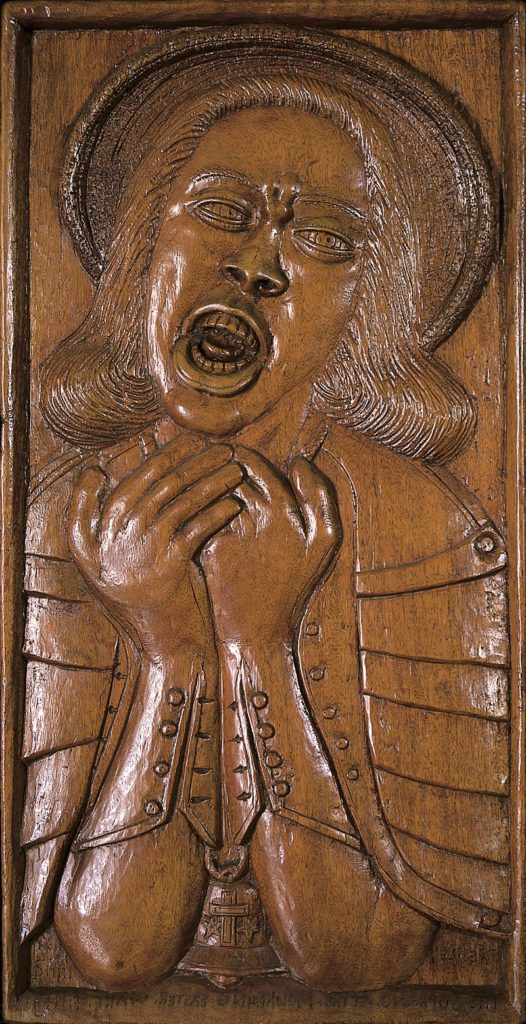
“A scold is paraded through the community wearing the “bridle,” an iron contraption used to punish women with a sharp tongue. Significantly, a similar device was used by European slavetraders in Africa to subdue their captives and carry them to their ships.”

The U.S. Supreme Court recently created a material and spectacular demonstration of how historical occlusions persist in the present. The people who were not the writers of enshrined documents, including those kidnapped from the African continent or related to them, people with disabilities and many others, are, were, and now will be even more so, at the elusive mercy of legislation, institutions, national borders and predilections of race and class.

As Jill Lepore wrote weeks before the overturn, “Women are indeed missing from the Constitution. That’s a problem to remedy, not a precedent to honor… [A woman] herself does not exist but is instead, as Mary Wollstonecraft wrote, a ‘non-entity.'”

Since the onset of the pandemic, the idea of “essential work” has entered a general consciousness in that people who perform tasks that are crucial to the maintenance of life have become relatively more visible. During the pandemic, workers who do the work that has historically and traditionally fallen to women, including food deliverers and caregivers, continued to endure starvation wages. An understanding seemed to emerge that if their numbers thinned, an already en masse health crisis would significantly broaden. And yet, one year after social media bristled over food deliverers being exploited on the front lines of the virus, and days after SCOTUS paved the way to criminalize abortions and miscarriages, a Door Dash worker was shot by police, thereby putting the essential worker ‘back in his place’ of disposability.

I

Such categories of non-status, “hyper-exploited” or “informal” work, as Maria Mies and others have called them, have been barred from the “worker” definition because tasks that were historically assigned to the bodies associated with motherhood are conferred the same lack of prestige imposed onto those who raise or bear children. Even in contexts that talk about subsistence or workers rights, childbearing, domestic labor and multiple forms of informal labor are still not given minimal protections, or even (until recently) sufficient language for describing thankless conditions of work that are, as a matter of course, unacknowledged, erased, and gaslit.

The existence of a femmes, reproductive, and “housewifized” labor form is an historical reality, not a “natural” one. Although biology is largely founded on the idea that only some bodies bear children, the division of labor that surrounds reproduction is a product of historical and social relations; it is not a “natural” condition. That said, the appearance of ‘natural’ gender grants the authority to exploit gendered bodies as a site of experimentation towards the blueprint for mass violence, slavery and trafficking. Mass disposability is a consequence of the decimation of bodily autonomy.

If definitions of the ‘wage-worthy’ have been narrowly defined, then so has value. The war in Ukraine has also posed a considerable threat to the stability of the idea of value. National entities and representatives are currently pouring enormous sums of capital into visions of how future East/West European and world borders will be shaped. Where Russia follows a regime of sacrificing humanity for an abstract border, the West describes and re-describes the value of the human. Whether or not the ‘human’ is truly a concern for Western governing entities or merely a form of propaganda that veils the preservation of future accumulation remains to be seen, but the discourse itself has a public and social effect that has generated many formal policy-making discussions that involve accepting financial losses in the name of boycotts.

It would not be obstreperous to imagine that between the recently circulating iteration of essential labor under covid and the boycott of previously advantageous business deals with Russia, the global socius might be exhibiting a tendency towards evolving away from living and thinking the numerical values of money in the “normal,” linear or historically predictable sense. Even the possibility of such a development represents an unprecedented threat to entities that thrive on and continue to demand unbridled powers of accumulation.

II

In 1847, when Marx wrote the Communist Manifesto in three weeks, he was commissioned by The Communist League, formerly The League of the Just, a group that was largely composed of guild worker artisans. One of the effects of this influential context is that “worker” in many texts still conjures images of White male woodworkers, bricklayers, stair builders and the like. The conditions of the creation of the Manifesto implicate a transition from the relative leverage that skilled guild artisan labor had against capital to the ‘worker hands’ who were tools of production, disposable, unskilled or de-skilled, and stripped of autonomy. Marx’s iteration of the “worker,” forged via a commission by reasonably nervous White male artisans as an expression of their fear of being instrumentalized as cogs, may well have supplied the material for a Right-wing contingent to abuse, in order to construct itself as the “authentic” worker body. This trace of relatively privileged artisans speaking on behalf of a much broader constituent of workers, in a kind of Napoleonic move according to Marx’s own early construction of the idea of class, re-appears in a mutilated and weaponized version in Steve Bannon’s view that the US remains an exploited colony of Europe in which only American-born White men need to be expressed by the “worker” notion. Entitlements to this definition are obviously at the catastrophic expense of others who perform other kinds of work including more essential and more socially occluded forms. The kinds of entitlements Bannon and other such figures easily reference have produced “replacement theory” and its accompanying gun violence, human abuses at borders, and violence in places structured towards xenophobia, as well as other sectors that have copyrighted authenticity in a multitude of dimensions, including but not limited to the arts, i.e., the masculinized elitism of “artistic technique” and so on.

That terms like “sex work” still require the qualifier “sex” in order to be inserted into the category of “work” testifies to an order of ‘true’ workers that obfuscate marginalized laborers and labor forms. Similarly, the work of slave labor in the 18th and 19th centuries, much of it domestic, was not seen as tool-bearing, which is one of the stipulations associated with what defines masculine labor against the feminine embodied labor that Maria Mies analyzed in the 1980s according to “work with the breasts and the womb.” Similarly, the idea of ‘slave’ is constructed as not a person who works, but as an inanimate tool of production in and of themselves, and is as such written out of the labor definition, with these practices carried into the present in prisons, unpaid overtime and the charge of laziness; an accusation that erases the possibility that a person with physical needs, such as sleep, or a psyche is connected to a body that is supposed to magically produce value for someone else without a personal or labor process. In “One is Not Born a Woman”, Monique Wittig links slave labor with gendered labor, arguing that the construction of gendered biology, including assumptions of ‘nurture’ projected onto childbearing bodies, produce invisibility and non-personhood in order to garner and quietly profit from the free labor value of the erased.

Meanwhile, the authentic, normative, standardized idea of “worker” produces a logic through which economies continue to deprive embodied workers, including starving artists, caregivers and others, of both wages and the dignity of personhood. In sum, a White male class to whom such historical texts referred retains a grip over the notion of ‘worker’ while others labor ‘outside’ or ‘behind’ the text and thus the historical and social. However, this recent attention given to essential work during lockdown highlights the possibility of re-distributing value within a regime in which value and visibility are intrinsically enmeshed.

III

The US Supreme Court majority now seeks to more intensively enforce the withdrawal and sanctioning of personhood of the exploited and unremunerated worker, of which one foundational category is the childbearer, and also those whose bodies are theoretically capable of bearing children but may choose not to birth. Much has been written about “back alley” abortions, and the many who have other talents and contributions but will be forced to become mothers and do the work of motherhood, laboring at domestic work without remuneration, and submitting to exploitative work in order to survive. Meanwhile those bodies who reject motherhood will be submitted to consequences that have been ‘updated’ by increased surveillance in the form of any number of high technology wars, mass violence, increased stalking, empowered white supremacist cells, and general forms of social pressure that can ensure the sanctioning of those who do not submit to norms complicit within patriarchal legitimacy. The surrounding structures that socially and institutionally police bodies are far more forceful today than they were when the constitution was written. And since then, multiple disciplines and fields of psychoanalysis and biology have naturalized hetero-procreation as the mandatory center of life, from Freud and Darwin to reddit discussion that anthropomorphize the natural world in terms of the procreative habits of varying species, and ‘riff’ on what “natural” gendered behavior should be according to imperializing whims.

The spectacle of misogyny in the confirmation hearings of Brett Kavanaugh, and Clarence Thomas several decades prior, including the “innocence” campaign waged by Johnny Depp or the general possibility of defamation and non-disclosure agreements for high profile rapists, form but a few of the exemplary chains of formal signs with increasing powers of social composition.

Making abortion less accessible will further conscript women into fields of invisible and unpaid labor, making childbearer bodies vulnerable to raising children at whichever level of poverty the State sanctions. The State has already realized billions of dollars in value in the unpaid labor of childbearers enduring toil in the name of “labors of love,” as well as the exploitative work of reproductive bodies coerced into states of desperation, as Sylvia Federici has pointed out. In her terms, profit from women’s unpaid and exploited labor, including but not limited to the production of future populations of workers, has been used to feed war machines, thereby moulding social reality into ever more virulent patriarchal forms.

IV

In Caliban and the Witch, Federici argues that these conditions are both historical and intentional: it was cheaper for the Catholic Church, who was for centuries the main land and wealth holder in Europe, to pay only a male laborer rather than the family supporting him. The Church thus organized the family unit and laws pertaining to the body, including marriage, accordingly. This meant that the wives of man-laborers, the people performing maintenance (food production and preparation, childcare, care for the sick and elderly, mental support) as support for the productivity of their wage-receiving husbands, and also caregiving, material tasks, and the work of the body involved in producing the next generation of workers, would never receive their own wage. By being naturalized into biology, the law-holding theistic institution that operated as the main boss and master, created an exploitation economy that has sprawled outward to consume almost all informal and marginalized labor forms. The production of a culture of silence around forced birth and all of the fallout that will follow for the lives of apparently ‘capable’ childbearing bodies will also have consequences across the entire informal labor economy, and for all genders therein.

In Federici’s account, the Church responded to the scarcity of workers in Europe as a result of the Plague by producing policies to benefit the maintenance of church properties and functions that required a plethora of human capital, and thus a social reality built on procreation. In order to create this economy of its own self-interest, the Church walled off common lands that had previously been used for autonomous food production, and created laws around sex, sodomy (ie non-procreative sex) and childbirth. This counter revolution over decades finally managed to force into submission a heretic movement of people who lived relatively more similarly to the so-called autonomies of current life in atheistic and non-fundamentalist contexts.

The Gutenberg Bible emerged to popularize, naturalize and sacralize the family unit and heterosexual marriage, to construct childbearing as the center of social reality in order to enforce procreation and therein the production of human capital.

Abortion has never been fully sanctioned or supported in the US. And yet, given the recent visibility of workers who served to protect and maintain life in the context of the pandemic, it seems no accident that the traditionalists further sanction the life necessities of bodies in this moment of the coronavirus, in which normally invisible forms of labor, including the toil of the body and the costs to the body in health and vitality, are being obviated. Such a sea change in what constitutes valuable and remunerable work would threaten the very basis of the profiteering economy. Moreover, the Church’s protocols, laws and doctrines that produced imperialization over the body, from the walling (‘hedging’) off of common lands to the sodomy laws to the mandate of ‘a marriage between a man and a woman,’ enforced domestic labor and forced birth, were all created during the plague; in the wake of an ebb of labor power in the context of mass death, illness and a worker re-thinking of the value of life over toil and submission. The historical reality of the plague bears similarities to the conditions produced by covid. The pandemic has intensified fundamentalist logic and brought to the fore the 500-800 year old period in which the Church began to realize its need for labor power/workers by re-organizing all elements of economy and a mutually composing social reality, including the relations of production of the present and the reproductive body as the key to controlling the labor relations of the future, especially the unborn worker. According to Federici, racism and misogyny also had to be created in order to keep laborers from uniting in protest, and people with wombs from controlling the future worker population, not only in number but also in temperament.

The fundamentalism that sees reproduction as profit in the form of unborn laborers is not interested in the personhood of women. Neither healthcare nor consent matter or are considered the responsibility or in the interest of the Christian State. While non-fundamentalist views understand forced birth as fiscally catastrophic as a result of what a multi-dimensional influx of traumatized bodies will cost, the traditionalists have a totally different calculation of profit, a different understanding of labor power, and of human aim. The fundamentalist algorithm of accumulation and functionality excise factors that non-fundamentalists find essential. It’s because of a calculation that ignores State responsibility for human life, leading to institutionalized rape and death and privation for religious aims, that even the most dogmatically capitalist arguments that are non-fundamentalist can find no equivalence or commensurability or appeal even along the most material or profiteering lines.

V

Bodies with the capacity to bear children are not responsible for the fact that they are fetishized for sexual abuse across the globe. Along with the elderly, people with disabilities and children, (all of whom are being raped in the Ukraine along with a program that targets everyone), people who get pregnant will suffer an increase in long term material consequences. What emerges in the next 20 years in Poland and the US after rape victims have been forced to bear the children of extreme trauma will shed light on the catastrophe such policies produce. One can only hope that the children of trauma and forced birth will not be compliant in perpetuating such a regime in the future, and that being born out of trauma will produce for them an alternative rather than static vision for the future.

Poland’s forced birth program is directly relevant to the US situation because, in the few States that offer rape exemptions, making use of them will be predicated on the safety of coming forward. A social reality that does not permit abortion is unlikely to provide a safe environment for rape victims to become vocal. Forced birth will strengthen masculine power by making sexual relations higher stakes and by making rape into a more lasting form of abuse, offering the rapist long term control of his victim. By re-instating a culture of shame, and by enforcing the mother role, the family unit, silent suffering and a rigid social experience will bring the capacity to ‘breathe’ well beneath the minimum at which it currently functions.

Women who are rape victims in particular along with any other abortion seekers have not consented to life with a child. The ruling is a crucial violation of life. Those who cannot abort are likely not to have the means or the mental and physical ability for such a life. Within the context of trauma, the State has an opportunity to steer the fate of children too damaged to perform any but the most exploitative labor, to also hyper-exploit mothers living in a state of desperation, or a subsequent population cut off from its familial culture by trauma, to untether and unmoor subjects in order to make them afresh as productive labor aka potential “tabula rasa” for State purposes. In this context, social networks will be necessary to help traumatized children withstand being alive as critical readers rather than menial cogs, and to create collectives of belonging that hold them away from a violent fate of disposability masquerading as depression, ideation or religious fundamentalism.

Materialist feminists have long observed that calculations of demographics place statistics of predicted pregnancies in relation to immigrant influx and other controls pertaining to material economy. Policies relating to abortion and what social discourse shames or encourages, and how that is engineered across forms of current media or in more historical or medieval forms of advertising, are generally steered by how heads of State require a work force or allocate resources. These practices of analysis for the purpose of policy are not dissimilar to the ideology of war in which the body and the human are subjugated for abstract experiments based on human predictions with unknown outcomes.

VI

The US has long fought over abortion as one of the last frontiers of bodily autonomy after what were reintroduced later as ‘rights,’ separated, severed, alienated via preciousness, specificity and class selection, and annihilated in Europe before the Enlightenment. In recent decades, the US holds immigrants at borders as it “processes them” while making considerations about whether to let them in based on demographics. If a class of mostly Black and Brown people too poor to travel to liberal States for abortions is forced to reproduce, the US can shut down its borders without losing out on the global competition for human capital.

Maria Mies summarized how programs such as forced birth are only limited to being misogynistic at their beginning. She wrote extensively on how bodies that have the capacity to bear children were targeted for the State’s experiments in exploitation, to be implemented later in different forms across broader swaths of population. Every non-capital owning body should become aware that policies of forced birth foreshadow an oncoming onslaught of aggression by owners of capital that will produce more categories of intensively exploited labor, that are likely to effect even privileged classes of the iterated White worker who meets the standard definition. It is here that ‘replacement theory’ must stand in as an alibi for the declining labor conditions of the heretofore relatively privileged White worker who uses this notion to retain a position as ‘the authentic’ as his own material stability crumbles.

I suggest that we turn to materialist feminism and its analysis of the evolution of gender constructs in relation to profit. For what Mies calls “time lag feminism,” or the body of work supporting the idea that women need to ‘catch up’ to men, or the idea of a linear history that ought to progress rather than ‘turn back’ can only yield short term gains in the endless tennis match that was designed by the Enlightenment to ensure that a regime of personality cults, class and identity hierarchies remain static. The idea that women are a generation ‘behind’ men constitutes a kind of white feminism in which women seek to supplant men in a machine that is built by imperializing desires and values.

Analyses might henceforth begin with the understanding that traditions are not going to protect the people they promise to exclude. The labor movements of the left must begin to take gender and reproduction much more seriously as intrinsic to how accumulation and profiteering maintain themselves, placing at the fore the understanding that reproduction is future labor power. Consent is also a crucial barometer for how to resist the historical and ideological imperialization with which the church has had a long-term agenda for recomposing a brutally disciplined and imperializing social reality. Consent literally checks in with the habitability of the body as well as its psychic and immaterial requirements.

Any movement that fails to understand that the battle to own and commandeer reproduction is the battle to own the labor, profit and accumulation of the future, and any movement that fails to understand the nuanced relationship between exploitation and consent is doomed to not only fail, but to play into the hands of imperial reality ad infinitum.

(Thanks to Cedrik Fermont for our conversations pertaining to the fact that every sexual identity has been raped in Ukraine, and the impact of abortion law in Poland for childbearing bodies.)

(By Dora Bleu)

(Image Credit: Caliban and the Witch)

Winter’s coming. Scotland stops evictions and rent increases. Your government can too!

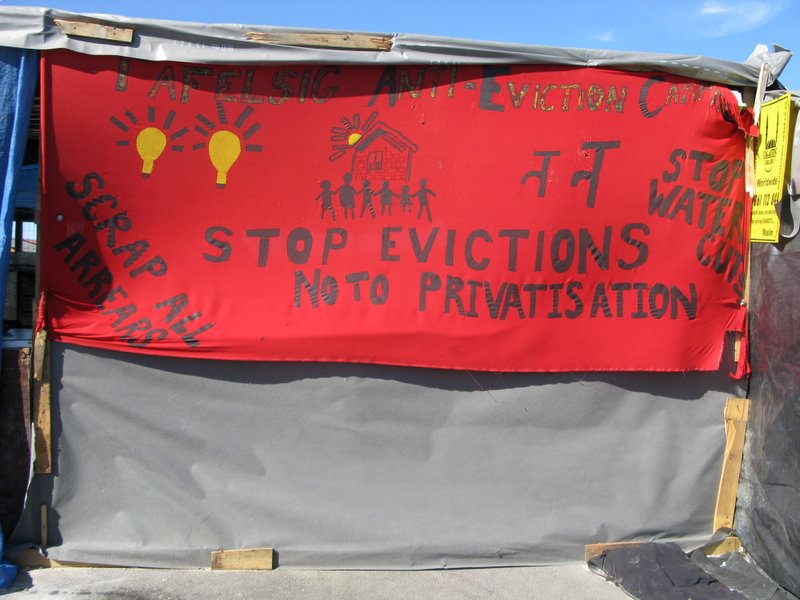
Winter is coming to the Global North. In the United Kingdom, winter can be brutal. Inflation this week hit 10.1%, the highest since 1982. Rents across the United Kingdom have skyrocketed at never-before-seen rates or levels. Scotland was hit the hardest. Last year, across the United Kingdom, close to a million rental households feared and anticipated eviction: “Black, Asian and minority ethnic (BAME) renters, renters with children, lower-income renters, and renters that have lost income during the pandemic, are disproportionately struggling.”. Where are the women in this tragedy? Black women, Asian women, minority ethnic women. Women with children. Lower-income women. Women who have lost income during the pandemic. Where are the women? Everywhere, disproportionately.  This week, Nicola Sturgeon, First Minister of Scotland, responding to the crisis, announced a rent freeze on public and private properties and a ban on winter evictions. In Scotland, 37% of households are rentals. The rent freeze and the ban on evictions will be in place until at least March 31.

According to Nicola Sturgeon, by October, 40% of all Scottish households would be “in fuel poverty”, 37% in “extreme fuel poverty”. As we have seen in the United States and elsewhere, fuel poverty translates to food poverty, housing poverty, education poverty, health poverty. Fuel poverty translates as well into increased domestic and community violence. There are no discrete poverty categories. As Nicola Sturgeon noted, “It is, to be blunt, a humanitarian emergency”.

Scotland cannot address fuel poverty on its own. The United Kingdom, ie Westminster, must do that. Scotland has the same impediments as many jurisdictions around the world. It can do some, but not all, things. But it has decided to do something. In Scotland as elsewhere, a rent freeze is controversial. A ban on evictions is controversial. The government of Scotland decided to welcome the controversy and move forward: “It will aim to give people security about the roof over their heads this winter through a moratorium on evictions. Secondly the legislation will include measures to deliver a rent freeze. The Scottish government does not have the power to stop your energy bills soaring but we can take action to ensure your rent does not rise. The practical effect of this statement is that rents are frozen from today. Two of the most important and fundamental sources of security for any of us are a job and a home. In times of economic and financial crisis. These can be the foundations that helps people through.”

These can be the foundations that help people through. Scotland has acted. Your government can as well.

(By Dan Moshenberg)

(Image Credit: BBC)

In South Africa, Hope Gloria Mashilo and Tshebeletso Seremane said NO! to the subjugation of women workers … and won!

Tshebeletso Seremane

Hope Gloria Mashilo and Tshebeletso Seremane used to work, as executives, at the South African Revenue Service, SARS. Mashilo began working at SARS in 2005, and by 2015 she had attained the position of Executive: Workplace Wellness, where she addressed employee assistance programs, occupational health, extended sick leave and chronic diseases. Seremane began working at SARS in 2009, as Executive: Integrity and Organisational Culture. Seremane was effectively the in-house person in charge of ethical conduct and culture. According to Seremane, at first SARS valued integrity. All that changed, again according to Seremane, in 2014, with the arrival of a new Commissioner, Tim Moyane, and of the now disgraced Bain & Company, who were hired to facilitate processes at SARS. Within a month of Moyane’s arrival, the new Commissioner and his friends at Bain announced a new restructuring plan. That’s when integrity left the building, and Hope Gloria Mashilo and Tshebeletso Seremane began worrying about the institution as well as their own positions and well-being. With good reason, as it turned out.

Moyane and Bain’s `restructuring’ was “unveiled” in August 2015. Soon after, many executives discovered their jobs no longer existed and they were re-assigned to ill defined, lower positions. Many, including Mashilo and Seremane, were informed they were now “Domain Specialists”, an undefined job which basically involved turning on a computer, sitting, then turning off the computer. To be clear, people continued to receive salaries as well as benefits and bonuses. Mashilo and Seremane, separately, thought this was, first, wrong and then suspicious.

Mashilo wrote a letter, entitled “Breaking the Silence”, addressed to Malusi Gigaba, then Minister of Finance, and Yunus Carrim, chairperson of the Standing Committee on Finance, with Moyane copied. Mashilo described her own personal trials as well as the illegal appointment of Bain and the spectral situation of “Domain Specialists”. Under South African whistleblower protection laws, the author of this letter should have been protected. Nevertheless, soon after Hope Gloria Mashilo was fired and escorted out of the building.

While Tshebeletso Seremane never wrote a letter, she refused to accept the indignity and illegality of the downgrading and of the “Domain Specialists” position. She too was fired and escorted off campus. Seremane has said the that dismissal had “broken her”. Her marriage fell apart as did other parts of her life.

Hope Gloria Mashilo and Tshebeletso Seremane decided to confront the indignity and illegality of their dismissals. They sued SARS, demanding re-instatement. On August 22, acting Labour Court Judge Smanga Sethene decided in favor of Mashilo and Seremane. His judgement begins: “History narrates that in human tragedies, wars and skirmishes, women are always burdened with sufferings and hardships. The burden of womanhood is a daily struggle encountered by women in all walks of life. Courts should not be meek and gentle when confronted with instances that have all the traits of any attempt to keep women subjugated in any form at workplaces. This case captures the hardships endured by two single mothers and senior executives during the infamous `restructuring’ of the South African Revenue Services (SARS) by Bain & Company (South Africa) during the tenure of Commissioner Thomas Swabedi Moyane … Their main sin was to question the integrity of the 2015 “restructuring” sponsored by Mr Moyane with Bain as a service provider”.

The decision concludes, “The injustice visited upon Ms Mashilo and Ms Seremane deserves the unwavering protection of this court. This court cannot consort with any corrupt activity at workplaces calculated to circumvent any provision of the Labour Relations Act. This court cannot consort with anyone who trampels upon women to exploit their vulnerability at workplaces. If this court were to turn a blind eye on what occurred at SARS during Mr Moyane’s `restructuring’, it would be failing in its constitutional obligations … This court shoulders the responsibility to ease the burden of womanhood at workplaces. It is in the interest of justice and the rule of law for this court to order the current Commissioner of SARS, Mr Kieswetter to welcome Ms Mashilo and Ms Seremane24 back … effective from 1 September 2022.”

Courts should not be meek and gentle when confronted with instances that have all the traits of any attempt to keep women subjugated in any form at workplaces. In refusing to be meek and gentle, courts follow, and honor, the actions and lives of those women who refused, who said NO! to indignity, who seized the power that was, and is, already in their hands. Hope Gloria Mashilo and Tshebeletso Seremane said NO! and won, and their victory is a victory for women workers everywhere, for women everywhere.

(By Dan Moshenberg)

(Photo Credit: EWN)

We Almost Lost Kiev (for Gil Scott Heron)

We Almost Lost Kiev (for Gil Scott Heron)

They pass out iodine tablets
As the people stand in lines

It inspires the children’s questions

(“What’s that?”)
As mama swallows it and cries.
But no one stopped to think about the children
Or how they will survive.
And we almost lost Kiev
This time.
But how will we ever get over
Losing our minds?

Same country as Chernobyl

Where we lost our minds one time.
Another power station
Another inhuman crime.
Will they stop to think about the people?
And how they will survive.
And we almost lost Kiev
This time.
How will we ever get over
Losing our minds?
The President of Ukraine
Has disasters on his mind.
And what would Gil Scott Heron say to us?
I mean…
…If he were still alive.
When it comes to global safety
Money wins out every time.
And we almost lost Kiev
This time.
Well how will we ever get over
Losing our minds?
Already lost Fukushima
one time.
Odds are we’ll lose again.
Next time.
Saw my mother’s hair.
This time.
Long Silver strands of her hair.
This time.
Melting in the wind.
This time.
Too fragile to be touched.
This time.
Got me feeling blue.
This time.
Joni Mitchell Blue.
This time.
Yves Klein Blue.
This time.
Shadow black and blue.
This time.
Nagasaki shadows.
This time.
Still waiting for a Trane.
This time
Coltrane saw those shadows.
One time.
Called for A Love Supreme.
That time.
We  still lost Chernobyl.
One  time
And Three Mile island.
That time.
Going to lose somewhere else.
Next time.
Lose someone else we love.
Next time.
Didn’t learn our lesson!
Three times!
Fourth time is the charm?
Next time?
Well, how will we ever get over
Losing our minds?
(By Heidi Lindemann and Michael Perry)
(Image Credit 1: Dana Kavelina, “We are all tied now” (Exit to the Blind Spot Series) / Fridman Gallery)
(Image Credit 2: Dana Kavelina, “from the threads of silence a pullover for a soldier is sewn” (Exit to the Blind Spot Series) / Fridman Gallery)

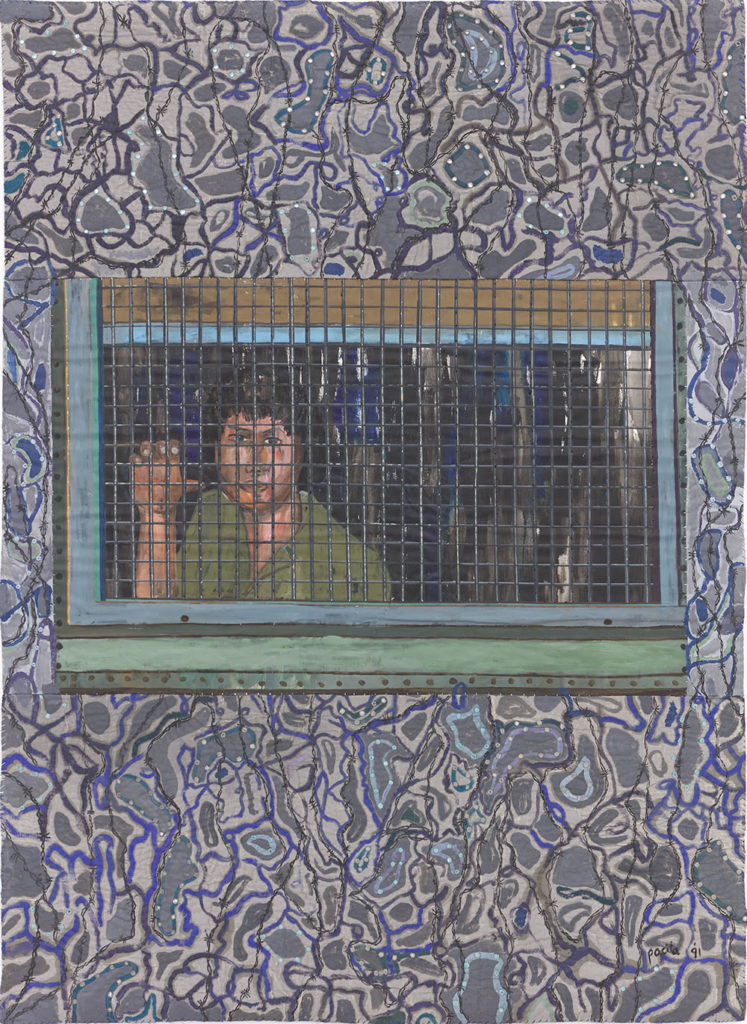
In Australia, Aboriginal and Torres Strait Islander women are incarcerated for being Aboriginal and Torres Strait Islander women

On August 17, the Queensland Sentencing Advisory Council issued a report, Engendering justice – the sentencing of women and girls, that found, yet again, that, from 2015 to 2019, Aboriginal and Torres Strait Islander women in Queensland were disproportionately subjected to incarceration, usually for `minor offences’, usually for short less than a year periods. This happened despite numerous national, organization, and academic reports and recommendations that clearly stated that incarceration for low level offenses was bad for everyone and that short term imprisonment was deeply damaging. And yet here we are, with a skyrocketing rate of Aboriginal and Torres Strait Islander women seemingly trapped behind bars.

That report follows a Guardian Australia report the week before that over 1200 people are detained without having been convicted, sometimes for decades. How? Most of the 1200+ are individuals who were deemed unfit to plead after being charged or were found not guilty due to mental impairment. So, `for their own protection”, they were thrown into prison. In the Northern Territory, one person has been in the Darwin Correctional Centre for more than 30 years. For their own good.

In 2018, Victorian Ombudsperson Deborah Glass investigated the 18-month imprisonment of a 39-year-old woman found unfit to stand trial and not guilty because of mental impairment. And so the province dumped her in solitary. Again, why? Because “Victoria has no secure therapeutic facilities for women with Rebecca’s disability. Authorities were concerned about releasing her into the community because she had no housing or services.” Nowhere to go? Go to jail, to solitary. As Deborah Glass noted, “We heard many more stories, some as sad as Rebecca’s, of people with significant disabilities who had spent long periods in prison. These stories highlight both the trauma of incarceration on acutely vulnerable people, and the threat to community safety in failing to provide a safe and therapeutic alternative to prison.” Glass concluded this case was “the saddest case I have investigated in my time as Ombudsman”.

In response to this week’s report on Queensland, Debbie Kilroy, founder of Sisters Inside, noted, “The thing with these reports and recommendations … the recommendations are not implemented. We’ve even got recommendations from the Royal Commission into Aboriginal Deaths in Custody from 1991 to decriminalise and repeal public drunkenness, and that still hasn’t happened. Governments continue to fund inquiries and reports, but recommendations continue to sit on the bookshelf, gathering dust for decades and decades and decades.”

The recommendations gather dust, the infirm sit in solitary, we hear many stories, sadness abounds. Over four years ago, Australia signed international treaties that required it to open its prisons to independent oversight. Thus far, it has successfully delayed any visit. Signing the document was the point, not changing the system. Debbie Kilroy understands this cynicism and the way in which it abuses language. When a bill was introduced this week to raise the age of criminality to 14, Debbie Kilroy replied, “So what you’re saying is a child, an Aboriginal girl that’s 14 years and one week old, can actually be put in a cage. I do not agree with that — no child should be caged ever.” Start there. No child should be caged ever, no vulnerable person should be caged ever, no person or persons should be caged ever. Ever.

(By Dan Moshenberg)

(Image Credit: National Gallery of Australia)

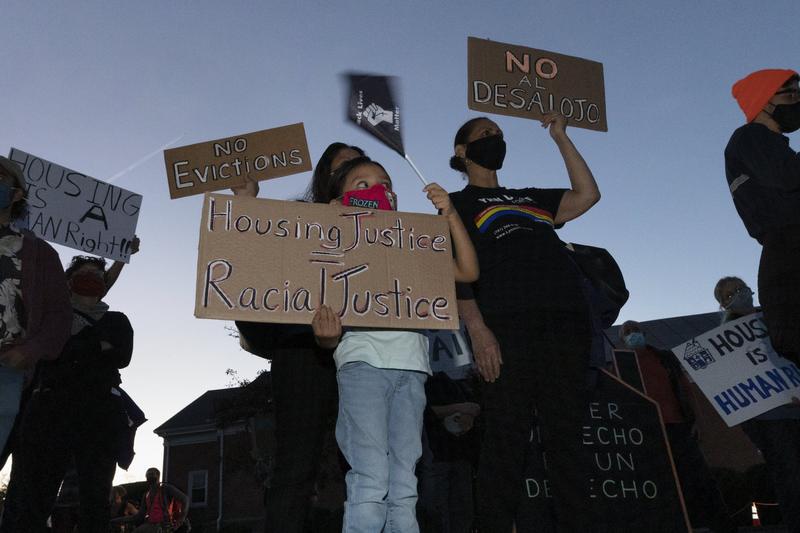
In the land of the “free,” “free” is only awarded to certain people

The Supreme Court’s decision to overturn Roe v. Wade has dominated the social and political landscape in the U.S. and across the world. In June, the UN voted to denounce the Court’s decision and when the Court released its ruling, Democratic politicians did not hesitate to reach out to their base through fundraising emails and texts. Additionally, many have expressed concerns about what this means regarding fundamental rights realized in the last 50 years. While these responses to the decision are important, it is time to also acknowledge the misogyny rampant in America.

Simply put, America hates women. The loss of the right to safe legal abortions threatens the right to life, liberty and the pursuit of happiness. Recent headlines about a ten-year old girl seeking an out-of state abortion for a pregnancy as a result of a rape is just one extreme but not unique example of the great dangers that many of us may face in the not so distant future. It is a gross story of forced reproduction and pregnancy without considering the physical and emotional toll a pregnancy may have on an adult let alone a ten-year old girl.

Additionally, people have been similarly forced into carrying pregnancy; being held unfairly and unjustly responsible for pregnancy outcomes. For example, Purvi Patel, an Indian-American woman, was imprisoned and convicted to 20 years in prison for her pregnancy loss. She was charged with felony child neglect and feticide – charges that value the humanity and life of the fetus over that of the individual carrying the pregnancy. These stories of loss, loss of autonomy and life, point to a devaluation and dehumanization that grounds the misogyny in America.

Outside of reproductive rights, perhaps another poignant example of misogyny could be viewed through the legal battle between Johnny Depp and Amber Heard. The issue was domestic violence, a reality many  know all too well, but this serious concern was almost second to the social media reactions to the case. As the trial was publicly consumed and followed for six weeks, it became clear who was favored and who was not. In fact, Heard was met with mockery and vilification for sharing her story; it was as if the crime of defaming an apparently beloved actor (Depp) was more horrendous than the allegations of violence and abuse. Regardless of how one may feel about the case, it was objectively troubling to see the lack of empathy, to see how easily people mocked someone’s story of abuse.

In the land of the “free,” these stories demonstrate that “free” is only awarded to certain people. “Free” to live as we choose, “free” to speak your truth in the hopes of being heard are not realized by all. It is unclear where to move forward from here, but acknowledging this reality is the best first step.

(By Michelle Nguyen)

(Photo Credit: Christine Garlough / UW-Madison Libraries)

Texas’s juvenile prison system is (still) in crisis (again): Where are the girls and young women?

E.Y., age 11

The Texas Tribune reports this month, and once again, that Texas’s juvenile detention system is still in crisis, again. As Tribune criminal justice reporter Jolie McCullough noted in an interview yesterday, “The Texas Juvenile Justice Department has really always been – it’s always been in crisis. It’s been more than a decade of crisis after crisis. There’s sexual abuse scandals, mistreatment allegations. They’re actually under federal investigation right now from the U.S. Department of Justice.” The Texas Juvenile Justice Department has always been in crisis. While the system has reduced from thousands to hundreds, that step is of little benefit to those still caught inside. Children are spending 23 hours a day, days on end, alone in their concrete cells, equipped with a mounted shelf and a thin mattress: “The lucky ones have a small window to the outside.” Children are `self-harming’ in record numbers. The “system is nearing total collapse.” Nobody in that system is lucky. And where are the girls and young women? They are in the Ron Jackson State Juvenile Correctional Complex in Brownwood … for now.

In 2008, the ACLU filed a class action lawsuit against Texas challenging inhumane conditions at the Brownwood State School, which was later renamed Ron Jackson. The conditions included invasive, frequent strip searches; frequent, extended use of solitary confinement; frequent application of “brutal physical force.” Why were girls and young women in Brownwood, in the first place? Minor offenses, minor misbehavior, but really for being girls and young women who had survived violence and were living with trauma, depression, and mental health issues. Any of those would send a girl or young woman into solitary, often and for long periods of time. Who in that system, in the early 2000’s, was lucky? That class action lawsuit covered “all girls and young women who are now or in the future will be confined in the Brownwood State School”. From 2008, is 2022 “in the future”, because the conditions at Brownwood, now known as Ron Jackson, are still brutal.

In 2012, the Texas Coalition Criminal Justice Coalition reported on girls’ experiences in the Texas juvenile justice system. They found: “Girls in the Texas juvenile justice system do not receive sufficient help to deal with past trauma in their lives … Negative interactions with staff are the least helpful part of the juvenile justice system; they are also the number one thing girls want changed in the juvenile justice system … Girls in the Ron Jackson state secure facility are extremely isolated from their families.” Anna Yáñez-Correa, Executive Director of the Coalition, noted, “We are failing many of these traumatized children. Half of the girls we surveyed at the Ron Jackson State Juvenile Correctional Complex told us that their time in county juvenile facilities either did not help or actually did more harm than good for dealing with their past trauma. Tragically, eight percent told us that their time at Ron Jackson is doing more harm than good, suggesting that our juvenile justice system may be re-traumatizing many of these domestic violence survivors.” As one girl explained, “Counselors, staff, the legal system – they can’t understand where we’re coming from and what we need. They’re always trying to judge us for our trauma.” Ten years later, the trauma and the judging continue and deepen.

In 2019, the U.S. Justice Department’s Sexual Victimization Reported by Youth in Juvenile Facilities, 2018 found that, nationally, 7% of youth in juvenile facilities reported having experienced sexual victimization, which was down from 9.5% in the previous report, in 2012. Texas was an outlier, reporting 10.3%. Ron Jackson’s lucky residents reported 14%, as they had in 2012. In August 2019, a guard at Ron Jackson was fired and jailed for sexually abusing a “resident”. For those incarcerated girls and young women, when does “the future” begin?

Last year, the U.S. Department of Justice launched an investigation into the abuse of children and teens in Texas juvenile detention centers. At the press conference announcing the investigation, Chad Meacham, acting U.S. attorney for the Northern District of Texas, said, “We are particularly troubled by the news coming out of the facility in our district, especially reports of misconduct by staff.” That was an explicit reference to the particularly troubling Ron Jackson State Juvenile Correctional Complex.

Last year, the Texas Juvenile Justice Department reviewed its own “progress”. Under the heading “Achieving Balance Between Supervision and Population”, the report addressed the particularities of girls at Ron Jackson: “Girls have very high levels of trauma, with 86 percent having 4 or more Adverse Childhood Experiences, and when we screen them for potential sexual exploitation, 36 percent are of clear concern and 55 percent are of possible concern. The small number of girls in state care quite often have an intense level of trauma that causes them to respond automatically and aggressively to stressors. Girls need an overall ratio of 1 direct-care staff member to 6 girls; for the most violent youth and those with significant mental health needs, that ratio is 1 to 4. Of girls in secure facilities 63 percent have been placed on suicide alert at least once— about twice the percentage of TJJD secure youth overall. When this occurs, they often need a 1 to 1 ratio … 84 percent of girls have four or more Adverse Childhood Experiences (ACEs) as compared to 12.6 percent of the public, 91 percent of girls are clear or possible concern for child sex trafficking … This is the highest concentration of acute needs and risk in the history of the agency.” How does the State respond to the highest concentration of acute needs and history? Diverting federal coronavirus relief funds to Texas’ “border security mission.”

In June 2022, Shandra Carter, Texas Department of Juvenile Justice Interim Director, wrote to her staff to outline her response to the department’s situation. The letter begins, “I am incredibly disappointed to have to inform y’all that we will temporarily be halting intake of youth committed to TJJD.” She then outlines five steps, including moving the female behavioral stabilization unit from Ron Jackson unit to the McLennan County State Juvenile Correctional Facility and “reducing’ the female population by 16 at the Ron Jackson State Juvenile Correctional Complex by moving them to the McLennan County State Juvenile Correctional Facility, currently holding 242 males. So, the reduction involves no reduction but rather moving 16 girls and young women to an all-male facility that is also under federal investigation.

The Texas Juvenile Justice Department has always been in crisis. From the first report to the latest, the “crisis” is always attributed to “staffing shortages”. While staffing shortages exist, the crisis in the Texas Juvenile Justice Department is prison. Texas responds to violence against girls and young women as a matter of criminal justice in which girls and young women are condemned for their trauma as well as their survival. Moving girls and young women from one prison to another does not reduce their population, it reduces their dignity and stature and intensifies their trauma. Blaming the situation on staff shortage refuses to acknowledge the truth, one which Mark Patterson, head administrator of the currently empty Hawaii Youth Correctional Facility, explained, “We no longer want to keep sending our kids to prison … Do we really have to put a child in prison because she ran away? What kind of other environment is more conducive for her to heal and be successful in the community?” Stop offering alibis, such as staff shortages, for our own vicious policies; stop sending children to prison; stop treating trauma and mental illness as a crime. Work towards healing in the community and beyond. Begin, again, by stop sending children to prison. Where are the girls and young women; when does their future begin?


(By Dan Moshenberg)

(Photo Credit: Richard Ross / PBS)

No girls in juvenile detention: In Hawaii another impossible world is possible

“Forgiveness must announce itself as impossibility itself. It can only be possible by doing the impossible.”   Jacques Derrida, On Cosmopolitanism and Forgiveness

For decades, women have been the fastest growing population. For decades, girls have been the fastest growing population in juvenile detention. While many have decried the situation, it often seems that the best one can hope for is some reform around the edges, but real change, transformative change, seems impossible. The problem is so big, so complex, and there are so many things to attend to. It’s … impossible. Well, welcome to Hawaii: “Hawaii has no girls in juvenile detention. Here’s how it got there.”

In 2014, we noted, “Girls are entering into the juvenile `justice’ system at an alarmingly increasing rate. One reason is that girls are arrested more often than boys for status offenses and are more severely punished for those offenses. The thing is those `offenses’ are not crimes. That’s what makes them `status’ offenses. If the girls were older, there would be no offense, no crime. But they are girls, and they must be protected from themselves.” Boys will be boys, and girls will be jailed. In January 2022, eight years later, we noted, “Girls `enter the criminal justice system’ in disproportionate numbers and, as a result, die at a young age in disproportionate number. The time for discovery is over. It’s time, it’s way past time, to stop the slaughter of girls and gender expansive youth.” Boys will be boys, girls will be jailed, and then they will die at an early age. At times, the news can seem dispiriting, but wait, there’s more. Hawaii has no girls in juvenile detention. How can that be?

Hawaii has no girls in detention because people worked together for years to make that happen, starting in 2004, when Judge Karen Radius founded a Girls Court which “aimed to address the specific crimes and trauma history of girls.” Other Hawaiian programs with similar aims followed suit. Then, in 2014, Mark Patterson assumed the administration of the Hawaii Youth Correctional Facility, HYCF. Patterson came from having been warden of Hawaii’s only women’s prison, the Women’s Community Correctional Center. Upon announcing that HYCF had no girls inside, Patterson explained, “We no longer want to keep sending our kids to prison. What I’m trying to do is end the punitive model that we have so long used for our kids, and we replace it with a therapeutic model. Do we really have to put a child in prison because she ran away? What kind of other environment is more conducive for her to heal and be successful in the community?”

As Patterson and others explain, this news is the result of a concerted 20-year effort that itself is built on decades of work, vision, struggle. Part of it involved seeing and speaking the truth. Native Hawaiian youths were disproportionately dumped into the criminal justice system. Girls were arrested for having survived, often barely, trauma. And so, Patterson and his allies set to transform HYCF into the Kawailoa Youth and Family Wellness Center, an environment with trauma care at its center and everywhere. This vision, and now reality, is based on “pu’uhonua — a place created within a traditional Hawaiian village for conflict resolution and forgiveness.”

For Patterson and his allies, the struggle is not over, there’s more work to be done, much more work. At the same time, their work and example have already taught that doing the impossible is necessary. Another world is possible, one in which impossible forgiveness subsumes the criminality and cruelty of justice structures that send children, especially girls, who have suffered trauma into cages, brand them for life, and then toss away so much more than a key, toss away their lives. Another impossible world is possible.

(By Dan Moshenberg)

(Image Credit: Ka Wai Ola)

British Columbia decided that rather than be second in the race to the bottom, it would prefer to be first in the pursuit of justice

#WelcomeToCanada

On Thursday, July 21, 2022, British Columbia’s Minister of Public Safety and Solicitor General, Mike Farnworth announced that the province will end its immigration detention contract with the Canada Border Services Agency (CBSA). The province would no longer hold immigrant detainees in provincial jails. Minister Farnworth explained, “In the fall of 2021, I committed to a review of BC Corrections’ arrangement with the CBSA on holding immigration detainees in provincial correctional centres. This review examined all aspects of the arrangement, including its effect on public safety and whether it aligns with the United Nations Standard Minimum Rules for the Treatment of Prisoners and expectations set by Canadian courts …. The review brought to light that aspects of the arrangement do not align with our government’s commitment to upholding human-rights standards or our dedication to pursuing social justice and equity for everyone.”

Part of the impetus for the provincial review came from a joint Human Rights – Amnesty campaign, #WelcomeToCanada, launched last year, on June 20, World Refugee Day. At the launch, the campaign noted, “Between April 2019 and March 2020, Canada locked up 8,825 people between the ages of 15 and 83, including 1,932 in provincial jails. In the same period, another 136 children were `housed in detention to avoid separating them from their detained parents, including 73 under age 6 … Since 2016, Canada has held more than 300 immigration detainees for longer than a year.”

This week, Ketty Nivyabandi, secretary general of Amnesty International Canada (English Speaking), said, “Today’s decision is a momentous step. We commend British Columbia on being the first province to stop locking up refugee claimants and migrants in its jails solely on immigration grounds. This is a true human rights victory, one which upholds the dignity and rights of people who come to Canada in search of safety or a better life.”

Kasari Govender, British Columbia’s current and first independent Human Rights Commissioner, added, “Detaining innocent migrants in jails is cruel, unjust and violates human rights commitments. CBSA may still hold migrants in a detention centre, but this a significant first step towards affirming the human rights of detainees. Now, it is up to the federal government to abolish all migrant detention and expand the use of community-based alternatives that support individuals.”

The decision is momentous, landmark, in a number of ways. In and of itself, it marks the first province to stop the brutal practice, and to do so in the name of human rights, social justice and equity. Additionally, until now, British Columbia is a leader in the incarceration of immigrants. From 2019 to 2020, 22% of detained immigrants were held in provincial jails. Then Covid hit. The number of people held in 2020 – 2021 dropped to 1605, of whom 40% were held in provincial jails. In the two years under review, only Ontario exceeded British Columbia in the incarceration of immigrants, asylum seekers, refugees. This week, British Columbia decided that rather than be second in the race to the bottom, it would prefer to be first in the pursuit of justice.


(By Dan Moshenberg)

(Image Credit: Amnesty International Canada)

Forging Friendships and Feminist Resistance: Where are the women, and what happens when they find each other

Paola helps her children with their homework over a video call in her cell

“Neighbors are the center of the universe to each other.”
Bessie Head

In March 2020, as the global COVID-19 pandemic was taking off, the Argentine government approved cell phones for incarcerated people. At that time, Paola was in Penitentiary Unit 47, in Buenos Aires. Upon receiving her phone, the first thing Paola did was call her neighbor, a number she had known by heart. The cell phones were the response to a quarantine that would have restricted visits, in-prison classes, and work outings, essentially increasing the isolation already faced by the prisoners every day. Access to phones has opened doors that were closed like zoom classes, facetime calls with families, digital payments, and one of the most important things: solidarity campaigns. Prisoners have used their cellphones to create Instagram accounts and solidarity campaigns to bridge the gap between prison and the outside world. Not only are the phones used to connect with people outside of prison, but Paola started a Whatsapp group to connect to her friends isolated in other cells, where they share information and activities and keep in touch. This story is important now more than ever because as the pandemic restrictions are lifted, families and human rights organizations are fighting to keep cell phones inside of prisons.

Prisons were designed to limit movement and connections between prisoners and the outside world; this is not a unique-pandemic experience and nothing at all like the celebrities who took to Twitter to share how their COVID-19 quarantine felt like a prison inside of the million-dollar Malibu mansions, but, I digress. What little solace there is to be found within the walls of prisons and jails is often found between the connections women can form, bonded by their mutual understanding of their positions in this world as female prisoners. With the recent death of Katherine Boudin, we can celebrate her work in creating carceral communities to share knowledge of literacy and AIDS; but we also fear for the future of such organizing in the wake of the COVID-19 pandemic.

Paola and her fellow inmates called their children, watched movies, celebrated birthdays together, and had increased access to attorneys, defenders, and legal information. Cellphones across various Buenos Aires prisons were not only used to organize protests but to document the abuses they were protesting and post them online. The videos called attention to the inmates’ abuse claims as well and legitimized them. In the age of social media, giving prisoners access to cellphones provides them a unique opportunity to pursue global campaigns and organizations. Prisons gain their power from isolation and severing ties within and among communities, but bringing them back together, even just virtually, could decrease the power of isolation that the carceral system holds over inmates. During a time of increased border patrol and family separation across national boundaries, maintaining global communities feels more important than ever. Where the global panopticon seems to gain control by maintaining constant surveillance, are cellphones giving us a way, when in the hands of prisoners, to reverse these effects? Does it give prisoners the opportunity to surveil their guards? To look out for each other? To look out for their families?

If neighbors are the center of the universe, then the prison-industrial complex was built to control and sever that center, and as a deadly virus spreads amongst neighbors in and outside of its walls, that center has become increasingly hard to grasp. Women have always found a way to support each other through friendships, campaigns, political organizations, and support groups. In the digital age, there is an opportunity to globalize these systems of support.

Friends watch a movie together in a Penitentiary Unit 47 cell


(By Abigail Langmead)

(Photo Credits: Rest of World / )