Greek cleaning women demand an end to austerity

In Greece, women are leading the popular struggles against austerity. In Athens, women cleaners have been camping out in front of the Finance Ministry for months. And they’re winning, slowly but winning.

Konstantina Kouneva, a Bulgarian immigrant to Greece, has been working as a janitor since 2001. She is also a trade unionist. In 2008, she was the victim of an acid attack. She sued the company she works for, for its lax approach to workers’ security, and won. She has kept on winning, and next month she will join the European Parliament, representing SYRIZA, workers, women workers, and social economic justice.

Women cleaners were fired, months ago, from the Finance Ministry and have been protesting, camping out, occupying, and suing. They have repeatedly won in court, and look forward to more such victories. The Supreme Court was supposed to decide on Thursday, but delayed its decision until September. The struggle continues.

The women continue the struggle. Despite police brutality which sent women to the hospital, the women continue their encampment in the space in front of the Finance Ministry. As Despina Kostopoulou explained, “They’re bigger than us, but we’re angrier.” Despina Kostopoulou is in many ways typical of the women cleaners. She’s in her 50s, she’s been working for the ministry for decades. She thinks the labor and time she has invested in the ministry counts. She’s right. That’s why the State is trying to rob her and the other women every which way every second of every day.

The women have traded, temporarily, the labor of cleaning for the labor of justice. “Protesting wasn’t hard for us, really. We had no choice. If you make a living with a mop in your hand, you’re already fighting to make ends meet anyway,” explains 57-year-old Evangelia Alexaki. What is the cumulative value of a life of labor, and especially if the laborers are women?

The struggle will not end with the re-instatement of hundreds of cleaner women. First of all, re-instatement under austerity is a tricky business, literally. The `returning’ workers will be offered half of their original salaries. Many will be told they have no insurance. And they will all remain vulnerable to the predations of austerity. That’s how `recovery’ works these days.

Women cleaners, mops and buckets in hand, are leading the charge. Don’t fix austerity. Throw it out. People are valuable, workers are valuable, women are valuable, women workers are valuable. Nobody should be treated like trash. Instead, take the program that treats women like so much garbage and throw it away. They are bigger, but we are angrier. Stay angry.


(Photo Credit: Uniglobalunion.org)

Help ensure dignity and respect for farmworker women!


Today, the Coalition of Immokalee Workers launched a new campaign: “Earlier this year, the Fair Food Program won the support of Catapult, a pioneering crowdfunding platform that works with groups around the globe to advance the rights of women and girls.  And today, we have the great pleasure of announcing the launch of the Catapult online campaign, “Ensure dignity and respect for farmworkers” — an effort to raise $25,000 in 150 days to help pay for a new auditor for the Fair Food Standards Council (FFSC), the Fair Food Program’s indispensable third-party monitoring body.  Now you can help support the FFSC’s crucial, day-to-day human rights work in the fields by checking out the online fundraising campaign here.”

This is a great campaign, a real opportunity to take the struggle for farmworker women’s dignity and respect, and all women workers’ dignity and respect, to a new level.

Across the United States farmworker women struggle and organize to end sexual violence in the fields. Currently over a half million women work in the agricultural sector, the vast majority of whom are undocumented Latinas. Last year, Rape in the Fields highlighted women’s struggles in the fields of California, the orchards of Washington State, and the egg and meat processing plants of Iowa. If you’re in the United States, pretty much whatever is on your table is composed of super-exploitation and extreme violence against women.

Farmworker women are saying, No! They’re saying the abuse is not acceptable and, importantly, it’s not inevitable. When Dolores Huerta says, “Sexual harassment is an epidemic in the fields,” she’s not sighing and giving up. She’s saying an epidemic needs a campaign to eradicate and transform it. When Maricruz Ladino, Olivia Tamayo, Angela Mendoza, Cesilia Lua, Danelia Barajas, Magdalena Alvarez look straight into a reporter’s camera or a jury’s eyes, and describe the weariness as well as intensity, they are spreading the word: Now! Now is the time!

Maricruz Ladino says, “The time came when I said, `No more.’ I made a complaint…. It wasn’t about the money because that does not give you back the integrity you lost as a woman, your self-worth as a woman. I was heard. That’s why I think there was justice. But a part of me died, and no one can give that back to me. This type of thing did not only happen to me. It was happening to many, many more women. And if I stay quiet, then it is going to keep happening. That’s why I want to talk about it now, so that everybody can see themselves in me, so that they won’t stay quiet anymore. They must react, not with violence but with the laws that protect them. Documented or undocumented, you have to speak.”

You have to speak, as women like Esther Abarca, Sandra Garcia, Lupe Gonzalo, Silvia Perez, Nely Rodriguez, and hundreds of others have done and are doing. Across the country, women have organized local farmworker women’s groups, have met with the Equal Employment Opportunity Commission, have filed law suits and more. But now is the time. Now is the time to move from local to national, to create permanent structures that will do more than respond to this abuse and that atrocity and this occasion of mass rape.

Representative Luis Gutierrez, of Illinois, says, “I learned a long time ago that when it comes to these situations, believe the women. Believe the women.” Believe the women. Believe the women who say, NOW IS THE TIME!

(Photo Credit: Forest Woodward / Facebook)

Harriet Nakigudde, Aderonke Apata … African Lesbian Asylum Seekers


Harriet Nakigudde

The surveillance and security State has a new version of an old song: “Don’t talk of stars burning above. If you are queer, show me.” The newest subjects of this travesty are Harriet Nakigudde, a 30-year-old lesbian from Uganda, and Aderonke Apata, a 47-year-old lesbian from Nigeria. Both live in England, but the treatment they’re receiving could as easily be in the United States, anywhere in the European Union, South Africa, Australia or any other country that receives gay and lesbian asylum seekers on the condition that they `prove’ that they are not only homosexual but also exclusively homosexual. There are no multiple subject positionalities in the modern asylum process.

Given that African refugees and asylum seekers are already “the untouchables of our time,” African lesbian asylum seekers suffer a more intense and more layered, some would say intersectional, untouchability. Home Affair Offices, Border Agencies, Immigration and Custom Enforcement, whatever, all collude in a public policy that is producing a new identity, the Lesbian Asylum Seeker. And within that identity is the most denigrated, the African Lesbian Asylum Seeker.

Harriet Nakigudde was supposed to be sent back to Uganda today. Why? Because she failed to prove that she is sufficiently lesbian. Due to “administrative reasons”, her flight was cancelled. But Harriet Nakigudde is still on the hook, as of now. She still faces return to a family that persecuted and raped her, in order to “cure” her, and to a country that increasingly criminalizes all same-sex engagements.

Aderonke Apata has provided all sorts of evidence of her lesbian identity and of the dangers she personally faces if returned to Nigeria. Home Affairs wants more, and so Apata is providing a home video of herself and her partner: ““I feel so bad it’s got to this stage. It’s such a desperate and precarious situation to be in, very dangerous, because anything could happen to those pictures, those videos.”.

With one face, the State sings, “Show me” to the African Lesbian Asylum Seeker and, with the other face, decries the State homophobia of the backward African nations. It’s textbook sexual orientalism at work. Instead of virgin or whore, you now have victim or vixen, as long as they’re `African.’

At one level, this is old news. Critics, activists, scholars have long discussed the representational challenges of lesbian asylum claims. While policies may formally change, the staffs do not, and so in England, for example, there’s no special training to those who adjudicate asylum claims based on sexual identity. Asylum is asylum is asylum, and, under Fast-Track Detention, that means pretty much everyone is guilty until proven guiltier.

Lesbian asylum seekers, and refugees, are constructed as deportable before the fact. Their `identities’ are largely declared as undecipherable by the State. If the State can’t read the bar code of your sexual identity, you don’t get into the club. With that policy, the State produces its new extravagantly disposable subject, the African Lesbian Asylum Seeker, who must prove that she has not only been persecuted but has been raped, who must proved that she is not only lesbian, but is fully immersed in a lesbian life style, who must prove … that which really cannot be proven. “Show me, show me now.”

(Photo Credit: GayStarNews.com)

In Zimbabwe, WOZA wins another victory for women’s rights

At a recent gathering in northern Virginia, a local activist lawyer argued, “Activism bears fruit, and organizing bears fruit, and we do win every once in a while.” While he was addressing immigrant activists and their supporters, his words ring true around the world. Ask the women of WOZA, Women of Zimbabwe Arise! Yesterday, they too won a landmark victory in the Zimbabwe Supreme Court, and it too is a lesson for everyone.

The case is Jennifer Williams, Magodonga Mahlangu, Celina Madukani and Clara Manjengwa v Co-Ministers of Home Affairs, Commissioner General of Police Attorney, Attorney General of Zimbabwe. But it’s much more than that. It’s four women, attorneys from the Zimbabwe Lawyers for Human Rights, women of WOZA, and women in struggle across Zimbabwe rising up in favor of women’s rights, human rights, Constitutional protections, and in so doing affirming, consolidating and intensifying women’s autonomy and power.

On April 15, 2010, the four women were arrested at a WOZA demonstration. They were taken to the Harare Central Remand Prison, where they spent five miserable days, “five days of hell.” The place was disgusting, and the treatment was abusive, for everyone, not just for WOZA members or political prisoners, although they received `special treatment’ as well. There was no clean water or toilets. Women were forced to remove their underwear. The place was filthy.

So, WOZA protested the conditions and sued.

Four years later, the Supreme Court of Zimbabwe found that WOZA members’ Constitutional rights were violated. The Court found as well that in those instances where WOZA members were targeted for `special treatment’, more of their Constitutional rights were violated. The Court instructed the police to ensure that they would provide clean water, working toilets, a clean mattress for each prisoner, adequate blankets, and that “women detained in police custody shall be allowed to keep their undergarments, including brassieres, and to wear suitable footwear.”

WOZA leaders, WOZA members, their lawyers, and women in struggle across Zimbabwe won a major victory this week. They said State agents cannot act with impunity. For the State, there is no place to hide. WOZA acknowledges the victory and says the time for celebration is not yet at hand: “Whilst WOZA members morale is boosted, members will celebrate when these conditions are a lived reality.”

Women across Zimbabwe, across the world, are organizing for the days when we all can celebrate. But for today, let’s applaud the work of Jennifer Williams, Magodonga Mahlangu, Celina Madukani, Clara Manjengwa, and all the women of WOZA. Activism bears fruit, organizing bears fruit, and we do win every once in a while. Woza! Arise!


(Photo Credit: WOZA Zimbabwe / Kubatana)

Ayesha Bibi Dawood has returned

Ayesha Bibi Dawood

Late last week, Ayesha Bibi Dawood passed away, and was buried on Sunday. Her biographer, Zubeida Jaffer, puts it succinctly, “Ayesha Dawood, one of a few remaining leaders charged with Treason with Madiba in 1956. The funeral leaves her home in Durban Road, Worcester. She leaves behind a daughter and son and six grandchildren.” She leaves behind a story that needs to be told and understood, a story of an Indian woman in a rural town in the Western Cape.

Ayesha Bibi Dawood was born in Worcester, in the Western Cape, on 31 January 1927. Her father was an Indian merchant and her mother a Malay woman from Calvinia. As Dawood tells the story, “It all began like this. I used to read the daily newspaper- Die Burger and the Cape Times- for my father. I started hating the Apartheid laws especially the Group Areas Bill and the Pass Laws. In 1951 came the call from the trade union movement, supported by the left, to stage a one day strike on 7 May. I then decided to throw in my weight against these unjust laws. I went to the trade union office in Russell Street and volunteered to help organise the strike.”

In Worcester, that one-day strike was a raging success, a success many credit to Dawood’s organizational prowess. For one day, just over 16,000 Colored, African and Indian people said a resounding and unified “No!” to the removal of the Colored people from the Common Voters rolls and to the 9000 Whites of Worcester. Bibi Dawood had arrived.

From there, Ayesha Dawood kept on keeping on. In 1952, she co-founded the Worcester United Action Committee, and helped turn Worcester into a center of the Defiance campaign and of regional trade union organizing. In 1953, she represented the Committee of Women in Copenhagen, and then visited and spoke at factories, meeting halls, union halls and elsewhere. She also visited her family in India on that trip. In 1955, she was charged with incitement and spent nine months in jail. In 1956, she was one of the 156 charged, with Mandela, in the Treason Trial.

In 1961, Ayesha Dawood married Yusuf Mukadam, an Indian who had met her during her stay in India. Mukadam was a worker in the Royal Navy. So taken with the young South African woman was he that, six years later and after numerous failed attempts, he jumped ship in Durban, made his way to Cape Town and then on to Worcester.

Soon after, Mukadam was arrested as an undocumented resident, and Dawood was told that she had one choice, to become an informant. She refused, and, in the delicate and discrete language of the day, was “served” with an exit permit that permanently “endorsed” her out of the country.

The young couple and their two children journeyed to Mukadam’s village, Sarwa, where Dawood knew nothing and no one. Mukadam spent much of the rest of his life as migrant worker in Kuwait.

Dawood organized women in the village. At one point, they wanted her to become chairperson of the local committee of the Congress People’s Party. Although she declined, her house remained a local organizing and community center.

And throughout, Ayesha Dawood knew that one day the Apartheid regime would fall and she would return. She prepared. She taught her children Afrikaans as well as English. In 1990, the return began. First her two children, Gulzar and Shabiera, were issued South African passports. In 1991, Ayesha Dawood returned home … in every sense.

Her story is captured in Zubeida Jaffer’s Love in the Time of Treason.

Many have expressed their sadness as well as their gratitude to the 86-year-old committed activist and veteran, one of the million sparks that set and constituted the decades long struggle. Let’s celebrate her version of her own story: “My story is just an ordinary story depicting a particular phase in history.” Imagine the joy of Ayesha Bibi Dawood as she returned home, to her home. Imagine the joy and then remember it really happened, thanks to her struggle combined with that of so many others. Rus in vrede Ayesha Bibi Dawood. Hamba kahle. Rest in peace.

(Photo Credit: South African History Online)

Who buries children in septic tanks and unmarked graves?

Artifacts left over from the Hiawatha Insane Asylum for Indians in Canton, now at the Canton Public Library.

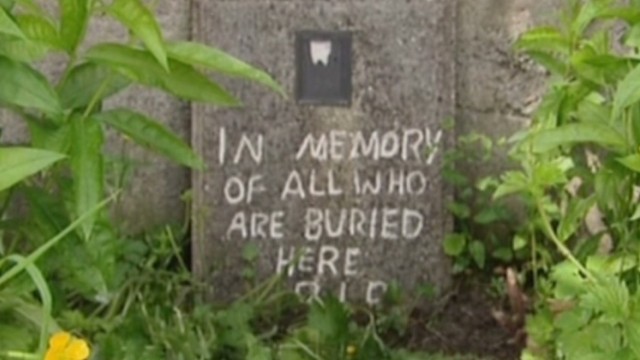
In Tuam, in Galway, Ireland, the Bon Secours sisters ran a place for “fallen women”, from 1925 to 1961. People called it The Home. In Canton, South Dakota, in the United States, the federal government ran the only `asylum’ for Native Americans, from the dawn of 1903 to Christmas 1933, the Hiawatha Asylum for Insane Indians. The home and the asylum form parts of a shared history.

Thanks to the work of historian Catherine Corless, the world “learned” last week that close to 800 infants and children born in the Home were disposed of in a septic tank. These were children of single women. The women came and quickly left, moving to other parts of Ireland or beyond. The children stayed, to be persecuted in school and worse. They suffered extraordinarily high mortality rates. And then they were dumped in a septic tank.

While shock and dismay have been expressed, all of this happened in plain sight. Neighbors complained about the Home. Not so much about the abuse and disappearance of children, but about the stench emanating from the cesspool behind it. Thirty-five years is a long time in a small village to keep a large secret. There was no secret.

Canton presents a similar story. In the late 1890s, a senator from South Dakota began lobbying for an asylum for Indians because, he claimed, “insanity was on the rise among Indians.” Despite overwhelming opposition from the medical community, who found no evidence of high levels of mental illness among Aboriginal populations, the project went through, and, of course, ended up in the southwest corner of the senator’s state.

The vast majority of `residents’ of the Canton Asylum were in for resistance of one form or another. Canton residents and the few survivors of the asylum all agree that there were very few residents who manifested actual mental illness. If a Native American said no to a White person or to an agency or pretty much to anyone, it often meant going to Canton, where most died. Not surprisingly, given that for the first eight years, it had no psychiatrist on staff and for the first 25 of its 31-year history, it had no nurses. The Hiawatha Asylum was a death sentence.

Those who died were buried in an unmarked grave that now sits between the fourth and fifth fairway of the Hiawatha Golf Course. For the past few years, every year the Keepers of the Canton Native Asylum Story have come to perform a healing ritual. They also want the gravesite to be honored. They talk of not only honoring the dead but also of engaging in restorative justice.

From Tuam to Canton, people are engaging in restoration and in restorative justice. This means turning the camera away from the ones thrown into the earth like so much trash and focusing on those who threw those bodies into ground. Who throws dead children into septic tanks? Who throws Indigenous infants, children, men, and women into an unmarked grave? Who? Everyone. This is the process of `nation building’, and it’s a filthy process in which some bodies have value and others have less than none, are deemed problems and obstacles to progress and end up in trash heaps, septic tanks, unmarked graves. There was and there is no secret here.

Tuam

(Photo Credit 1: Elisha Page / Argus Leader) (Photo Credit 2: CNN)

Barbie VIP Packages Fuel Fantasies of Excess and Inequality


Last week the luxury resort Forte Village experienced a great deal of backlash for promoting its “Barbie VIP packages” aimed specifically at young girls. Forte Village advertises the experiences as an opportunity for girls to explore beauty, fashion, and glamor and—with the help of stylists—prepare themselves and their Barbie dolls to walk the runway. Those critical of the extremely expensive (£364, or nearly $600) weeklong getaway include feminist writers, Twitter users, bloggers, and moms. Most critiques seem to focus on the extent to which these Barbie VIP packages are unnecessarily gendered, and rightly so. The idea that only girls can participate in the pink world of Barbie both excludes and ostracizes kids of other gender identities who enjoy fashion, makeup, and dolls.

The issue of exclusivity extends beyond gender: at first glance, exclusive marketing seems to be directly at odds with Mattel’s history of universal Barbie consumption. Mattel has (at times quite unsuccessfully) attempted to push Barbie sales all over the world both with “standard” blonde Barbies as well as through its appropriative “Dolls of the World” series comprised of different incarnations of culturally stereotyped Barbies. Thus, it would seem that Mattel would want Barbie established as a global as well as a household name. But this can only be a reality for some households. Even from her inception, Barbie was a decidedly upper-middle class reflection of Ruth Handler, the mother-turned-entrepreneur who “created” her. Indeed, scholars, critics, and consumers refer to Barbie as though she were a real person, a fantasy encouraged by the services Forte Village provides such as doll-and-girl manicures.

As omnipresent as Barbie may be, she has always been a status symbol as well. Girls who could dress their dolls in a plethora of individually sold outfits, provide ever-expanding “dream houses” for Barbie to live in, and supplement their first Barbie with companion dolls and accessories stood apart from those whose working class parents may not have had the time or finances to furnish complete Barbie worlds. Even today, Mattel continues its tiered marketing by boasting several lines of collector dolls that can cost hundreds of dollars. Thus, Mattel seems to contradict itself: the company that lauds Barbie as an accessible means of imaginative play is actually more focused on tailoring its products to those who can experience Barbie in excess, from lunchboxes to school supplies to clothing to these elite vacation packages.

However, a more inclusive marketing scheme wouldn’t make the Forte Village situation much less troubling. For the families who choose this vacation package, Barbie is not a mode of exploratory self-expression; she becomes a restrictive guideline that forces girls to perform an artificially constructed form of femininity that refuses to recognize Barbie’s impacts on our understanding of class and gender. Barbie has always been aspirational in nature, and this VIP package is no different: in choosing between the “Pink” level or “Glamour” level experiences, girls are taught as early as two years old that they should expect and aspire to a world where femininity means exclusive VIP treatment; where the reward for properly performing girliness is pampering and attention.

Moreover, this class exclusivity will likely inform girls’ perceptions of which types of people can perform these services for them. Is there a racial, ethnic, gender, or class difference between the stylists, the makeup artists, and the manicurists? And how does one reconcile life at the resort with life in the Barbie World, or life in the real world? Barbie’s mottos have always encouraged girls to do anything; to be who they want to be. But from what I can discern about this resort, girls are confronted with an extremely limited array of gender possibilities and socially appropriate hobbies. What good are Barbie’s 150 careers then? Disappointingly but perhaps not surprisingly, Forte Village strips Barbie of any redeeming qualities or exploratory possibilities, and turns her into a tool for teaching a monolithic vision of gender, capitalism, and consumerism.


(Photo credit: The Guardian / Alamy)

Can Christiane Taubira move France from repressive to restorative justice?


Two women are making headlines in Europe and in France: Marine Le Pen and Christiane Taubira. Marine Le Pen leads the Nationalist party “Front National”(FN) that got 25% of the French votes, with a very low turnout, at the recent European Elections in France. Christiane Taubira, the Minister of Justice, will introduce her reform of the penal system for debate at the parliament in June.

These two women have a dramatically different vision of society. Le Pen developed her message using leftist critiques of neoliberal policies and then proposing xenophobic and populist solutions that actually end up benefitting those who thrive on the policies. Her communication technique is based on political spectacle to discourage any kind of debate. Given the opportunity, she would send any opposition to jail. Marine Le Pen participates in the creation of a nationalist right that openly accuses migrants; the poor and any and all marginalized populations of being responsible for any capitalist crisis. Similarly, the Republican Party in the United States has absorbed the extreme tea party branch and normalized the same type of approach of political spectacle in the political debate.

In this context, the coming debate over the penal reform bill will stage a political spectacle with no intention to actually address the question of incarceration and justice. The right and extreme right have shown no inhibition in attacking Christiane Taubira on racist and disrespectful terms.

Meanwhile, Christiane Taubira and her collaborators have undertaken the difficult task of reinserting human values into a penal system that had evolved to serve neoliberal policies. The previous Sarkozy administration responded to calls for prison as the only solution. These policies were fueled with a rhetoric of fear and security, which produced a fertile terrain for the development of political parties such as the FN. Under the aegis of security, the goal was to normalize the punitive control of populations increasingly marginalized by the reduction of social protection and public services, and increasingly precarious working conditions.

Taubira’s ministry has worked on this project since the beginning of her appointment. Consultations were broad and produced a great number of recommendations, especially from the Conference of the Consensus. This multi layer review system brought comprehensive recommendations largely directed at lowering the rate of repeat offenders with more productive solutions for offenders, moving away from mandatory sentencing.

According to Christiane Taubira, the central aspect of the bill is to establish restorative justice. The bill would abolish minimum sentencing, deemed one of the worst legacies of the previous president. It promotes case-by-case individual sentencing. Victims would benefit from a more distributive and generous support system. The bill would reduce “dry release” from prison, which means release without supportive measures for reentry.

The key is the criminal coercion measure, which supplies the judge with an array of sentencing possibilities, including injunction to care. Prison would no longer be the only resource available. This measure was to be applied to all offences. Many voices opposed this measure including within the government, from Prime Minister Manuel Vals to Minister of Interior Bernard Cazeneuve and finally to President Hollande. The men of State united to demand that the criminal coercion measure be limited to offences shorter than five years. The problem is that the criminalization of drug use has lengthened sentences beyond five years. A parliamentary technicality allowed representatives to amend the text so that Taubira’s initial bill could be restored. After the council of ministers on Friday, the President made clear that he would not tolerate this part of the bill without a five-year ceiling.

For these three leading men from a Left government, what is the basis of their vision of criminal law? Is it that incarcerating bodies is the best means to render justice, or is it that the climate of intolerance and suspicion, brilliantly exploited by right and extreme right nationalist elites, has forced them to compromise?

Marine Le Pen and the right in general, have accused Christiane Taubira of defending migrants and delinquents. They made this myth the main argument of their campaign. There is nothing new here. Ronald Reagan used mythologies of the welfare queen to win election. This simplification of social debate to mythical images erases the complexities of the current political economy.

This is the climate that awaits Chritiane Taubira as she engages parliament in a debate about the role of incarceration in connection with the protections of civil society, which implies a reduction of inequalities. As labor and social laws are being compromised to serve a financial market that has no desire to protect society but rather seeks to fragment it in order to utilize it, Taubira begins a national debate on mass incarceration as a function of a political economy of growing inequality.

Hopefully, the President, who claimed to be a progressive change agent, will support his Minister of Justice Christiane Taubira in her attempt to transform the criminal justice system and abandon repressive justice in favor of restorative justice and a restoration of civil society protections. We’ll see.


(Photo Credit: Libération / Joël Saget /AFP)

Detention centers: No country for young girls

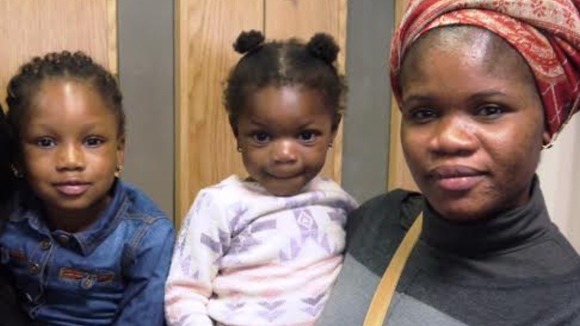
Two girls, both under five years old, were released after two days and nights in detention. Last night, Basirat and Rashidat, and their mother, Afusat Saliu, were released from Cedars pre-departure `accommodation’. They spent Wednesday at Cayley House, “a non-residential short-term holding facility at Heathrow Airport.” It’s not a facility. It’s a prison. Here’s how their mother, Afusat Saliu, describes their first night: “It was terrible. We had to sleep on the floor. There was no privacy – if you went to the toilet, you went in front of everyone. I felt terrible. Some of the crew at Cayley House were nice, but it was not a good environment for a child.”

No place for a child. In a report released today, Her Majesty’s Inspectorate of Prisons agrees. Too much force is used too often. Officers show up in full battle gear, don’t announce themselves, don’t knock on the door, batter the door down and rush in. They have two speeds: terrifying and terrorizing: “Whatever one’s views on immigration, the distress described in this report of the families passing through the centre and its potential impact on the children involved is disturbing. It was difficult to see how the children’s welfare was being promoted in line with statutory requirements.”

42 families `passed through’ Cedars last year. Suicide and self-harm measures were initiated 25 times. This is the new math of neoliberal fortress nations. The mothers who seek help are bad mothers, the children who need help are bad girls. They’re defective products that must be removed.

Thanks to a mighty hue and cry, including leaning on Richard Branson not to allow his airline to be used for deportation, Afusat Saliu and her daughters, Basirat and Rashidat, were given a reprieve, while their case is `reviewed.’ In the name of the girls, Afusat Saliu applied for asylum, because she fears her daughters will be forced to undergo female genital mutilation in Nigeria.

Think of all the work and time that has gone into keeping two young girls out of prison.

Those two young girls, those babies, should never have been in prison in the first place. They should never have been forced to leave their home in Leeds and shuttle from one hole to another. They should never have been forced to feel their mother’s distress. You don’t need a government commission – not from the United Kingdom, nor Australia, nor the United States, nor anywhere – to know that. You know in your bones and in your soul.

Detention centers, prisons, are no country for young girls. They are terrible. I feel terrible.


(Photo credit: Anj Handa / PA)

How many women are forced to give birth in solitary confinement?

We the people must be persuaded that no child should be born in a solitary confinement cell. We the people must be persuaded that no woman should have to give birth while in solitary confinement. Who are we? We are the United States of America. In this man’s land, pregnant women prisoners have less than no reproductive justice or rights. Instead of care, they receive neglect and abuse that crosses over into torture.

Last week, Nicole Guerrero filed a lawsuit against the Wichita County Jail, in Texas, and others for having forced her to give birth in solitary. The baby died. It’s a terrible story, and it’s an increasingly common one. While much of the focus has been, and will be, on the details of the case, consider as well the larger, national framework. Nicole Guerrero is not an exception. She is the face of the everyday violence against women, and in particular against pregnant women, in the prisons and jails of the United States.

Last year, in response to the Pelican Bay hunger strike in California, United Nations Special Rapporteur on Torture, Juan E. Méndez, found nearly 80,000 prisoners in solitary confinement, although the numbers are difficult to determine. He urged the United States to suspend prolonged and indefinite solitary confinement and to consider the rights and needs of the vulnerable: “I urge the US Government to adopt concrete measures to eliminate the use of prolonged or indefinite solitary confinement under all circumstances, including an absolute ban of solitary confinement of any duration for juveniles, persons with psychosocial disabilities or other disabilities or health conditions, pregnant women, women with infants and breastfeeding mothers as well as those serving a life sentence and prisoners on death row.”

Pregnant women, women with infants, breastfeeding mothers: these are the most recent targets of mass incarceration, those charged with “fetal endangerment.” As charges against pregnant women both rise and intensify, more and more pregnant women are going into the prison system, and the vast majority end up in local and county jails, or in State prisons, like the Julia Tutwiler Prison for Women in Alabama. Inevitably, more women will undergo childbirth in solitary, and more children will be born in solitary.

When Delegate Mary Washington, of Baltimore, first heard of a pregnant woman prisoner, en route to the hospital, being shackled, she said, “Wait. What? What do you mean … shackled?” The woman telling herthe story explained she meant exactly what she said. Pregnant women prisoners, women prisoners in childbirth, are routinely shackled. It’s part of the new normal.

Nicole Guerrero is a signature of the next phase of that new normal. She is neither anomaly nor exception, and despite her pain, anguish and suffering, she is not the stuff of high drama. The national history of infamy is not made up of tragedy, but rather an endless series of ordinary episodes that combine to form normalcy. Our normalcy. We are the people who demand to be persuaded that there’s something wrong with a system that forces women to go through childbirth while in solitary confinement. We are the people who demand to be persuaded that the destruction of women is a bad thing. Remember that.


(Photo Credit: guardianlv.com)