In New York, for-profit prison healthcare loses another paying customer

New York City recently announced its plans to end its contract with the for-profit prison healthcare provider Corizon Health in the city’s infamous Rikers Island jail complex. The Health and Hospitals Corporation of New York City, which currently operates all of New York City’s public hospitals, will now control Riker’s health care. This decision comes on the heels of Washington, DC, City Council’s decision to reject an offer from Corizon, that had been approved by the city’s own Office of Procurement.

New York City’s comes as a major victory for people who believe that for-profit corporations are the root of all evil when it comes to atrocities of incarceration in the United States. For-profit prison healthcare corporations such as Corizon have a history of malpractice lawsuits, negligence, and horror stories of abuse and torture of the mentally ill that would shock even the most ardent cynics. Accusations against Corizon include leaving a man with diagnosed manic-depressive disorder locked for four days in four-point restraints in a room that was 106 degrees. He died. Another accusation involves a Corizon employee who would withhold food and water from patients she did not like. Corizon’s reputation was so bad, a University of Virginia doctor claimed that releasing a cancer patient into their care was unethical.

While there is no denying the evils of Corizon, the problems with Rikers Island do not begin and end with healthcare. Corizon did not prescribe Kalief Browder with two years of solitary confinement. Corizon doctors did not beat Kalief Browder for a fight he did not partake in, as he awaited trial behind bars for three years for a crime he did not commit. The men who did this to Kalief Browder were government employees not motivated by profit and the almighty dollar, but instead fueled by the violence of incarceration. We can continue to reform this nation’s jails, but the fact remains that we are incarcerating and abusing men and women who are deprived of their humanity and dignity for crimes they did not commit. To paraphrase the curator of this blog, Dan Moshenberg, the best medicine for the people of Rikers is freedom.


(Photo Credit: https://resistrikers.wordpress.com)
I appreciate the Christian ethos of forgiveness. But …


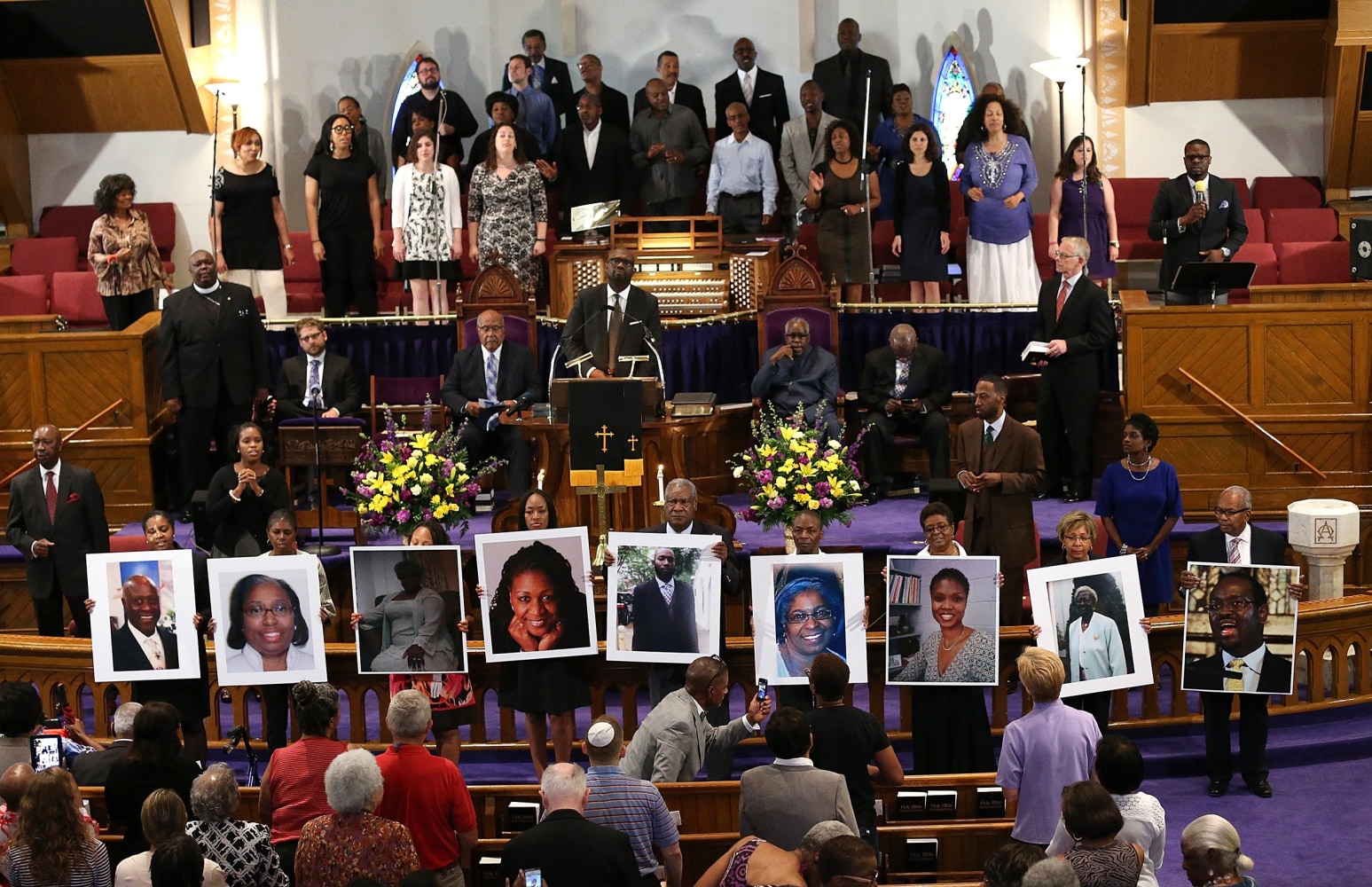
I appreciate the Christian ethos of forgiveness. But in the most generally used and accepted meaning of the practice, the protocol of forgiveness requires that one come humbly, make confession of one’s sins, and ASK for forgiveness; and once asked for and penance received and acted upon, forgiveness is granted by God. So as appreciative as I am of this protocol, I am equally troubled by what appears to be our training to almost knee-jerk hand out forgiveness. This is something I worry that works against us, for it seems to demand we forgive but without our right to wholly engage our pain, our need to heal, our right to be restored–and then the time to actually do these things. One cannot dictate another’s healing or grieving process or timeline, and that’s not my attempt here. But I worry that if past is prologue, the way we’ve been trained to say ‘I forgive,’ absent, it appears, critical unpacking, moves the dialogue too fast and us into a supplicating position where we “forgive the sinner, hate the sin,” and then are forced to move forward without the rightful space to restore those who directly experienced this massacre–as well as the impact upon we who were a witness and now, now we all must live with yet another level of terror in our blood–which impacts our health, physical, spiritual, emotional. Forgiveness, I am saying, in this nation, lands too often as a tool of white supremacy.

I am writing this to say I need time to heal. I am writing this to say that if I do, I can’t imagine what those who were in the church that night, or their family and friends and fellow congregants need. This above all, is what sits in my heart this Saturday Mourning.


(Photo Credit: Getty Images / Win McNamee)

In France, give the migrants legal documentation!

When the European Court of Human Rights was formed in 1959, many thought that it was a good step toward a more human Europe and hoped it would inspire better behavior beyond Europe. On June 8th, in Paris refugees escaping wars and human rights violations asked where was the European Court of Human Rights as they were thrown forcibly into a police bus on the Rue Pajol in the 18th district of Paris.

Despite a protective cordon formed of residents of the district, Communist Part and Left Front elected officials of Paris, and members of the many associations who bring support to migrants and refugees, the police special unit CRS intervened on the Rue Pajol in the 18th district. The police intervention was violent and destructive.

The refugees regrouped, after the police dismantled a nearby camp. These refugees have traveled far, mainly from Eritrea, Somalia, Egypt, and Sudan, and, since the summer of 2014, about 350 of the hundreds of thousands who have crossed the Mediterranean Sea have landed in this very visible improvised camp under the Parisian metro of Porte de la Chapelle, in the northern part of Paris.

On June 2, the first police intervention moved some asylum seekers to hotels in various areas around Paris and left others. Some came back even though they had a room in a hotel. They felt isolated, and they were starving since the authorities did not include food in their plans. As the executive director of the federation of associations dealing with social rehabilitation explained, at least in Paris, associations would deliver food to the camps.

In France, associations have historically formed a strong civil solidarity structure. Thanks to the work of associations such as France-terre-d’asile, Salam, and others, migrants receive support and food. These associations denounced the hypocrisy and repression but also welcomed the recent changes in the asylum bill that simplify the demand process and remove some of the constraints that were a true conundrum for refugees and plan for more housing structures. Additionally, since 2012, Europeans in France are permitted by law to welcome undocumented migrants in their home. These associations still question both the lack of financial support in this time of financial austerity and the expulsion process.

In fact, France terre d’asile had alerted the authorities of the formation of these camps some time ago, demanding decent solution for the migrant refugees. Today, they condemned a year of inaction that has left migrants living in precariousness and terrible sanitary conditions.

Despite an unprecedented mobilization of associations along with the OFPRA (Office francais de protection des refugiés et apatrides, the French Office for the Protection of Refugees and Stateless People), the State solution was to send the police and inflict violence on migrants.

Many camps have formed in France, especially in Paris and in Calais. Migrants face different legal situations. Some file for asylum, others don’t want asylum in France. But the main issue is to welcome them, explained Danielle Simonnet, a Paris Councilor. Although she judged it too late, she welcomed the proposition of the Mayor of Paris, Anne Hidalgo, to create transit camps where each migrant would receive the administrative, medical and human support needed. This is a question of pure solidarity, according to Danielle Simonnet, adding that France has not reacted in a timely manner to the situation. Among the refugees of Porte de la Chapelle, 16 of them had proper asylum documentation and still did not know where to go. In France, the law requires providing accommodation to asylum seekers. In addition, Pierre Henry, of France terre d’asile, had to intervene to get refugees out of detention centers, even though it is unlawful to detain them.

So why did the authorities respond with police instead of applying the law and behaving humanely?

Surveillance, policing and austerity are articulations of the current security mentality. The response from leaders of the right and extreme right has ranged from Marine LePen’s send them back to their war-torn countries and apply Australian immigration policies to Nicolas Sarkozy comparing the migrants to a water leak. With their disinformation, these leaders spread fear and intolerance, dehumanizing refugees and migrants. They bully the concept of solidarity. In fact, with 600 000 asylum seekers in 2014 for 500 million Europeans, Europe is not overwhelmed.

Instead, Europe must first end the Dublin II regulation that forces migrants to seek asylum in the country they first entered the EU. This regulation has caused migrants great suffering.

What of the people who live in France and don’t match any of the asylum categories? Danielle Simonet, Pierre Henry and many others respond, “Just give them legal documentation,” let them live decently, put in application the human rights concept!

(Photo Credit: NouvelObs)

White fear of Black success

White people kill Black people because they’re doing things right, not despite that.  That’s the problem, you see.  We can’t have that.

Black people who start hot meal programs for the people in their communities – we can’t have that.  Black people who attend church every week – we can’t have that.  Black people so carefree they spend time together at the pool – nope, that’s not gonna work.

When you have to be afraid to simply be in the world—to be with your friends, to buy candy, to look at toys, to worship, to walk—you’re living in terror.  People who stare that terror in the face and live anyway, and thrive anyway, and help anyway, those are the people whites fear the most.

The terrorist massacre in Charleston occurred about 100 miles away from an area in South Carolina where, in 1862, Union Army General Ormsby Mitchel ordered that a town for freed Blacks be created.  The town, which came to be called Mitchelville, was designed as an experiment to demonstrate to white people whether African Americans were capable of organizing and governing themselves after emancipation.

This was all explained to my family and me by a Gullah man named Emory Campbell when we visited the area three years ago.  It will not surprise you to learn that the town thrived.  The “experiment” worked, and the 1500 African Americans who lived there succeeded in establishing farming collectives, stores, a government, a school (along with laws about compulsory education), and a church.

And that was the problem.  According to Campbell, the town was set on fire – not unlike other Southern towns along the coast, from Charleston to Florida, that had been ordered by Union Army General William Sherman to be settled by freed Blacks for farming.  Mr. Campbell showed us the only material remains of Mitchelville, South Carolina:  some bricks from the church the community built.

Success is a damnable thing for Blacks.  Some forms of social organization (such as mass incarceration and residential segregation) are meant to stifle such success.  But when people achieve success anyway, well, we’ve got to put a stop to that, don’t we?


(Photo Credit: WoodandPartners.com)

I wonder if white men in Charleston

“Mother Emanuel” African Methodist Episcopal Church

I wonder if white men in Charleston (or even within 5000 miles of it), between the ages of 10 and 90, between 3’5″ and 7′, white men wearing suits and ties or white men wearing bathing suits or white men wearing jeans and tshirts or white men wearing khakis and polo shirts, white men who are sleeping, white men who are walking, white men who are running, white men who are in the midst of asthma attacks, white men who are doctors, white men who are washing their cars, white men who are teachers, white men who are eating with their families, white men who are playing golf, white men who are eating sandwiches in a park, white men who are driving, or/and white men who are breathing will be unceremoniously harassed by the police?

Will be by beaten down like an animal by the police?

Will be arrested, will be shot, will be killed by the police under the pretext of ‘looking like’ the suspect (or without any pretext at all)?

Will receive hostile stares from fellow citizens and neighbors?

Will be judged and juried by millions before they wake in the morning?

Will be destroyed by hate—all at once, or little by little?

(Photo Credit: CNN)

“There’s some office space in the back….”

Words that can change a community can be as simple as: “There is some office space in the back that I can let you have…” Sometimes revolution and healing happen because of one leader with pragmatic generosity and skillful organizing.

On May 23, 2015, Southeast Washington DC lost such a leader—-a woman who brought profound interconnectivity to the lives she touched. She did it by offering, space, hope, humor, and help.

I had only known Jeanne Shelton Gault since early 2014 when she began working on finding my husband, Michael Perry, and me a unit in the Naylor Gardens Cooperative Housing Association.

Naylor Gardens is often called “the best-kept secret in southeast Washington, DC.” It was founded in the new year of a new day—January 3, 1946. The war was over and the articles of incorporation of the Veteran’s Cooperative Housing Association were recorded. Naylor Gardens remains a cooperatively owned housing community and Jeanne Gault was one of the greatest advocates and activists that this cooperative community ever had. She seemed to believe in that spirit of a “new day” to her very end.

Jeanne spent much of her life growing up in Naylor Gardens and was, herself, a co-op member. She was also a realtor, a community philanthropist and a powerhouse of a woman who seemed to profoundly affect change one life at a time.

We went to her memorial this past Sunday, and it was like watching a scene from a Frank Capra movie. Except the woman who was being eulogized by so many people didn’t have to lose everything to appreciate her community and the people around her. And, unlike the homogeneous characters in It’s a Wonderful Life, Jeanne’s memorial was a parade of races, sexes, ages, and cultures.

One person after another told stories with a common theme:

They ended in: “You need an office to start your own business? I think you should. There’s space in the back.”

Or: “My door is always open, and someone is always in the kitchen, just let yourself in….”

Or: “My only question to you is, do you know how to bake cookies and do you like spinach squares?” The keeper of this last story said Jeanne took her in as family and provided something that was missing in her own.

These are just a few examples of the hours of stories the community lined up to share.

Jeanne’s daughter, Patrice, closed by telling us that, as much as we all loved Jeanne, Jeanne loved us too. She said her mom had a story about all of us. She told them to her family, friends and co-workers. She carried our memories just as we carry hers now.

Jeanne’s love of community had no circumference and the center of her generosity seemed to be everywhere. You can see traces of her work in all the member-owned units of Naylor Gardens (some of which Jeanne got her own family to finance for extremely low rates); in and around her office on Raleigh Place, SE (which I never saw, but was described to me as “being like the mayor’s office”); and along the homes of neighbors lining the streets where she lived.

In addition to being a backbone in several district wards, Jeanne was a pillar in Naylor Gardens. My husband and I have the honor of being the last couple she took into settlement.  She had fought for us and victoriously navigated the difficult negotiations of our share purchase.

At the time of our settlement, she was profoundly ill. She came in a festive quilted skirt with a smile on her face, accompanied by her daughter, and, by appearances, using a great deal of physical strength to complete this last job. She saw it through–all the way to our signing on the dotted line, and her smile never diminished. We left the settlement telling her our first order of business would be to have her for tea. “That will be nice,” she said. I carry the sweetness of the thought.

As I heard one testimonial of Jeanne’s generosity after another, I thought of a line from one of the books on our shelf she once admired:

To have a friend in need is sweet.
And to share happiness.
And to be a light.
And to have done some good before leaving this world….
Is sweet.

It would be nice if I could say that the good Jeanne Shelton Gault did for an entire city will ripple through time; but, that will only happen if those of us who were touched by her enthusiasm follow her example of pragmatic sweat activism–and offer each other a little space.

The change she affected was based on grace and care. Generosity can be an unstoppable force whose effects are felt immediately; and, its influence is contagious. Those she touched in practical and profound ways are left with the wonderful burden of relentlessly investigating the power of cooperative action.

Jeanne never stopped investigating that power, and a 43-acre cooperative community, hidden adjacent to Hillcrest, shines like a beacon of hope in an economy where housing is becoming more and more unaffordable. Washington, DC was left a sweeter place because of Jeanne Gault and her dreams can continue through us–if we roll up our sleeves and work just a little.


(Photo Credit: CoopsDC.org)

Across Europe women campaign against the Dictatorship of the Debt

In March the European Forum for Alternatives met. With austerity measures imposed over the populations of Europe under the fabricated argument of the need to repay a fictitious public debt, the solidarity among Europeans is growing more organized, especially with the rise of major feminist and feminine voices in Greece and Spain.

Among the many speakers, Zoe Konstantopoulou, recently elected Speaker of the Vouli (Greek Parliament), presented the stakes for Europe as her country has been the theater of the most odious experimentation of European Structural Adjustment Programs, symbolized by austerity. As she said, the neoliberal order reigns in the EU and has created its own destructive weapon with the Troika. It wants to neutralize all opposition and diffuse its power based on debt anxiety.

The forum’s many workshops brought the voices of women who have fought for their rights, including Giorgia Ekonomou, one of the Greek Finance Ministry cleaners; the representatives of the hair cutters of the 57 bvd Sebastopol in Paris; and the hotel chambermaids who won recognition for their workers’ rights.

In her speech about the audit of the Greek debt, a true European issue, Zoe Konstantopoulou acknowledged these feminist battles as well as the brutal destruction of human rights that came as the result of the Troika memoranda. The battle against austerity measures is also a transnational feminist battle.

Regrettably, Zoe Konstantopoulou is the only woman that has a prominent position in Greece since the election of Syriza. Still, as Yorgos Mitralias of the Greek Committee Against the Debt told me, she was not supposed to exist and so is a gift fallen from heaven. She is the voice of reason for many. She wants to shatter corruption, especially financial corruption, while not losing the purpose of political representation as the means of defending the civil society with all its members. “In Greece, we have a systematic infringement on human rights, social rights, worker’s rights on democratic rule of law, on the welfare state,” declared Zoe Konstantopoulou when she was first elected to the parliament in 2012.

Last April in Rome, Zoe Konstantopoulou was keynote speaker at the conference of the European Union parliaments. She began by questioning the title of the session, “A discussion about the Continent of Fundamental Rights. A Europe of Freedom, Solidarity, and Security.” She said, “Is it a discussion about the past, the present, or the future? Is it a discussion about Europe as it used to be, as it is or as it should be? Is it a discussion about the whole of Europe or about part of it?” She remarked that Europe as expressed by its executives, banking and financial sectors, seems to have lost its way during the five last years. She questioned the emphasis on numerical and economic estimation that have been proven to be gross miscalculations, and she ranked competitiveness way below human rights in the European hierarchy.

Her speech addressed the dictatorship of debt: she explained that State debt, as a new European epidemic, is being used as a pretext but also as a tool to retreat the State from its responsibility vis-à-vis human rights and democratic rights. She sees State debt as an extortion mechanism and reminded her audience of the extraordinary trail of misery and death that austerity policies provoked.

Konstantopoulou also reaffirmed the importance of an uncorrupt parliament, a place where no forceful interventions should occur. Since 2005 the Greek parliament has been the theater of all kinds of violence with 800 pages of laws pushed by the Troika, targeting basic human rights, public services, and shielding financial crimes and tax evasion. Just recently a stand off with the Minister of the Interior Panoussis took place with the intrusion of police forces in the parliament that she condemned.

With her anticorruption stand, Zoe Konstantopoulou has become the target of all sorts of attacks including from members of her own government. According to Yorgos Mitralia, But the campaign against her is reaching a new level punctuated with sexist slurs. So far the support to Syriza and Alexis Tsipras’ government is strong with 65-70% approval rate. Although it is a critical moment with the audit of the debt in progress and the hard negotiations with the Eurogroup, Zoe’s initiatives are well supported by the people of Greece and even beyond Greece’s borders

Meawhile, in Spain, three prominent political positions have been won by progressive women in the last elections with the success of Manuela Carmena, the new mayor of Madrid, of Ada Colau in Barcelona, and of Monica Oltra in the Valencia region. All three got their votes for their strong stand against financial corruption, and for defending social consciousness, the only way to reduce the impact of neoliberal totalitarian austerity promises, begetting inequalities, the plague of women’s lives. The movement is growing and a new solidarity is forming in which women are playing a key role.

Zoe Konstantopoulou

(Lead Photo Credit: http://kaosenlared.net) (Photo Credit: http://www.european-left.org)

We may be mad, but we are not crazy!

We may be mad, but we are not crazy. We see the pain and persistence, the resilience of our families.

AND we see you Bondi, Slatery, Caldwell* and the rest of the Republican blockers. You are hypocrites.

You want our work, our latino purchasing dollars, our votes, our immigrant taxes but dare to deny our dignity.

AG blockers, purveyors of justice, deny us. Their “family values” don’t include brown/black families. Their “freedom” is only for a few. They want family prisons, bed quotas, mandatory minimums, mass incarceration for prison profiteers. Bondi in bed with GEO.

But guess what, that’s not what our nation wants. We won not in the courts, nor in the Congress. We won in the streets. They may have the past but we possess the future and we are not waiting for it. We built it day by day –with respect and dignity, liberty and justice for all.


*Bondi, Florida’s Attorney General; Slatery, Tennessee’s Attorney General; Caldwell, Louisiana’s Attorney General, have joined a suit to stop Obama’s executive order on immigration.

(Image Credit: http://collections.museumca.org)

I went from solitary confinement straight to my Mom’s

Brian Nelson spent 28 years in prison. The last twelve he spent in solitary confinement at the notorious Tamms supermax, in Illinois. He was never told the reason he was moved from a minimum security prison in another state to a supermax in Illinois. Then, one day, the door to his isolation cell opened, “I went from solitary confinement straight to my Mom’s.” There are tens of thousands of Brian Nelson’s released straight from years in solitary confinement to the street, and the overwhelming majority go straight to their mothers, grandmothers, and other women caregivers.

According to an NPRMarshall Project collaborative report, across the United States every year, prisons send thousands of people directly from solitary confinement to the streets. If, as if often the case, the solitary-to-street citizen has served her or his full sentence, “maxed out”, then there is no supervision and no assistance whatsoever. S/he must simply deal or die, and death is the State’s preferred option. NPR and the Marshall Project surveyed all 50 states and the Federal Government, and found 26 states don’t count how many prisoners they’ve released directly from solitary. Neither does the Federal Bureau of Prisons. Of the 24 that do, in 2014, at least 10,000 were released directly from solitary to the street.

Solitary confinement has become the default for prisoners of color, as well as for those living with mental illnesses. One study of the use of solitary confinement, isolation and “supermax” in Arizona noted: “All of these statistics are of course made more outrageous by the glaring fact that the white male prisoner population in supermax facilities is dramatically lower, only 25 percent, than in the general prison population, where it is 39 percent. For white female prisoners it is even more disparate, with the drop from 52 percent in the general prison population to 29 percent in Lumley SMA. Meanwhile, whites make up 73 percent of the Arizona state population. Put simply, persons of color are consistently placed in conditions of isolation at much higher rates than their white prisoner counterparts. Thus the negative impacts of supermax while incarcerated and upon re-entry are disproportionately levied against populations of color in Arizona.” As Arizona cages, so cages the nation.

While women make up a minority of those in supermax, those leaving solitary for home end up being taken care of by mothers, grandmothers, and wives. And that’s the point of the entire project, in which extended solitary confinement is the beating heart. The overwhelming majority of prisoners come from a small number of metropolitan neighborhoods of working people of color. The survivors of extended solitary confinement are the distillation of that political economic geography: Black, Brown, working poor.

But they can go home again. In fact, they have to, because there are no social services to help them: no medical care, no education, no counseling, nothing but charity. So they go home, where they don’t have to beg to get help. They go to their mothers, women like Sara Garcia and Brian Nelson’s mother, women who look at them and cry and ask, “Oh my God, what have they done to him?”. They go to their grandmothers. And their mothers and grandmothers take care of them. They engage in labor intensive, grueling work, for years and decades, and no one pays them a dime. This is urban redevelopment in the United States. Remove targeted people and populations from productive or creative pursuits, and then extract value out of their struggles to survive, to care for one another, to love, all the while writing treatises on the collapse of the urban community and how a new influx of capital and white folks will fix all that.


(Photo Credit: redpowermedia.wordpress.com)


In South Africa, the forced sterilization of HIV positive women is part of the plan

In March of this year, we wrote: “In South Africa this week, 48 women living with HIV and AIDS responded to the indignity and abuse of forced sterilization. Represented by Her Rights Initiative, Oxfam, and the Women’s Legal Centre, 48 women who had suffered forced sterilization in Gauteng and KwaZulu-Natal came forward and lodged a formal complaint. These 48 `cases’ were from 1986 to 2014. These 48 women are the tip of a rumbling volcano.” Yesterday, the volcano rumbled, as a report indicated that, of 6719 HIV positive women interviewed, 498 said they had been forcibly sterilized. “It is the largest number of reported forced sterilisation cases ever uncovered in the country.”

The report, The People Living With HIV Stigma Index: South Africa 2014, noted, under Sexual Reproductive Health: “Of concern is that 7% of respondents reported that they were forced to be sterilized. In addition, 37% of the respondents said that access to ARV treatment was conditional on use of contraceptives.” Sindisiwe Blose, a research project manager and a member of the Treatment Action Campaign, elaborated, “We heard from people living with HIV who had refused marriage due to stigma, had avoided work promotion, or had been coerced into undergoing sterilization. Behind the figures lies a depth of suffering that struggles to be addressed.”

Close to 500 women forcibly sterilized doesn’t just happen. In this instance, the incidents were distributed all over, with the hotspots in three provinces: Eden, in the Western Cape, accounted for 22%; Buffalo City, in the Eastern Cape, 20%; and Sedibeng, in Gauteng, 19%.

Sethembiso Mthembu, of Her Rights Initiative, responded to the numbers: “The data of 498 cases basically confirms the practice is widespread. It is systematic. It is not a few rotten apples.” The Women’s Legal Centre also described the sterilization as systemic, with Jody-Lee Fredericks, of the Centre, adding, “This is horrific.”

The horrific this is the banality of the policy. As Helen Rees of the Wits Reproductive Health & HIV Institute recently explained, the biggest concern right now is young women, ages 15 to 24, and women sex workers. Many of the young women who are “placed in this situation” are poor, vulnerable and “prey to sexual exploitation.” In other words, none of this is surprising.

Yesterday, Nkhensani Mavasa, the Chairperson of the Treatment Action Campaign, addressed the opening session of the South Africa Aids Conference 2015. She spoke of a new denialism among the leadership of the nation, and she warned, “If you choose to ignore the crisis in the healthcare system, this crisis that is a fact of our daily lives, you may, like those other denialists in the past, end up on the wrong side of history.”

The forced sterilization of HIV positive women is an integral part of that new denialism. In the complaint filed in March, 48 women and their supporters rejected the double stigma of being HIV positive and being unable to have children. They also rejected the third stigma of having failed the nation-State. Women who are HIV positive are viewed as failed citizens. That’s why they can be treated this way, despite Constitutional and legal protections to the contrary. The Department of Health says forced sterilization is not department policy, but it is practiced, in the open, regularly. The forced sterilization of HIV positive women is an integral part of State violence against women, and it is never accidental or incidental. It is part of the plan.


(Photo Credit: The Star / Chris Collingridge)