Dan Moshenberg

Dan Moshenberg is an organizer educator who has worked with various social movements in the United States and South Africa.

Uganda is … Who is in our hearts of hearts?

Sylvia Tamale

The Rev. Gideon B. Byamagusha is a person of courage, a person of the hearts of hearts. Byamagusha is an Anglican priest in Uganda, in a parish outside of Kampala. In 1992, Byamagusha announced that he was living with HIV. He was the first African religious leader to do so. In 2003 he founded the African Network of Religious Leaders living with or personally affected by HIV/AIDS, or ANERELA. By the end of 2006, ANERELA numbered over 2000 members in 39 African countries. In 2006, Rev. Byamagusha started a shelter for AIDS orphans. In May of this year, Rev. Byamagusha was awarded the Niwano Peace Prize. He lives today with his wife and three children.

He lives today, and in today’s edition of the Sunday Monitor, he writes: “No one really knows how many homosexuals , tri-sexuals, bi-sexuals, hetero-sexuals and non-sexuals we are in Uganda. What is known is that these sexualities are certainly not new ways of life.”

We are … homosexuals, tri-sexuals, bi-sexuals, hetero-sexuals and non-sexuals. We are.

On Thursday, November 19, Los Angeles County reported a 21% increase in crimes against gay, lesbian, bisexuals and transgendered people. The report noted that sexual-orientation hate crimes were more likely to be more violent than hate crimes based on racism or religious hatred.

Friday, November 20, marked the eleventh Annual International Transgender Day of Remembrance. The Transgender Day of Remembrance began in 1999, to commemorate, mourn, and protest the 1998 murder of Rita Hester, a transgender woman of color in Boston

Last year, in Yeoville, a neighborhood of Johannesburg, South Africa, Daisy Dube was brutally murdered, shot, when she and her friends asked three men in an car to stop calling them “isitabane”, a Sepedi slur against LGBT people.

A little over a week ago, on November 13, in Puerto Rico, 19-year-old Jorge Steven López-Mercado, was killed, beheaded, dismembered, and his remains were set on fire, because he was a man dressed in woman’s clothing.

Tara Sawyer sees November 20 as “an opportunity for all of us to stand up to end violence against all women….Some counts have the average number of murders of transgendered people at 19 per month! Or put another way, 1 in 12 of us in America will be murdered. But we as transgendered people are the only ones counting, in pretty much every country across the world. I’m a transgendered sex worker, and I want to not get killed for who I am or what I do. As our death count rises, I beg that you consider your prejudices around gender, and let us live in peace. I’m literally begging for my life.”

We are the only ones counting. Let us live in peace. I’m literally begging for my life.

In Uganda, homosexuality was already criminalized, and that was not enough. A new bill proposes death. Remember, sexual orientation crimes are likely to be the most violent, especially when perpetrated by the State, by Society, by Large Structures. The people must be protected, Society must be defended, the Nation must be preserved. Gay, lesbian, bisexual, transgender people must learn to die, must learn to beg for life … and then die.

Die … or dialogue? On Wednesday, Makerere University hosted a public dialogue between Sylvia Tamale, well-known human rights, women’s rights, sexual minorities rights’ feminist lawyer, and Maj. Rubaramira Ruranga, Executive Director of the National Guidance and Empowerment Network of people living with HIV/Aids in Uganda. Major Ruranga has been living openly with HIV since he announced his HIV status on World Aids Day, 1993. Before his promotion to his current rank, he was known as Captain Condom. There are many courageous people in Uganda.

Tamale opened her remarks with an invocation to dialogue: “I would like to thank the Human Rights and Peace Centre for inviting me here this afternoon to share my views on this bill.  It is great that HURIPEC organized this to be a dialogue and not a debate because debates have a tendency to polarize and divide along irrational gut-level responses.  A dialogue, on the other hand, usefully sets the stage for people to listen to each other with understanding, tolerance and helps build bridges.  I hope that this public dialogue will mark the first stepping stone for all of us to embark on a rewarding journey of mutual respect, simple decency and fairness.”

Stepping stones or stones of violence? It is not enough to put down the stones. Something must be built, an open bridge, an open road, an open and shared journey.

She concluded her remarks with an oblique return to the theme of dialogue: “Do we really in our hearts of hearts want our country to be the first on the continent to demand that mothers spy on their children, that teachers refuse to talk about what is, after all, “out there” and that our gay and lesbian citizens are systematically and legally terrorized into suicide?  Ladies and gentlemen, you may strongly disagree with the phenomenon of same-sex erotics; you may be repulsed by what you imagine homosexuals do behind their bedroom doors; you may think that all homosexuals deserve to burn in hell.  However, it is quite clear that this Bill will cause more problems around the issue of homosexuality than it will solve.  I suggest that Hon. Bahati’s bill be quietly forgotten.  It is no more or less than an embarrassment to our intelligence, our sense of justice and our hearts.”

What is in our hearts? Justice? Love? Who is counting our deaths, who is opening our spaces, who is charting our journey? Who is in our hearts of hearts? Let us live in peace. I am literally begging for our lives. We are …

(Photo Credit: The Sunday Monitor)

Uganda is … Are you now or have you ever been …?

Speciosa Wandira

Speciosa Wandira was Vice-President of Uganda from 1994 to 2003, and was actually the first woman Vice-President on the continent. She is also a physician, and her story provides insight into the Anti-Homosexuality Bill passing through the Ugandan Parliament.

Dr. Wandira was once married to an engineer named Kazibwe. They had been married for some time. In  2002, she publically took on the taboo subject of domestic violence against women in Uganda. She revealed in public that she had been battered.

She was a 48-year-old woman then, a mother of four, speaking before Parliament on International Women’s Day, and she simply told the truth. She had endured abuse for three decades, she had suffered too much and for too long. She filed for divorce, and was finally granted it. The process was so time consuming and exhausting that she stepped down from government in 2003, but she had opened a full debate, in Uganda and on the continent, concerning marital rape, women’s rights in divorce settlements, property rights, and some regulation of polygamy.

On November 11, 2009, some seven years later, the Ugandan Parliament passed a Domestic Violence Bill. Women activists, feminists, civil society have welcomed the passage into law. It is a positive step … that took seven years and actually much longer. Imagine climbing stairs in which each step takes (a) a prominent leader to intervene and (b) seven years.

At the core of the debate concerning the Domestic Violence Bill was masculinity. What does it mean to be a man? What does it mean to be a man in Uganda? What does it mean to be an African man? These were the questions posed. These are the questions that underline the Anti-Homosexuality Bill, a bill that would punish homosexuality, the hint, the aroma, the aura of homosexual anything, by death. Are you now or have you ever been … ?

Speciosa Wandira is also one of the Champions for an HIV-Free Generation.

The Champions for an HIV-Free Generation are a group of African leaders committed to “meeting the challenge of AIDS”. They number ten: Festus Mogae, former president of Botswana; Kenneth Kaunda, former president of Zambia; Joaquim Chissano, former president of Mozambique; Benjamin Mkapa, former president of Tanzania; Desmond Tutu, former Archbishop of Cape Town; Edwin Cameron, currently a Justice of the Constitutional Court of South Africa; Miriam Were, chairperson of the Kenyan National Aids Control Council; Joyce Mhaville, chairperson of the Steering Committee of the African Broadcast Media Partnership Against HIV/AIDS (ABMP); Liya Kebede, Ethiopian model and Goodwill Ambassador for the World Health Organization’s maternal and child health program; and Speciosa Wandira Kazibwe.

It was reported yesterday, Sunday, November 15, that, at the end of October, Festus Mogae, chairperson of the Champions for an HIV-Free Generation, sent a letter to Uganda’s President Museveni. In that letter, President Mogae charged that “the draft HIV/Aids Prevention and Control Bill 2008 and the proposed Anti-Homosexuality Bill could have a chilling effect on HIV/Aids prevention efforts.” The problem is the pandemic. Are you now or have you ever been…HIV+?

But what if the Anti-Homosexuality Bill is linked instead to the Domestic Violence Bill? According to some, “40% of crimes committed in 2008 were crimes of passion or related to domestic violence”. Others suggest that 68% of Ugandans have suffered domestic violence. When it comes to domestic and sexual violence, it’s women and children first.

The stew of discrimination, state persecution and execution of human beings provided by the Bahati Bill is an all too familiar one, especially to those who live and struggle with domestic and sexual violence. It’s part of a continuum. Here’s an example.

On Wednesday morning, a radio call-in show in Kampala had birth spacing and family planning as its theme. According to one report, the topic in fact was man: “Let no one confuse us, we want many children. Every man should not consider himself done until they have got 80 children,” said a caller into Impact FM’s morning show on Wednesday. “How can you a Muganda man, say that you have only two children, it is a shame. You have become a mzungu (white man),” said another…. Though women bear the brunt of big families and frequent pregnancies, the callers were mainly men and almost all of them were calling for large families. Listening in, I wished children grew on trees so that whoever wanted many could go and pluck them. Sadly, that is not the case. A woman, somewhere, has to risk her life to bear children in Uganda. According to statistics, a Ugandan woman has a one in 27 lifetime chance of dying during the process of getting a baby. This is compared to a one in 8,000 chance in the developed world — yet the men were calling for 60 or 80 children per man. At an average of seven children per woman in Uganda, this means each man would need at least 10 women to achieve this feat. Uganda is an agricultural country and 80% of the production is by women. If these same women are going to be pregnant seven times in their lives, when will they get time to look after their babies and also contribute to their family development?”

“You want only two kids, are you a mzungu?” Are you gay? Are you a lesbian? Are you a woman? Are you a wife? Are you a mother? Are you a man? Are you a man? Are you a man? Are you now or have you ever been …?

(Photo Credit: The Daily Monitor)

Uganda is … “under attack”

Uganda is under attack and, as always, it’s the mothers of the nation who are to blame.

An Anti-homosexuality Bill has been tabled before the Parliament of Uganda. Many have risen to denounce and oppose it, both within the country and from across the globe.  Many others have risen to support it. Some in the Church have argued in favor of the capital punishment in the Bill, others have argued for life imprisonment. The ones arguing for life imprisonment are actually considered to be in opposition to the Bill. After all, in Uganda “homosexuality is already an offence under the Penal Code of Uganda as is same-sex marriage, which is prohibited by the Constitution.”

This is the logic of being-under-attack. As Michel Foucault put it, “Society must be defended”, and you, sir, madam, are not of society. You are a threat. Equally, you as a threat are a race, or better a sub-race. LGBTI people are being described as a public health threat, a moral threat, a national security threat, a spiritual threat, a pathogen. When, for example, the Archbishop of Uganda rallied his flock last year to protect him from the threat of the gay community, what did he say? ““The team of homosexuals is very rich, Archbishop  Henry Luke Orombi said, “They have money and will do whatever it takes to make sure that this vice penetrates Africa. We have to stand out and say no to them.” Sound familiar? If not, go to Nazi propaganda, especially in its early and middle years,  and see how the Jews, the Roma, the homosexuals and the disabled were described. Wealthy, a penetrating vice, infectious and infesting. Vermin.

The Bill was put forth and its campaign is spearheaded by Ugandan MP David Bahati. Some describe this whole situation as a convenient distraction for the government. Others see this as yet another sign that the government is filled with “purveyors of hate, who have no qualms about killing those who disagree with them or are unlike themselves. No doubt, they are more dangerous to the people of Uganda, than gays and lesbians.”

Not the good MP Bahati, however. He explains, in an interview published Sunday, November 1, that Uganda is under attack from the evil of homosexuality, that the “Anti-Homosexuality Bill is a nice piece of legislation. It is a consolidation of values of Ugandans and the country at large. It aims at holding the integrity of Ugandans high in the sky.” The nation is under attack, and now, so is Bahati: “ever since we tabled this Bill, we have come under attack. People have argued that we are promoting a hate campaign against homosexuals. And these attacks are coming mostly from civil society members who claim that homosexuality is a human right.

“These same groups have persistently continued to place this evil in the category of human rights. They have rallied people to resist the Bill. They argue that we are targeting homosexuals, we hate them. But some of the people behind these messages are mothers and respectable people in our country.

“Can you imagine mothers who are supposed to protect their children from abuses like sodomy are the very people protesting this Bill? Instead of protecting their children they are up in arms supporting abusers of these children! People who support this evil have endlessly started to threaten us.”

This is the logic of national-being-under-attack. What is at stake here? Motherhood. Mr. Bahati simply wants to save the mothers of Uganda … from themselves.

This is the all too familiar logic of being-under-attack, of protection and security. Hate is called love, violence is called peace, victims are called perpetrators, and love itself is called evil.

Remember the Call to Action: “Denounce this bill through a protest at a Ugandan Diplomatic Mission in your country on November 9th 2009, where applicable. Urge the Government of Uganda to reject this Bill in its entirety.” Uganda is…not under attack.


(Photo Credit: Uganda Beat)

Who are the plunderers, and who are the restorers?

In the Congo, who are the plunderers? Sokari Ekine posed this question earlier this week, after having seen Grand Theft Congo. It’s a good question.

Grand Theft Congo tells the story of cassiterite, a mineral that serves as the base for tin. The value of cassiterite skyrocketed when the European Union outlawed lead and replaced lead with tin. Europe rises, and the eastern Congo sinks, literally. As Ekine notes, the minerals are mined by slave labor, but they are transported and purchased by a free market of local comptoirs, or trading houses, and distant corporations. Everyone turns a blind eye. But does this identify the plunderers? Who are the plunderers?

A recent Global Witness report, Faced with a gun, what can you do?: War and the militarisation of mining in eastern Congo, identifies seven military and other armed groups as those who are `plundering minerals’. These groups are a Rwandan Hutu armed group; Tutsi-led rebels backed by Rwanda; another group that allies with different sides at different times; various mai-mai groups in North and South Kivu, organized largely along ethnic lines; a Tutsi cadre; the Congolese national army; and demobilized combatants, especially former mai-mai. The mai-mai were originally local resistance forces opposed to the Rwandan invading armies and militias.

In this report, the term plunder is only used to describe the actions of regional military forces, Congolese or Rwandan. The report documents the comptoirs, or trading houses, that sell and export the minerals, through Rwanda and Burundi, to companies elsewhere, such as Thailand Smelting and Refining Corporation (THAISARCO), the world’s fifth-largest tin-producing company, owned by British metals giant Amalgamated Metal Corporation (AMC); British company Afrimex; and several Belgian companies such as Trademet and Traxys. These then sell their materials to electronics and other industries. These companies all contribute to the violence, but they are not described as plundering.  Why not?

The plunder of the Congo is presented as the Great Plunder, the Rape of the Congo. Some see the plundering as a system. Others argue that the plunder of natural resources can only take place in the context of super exploitation, forced labor, and carnage. For some, this carnage concerns sexual terrorism and militarized rape campaigns. Soldiers rape, commanders condone, women suffer, and the copper, diamonds, cassiterite, coltan keep on moving. And don’t forget the wood, the nickel, the land itself.

But what exactly does it mean, to plunder? “To rob (a place or person) of goods or valuables forcibly, typically in a time of war or civil disorder or in the course of a hostile incursion; to pillage, ransack; to rob systematically; to despoil.” Plunder is always military. In fact, it seems to have first appeared in English during either the Thirty Years’ War, when English soldiers were fighting in southern Germany, or earlier, when English soldiers were fighting in the Low Countries. It took root and effloresced in England during the English Civil War. Wars of empire or civil wars.

But the intricacies of plunder, and of the identity of the plunderers, go further. At its German or Dutch root, plunder meant “to rob of household furnishings.” Plundering involved the violent, militarized seizure of bed-clothes, clothing, baggage, rags, trash, everything. Plunder did not mean to take the most valuable but rather to ravage and ransack the most ordinary, the stuff of everyday life. Plundering is a violation of the most intimate, the trash and rags that comprise our days, that which we cherish most and which the market values least, and it always goes from house to house, from body to body.

The plunder of the Congo is the violent militarized seizure of the everyday, of the ordinary. Women. Men. Children. Forests. Land. Stuff. Even in the story of plunder, which should be their story, they have all been sacrificed to the story of markets, of mineral resources, armed forces, major corporations. They must be restored to the center of their own stories and the story of the Congo.

Who are the plunderers, and who are the restorers, the replenishers, the re-founders? There are the ones who are well known, such as conservationist René Ngongo who has worked with local growers to find ways of sustaining rather than devastating the rainforests of the Congo Basin and who has taken on the mining and logging industries. There’s Dr. Denis Mukwege, at Panzi Hospital of Bukavu, who has tended to survivors of sexual violence. Then there are the thousands, like the Director of Maison d’Écoute (Listening House), ‘whom I will call Rebecca Kamate”, local women and men whose names must be withheld, Congolese women and men who literally turn the swords that have been thrust into them into ploughshares. They are the ones “that have managed to maintain their integrity by not partaking in the plunder of the Congo”, and they too are numerous. Where is their story told, where is their documentary, where is their Congo?

(Photo Credit: International Committee of the Red Cross)

Baring the brunt

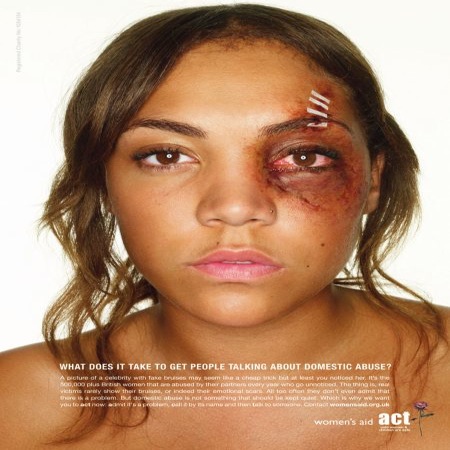
September, the song was, “Women hold up half the sky.” By the look of news reports this week, October, Domestic Violence Awareness Month, the tune might well be “Women and children bear the brunt”. From households and intimate relations to the armed forces to global poverty, women bear the brunt, children bear the brunt. This is not good news.

The new song began last Friday, with an article that centered on LeAnna M. Washington, Pennsylvania State Senator from the 4th District, which covers part of Philadelphia and Montgomery County. Senator Washington’s official Senate biography reports, “Washington has triumphed over many personal challenges in her life. She was a high school dropout, teen parent, and victim of domestic violence early in her marriage. Her tenacity, perseverance and faith in God allowed her to transform victimhood to victory. Washington, who earned a Master’s degree in Human Services from Lincoln University said of the road she has traveled: “I will go where there is no path and I will leave a trail for others to follow.””

In Friday’s article, Senator Washington is described as having been married at 18, and then living with the big secret of domestic violence, of spousal abuse. She is described as one of `many black women across the country….It’s about absorbing the reality that close to five in every 1,000 black women aged 12 and up are victims of domestic violence, according to the U.S. Department of Justice. It’s understanding that among those abused aged 15 to 34, murder by a husband or boyfriend remains a leading cause of death. More importantly, it’s about actively working on changing those outcomes….Verbal, sexual and physical abuse are forms familiar to a large swath of black females. Historically so…. These are the scars of slavery, lack of education, discrimination, unemployment and other frustrations that have been exacerbated among African-Americans. Poverty tends to be an indicator for abuse, though violence is not confined to one social class. The difference is having options and resources to escape – options not always afforded by those struggling to survive day-to-day. Feeling trapped leads many women to stay put – and in peril.”

The article is titled “Black women bear the brunt of domestic violence,” and it appeared in blackamericaweb. In every community, women bear the brunt of domestic violence. In every community, the language of that particular brunt, of that bearing, is silence.

And those communities are not only defined by race and ethne. For example, on Thursday we `learned’ that in the U.S. military “lesbians bear brunt of military discharges….Every military branch dismissed a disproportionate number of women in 2008 under the policy banning openly gay service members. But the discrepancy was particularly marked in the Air Force, where women were a majority of those let go under the policy, even though they made up only 20 percent of personnel.”

On the same day, Thursday, it was reported that in Lesotho, “children bear the brunt of the deepening economic crisis…”Adult frustration” translated into a grim reality of child abuse, violence, neglect and exploitation, with thousands left to fend for themselves, excluded from crucial services such as hospitals and schools.” The next day, the Africa Child Policy Forum sent out a press release, announcing a new publication, Child Poverty: African and International Perspectives. Here’s what they said in the release: “Poor children to bear the brunt of global economic crisis. New book looks at the brutal reality of child poverty….The book also includes analysis of the impact of the current financial crises on child poverty in the face of increased estimates of the actual number of newly poor and reduced economic growth in sub-Saharan Africa estimated to be down to 3.5 percent – implying a 7 percent increase in poverty in Africa, of which children will bear a huge brunt.”

From one community to another, what exactly is meant by “bearing the brunt”, and why is it always women and children who are endowed with that particular role and capacity? Can community exist without women and children bearing a, or the, brunt? A brunt is “An assault, charge, onset, violent attack….The shock, violence, or force (of an attack)…. The chief stress or violence; crisis.” To bear can mean so many things, from carry to bring forth fruit or offspring, but when it comes to bearing the brunt, it means “to suffer without succumbing, to sustain without giving way, to endure.” Bearing the brunt as an acceptable facet of everyday life, as an acceptable `neutral’ phrase, is a perversion of any vision of sustainability as articulated with wellbeing.

Domestic Violence Awareness must transform the language and the logic of the brunt. It’s time to stop talking about bearing the brunt and start talking and acting on baring the brunt. What is the attack, who and what are the assailants, what is the violence, the force, the stress, the crisis? All must be addressed as part of the same question and part of the same solution. And it begins and ends with women, not majestically holding up half the sky but rather ordinarily and daily populating and sustaining all the daily world. Bare the brunt now, today, and always.

(Photo credit: Precious Jones in NCKU)

Regret haunts the world

Regret is in the air this week. You might say, regret is the name of the game and, even more, the game of the name. From Geneva to the Gushungo Dairy Estate, in Zimbabwe, to Guinea, it’s been a week of declarations of regret.

On Monday, in Conakry, the capital of Guinea, thousands gathered in peaceful, and courageous, protest, to demonstrate their opposition to the military dictatorship of Captain Moussa Dadis Camara, who seized power in a military coup last December. Reports suggest that as many as 157 people were killed by soldiers who opened fire on them. Survivors and witnesses also reported, “A number of women taking part in the demonstration were stripped naked and sexually assaulted by security forces”. This has been described as “most shocking to the wearied citizens in this predominantly Muslim nation” who were “`profoundly traumatized’ by what had happened to the women in the stadium”.

The government of neighboring Liberia, a country that knows something about militarized sexual violence, issued a statement: ““The government of the Republic of Liberia has expressed grave concern at the events unfolding in neighboring Republic of Guinea, and has learned with profound regrets of the deaths of over 90 persons during a demonstration in Conakry on Monday, September 28, 2009”.

From Conakry, “Guinea’s military junta leader has expressed regret over the bloodshed in the clash between the opposition and security forces in the capital Conakry, Radio Senegal reported on Tuesday.” Death merits “merits” regret. Rape and sexual violence are clothed in silence, deep and profound.

In the same week, it was revealed that Nestlé had been purchasing dairy products from the Gushungo Dairy Estate, in the Mazowe Valley, about 20 kilometers north of Harare, a dairy farm recently taken over by Grace Mugabe. Once this was discovered, other connections were revealed. For example, DeLaval: “DeLaval, a leading equipment firm based in Sweden, is part of the giant Tetra Laval group owned by the Rausing dynasty”. They had sold a ton, actually tons, of equipment to Gushungo. Their response: “.Jörgen Haglind, a spokesman for Tetra Laval, said: “Tetra Laval was not previously aware of this transaction and we can only regret that the control functions within DeLaval have failed as this transaction should never have been approved.””  On Tuesday, “Delaval’s international spokesperson and vice-president of marketing and communications, Benoit Passard, said….”We regret that this has happened. We first made contact with the SA Dairy Association and then a long list of investors. The Mugabe name was never mentioned. This has come as a surprise to us and we would never have done business with them had we known this was who we were dealing with.””

Tuesday was a big day for expressions of regret. On Thursday, Nestlé Zimbabwe “ditched” Gushungo, without any expression of regret but rather an explanation of market forces. Perhaps those would include the threatened global boycott. We’ll never know. By Thursday, the government of Guinea was no longer expressing regret for anything, but rather claiming outside agitators and other nefarious forces were at work in Monday’s demonstration.

What is regret? “To remember, think of (something lost), with distress or longing; to feel (or express) sorrow for the loss of (a person or thing)…. To grieve at, feel mental distress on account of (some event, fact, action, etc.).” Regret is lamentation, grief, sorrow. Regret is loss.

In Conquest: Sexual Violence and American Indian Genocide, Andrea Smith, Cherokee scholar, feminist, rape crisis counselor, activist, woman, tells a story of regret: “`Assimilation’ into white society …only increased Native women’s vulnerability to violence. For instance, when the Cherokee nation was forcibly relocated to Oklahoma during the Trail of Tears in the nineteenth century, soldiers targeted for sexual violence Cherokee women who spoke English and had attended mission schools….They were routinely gang-raped causing one missionary to the Cherokee, Daniel Butrick, to regret that any Cherokee had ever been taught English.”

As Smith records for Native women in the United States, as the women of Guinea and Zimbabwe understand deeply, as women in Sweden and Switzerland might know as well when they consider DeLaval and Nestlé as elements of their own well being and comfort, sexual violence is a State policy. It is not an exceptional event, but rather is woven into the very fiber of State security and national development. Ask the Sudanese women refugees in eastern Chad, who have no place to hide from or escape the daily sexual violence.

The United Nations Security Council this week voted to request the appointment of a special representative to address sexual violence in armed conflict zones. After the vote, “Secretary-General Ban Ki-moon … immediately following the text’s adoption…. expressed regret that previous responses to sexual violence had not been able to stem the scourge.”

Were the Security General to express regret, or the leader of Guinea, or the corporate representatives, or the clergy, or anyone in public office or private spaces, for sexual violence, it would have to be more than a simple pro forma apology. The one expressing regret must perform and demonstrate grief, lamentation, sorrow, must understand and teach a lesson of loss. Until then, regret haunts the world … profoundly.

(Photo Credit: Rhizome)


Ishrat Jahan and the gender of aftermath

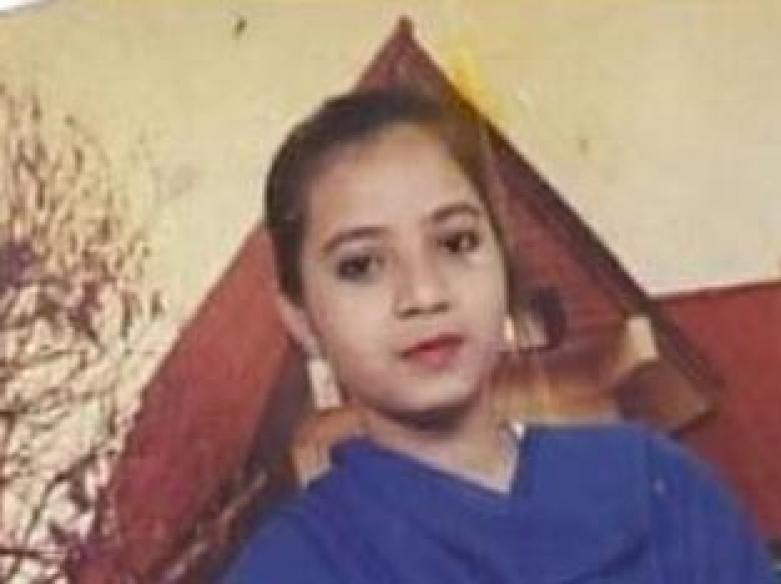
Ishrat Jahan

On the morning of June 15, 2004, in Ahmedabad, in the state of Gujarat in India, Ishrat Jahan and three others were killed by police. In India, these events are commonly referred to as encounters. The government claimed that Ishrat Jahan was “India’s first woman terrorist”. A recent magistrate report suggests that Jahan was simply a college student with no ties to any terrorist group whatsoever, and that the claims by the State were cynically manufactured. In India, this is a cause célèbre. In Gujarat, it is said, a dead woman haunts the State. The State is haunted.

A haunted State is a state that exists in the aftermath, a state in which the real occurs after the event, in which ethics is always deferred, always for a later determination.

Italy is a haunted State. Six Italian soldiers were killed last week in Afghanistan. Monday was a national day of mourning. As Italians gathered in the tens of thousands, it was not the soldiers who were said to haunt the assembled but rather “this gray area between peacekeeping, peace enforcement and combat operations….The ambiguity has haunted the country”. This ambiguity is precisely the clarity of the aftermath. We don’t know exactly what our mission is, but we will, once it’s accomplished. When it comes to war, the aftermath justifies the means … and the deaths.

But it’s not just the military branches of government that rely on the continual deferral of the aftermath. For example, Lauro L. Baja, Jr., a distinguished Philippine ambassador at the end of an illustrious career, faces the ignominy of a court trial: “When Lauro L. Baja Jr. returned to his native Philippines in 2007, he had just finished a four-year stint as ambassador to the United Nations that included two terms as president of the Security Council. A storied diplomatic career that began in 1967 culminated with the Philippine president conferring upon him the highest award for foreign service. Then a three-month episode from his U.N. days returned to haunt him. He was sued by Marichu Suarez Baoanan, who had worked as a maid in New York City for Baja and his wife, Norma Castro Baja. Baoanan, 40, said the Bajas brought her to the United States in 2006 promising to find her work as a nurse. Instead, Baoanan said, she was forced to endure 126-hour workweeks with no pay, performing household chores and caring for the couple’s grandchild. Baja denied the charges, saying Baoanan was compensated. He also invoked diplomatic immunity — a right that usually halts such cases in their tracks.”

How does this haunting work, and what does it tell us? If the allegations in the Baja case are proven, somehow those who committed the violence are haunted, because they are the subjects of history, the actors. What about Marichu Suarez Baoanan? Or Mildrate Yancho Nchang, who worked without pay or a day off for three years and then went to hospital when her employer, a Cameroonian diplomat’s wife, beat her severely. What happened to the diplomats? They got off. Diplomatic immunity.

Diplomatic immunity is one issue, a matter of rule of law and interpretations of sovereignty. Existential immunity is another. Who haunts, who is haunted, how does haunting work, and, finally, is haunting gendered?

These are stories of aftermath. From India to Italy to diplomats’ households, the haunting only begins once the period called aftermath has begun. To be confronted with or to struggle with aftermath is to be haunted, but what exactly is aftermath? “A state or condition left by a (usu. unpleasant) event, or some further occurrence arising from it” and before that, aftermath is the “second or later mowing; the crop of grass which springs up after the mowing in early summer”. The math is the mowing itself, the action and process of chopping down. The aftermath is the grass that follows the violence and the act of mowing it, again and again and again. What is the gender of math? At its root, feminine. And what is the gender of aftermath? Woman. Ask those who haunt. They’ll tell you.

(Photo Credit: news18)

The gender of stampede

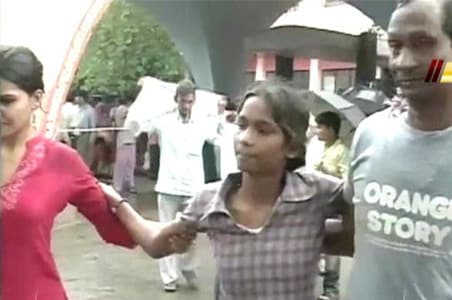
There was a stampede in Jakarta, Indonesia today. Few agencies have reported it, I’ve found only one. Thirteen people are reported injured, and it is reported that the thousands who gathered for free food and cash handouts, to mark the end of Ramadan, were overwhelmingly women and children.

Human stampedes are reported throughout the year, everywhere. In the past week or so, four human stampedes have been reported, Jakarta’s being the most recent.

In New Delhi, India, on Thursday, September 10, “Tragedy struck a government secondary school in Indian national capital New Delhi Sept 10 when five girls were killed and 27 other students injured, six of them very critically, in a stampede. The incident occurred when students were trying to make their way up and down a narrow staircase when they were asked to shift classrooms during an examination in the Khajuri Khas Senior Secondary School….Some students said they were asked to shift classes as certain classrooms were water-logged due to incessant rains since Sept 9 night. One of the girls, going down the staircase, fell leading to the stampede….All but one of the 27 injured students were girls.” In the end, 34 students were reported injured, five killed.

That was Thursday. On Saturday, in KwaNongoma, KwaZulu Natal, South Africa, “Tragedy struck at the annual Royal Reed Dance … when one of the maidens was crushed to death during a stampede that broke out following a scramble for promotional caps. Another maiden is in a critical condition while 10 others were seriously injured as the event turned into pandemonium.”

That was Saturday. On Monday, September 14, in Karachi, Pakistan, “Eighteen people were suffocated to death during a stampede here on Monday as poverty-stricken women battled for a free bag of flour being distributed by a philanthropist in Khohri Garden. The dead reportedly include a number of children as well. Meanwhile, several unconscious women were rushed to the emergency ward of the Civil Hospital in Karachi.” Actually, it was twenty women and girls killed, and fifteen were injured. Or was it at least 25? At any rate, the women and girls were waiting for free food.

Stampedes occur all the time. It could be sports events, such as in March of this year at the Houphouet-Boigny Stadium in Côte d’Ivoire at a football, or soccer, match when a wall collapsed and the crush killed 22 and injured over 130. It could be the proverbial fire in a crowded theater or club, as happened in Bangkok this New Year’s, when at least 59 people were killed and over 200 were injured. Or it could be a sale at a big store, like Wal-Mart, as happened late last year, in Valley Stream, New York, not far from New York City. That was on the Friday after Thanksgiving, when people couldn’t wait any longer and broke through the doors, trampling a worker, Jdimytai Damour, to death. It happens all the time.

All of these incidents were described as stampedes. In the most recent, the dead and injured were all or almost all women and girls, but that is not my point here today. What exactly is a stampede, and how does a crowd crush become a stampede?

Stampede is a relatively new word, and it seems to be North American. According to the Oxford English Dictionary, it was coined early in the 1800s, Cowboys in the United States borrowed the Spanish word, estampido, which means crash, explosion, or report of a firearm, and estampida, which means a stampede of cattle or horses. It was an early example of transnational vaquero cowboy culture. The word didn’t come from Spain, it came from Mexico. Stampede, or stompado, was a “sudden rush and flight of a body of panic-stricken cattle” or horses. Later, stampede came to mean a “sudden or unreasoning rush or flight of persons in a body or mass”.

Here’s the thing. At its inception, stampede meant a thundering herd, powerful, dangerous. Today, when referring to people, it means a mass of people in flight who are threat mostly to themselves. How does that happen? Here’s one possibility. At the beginning, stampede was virile, masculine, big roaring animals and big riding cowboys. People, on the other hand, that was panic. In fact, the word in Spanish for the phenomenon of people rushing as a crowd and crushing one another in the process is precisely pánico. Panic. Sudden, wild, unreasoning, excessive, at a loss and out of control. And what is the term for mass panic?  Hysteria, the women’s condition: “Women being much more liable than men to this disorder, it was originally thought to be due to a disturbance of the uterus and its functions”.  Hysteric: “belonging to the womb, suffering in the womb”.

It doesn’t matter who is trampled in the event called a stampede. What began as an articulation of masculinity, the enraged capacity to destroy all in its path, has become the embodiment of womanhood, the helpless implosion of self. What began as a roar has become somehow a whimper. When you read that a group was in a stampede, know this. It is not a neutral word. It is a gender, and the gender is woman.

And those who were in the stampede? Writing of the trampling to death of Jdimytai Damour, one person commented, “I’m particularly troubled by reports that police are thinking about charging individual members of the crowd. When people behind you start pushing you forward, there is often nothing you can do. And there’s a real fear that if you try to resist, you too will be trampled. Part of the tragedy is that there are undoubtedly people in that crowd who know they stepped on something that day, or who, in their excitement, spurred on the surge. These thoughts may haunt them for many years.”  Those who trampled will be haunted, those who lost loved ones will be haunted. The rest of us, we are meant to be haunted by the gender of stampede.

(Photo Credit: NDTV)

ACAS Bulletin 83: Sexual and gender based violence in Africa

Sexual and gender based violence in Africa

A New ACAS Bulletin edited by Daniel Moshenberg

This Bulletin began in response to news reports of “corrective” and “curative” gang rapes of lesbians in South Africa. These were then followed by news reports of a study in South Africa that found that one in four men in South Africa had committed rape, many of them more than once. We wanted to bring together concerned Africa scholars and committed African activists and practitioners, to help contextualize these reports. We wanted to address the ongoing situation of sexual and gender based violence on the continent, the media coverage of sexual and gender based violence in Africa, and possibilities for responses, however partial, that might offer alternatives to the discourse of the repeated profession of shock or the endless, and endlessly reiterated, cycle of lamentation. To that end, we have brought together writers of prose fiction (Megan Voysey-Braig), lawyer-advocates (Salma Maoulidi, Ann Njogu), poets (Chinwe Azubuike), trauma scholars (Sariane Leigh), human righs and women’s rights advocates (Michelle McHardy), gender and transgender advocates (Liesl Theron), activist researchers (Sasha Gear). These categories are fluid, since every writer here is involved in various activist projects, advocates in many ways. The writers do not pretend to `cover Africa’, and neither does the collection of their writings. The writings treat South Africa, Nigeria, Zanzibar, Kenya, Sierra Leone. They are meant to continue certain conversations, to initiate others.

Read more here : http://concernedafricascholars.org/analysis/acas-bulletin-83/

Download the Entire pdf (3.4mb) here: http://concernedafricascholars.org/docs/Bulletin83.pdf

Table of Contents

Sexual and gender based violence: everyday, everywhere, and yet… | pdf
Daniel Moshenberg

Untitled | pdf
Megan Voysey-Braig

Zanzibar GBV advocacy: important lessons for future legal reform strategies | pdf
Salma Maoulidi

Searching for the will to conscientiously prosecute sexual crimes in Zanzibar | pdf
Salma Maoulidi

Poet’s Note | pdf
Onwu Di
Of Widowhood
Chinwe Azubuike

Post conflict recovery in Sierra Leone: the spiritual self and the transformational state | pdf
Sariane Leigh

To be a woman in Kenya: a look at sexual and gender-based violence | pdf
Ann Njogu and Michelle McHardy

Trans-hate at the core of gender based violence? | pdf
Liesl Theron

Manhood, violence and coercive sexualities in men’s prisons: dynamics and consequences behind bars and beyond | pdf
Sasha Gear

Supplemental Material

Profile: Dr Denis Mukwge
Lelly Morris / The Lancet

Interview: Sexual terrorism in eastern DRC
Amy Goodman interveiws Christine Shuler Deschryver

Report: Soldiers who rape, commanders who condone
Human Rights Watch


The Association of Concerned African Scholars (ACAS) is a network of academics, analysts and activists. ACAS is engaged in critical research and analysis of Africa and U.S. government policy; developing communication and action networks; and mobilizing concerned communities on critical, current issues related to Africa. ACAS is committed to interrogating the methods and theoretical approaches that shape the study of Africa.

It may be Labor Day in the USA but not for the `un-worthy’ cleaners

Hands in Solidarity, Hands of Freedom mural on the United Electrical Workers building, Chicago, Illinois

It’s Labor Day weekend in the United States, and I’ve been thinking of the names, words, and voices that are consistently dropped out of the public accounts of workers and of labor. They’re stories that are deemed not worth telling or selling. Who decides the value of a story or the worth of a person or a people? Who decides something or someone is beyond worthless, beyond unworthy, is actually filled with un-worth? Consider two stories, from this weekend, that concern cleaners, and how their gender is `of no consequence’.

One involves cleaners at the University of the Free State, in South Africa, the other involves cleaners at GEICO headquarters, in suburban Washington, DC, in the U.S.

In February 2008, four white students at the University of the Free State made a horrible video. According to one report, “The video depicts four white male students taking four black, elderly, female workers and making them down a bottle of beer, run a race, play rugby and then kneel and eat meat which had been urinated on”. According to other reports, it was five Black elder workers, four women and one man.

Whatever the number, the workers were Black, overwhelmingly women, and elders. The media consensus? Racism. This was simply a matter of racism. Why? Perhaps because the students themselves said the video was in protest of racial integration of the residences. Perhaps.

Over this weekend, a full eighteen months later, the South African Sunday Times reports those cleaners, “four elderly female cleaners” are now “still being taunted”, by students, and are still haunted every time they don their cleaner uniforms. They have asked, since February 2008 when the film was made and circulated, for the University to change their uniforms. As of yet, nothing has changed, in either outfit or culture.

The report never deigns to quote any of the cleaners, instead opting only for the words of minister of higher education Blade Nzimande. And so the video remains simply racist. Gender matters not, elder status matters not. These topics are un-worthy.

I’ve been thinking about the names, words and voices of women workers, and in particular cleaners, because of an incident in Washington, DC. “12 union workers” lost their jobs recently when GEICO, the insurance giant, changed cleaners, and in so doing, moved from a unionized company to a non-union company. Service Employees International Union, SEIU, local 32BJ represents `property service workers’, and is staging protests. Washington Business Journal reports on the situation, without any names, other than those of corporations and union locals. Local National Public radio station WAMU reports on the protest, and interviews union district chair Jaime Contreras and company senior vice president Don Lyons. No workers. Radio América interviewed Jaime Contreras, who spoke, compellingly, of the workers’ situation. The television network, Univision, also ran a piece. They interviewed Dima Diaz, of SEIU, and Jose Rafael Cabrera, a dismissed worker. They tried to interview company boss Derek Miller, but no luck.

If you watch the Univision piece, you might notice that the majority of union activists and workers in the piece are women. Where are they in the reports? I am not saying the SEIU or the news media conspired to keep them out. But they did keep them out. It would be surprising if a crew of 17 cleaners was exclusively men workers. In fact, it would be shocking.

I understand that workers, women or men, may not want to have their names shared, might have reasons, many reasons, to protect their anonymity. But their words? As long as women workers, and in particular women workers of color, are kept out of reports of their own struggles, they will be continue to be considered un-worthy of attention, respect or recognition. Those women workers, those cleaners, have names, words, voices.

(Photo Credit: Harvard College Women’s Center)