Dan Moshenberg

Dan Moshenberg is an organizer educator who has worked with various social movements in the United States and South Africa.

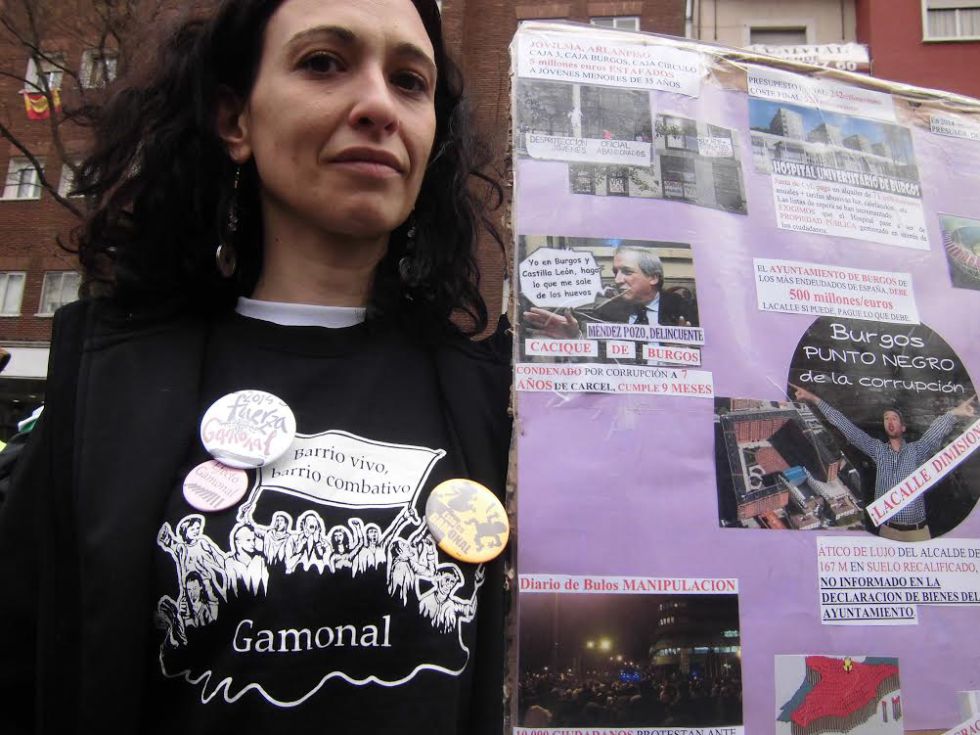
In Chile, women shut down Monsanto’s Law

Good news! Women across Chile organized, mobilized and shut down, at least for now, the dreaded Monsanto Law. The law would have given multinational corporations the power to patent seeds they discover, develop or modify. For small and mid-sized farmers, which is to say for the rural 99%, this would have been catastrophic. It would have been disastrous for Chile’s `seed heritage’ as well. Women lead the campaign to stop the law, and last week, the government withdrew the bill.

On Monday, March 17, Secretary General to the Presidency Ximena Rincón announced the withdrawal. Rincón had long been a leading critic of the bill, both in Parliament and in government more generally.

ANAMURI, Asociación Nacional de Mujeres Rurales e Indígenas or the National Association of Rural and Indigenous Women, was a central organizer and mobilizer in the campaign. ANAMURI co-director Alicia Muñoz explained, “All of the resistance that rural organizations, principally indigenous communities, led during these past years was a success. We were able to convey to the parliament how harmful the law would be for the indigenous communities and farmers who feed us all. Big agriculture, or agro-business is just that, a business. It doesn’t feed our country.” In their organizing and mobilizing, ANAMURI explicitly linked the capitalization and commoditization of food and of seeds to capital and to patriarchy. Repeatedly, they stressed that the right to food and the struggle for biodiversity is part of the women’s liberation struggle in Chile and everywhere.

Camila Montecinos, of GRAIN, focuses on biodiversity and food sovereignty. Her organization worked with CLOC, la Coordinadora Latinoamericana de Organizaciones del Campo, to organize rural women, workers, and indigenous communities to educate the members of government and the general population as to what is at stake, and again not only for Chile: “This struggle has not ended. Certainly the agrobusiness sector is going to lobby fiercely. We’re ready for that. Sometimes Chile looks like one of the most submissive countries, but if we can win here, others can win elsewhere where similar laws are in place.” In Argentina, for example, women like Sofía Gatica are leading a similar campaign against Monsanto and Monsanto Laws.

Lucía Sepúlveda, of Rapal, la Red de Acción en Plaguicidas y sus Alternativas or Alliance for a Better Quality of Life/Pesticide Action Network, has been organizing to stop the destruction of small farms and the resultant production of rural food deserts, in the heart of the farmlands. At the same time, when the bill was pulled, Sepúlveda reminded the women around her that it was originally Michelle Bachelet, in 2009, who originally presented the bill to Parliament.

After years of organizing, cajoling, mobilizing, and meeting, Bachelet’s emissary pulled the bill for reconsideration. At the same time, Bachelet announced this week her intention to establish a Ministry for Women and Gender Equality. Alicia Muñoz noted that ANAMURI has been organizing and lobbying for this Ministry since the advent of democracy in Chile.

In Chile, women are on the move: in the government, the fields and factories, the schools, the households and the streets: “We won because we organized an enormous collective effort and massively broadcast and shared our position.” In the words of an earlier Chilean popular movement, “¡El pueblo unido, jamás será vencido!”


(Image Credit: ANAMURI)
For Nozuzile Mankayi, the struggle continues

Nozuzile Mankayi

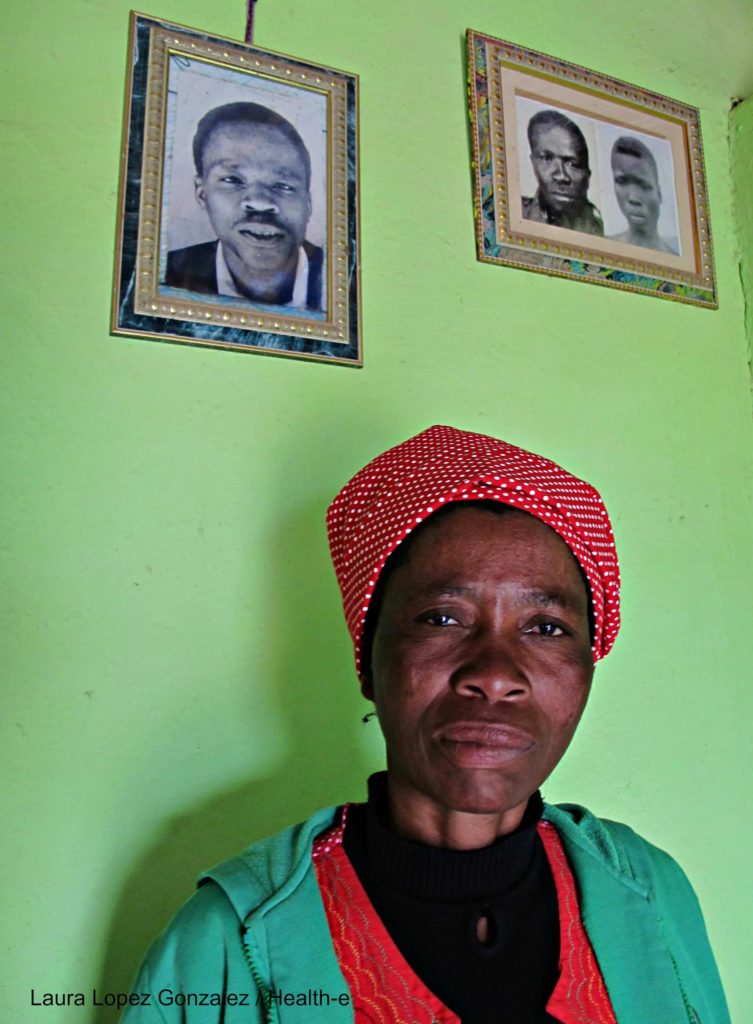
Nozuzile Mankayi is a gold widow.

Her husband, Thembekile Mankayi, spent 1979 to 1995 working underground in the Vaal Reefs gold mine, in South Africa. In 1993, Mankayi contracted pulmonary tuberculosis. He received treatment, improved slightly, and then suffered a recurrence, and had to leave. When he left, he was paid a mere R16,000 for his troubles. In 2006, he was diagnosed with silicosis.

In 2006, Thembekile Mankayi sued AngloGold Ashanti Ltd. for 2.6 million rand. He sued for dignity. Four years later, in August 2010, the Constitutional Court heard the case. Seven months later, March 2011, the Constitutional Court decided in Thembekile Mankayi’s favor.

Thembekile Mankayi died one week before the decision was announced.

It’s been three years, and his widow, Nozuzile Mankayi, has not received a single penny.

The South African compensation system is designed to strangle and choke gold widows to death. First, they have to submit their respective partner’s bodies to a post mortem. For many families, cutting open the body is forbidden. So, women have to be prepared to withstand often intense opposition and worse.

Second, women survivors receive far less than their partners would have.

Jenni Williams, of the Women’s Legal Centre, has argued, “The women who take care of miners are doing unpaid care work. At the moment we are developing a strategy around what would be the best way to litigate around this, but for now we are saying that unpaid care work should be recognised in the context of damages claims, but also in government planning and budgeting. There needs to be recognition that women contribute towards the economy in that they are working for free, which means that there is a saving. In other words, where you had to hire a nurse to look after the sick person, you would have the wife or daughter doing this for free. In terms of this class action suit, what we are proposing is that part of the damages award is a trust that is set up that acknowledges the saving that the mining companies would have by virtue of the fact that these men’s partners and daughters are going to look after them … The court should take that into account when they look at the damages claim because the person doing the harm is actually benefiting from the woman’s unpaid care work.”

It has been said, “Half the harm that is done in this world is due to people who want to feel important.” All the harm addresses women. When miners are attacked, in their lungs by dust and in their chests by bullets, women carry them, through the long day’s night and to the graveside. The persons doing harm benefit from that. They benefit from women’s unpaid labor and used up lives. They benefit from the tragedy of others deemed unheard and unseen: women.

Thembekile Mankayi waged a mighty campaign against predators who ultimately exploded and collapsed his lungs. Nozuzile Mankayi will not stay unheard or unseen. For her, and for the more than 200,000 former gold mineworkers and gold widows now engaged in a class action suit, the struggle continues.


(Photo Credit: Laura Lopez Gonzalez / health-e.org.za)

Thais Moreira and Yashika Bageerathi: faces of democracies’ new witch-hunt


From the perspective of the State, young asylum seekers and young undocumented residents are the same. They are not supposed to be `here’. They are not supposed to speak up, and certainly not for themselves. Under no circumstances are they to succeed. Unkempt citizens of the unwashed criminal classes, they are to stay in the shadows … as shadows. This week, , in France, and Yashika Bageerathi, in England, are the faces of democracies’ new witch-hunt, and they reveal that a specter haunts Europe.

Thais Moreira is a 20-year-old student who came to France, from Brazil, in June 2009. She came with her mother. Since her arrival, Moreira has been a model student, resident, everything. She has fully integrated herself into her neighborhood, school, and new country. In mid February, she went to the local police station for `regularization.’ According to French law, if one has been in the country for five years and has completed three years of schooling, one can apply for residence papers. Some bureaucrat decided that Moreira had only arrived in France in 2010. And so, on March 7, she received the dreaded OQTF, or Obligation de quitter le territoire français. The letter gave her 30 days to leave the country.

Yashika Bageerathi is 19 years old. With her mother, younger sister and brother, a 16-year-old Bageerathi arrived in England in 2012, fleeing physical violence from a family member in Mauritius. Last week, Yashika Bageerathi was informed that, since she was now of majority, her case had been separated from that of the family, and her application for asylum was denied. She was to report to Yarl’s Wood. She was sent to the airport where, apparently, British Airways refused to give her passage. This seemed like a reprieve … until the State responded to the young woman’s appeal to not be separated from her family. The Home Department’s replied, “Fine, the whole family’s denied asylum, and you’re all going back to Mauritius.” That’s where the situation sits now.

In both Thais Moreira’s and Yashika Bageerathi’s cases, students and staff mobilized and organized. They have protested, marched, organized Twitter campaigns (check out #FightforYashika), organized petitions, and more. They have raised a mighty ruckus. And they are asking questions, especially about “the yawning gap between official rhetoric against immigrants “who do not fit” and the violent reality of expulsion and deportation.”

From the Dreamers in the United States to Thais Moreira in France to Yashika Bageerathi (and before her, Lorin Sulaiman) in England, young people, students all, are protesting the witch-hunt that is immigration policy. And it’s not just those students who are asylum seekers or undocumented residents. It’s their friends as well, the students they study, play, and live with. They confront State viciousness with hope and creativity. They oppose State callousness with love. Who’s the teacher and who’s the student now? Stop the democracies’ witch-hunt. Empty the immigration prisons. Stop the deportations … now!


(Photo Credit: http://www.comunidadebrasileiranafranca.com)

Mississippi is burning to kill Michelle Byrom

Central Mississippi Correctional Facility

“Kill the pig. Cut her throat. Bash her in.”

Michelle Byrom may, or may not, be executed this Thursday, in two days. She currently sits on death row in Central Mississippi Correctional Facility, in Pearl, Mississippi. Mississippi has three State prisons. All women `offenders’ end up in CMCF. In 1996, Mississippi hosted 807 women prisoners. By 2001, it boasted 1,445 incarcerated women. Today, according to the State’s March 2014 `fact sheet’, Mississippi’s prisons and jails hold 2,233 women behind bars. 900 women live, and die, in Central Mississippi Correctional Facility.

In 1999, someone killed Edward Byrom, Sr. By all accounts, Byrom Sr. was a vicious, abusive man, who tortured his wife, Michelle, and forced their son, Edward Byrom Jr, known as Junior, to live in the lowest rungs of hell. Physical abuse, mental and emotional torture, and sexual exploitation were the daily, and hourly, fare in the Byrom household.

The State decided that Junior and a friend had been part of a murder-for-hire plot hatched by Michelle Byrom. When Byrom was killed, Michelle Byrom was in the hospital for double pneumonia. Junior has confessed, at least four times, to having actually murdered his father. Something snapped, he picked up a gun and shot him. Michelle Byrom has been diagnosed “with borderline personality disorder, depression, alcoholism and Muenchausen syndrome, a serious mental illness that caused her to ingest rat poison to make herself ill.” And, of course, her counsel, by all accounts, was somewhere between dreadful and criminally negligent.

Observers have waxed literary in describing the case. For example, Warren Yoder, executive director of the Public Policy Center of Mississippi, said, “John Grisham couldn’t write this story … In any reasonable world, this would be a short story by Flannery O’Connor. Instead, it is happening now in our Mississippi.”

Why is Mississippi burning to kill Michelle Byrom. For that, better to turn to Lord of the Flies. Mississippi hasn’t killed a woman in 70 years, and Mississippi can read the writing on the wall. Soon, capital punishment will come to an end, even in Mississippi, a national leader in executions. That recognition feeds the fire. Facts be damned, along with presumption of innocence and shadows of doubt. The beast needs blood.

The details of Michelle Byrom’s life are hard and disturbing, but the substance, and stench, of Mississippi’s burning is far worse. Stop the execution of Michelle Byrom. Stop all the executions.


(Trip Burns / Jackson Free Press)

In Spain millions march for dignity

Belèn Calvo

“I came because I have dignity.”

As many as two million demonstrators converged on Madrid this weekend to reject austerity and support individual and collective dignity. For the past month, eight columns have been on the move, and Saturday, they met, as the Marches for Dignity flooded the streets and captured the imagination of the Spanish people.

Marchers and supporters have demanded no more payment of the debt; no more cuts; no more Troika; and bread, work, shelter (and roses) for all. While they have specific policy demands, such as a law establishing a basic income and an end to all evictions, the heart of the mobilization has been to demand an end to State terror and a concerted effort to build dignity. To march, and to work, for dignity is to reject the politics of fear and terror.

The marchers’ manifesto demanded equal rights for women, migrants, people of color, members of LGBTIQ communities, elders, the poor, workers, dissidents, and more. More to the point, they have demanded an end to the assaults and a beginning to real democracy and real dignity.

Women have been prominent across the sectors. Women have led the anti-eviction movement, and they have led and populated all other movements as well, from mining communities to farm communities to urban communities, from factories to schools to clinics. Women like anti-eviction activist Mamen Ruiz argued that women had been pushed to the brink, and beyond, and that now is the time. Women like Virginia, a government employee, marched to protest the astronomically rising tax rates and the new, stringent anti-abortion laws. Women like teacher Belén Calvo came because, in her words, “I have dignity.”

Women marched to secure an end to sexual violence and exploitation. They argued that women had long struggled with and organized to secure the right to live without male violence and the right to family planning. Under the Troika’s constant assault on women, and almost everyone, violence against women has intensified. Violence has intensified against women of color, immigrant and migrant women, women workers, women students, women seeking medical assistance, and the list goes on.

Outside of Spain and the usual suspects, the Western media has barely covered the largest protest in recent Spanish history, except to note that they ended with some clashes between police and a very small number of demonstrators. Whether police or protesters began those clashes remains debatable. What is clear is that the only `news fit to print’ is violence, however incidental.

For the international news media, austerity is the new normal. Meanwhile, anti-austerity resistance is gaining ground in Greece, Cyprus, Ireland, Portugal, Spain. Much of the prison resistance organizing in the United Kingdom, United States and Australia is anti-austerity at its core. Much of the protests about public service in South Africa are as much about the State’s austerity development program as the shoddy service. In each instance, women are at the core of organizing. In each instance, women echo Belén Calvo: “I come because I have dignity.”

The message is clear. End the reign of terror and torture that passes for austerity. Remember, we each and all came because we have dignity.


(Photo Credit: El Pais / J.J.G.)

For women farmworkers of Immokalee NOW IS THE TIME!

In Florida’s tomato fields, and across the United States, women tomato pickers and farmworkers – such as Lupe Gonzalo, Silvia Perez, Nely Rodriguez, and scores of others – are organizing a quiet revolution, by waging a raucous, joyous, ferocious struggle. Welcome to the tomato fields of Immokalee, Florida. Welcome to the future.

The Coalition of Immokalee Workers has been organizing, representing, testifying, winning and consolidating farmworkers’ power for twenty-one years. In that time, the organization itself has matured. A key part of its growth has been the formation of the Immokalee Women’s Group and the recognition of women as a central sector in the struggle for farm worker’s rights, dignity, and power.

Recognizing women’s centrality has meant recognizing that the struggle for rights, dignity, and power is a community wide struggle rather than strictly a `shop’ issue. While exorbitantly expensive, predatory housing affects everyone, women carry the greater load of both dealing with rent payment and of maintaining the household. Women attend more to health care, child care and children’s well being, food provision in food deserts amidst the farmlands, and the list goes on. Women keep the daily train of the everyday moving along.

At the same time, women in the fields face their own special circumstances. Rampant, and often illegal, use of pesticides and lack of both information and safeguards imperils women’s health in particular ways. Sexual abuse at work attacks women daily.

The women of Immokalee have declared NOW IS THE TIME! They reject the planned catastrophe of lethal housing, fatal indebtedness, wage slavery, sexual abuse and exploitation. They reject the harvest of shame and the fields of abjection. They organize hope.

On Saturday, March 8, International Women’s Day, the women of Immokalee wrote and delivered a letter to Wendy’s, which has thus far refused to sign the Fair Food agreement, “Hear the voice of the woman, who today dares to defend her dignity in the fields. A new day is coming to Florida’s fields, with the Fair Food Program. It guarantees that the dignity of women is respected. We have to keep fighting, and we have to keep shouting, at Wendy’s and other corporations, that the hour has arrived. NOW IS THE TIME!”

On the following Saturday, Lupe Gonzalo, CIW farmworker and organizer, spoke directly to Publix, which has also not signed the Fair Food agreement; to supporters and to the world: “We want to say to Publix that as women, we will not even consider allowing sexual violence to continue in Florida’s fields or the agricultural industry.  We will not take one step backward.  We will only continue forward.”

We will not take one step backward. Lupe Gonzalo has been recognized as “a powerful voice” for justice. She is. Her power is the power of women, rejecting sexual abuse and all forms of exploitation. Her power is her capacity for affirmation, her ability to reach and teach others around her, and especially women, to affirm themselves, individually and collectively, and to “feel proud to walk, to march, to demand justice, to demand respect for ourselves, for our families, for our children, for future.”

As one CIW woman farm worker noted, two years ago, “Our history is not written in any books. I don’t think there’s enough paper to capture the daily life of a woman in the struggle, fighting to provide for her family. We as women want to move forward, so that tomorrow our children will not have to suffer as they do today.”

The future is now. NOW IS THE TIME!

(Photo Credit: Forest Woodward / Facebook)

In Cyprus austerity passionately embraces incarceration


Sunday, March 16, marked the first year anniversary of Cyprus’s crash program in austerity. The troika – the European Commission, the European Central Bank and the International Monetary Fund – in its infinite wisdom forced Cyprus to welcome a raid on all its bank deposits by means of a tax on all deposits. While that particular, and particularly destructive, policy was rescinded, other measures remain in place. Two weeks ago, Cyprus Parliament approved massive and deep privatization of public services. What does not close is the prison.

Last week, in response to two reports, the European Parliament backed resolutions critical of the Troika’s lack of democratic accountability. For Liem Hoang-Ngoc, co-author of one report, Cyprus is a prime example of the Troika’s anti-democratic practices and mentality: “If there had been open debate at the European Parliament, the Eurogroup would never have suggested that Cyprus tax deposits under 100,000 euros… Macroeconomic goals have not been realized: growth is sluggish and debt has skyrocketed. We underlined the disagreements among the members of the Troika, proving that other politics were possible. The message I wanted passed is that the politics of austerity have failed. Democratic debate must be open in order to make public the existence of alternative politics.”

Throughout the island nation’s year of political uproar and economic collapse, prison, and specifically detention of migrants and asylum seekers, has remained a growth industry.

Cyprus has had a longstanding love affair with putting asylum seekers behind bars. A 2012 report noted, “Every year, hundreds of people who flee to Cyprus to escape persecution, war or simply grinding poverty are put behind bars and detained as if they were criminals, even though they have committed no crime. Most are detained for months, often in poor conditions without access to adequate medical care and usually unable to challenge the lawfulness of their detention due to the paucity of free legal aid. In some cases, the Cypriot authorities refuse to free people even when the Supreme Court has ordered their release.”

The report told the story of N: “N. is an asylum-seeker from Sri Lanka. She is married to another Sri Lankan asylum-seeker who lives in Cyprus and they have submitted a family asylum application. They have an eight-year-old daughter. In September 2011, N. was arrested without documents and detained in Block 9 of Nicosia Central Prison. Her lawyer, [said] that despite his repeated requests, the authorities did not provide him with the deportation and detention order, so in April he challenged the lawfulness of her detention before the Supreme Court…In December 2011, N. was still in detention along with several other women held pending deportation. She tearfully said: `What kind of country separates a mother from her child? Yesterday it was her birthday. My daughter told me, ‘mama I miss you so much’.’ N. was eventually released on 23 April 2012, one day before the scheduled Supreme Court hearing and after seven months in detention.”

That was 2012. A report released today suggests the only change is from `prison’ to `detention centre’: “One woman, Nina (name changed), 28, was separated from her 19 month old son whom she was still breastfeeding and detained in a police station, after she was arrested while trying to apply for permanent residency. She is married to a Romanian citizen and told Amnesty International her immigration status has always been regular and that she did not know the reason for her arrest. Her son was taken away by social services and was only allowed to see her three times a day for 20 minutes at a time for feeding.

A second woman from Sri Lanka, was detained in Menogia detention centre after visiting her husband, also a Romanian citizen, who was being held at a police station. They were accused of having a marriage of convenience despite a DNA test proving that her husband was the father of her child. She was only allowed to see her three year old son twice a week for half an hour each time. Both women have since been released after four days and four weeks in detention, respectively.”

In the past year, there have been repeated hunger strikes both by prisoners inside Menogia and by loved ones and others outside: “It must be a special kind of hell, the bottom beneath the bottom, to escape persecution, war or a natural disaster only to be locked up indefinitely in a place every bit as dehumanizing as a prison. At the Menogia detention center in Cyprus, twenty-five Syrian refugees fasted to try to end their mistreatment, which included the denial of food and medical care.”

From the debtors’ prisons popping up in the United States to the immigration and asylum prisons in Cyprus, austerity passionately embraces incarceration. In a world in which “migrant populations have become increasingly feminized,” another world, without special kinds of hell, must be possible.


(Photo Credit: Cyprus Mail)

The 1001 days and nights of Reeyot Alemu’s imprisonment


“Every new stretch of prison for a group of political prisoners gave birth to a new batch of freedom songs. Jail spells had not broken us; they had helped make us.”
Ruth First: 117 Days: An Account of Confinement and Interrogation Under the South African 90-Day Detention Law

Sunday, March 16, marked the 1000th day Reeyot Alemu spent in an Ethiopian prison, the notorious Kaliti Prison, for the crime of writing critical news pieces. Alemu followed a path similar to that of Ngugi wa Thiong’o in Kenya, Paulo Freire in Brazil, Ruth First in South Africa, Angela Davis in the United States, and so many others. That is, she is a teacher who was called upon to write. Nothing heroic. Just write. Write the news. Write the facts. Write the analyses. These acts of writing qualify as terrorism in Ethiopia (as they do in much of a world covered by interlocking Wars on Terror).

In Reeyot Alemu’s case, her terrorism was to focus on poverty, inequality, corruption, and gender inequality, or, more precisely, women’s rights and the oppression of women. For that, she was initially sentenced to fourteen years in prison. The sentenced was then `reduced’ to five years.

In 2012 Alemu won the International Women’s Media Foundation’s Courage in Journalism Award. In May 2013, she won UNESCO’s Guillermo Cano World Press Freedom Prize 2013. Each time, she managed to smuggle out notes that called on journalists to be of courage, to report and write and expose, to “be voices of the voiceless [and] reveal the truth of the oppressed ones.”

Since the UNESCO award, it appears that life has grown even more difficult for Alemu. Her visitors have been restricted. At one point, she was only allowed to see her parents and a priest. Her fiancé and her sister have both been prohibited from seeing her. In September, Reeyot Alemu was on hunger strike. Alemu’s family says she is living with breast cancer, and the prison is refusing her medical treatment. Reports suggest that the State has paired Alemu with a “tormentor”, a prisoner whose job is to make another prisoner’s life a living, and dying, hell. When Alemu is not in the living hell of her cell and cell mate, she’s in the torture hell of solitary confinement.

Some, such as the Committee to Protect Journalists, have broadcast Alemu’s case, but in general the media has remained silent. Why? Have the abusive and abysmal conditions of Kaliti Prison become the new normal? Has the abuse of journalists and teachers become beside the point? Is the War on Terror so much a part of the global everyday that the struggle of one woman to address the conditions of women and the corruptions of State become just so much collateral damage?

Some suggest that Ethiopia’s anti-terrorism law, passed in 2009, was actually forced upon the nation by the United Nations. While that’s doubtful, it is the case that in passing the law, and entering into the global prison regime, Ethiopia joined the 21st century’s league of nations.

The pedagogy and the literature of the oppressed will emerge from the prisons of the world. One day, Reeyot Alemu will teach us that the voiceless are not voiceless. They are working and giving birth to new batches of freedom songs, and to new practices of justice.

Meanwhile, today, Monday, March 17, 2014, marks day 1001 of Reeyot Alemu’s imprisonment. Tell someone … now.


(Image Credit: Global Voices)

Amira Bouraoui: Barakat! Ça suffit! Enough! ¡Ya basta!


Enough! That’s Amira Bouraoui’s message for Algeria’s President Abdelaziz Bouteflika, in office now for 15 years and running for another term. Bouraoui started a new, and yet not so new, movement in Algeria, a movement of  “Algériens indignés”. Indignant Algerians. Algerians who refuse to be counted out or, worse, counted among the dead: “L’Algérien n’est pas mort, il réfléchit et il n’est pas d’accord.” The Algerian is not dead. He thinks about what’s happening, and he does not agree.

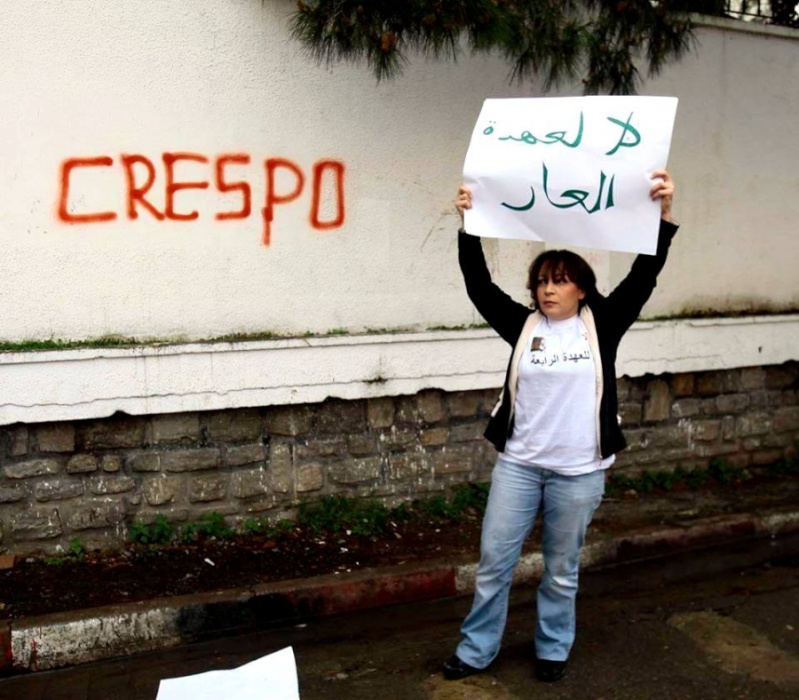
Amira Bouraoui is a gynecologist, a mother of two, and an ordinary woman. On February 22, before Bouteflika had formally announced his candidacy, Bouraoui showed up at the gates of her local university, stood there alone with a placard, and said, STOP. She said, Barakat! Ça suffit! It’s enough! Around the world, people heard a woman saying, yet again, “¡Ya basta!”

Within two days, that singular action sparked a movement.

On Thursday, hundreds gathered in a peaceful demonstration and were met with police intimidation and, for some, brutality. Bouraoui was arrested. Of Thursday’s demonstration, Bouraoui said, “We organized this protest not only to say NO! to a fourth term for Bouteflika, which would be a shame for Algeria, but also to promote the struggle to dispel people’s fear of expressing ourselves freely and openly in our own country.”

Around the world, women, individually and singularly and collectively and together, organize to say NO to patriarchy, domination, oppression, violence. Women organize to say YES to expression, sharing, collaboration, real peace, love.

Amira Bouraoui got up one day, kissed her children, and walked out the door. Alone, she carried a sign to the local university, because she thought and thinks students matter and education matters, and she said, NO! Barakat! Enough is enough! Ça suffit! And around the world … the world heard a woman saying, yet again, “¡Ya basta!” It was a woman’s solitary, small gesture that lit up the sky.

That’s the message for March 8, 2014, International Women’s Day. ¡Ya basta! Enough! Ça suffit! Barakat!


(Photo Credit: Le Portail des Hommes Libres)

#YakiriLibre: Tod@s somos Yaki, tod@s merecemos justicia

The case of Yakiri Rubio is a celebrated case in Mexico, which has received practically no attention in the United States or in the Anglophone press worldwide. That’s a shame, because Yakiri’s case articulates with cases in the United State, and with the more general situation of women’s safety and wellbeing.

In December, 20-year-old Yakiri was seized by two men, brothers, and taken to a hotel, where she was raped. Yakiri picked up a knife and struggled with her attackers. She struck one of the attackers in the neck, and he subsequently died of his injury. Clothes ripped, bleeding and bruised, Yakiri fled the hotel, found a police officer, and described what happened. She was taken to the police station. No one believed her. That night in the police station, she received no gynecological examination or any medical attention. No medication, no treatment, no nothing. Then Yakiri was booked for first-degree homicide. The only eyewitness to testify against her is the other brother, also involved in the rape.

Yakiri has been in one prison after another for three months. Her family organized a major campaign. Women’s groups, civil and human rights organizations, and others have mobilized their forces. Yesterday, finally, a judge reviewed the case and decided to downgrade the charge from first-degree murder to self-defense with excessive force. While this downgrade did not absolve Yakiri, it did make her release on bail possible. She was supposed to be released yesterday but, thanks to bureaucratic foot dragging, as of noon today, people were still awaiting her release. Her lawyer, Ana Katiria Suárez, felt pretty confident that Yakiri Rubí Rubio would walk out of prison today, not a free woman, not an exonerated woman, but at least no longer behind bars and caged.

On line and on lampposts and walls, Free Yakiri posters have proclaimed: “#YakiriLibre: La violencia machista es un crimen, que te encarcelen por defenderse tambien”: “#FreeYakiri: Male violence against women is a crime, and they put in jail for defending yourself against it.” In Mexico, women and men understand that Yakiri defended herself against both an immediate physical assault and ongoing structural, cultural, political, economic and societal violence against her as a woman and against all women.

Yesterday, the State announced it will review the cases of women currently behind bars, in the light of Yakiri’s case. There will be others like Yakiri.

This is a Mexican case that speaks to cases worldwide. In Florida, Marissa Alexander shoots a warning shot to stop a murderously abusive partner, and is not only charged but also persecuted by the State. In California, Patricia Norma Esparza was 20 years old when she was raped and then struggled with and killed her rapist. In a preliminary hearing last week, the police argued that Esparza “consented to” being raped, and so it’s all on her.

In each case, the woman was offered a deal, and in each case, the woman turned it down and demanded either a trial or to be let free. From the formal rule of law – the police, the Courts, the prison – to the informal everywhere else, women reject the compromised position and status that is offered to them as a `gift.’ They know: When it comes to ending sexual violence, when it comes to establishing a material world of peace and safety for all, there are no deals. As one demonstrator’s sign read, “#YakiriLibre: Tod@s somos Yaki, tod@s merecemos justicia”. We are all Yaki, we all deserve justice.


(Image Credit: https://mediosindependientes.wordpress.com)