Farmers’ Protest in India Is An Intersectional Feminist Issue

It is important for the Indian farmers’ protest movement currently unfolding in New Delhi, India, to be seen as intersectional feminist issue. 

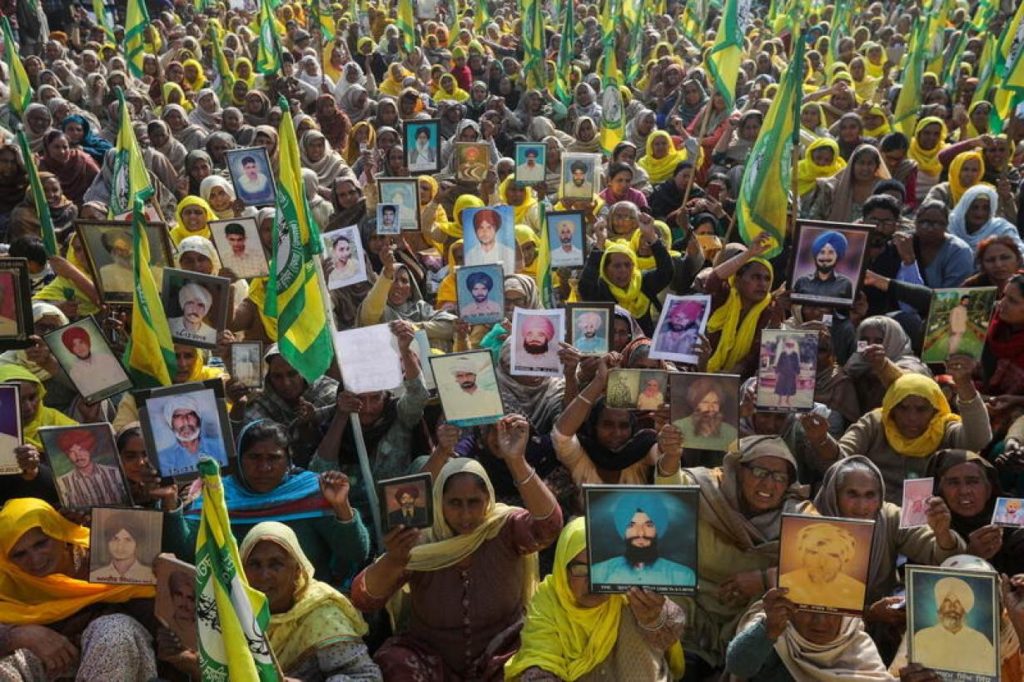
Farmers from the Punjab are protesting the latest laws of the Indian government designed to now hand over to the billionaires—who already hold this poor country’s wealth since the so-called liberalization of the 1990s.The farmers are calling attention to the government’s colonizing of the agrarian sector.  Among networks covering news about the farmers’ protest in New Delhi, we see only male farmers and male protesters and male speakers. Where are the women, especially since the state of Punjab is rife with violence against women, a warped sex ratio, and the wide economic gap between the genders? The reality is that women farmers all over India are underrepresented in the news. They do the same work as men and use machines that are easier for men to use than for women. In the spate of suicides among farmers that we have seen in the past decade, women farmers are part of this statistic, but did not make the news. According to Surbhi, “out of total 8007 farmers suicide in 2014, 441 were female farmers.” Additionally, the women are affected by the farmers who commit suicide, since now they become the sole supporters of their families and receive no welfare form the government. Undervalued, women farmers are the building blocks of the country’s economy. 

What is the reality on the ground during the current farmers’ protest in New Delhi? Women from across villages and towns in Punjab have traveled to Delhi to speak. When a women protests, she is speaking for her whole family and for her whole village of farmers. Women protestors are enlightening the public about the bias against female farmers who are called agricultural laborers and are paid less and given poorer implements and are exposed to toxic chemicals. In fact, the women farmers work hard for long hours and do the same kinds of work as their male counterparts, from sowing and harvesting, to threshing and winnowing. 

The farmers are protesting not just the lack of control over the prices of their products but the corporate pressure to use GMO seeds. In a recent Twitter post, Vandana Shiva states, “In 1984 Punjab farmers were protesting against the #GreenRevolution model saying if you cannot choose what you grow or how you will grow it , these are conditions of slavery . They have already paid a very high price with debt , suicides & a #CancerTrain”. Shiva’s ecological activism is based on understanding that the exploitation of the earth and our ecology is both intersectional and transnational. She traces back the exploitation of the most vulnerable, earth, women, and the poor to colonialism and capitalism. In the same Twitter feed, Shiva argues, “No one was dying of famine in India in 1965 when the World Bank & US govt imposed the #GreenRevolution on Punjab to sell left over war chemicals. Chemical Monocultures of dwarf rice & wheat forced on farmers use 10 times more water.” Here is an example of economic colonialism at play, which in another 60 years has not subsided but increased in power. 

As Shiva and other feminist activists see, a stitching together of agricultural activism across borders can impact governments subservient to corporate interests. In the current farmers’ protest, Sikh women in the U.S., Canada, Amsterdam, are taking to the streets, bringing attention to their farming families spread over the diaspora. As Ramanpreet Kaur, one of the Sikh activists in Queens, New York says, “Even if you don’t feel a personal connection to India or the farmers out there like many of us do, as a human being who lives on earth you should be concerned about exploitation of the people who feed you everyday.”

Women activists who are part of the long arc of farmer activism in Indian history are not only protesting the Indian state with its development model but also patriarchy and capitalism. Currently organizations such as Mahila Kisan Adhikaar Manch (MAKAAM) are on the ground offering the strong voices of women farmers. 

In other parts of India, there are grassroots movements such as Fatima Burnad’s Society for Rural Education and Development (SRED), which lists support of women farmers as part of the intersectional model. SRED challenges the oppression of Dalit and women laborers. These movements are intersectional and bring religious, caste, communal, and gender perspectives into the fight for farmers’ rights. 

What is interesting about the Sikh farmers is that Sikhism as a religion is critical of caste discrimination and religious divisions. Men and women were equally active during partition. They are admired for their warrior spirit and their generosity. At the height of the protest, the farmers offered langaar, or food donation, to all protesters—a sign of their good will despite the draconian measures they are battling. The farmers are careful not to let the news media misconstrue their protest into a religious protest or the 1980s disastrous “Khalistan” protest. They do not want to be labeled anti-national. In fact, the stories about women farmers can become the linchpin for any success that can be seen in this latest farmers’ protest movement. In addition, feminist protests across the globe can show solidarity with the farmers and increase pressure on the Indian government and point to the danger to food, earth, and human and animal health.

Pramila Venkateswaran


(Photo Credit: Reuters / Anushree Fadnavis)

Neither eviction wave nor tsunami, what’s coming is ethnic cleansing, a pogrom

For the past few months, the United States, at all levels, has and has not faced the reality of impending mass evictions. The Center for Disease Control, or CDC, issued an eviction moratorium, which runs out December 31. Numerous states, counties, and cities have issued their own eviction moratoria. In almost each case, the moratorium was riddled with loopholes and way too short-term. None of the moratoria cancelled debt or rent, although some cancelled late fees. Thus, once the moratorium expires, families and individuals will be faced with months of piling debt. Along with debt, hunger has intensified and expanded. Many are forced to decide between food and shelter. Meanwhile, with the pandemic surging, with lockdowns proliferating across the country, evictions are not only ongoing but, in some parts of the country, spiking, despite the pretense of a moratorium. Why? What is the investment in evictions? When staying at home means staying alive, what `inspires’ landlords and police or sheriffs to throw fellow human beings into the cold? What is our investment in evictions that we let them go on? Eviction haunts the United States. Why do we take eviction for granted?

For the past few months, housing activists and advocates as well as the media have warned that mass evictions are on the way, to no avail. Every day brings another spate of heartbreaking stories of people who did what they were supposed to do and are facing eviction or have been evicted. These stories are generally under headlines that invoke eviction waves or, more emphatically, eviction tsunamis. Again, to little or no avail. “It’s terrible and no one cares.”

The impending mass eviction is not a wave, nor is it a tsunami. It’s ethnic cleansing, it’s a pogrom. Various reports have demonstrated that mass evictions will do exactly what evictions have done for decades, target Black and Latinx households, communities, and neighborhoods. The central focus of this assault is, and historically has been, Black women. A recent study of racial and gender disparities among evicted people in the United States found “Black renters received a disproportionate share of eviction filings and experienced the highest rates of eviction filing and eviction judgment. Black and Latinx female renters faced higher eviction rates than their male counterparts. Black and Latinx renters were also more likely to be serially filed against for eviction at the same address.”. This was based on evictions between 2012 and 2016. As eviction scholar Matthew Desmond noted, in a research article published in 2012, “In poor black neighborhoods, eviction is to women what incarceration is to men: a typical but severely consequential occurrence contributing to the reproduction of urban poverty.”

And this year, during the pandemic? “During the pandemic, the rate of evictions in majority Black and Latino neighborhoods has been twice that of mostly white neighborhoods, even as COVID-19 affects minorities disproportionately.” According to last week’s Government Census Household Pulse Survey, among Black and Latinx households, around 40% say they have little to no confidence they’ll be able to meet next month’s rent payment. Most are already heavily in debt to both credit cards and family members. Evictions today increase the numbers of Covid deaths, immediately, and will hobble Black and Latinx for years to come. Of the nearly 40 million people targeted for eviction, “women are both disproportionately likely to be evicted and disproportionately hit by the current economic downturn.” Here’s what disproportionality looked like in October: 15% of Asian, non-Hispanic women were behind on rent; 19% of Latinas and 25% of Black, non-Hispanic women couldn’t pay rent

A tsunami is “a brief series of long, high undulations on the surface of the sea caused by an earthquake or similar underwater disturbance. These travel at great speed and often with sufficient force to inundate the land.” A pogrom is “an organized massacre aimed at the destruction or annihilation of a body or class of people … an organized, officially tolerated, attack on any community or group.” The United States is not facing an eviction tsunami, it is creating an eviction pogrom. Eviction is not a natural force crashing on our built environment; eviction is an officially tolerated, organized attack on a community, with the ultimate purpose of extermination. Call it a pogrom. 

(By Dan Moshenberg)

(Photo credit: The New York Times / Sally Ryan)

Cruelty has a Human Heart


Cruelty has a Human Heart
by Dan Moshenberg

Sometimes the world is awash with spectacular cruelty. England races to deport asylum seekers ahead of BrexitThe President of the United States races to execute people before he leaves the White House. In this world of Big Men, Big Women making big decisions, what is the life of an eleven-year-old girl in Birmingham, England? Apparently, for the Birmingham City Council, very little, if that much. Here’s the story. It’s a small story.

An 11-year-old girl, born in the United Kingdom, lost her mother to a terminal illness. The girl’s father was denied permission to enter the United Kingdom. When the mother was diagnosed with a terminal illness, she asked the girl’s father to assume responsibility for the girl. He refused. When the mother died, family friends took her in. They acted as foster parents. They also applied to the Council for help, specifically a social worker, and financial support. The Council, deciding that the arrangement was “private”, denied the application and moved to start proceedings to have the girl deported. This week, the Ombudsman ruled in the girl’s favor, noting, “As a result of the council’s actions, [the girl] spent over two years in a placement that was legally insecure. She was not recognised as a ‘looked after’ child and therefore missed out on the additional support and protections that come with this.

“She lost contact with her only remaining relatives and was at risk of being deported due to her fragile immigration status. She lost significant sums from the trust fund provided by her mother. Despite her vulnerabilities and the significant upheaval in her life following her mother’s death, her needs remained unassessed and potentially unmet.”

The Birmingham City Council has agreed to pay the girl £1,000 for distress caused; £1,000 to the family friends, along with the support money they should have received; and money to cover the cost of the girl’s citizenship application, when that day arrives.

The story ends: “A spokesman for Birmingham Children’s Trust, which is in charge of caring for looked-after children for the council, said it accepted the ombudsman’s findings and apologised to both the complainant and the girl.” We don’t know if the complainant and the girl accepted the apology. They shouldn’t. We shouldn’t either.

In what world does it make sense to deport an 11-year-old girl child, whose mother has just died, whose father has rejected her? Ours. We must address the cruelty. The world is awash with the tears of those who suffer cruelty, spectacular cruelty, intimate cruelty. Cruelty. Cruelty has a Human Heart.  


(Image Credit: Martin Kammler)

Say it out loud

Say it out loud
(Gender-Based-Violence)

Irked is he
at the acronym
saying it hides
the word violence

Connected to jazz
is Nigel Vermaas
on evening Bush Radio
the 16 Days Campaign
at its end

Say it out loud
Gender-Based-Violence
don’t hide it
don’t let it hide

Behind an acronym
Behind a committee
Behind closed doors
Behind a veil a cloak
Behind a pandemic

Woman got a right to be
follows the little opinion
a Caiphus Semenya song
he finds fitting

He said it out loud


Bush Radio’s Nigel Vermaas puts his foot down on evening community radio.

By David Kapp

(Photo Credit: Design Indaba)

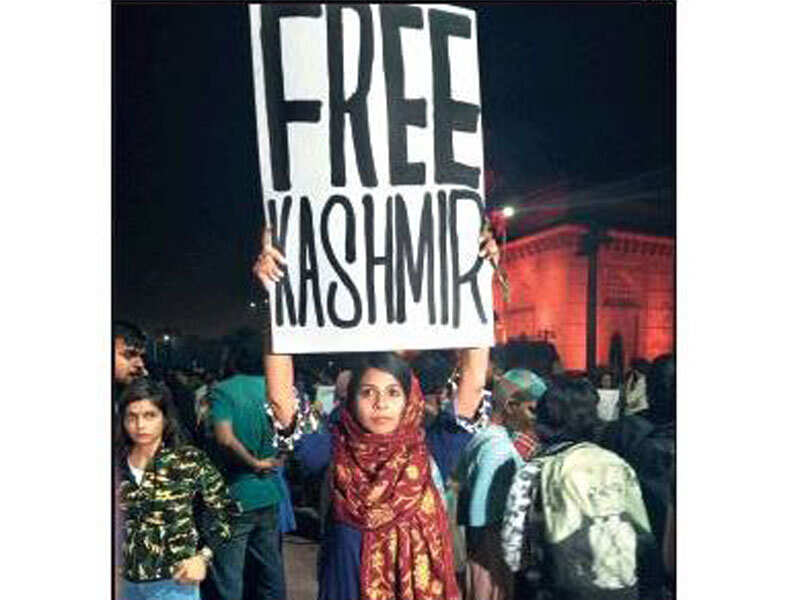
Where is the global outrage: #FreeKashmir #StandWithKashmir

(Photo Credit: Times of India)

Where is the global outrage: #StandWithJNU

JNU Students Union President Aishe Ghosh after being assaulted by masked assailants

(Image Credit: Satracomics / Facebook) (Photo Credit: Vipin Kumar / Hindustan Times)

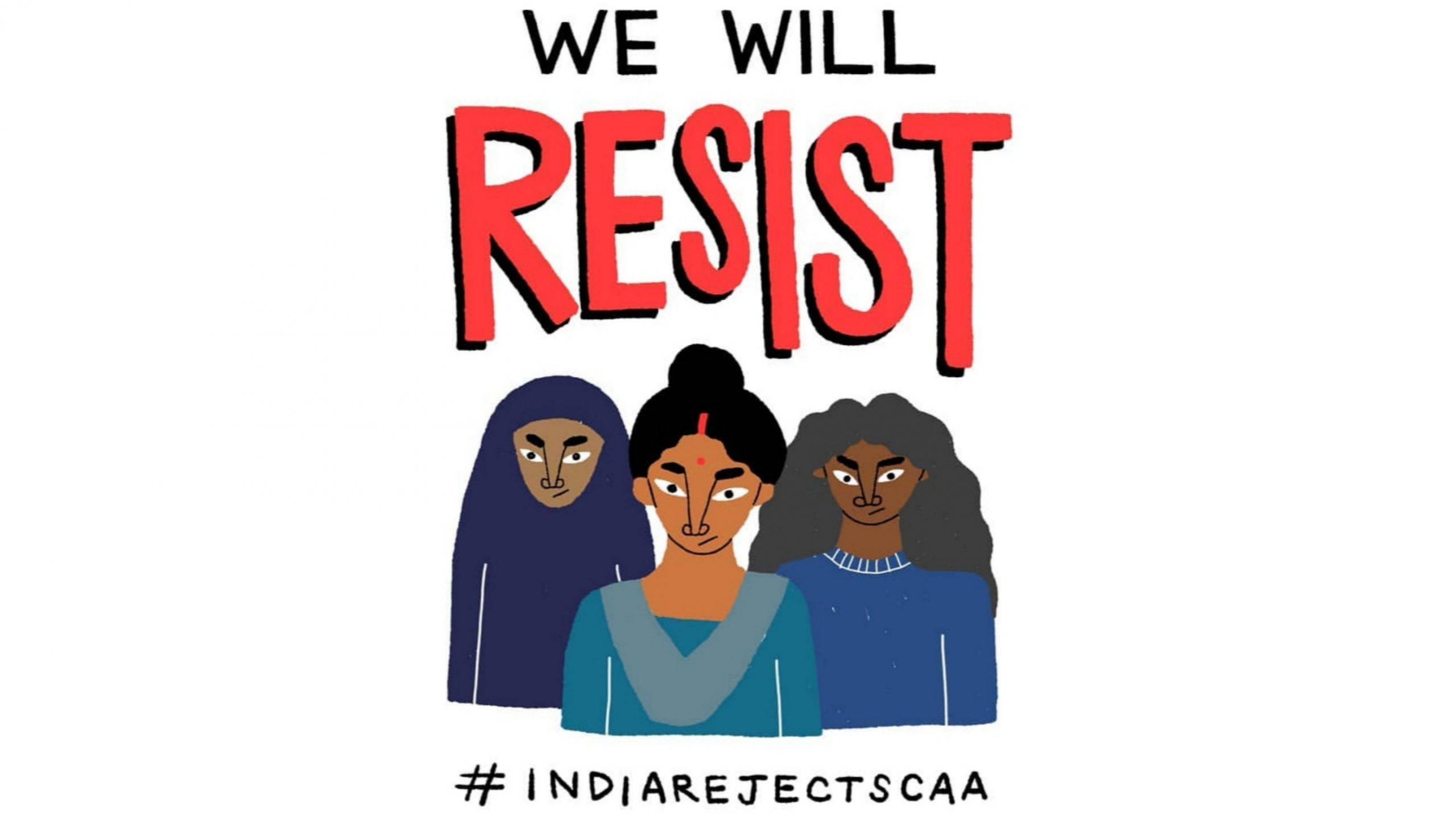
We will resist: India rejects CAA


(Credit: Feminism in India / Instagram: Creatives Against CAA)

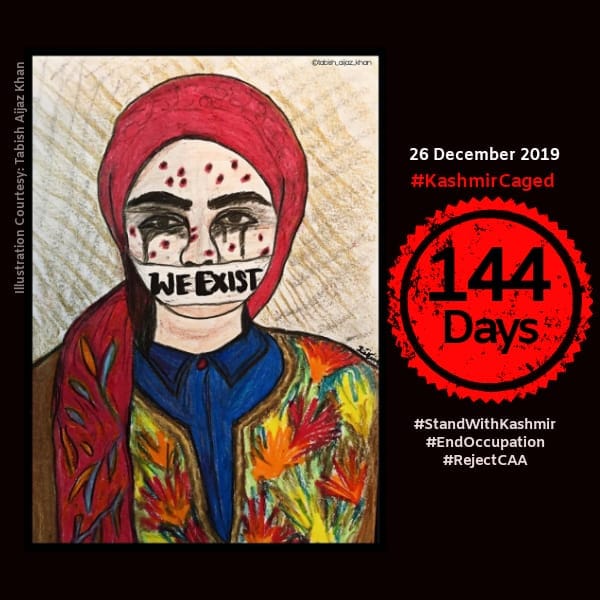
Kashmir caged: Where is the global outrage?

#RememberMarikana: The Widows of Marikana say, “WE ARE STILL SUFFERING”

(Image Credit: BASFLonmin)


Justice, redress and restitution for the widows of Marikana


(Speaking Wounds: Voices of Marikana Widows Through Art and Narrative)

(Image Credit: The Journalist)