Ashley Smith haunts Canada’s total peace of mind

For the second time, Canada is trying to investigate the death of Ashley Smith. The inquest starts today. The coroner leading the inquest says Smith’s death was a tragedy. The lawyer representing Smith’s family says it was a case of “absolute torturous circumstances.”

On October 19, 2007, 19-year-old Ashley Smith, an inmate at the Grand Valley Institution for Women, in Kitchener, Ontario, Canada, tied a rope around her neck and choked herself to death. Seven guards watched and actively did nothing as all this transpired.

Some called her death inhumane, while others hoped her death would haunt Canada. Now, more than five years later, it’s unclear that even the Canadian prison system feels particularly haunted by Ashley Smith’s death.

What has been clear from the start is the State’s attempt to shut down the investigation. From the beginning to today, the State has fought tooth and nail to bury any evidence of the event.

What emerged early today was evidence that “the State cares.” In the early days after the release of `shocking’ and `damning’ videos that showed how Ashley Smith died, Don Head, Commissioner of Correctional Service Canada, wrote to the guards to express his concern for their well-being. Did he communicate with Ashley Smith’s family? No. Did he speak with the Press or, in any other way, with the public? No. But he did write to the guards, to make sure they weren’t traumatized … by the public attention to their practices, that is.

This is reminiscent of the European police inspector who, during the Algerian national liberation struggle, went to the psychiatrist, Frantz Fanon, for help. The inspector complained that his work, torturing Algerians, was negatively impacting his home life. Part of the problem, according to the inspector, was that torturing was exhausting. He wanted the doctor to help him: “As he had no intention of giving up his job as a torturer (this would make no sense since he would then have to resign) he asked me in plain language to help him torture Algerian patriots without having a guilty conscience, without any behavioral problems, and with a total peace of mind.”

Are these men tortured by remorse? … The sick police agents were not tormented by their conscience. If they continue their professional practices outside their offices or their workshops—which happen to be torture rooms—it is because they are victims of overwork. “ They “manifest an exemplary loyalty to the system.”

Grand Valley Institution for Women is a prison for adult women. Weeks before being shunted into the adult prison system, Ashley Smith wrote in her journal, “If I die then I will never have to worry about upsetting my mom again.”

Ashley Smith rests in peace, and the system that killed her wants to get back to work, without having a guilty conscience, with a total peace of mind.

(Image Credit: The Toronto Star)
Haïti, trois ans déjà

January 12, 2010. Three years ago, the ground opened in Port-au-Prince, and across Haiti. And now … every year, a new memorial service. Every year, the same questions: What happened? What has happened since? What has happened in the last year? Who cares?

It is certainly the case that so-called international community, which is neither international nor community, has shamed itself in Haiti. As one writer recently noted, speaking of the United States, “Americans have loved Haiti to death. We are listless, lazy, cheating lovers who don’t have the stamina to go the distance in a relationship. Haiti is just too much work.”

Haiti is just too much work … and, as far as the international community, Haiti is filled with too many Haitians. The so-called peacekeeping forces brought cholera; the so-called donors brought thorough lack of transparency, corruption, and devastating ineffectiveness. Meanwhile, Haitians up and down the streets and hills, and across the political spectrum, knew and complained that something and everything was wrong in the process. They knew, and said volubly, that the powers that be were refusing to listen. That this Foundation and that Fund were talking only among themselves.

So, where are `we’ now? For those who do write about Haiti (and notice how the attention has narrowed, waned, and weakened), there’s much handwringing about learning the `art of listening’. There’s much talk about how hard the road is, as if `we’ hadn’t designed and built this particularly dreadful road.

Meanwhile, Haitians keep on keeping on. Organizing, struggling, dealing with their positioning in the global political economy, dealing with the international community’s predation that masks itself as benevolence. Not much has changed, and yet, of course, everything has.

Women workers and organizers, such as Yannick Etiennc, continue to organiz, especially in the textile and garment factories. 21 of 22 garment factories are thought to violate minimum salary laws. How many garment factories in Haiti have lost their preferential treatment, by the US government, because they violate workers’ rights … and the labor laws? Zero. The struggle continues, exactly as it did before.

In the Morne Lazarre section of Pétion-Ville, Réa Dol continues to organize the SOPUDEP school. The school had always addressed the violence of inequality, the legacies of State violence. It was a center of transformation, from its inception, pushing for free and accessible education and community economic empowerment. Since the earthquake, the work has intensified, and at the same time has remained the same: building community, building strength.

Women like Malya Villard-Appolon, founder of KOFAVIV, have continued to build on the work of Haitian feminists and organizers Anne Marie Coriolan, Magalie Marcelin and Miriam Merlet, to stop violence against women. Since the earthquake, that struggle has moved from shacks and factories to tent cities and then back to police stations and court houses. The struggle continues.

And then of course there are all the unrecognized women, women like Tante Rezia, who spend their lives in necessary silent support of family, community, neighbors, and themselves.

Haitians have always been on the move, always organizing, and their work has always been loud and proud. It takes a lot of work to not-hear and not-see. It always has taken a lot of work to not-hear and not-see. That has always been the work of the international community in Haiti, to smell the lilacs in bloom and declare the bouquet is fetid and the flower is blight.


(Photo Credit: SOPUDEP.org)

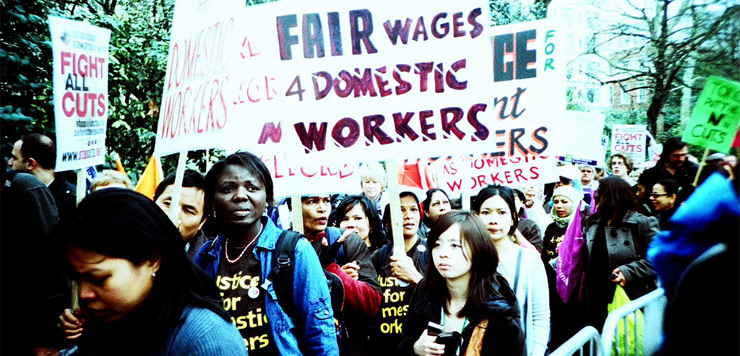
Domestic workers are women workers are workers. Period.

The International Labour Organization released a major study today, Domestic workers across the world: Global and regional statistics and the extent of legal protection. Though the report’s picture is largely what one might expect, it’s still worth engaging.

In 2010, at least 53 million women and men worked as domestic workers, up 19 million from the last count of 33.2 million people, in 1995. That’s almost a 60% increase in the size of the global domestic labor force. And remember, the numbers are always lowballed, so that the ILO suggest there could be as many as 100 million domestic workers.

Globally, universally, everywhere, domestic workers are overwhelmingly women. Which women might change from place to place, but they’re always women. Globally, 83% of domestic workers are women. Globally, 1 in every 13 women wage earners, or 7.5%, is a domestic worker. In Latin America, 26.6% of women workers are domestic workers. In the Middle East, 31.8% of women workers are domestic workers.

In the United States, 95% of domestic workers are women, of whom 54% are women of color. Latinas make up the largest group among the women of color domestic workers.

This means the status and state of domestic workers is part and parcel of the pursuit of gender equality. Addressing the inequities of domestic workers’ lives and situations is key to women’s emancipation … everywhere.

The United States gets something of a free pass in the report, but it shouldn’t. Here’s why. The report focuses on three areas of major concern: working time; minimum wages and in-kind payments; and maternity protection. Paid annual leave falls under the category of working time, and guess what? Of the 117 countries in the report, the United States is one of only three countries without a universal statutory minimum for paid annual leave. The other two are India and Pakistan.

When it comes to coverage of domestic workers’ control over their time, the United States is the only so-called developed country and the only country in the Americas that excludes live-in domestic workers from overtime protections.

The picture is worse when we turn to maternity leave. Among so-called developed countries, only the United States, Japan, and South Korea have no entitlement to maternity leave for domestic workers and no entitlement to maternity cash benefits. In the Americas, the United States is the only country that has neither maternity leave nor maternity cash benefits for domestic workers.

At the beginning of the 20th century, women were described as “being forced to become servants”. A hundred years later, they are described as “preferred by employers.” That’s the march of neoliberal progress. You weren’t forced; you were preferred. Otherwise, it’s been a century of exclusion of domestic workers from protective labor legislation.

It’s time to end that century. Domestic workers are under attack. They’re under attack because they are women. End the exclusion of domestic workers from national labor laws. Domestic workers are women workers are workers. Period.


(Photo Credit: ACelebrationofWomen.org)


Ikamva means the future … is now!

In Xhosa, ikamva means the future.

Asanele Swelindawo. Ayathemba Njovane. Akhona Nokeva. Siyabulela Godwana. Rhondashein Ntebaleng Morake. Joy Olivier. Zamo Shongwe. Thabisile Seme. Khona Dlamini. Nyasha Mutasa. These are just some of the names of IkamvaYouth.

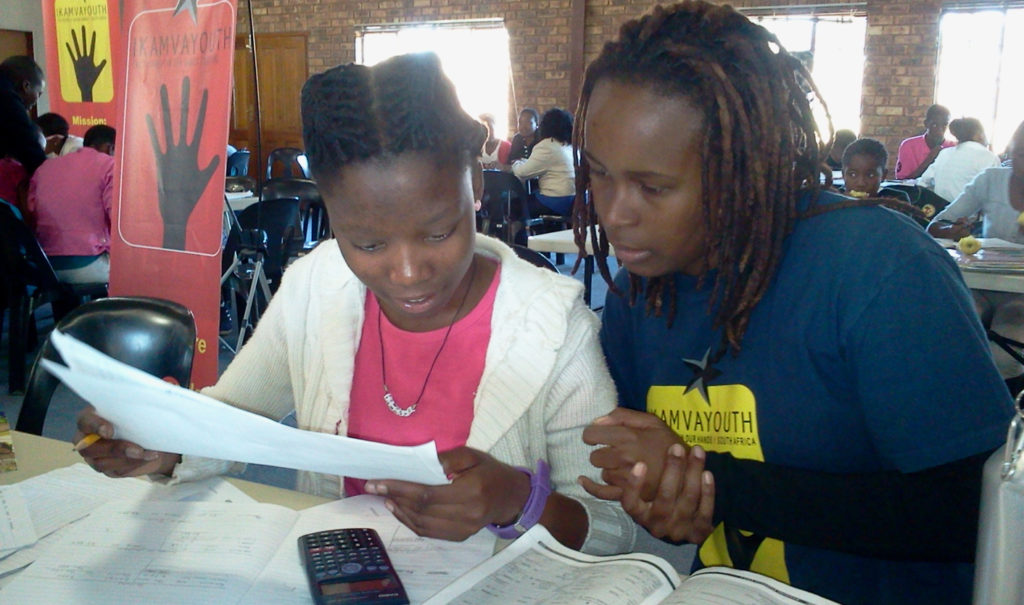
IkamvaYouth is a movement that began in Khayelitsha in 2003, in response to the tragedy of township education then … and in too many ways still is. Two researchers, Joy Olivier and Makhosi Gogwana, went to Gogwana’s old high school, only to find that it was impossibly worse than when he had graduated.

They decided to help matriculants graduate and prepare for either university or for full and gainful employment. They began small and, each year, grew. Each year, as well, their record of graduation and of successful entrance into university has grown by leaps and bounds. Today, IkamvaYouth has branches in Makhaza, Masiphumele, and Nyanga, all on the `outskirts’ of Cape Town, in the Western Cape; in Ebony Park and Ivory Park in Gauteng; and in Chesterville and Umlazi in KwaZulu-Natal. They are organizing two new branches this year, in Grahamstown, in the Eastern Cape, and one in Gauteng.

This year the Gauteng and KZN branches had 100% pass rates. 91% of the learners have qualified for university entrance. That’s impressive. But there’s more.

The literature on IkamvaYouth refers to it as a non-profit organization that draws on an ever-growing pool of volunteers. Others describe it as a successful tutoring and mentoring program or as a best-practices model grass-roots youth development organization. Much of the scholarly literature on IkamvaYouth focuses on social entrepreneurs, mathematics and science instruction, and the use of ICTs.

That’s all accurate, but it misses a key point: democracy. For Joy Olivier “IkamvaYouth drives social change… IkamvaYouth has a democratic youth-led structure.” The tutors are mentors, and the tutor-mentors are increasingly `Ikamvanites’, graduates of the program who return to keep the energy and the learning and the movement sustained.

Last year, IkamvaYouth made the 2012 WorldBlu List of Most Democratic Workplaces. IkamvaYouth is the first South African AND the first African organization to receive such recognition. Here’s what WorldBlu said: “IkamvaYouth empowers disadvantaged youth to lift themselves out of poverty into a university education or employment. IkamvaYouth practices the democratic principle of Fairness + Dignity by creating an environment in which each individual has an equal representative voice, regardless of rank or age. It is the “level of insight” on a particular issue that is valued above the position a person may hold. To uphold this value over a wide geographical spread, branches have online meetings, where a democratically-elected representative of each grade sits on the committee and is also involved in all decision-making. Minutes of meetings are sent to all participants and are available on Facebook groups for additional input. The youngest and newest members’ votes hold as much weight and value as their branch coordinators.”

Democracy matters. Democracy in education matters. IkamvaYouth is creating autonomous spaces of democratic action and nation building in South Africa. They are teaching the world that ikamva means the future … and the future is now!

(Photo Credit: Jon Pienaar/Daily Maverick)

Swazi women have always been on the move

Swazi women are on the move. Actually, Swazi women have always been on the move, organizing, opening spaces for women, opening spaces for democracy. Every year, the international media `discovers’ Swazi women on the move. But Swazi women know they have never been still and they have never been silent.

As Swazi feminist and labor organizer Cynthia Simelane explained recently, Swazi women have a longstanding tradition of organizing. Over 20 years ago, in 1990, women got together and started the fabulously named SWAGAA, Swaziland Action Group Against Abuse, an organization initially dedicated to addressing family violence and sexual abuse. They’re still going strong. In 2001, Thelma Dlamini, Siphiwe Hlope, Nonhlanhla Dlamini, Elina Hltatshwako, and Gugu Mbata, five middle-aged women living with AIDS, organized something variously called Swaziland Positive Living, Swazis for Positive Living, or Swaziland for Positive Living. Whatever its exact name, 12 years later, they’re still rocking, expanding, stretching, creating and representing. In 2009, Swazi women organized Swaziland Single Mothers Organization, which in the last year doubled its membership.

Between 2001 and 2009, Swaziland acceded to the Convention on Elimination of All Forms of Discrimination Against Women, CEDAW, in 2004. In 2005, the King, Mswati III, “acceded” to a new Constitution, which contained some victories for Swazi women, including a Bill of Rights which enumerates the rights and freedom of women: the right to equal treatment and opportunity; the right to assistance from the State “to enhance the welfare of women to enable them to realize their full potential and advancement”; and the right to protection for women from being “compelled to undergo or uphold any custom to which she is in conscience opposed.”

While the Constitution is far from perfect (and what State document isn’t far from perfect anywhere?) and while its implementation has been spotty, at best, it’s not nothing. Ask Mary-Joyce Doo Aphane. She’s the woman who used the 2005 Constitution to sue for her rights to property under her own name. And, last year, she won her historic case. What’s in a name? Plenty, especially if the person is a woman. Ask Mary-Joyce Doo Aphane and all the women of Swaziland.

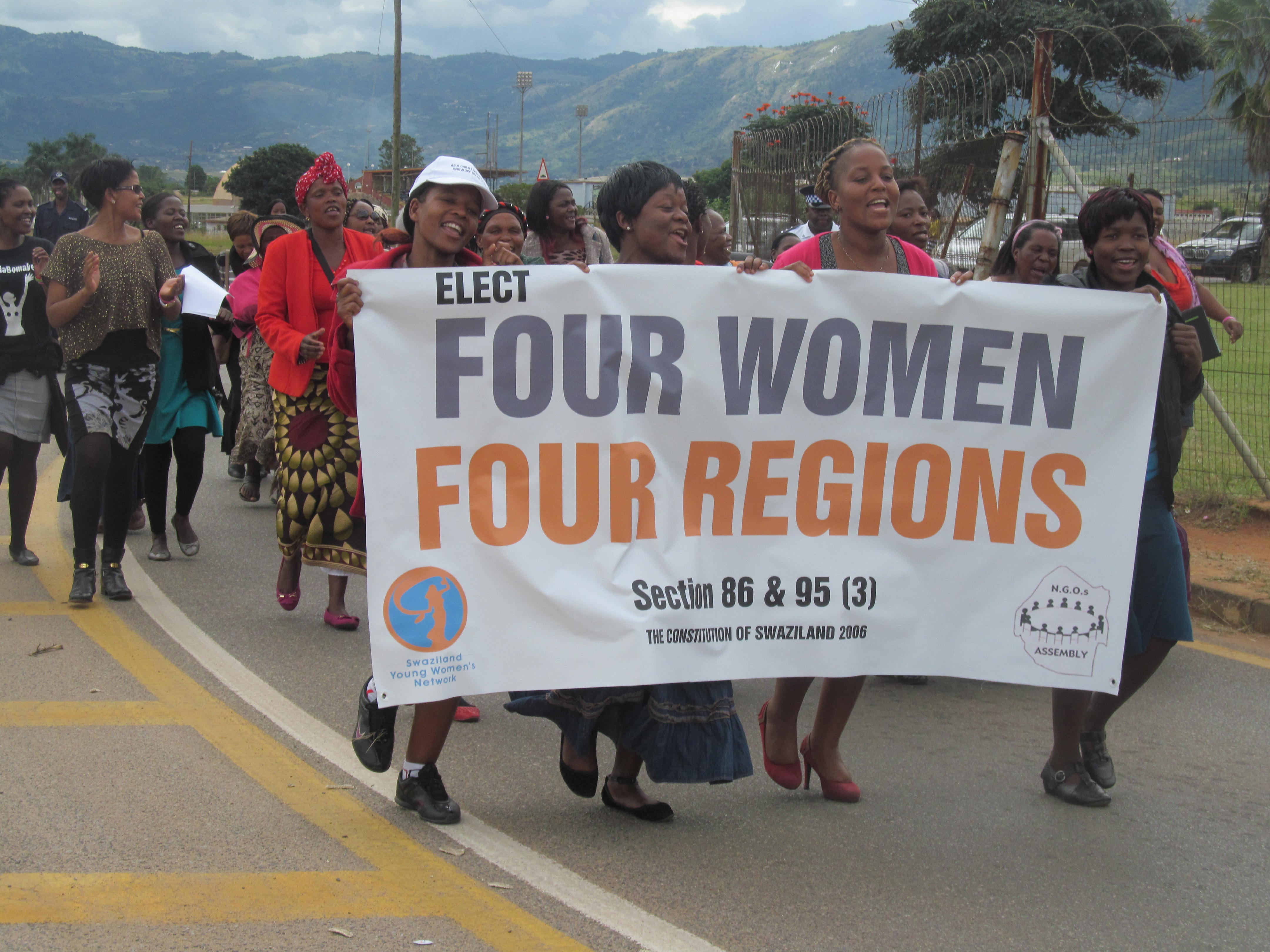
2011 saw the emergence of the Swaziland Young Women’s Network, a multi-focused organization committed to young women’s empowerment and to transforming not only the State but also everywhere and everyone in order to create autonomous spaces, once again, for women, in this instance for young women. And they’ve been kicking it ever since, from taking on public transportation’s sexual violence to creating vibrant events for young women artists to organizing last month’s mini-skirt march.

Swaziland is more than one corrupt monarch. Swaziland is hundreds of named and unnamed women’s groups, traditions, actions and movements, where women have always organized for the realization of democracy, not in some distant future, but now. The next time some article `discovers’ Swazi women are organizing, remember … Swazi women have always been on the move.


(Photo Credit: Swaziland Young Women’s Network)


Cry, cry, cry, set the women prisoners free

For the New Year, Zambia’s President Michael Sata released 59 women from prison. Of the 59 women, 43 are “inmates with children”, four are pregnant, and 12 are over 60 years old. As a consequence of President Sata’s move, 50 children, who were living in prison with their mothers, will see something like the light of day. The Zambian Human Rights Commission is pleased, as is Zambia’s Non-Governmental Organisation Coordinating Council. Both remind the President, as well, that now the State must attend to the “empowerment” of the 59 women. That includes economic, political, emotional, physical and spiritual well being.

In Uganda, members of civil society are calling on the State to “exempt women offenders with babies and expectant mothers, from long custodial sentences”. 161 children of women prisoners are currently guests of the Ugandan State. 43 of them are in Luzira Women’s Prison, aka Uganda’s Guantánamo. In March 2012, Luzira Women’s Prison at 357 percent capacity, and it’s only gotten worse since.

The situation for U.S. children of the incarcerated is equally horrible. In the U.S. the children don’t get sent to prison with their mothers. Instead, they are sent to “kiddie jail” … or they are left to fend for themselves at home, especially if the at-home parent is a single person, and more often than not in that case, a single mom. One study has shown that only a third of patrol officers modify their behavior or actions if a child is present. Of that third, 20% will treat the suspect differently if children are present, and only 10% will take special care to protect the children. That’s 10% of 30%. That’s 3%, in a country in which imprisonment is a national binge, and in which women are the fastest growing prison population.

And that “special care” can mean something like this: If an adult caregiver is arrested and there are no other adults around to care for a child, the child is taken first to the hospital, then to juvenile detention for processing, and then dropped off at a foster home. It’s a recipe for post-traumatic stress disorder.

The vast majority of incarcerated mothers lived with their children before going to prison. Almost half of incarcerated mothers are single heads of households. Most of their kids end up going to stay with grandparents. For those women prisoners who give birth to children while in prison, more often than not the children are immediately taken away, often forever.

And for women of color, and the children of women of color, it’s worse. For example, some judges give mothers longer sentences because “these women should have considered the impact on their children before committing a crime.” Women of color “bear the brunt” of that largesse.

Since 1991, the number of children under age 18 with a mother in prison more than doubled. In 2007, 1 in 15 Black children, 1 in 42 Latina/Latino children, and 1 in 111 White children had a parent in prison in 2007. Those are the ratios of racial justice and concern for children in the United States.

Make 2013 the year of the child. Set the women prisoners free, and, in so doing, set the children free.


(Video Credit: YouTube)

The ordinary torture of children

2012 has been a year of spectacular violence – Marikana, Newtown, Delhi, Dhaka – against women, against children, against workers. And that’s only the last five months. There was cause as well to celebrate, to hope, as the Idle No More movement across Canada extends the light of indignation, occupation, Spring into the new year.

And there was the absolutely ordinary violence against children that continued, largely unmarked, except of course by those immediately affected and by the usual suspects of social justice advocates and activists. Especially in the United States and Australia, children continue to spend long times in prison. This includes children asylum seekers.

In a sense, 2012 began with Jakadrien Turner, a fourteen-year-old African American, US citizen, girl who was shipped off to Colombia, alone. Turner spoke no Spanish, knew no one in the country. At the beginning of the year, she was returned to the United States. No apologies. No explanations. Silence.

Displaced and refugee children who move to high-income countries face numerous mental health and other risks, not the least of which are the delicacies of class warfare taking place across the austerity-soaked `free world.’ But they also face a risk mental health studies don’t acknowledge: a war on children.

In the United States, for example, an applicant for asylum faces a double test: evidence of an objective risk of persecution and evidence that they subjectively fear this risk. Recently, Burhan Amare, a nine-year old hearing impaired girl from Ethiopia, was denied asylum. There was clear evidence of real risk of persecution and violence. But the child, communicating through a sign-language interpreter, didn’t sufficiently manifest subjective apprehension.

Burhan Amare has a brother, in Australia. Not a biological brother, but a brother nevertheless. The boy, nine years old, is an asylum seeker in detention. Australia has mandatory detention for refugees and asylum seekers. The boy tried to commit suicide. Supporters are “distressed”. The State is maybe taking the case “under advisement”.

There is a sickness in the system of long-term immigration detention … and the sickness is the world that produces that machinery and then walks away from the slow torture of children in prisons. That is our world, a world in which, daily, children are subjected to long-term detention, for the crime of having nowhere to go. This is the silence and the muffled noises we hear, or don’t, that are the foundation of the explosions of spectacular violence. We must mark the everyday so that we understand the seemingly exceptional explosions are not exceptional. They are part of the fabric of everyday violence. The war on children must end … now.


(Photo Credit: Mike Fuentes/Ap)

In Canada, five women set the spark

Thanks to five women, four of them First Nation women, who have had enough, winter in Canada suddenly turned very hot. Idle No More is sweeping the country with the heat of justice, democracy, emancipation, and peoples’ power. It’s a Native Peoples’ Northern Lights, and it could shine on all of us.

Five women have started a national movement with global reach. Chief Theresa Spence of the Attawapiskat First Nation is on the fourteenth day of a hunger strike. Her immediate demand is that the Prime Minister and the Queen meet face to face with her and other First Nation leaders to address the longstanding violations of treaties. First Nation peoples and communities have had enough of sitting on the sidelines of their own histories.

At the same time, Chief Spence has another, call it existential demand: life with dignity. Last year, Chief Spence drew international attention to the deplorable living conditions on her Northern Ontario reservation. Since then … nothing has improved. So, Chief Spence is saying that death-in-life, that survival without dignity, that being turned into something less than a shadow is unacceptable. And so she is on a hunger strike.

The hunger strike is as well part of a mass strike, initially organized by four women in Saskatchewan: Jessica Gordon, Nina Wilson, Sylvia McAdam, Sheelah McLean. The women were fed up with the intensifying assault against First Nation peoples by the Canadian government, not to mention the assaults by the State on Native women. The last straw was something called Bill C-45, a monster omnibus bill that threatens First Nations with loss of land, environment, life, agency and autonomy. To the four women, it seemed that Bill C-45, and the Canadian government and State, offered First Nations people, and everyone, loss and the promise of more and deeper loss as the only absolute value. And, of course, the State calls it democracy.

So they organized, and the organizing effort has spread like prairie fire. The lesson here is the lesson the women of Egypt, Sudan, Spain, Chile, have brought over the last couple years. It’s the lesson the women of the Indignados, Girifna, the Arab Spring, the Chilean Winter, Occupy, UK Uncut, and, behind them, of the Zapatistas and Ya Basta, and behind them …

The lesson is that hope is material. Hope must be maintained as a concrete, material part of all of our lives. When loss is offered instead of hope, when debt is offered instead of hope, when autocracy and kleptocracy are offered, in the name of democracy or security, instead of hope, it’s time to be idle no more. It’s time light the winter skies.

And that’s the star the five wise women of Canada and their sisters and brothers have taught us to follow this December. They are “opening the eyes of this land” and, hopefully, this world.

(Photo Credit: Idle No More)

There are still songs to sing …Newtown, Connecticut, 2012

Friday, December 14, 2012, and the news from Newtown, Connecticut, is terrible. A nation says it is in anguish. The President speaks of the pain and the horror, of our children and our neighborhoods. Our tears flow. And the traffic in guns continues. And in these theaters of horror, more often than not, the shooters are men and the first targets are women.

We have been here before. It is all too familiar.

Near the end of a life spent trying to turn the pain, horror and anguish of mass violence into the possibility of understanding, Paul Celan found that the project of poetry, his life project, was “an impossible struggle, doomed from the start to disaster. For poetry cannot save the soul or retrieve a lost world. It simply asserts the given.”

And Celan wrote:

“THREADSUNS
above the grayblack wastes.
A tree-
high thought
grasps the light-tone: there are
still songs to sing beyond
mankind.”

The thought that is tree-high is too high for our grasp. It is too late to sing songs beyond mankind. There must be songs to sing now. And they must begin by turning swords into ploughshares … now. Right now.

(Photo Credit: Panoramio.com)

The Bangladesh factory fire was a massacre of women workers


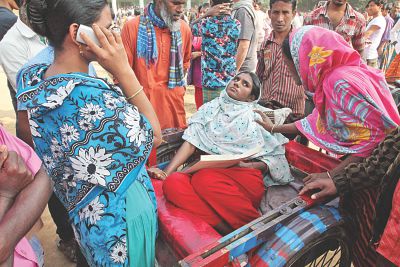
On Sunday, November 25, 2012, Bangladesh suffered its worst-ever factory fire, at the Tazreen Fashions factory. At last count, 123 workers died. By all accounts, the workers were all or almost all women. Nothing here was new. Bangladesh has 4500 garment factories. The garment industry in Bangladesh employs more than 3 million people. Most of them are women. Many of them have died in `industrial accidents’.

There was no accident.

And now, less than two weeks later, the `discoveries’ begin. Today’s breaking news is the factory had no safety certificate. No one thought it did. Exit doors were locked. We knew that. Managers wouldn’t let workers leave until the flames were obvious, until it was too late. We `learned’ this week that Wal Mart actively blocked, or nixed, safety moves in Bangladesh, including in Tazreen Fashions factory. Are you surprised? Neither am I. The news is not that Wal Mart stopped a move towards worker safety, but rather than now the documents proving it have been made public as have the Wal Mart receipts left on Tazreen’s burnt floors. All of this has undermined Wal Mart’s account and credibility. Who believed Wal Mart in the first place? Who believes Wal Mart now?

Who believes the fashion industry when it claims shock and dismay? Who believes The New York Times or any other news outlet when they only now `discover’ a “gap in safety for local brands”?

Investigative reporting is important, as is research. So is accountability, including accountability in tone and diction. There was no accident, there was no gap, there was no absence, and there is no surprise. Call the event by its proper name: massacre. “An indiscriminate and brutal slaughter of people”, specifically of women. And the factory was no factory. It was a slaughterhouse. It always was, and we cannot claim to be surprised when the flames burst and the women workers’ bodies explode … again.

(Photo Credit: TheDailyStar.net)