Who haunts May 25, 2009?

This April 1865 photo shows the graves of Union soldiers who died at the Race Course prison camp in Charleston, which would later become Hampton Park. On May 1, 1865, former slaves gave the fallen a daylong funeral

Today is May 25, 2009. In the United States, it’s Memorial Day, the last Monday of May, a day meant to honor those U.S. women and men who died in military service. Not all deaths are equal, and not all are equal in death.

Mary Clare Lindberg’s son, Benjamin Jon Miller, killed himself, as have many U.S. soldiers who have fought in Afghanistan and/or Iraq. Benjamin Jon Miller’s name is not on his unit’s Memorial Wall: “In March, Lindberg made a pilgrimage to Fort Campbell, Ky., to visit the post where her son served with the 101st Airborne Division. While it was comforting to meet with the soldiers with whom her son had served, Lindberg was upset when she saw the unit memorial. The names of two soldiers from her son’s brigade who were killed in combat were on the memorial, but Ben Miller’s name was not.”

Kyle Harper was engaged to Michael Hullender. Michael Hullender was killed in Iraq. Kyle receives no recognition, she finds “herself floating in legal limbo, with no rights to his effects or his name. Even in a bureaucracy as large as the Army, there is no form you can fill out to verify love, to explain the messy details of life; only the marriage certificate counts. As a result, the military had to treat Kyle the way it does all fiancees — as though she had no relationship with Michael. All the Army could offer were condolences. There would be no grief counseling, no casualty pay, no say in his burial….The military does not keep statistics on engaged soldiers or their partners.”

Walls without names, documents unsigned. Memorial Day.

Some say Memorial Day was begun by former slaves, 144 years ago, in Charleston, South Carolina: “Charleston was in ruins. The peninsula was nearly deserted, the fine houses empty, the streets littered with the debris of fighting and the ash of fires that had burned out weeks before. The Southern gentility was long gone, their cause lost. In the weeks after the Civil War ended, it was, some said, “a city of the dead.” On a Monday morning that spring, nearly 10,000 former slaves marched onto the grounds of the old Washington Race Course, where wealthy Charleston planters and socialites had gathered in old times. During the final year of the war, the track had been turned into a prison camp. Hundreds of Union soldiers died there. For two weeks in April, former slaves had worked to bury the soldiers. Now they would give them a proper funeral.”

Former slaves, Black women, men, children, descendants of Africans, marched and dug for the White prisoners who had died in the struggle to end slavery. Memorial Day was born out of the carnage of civil war, out of the labor and solidarity of emancipated slaves, out of the devastation of prison.  Memorial Day begins just past the crossroads of empire, slavery, capitalism, racism, civil war, nationalism, patriarchy, violence, sexism. That’s one hell of an intersection, but if Memorial Day started with African-derived formers slaves gathering, marching, and taking of care of business, it should be located at the intersection of truth and reconciliation. It should be. The slaves’ names will not appear on any wall, they will not be legitimated by any document. Today, May 25, 2009, is African Liberation Day. What would those former slaves, Black daughters and sons of Africa, say, and what would those White prisoners say in response?

(Photo Credit: Library of Congress / PostandCourier.com)

Haunts

Welcome to `Haunts’, a new series about prisons, police, women.

A specter is haunting the world, or so one could believe from reports and blogs. Consider these:

My Great Recession: Economic Downturn? When Was It Ever Up?”, RaceWire, May 21, 2009:
“Economic downturn? When was it ever up? I have been dealing with poverty and economics since I was a child in Guatemala- now as a young adult in this country its even harder for me to find a job, get housing or go to school. It makes me feel empty like a ghost, because I feel I have a lot to offer. I have survived gangs, drugs and migration. Im not sure how I will survive this.”

Spooks haunt our democracy”, Mail & Guardian, May 22, 2009

And then there’s “Quarto”, a poem by Adrienne Rich, in The Nation, which begins:
1.
Call me Sebastian, arrows sticking all over
The map of my battlefields. Marathon.
Wounded Knee. Vicksburg. Jericho.
Battle of the Overpass.
Victories turned inside out
But no surrender

Cemeteries of remorse
The beaten champion sobbing
Ghosts move in to shield his tears

There have been others in the past couple days. The world is indeed haunted by specters, ghosts, revenants (revenants means “literally that which comes back”), and for some, it was Jacques Derrida, in Spectres of Marx: The State of the Debt, the Work of Mourning, & the New International, who drew attention to ghosts around us as part of the new world economic order. Derrida noted that the first noun of the Communist Manifesto is specter. We note that the first verb, the first action, is haunting.

The home of specters, of ghosts, of revenants is prison. The place where people are and are not, visibly invisible, a zone of hyper-monitored abandonment. Say `recidivism’ to anyone, and they’ll know you’re talking about prison, about prisoners.

There are more people in jails and prisons today, globally, than ever before. There are more people in jails, prisons, detention centers in the U.S. than ever imaginable. There is more money being made out of prison than was ever conceivable. Early prison designers thought conscript labor might pay the bill. Ha! They never thought about private prisons, about the surplus value emanating from prisoners’ bodies, the aura. And at the center of all this new world global prison? Women. The fastest growing prison population, thanks largely to so-called wars on drugs and their mandatory sentencing programs. Women, mostly low income, mostly defined as members of racial minority and oppressed communities. Women constitute the haunting ghost in the prison machine. Women are not only prisoners, they are partners, spouses, mothers, friends, sisters, daughters, aunts, grandmothers, correspondents, visitors, re-visitors. They are the revenants who sustain … what? Women haunt from within, women haunt from without.

What is haunt? It’s a verb, it’s a noun; it’s an action, it’s a thing. Haunting, even etymologically, is all mixed up and messy and confusing. It mixes action and place:

haunt: From the uncertainty of the derivation, it is not clear whether the earliest sense in F. and Eng. was to practise habitually (an action, etc.) or to frequent habitually (a place). The order here is therefore provisional.”

In Fifty Secrets of Magic Craftsmanship (Dial Press, 1948) Salvador Dali described a way in which prison haunts the eye:

“After the two months which I spent in prison during my adolescence I was able to realize the truth of the phenomenon of the so-called “flying bars” of which all prisoners speak. For a long time after their incarceration, in the most unexpected circumstances and places, they often see the bars of their prison window appear before their eyes, sometimes fixed but more often as if in flight, now standing out dark against a light background and again–more frequently–appearing as negatives, even against very light background, like the sky, for instance, on which I often observed the bars of my prison in Gerona, appearing in a blue tonality even more luminous than the sky itself. These apparitions, which lasted about three months after my liberation, made me give a good deal of thought to the persistence of retinal impressions….Thus you realize that what I am advising, good inquisitor that I am, is that you should surround yourself with a prison for your eye. For nothing is more harmful to it than the freedom to see everything, to attempt to embrace everything, to want to admire everything all at once. But the prison which I advise for your eye must be mobile, transparent, and its flying bars aerial and tiny.” (61, 62)

Surround yourself with a prison for your eye. To do so, try to focus on the women in and beyond the global prison. Ghosts move in to shield his tears. Adrienne Rich knows, the ghosts are women, but the women, haunting, are not ghosts.

(Photo Credit: Ai Weiwei / Mary Boone Gallery)

Iowa: Gay man gets 25 years for one-time non-disclosure to a single complainant

Nick Clayton Rhoades speaks at the World AIDS Conference

Given the things I write about on this blog, I thought I was inured to outrage.

However, the 25 year jail sentence for a gay man in Iowa earlier this week for not disclosing his HIV status prior to one-time sex with a man he met online, reaches new lows in the history of criminalisation. This is a potential human rights violation almost on par with Willie Campbell’s 35 year prison sentence for spitting. (I’m thinking about the Eighth Amendment’s Cruel and Unusual Punishment Clause, a discussion of which can be found here.)

The Waterloo and Cedar Falls Courier reports that Judge Bradley Harris sentenced 34 year-old Nick Clayton Rhoades to 25 years in prison, the maximum punishment under Iowa’s draconian (and mistitled) “criminal HIV transmission” laws, following a guilty plea. There was no tranmission: the male complainant has not tested HIV-positive, and it is now almost a year since the encounter. (The subtlety seems lost on the headline writer, who erroneously states:‘Plainfield man gets 25 years for transmitting HIV’ )

Not only was there no sentence reduction due to Mr Rhoades’ plea (after all, he saved the court a lot of time and money; and let’s face it, it was one person’s word against the other, which could have gone either way with a jury), but Judge Harris additionally placed Mr Rhoades on lifetime parole and ordered him to pay court costs and restitution.

In addition, he ordered that must Mr Rhoades must:

  • not contact the complainant for five years
  • register as a sex offender
  • and undergo a sex offender treatment programme.

“Simply because it happens regularly that people don’t disclose, doesn’t mean it’s safe,” Harris said. Despite improved treatments, he told Rhoades, contracting human immunodeficiency virus” does change your life, and you more than anyone else should know that.”

[…]

“One thing that makes this case difficult is that you don’t look dangerous; you don’t look like most of our criminals that sit here,” said Harris. “But the risk is still there, just like if you would have shot a gun.”

According to the report, Mr Rhoades met the male complainant, “in an Internet chat room” on June 26th 2008, and then went to his home to have sex.

Although the contact was consensual, the victim, who has since tested negative for HIV, said Rhoades denied he had any sexually transmitted infections. “I should have had the right to choose whether to be intimate with someone who was HIV positive,” the victim read in statement to the court. “Instead, Nick was manipulative and denied me that right. … He lied online, and he also lied to me in person when I asked him directly if he was ‘clean.’”

Rhoades said he doesn’t remember discussing his HIV status with the victim. He drank heavily and took prescription pills before having sex, a combination that he said clouded his judgement. In addition to HIV, the defendant also was being treated for herpes and genital human papillomavirus at the time of the incident, said assistant county attorney Linda Fangman.

Rhoades, who was diagnosed with HIV in 1998, was arrested in September. Living with the virus is like “carrying a concealed weapon,” he told the court, saying he felt guilty for exposing an unknowing individual to the disease.

“I always wanted to be part of the solution, and not part of the problem,” said Rhoades, who had previously participated in AIDS education efforts. “Clearly, I’ve fallen short in this case.”

Mr Rhoades sounds like a genuinely remorseful man. He believes that he should have disclosed his status, and didn’t. Even if you agree with HIV disclosure laws in general – notwithstanding arguments supporting the concept of shared responsibility of both parties under these circumstances, or the unreliability of disclosure as a way of protecting yourself from sexually transmitted infections – there really is absolutely no justification for this outrageously long prison sentence.

To put this into perspective. A year ago I reported on a 12 year HIV exposure sentence in Arkansas (where the maximum penalty is 30 years) for a man who did not disclose to his girlfriend. At the time, it was the longest sentence I’d heard of for a single complainant. This is a single act!

Notwithstanding Johnson Aziga’s likely life sentence after recently being found guilty of murder, the previous longest-ever sentence in Canada was 18 years, and that was for Carl Leone, with 15 complainants, including five who tested positive.

The longest sentence that I’m aware of in Europe has been for Christer Aggett, sentenced to 14 years in prison in Sweden, with a dozen complainants, two of whom tested positive, and half of whom were under 15.

In 2006, the Iowa Supreme Court upheld the law after Adam Musser, 25, appealed his four convictions – and 25-year-prison sentences – for having unprotected sex with four different women in 2002 and not telling them he was HIV-positive.

And yet, in 2007, a woman who also pleaded guilty after not disclosing her status to a single complainant during a three month relationship, had her 25 year prison sentence suspended and received four years probation.

Since Judge Harris has also ruled that he can adjust the sentence any time within the next 12 months (and there is already a precedent to suspend sentencing), I suggest that anyone who feels as outraged as I do, contact either Judge Harris, or Mary Stegmeir (mary.stegmeir@wcfcourier.com), the journalist who reported the case at the Waterloo and Cedar Falls Courier.

About Judge Harris, from the Iowa Judicial Branch website:

District Court Judge, Bradley J. Harris: District 1B Judge Harris, Grundy Center, was appointed to the bench in 2007. He received his undergraduate degree from Loras College in 1976, and his law degree from the University of Iowa in 1980. Judge Harris is a member of the Iowa Bar Association, the Grundy County Bar Association, as well as the Iowa County Attorney Association. Prior to his appointment to the bench, he was a partner at the law firm of Kliebenstein, Heronimus, Schmidt, and Harris, and also served as the Assistant Grundy County Attorney from 1995 to 2003, and the Grundy County Attorney from 2003 to 2007. Judge Harris is married and has two children.

[Edwin J. Bernard’s blog, Criminal HIV Transmission, “focuses on prosecutions for sexual exposure to, or transmission of, HIV around the world”. HIV crimes. And where there’s crime, there’s prison. We thought the links might be interesting. Thanks to Edwin for his work, and for sharing it here.]

(Photo Credit: Frankfurter Allgemeine Gesellschaft / Peter-Philipp Schmitt)

“Why can’t I quit you?”

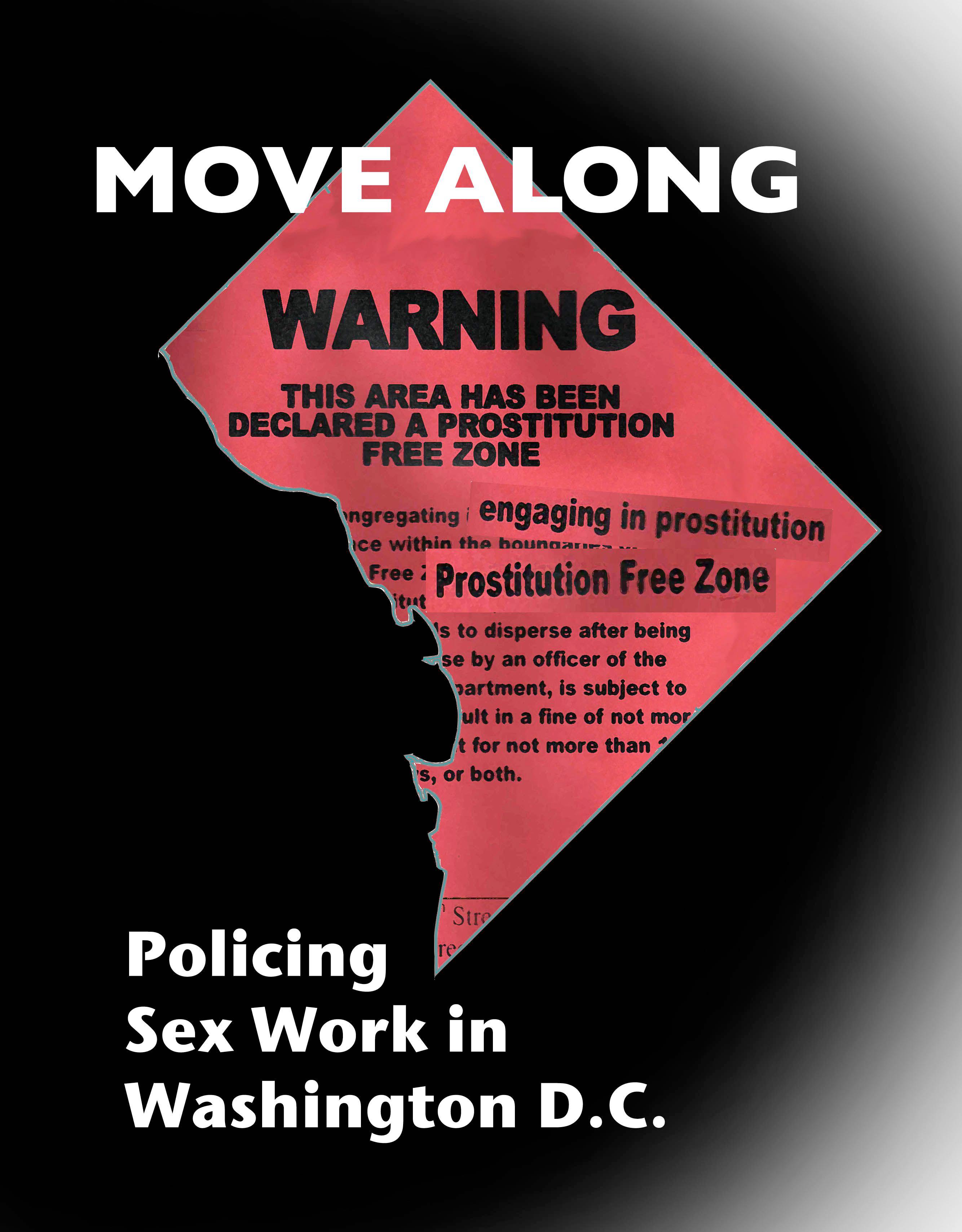
In March, the Metro Police Department had a minor publicity issue when one of its own was arrested in an anti-prostitution sting targeting clients.  Officer Robert A. Schmidt was charged with solicitation after agreeing to pay an undercover female officer $80 for sex.  Solicitation is a misdemeanor in the District, however, solicitation tends to be treated completely differently within both the police department and the courts.   Like in most other U.S. cities with anti-john laws, D.C. still tends to focus most of its resources on policing the sex workers themselves.  Since most workers are woman-identified, these sort of tactics have been declared to be discriminatory on a few select occasions, though not most.  Women are the largest group arrested on charges of prostitution with transgender workers being the second largest groups.  Male workers and clients only make up about 2-3 arrests per night.  In recent years, a few U.S. cities, most notably San Francisco, have instituted reforms targeting clients in order to cut off demand for sex work altogether.  In Sweden, authorities have even gone so far as to decriminalize sex work itself, while criminalizing the act of solicitation.  The intent, however, remains the same: abolition.  Even when tactics target male clients and not workers explicitly, abolition still sends the statement that sex work is wrong and inherently exploitative; workers are victims worthy of pity rather than a safe and fair wage.

With the intent of seeming more even handed in enforcing the law against engaging in and soliciting prostitution, D.C. utilizes “rehabilitation” programs for individuals charged as clients of prostitution called “john schools” as a means of teach clients about the ‘inherent’ harms of prostitution like “crime, fear, and health disorders”. School is one day long and consists of testimony from “a psychologist, survivors of prostitution, prosecutors, police, health professionals, local residents, and business owners”.  The finger is pointed at these clients instead of pimps, police, and other abusers; it also virtually ignores systems, which not only perpetuate the practice but make it dangerous. These schools, with a fine, are offered in lieu of the typical penalties for first time offenders.  Officer Schmidt’s charge was dismissed after he completed “john school” and his record is clean.  It is a safe bet that workers arrested that same night had a different experience.

Despite the fact that the law itself is written indiscriminately, policing practices and the ability to expunge one’s record and avoid jail time through “john schools” signify that anti-prostitution policy remains discriminatory in practice.  Authorities have acknowledged a legitimate interest in keeping clients, especially middle-class white men, out of jail and their records clean, yet, the state seems disinterested in considering that the lives of workers would also be improved by not having convictions, police harassment or their daily lives disrupted by jail time or fines.  The practice of the law quite literally values the lives of men over women.  Low arrest rates of clients, likewise, means that there are generally low recidivism rates compared to workers and recidivism often leads to harsher sentencing.  Workers who are unable to pay increasingly high fines are more likely to spend as many as 180 days in jail.  Street workers often come from poorer socio-economic backgrounds and often are parents or are supporting others.  The criminal justice system tries to see these individuals apart from their relationship to the larger community and fails to acknowledge that jail time is an unpaid absence from work.  It’s a loss of income for the worker and often for their families that is further complicated by court fees and fines, which require them to work more.  Separation from family, especially children, has problematic short and long-term complications. Children whose parents serve time in prison are often left vulnerable to higher incidences of abuse, neglect and rape; if unable to stay with extended family they are placed in state care not because their parents are necessarily unfit but because they were working.  How can advocates of criminalization claim that these practices are in the best interest of women?

Imprisonment is especially complicated in regards to transgender workers, a group, which has been disproportionately targeted for harassment and arrest in D.C.  With the passage of the amendment adding gender identity and expression to the D.C. Human Rights Act in 2007, the Department of Corrections has had to change its intake and housing policy.  Previously there was no system in place to change a person’s gender in the criminal records database, even if they had undergone transitional surgery and/or had their name and gender legally changed.  This caused many women to be automatically placed into holding cells with males and led to high incidences of sexual assault.  The new policy ostensibly would allow for transgender persons to be housed in either the general population or protective custody of the gender they are deemed by the Transgender Committee. Transgender inmates must also be allowed access to hormone treatment under the new policy even if they had not started prior to arrest.  The new policy also requires strict nondiscrimination.  It has yet to be seen, however, how the policy will be carried out and though seemingly benign, the daily reality of imprisonment poses its own dangers.  Genitalia are still the primary indicator used for determining housing and it is unlikely that many transwomen would be housed with biological women or that they would even choose to be.  Likewise, protective custody is simply euphemistic for solitary confinement; these inmates are placed in single-person cells and only given two hours outside of these cells a day to shower and exercise.  Because of this, few knowingly choose protective custody even when they fear violence among the general population.  Transgender men and women are not passive victims of a system which hasn’t yet ‘caught up’, but they have been targets of a system which bent on eliminating them.  Disproportionate and violent targeting of transgender workers, as well as all woman-identified workers, sends precisely the signal it intends: abolition.

(Image Credit: DC Trans Coalition)

Bordering on: citizens, prisoners, exceptions, women

I used to think that all prisoners are political prisoners because they’re `guests of the State’, housed and held in total institutions in which the very least the State was obliged to do was acknowledge the prisoners’ existence and maybe keep them alive. Given the convergent news of this past week, I have had to rethink that a bit.

Four names: Edwina Nowlin, Alberto Fujimori, Jacob Zuma, Gladys Monterroso. Four countries: the United States, Peru, South Africa, Guatemala. If your country isn’t on this list, that’s accidental good fortune. Trust me, it should be. In fact, it is.

A girl is flogged in Pakistan, a video captures the moment and circulates and suddenly everyone is concerned about gender and punishment in Pakistan. Even the Pakistani courts perform concern: “Pakistan’s newly reinstated chief justice has ordered a police committee to investigate the controversial flogging of a teenage girl. Ayesha Siddiqa wonders about the innocence of the sudden gaze, “As the entire Pakistani nation watches video footage of a 17-years-old girl screaming on their television screens during the process of her torture at the hands of the brutal Taliban in Swat, one wonders if the mothers, sisters, daughters and the male members of this nation will ever take time out to think about this system of justice advocated by these men who are not even qualified to interpret the Quran and Sunnah.” She lays the system of Hudood laws squarely on the shoulders of the Zia regime: “In Pakistan in particular where the Hudood laws were formulated under the Zia regime, the objective was not to bring justice in the society but to throttle all forms of justice. In this respect, the Taliban in Swat and those who ruled Afghanistan for some time are Zia’children. They use force arbitrarily and apply laws without the real context to enhance their own power.” Flogging is never `spontaneous’ , never `organic’, and never `gender neutral.’

In the United States, there’s the tale of Edwina Nowlin: “Edwina Nowlin, a poor Michigan resident, was ordered to reimburse a juvenile detention center $104 a month for holding her 16-year-old son. When she explained to the court that she could not afford to pay, Ms. Nowlin was sent to prison. The American Civil Liberties Union of Michigan, which helped get her out last week after she spent 28 days behind bars, says it is seeing more people being sent to jail because they cannot make various court-ordered payments. That is both barbaric and unconstitutional.”

This practice is going on all over the country: poor women, and men, who cannot pay the fines, and cannot be the additional fees to the companies that collect the fines, are thrown into jail: mothers, sisters, daughters, friends, strangers. Debt, the not so secret origin of primitive accumulation, built on the backs of the poors, largely people of color, largely women, haunts our world, from Pakistan to the United States and beyond.

Meanwhile, death stalks and storms the corridors and cells of Zimbabwe’s prisons, as demonstrated in a documentary shown this past week. Emaciated prisoners can’t bring the morsel of food to their lips, can’t stand and can’t fall. Hell hole. Death camp. These phrases are too elegant by far for what’s going on. George Nyathi, recently released from the torture of Hami maximum security prison outside of Bulawayo, looks into the mirror now, now that he is `free’, and sees Edwina Nowlin. The young woman in Pakistan looks into the mirror and sees …

I’ll tell you what they don’t see. They don’t see Jacob Zuma, who was exonerated of all corruption charges on Tuesday. They might see Alberto Fujimori, already in jail and sentenced, at almost the same instant that Zuma was released, to twenty-five years for having ordered kidnappings and killings when he was president. Fujimori may be in prison, but he’s powerful. His daughter says she may run for president of Peru, and would pardon her father. There’s no such daughter for that girl in Pakistan, for the prisoners in Zimbabwe, for Edwina Nowlin. There’s no powerful daughter coming to rescue those `suspected of terrorist activities’ being tortured in the prisons of Uganda, of the United States, of everywhere. No powerful kin or kith comes to the rescue of those mysteriously jumping from police vans or prison windows, such as Sidwel Mkwambi, beaten to death by police.

And when Gladys Monterroso, a prominent Guatemalan attorney and activist, was abducted last month, held for thirteen hours, burned, beaten, sexually and psychologically abused, there was no Great Man nor any of his family or cronies, to swoop down and save her. When Fujimori and Zuma and their gang look in the mirror, they see the State, they see State Power. When the rest look in, we see ourselves and those like us, call us citizens, of a nation, of the world, of whatever.

I used to think that prisons demonstrated the limit case of citizenship, that we had to ask why some people were in prison and why others were not. This week has me wondering. Perhaps it’s the other way around. Perhaps we have to wonder how it is that any of us, that anyone you or I meet on the street, is not in prison. Perhaps prison is the crucible of normative citizenship in the world we inhabit, and being-outside, what’s that called again, oh yeah, freedom, that’s the exceptional state. And that would go some distance in explaining why women are the fastest growing prison population and still don’t get counted, still are not recognized. Citizenship. Gladys Monteroso, Edwina Nowlin. Citizens, not exceptions.

Who pays for the rule of law? Who will pay?

Birtukan Mideksa is currently being held in Kaliti Prison, in Ethiopia. Remember her name, Birtukan Midekas, and remember Kaliti Prison. There will be a test on prison geography and another on prisoners, with special attention to women prisoners. Women prisoners aren’t only in prison, however. Consider Mitmita. She’s an Ethiopian human rights activist. Mitmita is not her name. She can’t write in her own name. Reading Prespone Matawira’s series on Zimbabwe, I’ve been thinking of the anonymous and pseudonymous women, those one knows about, those completely obscured, in the shadows, disappeared. How many named and unnamed are there, officially or existentially political, imprisoned and confined women, in Ethiopia, on the continent, globally? Why do we know some names and not others? How many are hidden under or within, how many are blurred and waiting a proper reading, a proper enunciation? For every Prespone, for every Mitmita, for every Birtukan Mideksa, for every Jestina Mukoko, how many go unheeded, unrecognized? What becomes of their lives and stories? How much of silence, shadows, blurs is gendered? How do these women, and these women’s issues, mark a border between human rights and women’s rights? How is that border different from the militarized U.S. – Mexico borderlands, that actually extend across Central America, that home sweet home in which women are trapped in the transnational household, and how are they identical?

Recently, in Tanzania, the Minister of Justice and Constitutional Affairs suggested a review of the Sexual Offences Special Provisions Act, SOSPA, because the sentences were too severe. Women’s and feminist activists protested the statement and decried the incompetence underlying its reasoning. Between 2006 and 2007, Salma Maoulidi conducted a study of Zanzibari attitudes towards sexual violence: “sexual violence continues to be viewed more as a moral crime rather than as a legal crime. It is thus not surprising that about 34 per cent of respondents consider sexual crimes as private issues. Only 16 per cent think that it is a criminal offence…. only 50 per cent of functionaries interviewed indicated using the Penal Decree in matters concerning GBV, the remaining 31 per cent used religious laws, and 18 per cent used medical guidelines when dealing with GBV cases. The study found knowledge of laws related to GBV to be very low in communities. Over 65 per cent of individuals interviewed were not aware of any law related to GBV. Largely, local customs and religious law are used to solve GBV matters.”

Moral crime, Legal crime. Human rights. Women’s Rights. What does it mean to categorize, to differentiate and perhaps by so doing to make some offenses more equal than others?

In Norway, a Muslim woman police officer requests permission to wear her hijab as part of her uniform, and all hell breaks loose. Is this the hell of human rights or of women’s rights? In Nigeria, a bill is passing through parliament that would further criminalize same sex  relationships and associations. Is this moral criminalization or legal criminalization?In Dar es Salaam, a culture of silence prevails for lesbian women. Is this the silence of morality or of legality?

Women are imprisoned, jailed, confined. In the U.S. almost 3 million children have their parents in jail. This occurs at a period of escalating incarceration of women, most of whom are Black or Latina, two thirds of whom are mothers of young children. What happens to those children? Who cares? Not the State. The State cares about war, war on poverty, war on drugs, war on terror. They’re all wars on women. Women with names, women with pseudonyms. In Quito, Ecuador, as all over the world, women know that the war on drugs is a war on women.

In Tanzania, distinguishing between the moral and the legal is killing women. In the United States as well, where women immigrants in detention are dying for health care. Women are flat out denied or have to wait ridiculously long times for any sort of gynecological care, mammography and breast health care, any sort of prenatal or postnatal care. It’s a gruesome list, indeed, and women are targeted as women. And services for survivors of sexual and gender-based violence? “ICE policy fails to comprehensively address the needs of survivors of violence.” Au contraire. Inaction is a policy, non-policy is a policy. If rape during border crossing is `routine’ and routinely unreported, and if those, mostly women, who have suffered sexual violence during their journeys across borders and across streets, at work and at home, if there is no address, is that moral criminalization or legal criminalization?  Human rights or women’s rights? Which state actually cares? Not the United States, not if you’re an `immigrant woman’, certainly not if one recalls that “immigration detention is the fastest-growing form of incarceration in the United States.”

The U.S. immigration detention complex is a black hole. “Victoria Arellano, a 23-year-old transgender woman from Mexico, was detained at ICE’s San Pedro Facility in May 2007. Arellano was suffering from AIDS though not exhibiting symptoms. In detention, her condition deteriorated because she was not given access to the antibiotics she needed.  According to The Los Angeles Times, her requests to see a doctor were ignored by facility staff. Other detainees dampened towels to reduce her fever and created makeshift trash cans from cardboard boxes to collect her vomit. Only after a strike and civil disobedience by detainees in the facility did staff take her to the infirmary. Arellano died two days later, after two months in detention, due to an AIDS-related infection.” Women, and children, in shackles. Transgender women violated every which way.

Nomboniso Gasa says all political prisoners in Zimbabwe must be freed now. Furthermore, the situations and conditions, and dreams and dignity, of women must be addressed: “All of the crises affect women more severely. One important issue is the widespread use of rape as a political weapon. And there has recently been a noticeable change in the way security forces relate to women. When Jestina Mokoko was arrested she was in only a nightdress. She asked if she could get dressed before she was taken but security denied her the right to her dignity by not allowing her to change clothing or take her female medication with her. And of course widespread shortage of food affects women more because they are always the last to eat. Even though they forage more food, after the men and the children eat it is the women’s turn, but by then there is nothing left.” The conditions in Zimabwe’s prisons are dire.

Across the United States, states are relaxing sentencing guidelines and softening drug laws. When Tony Papa, a victim of the Rockefeller drug laws, was finally released, he co-founded Mothers of the NY Disappeared. Now he feels truly released, and can exhale freely, if with a lingering sense of disbelief. So, the 70s at last may be laid to rest: “Nearly 40 years after the Rockefeller laws launched America down the disastrous road to wholesale incarceration, a more sensible and nuanced approach to drug sentencing is starting to take centre stage.” Where are the women in this account, in this relief program?

The rule of law targets many: drug users, sex workers, lesbians, immigrants, Muslims, activists, women. Everywhere. These laws have driven the hyperincarceration rates of women, in the U.S. and everywhere. The rule of law is a war zone. The laws change, they may be gone, but nothing changes until women’s names, bodies, lives are brought into the light of day. How many more stories, how many more articles, are required before that action is taken, before the war on women is acknowledged and addressed? Who pays for the rule of law? Women. Who will pay? There’s the question.

(Photo Credit: Ethiopia Forums)

What are the ages of woman in the U.S. policing prison state?

What are the ages of woman? In the U.S. policing prison state, that’s an easy question with a simple answer. One. 92, 15, and anywhere in between, it’s all the same.

On November 21, 2006, three police officers burst into the home of 92 year old grandmother, of 92 year old Black woman, Kathryn Johnston. Breaking the locks and door took the officers a couple minutes, and so Ms. Johnston had time to get her revolver and shoot. She shot once. She hit the porch roof and nothing else. The officers fired 39 shots. They didn’t miss. They then “handcuffed the mortally wounded woman and searched the house. . . .There were no drugs. There were no cameras that the officers had claimed was the reason for the no-knock warrant. Just Johnston, handcuffed and bleeding on her living room floor.” Three men with guns and battering rams shackled a 92 year old woman whom they had already transported to the just-about-far side of death’s door.

The raid was bogus, the cover up was as botched as the break in (and the prosecution), and the three officers were sentenced last week.

For many, this story is one of corruption. For some, it’s the corruption of over reliance on “paid or otherwise compensated snitches” also known as confidential informants. For others, Johnston’s killing, two days before Thanksgiving, “laid bare the corruption of an out-of-control narcotics squad that lied to get search warrants and planted drugs on suspects.” U.S. District Judge Julie Carnes suggested that “Atlanta Police Department performance quotas influenced the officers’ behavior”. One of the officers “said his moral compass failed when he began to think “drug dealers were no longer human. `I saw myself above them,’ he said”. Department policy or workers’ mentality? Either way, the story wants us to believe the culture of the thin blue line has been corrupted. In Atlanta, many, especially in the African American communities, suspected that corruption in the police force was rampant. The federal investigators did as well. After what is called a full investigation, it has been determined that the officers who killed Kathryn Johnston were `a rogue unit’, and that corruption is not rampant.

If Kathryn Johnston’s murder was not racially motivated, because the three were two White and one Black officer and because the Chief of Police is Black, if her murder is not the result of mass corruption, then how is one to understand the sense of this `senseless killing”? Let’s stop making senseless, if only for an instant.

The three were sentenced Tuesday, February 24. Three days later, at another corner of the nation, in Seattle, “a video showing a King County Sheriff’s deputy pummeling a 15-year-old girl in a holding cell was released Friday over the strenuous objections of the officer’s attorney.” Two fifteen year old girls were picked up in a reportedly stolen car, in fact not stolen but owned by the parents of one of the girls. In a holding cell, perhaps something happened perhaps not. Regardless, as you can see in the video, at one point one officer “ lunged through the door and kicked her, striking either her stomach or upper thigh area, court documents say. He pushed her against a corner wall before flinging her to the floor by her hair. He then squatted down on her and made “two overhead strikes,” although it’s unclear where the blows landed.” There were two officers in the holding cell: “The second officer shown in the video was a trainee at the time and is not under investigation.” This holding cell was a classroom for the trainee. This is `education’, and it’s all about big boys and little girls. Today’s lesson, how to treat the female juvenile offender. First, throw her to the ground. Then, beat her. Repeat if it feels good, because Justice, swift and armed, hair yanking and female body flinging, Justice squatting, feels good.

Finally, Sunday, March 1, the following story, in New York, began to emerge: “The NYPD’s Internal Affairs Bureau is investigating a claim that the patrolman raped an intoxicated business executive after the cop and his partner responded to a cabdriver’s 911 plea for help with his drunken passenger, the sources said.” The police officer and a companion were not only caught on surveillance tapes returning to the woman’s apartment, but also are clearly trying to hide, once they see the camera. I don’t know how old a “business executive” is, but I think it’s safe to say, older than 15 and younger than 92.

In the reports of the New York and the Seattle police events, police involvement of some sort with drugs and alcohol is suggested. That may very well be the case, but if we focus on the women, something else emerges. Repeatedly the rule of law is the force of law is the law of violence is the rule of violence, and an important element binds that wrangled mangled syntax: women.  Black women, White women, old women, young women, women of indeterminate age, low income women, affluent women, women of indeterminate income. Women thrown to the floor or to the bed, dead, alive, unconscious, seen by the law as not human.  In that context, you know what’s lower than a drug dealer? Women … literally.

Whether or not the two officers in New York or the one in Seattle are `found guilty’, the point is that the story of their violence in the service of the law, though shocking, is not surprising.  What is the value of a woman’s life in the United States policing prison state? In Atlanta, along with the jail time served, “each defendant was also sentenced to serve 3 years on supervised release following his prison term, and collectively to pay $8,180 in restitution for the costs of Ms. Johnston’s funeral and burial.” $8,180. That’s the accounting of the value of a woman’s life in the marketplace of the rule of law.

(Photo Credit: Eidard.com)

The Republic of Chikurubi


What passes today for good news from the government of Zimbabwe? The 100-trillion dollar note? No. The rate of deaths from cholera exceeding the rate of inflation, having topped 2000? Not even close.  “The twisted arithmetic of crumbling Zimbabwe” that makes burials out of reach of ordinary peoples’ economies? Nope. Give up?

Good news in Zimbabwe is the release of two-year old bandit terrorist Nigel Mutemagawo, abducted, held in custody for 76 days, held at Chikurubi Maximum Security Prison for close to two weeks: “Medical reports show that during his abduction and continued detention for charges of banditry and terrorism, two year-old Nigel was assaulted and denied food and medical attention by his captors.” Two years old. Talk about early childhood education. Not to worry, though. The news isn’t all good. Nigel’s parents, Violet Mupfuranhehwe and Collen Mutemagawo, remain `in custody’, and Nigel was sent to MDC officials, “who are total strangers.” Zimbabwe has figured out both the national security issue and child care. Democratic socialists, take note.

Jestina Mukoko appeared in court Thursday, January 15: “Jestina Mukoko, a well-known human rights campaigner in Zimbabwe, was forced to kneel on gravel for hours and was beaten on the soles of her feet with rubber truncheons during interrogations, she said in a sworn statement recently submitted to a court in Zimbabwe.” Not to fear, the rule of law still presides in Zimbabwe: “Zimbabwe’s director of prosecutions, Florence Ziyambi, said Thursday that Mukoko’s rights were not violated by her detention.`She can ask for remedies and compensation for the ill treatment she claims she went through,’ Ziyambi said.” In 100-trillion dollar notes, no doubt.  It’s a good thing that Zimbabwe’s Attorney General had already declared Mukoko a national and societal threat and had said that she would stay in jail, no matter what the courts decide.

While the Big Parties do and don’t negotiate, people, ordinary extraordinary, are changed, perhaps forever. Beatrice Mtetwa said of Jestina Mukoko, after her two court appearances on Thursday: “It’s like she’s no longer the same person they took away.” She is no longer the same person they took away.

Where was Jestina Mukoko taken? Where was Violet Mupfuranhehwe taken?  “All the female detainees, including the former ZBC broadcaster, are being held in solitary confinement in the male section of the notorious Chikurubi Maximum Security Prison – an area of the prison reserved for only the hardest of criminals.” Perhaps this is the government’s plan, to change the name and substance of the country from Zimbabwe to Chikurubi: worthless money, rampant disease, collapsed infrastructure, feuding gangs committed to interminable conflict. Sounds right.

What if every country were renamed according to its most notorious prison? The Republic of Zimbabwe could become the Republic of Chikurubi. The United States of America could become the United States of Guantanamo. The Republic of Turkey could become the Republic of Imrali. The Republic of Indonesia could become the Republic of Nusakambangan. The Commonwealth of Australia could become the Commonwealth of Christmas Island. The possibilities of translation are endless. They form a chain, an archipelago, around the globe. Where were Jestina Mukoko and Violet Mupfuranhehwe taken? The Republic of Chikurubi. Where did they go? That remains to be seen.

(Photo Credit: Reuters / Philimon Bulawayo)

“Mugabe’s wife raids bank vaults”: who built the vaults?

The headline reads: “Mugabe’s wife raids bank vaults”. Remember Brecht’s poem about the worker who reads history, which ask, “Young Alexander conquered India. He alone?” She alone?

Grace goes shopping, Bob goes for `reflection.’ What does he see when he looks in the mirror? Who does he see? Does he see the starving, the dying, the tortured? Does he see Jestina Mukoko? Reporters Sans Frontieres do. They wrote yesterday to “Tomaz Salamao, the executive secretary of the Southern African Development Community (SADC), urging his regional organisation to put pressure on President Robert Mugabe’s government to release journalist and human rights activist Jestina Mukoko as soon as possible. As soon as possible is always too late. Ask the citizens and residents of Gaza. Ask the citizens and residents of Zimbabwe.

The Times today posted a Civicus video made largely in Zimbabwe over the Christmas holiday. It’s called `Inside Zimbabwe’. Not a single woman is interviewed. They must have all been in Malaysia shopping. But it does have some great lines: “South Africa is acting like a condom to Robert Mugabe.”

Who built the bank vaults? Not Grace, not Bob, not the South African government nor the South African corporations, not SADC. Cooks, domestic workers, farmworkers, and others. As soon as possible is always too late.

 (Photo Credit: Civicus)

Zimbabwe: what else can we say?

Jestina Mukoko

Nigel Mutamagau, a two year old, abducted with his parents and now in jail, has been beaten and has not received medical attention. Jestina Mukoko, director of the Zimbabwe Peace Project, was abducted, is now in jail, and reports suggest that, along with torture, she may be suffering poisoning.

Welcome to Zimbabwe, where the rule of law means once you’ve been abducted and disappeared for a while, you’re meant to be grateful if you show up in jail and then in court. Where’s the gratitude, where’s that thank you note to the government, to ZANU-PF? Last week, in “Fighting for Jestina Mukoko,” an interview with Elinor Sisulu and Barbara Nyangairi of the ZPP, Mukoko was described as a role model because she would speak publically in a place where none do, a zone of collective social self abandonment, Zimbabwe: “”The day before she was abducted she spoke about women and police violence, in an address to the women’s coalition in Mount Pleasant.” When her lawyer, Beatrice Mtetwa, of Zimbabwe Lawyers for Human Rights, finally saw Mukoko, she reported: “We saw Jestina. Of course someone who has been tortured cannot look good. She was seen by a doctor who is working in cahoots with her torturers, they [usually] want to make sure [the effects of] her torture [are] not too visible.” That was last Sunday.

Jestina Mukoko is still in jail; Beatrice Mtetwa still represents her and still speaks out. Mukoko was kidnapped on December 3, was disappeared for three weeks and then `magically’ appeared in court on December 24. Mtetwa filed motions to know who her abductors were, to dismiss any information obtained under `duress’, aka torture, and to be allowed to go to hospital for treatment. Friday, January 2, all motions were denied: “`The law has absolutely broken down in Zimbabwe,’ Mtetwa told journalists outside the court. `If a High Court can refuse to investigate an admitted kidnapping, refuses a patient a right to medical treatment — to a place she can get treatment — what else can we say?’”

What else can we say?

At the very least, we can speak, shout, sing their names: Nigel Mutamagau, Jestina Mukoko, Barbara Nyangairi, Beatrice Mtetwa, Elinor Sisulu. We can try to find the names of others who have been abducted but for the moment remain disappeared, and we can invoke the names of those `whose bodies have been identified.’ Let these names engulf and erase the names of the murderers who run Zimbabwe, the names of the murderers of adjacent countries who support the murderers who run Zimbabwe, the names of the murderers of distant countries who have supported the murderers who run Zimbabwe.

(Photo Creidt: Frontline Defenders)