Featured
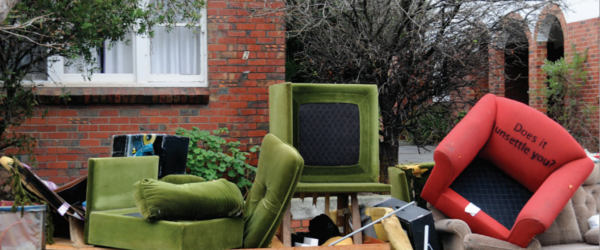
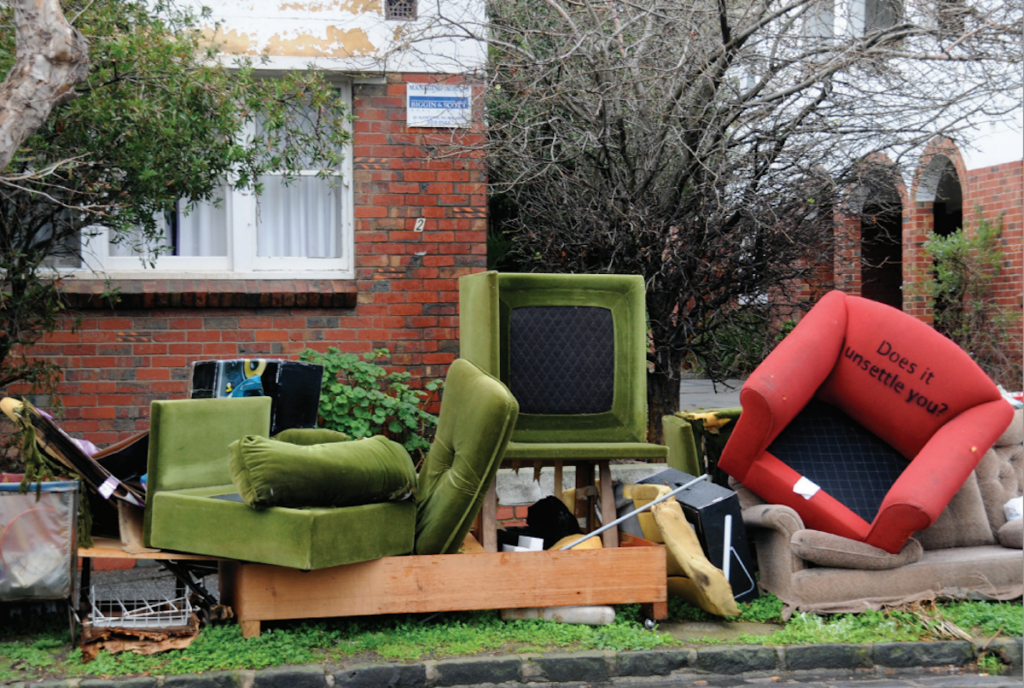
States of abandonment: In evictions, who abandons whom?
“Zones of abandonment … accelerate the death of the unwanted. In this bureaucratically and relationally sanctioned register of social death, the human, the mental and the chemical are complicit: their entanglement expresses a common sense that authorized the lives of some while disallowing the lives of others.”
João Biehl, Vita: Life in a Zone of Social Abandonment
This story is about a day in the life of Sherry Gudger, a resident of Halethorpe, in Baltimore County, in Maryland. Sherry Gudger is a single mother living with multiple sclerosis. On or around August 7 of this year, Sherry Gudger received a notice stating that she would be evicted on the 25th of August. According to Ms. Gudger, she “did her best to remove her personal possessions from her third-floor apartment”. She didn’t manage to remove everything. August 25th was the first day of school for her 8-year-old son. Ms. Gudger walked her son to school, returned to the apartment, and found that all her belongings had been thrown away. These belongings included “her passport card, clothing, work tools, her eight-year-old son’s bed, and other furniture.” The trashing of her estate was completely legal. Baltimore County has a “Placement of Personal Property” ordinance, which says that a tenant’s belongings removed during an eviction “shall be considered abandoned”. Sherry Gudger has joined a lawsuit challenging both the loss of her possessions and the law itself. The action was “lawful”, but was it right? Further, and really, did Sherry Gudger “abandon” her personal property … or was she abandoned by the processes of eviction?
These questions have already been asked and answered. In 2024, the U.S. Court of Appeals for the Fourth Circuit struck down a similar law in Baltimore City. According to Maryland Legal Aid, representing Sherry Gudger, “In that case, the court held that tenants are entitled to clear notice that they could permanently lose ownership of their possessions during an eviction and that due process requires a meaningful opportunity to determine whether property was truly abandoned.”
Sherry Gudger explained, “I became part of this lawsuit because I believe everyone should be treated fairly. A lot of people are going through hard times right now, and what happened to me and my family could happen to someone else. People deserve to know what can happen to their property and have a chance to recover the belongings that are important to them.”
People deserve to know, and people deserve a chance to recover. For residents, and often for neighbors and friends, evictions are an existential crisis. That crisis does not endow the State or any entity with the power to reduce them to nothing. That’s what was supposed to happen in Halethorpe. Management told maintenance to go in, grab everything and dump it. Sherry Gudger was supposed to simply disappear … but she refused and refuses to do so. She refuses to be a citizen of the state of abandonment, a zone of social death through forced and unremarkable disappearances. It’s just business as usual. People deserve to know. People deserve a chance to recover. I believe everyone should be treated fairly.
(By Dan Moshenberg)
(Photo Credit: Julie Shields / “The things people told me“)

Fortress Football: Empire, Anti-Blackness and the Capture of the Beautiful Game
The 2026 FIFA World Cup will unfold during a period of intensifying U.S. militarism, imperial consolidation and border securitisation. Rather than standing outside these realities, the tournament risks functioning as spectacle for empire — projecting “global unity” while systems of extraction, anti-Blackness and unequal mobility deepen globally. Yet football mega-events have perhaps never been politically […]
From 1976 to 2026, neither peace nor ceasefire have ever been keywords. So what?
“The blues remembers everything the country forgot” Gil Scott-Heron and Brian Jackson, “Bicentennial Blues” What does it mean to forget the meaning of peace? Of ceasefire? Or, what does it mean to never have known? In 1976, the year of the United States Bicentennial, the Welsh activist scholar Raymond Williams published Keywords: A Vocabulary of […]

With “seclusion rooms” in schools, the war on children with disabilities continues
This week, NPR reported rampant abuse of Native American children in schools in a district in upstate New York: “Native kids with disabilities were held in wooden boxes. Sweeping reforms are coming”. The story is deeply disturbing. Schools built wooden boxes, “timeout” spaces”, and confined children with disabilities, children in majority Mohawk districts, into […]
Empty words that empty us: ceasefire
because your side of the cease-fire was holding since more than a year before they said so what June Jordan, “Apologies to All the People in Lebanon” Today, The New York Times (finally) thankfully revealed the truth we already know and have known: “Russia-Ukraine War Shows Cease-Fires Have Lost Meaning Under Trump”. For the past […]

On which seashore of endless worlds do children meet?
On the seashore of endless worlds children meet. The infinite sky is motionless overhead and the restless water is boisterous. On the seashore of endless worlds the children meet with shouts and dances. They build their houses with sand, and they play with empty shells. With withered leaves they weave their boats and smilingly […]

On record-breaking: When you care enough to send the very best …
“Whoever’s homeless now, will build no shelter; who lives alone will live indefinitely so” Rainer Maria Rilke, “Day in Autumn” Today, it is reported that homelessness in Western New York state hit “a record high”. The current level is “the highest recorded since data collection began in 2005, and 24% up from just last […]

The racist `normal’ of deed theft: near death, near-death, or nearly dead
Sustaining today’s waves of spectacular violence is a web of everyday violence, the violence of the normal. This week’s example of that is deed theft. In Brooklyn last Wednesday four people were arrested at a protest against deed theft “after gathering outside a brownstone in support of a woman who is fighting attempts to evict […]

I do know this can’t happen to anyone else, ever again: is this the end of childhood?
Five years ago, the United Kingdom public was “shocked” to learn the story of child Q, a 15-year-old Black girl in Hackney. Child Q was at school. She was “suspected” of having cannabis. The police were called. The police strip-searched the child. The child was menstruating. Of course, the police found no contraband: “A council […]

In New South Wales, where are the First Nations women? In prison, still discarded and ignored
Last week, the New South Wales Auditor General released a report, “Support for First Nations peoples in custody and post-release to reduce reoffending.” To absolutely no one’s surprise, the report shows that the state has failed to address the needs of incarcerated (or any) Indigenous people, or, better put, the state has successfully tortured Indigenous […]

“This place broke something in us. Something that I don’t know if we will ever be able to fix”
“Before I built a wall I’d ask to know What I was walling in or walling out, And to whom I was like to give offense. Something there is that doesn’t love a wall, That wants it down.” Robert Frost, Mending Wall When do we start to care? What is the threshold of our […]