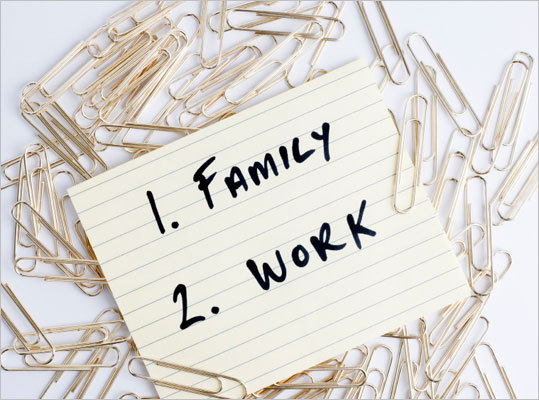
Instead of investing his money, he invested himself to support his family


Among the many people I met in Korea, both new acquaintances and old, the driver of the jumbo taxi that ferried me and my luggage between Seoul and Pyeongtaek was deeply moving. At first glance he is an ordinary middle-aged South Korean man, one of millions working to support their families. Like so many such “ordinay” people, he has a fascinating life story. Laid off from his job at a prestigious chaebol as a consequence of IMF restructuring, he was in a bind. Still in his forties, he had children to put through high school and he was adamant that, unlike him, they should go to college. He watched his peers, many of whom were also laid off, use their severance pay to start small businesses such as clothing stores, restaurants, bars. And he watched them all close and his friends end up in even greater economic straits.

He needed work that provided a path to self-sufficiency but wouldn’t use up his severance pay. He was unwilling to take that risk when his family’s living depended on that lump sum. So after much agonizing, he became a taxi driver for a taxi company. After a few years, he gained the right and the means to buy and drive his own taxi. Then after a few more years he gained the right and the means to buy and drive his own sedan or “model” taxi. He worked hard to build a customer base, for the sedans are more expensive and depend on regular customers.

A few years ago he heard about jumbo taxis, minivans that serve a fairly exclusive base of customers, often from overseas. He was able to buy one just a few months ago, and became part of a small network of jumbo taxi owner-drivers. Now he drives around people like me with too much luggage to fit in regular taxis (this is what happens when your children are drummers), foreign celebrities, Korean celebrities, and random rich people. With his diligence, he put his children through college, saw them married and settled in careers, and still provides for his wife.

He spoke about the embarrassment of picking up passengers in the early years to discover they were former co-workers, often those who had worked under him, but noted that was nothing compared to the daily grind of trying to pick up enough fares to have something left as income after paying the taxi company. Becoming an owner-driver was a huge relief, and also an achievement because that right comes only with a spotless driving record. It also spurred him to learn English, for many of his customers are foreigners. He knows enough to carry on some small talk, take reservations, and otherwise make sure his customers have a pleasant ride and will want to ride with him again.

When I asked what the biggest hardship was, he immediately said that it was being unable to support his family as he wished. He wanted to support his children, but he also wanted to provide for his wife. He wanted her to be able to run the household without money worries, take her friends out to lunch, and splurge on clothes and makeup once in a while. Love means little, he said, if one cannot express it properly by taking care of your loved ones. “I always told my wife, I’m sorry, things will get better, I promise. And I worked hard to make sure that I kept my promise. And I did.”

Now he and his wife enjoy a quiet life, but he still keeps a busy work schedule. He noted that he needs to build up savings for “real old age, nowadays that’s in your 80s.”
Smiling, he said that after he drops me off in Seoul, he is going to take his wife and her friends on a day trip. “This is how we take care of each other.”

There is much to see in his life story, especially about the South Korean economy, traditional marriages and gender roles, and upward mobility. But what I see most clearly is his spirit, his intelligence, and his love in action for his family. The cynical side of me says you have no idea what this man is really like. And that’s true. But what I saw was a person who weighed his options as he tried to fulfill his family obligations, and that he balanced ambition with caution. Instead of putting his severance pay on the line by investing it as his friends did, he kept it as insurance for his family and put his own social status and daily well-being on the line. Instead of investing his money, he invested himself to support his family. There isn’t a whole lot more you can ask of a person.

(Image Credit: Boston Globe)
Why I no Longer Use the Term, ‘Game.’

Is it bushmeat or game? Who decides?

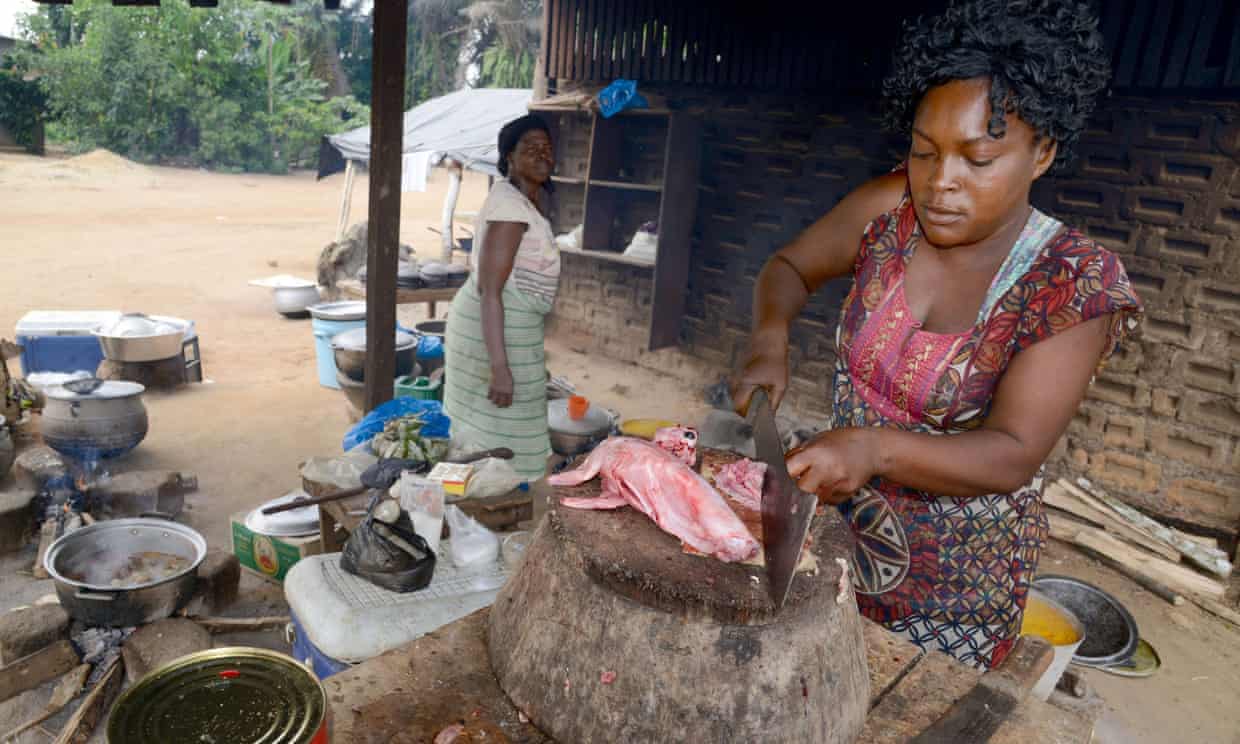
Years ago, I was enjoying my bushmeat in an Australian restaurant in Belgium and said as much when my dinner companion gently reminded me that what I was eating was “game” and not bushmeat, and I had been invited out to “enjoy game.” Apparently, bushmeat is what you get in a small, ramshackle affair by the roadside in Nsukka, paired with palm wine and most often eaten by hand, not meat carefully paired with a Pinot Noir or a Shiraz in a restaurant where the silverware is so shiny and so smudge free you can use it to fix your makeup.

This morning, I did a quick google search and found this:

“The term “bushmeat” refers to meat that comes from wild animals captured in developing regions of the world such as Africa. Bushmeat comes from a variety of wild animals, including bats, nonhuman primates (e.g., monkeys), cane rats (grasscutters), and duiker (antelope).”

“Game are wild animals and birds. Large native game animals living in America include antelope, buffalo, bear, deer, elk, moose, reindeer, and wild boar. “

Fact 1: bushmeat and game come from wild animals.

Fact 2: Antelope is bushmeat when in Africa but game once it crosses the ocean.

Question: Who does the naming?
Why does it matter?
What does naming say about the imperialism/hierarchy of cultures?

Naming is neither innocent nor neutral. Victors name the conquered, the wealthy name the poor. Think about why every westerner in Africa is an “expatriate” and Africans in the west are “immigrants,” and how the labelling influences the dominant narratives around these two groups. Think about why you are a cosmopolitan if you’ve travelled extensively (in the west) and speak a variety of European languages but not if you are Nigerian and have lived/travelled extensively across Africa and speak many African languages.

One of the stories my father-in-law (who taught history and French for many years) and my husband (who is a history buff) love to tell the younger generation (children and grandchildren) is how William the Conqueror influenced the names of (cooked) meat in English. When William the Conqueror invaded England in 1066, he gave land to the knights who fought with him and made them dukes and earls and etc. They did not work the farms or cook their own food but they named the meat which landed on their plates. The transformation from cow to beef (le boeuf), from pig to pork (le porc), from calf to veal (le veau) happened once the animals left the farms of the poor Anglo Saxon farmers and landed all ready to be devoured by the nobility.

Cultural imperialism of course goes beyond naming. It is also about what is framed as “civilized” and therefore desirable and what is not. It is about people turning up their noses at people eating eba with their hands and yet killing themselves to learn how to use chopsticks so they can “eat Japanese food the proper way.” It’s about people gagging at the thought of me enjoying goat meat (good thing it didn’t make it to the plates of the nobility or we would have been calling it chevon like the French or some other variant of chèvre) and yet ridiculing me for thinking that raw oysters are gross. It is people thinking that when the French speak English with their accent (including H-dropping), it is sexy but when a Yoruba does it, it is “bush.” It is people rolling their eyes at African superstitions yet believing that the position of the stars on the day they were born has an effect on their personality (and determines their fate). It is about people thinking that there is one single measure of civilization and that they calibrate it.

Years ago, I was invited to talk about my favorite pieces of classical music on a radio show in Belgium. I was upfront in my correspondence with the (producer?) about classical music not being my cup of tea. I think I said I wasn’t knowledgeable at all about it. Undeterred, she sent me a box of CDs of classical music, determined to bring me on the right side of “civilization.” She very thoughtfully labelled each CD according to its “mood.” I gifted the CDs to my husband (who does enjoy classical music). A few weeks later, I get a mail from the producer asking if I’d played the CDs. I lied and said I had. She decided I was ready to come on the show. Cut a long story short, I went on the show and the woman begins by talking about my ignorance of classical music before the show and then asks, ‘So, you had no culture of music growing up in Nigeria?” In proper Naija fashion, I answered her question with a question. I asked her what she knew of highlife (“Highlife? What’s that?”). I asked her what she knew of juju (she’d never heard of it.) I told her it didn’t matter to my father that she knew Mozart and Beethoven, if she knew nothing of highlife and juju, she was a cultural barbarian. She was appalled. She had not thought that there was a “musical culture” outside of the European tradition. Like my mother would say, I gave her homework.

In recent years, I have begun making a conscious effort to pass out such homework where I can. We all have a responsibility in challenging narratives that privilege other cultures/voices/stories over ours.

And that is why I no longer use the term, “game” for any kind of bushmeat.


(Photo Credit: Guardian / Issouf Sanogo / AFP / Getty)

Three years on, still no justice for Ms. Dhu, her family, or Aboriginal women generally

Ms. Dhu, who died in police custody, August 2014

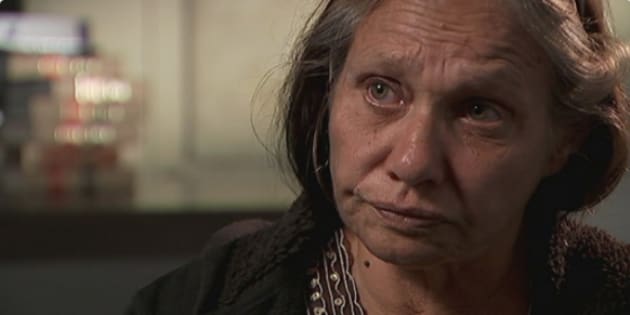
In Australia, for Aboriginal women and their families, the wheels of justice do not turn at all, but they do try to grind the people into dust. On August 4, 2014, a 22-year-old Aboriginal woman, called Ms. Dhu, died in custody in Western Australia. She was being held for unpaid parking fines. Ms. Dhu screamed of intense pains and begged for help. She was sent to hospital twice and returned, untreated, to the jail. On her third trip to the hospital, she died within 20 minutes. Reports suggest she never saw a doctor. Her grandmother says she “had broken ribs, bleeding on the lungs and was in excruciating pain.” That wasn’t enough. In her death, Ms. Dhu joined a long line, actually a mob, of Aboriginal women who have died in custody in Australia. Ms. Dhu’s family joined a longer line of Aboriginal family members seeking justice. Three years later, Ms. Dhu’s family still struggles for peace and something like justice concerning the circumstances of their loved one’s death. To make matters worse, the statute of limitations is running out soon, and so Ms. Dhu’s mother, Della Roe, and her brother, Shaun Harris are preparing to sue the State, not because they want to but because the State has pushed them to this moment. As Della Roe explains, “I want justice and someone pay for what they did to my baby. They need to be accountable for it.”

The State did its own accounting, and that’s why, and how, Ms. Dhu died. Like the United States, Canada, and others, Australia has invested heavily in the devaluation of Aboriginal women’s bodies and lives. The rising rates of incarceration married to the plummeting budgets for assistance say as much. So do the women’s corpses, decade after decade, year after year. For Aboriginal women, the histories and lived experiences of colonial occupation and violence not only continue to this day. They are intensifying.

A contemporary postcolonial, anti-colonial politics begins and ends with the State murder of Aboriginal women’s bodies, which runs from lack of services and assistance, from cradle to grave, to mass incarceration to dumping into the mass graves of historical amnesia. Another world is possible, and it requires more than an endless cycle of “discoveries” followed by commissions.

Della Roe, Shaun Harris, and the spirit of Ms. Dhu are represented by George Newhouse and Stewart Levitt, prominent human rights attorneys. According to George Newhouse, “It’s three years since her death and time’s up. Time’s up. These reforms need to take place and I’m hoping that the case will lead to real reform in WA.” Stewart Levitt adds, “It’s been like hell. How else can I explain it, you know? No-one’s been accountable for it, it’s terrible. The last three years has been like hell.”

Ms. Dhu was murdered by State systems of accounting. She was in jail for $3,622 in unpaid fines. The jail staff and the hospital staff decided she wasn’t worth believing or treating. She wasn’t worth the bother. And so Ms. Dhu died and remains dead. No amount of accounting will bring her justice. And her mother and uncle and kin and community are left to struggle with the State systems of accounting that value their lives as beneath assessment. What would justice for Ms. Dhu mean today? To begin, stop sending Aboriginal women to jail and prison. Stop the slaughter now.

Ms. Dhu’s mother, Della Roe

(Photo Credit 1: ABC) (Photo Credit 2: Huffington Post Australia)

This is How Angry I Am

This is How Angry I Am

Tell me one more time to calm down
Tell me once again that I am emotional
One more time.
I will clobber you in dance step
With a cast-off pipe from a bombed out abortion clinic

Tell me one more time to move on
Tell me once again that he won
One more time.
I will join hordes of starving hags and babies
To scratch your useless eyes into smeared gelatin

Send me texts about the unfairly high price tag
Of having transgender people in your military
One more time.
You will be force fed an overdose of Viagra
And your useless heart will eventually stop stirring

Ask me again to welcome the Dakota Access Pipeline
Tell me that only a Christian Church is sacred land
One more time.
We will send you nightmares, terrifying and relentless
And your useless psyche will melt and fall

Send me once again bloodless tracks about illegal aliens
And the plot of radical Muslims to kill us all
One more time.
We will find the trucks loaded with suffocating dreamers
We will give them air, suckle them tenderly, and teach them to read

Tell me one more time that I am naive, a bleeding heart
Send me speeches saying he is good for business, for jobs
One more time.
We will write, march, persuade, scream, cry, vote, resist
And your useless voice will slip under the cold water

You, my brother, have no idea how angry I am

No idea.

— Seraphin Morgan
July 27, 2017

(Image Credit: PBS)

In Virginia, Lipton Tea workers prove there is power in a union

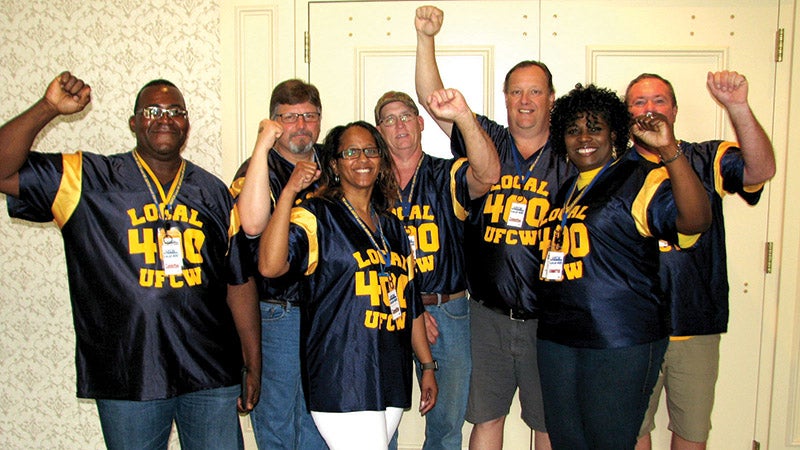
On Monday, July 24, workers at the Lipton Tea factory in Suffolk, in the so-called right-to-work Commonwealth of Virginia, voted 109 – 6 to approve their first union contract. The contract covers 240 workers in the plant. It also covers all Lipton Tea factory workers in North America, since the Suffolk plant produces all the Lipton tea bags sold in North America.

The story of workers taking charge began last year. For the preceding ten years, workers had seen their benefits shredded, the pace of work accelerated, their positions rendered increasingly precarious. Sick leave, including unpaid sick leave. was reduced to the barest legal minimum. Insurance coverage became prohibitively expensive and, simultaneously, less expansive. Particular to Lipton was something called “drafting” in which workers were forced to work overtime, often 12-hour shifts for 13 days before getting a day off.

In 2013, Lipton Tea, owned by Unilever, announced it would invest $96 million to “upgrade” the factory. That meant new machinery. Production stopped temporarily. When production resumed, all the workers were forced to re-apply for their jobs. As mechanic Robert Davis explained, “I had been there 23 years, but I had to reapply for the same job, turn in a resume and everything.” Davis was turned down the first time he applied.

With speed ups, no sick leave, workplace injuries and illnesses, workers began leaving. When they left, they were not replaced. The factory workforce decreased, as the amount of work increased. This is known as “lean production.” Last spring, workers decided they had had enough, and called the United Food and Commercial Workers. According to UFCW Kayla Mock, “From the beginning, they took so much ownership and responsibility for building their union. They held full-on organizing conversations with their co-workers, identifying other leaders in the plant and bringing them on board, talking and assessing the other workers.” Mock added, “The workers were the ones who took ownership of it from the very beginning. They very clearly understood that their union was something that they needed to build, almost like a tangible thing, and they built it from the ground up—they just owned it.”

Lipton Tea workers called Hellman Mayonnaise workers in Chicago. Unilever owns Hellman Mayonnaise, and the Chicago plant is unionized. The workers in Suffolk learned that their brothers and sisters in Chicago had better working conditions, including better and more immediate pay for overtime and a far superior, and much cheaper, health care plan.

Anita Anderson, who has been with Lipton Tea for ten years, explains, “You had a choice to make. You call out sick and get one incident, or you come to work and pass germs around … If you got hurt on the job, it’s never unsafe conditions. It was never that you were fatigued from working so many hours. It was always, the employee did not do something right. So if you get hurt, then it’s an incident, it’s a strike in your personnel file … We decided we deserved more than what we were getting. Once we got a write-up comparing the benefits of the Hellman plant compared to our plant, a lot more folks came on board.” Anderson started talking with her colleagues, “I told them about how the Verizon workers had a union, and when they were threatened with their jobs going overseas, they went on strike, they fought, and they won and kept their jobs.”

August 26, 2016, the workers of Lipton Tea voted 108 – 79 in favor of joining the UCFW. Juanita Hart has worked 25 years at Lipton Tea: “I was crying like I had won the lottery. I was so glad and I was so happy because I’ve been told for all this time, all these years, that it would never happen. And when it happened, I had so much joy that all I could do (was) cry.” Anita Anderson added, “Everyone is excited. Even the ones that were naysayers about the union are asking about the next union meeting so they can speak up and talk about the issues in the plant.”

Yesterday, Lipton Tea workers voted for the first time in the 60 year history of the factory, and they approved a contract that would save them more than $4000 a year in health care costs. Yesterday, Lipton Tea workers – with Anita Anderson and Juanita Hart among the leaders –  voted for workers’ dignity, respect, and power. There is power in a union.

(Photo Credit: Suffolk News Herald)

In Poland “ladies are not playing”, they are fighting for their rights

In Poland last year, the Federation for Women and Family Planning celebrated its 25th anniversary. It was created to defend the reproductive laws that existed in 1991. Its director, Krystyna Kacpura, reflects, “This is the only organization in the country whose focus is sexual and reproductive rights, of course we have many NGOs working on women’s issues such as violence against women but not on reproductive rights. So, for a country of 10 million women in reproductive age, it’s nothing!”

At the end of “the cold war” world order, the process of democratization of eastern Europe, including with the reunification of Germany, was accompanied by a decline in sexual and reproductive rights and women’s rights in general. Poland has taken this to the extreme. With Ireland and Malta, Poland is the country with the most restrictive laws as regards abortion.

Recently, the passing of the French political feminist figure Simone Veil has triggered numerous reflections on the important right to universal access to free contraception and abortion. Feminist philosopher Genevieve Fraisse wrote, “Abortion is not murder. It is exercising the right to be free.”

Meanwhile, in 2016, the newly elected extreme right Polish government tried to pass a total “ban on abortion” law. Krystyna Kacpura is Executive Director of the Federation of Women and Family Planning, and she is also a member of the Sexual Rights Initiative, European Society for Contraception and Reproductive Rights, and the Programme Council of the Congress of Polish Women.

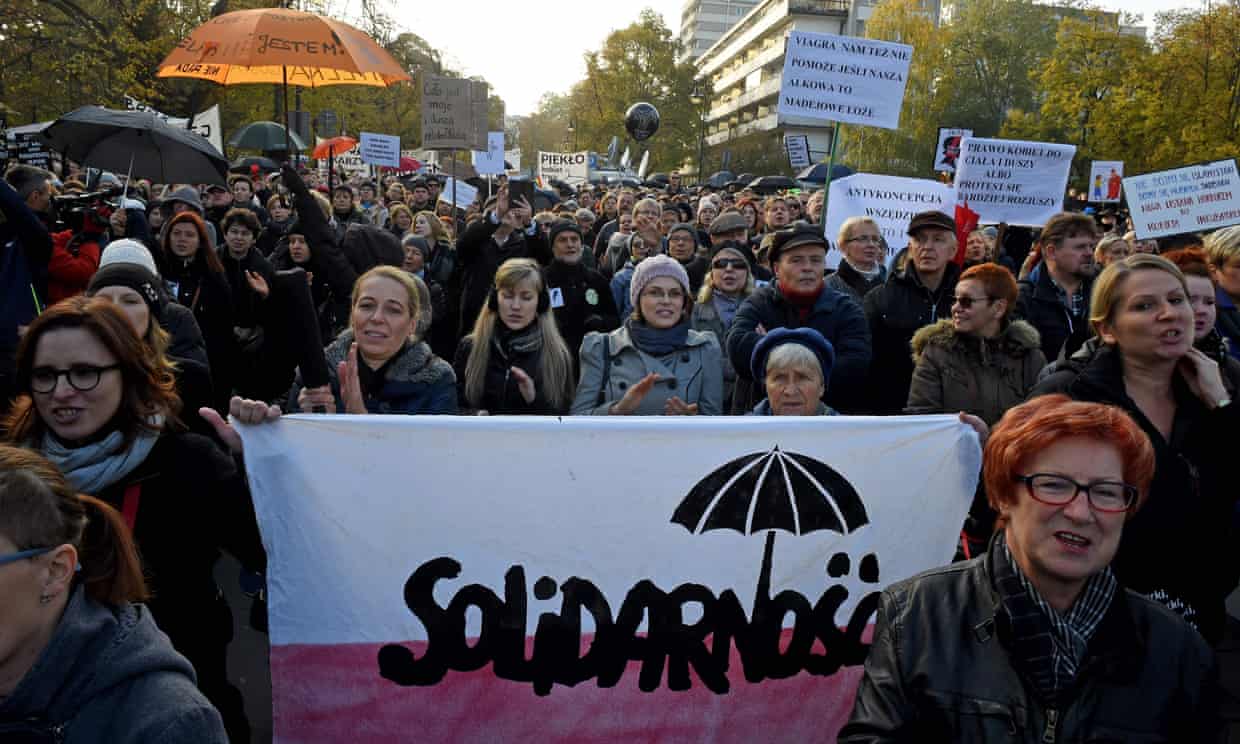
Krystyna Kacpura met with and recalled for Women In and Beyond the Global the history of the solidarity movement that rejected this law. But the battle is not over, and some similarities are easy to establish with the US anti-abortion movement as she explains:

Krystyna Kacpura


(Photo Credit 1: The Guardian / Janek Skarżyński /AFP /Getty Images) (Photo Credit 2: Wyborcza / Albert Zawada)

Florida’s special hell for women, the Lowell Correctional Institution, ran out of water

Florida built a special hell for women, the Lowell Correctional Institution. In 2015, Lowell housed, or better caged, 2696 women, surpassing the Central California Women’s Facility and thus becoming the largest women’s prison in the United States. From the start, in 1956, to today, the place has been a nightmare: overcrowded, rampant with staff abuse of prisoners and institutional abuse of staff, severely under resourced, violent, toxic and lethal. In 2014, Michelle Tierney, Latandra Ellington, Regina A. Cooper, and Affricka G. Jean died “under suspicious circumstances.” They did not die; they were killed by the institution. From the outset, death-in-life has been the everyday norm for Lowell. Last week, Lowell hit a new low, no water for days. The Lowell Correctional Institution, hellhole of inhumane practices, became the Lowell Correctional Institution, hellhole of `subhuman’ conditions.

Here’s the official version: Lightning struck a water pump on Saturday, July 8. It shut down water and a geothermal line, which meant no water and no `air conditioning’. On Monday, July 10, the Florida Department of Correction released a statement: “Storm damage over the weekend caused maintenance issues that effected the well pumps and geothermal line at Lowell Correctional Institution. Institution maintenance staff responded immediately and have been on scene trying to resolve the issues with assistance from the local fire department and contractors. The geothermal line has been repaired and a replacement pump for the well is expected to arrive today. All inmates have access to drinking water. Toilets and sinks are operational using non-potable water being brought in to the institution.”

On Thursday, July 13, The Miami Herald reported that drinking water was still unavailable, and would be unavailable for at least another three days.

Lowell Correctional Institution doesn’t have air conditioning. Instead it relies on geo-thermal cooling. The State admits that the system is faulty, at best. Prison staff say the system doesn’t work at all in a number of the dormitories. Now, it officially doesn’t work anywhere. Meanwhile, Lowell has been cited repeatedly for unhygienic conditions, including worms and mold in the showers and sinks. Last week, for at least three days, the showers and sinks were officially shut off. Toilets were also `inoperational’, which prisoners explained means toilets overflowing with feces.

One staff member said, “It’s a disgusting mess; the women are living in subhuman conditions.” Another added, “I don’t understand why the health department doesn’t get involved. There’s been a constant problem here with sanitation. Toilets that don’t work — sometimes only one works for 160 inmates.”

Florida maintains that the situation in Lowell Correctional Institution is under control and just fine. Florida can make that claim because the situation in Lowell Correctional Institution has been subhuman for years, and who complained? Prisoners, their families and friends, staff members, and the occasional activist. Where’s the hue and cry over the abysmal conditions in the nation’s largest women’s prison? Florida built a special hell for women, Lowell Correctional Institution, and really, who cares?


(Photo Credit: Miami Herald / Emily Michot)

Who’s your boss? Two South African courts decide in favor of workers

A specter is haunting the global economy: the specter of workers organizing. All the powers of the old and new global economy have entered into an unholy alliance to exorcise this specter, but it just keeps coming back. Actually, it never left. In South Africa this week, organized and organizing workers received encouraging decisions from two separate tribunals. In one case, workers hired through labor brokers, also known as temporary employment services, were told that if they are employed by someone for three months, that makes them employees of the contracting company. In the second case, Uber drivers were adjudicated as employees of Uber, rather than as `self-employed contractors.’ Both decisions will be appealed, but the decisions clarify the status of laborers as they affirm that workers know who they are and they know who their bosses are. Additionally, the decisions have clarified the lines of antagonism. Aspects of class struggle may change, but the essence, exploitation of workers’ labor time, has not.

The case concerning “temporary” workers involved the National Union of Metalworkers, Assign Services and Krost Shelving and Racking. Assign Services provided Krost with workers. Many of them worked for more than three months. The decision by the Labour Appeal Court in Johannesburg means that workers can’t be summarily fired, they have the right to appeal mistreatment, they have collective bargaining rights, and that they qualify for benefits, including retirement and health benefits. In other words, they are permanent workers, no matter what the terms of client to labor broker contract claimed.

This is a victory for workers considered by many to be among the most vulnerable. It also regulates temporary employment services to actual temporary employment status. Once the three months have been hit, the temporary employment services are no longer needed. This also means that workers who have fallen into this double bind, and they are many, can now begin organizing, and litigating, in response to previous damages.

That decision was handed down on Monday, July 10. On Wednesday, July 12, the Commission for Conciliation, Mediation and Arbitration, CCMA, ruled that Uber drivers are employees of Uber, and so are protected by South African labor laws. In this instance, former Uber drivers, who had organized into something called The Movement filed a complaint concerning unfair employment practices. In particular, they protested having been summarily dismissed by Uber, without cause, reason or possible appeal. They explained that being fired by Uber happens when Uber simply turns off their app. No warning, no process, no nothing. Just silence. Their appeal gained further weight when Uber claimed the CCMA couldn’t hear the case because the drivers are “partners”, not employees. The CCMA didn’t buy that, and so now, Uber drivers have the right to all protections afforded employees: collective bargaining, due process, strike.

Neither case is definitive, and further appeals are already in process, but the cases, individually and taken together, matter. Workers know who the boss is, and they also know the terms of workplace and workforce engagement. Both cases happened at all because of workers’ organizing and organizations raising a ruckus, finding good attorneys, and then raising more of a ruckus. Workers know the difference between temporary and permanent, and they know that permanence, such as it is, is only secured through collective action. The workers also know the entity that fires workers is the employer. Who’s the boss? Ask the workers.

(Photo Credit 1: Business Day / The Times) (Photo Credit 2: Quartz / Reuters / Siphiwe Sibeko)

a petite woman

a petite woman

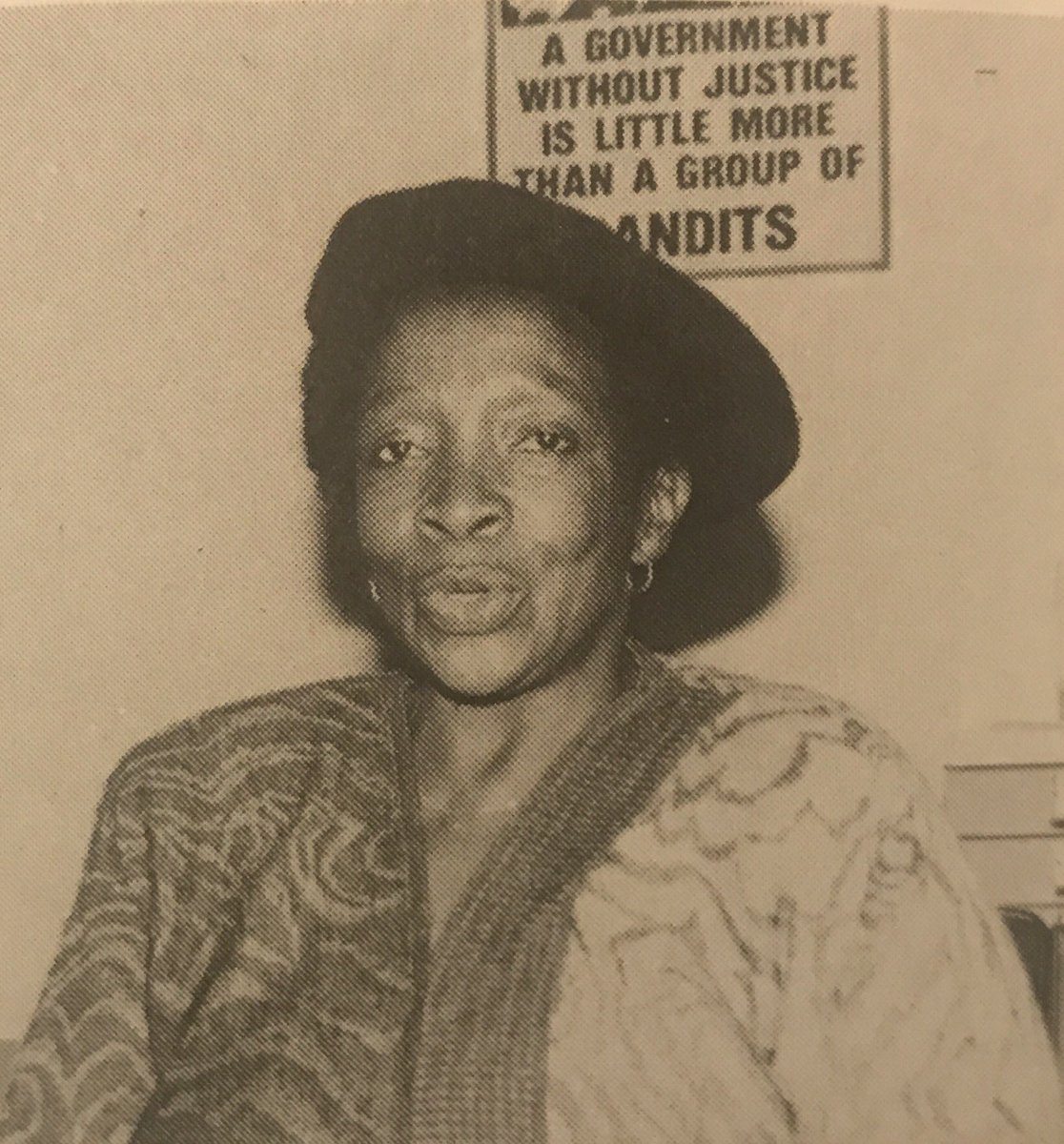
Emma Mashinini was
we get to hear
on morning radio

a petite woman
that’s what she was

diminutive little elfin
tiny small short

Emma Mashinini has passed
trade unionist pioneer
pioneer trade unionist

a petite woman
that’s what she was

anti-apartheid fighter
fighter for women’s rights
a warrior on all fronts

women described
a woman described
differently to others
to men

(did we see
that appendaged
to late unionist
Ronald (Bernie) Bernickow
or music giant Ray Phiri)

a petite woman
that’s what she was

we have a long way


(Emma Mashinini’s short tribute (read by a woman) on SAFM’s (morning) AM Live gets this one going.)

(Photo Credit: Buzz South Africa)

Tomorrow Scotland finally demolishes Cornton Vale, its only women’s prison


This morning, Nicola Ferguson Sturgeon, First Minister of Scotland and leader of the Scottish National Party, wrote, “Tomorrow sees a major milestone in the transformation of our justice system. We will begin the demolition of Cornton Vale women’s prison, a move that marks the next stage in our plans to ensure Scotland’s penal policy doesn’t just punish people who’ve committed crimes – important though that is – but helps deliver safer communities in the long term.” Cornton Vale is Scotland’s only women’s prison, and it has been a toxic hot mess for decades. Its destruction is welcome and long overdue.

Cornton Vale has been called the “vale of death”, due to its regularly high rate of suicide. Between 1995 and 1998, eight prisoners hanged themselves. Yvonne Gilmour hanged herself in 1996. So did Angela Bollan. Outcry and inquiry ensued. In 2001, in the span of a single week, Frances Carvell and Michelle McElvar hanged themselves. Outcry and inquiry ensued. In 2012, Sarah Mitchell was “found dead” in her cell. Outcry and inquiry ensued.

Outcry and inquiry, outcry and inquiry, the same drumbeat for more than twenty years. During that time, commissions found that the prison was overcrowded. Report after report decried the rising rate of women’s incarceration. Everyone seemed to agree that too many women were being thrown into prison. Meanwhile, Scotland’s women prison population rose by 120% since 2000. As of last year, Scotland “boasted” the second highest rate of female imprisonment in northern Europe. Spain’s number one.

Last year, a commission found that women at Cornton Vale were forced to use their cell sinks as toilets at night, because they had no access to proper toilets. It was just the latest scandal to mark the dismal history of Cornton Vale. Various commissions have described Cornton Vale as “not fit for purpose”; “wholly unacceptable in the 21st century”; “in a state of crisis”; “Victorian”; “a significant breach of human dignity”; “an unacceptably poor establishment”; “disgracefully poor”; and, as always, notorious.

After all the reports and deaths and harm, Scotland finally decided to shut Cornton Vale down. The first plan was to replace Cornton Vale with a larger prison, but cooler, evidence based heads prevailed, and that plan was dropped for another, an 80-bed prison, five regional 20-bed facilities, community sentencing and service, and much greater funding for mental health, drug abuse, counseling and more.

Cornton Vale is more than a “vale of death”, although that would have been enough. It was the vale of women’s slow and painful death and deaths. For the past two decades, Scotland  criminalized women’s lives and bodies and then, by unequal funding within the prison system, ensured that no one would leave unharmed. Tomorrow is a milestone. Cornton Vale will be demolished. Which women’s prison is next?