The factory fire in Indonesia was a planned massacre of women workers

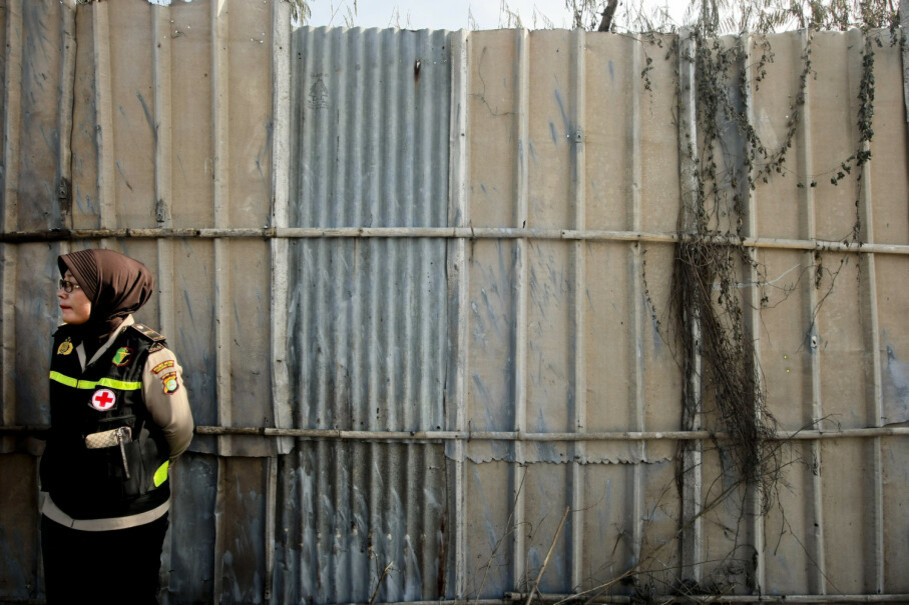
A police officer stands in front of the factory

On Thursday, October 26, 2017, in Tangerang, a city near Jakarta, local, national, regional, and global economic development tossed another 49 charred bodies, almost all women and girls, onto the sacrificial pyre. A fireworks factory “experienced” a fire. Two explosions roared, and 49 workers burned to death. The factory employed 103 workers, almost all women and girls. The death toll continues to rise. The 49 dead, and the 54 survivors, most of whom are severely injured, join their sisters from the Triangle Shirtwaist Factory in the United States, to the Kader Toy Factory in Thailand, to the Zhili Handicraft Factory in China, to the Tazreen Fashions Factory in Bangladesh, and to the Kentex Manufacturing Corporation in the Philippines two years ago and the House Technologies Industries earlier this year, also in the Philippines. Every one of these was a planned massacre of women workers. Last week’s fire in Indonesia was a planned massacre of women workers. Everyone knew it would happen, sooner or later.

Why did so many women die? So many women died because women were the workers. It makes “economic sense”, which means the pay is low and the working conditions abysmal. Now that the smoke and stench rise from the pile of 49 charred workers, almost all women and girls, now the world takes notice of “Indonesia’s conjoined struggles with workplace safety, widespread child labor and keeping children in school.”

Why did so many women die? So many women died because there was no rear exit, and so they were trapped by flames and smoke, and many were burned beyond recognition.

Since the early 1980s, researchers have been writing about women workers in Tangerang. Along with nearby Cikarang, Tangerang has been “at the heart of the Indonesian industrial system since the export boom of the 1970s”, and, from the 1970s until today, the living and working conditions have been described as “hell-like”. Women have organized, through unions and through other associations, for improvements, which come and go. Women workers in Tangerang have organized mass strikes, famously in 1991. Most of the women who work in Tangerang have migrated there, from rural areas in Indonesia, and so, despite decades of struggle, in some ways, the struggle begins anew with every new cohort.

And now? The factory owners are detained and under investigation. Families, friends and neigbhors keen and mourn. The world yet again stares, for a moment, at the pictures of grieving mothers, and reads of the loss and sorrow and loss. None of this is new or unforeseen. Tangerang specifically has been in the eye of public policy, environmental, labor, women’s, children’s, development scholars’ and activists’ studies for four decades. Industrial fire codes have been in everyone’s eyes for over a century. And yet, day in and day out, 103 workers, almost all women and girls, went to work in a fireworks factory that had no proper exit in case of fire or other catastrophe. That factory wasn’t a factory; it was a slaughterhouse. When the flames burst and the women and girl workers’ bodies exploded, when the daughters’ and mothers’ and sisters’ bodies blew up, there was no accident. That was an indiscriminate and brutal slaughter of people, a massacre, and it was part of the plan. The fire was like a roar. “After that, there were no voices anymore.”


(Photo Credit: Jakarta Globe / Yudha Baskoro)

That is not right

Chanelle McCrawl

That is not right

A paternal grandfather
can’t get much sleep
as yet another
young one is killed

(she thrown on a field
like a piece of garbage)

That is not right
she is a human being

(a local library colleague
wonders whether children
are growing up too quickly)

elsewhere a besuited one
declares that gangs
are using weapons
of war

blustering on about
never failing our people
and liberating our people
from prisons of fear

is the mind not
that dangerous place
that weapon of war

male suspects appear
and are charged
while we fill that
other concrete prison

then tick off boxes
for political statisticians
and the statistics
of politicians

Is that right

“Another girl killed, another tenant held” (Cape Times, October 24 2017), “Charnelle’s mom shares her grief” (Argus, October 24 2017), “Another child found dead” (Athlone News, October 25 2017), and “Gangs using ‘weapons of war’” (Athlone News, October 18 2017).

(Photo Credit: David Ritchie / ANA / Cape Argus)

Nancy Almorin Lubiano challenges Hong Kong’s live-In maid rule


For migrant domestic workers living in Hong Kong, live-in work continues to be one of the most precarious forms of work. In a new court hearing, lawyers for Nancy Almorin Lubiano, a domestic worker from the Philippines, are challenging Hong Kong’s live-in domestic rule that could affect her and 350,000 other women.

Lubiano’s lawyers are suggesting that the rule, put in place since 2003, is unconstitutional because “it heightened the risk of breaching the fundamental rights of helpers, violating international charters.”

Hong Kong’s regime originally had a more liberal stance for workers, which allowed domestic workers to provide outside living accommodations, so long as they had their employers’ permission. A year before the rule was put into place, of the city’s 200,000 maids, 100 worked as live-out employees.

Today, the rule that mandates live-in domestic help face the consequence of, “administrative sanctions in future applications for a visa or employment, and criminal prosecution over charges such as furnishing false information, which is punishable by a HK$150,000 fine and 14 years’ imprisonment.” Domestic workers face extreme precarity being forced to live in the home of their employers, always at the beck and call of their employers, and anyone attempting to flee a dangerous situation could be moved from one prison to the next.

For live-in domestic workers residing in Hong Kong, risk is ever present. According to Lubiano’s lawyers, “Key findings by Shieh included an average of 71.4 working hours per week, with more than one in three respondents deprived of their weekly 24-hor rest day as required by law. Another 40 per cent were deprived of independent rooms, some of them exposed to the rest of the household while sleeping in corridors, kitchens, and even beds above toilets.” Lubiano was given a 60 sq. ft. storeroom in a 640 sq. ft. flat shared with a family of three; because it was a storeroom Lubiano was never given privacy, since her employers had access to the room at all times. If maids in situations like Lubiano desired to leave an abusive employers, they would only have two weeks to find another employer before they are forced to leave the city.

The arguments made by Lubiano’s lawyer, Paul Shieh Shing-tai, calls the case “a challenge to the system…saying the government should not interfere with foreign maids’ private life just to achieve the purpose of monitoring and maintaining security.”

While the case is being heard by the courts, based solely on the constitutionality of the rule, the 350,000 domestic workers will live and work in a state of limbo, continuing to work in a state of insecurity. Reports illustrate that domestic workers are victims of “a range of exploitative practices that would meet the internationally recognized definitions of forced labour and trafficking.”

Lubiano and Shieh have a very narrow legal challenge for the live-in rule, as contended by Shieh himself, but the verdict of the rule has large implications for foreign domestic workers in Hong Kong. The ability to be given the choice to live out, as opposed to the powerlessness that some feel living in their employers’ home would mean the ability to have an escape from abuse and exploitation, and the end of a 24-hour on-call workday.

(Photo Credit: Hong Kong Free Press)


Why does the English government hate Paulette Wilson and Patricia Simeon?

Paulette Wilson

Why does the English government hate Paulette Wilson and Patricia Simeon? What horrible crime has each committed? The only binding element in their combined story is that they are Black immigrant women. Individually, each woman’s story shows a State built of shameful violence against women. Taken together, the combined story of Paulette Wilson and Patricia Simeon shows a State in which State violence against women of color immigrants is an ever expanding and intensifying evil, a key part of which is the humdrum ordinariness of the women’s stories. What happened and is happening to Paulette Wilson and Patricia Simeon happens every day and all the time. Their stories are so common they barely get told.

Paulette Wilson is 61 years old. She arrived in England, from Jamaica, in 1968, when she was 10 years old. She has never left England. She has never returned to Jamaica. She grew up in Telford, where her grandparents looked after her. She has a British daughter and grandchild. She has 34 years of National Insurance payments. The law in the United Kingdom states that anyone who settled there prior to January 1, 1973, has the right to remain in the country. Paulette Wilson’s lawyers provided evidence, ample evidence, that she had been in the country since 1968, and that evidence was ignored. Last week, she was taken to Yarl’s Wood. Today, she and her daughter were informed that she was going to be released. When asked about the “heavy handed” approach applied to this Black woman who has lived, nonstop and without trouble for 50 years in the country, when asked about the reasons for ignoring both the law and evidence, the Home Office replied, “We do not routinely comment on individual cases.”

In so many ways, this is not an individual case; in so many ways, this case is routine.

Just down the road a bit lies Sheffield, where Patricia Simeon has lived since 2012. Patricia Simeon is 30 years old, Hal Paulette Wilson’s age. Patricia Simeon is a lesbian organizer and human rights campaigner from Sierra Leone. She is locally well known for campaigning for LGBT+, refugee, and faith community rights. She is one of the founders of LASS, the Lesbian Asylum Support Sheffield group. Initially refused asylum, Patricia Simeon was preparing for a November 7 appeal when, last Wednesday, she was picked up and dumped in Yarl’s Wood. Friends and allies launched a campaign to set her free. They noted that Patricia Simeon has provided ample evidence of having been tortured, which means, according to Home Office rules, she should never have been detained. As with Paulette Wilson, the rules and evidence were ignored. On Tuesday, Patricia Simeon was released from Yarl’s Wood.

While the release of both Paulette Wilson and Patricia Simeon is a cause for celebration, the question remains, “Why does the English government hate Paulette Wilson and Patricia Simeon?” They join the list of women of color immigrant women who have had to live with that same question, a list that includes, in the past seven months alone, Kelechi Chioba,  Erioth MwesigwaShiromini SatkunarajahIrene ClennellChennan Fei. As members of #SetHerFree and Movement for Justice By Any Means Necessary know, and as every woman who’s been held in or threatened with a stay in Yarl’s Wood, there is no setting free and there is no justice until Yarl’s Wood and its adjudicating apparatus is destroyed, once and for all, brick by brick, razor wire by razor wire, pen by pen. Shut Yarl’s Wood down; do it now!

Patricia Simeon

(Photo Credit 1: BBC) (Photo Credit 2: Change.org)

The nation-State of Jane Doe: Jane Doe is very tired

Jane Doe is a 17-year-old undocumented woman currently caught in the State of Jane Doe, Texas and the United States of Trump. Both Texas and the United States are hell bent on torturing Jane Doe. Jane Doe is originally from Central America. Last month, Jane Doe discovered that she is pregnant. She requested an abortion. Jane Doe did everything that Texas required of her to obtain an abortion. Jane Doe is an “unaccompanied minor.” She did everything she had to do, and yet she is being held hostage by the United States government. Jane Doe is 17 years old, has played by the rules, and is being tortured for that. Her attorney reports that “she talks about being very tired.”

In the past week, a series of court hearings concerning Jane Doe have swung back and forth, one court allowing the abortion to proceed, the next disallowing Jane Doe’s immediate access to abortion and giving her until October 31 to find a sponsor to assume responsibility of the young woman and transport her to the clinic. Yesterday, another higher court heard an appeal of this decision. With all the attention on the legal proceedings, it’s easy to lose sight of the woman who never wanted to be called Jane Doe.

Jane Doe came to the United States on her own. She has reported that her parents beat her older sister when they discovered she was pregnant. Shortly after crossing the border, Jane Doe was apprehended. At the same time, she learned she was pregnant. She asked for an abortion. In Texas, an unaccompanied minor must obtain a waiver to get an abortion. Jane Doe did that. With the help of Jane’s Due Process and others, Jane Doe raised enough money for an abortion. Transportation was arranged. Everything was set. Despite court orders, the Office of Refugee Resettlement prohibited Jane Doe from travelling to her medical appointments. The Department of Health and Human Services forced her to attend a “Pregnancy Crisis Center” counseling and to have a sonogram. Even though Jane Doe had obtained a waiver that included confidentiality, the authorities informed her mother of her pregnancy. Those same authorities now say that Jane Doe can return to her family home, where she fears violence, and to her native country, where abortion is criminalized. In yesterday’s hearing, the government attorney argued, “Ms. Doe arrived here illegally and refuses to leave. She has put herself to a difficult choice. And if the federal government has to approve, assist, and be complicit in Ms. Doe’s abortion, the government’s interest in avoiding that facilitation outweighs any alleged ‘burden’ she has created for herself.”

Jane Doe bears the burden of living in a world in which the powerful hate young immigrant women of color, and impelled by that hatred lie, torture, and savage the life of a 17-year-old Latina who has braved so much. Then there is the historical burden we all share, that of living in a country in which “health and human services” means being held hostage and tortured and in which “refugee relocation” means being held hostage and tortured and then, of course, being told that the refugee “bears the responsibility.” We have seen this before.

“Who is on the look-out from this strange watch-tower
To warn us of our new executioners’ arrival?
Are their faces really different from ours?
Somewhere in our midst lucky Kapos survive.
Reinstated officers and anonymous informers.
There are those reluctant to believe
Or believing from time to time.
There are those who look at these ruins today
As though the monster were dead and buried beneath them.
Those who take hope again as the image fades
As though there were a cure for the scourge of these camps.
Those who pretend all this happened only once,
At a certain time and in a certain place.
Those who refuse to look around them,
Deaf to the endless cry.”
Night and Fog, Alain Resnais and Jean Cayrol

Jane Doe is 15 weeks pregnant. Texas bans elective abortion after a woman’s 20th week of pregnancy. Who is on the look-out to warn us of our new executioners’ arrival?


(Update: Jane Doe had her abortion, Wednesday, October 25, after a Court of Appeals ruling Tuesday, October 24.)

(Photo Credit: The Washington Post / Michael S. Williamson)

In Indonesia, education is the key for domestic workers’ empowerment

For many domestic workers, work is grueling and exploitative, with long hours and low pay. Some fight back. Others do not, feeling as if the life of a maid or domestic worker will forever mean unfair treatment and meager wages. Some are too afraid that they are replaceable and accept whatever is given to them. Others work because they believe they have no other form of education behind them with which to ask for raises or better treatment. Can domestic workers become empowered enough to fight for better wages and better working conditions, and if so, what are some of the ways they can organize?

Indonesian maids have illustrated one mode of organizing that leads to empowerment and courage to fight for better wages; education. In an attempt to combat the hostile working conditions, Indonesia has introduced a pilot training program which “aims to enhance domestic workers’ skills and win recognition for their work as a profession in a bid to fight exploitation and modern slavery.”

Indonesia remains a large provider of maids for countries such as a Singapore, Malaysia, Hong Kong and the Middle East, while four million women are also employed within the countries as domestic workers as well. Though domestic work is one of the primary modes of employment for Indonesian women in the country, there is a larger chance for abuse for domestic workers laboring in Indonesia, because, “unlike their counterparts who work overseas, who must go through extensive training regulated by the government, there are no such provisions for local maids.” Thus, local domestic workers are in danger of exploitation and abuse, suffering from long work hours, withheld wages and a lack of formal contract, because the government does not recognize domestic work as formal work with labor protection form formal labor laws.

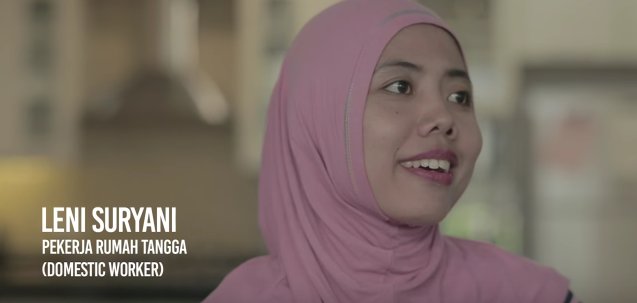
For women like Leni Suryani, the training program instilled the confidence to ask for a higher starting salary. As one of the first graduates of the program, “Suryani said she brushed up her skills on cooking different cuisines, housekeeping and childcare during her training, as well as learning English and using computers. At the end of the 200-hour course last year and after a test, she received a certificate given by a national professional certification board that recognized her skills.” With the certificate, she was empowered enough to negotiate a higher salary with an American family.

The International Labour Organization, which oversees the program, trains women in domestic work skills and educates them on workers’ rights so they can fight nearly slave-like conditions. Irfan Afandi, the program’s national advocacy specialist, highlighted the importance to empower women, even if it’s only with a certificate: “They think working from 6am to 8pm is normal and they should do anything they are told-from cooking to car washing and gardening. There is no clear scope of their job…They are confident because now they are professional domestic workers. They learnt the skills, it increases their employability and prospects for better work conditions.”

Training and being given such a certificate instills confidence and pride in work that is done. Like Suryani, it has empowered a once discouraged domestic worker into better wages and a better working situation. Education in workers’ rights and acquiring skill sets to help them improve the prospects empowers all marginalized women to resist falling into the trap of exploitation by means of instilling pride in domestic workers’ earned skill and labor.


(Photo Credit 1: Twitter) (Photo Credit 2: Twitter)

Cherrylin Reyes, Titin Rohaetin Suryadi, Fatima Benkharbouche, and Minah Janah say NO! to slavery … and win!


In the United Kingdom, today, October 18, is Anti-Slavery Day. Today, October 18, in two separate decisions, England’s Supreme Court decided that domestic workers employed by diplomats have the right to sue their former “employer”. These rulings have been hailed as landmark decisions, and hopefully not only for the United Kingdom. For migrant domestic workers, they could be the shot heard in capitals round the world.

The first case involves Cherrylin Reyes, directly, and Titin Rohaetin Suryadi. Cherrylin Reyes, a Filipina worker, worked for the al-Malki household from January 18, 2011, until March 14, 2011. Titin Rohaetin Suryadi, an Indonesian worker, worked for the household from May 16, 2011, to September 19, 2011. Both women have described inhuman working conditions. They worked 18 hours a day, seven days a week, and were not allowed to leave the house, except to take out the trash. Cherrylin Reyes reports that the al-Malkis took her passport and prohibited any contact with her family. Titin Rohaetin Suryadi says that her payment, such as it was, was sent directly to her family, rather than being given to her. The two also allege that they were trafficked, and have letters from the UK Border Agency that note that there are “reasonable grounds” for the claim. Additionally, Cherrylin Reyes and Titin Rohaetin Suryadi argue they were paid below minimum wage, and that they were subjected to racial discrimination.

On March 14, 2011, Cherrylin Reyes reported the situation to the police, after which she fled. On September 19, 2011, while the ambassador was away and his wife was asleep, Titin Rohaetin Suryadi escaped. In 2011, Cherrylin Reyes tried to take the al-Malkis before an Employment Tribunal. The Tribunal and then lower courts held that al-Malki, who was a diplomat from 2010 to 2014, had diplomatic immunity. With the help of the Anti-Trafficking and Labour Exploitation Unit (ATLEU) and Kalaayan, an organization that works for justice for migrant domestic workers in the United Kingdom, Reyes appealed the decision.

Today, the Supreme Court ruled that the employment of domestic workers in the diplomat’s household was not part of the diplomat’s official function, and so residual diplomatic immunity was lost once al-Malki left his post. Further, a majority of the Court added that human trafficking is a ‘commercial activity’, and so also falls outside of the diplomat’s functions and therefore outside of the reach of diplomatic immunity. Both ATLEU and Kalayaan are pursuing other cases that will challenge so-called diplomatic immunity of domestic worker employers while they are in post.

In the second case, two Moroccan women, Fatima Benkharbouce and Minah Janah, had worked for employees of Sudan’s and Libya’s embassies, respectively. The two claim they were forced to work unlawful hours and were paid far below the minimum wage, and took their employers to the Employment Tribunal, which denied the claims, again on the basis of state and diplomatic immunity. The claims were based on both UK and EU laws. The Supreme Court today ruled that the claims based on EU laws had to be considered.

This means that Cherrylin Reyes, and ultimately Titin Rohaetin Suryadi, and Fatima Benkharbouche and Minah Janah can proceed, as regular workers, to take their cases and cause to the Employment Tribunal.

Avril Sharp, Policy Officer for Kalayaan, explained, “These cases were about access to justice for domestic workers, including those who had been trafficked to the UK and exploited in domestic servitude and forced labour. Human trafficking and modern slavery are grave human rights violations … Kalayaan will continue to support domestic workers and assist them to bring cases before the employment tribunal to ensure their employers are held to account. Diplomatic immunity should not act as a bar to enforcing rights and is at odds with the UK’s stated aims of combatting and preventing modern slavery.”

Cherrylin Reyes added, “I am delighted that the supreme court agrees that I can take my claim against the al-Malkis. I know there are lots of other domestic workers who have suffered like me and I am delighted that they will be able to use this case to get redress, and that they will not have to wait as long as I have done. I see myself as a fighter. Bringing this case has made me stronger.” Bringing this case has made us all stronger, and that much closer to justice for all.

(Photo Credit: Kalayaan) (Image Credit: Lexisnexis)

And, me too. Duh.


We are all sick and tired of having to remind or convince others that people of all marginalized gender statuses systematically experience sexual harassment and sexual assault. Too many of us can’t or don’t say “me too” because we have already been murdered by this terror or we are exercising self-care or we don’t feel safe to share or we are too young or poor to have access to social media or our sexual violence experiences are not just caused by patriarchal forces or we simply don’t like the fact that we still have to say this shit out loud to reveal the prevalence of sexual violence. So if you’re surprised reading those “me too”s pouring on your timelines, please add the silenced/silent ones to the list; then you may feel the real terror.

And, me too. Duh.

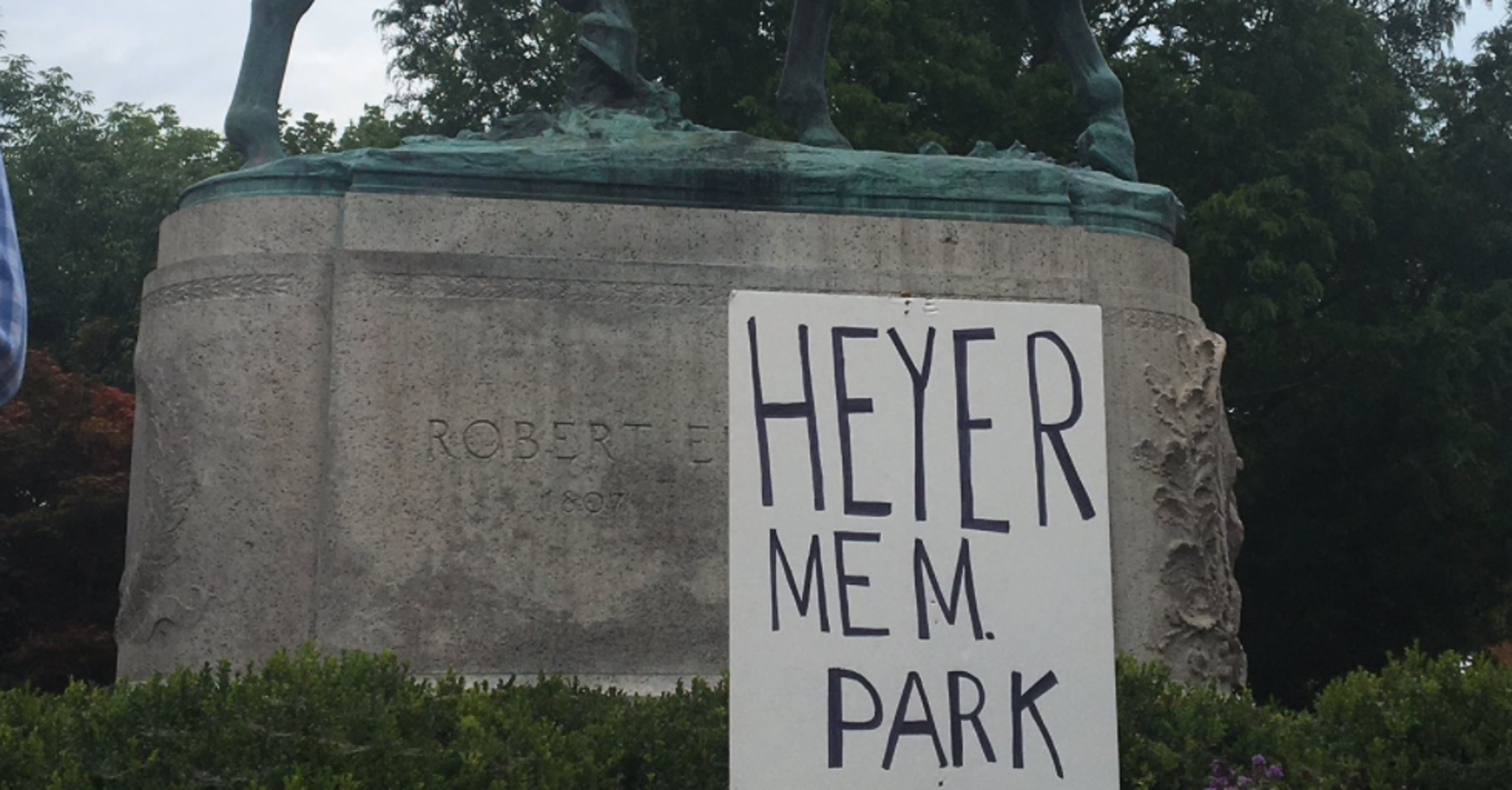
Charlottesville or University of Virginia: The Locations of White Supremacy (2)


In the 1980s, Michael Ryan, a leading social theorist, was denied tenure at the University of Virginia. At the same time, up and coming postcolonial feminist theorist Gayatri Spivak was rejected for employment. In the late 80s, Ryan wrote a piece, for Semiotexte, entitled “Mr. Jefferson’s University”, in which he stressed Jefferson’s being a slaveowner. According to Ryan, the architecture of the University of Virginia had been designed for White Masters, purposefully to deny the body, and to enhance the Master/Slave structure of power. Ryan also noted that much of the town of Charlottesville was built on old slave quarters.

I attended the University of Virginia, later, when Emily Post’s “Manners are how we get along” acted like a purposeful restraint on the possibility of invested exchanges that might not follow specific rules. This social mandate ignored the question: are there only ‘manners’ and violence? Can something else exist? I was told I was un-mannered for saying complicated things, for asking people to listen too hard or read too carefully. My cis-het-man-colleagues were less harshly criticized. These “manners” echo in current discussions of “what happened in Charlottesville”. This echo invokes the socially formalized and reversed restraining order against the traumatized one who says too much. Sometimes the language of trauma, privation and of the imperialized has to be improvised and innovative.

Richard Rorty, the preeminent American philosopher who worked for decades at UVA and with whom I studied, was one of Pragmatism’s greatest advocates. Rorty believed that the world does not need theory, complex notions or any engagement with the analytics of social differences, but only needs the mechanical and usable protocols of science and commerce. His work legitimated a tidal wave of American anti-intellectualism. For decades Rorty held his position in pleasant well-mannered arguments with those of us who saw where his dream was going, and, in the end, he got his wish that theory be seen as useless and be done away with.

When I attended the University of Virginia, the English Department was hostile to most forms of theoretical work, especially those that responsibly carry considerations of the social world.

The famous 90s Hoax by Alan Sokal clarified a multi-decade attack on ‘Theory’ and theoretical methods that analyze historical events and scientific ideas, make predictions, open dialogues, and most importantly enable different approaches. It was a spectacular moment of a well-regarded entity being taken in by ‘fake news.’  It’s time to revisit that discussion. There are millions of ways to misread. If the editors of Social Text were acknowledging their own lack of scientific knowledge and deferring to the title of a decorated scientist, the critique could have been aimed at the acceptance of authority as institutional position rather than the language of theory. The outcome of a critique aimed at positional authority would have been vastly different. It might have opened a dialogue about the toxicity of deference, rather than promoting a widespread attack on diverse schools of thinking suddenly all yoked together as “jargon.”

There has been only one sanctioned way to understand the Sokal affair: that decades of social theory – including identity politics, postmodernism/poststructuralism, materialist feminism, historical materialism, subaltern histories, French sociology, linguistics, hermeneutics, phenomenology, a multitude of anti-imperialist considerations, and many other schools and ideas and combinations thereof – all became de facto fraudulent pseudo-scientific posturing that deserved to be ridiculed. Any iterations of reality outside of the always obviating norm were collapsed into identity politics – as if there were only one way to think social reality against empire. While theoretical work and its difficulty were embattled long before the Sokal Hoax, Sokal managed to produce a sudden, sweeping, universal revaluation of these now fully othered methods. That this revaluation happened could have spawned an enormous study on an instance of the sudden reconfiguration of truth. That so many possible dialogues were so successfully silenced should have provoked more suspicion. Instead mechanical reality has since become the norm. The utility and pragmatism of life have reigned with little opposition: only the technical masters of science are permitted to construct unchallengeable narratives about the world and its progress.

This silencing uber-coherence under the aegis of rational simplicity is White supremacy in its very form and being. Silencing is not what the Antifa are ‘doing to’ Unite The Right. Silencing is being denied engagement with the many variant and possible apparatuses for thinking.

The Sokal Hoax legitimated a major backlash against theoretical work, and seemed to forge part of the ether of shrinking departments and dismissals. Why were questions about being forced to speak Standard English not circulated more? What are the implications of the notion of a ‘transparent’ or ‘plain’ language? Why was this perfect plain simple language with its Emily Post manners of dotted “i”s considered the language of the non-elite? How White is it? Why are some technical languages permitted while others not? Who gets shot down for using big words or complicated sentences? What is wrong with learning, asking questions, reading slowly, looking up words? Why is it discrediting to give an author the benefit of the doubt while reading their work?

All of this has been part of White supremacy’s quiet maintenance program. It was theorists who saw and noted it decades ago, many of whom, including Michael Ryan at UVA in the 1980s, lost their jobs.

The advent of White supremacy in Charlottesville is no surprise, even if it’s not particular to now and not particular to Charlottesville. The University of Virginia has always been a location where White privilege not only perpetuates but strengthens, and where those stamped with degrees help each other into the highest offices. The myth that Universities safeguard histories or that White philosophy engages real questions of ethics was exposed decades ago in the work of thinkers like Spivak and Ryan. Now the substance of their work, their exposes, “call-outs,” concerns and criticisms, are being spectacularly played out.


(Photo Credit: Huffington Post) (Image Credit: The Nib / Nomi Kane)

SB 4 and the Domestic Workers Fighting Against It: “We have a beautiful sisterhood”

Araceli Herrera

Amid the continuous attacks on undocumented immigrants across the United States, on September 25th courts permitted key elements of Texas’ Senate Bill 4 to go into effect, which allows police to work with immigration officials in detaining suspected undocumented people. SB 4 acts as a ban on sanctuary cities, by allowing police to inquire about immigration status during routine traffic stops, keeping undocumented people detained in jails, and punishing officers or city officials who refuse to comply with the legislation.

Opponents of the bill have raised concerns over the bill as infringing on people’s First and Fourth Amendment rights, and the risk of increased racial profiling during traffic stops. With the increase of racist, anti-immigrant sentiment permeating the country, it is a legitimate concern for those who are undocumented who may fear that they are one stop away from being detained and deported.

That concern has not stopped those who most at risk from speaking out against it. Many immigrants living in Texas have raised their voices in opposition to the bill, most notably domestic workers who fear they are most at risk because of the precarity of their jobs.

Araceli Herrera is a domestic worker who cleans houses for a living and was an undocumented worker for years. She was the founder of Domésticas Unidas, a coalition of domestic workers which fights to empower and educate undocumented domestic workers in San Antonio. The coalition is based on camaraderie and sisterhood among groups of domestic workers who met on a bus route before they started their workdays. Meeting on public transportation, the group could assist one another in instances of illness, which prevented a member from receiving her wages, to offering condolences after the death of a relative. When the bus route was suspended, the women organized, fought, and won the restoration of the route four years later. The group’s official motto became, “Cooking, Cleaning, Organizing and Fighting, The World Changes.”

Domestic workers in Texas have been subject to exploitative labor conditions that could be exacerbated if SB 4 isn’t struck down. 59% of all domestic workers are undocumented and 26% of those domestic workers are live-in nannies, placing them at the mercy of their employers. Many are subject to slave like conditions, abuse and exploitation, afraid to speak out because of their employers’ threats of report and deportation.

Live out domestic workers, who rely on having cars and driving to get to their jobs, do so without a license, as Texas has not issued driver’s licenses to non-naturalized citizens in nearly six years. Domestic workers in Texas therefore need to carefully navigate the public and private sphere for fear of deportation in all walks of life.

In response, domestic workers have organized workshops that educate undocumented women on the rights they have during traffic stops. Fear and anxiety about SB4 has persuaded many that ignorance of the law is the wisest route. According to Araceli Herrera, “Many don’t want to know how SB4 will hurt them because they are scared. They go with their little kids and open their eyes when their questions are answered.”  Instead of hoping and praying for the best,  Domésticas Unidas workshops advise undocumented immigrants in Texas to memorize their respective lawyer’s phone number.

Although racist ideology concerning undocumented people has won at the state level in Texas, the sisterhood of Domésticas Unidas forges forward, undeterred. Undocumented domestic workers and supporters have been out in force, marching in San Antonio, and protesting at the State Capitol in Austin. Workers have put their undocumented status on display, fighting against a bill that will put themselves and their families in jeopardy. During such time, they will make sure to provide advocacy campaigns to empower other domestics to fight for their rights against exploitation and abuse at their place of employment as well. In the words of Araceli Herrera, “We have a beautiful sisterhood.”


(Photo Credit: Scott Ball / Texas Monthly)