In Algeria, once again women shouting “Barakat! Ça suffit!” demand freedom!

Friday, March 29, tens of thousands of protesters filled the streets of Algiers and across Algeria, rejecting the Army’s version of “compromise” and insisting on popular democracy. This is the sixth mass demonstration in six Fridays, and there have been other, smaller ones during the weeks. Already, the people have removed the forever-and-a-day President Abdelaziz Bouteflika. What happens next is unclear, as it always is, but what is clear, both from reports and from the histories of Algerian people, is that once again women are key leaders and constituents of this uprising, insurgent demand for real democracy, real equality, and real freedom. Report after report after report after report has noted the presence of women “on the front lines”, the ways in which women have retaken and reshaped the public space. These women are part of a longstanding Algerian women’s movement. Like their sisters in Tunisia, in Algeria, women have always been in the forefront of the democratic struggle, have always been the revolutionary guards.

On March 16, Algerian Women for Movement Towards Equality released a statement-petition: “We are currently experiencing a magnificent, peaceful popular uprising against the political system in place. The massive presence of women in the processions testifies to the profound transformations of our society and demands recognition of women’s rights in an egalitarian Algeria.

“This system has reigned supreme since independence using coercive and autocratic means to defeat any desire for change and democratization. In addition to the destruction of the institutions of the Republic (health, education, justice, culture, etc.), the beggaring of political life, corruption, authoritarianism and social injustices, this system has also implemented a Machiavellian strategy sustaining and reinforcing inegalitarian thinking and practices. Algerian women have paid a high price, both symbolically, formally and realistically.

“The history of the Algerian struggles testifies to the massive commitment of women to all the just and decisive struggles that the country has carried out: the War of National Liberation, the building of the independent Algerian State, the revolt of October 1988, trade union, student and democratic struggles before and after October 1988, the struggle against armed fundamentalist groups during the 1990s, etc. Alongside men, women conceptualized, developed and conducted struggles in the hope of building an egalitarian society and seeing this concrete equality lived during these difficult moments become an indisputable achievement once the goals have been achieved.

“Unfortunately, this promised equality is not yet realized. The massive schooling of girls and its procession of competent graduates, our presence in the world of work as well as the legislative and regulatory changes wrenched by decades of struggle, have not yet taken women out of their minority status in society, which remains patriarchal, and in institutions.

“The active and unconditional participation of Algerian women in the February 22nd Movement encourages us to reaffirm our determination to change the system in place with all its components, including its sexist, patriarchal and misogynistic aspects.

“On March 16, 2019, a women’s meeting was held in Algiers. After a debate and a wide consultation, it is retained as follows:

• We, the women who signed this declaration, are convinced that the construction of our common future is nothing without full equality between citizens, regardless of gender, class, region or belief.

• We must continue to be present everywhere with our colleagues, our neighbors to maintain this beautiful diversity in all processions but also to make more visible our demand for equality.

• We decided to create a feminist space that will be positioned every Friday at the portal of the Central Faculty of Algiers.

• We support and encourage similar initiatives throughout the Algerian territory and fully subscribe to all statements that consider equality between women and men as one of the priorities for the change of the current system.

• We call on all women who recognize themselves in this call to join their signatures to ours, to integrate feminist spaces where they exist or to initiate them when conditions permit, and to participate in our next meetings.

• We call to take into account the equal representation of women in any citizen initiative for the exit of this crisis.

• We condemn any act of harassment during demonstrations.

Algiers, March 16, 2019” (You can read the original and sign the petition here.)

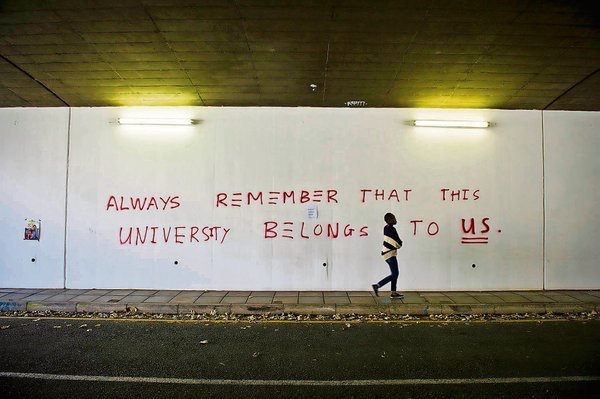
On February 22, 2014, just before Bouteflika was to formally announce his candidacy, Amira Bouraoui– a gynecologist, mother of two, “ordinary woman” – showed up at the gates of her local university, stood there alone with a placard, and said, STOP. She said, Barakat! Ça suffit! It’s enough! Around the world, people heard a woman saying, yet again, “¡Ya basta!” Within two days, that singular action sparked a movement. For the past ten years, the Collectif Féministe d’Alger(the feminist association of Algiers) has been organizing for women’s dignity, rights and power. 

Five years later Amira Bouraoui is joined by 83-year-old Djamila Bouhired, a guerrilla combatant in Algeria’s war of independence; 17-year-old ballet dancer Melissa Ziad;  Zoubida Assoul, president of the Network of Arab Women Lawyers; Louisa Hanoune, Secretary General of the Workers Party; and hundreds of thousands of women of all ages and from all sectors of the country. They carry their decades and centuries of resistance into the spaces they seize and create. The future is now. 


(Photo Credit: NPA2009 / DR)
On the funding cuts looming over Women’s Studies Centers across India

I love India; it is my home, a very old home that has seen and endured so much. Like most old homes there are many cracks signaling structural and foundational damage, the kind of damage which takes more than a trip to Home Depot on a Sunday afternoon. As someone who doesn’t live at home anymore, I have seen it from outside and have seen its beauty from afar. I am a transnational Indian woman whose sense of belonging is shared by the United States and India. With that in mind, I want to share my views on the funding cuts looming over Women’s Studies Centers across India.

Research and the women of India have a long history; she has been the subject of civilizing missions and she has been the subject of “white men saving brown women from brown men” campaigns. She is included in a group of sisters who inspired Linda Tuhiwai Smith to say that research is a dirty word. These are different ways of emphasizing why Women’s Studies in India is important. We need to acknowledge the vital role Indian researchers play in bringing to light the issues that are faced by girls, young women and women who have been invisible for far too long. Their stories need to be told; their issues need to be addressed. 

We are all familiar with funding cuts, and we know every such decision sends a message about priorities. What is the message with this current proposed decision? It says: “Yes, of course, we care about Women’s Empowerment, we have snazzy catchy slogans about the importance of the girl child. However, we are also afraid of the kind of research you conduct, the questions you ask of us, the government, and also the changes you wish to see through your research. You take aim at patriarchy, capitalism, and fundamentalism. We aren’t sure if we want that.”

The proposed decision to cut funding is signaling to the educated Indian woman and to the world that women are not a priority. At the end of the day, we belong to the world’s largest democracy, a political system in which votes count more than research initiatives. This is especially true if the research focuses on shedding light on the systemic problems that sustain and maintain attitudes that place different values on lives based on gender. If implemented, these cuts propose to paint over the problem and create an illusion that women and women’s issues matter because women vote and their votes matter.Votes are generated though the messages of empowerment and government sponsored  women’s empowerment campaigns. For example, the most recent such campaign is called ‘Beti Bachao, Beti Padhao” which translated means “Save the daughter, Educate the daughter”. The irony of the slogan is not lost on me, nor is it lost on researchers and future scholars who want to make a difference. According to news outlets, the decision is not final, a final decision will made after April 5th regarding this issue. However, they are also taking suggestions about how to resolve this issue. If the women of India had the ability to speak as a collective, I wonder what her message would say?


(Photo Credit: She the People)


March 25: The Triangle Shirtwaist Factory Fire, working women’s safety, and why we don’t prosecute the rich


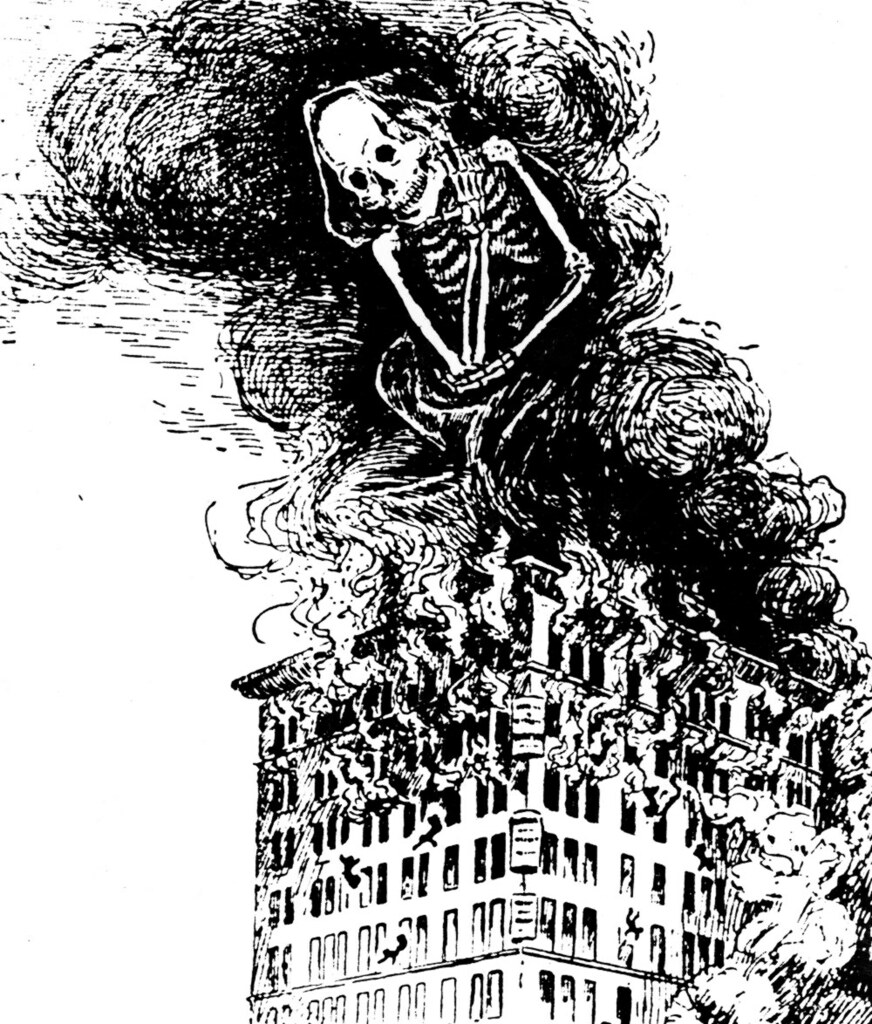
March 25th was the 108th anniversary of the Triangle Shirtwaist Factory Fire in New York City, an event that killed 129 immigrant women (in total, 146 died) and has been remembered as one of the worst tragedies in American history. As immigrant men and women funneled into Ellis Island and settled in New York City, many men and women found jobs in factories, and industrial work. The Triangle Shirtwaist Factory took up the top three floors in Greenwich Village. It was described as a sweatshop—employing Jewish and Immigrant women—creating button-down blouses in close-quarters for 12 hours each day, for a meager $15 a week. 

The safety of the women workers was never considered; it was never regarded as a concern. The women worked in close corners, with a corroded fire hose, no sprinkler system, an unreliable elevator (able to hold only 12 people and broken every four trips). The two staircases leading to the street had a locked door to access them, and the fire escape was too narrow for the 600 workers to file out quickly. 

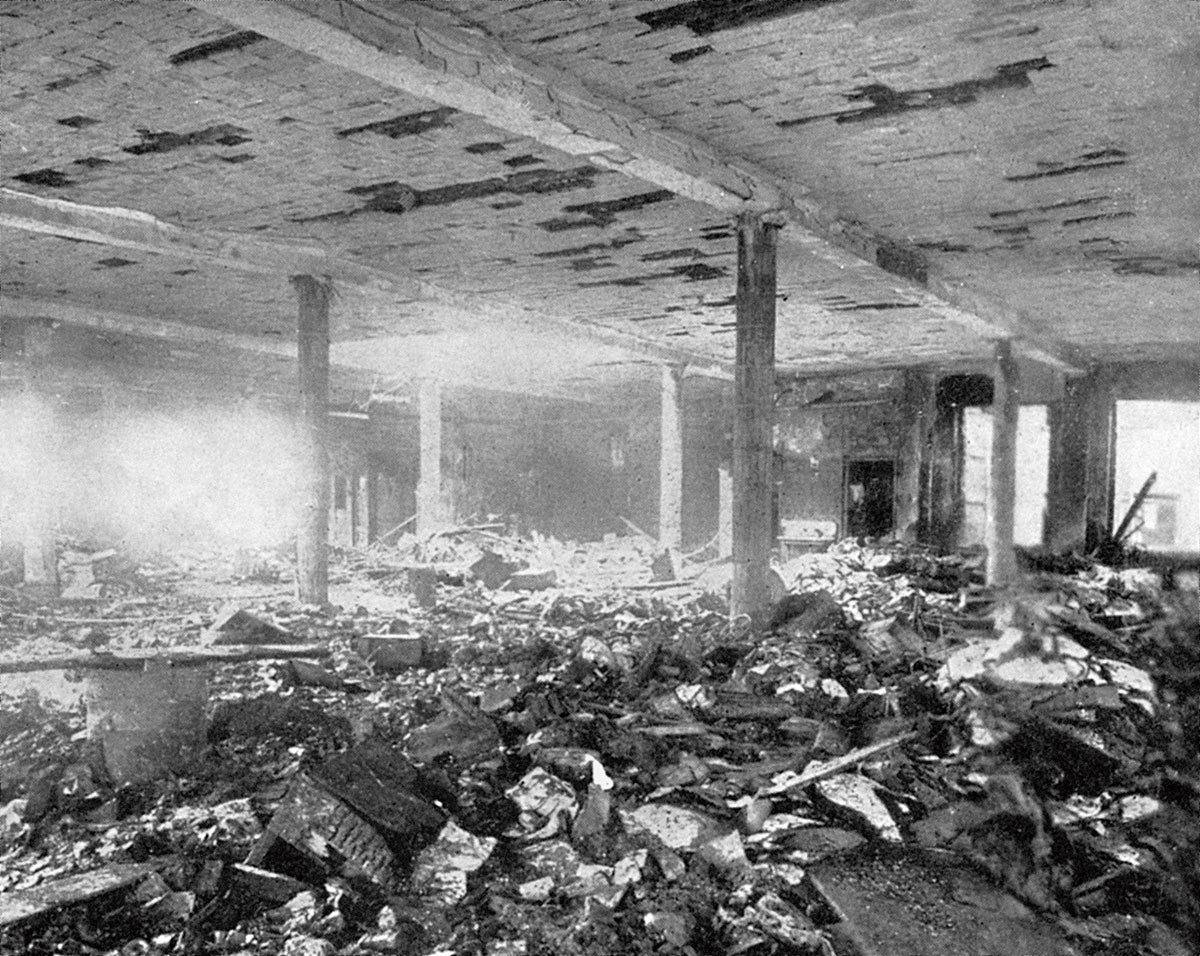
On March 25, 2011, a fire broke out. With doors and fire exits locked and the sole fire escape broken as workers fled, firefighters were unable to enter the building and their ladders did not reach top floor. The age of the murdered women ranged from 16 to 23 years old. 

With outrage mounting and protests from workers, unions, and progressives, New York state investigated factory conditions and implemented workplace safety rules. And yet there was no justice for the deaths of the women. At best, the factory owners were negligent with the conditions of the women; at worst, corporate greed prevailed, and the owners should have faced manslaughter charges. Neither happened.  

The victims’ (mostly women, remember) lives amounted to nothing more than $75 per person, paid to families that sued the company. Justice was not for those workers and their families; justice is only for the extremely wealthy who didn’t give a care for the safety of the women creating excess in wealth for themselves. 

To this day, safety conditions for women workers remain a major issue in the United States and around the globe. Sweatshops in third world countries are still thriving, with women exploited everyday to create cheap merchandise to sell to Imperial countries. Incarcerated people are forced to work with poor conditions for less than what factory workers were getting a week. Large corporations are not held accountable for their poor conditions unless they are publicly shamed for their exploitation and abuse of workers. Even then, they’d rather launch a PR campaign than implement safer labor conditions. For the rich, working-class and poor women’s lives mean nothing; it’s cheaper to pay a token after the tragedy.

After the fire


(Image Credit: 5 Minute History) (Photo Credit: Smithsonian Magazine)

What happened to Annabella Landsberg? Just another agonizing death in HMP Peterborough

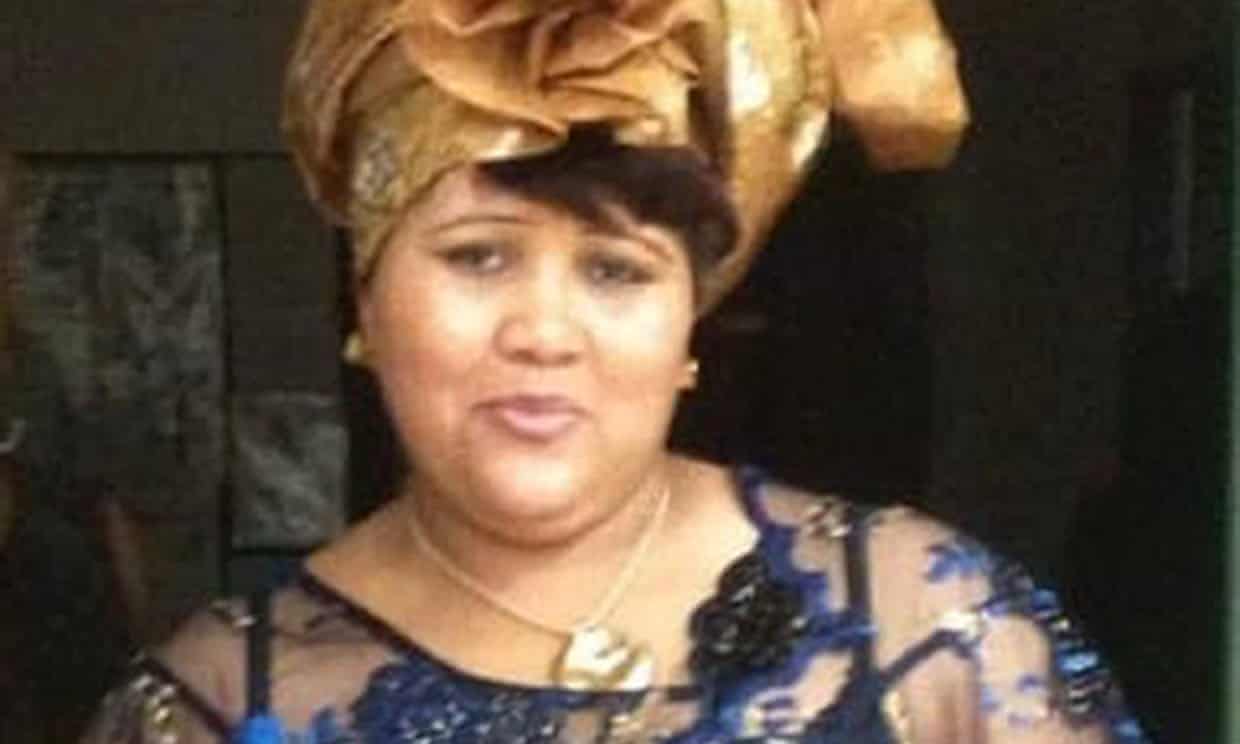
Annabella Landsberg

Annabella Landsberg died, or was executed, September 6, 2017, at HMP Peterborough, in Cambridgeshire, England. Two years later, an inquest is taking place. Annabella Landsberg fled Zimbabwe, following a gang rape. She was HIV+; she was also diabetic. At the time of her death, Annabella Landsberg was 45 years old and the mother of three children. The story of her death `begins’ September 2, 2017. On September 2, Annabella Landsberg lay on the floor, saying she couldn’t get up. She grabbed at the sink, trying to stand. When an officer walked in, she grabbed at the officer’s leg. A second officer pressed the alarm. The staff decided that Annabella Landsberg wasn’t having difficulties standing but rather was being “obstructive”. They left her on the floor. That was 6 pm, September 2. The staff left Annabella Landsberg on the floor, without food or medication, until 3 pm the next day. Throughout that time, staff report that Annabella Landsberg was “moaning and mumbling incoherently.” No one did anything. Finally, a nurse came in, told Annabella Landsberg to stand up, called her “pathetic”, threw water on her, and left. A second nurse came in, decided that perhaps Annabella Landsberg wasn’t malingering, called the ambulance and off she went. On September 6, she died … or was executed. Just another day in the hellhole that is HMP Peterborough.

Since its opening in March 2005, HMP Peterborough has been touted as a model private prison. Sodexo Justice Services `manages’ HMP Peterborough, which houses, or contains, both men and women. The women are mostly remand prisoners, awaiting trial. Everyone is supposed to be short-term, low level, and generally available to `rehabilitation.’ Peterborough brought to the United Kingdom, and in large degree to the world, “payment by results,” in which the prison corporation would be paid based on prisoner re-entry results. Some in England wondered if Peterborough might be the way forward, the path out of the neoliberal prison forest. Some in the United States did as well. It wasn’t. In 2017, payment by result was dropped and replaced with something even worse.

From September 11 – 27, 2017, days after Annabella Landsberg died, the Chief Inspector of Prisons conducted an unannounced inspection of Peterborough: “Most women only stayed at Peterborough for a few weeks and in our survey 89% said they arrived at the prison with problems; 65% of women said they felt depressed and over a quarter said they felt suicidal. Worryingly, 66% said they had mental health problems … We were particularly concerned about safety, and this is the first women’s prison in several years to have been assessed as ‘not sufficiently good’ in this area … Since our last inspection … outcomes had deteriorated in Safety and Respect.” The Inspector described the deteriorating conditions: “Use of force was far too high at more than double what we usually see in women’s prisons; we saw examples where not every opportunity to de-escalate the situation had been used. Use of strip- searching was also too high, which was particularly disappointing given the heavy investment in training staff about how past trauma can be reignited in the prison setting.” 

In 2013, Nadine Wright, a woman living with mental health illnesses, heroin addiction, and isolation, did not receive her benefits, and so was left barely living, desperately poor, somewhere below hand-to-mouth. Nadine Wright stole some food, was arrested and sent to Peterborough. Nadine Wright was pregnant when she was arrested. While in her cell, with a nurse in attendance, Nadine Wright went into labor and suffered a miscarriage. The nurse then left the cell. She left the fetus in the cell. No one came to clean up the cell. Nadine Wright had to clean up her own blood: “There was blood everywhere and she was made to clean it up. The baby was not removed from the cell. It was quite appalling. It was very traumatic. She only received health care three days later, after the governor intervened.”

The line from Nadine Wright to Annabella Landsberg is direct. What crime did Nadine Wright commit that she should have been tortured so? Attempted survival. What crime did Annabella Landsberg commit that she should have suffered the contemporary version of being drawn and quartered? Attempted survival. The staff carried out the crimes committed in HMP Peterborough but they were designed and committed by the State. How long, and how many more iterations of Nadine Wright and Annabella Landsberg, must we `discover’ before something is finally done?


(Photo Credit: The Guardian)

The wealthy bribe their way in the world; the poor just go to jail

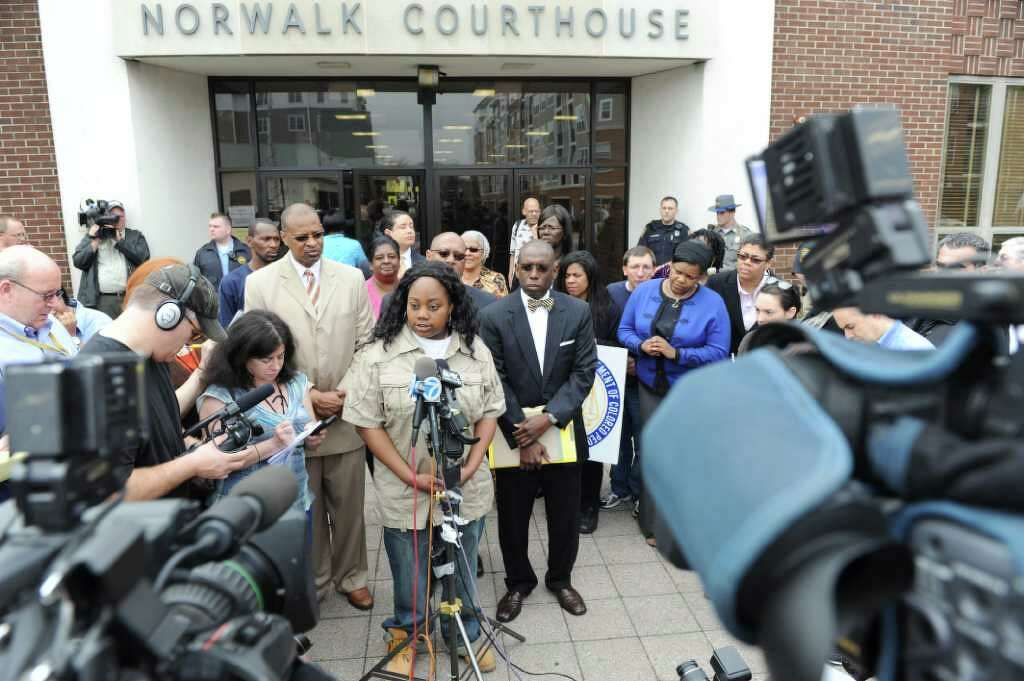
Tanya McDowell addresses reporters

The newest college admissions scandals bring into focus the distorted and privileged ways the rich bribe their way to make sure their children get into prestigious colleges and Ivy League schools. Some of the more ridiculous attempts included a teenage girl who did not play soccer becoming a star soccer recruit at Yale for $1.2 million; a high school who was falsely deemed to have a learning disability so that he could have a proctor at a standardized test to get the right score to attend the University of South California for $50,000; a student whose parents paid $200,000 so that she could win a spot on the U.S.C. crew team, without any experience in rowing, by having another person in a boat submitted as evidence of a nonexistent skill. 

The outrageous attempts go on and on, in a scandal that led federal prosecutors to charged 50 people to buy spots in the freshman classes at Yale, Stanford and other major-leagued schools. Those wealthy parents included Hollywood celebrities and prominent business leaders, with more indictments to come. Top college athletic coaches were also implicated for accepting millions of dollars to help admit those undeserving students to those high-profile schools. And while the theoretical punishment carries a penalty of 20 years, it is highly unlikely that these wealthy people will face any serious prison time. They’ll get lighter sentences or alternative punishments: “The judge could actually impose a sentence of probation in cases like this. He could impose community service, public work service, or home confinement. There’s a wide range of options available to the judge.” 

Meanwhile, we continually imprison Black and Brown parents for longer periods of time for lesser offenses, including nonviolent drug offenses, minor misdemeanors, or something as simple as not being able to post bail, despite having committed no crime (16-year-old Kalief Browder was held at Rikers Island for three years because, accused of stealing a backpack, he couldn’t afford the $3,000 bail to get out).

Where is the sympathy and compassion for these individuals? Where is the leniency for those who have not committed a violent offense? If you’re not rich, there is no sympathy, compassion or leniency. None.

Consider Tanya McDowell, a homeless Bridgeport, CT mom who was arrested and charged with first-degree larceny for enrolling her son Andrew in a better school in neighboring Norfolk. McDowell eventually took a plea deal and was sentenced to five years in prison for sending her child to a better school district. To give her child a better education. In a hyper segregated country where there is nearly $23 billion more in state and local funding for white schools than predominantly nonwhite districts.  

It’s time for us to acknowledge that both prison and education have been set up so that only the wealthy and white get the best services. Wealthier members of society can “donate” their way into having children attend, even if they don’t deserve it; the wealthy can leave prison and serve house arrests in large mansions or pay lawyers to never “suffer” any kind of punishment whatsoever. To be poor means to be imprisoned for wanting your child to succeed and never being able to pay your way back out. 


(Photo Credit: Kathleen O’Rourke / Stamford Advocate) (Image Credit: A Different Drummer)

Japan joins the list of nation-States `apologizing’ for forced sterilization

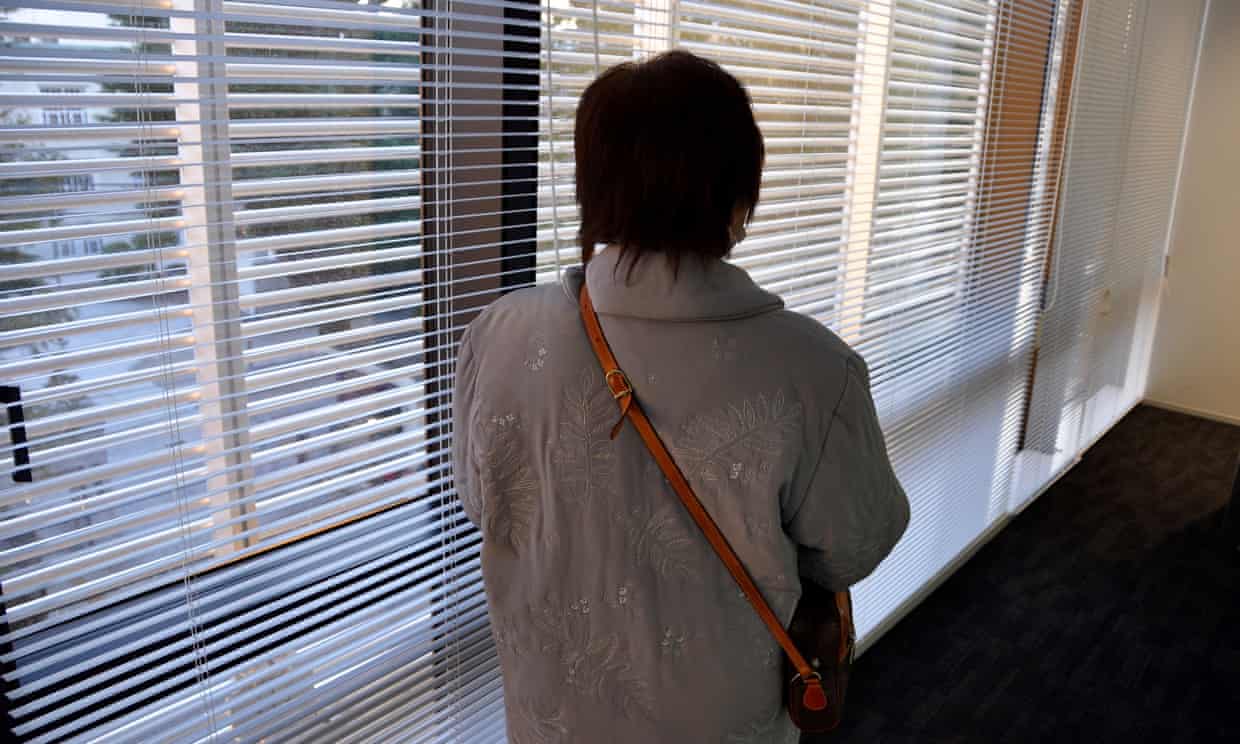
When she was 16 years old, Junko Iizuka was forcibly sterilized.

On Thursday, March 14, all major parties in Japan agreed to pass a measure, probably in April, that would “deeply apologize” and offer compensation to victim-survivors of forced sterilization. The compensation would be a one-off payment of around $28,700. Now we know the value of life in Japan … and elsewhere. Survivors and their supporters and advocates argue that the compensation is way too little and way too late. Japan suspended its 48-year program of sterilizing those who might produce children described as “inferior”, under a law called the Eugenics Protection Law. The youngest known victim was 9 or 10 years old; 70% of those sterilized were women and girls. Since 1996, women and supporters have organized and demanded recognition, compensation, apology, dignity and justice. It only took 23 years to arrive at something approximating any of their demands, and that was largely due to a barrage of civil suits initiated last year. Forced sterilization is a formative element in contemporary nation-building, and Japan is not an outlier in this matter.

From 1935 to 1976, Sweden sterilized womenit deemed socially or racially inferior. `No one’ know about this program until it was revealed in 1997. In 1999, Sweden agreed to pay victim-survivors a one-off payment of $22,6000. Then, in 2012, it was `revealed’ that Sweden required transgender people to undergo sterilization. The law requiring sterilization was passed in 1972, but “no one” knew. In February 2012, thirty years after its passage, the law was repealed

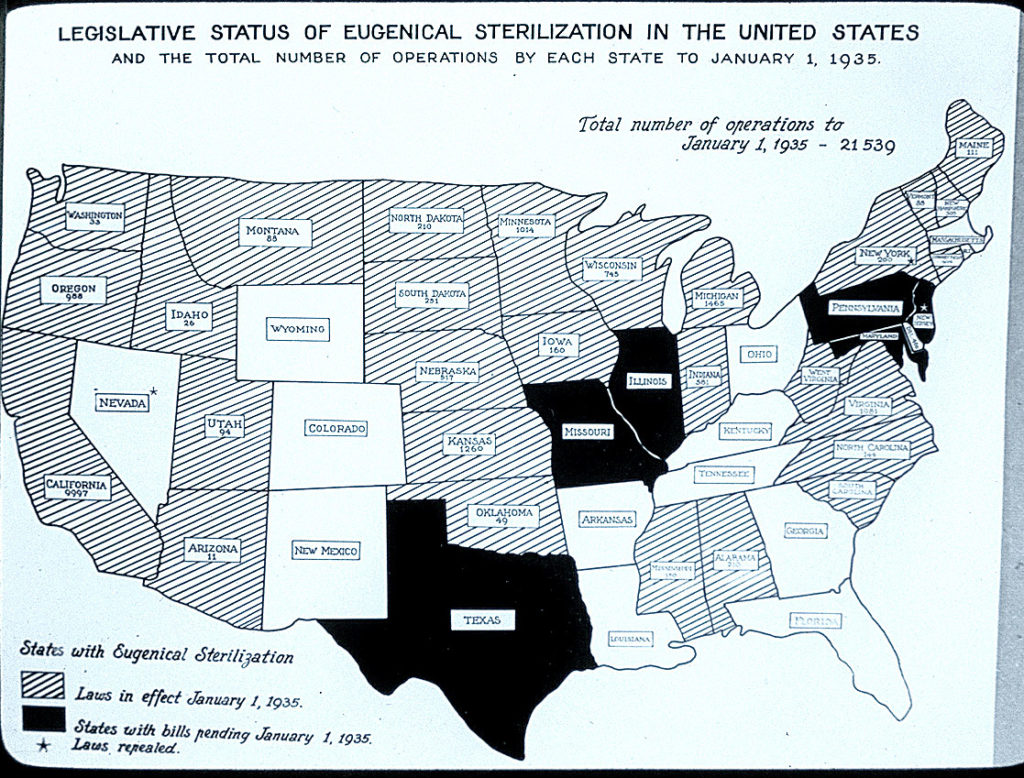
Japan now joins the list of nation-States dealing, and not dealing, with their histories of forced sterilization: PeruSouth AfricaNamibiaIndia, to name a few that have addressed the issue in the last few years. Sometimes the ostensible reason is health care, particularly HIV; or population control; and the list goes on. No matter the immediate explanation, the reason is always “protection.” In the past few years, in the United States, CaliforniaVirginiaNorth Carolinahave addressed their histories of forced sterilization. The United States has not addressed its history of forced sterilization of Native women. Nor has Canada.

The Japanese government will not say if forced sterilization operations under the now-defunct eugenic protection law were unconstitutional”. 

Every program of forced sterilization had a justification. Every later discovery offered an alibi, most of which argued `the times were different’. That was then. The problem is that now is then, as then was now. Forced sterilization of women and girls is baked into the formation of citizenship in the modern nation-State, every single one without exception. It is the signature of nation-State modernity. As long as the State produces and reproduces hierarchies of citizenship, that’s how long the nation-State will find ways to accommodate forced sterilization of women and girls. For `our’ protection and security. There is no apology deep enough to address that constitutive and absolutely ordinary atrocity.


(Photo Credit: Daniel Hurst /The Guardian) (Image Credit: PBS / Truman State University)

Yet again, we face, or don’t, the fearful symmetry of white supremacy

March 15, 2019, and the news, once more, is terrible. In Christchurch, New Zealand, 49 Muslim worshippers massacred in the name of white supremacy. Off the coast of Morocco, 45 migrants drowned in the Mediterranean. Three years ago, all that was human drowned in the seaall that was holy had been profaned, and we thought, we hoped, we were at last compelled to face with sober senses our real conditions of life, and our relations with our kind. Seven years ago, we thought it might be too late to sing songs beyond mankind. We thought there had to be songs to sing, and that those songs had to begin by turning swords into ploughshares, immediately, right away. And then we moved on, which is to say we went nowhere.

Today, the news and much of the world is filled with discussions of “white supremacy.” The butcher of Christchurch was “deep” into white supremacist culture. The drowned migrants, many of them women and children, had to take to the sea because Europe (and the United States and Australia) have declared a “just war” on migrants of color who are represented as an “invasion” at the border and in the homeland.

There are no more songs to sing; even silence fails us, as we fail silence. Here’s how the news from Christchurch was contextualized, “Christchurch, the South Island’s largest city, which is known to have an active white-supremacist subculture.” Known to have an active white-supremacist subculture. What kind of knowledge, what kind of knowing, is that which knows and does nothing? White supremacy is hate; white supremacy is a hate crime. It is not a preference; it is a deadly assault always already in motion. 

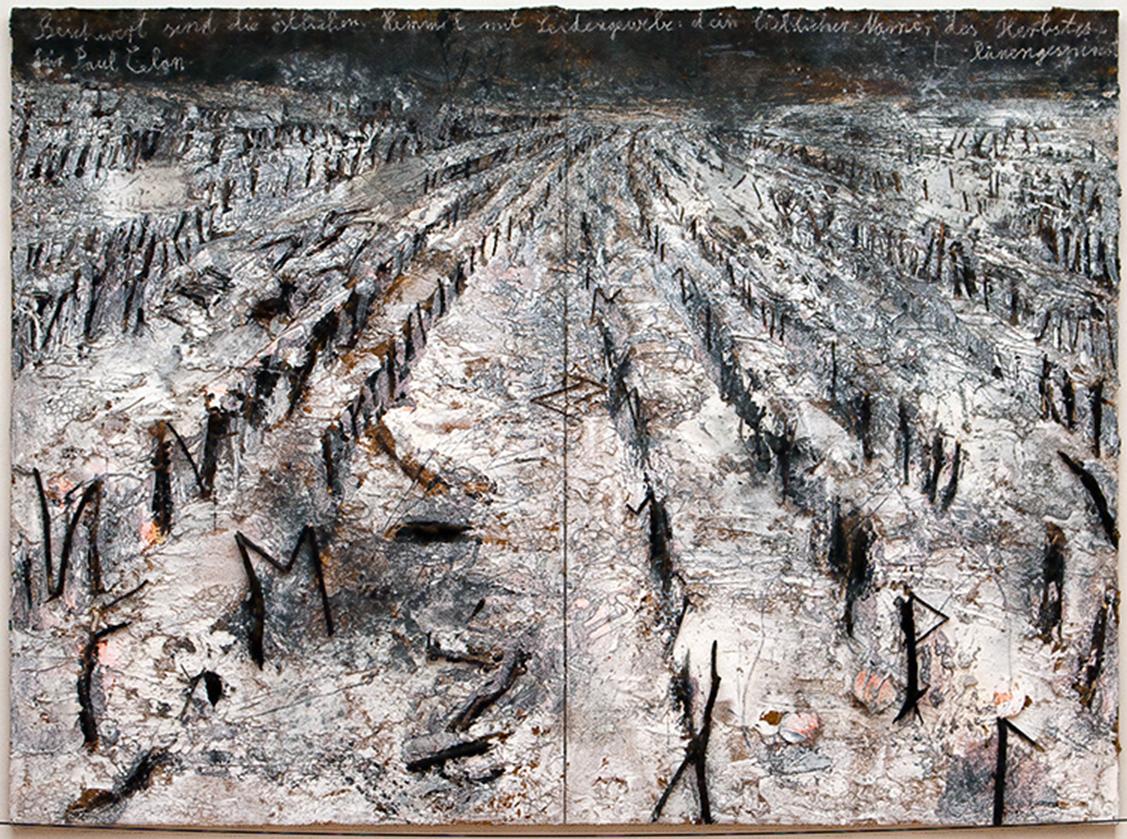
Having survived, at times regretfully, the Holocaust, Paul Celan tried, and failed, to turn the pain, horror and anguish of mass violence into the possibility of understanding. Poetry is what emerges from that failure. May it not be too late.

Whichever stone you lift

Whichever stone you lift – 
you lay bare 
those who need the protection of stones: 
naked, 
now they renew their entwinement. 

Whichever tree you fell – 
you frame 
the bedstead where 
souls are stayed once again, 
as if this aeon too 
did not 
tremble. 

Whichever word you speak – 
you owe to 
destruction


(Image credit: Meditatioprodomo)

Regarding university admissions racketeering

Universities should be free for students. Teachers should be paid a living wage and their jobs and safety should be protected. Universities should not be hierarchized as better or worse. Reading history, and the history of ideas and talking about social difference and differences of practice between people, cultures, thought, disciplines, eras, being (and so on) should be given more space, not less. Education is a right, not a privilege. The time and a special space to talk about how to make a more human, generous, habitable, livable world, ie one that is not murderous, disciplinary, controlling, violent in the name of profit or anything else, is a right not a privilege.

Were we to have an actual education system, one that did not require individual funds, one that enabled accountability, empathy and mutual transformation rather than superficial displays, it would not be possible to monetize the sub-standard grades of rich people. 

For many reasons the collapse of the current education system as any kind of generator of thinking or learning is intensifying. I invite especially those of us who have worked and lived as adjuncts, or have multiple degrees but now, or at some other protracted time, no job, or who felt trapped by material and immaterial cycles of violence in the University, to think about what kind of place of learning we might want to create and build.

If there is to be a different world, learning itself will need a new shape, not one patterned from moving up in ranks, being evaluated, or being valued as rich and successful, or accumulating without giving empathy via being watched as a spectacle in some form of “fame.” 

I want to ask: What didn’t we get? How can we help each other get it now?


(Photo Credit: Verso)

Women farmworkers of Immokalee have spoken: “We are tired of excuses! We want justice!”

Lupe Gonzalo

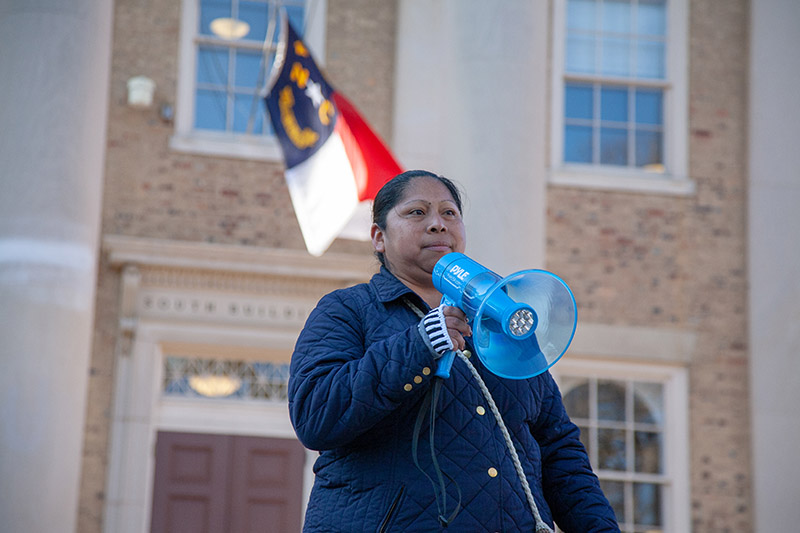
Last Friday, March 8, women and allies commemorated International Women’s Day, a day that honors the March 8, 1917 march of over 100,000 women workers through the streets of St. Petersburg, calling for the overthrow of the czar. Four days later, the czar was gone. From the outset, International Women’s Day was International Women Workers’ Day. The women farmworkers of Immokalee, Florida, like women farmworkers around the world, know this lesson in their bodies as well as their days and nights, and they teach it every single day. This year, as in years past, they are taking that lesson to school, to universities in North CarolinaOhioMichigan and Florida, to be exact. Their message is clear and direct. As Lupe Gonzalo, a farmworker organizer leader of the Coalition of Immokalee Workers, told the assembled at University of North Carolina Chapel Hill: “You cannot claim light and liberty while doing business with companies like Wendy’s… This message is for all of the university administrations: We are tired of excuses! We want justice!” We are tired of excuses! We want justice!

For over twenty years, the Coalition of Immokalee Workers has been organizing to create justice in the fields. They have fought against slavery in the fields, and in so doing established anti-slavery and anti-trafficking networks. They have fought against sexual violence and exploitation in the fields and developed some of the most stringent and effectively monitored codes of conduct in the agricultural industry anywhere. The Coalition began its Campaign for Fair Food in 2001, and in 2011, signed its first formal Fair Food Program agreement, this with the Florida Tomato Growers Exchange. That first agreement included “a strict code of conduct, a cooperative complaint resolution system, a participatory health and safety program, and a worker-to-worker education process.” From the outset to today, the Coalition of Immokalee Workers has insisted that workers have to be in charge of the pursuit of dignity and justice. At the core of that insistence has been the women members of the Coalition of Immokalee Workers who, from the outset, argued that every so-called watershed moment had to be understood as “a movement, not a moment”. From their campaigns to bring growers, grocery chains and restaurant chains to the table, the women of the Coalition of Immokalee Workers has insisted that labor rights are women’s rights are women workers’ rights. The companies that have heard, or were forced to hear, that argument include Yum! Brands aka Taco Bell, McDonald’s , Burger King, Whole Foods, Subway, Bon Appétit, Compass, Aramark, Sodexo, Trader Joe’s, Chipotle, Walmart, Fresh Market, and Ahold USA. 

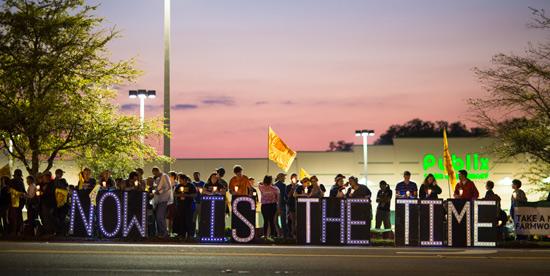
For the last few years, the Coalition of Immokalee Workers has been pushing Wendy’s to come to the table. Their campaign, Boot the Braids, has called on universities and colleges to join the boycott of Wendy’s. This month’s iteration of that campaign is the 4 for Fair Food Bus Tour, targeting universities in four states. Thus far, the University of Michigan announced that Wendy’s will not return to campus until it signs and abides by the Fair Food Program standards.From the beginning of the Wendy’s campaign, and before and beyond, women farmworker organizer leaders have insisted that every part of the labor system must engage with the dignity of women workers as part of the struggle for dignity for all workers and as part of the struggle for dignity for women workers in particular. This is what the Coalition of Immokalee Workers means when they discuss worker-driven social responsibility linked to worker-to-worker popular education, research and leadership formation. Again, you cannot claim light and liberty while doing business with companies like Wendy’s. That message is for everyone: We are tired of excuses! We want justice! NOW is the time!


(Photo Credit 1: Coalition of Immokalee Workers) (Photo Credit 2: Forest Woodward / Facebook)

The politics of suffering, a growing project in Europe

In France, the yellow vests movement, some of whom are inspired by nationalistic racism and others need community and support, continues to monopolize the attention of social media, forging a large variety of opinions. Some talk about the suffering that pushes them to hit the roundabouts, others talk about shattering the government, all are the product of the neoliberal austerity creed. 

The trigger was the implementation of a new tax on diesel fuel that was going to impact mainly the population who has older cars in the outskirts of big city suburbs and the rural population. 

Additionally, diesel fuel was once subsidized to serve the interest of oil companies and is now officially identified to be responsible for premature death due to deadly micro particles released in the air after combustion. 

Should the concerns be also about climate change with the building of a disaster? Should the perpetuation of economic interests be questioned? Instead of asking these questions, the official discourse from a large political spectrum revolves around consumer purchasing power and unemployment. In this European setting, the term suffering is largely used to depict a large range of social situations. 

What does it mean to be suffering in France and elsewhere? Who is suffering? 

Here is Trump’s understanding of the notion of suffering: “On behalf of our nation I want to apologize to Brett and the entire Kavanaugh family for the terrible pain and suffering you have been forced to endure.” The suffering endured by Salvadorans, Hondurans and Guatemalans who were facing death at home and now are facing repression going north does not qualify as suffering for Trump and his cronies. 

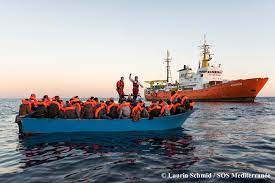
In Europe, the suffering of 49 migrants who had been rescued by humanitarian ships in January has been ignored. This came after the closure of many ports of access, decided arbitrarily by the Italian Government against sea-rescue organizations. These organizations, such as SOS Mediterranée, were created after the end of Mare Nostrum to compensate for the absence of official rescue ships. Now, it is the turn of these non-governmental organizations to be dismantled by the authorities. 

The United Nations Refugee Agency, UNHCR, just released a report about refugees/migrants arriving in Europe and at European borders. Reports come with numbers. With an estimated 2,275 people drowned in 2018 in the Mediterranean Sea, the year is a record of deaths compared to the number of arrivals in Europe.  More than 1500 people have already died attempting to reach Europe since the beginning of 2019. This situation casts doubt on the decisions by nation-states to remove rescue ships and close land routes rendering traveling to safety very dangerous. 

The UNHCR’s Director Pascale Moreau declared: “With the number of people arriving on European shores falling, this is no longer a test of whether Europe can manage the numbers, but whether Europe can muster the humanity to save lives.”

Saving lives would be a good idea, but there is a good deal of suffering awaiting the saved lives when they face asylum process. Incarceration of migrants is on the rise in Europe; that is the project of the Italian minister of interior, Matteo Salvini. 

There is another way, leaving them in the streets with the increasing homeless population, thanks to neoliberal austerity. Women are particularly vulnerable when homeless.  Every year, the Abbé Pierre Foundation sarcastically rewards the best initiatives to impede the homeless from finding a place to rest in cities. The award called “Les Pics d’or” (golden picks) goes to municipalities, metro stations, even banks. They render public spaces uninviting and uninhabitable with all kinds of devices, picks, individual seats instead of benches, rocks, and massive planters. And then there are the police raids slashing tents given to migrants by humanitarian helpers. 

So much work done by the neoliberal technocrats to make the Wretched of the Earth  suffer, while the richer are thirsty for help and assistance for their leisured life. Although it seems cliché, this reality of asymmetry is well described in the most recent World Inequality Report.   

There is no crisis of migration: only 3% of people migrate, 97 % stay where they are, 70% of African’s migrants remains on the continent, and, in 2017 only 10 % of migrants migrated for economic reasons. In France, only 0.5% of the population is undocumented; although they are eligible to free health care some are dreaming to create administrative devices to impede their access to health care services.

So much confusion about suffering generated by economic austerity, migration.  Let’s remember:  “Sapiens Africanus was born not in a lattice of sharp borders but rather an open ecosystem, punctuated by climates, shortages, abundances, droughts, and floods, ruptures and junctions, alliances, parasitisms, antagonisms, sharing, and exploitation….” Patrick Chamoiseau in Migrant Brothers, imagine migrant sisters! 


(Photo Credit: SOS Mediterranée / Laurin Schmid)