(we) laugh it off

(we) laugh it off

we laugh it off
democratically
(even though
there was none
back there in 1976)

we laugh it off
myself and a folkie
a work colleague into 
Dylan Baez and Jim Croce 

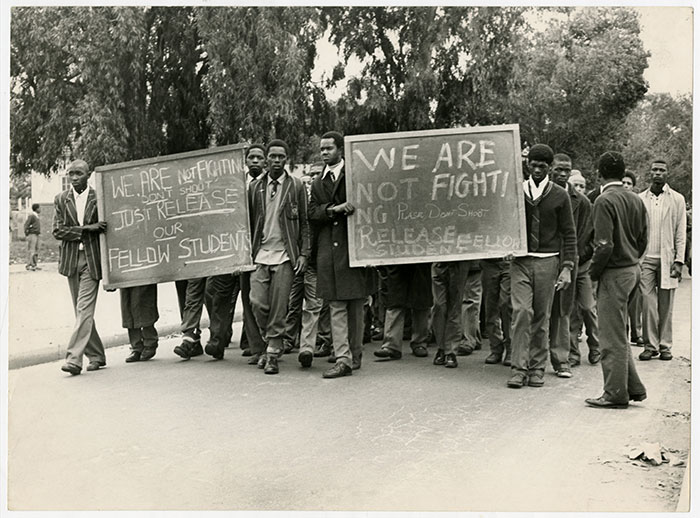
June 1976 it was
circa the 16 and 17
a stay-away from work
(my first it was)

a manager fellow it was
(we are being genteel here
as he was harsher labelled)
suggesting we get
a police escort to work

we laugh it off
explaining to him
that they oversaw
apartheid and the like

(in the name of law and order
keeping us safe from the red peril
keeping us safe from the yellow peril 
keeping us safe from the swart gevaar)

June 1976
the Soweto uprising
the Soweto student rebellion
(there are those who
called the event a riot)

many exiled in its wake
before and after

Youth does it matter 
to you today
what this political holiday
was all about

Will it make tomorrow
any the better if you did


(Photo Credit: South African History Online)

Nigerian workers and the work of Penelope

This season of national anomie is not the best of times for Nigerian workers. Emasculated, apoplexy, pauperized barely describe their present predicament. The palpable enormity of despondency suffusing Nigeria was evinced by the fact that the recent announcement of a new national minimum wage was met with stark indifference, undisguised apathy and the ominous feeling that it can neither palliate nor improve their economic situation.

The gloom and hopelessness enveloping the average Nigerian worker has its roots in the financial and psychological haemorrhage Nigerians have suffered over the years, exacerbated by decades of poor socio- economic policies, inept leadership, political quagmires and pillaging of Nigeria’s national treasury. With the total cabalization and cartelization of the various means, levers and instruments of power, majorities of excluded Nigerians have had no chance, respite, reprieve or breathing space in the economic pogrom heaped on them. In the early nineties, the common refrain was that poverty ruled over Nigeria’s landscape like a colossus. In 2019 Nigeria has not only become the poverty capital of the world, poverty and its attendant mentality have been ingrained in our minds like myths immemorial.

Nigerians toil relentlessly daily to overcome an array of obstacles that have been erected against their progress. Nigerians strive to acquire additional skills and degrees to improve their situation in an economic system that only makes them slave harder, longer and more for a tokenistic existence. While many  Nigerians pull themselves up by their bootstraps, hanging precariously on the socio-economic cliffhanger, political office occupants swim in luxury. That is why the assurance member of the House of Representatives who recently became speaker in the current dispensation nonchalantly rubbed it in the face of Nigerians by buying his wife a 100Million naira car.

Work is central to people’s wellbeing. In addition to providing income, it’s also an important psychological boost that enhances people self-worth, promotes social contacts and increases national productivity. The impact of qualitative work on the accomplishment of worker aspirations and galvanizing socio-economic and political advancement is unquantifiable. UNDP noted that work contributes to public good, and that human beings working together increase material well-being and accumulate a wide body of knowledge that is the basis for cultures and civilizations. 

But how many Nigerian workers actually get self-actualized or get the financial and work satisfaction they deserve or require?

The universal principle is that if you work hard you will eventually reap the fruits of your labour. If you are a diligent and honest worker in Nigeria, you end up with nothing at the end of the day. Faced with pitiful salaries and a skyrocketing cost of living, the average Nigerian worker needs loans or cooperative assistance to pay rent and school fees, to buy second hand cars and household items, to perform basic ceremonies like weddings, naming, burials, and children’s parties. The private sector actively collaborates in the scheme to perpetually penurize and enslave Nigerian workers as most of them engage in unfair and unsavoury labour practices. Further, the woes of Nigerian workers continue unabated after employment, as the Nigerian retiree is said to be one of the poorest in the world and Nigeria has been described as one of the worst places in the world to be a pensioner.

The present government reels off positive statistics and gloats over its various achievements, such as programs to bolster youth employment, diverse social protection schemes, unprecedented capital projects expenditure and patronage of local contractors. Meanwhile, many Nigerians still face severe social and economic hardships. So, who are the beneficiaries and what is the actual impact of these much touted programmes? During Buhari’s first term, Nigerians became poorer during the first term of President Buhari, and unemployment is spiralling out of control.

For Nigerian workers, when it rains, it pours. In the past six months, Nigeria has been described as one of the most miserable, poorest, slave-like open defecation hole for workers’ rights in the world. The current minimum wage is far less in value than the 1981 minimum wage, meaning that the quality and standard of living of Nigerian workers hit rock bottom in 2019. These grim statistics only serve to underpin the misery of Nigerian workers. If you are not part of the ruling elites and their acolytes, working becomes equivalent to performing the work of Penelope.  Convinced that their case is beyond redemption, many Nigerian workers have generally resigned themselves to fate and have lost the quest to live independent, fulfilled and enjoyable lives 

The average Nigerian worker has been left to permanently penny pinch on the fringes of an impecunious life. This is where the work of Penelope comes in, work which is eventually fruitless, unrewarding and leaves the worker poorer at the end of the day. Overtaxed, slavish and poorly remunerative work makes the worker labour continuously in vain with no end in sight and no hope at all, a vicious cycle of no savings, tangible achievement, or headway, just living for the next day. No matter what you do, you will never get by and you will never get ahead, with the odds stacked against you by an insidious, reprehensible system that crushes your wellbeing, welfare and progress. This is the kind of work that is preponderant in Nigeria and the kind of work that the majority of us are engaged in.

It isn’t surprising that Nigeria lags behind on Global Human Development indices and reports. The link between work and human development as advanced by the United National Development Programme needs to be continuously highlighted for the sake of posterity. Work enhances human development by providing incomes and livelihoods, by reducing poverty and by ensuring equitable growth. Human development— by enhancing health, knowledge, skills and awareness— increases human capital and broadens opportunities and choices. It’s time for the current regime to make crucial policy choices tocreate work opportunities, ensure workers’ well-being and develop targeted actions against inequalitiesthat can have positive impacts on society as well as the wellbeing of Nigerian workers and their families.

Nigeria’s social partners must join forces to make Nigeria a better place for Nigerians to work and enjoy the fruits of their labour; to make work a fulfilling activity regardless of cadre or profession; to block loopholes in laws and rules that make it easy forpublic and private firms to exploit and denigrate workers, to uphold the freedoms to associate and to bargain collectively that can make it possible for Nigeria to realize humane and just conditions and terms of employment that canameliorate our collective sufferings and put an end to the work of Penelope that majority of honest, hardworking, long suffering Nigerians presently suffer. 

(Image Credit: Time)

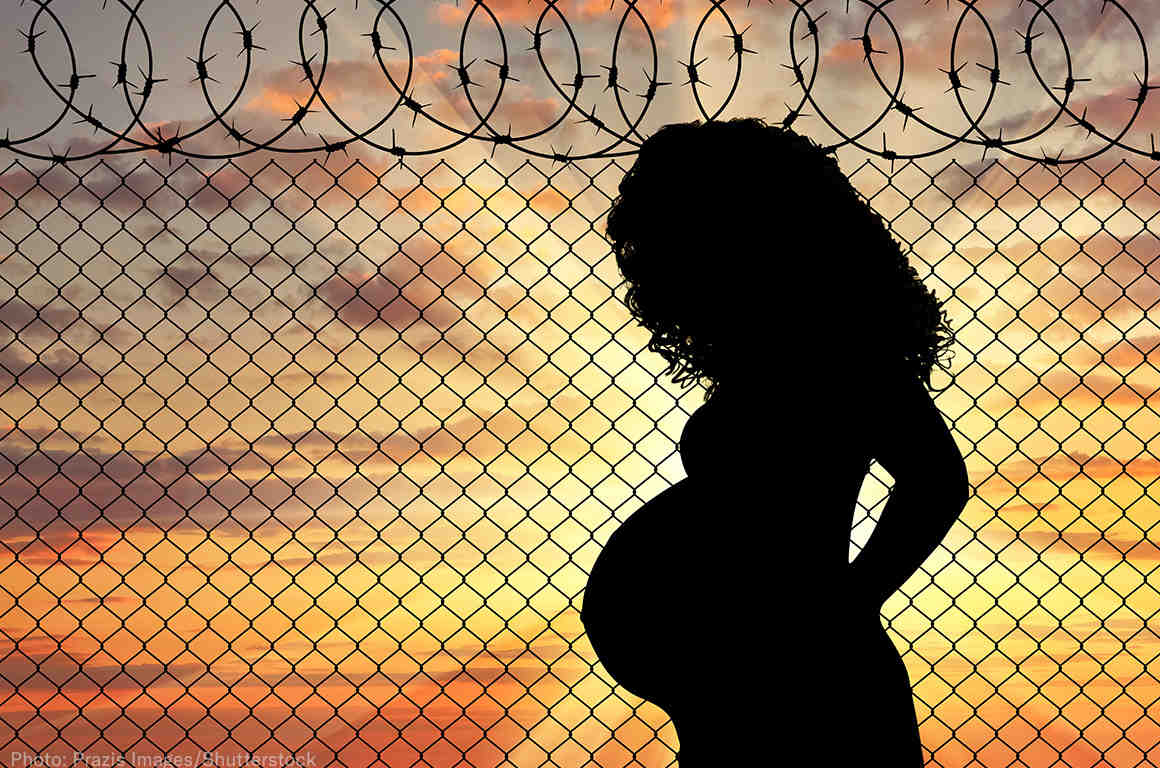
Migrants in Custody at Hospitals Are Treated Like … Felons?

Sometimes a headline says it all, the whole reported story and a great deal more: “Migrants in Custody at Hospitals Are Treated Like Felons, Doctors Say”. The New York Timesreports, today, of the now familiar and yet still jarring brutality the Trump administration, the Nation-State more generally, visits on the bodies and souls of those courageous enough to seek asylum. In this instance, the focus is the abuse directed at “a 20-year-old Guatemalan woman who had been found late last year in the desert — dehydrated, pregnant and already in labor months before her due date.” The treatment by ICE agents is vicious, mean and often illegal. Horrible. But the doctors never actually say the migrants are treated like felons. What is to be made of the phrase, “treated like felons”?

As the article explains, “In many cases, doctors say, their patients are newly arrived asylum seekers, like the Guatemalan woman in Tucson, who had fled violent abuse from her baby’s father back home. Such patients, who are in custody only because of their immigration status, are often subjected to security measures meant for prisoners charged with serious crimes.” Dr. Patricia Lebensohn, a family physician, thinks that constant supervision in a patient’s room “makes sense if you have a prisoner that’s convicted of murder, but this is a different population, especially the asylum seekers. They’re not criminals.”

They’re not criminals, they’re not felons, and so they deserve to be treated as … human beings with Constitutional, legal, civil, and human rights and protections? Is that the implication? This is the common sense that emerges from decades of mass and hyper incarceration. This is a reason that shackling pregnant women, women in childbirth, “makes sense”. They’re criminals, felons. It makes sense for agents to be present during medical examinations, to listen in on conversations with doctors, to watch ultrasounds, to intentionally interfere with sleep, to harangue and harass. It makes sense because they are criminals. It makes sense because they are women, people of color, poor, fleeing violence, begging for mercy and demanding assistance, seeking justice. Criminals and felons, each and every one. This is our common sense, but it doesn’t have to be. Imagine if we treated migrants and felons like people, like ourselves. Another headline is possible.

(Image Credit: ACLU)

Every woman in my family has had breast or ovarian cancer

Every woman in my family has had breast or ovarian cancer

Every woman in my family has had breast or ovarian cancer. 
They cut pounds of flesh off to stop their body from killing themselves, 
Cut it away with their own hands, 
So they could stand a little longer. 

Doctor said cutting would leave scars. 
Doctor said scars are ugly, 
Doctor said woman better dead than ugly. 

My ancestors said no. 
They said fuck your flesh forms and the idea of female being the same as a foster care system for broken men and babies we birthed by ourselves. 
It isn’t our job to look like the fantasy you created. 

Doctor said woman listen. 
Women ate him. 

My great grandmother lived to 92. 
She forgot my name, 
Called me by my mothers, 
Then forgot that one too. 
But she never forgot to tell the male nurse to fuck off, 
Never forgot where her callouses came from, 
She made candy, 
With her bare hands. 
When she held me I felt sweet too, 

Look at my cuticles. 
Can’t you see the women who have come before me. 
Can you see their tears of sorrow in this soft skin. 
I wonder if it comes down to it, 
Will I be able to cut it away for survival like they did. 

My grandmother gets drunk off of 2 Natty Lites in her concrete backyard on a sticky summer Saturday evening. 
As a Philly Italian, Natty Lite is an insult to crushed grapes in our fists that we sip from because  we can’t afford glasses. 
She divorced her Philly Italian, my grandfather, 42 years ago, 
She drinks the Natty Lite as a final fuck you. 

Finally old enough to sip them with her she spills secrets: 
I’d rather be alone than broken. 
I’d rather be alone than on my knees for a man who would never pray at my alter, 
I’d rather be alone than be a wife. 
To a man who doesn’t deserve to be called a husband. 

I hear the ghosts of my ancestors in every one of my footsteps. 
I think of the women that suffer sweat and strive so I could be here. 
Telling my mother and her mother, 
That maybe I’m not a girl. 
Maybe I’m somewhere in between. 
And they look down at their flat chests and wombless wombs. 
Cut away by their own hands so they stand a little longer. 
They know that losing these things didn’t make them any less woman. 
Understand that me having them doesn’t make me any more so. 

They grant me new names like, 
Darling, 
And grandchild , 
And able to go to college, 
When the ones before me couldn’t because father only had enough funds for one. 
Fuck the other five sisters. 
My grandmother was number two. 
She could almost taste the pages of the books she never read.

The women in my family ate cancer for breakfast and, 
Ate the men who didn’t love them and, 
I know I said I have soft skin but the women in my family taught me how to take a punch, 
To spit blood then keep smiling, 
To have sweet hands who can still strangle, 
To take no shit from a man who’s half the person I am right now let alone the person I’m about to be, 
The doctor said I was ugly. 
So I ate him. 


(Photo Credit: Hands Up United / Robert Alexander / Getty)

Where is the global outrage at the massacre of the innocents in Sudan?

As of this writing, freedom loving, democracy building people, `civilians’, `protesters’ have been butchered by the so-called Rapid Support Forces, or RSF, under the leadership of Mohamed Hamdan Dagolo, also known as Hemeti, also known as the Frankenstein of Khartoum.The RSF are also known as the Janjaweed, the group that terrorized Darfur for years, with particularly brutal violence against women.Forty bodies have been pulled from the River Nilewhere they were dumped. Members of the RSF raped protesters, beat up clinic doctors and volunteers, and plundered and looted hospitalsMembers of the RSF violently kicked the injured and wounded out of hospitals and clinicsAll along, the pro-democracy freedom movement has been steadfastly non-violent. The RSF has locked down Khartoum. The atrocities continue, the massacre continues. The world largely stands by, watches passively or looks away and murmurs, “Oh shame.” Where is the global outrage at the massacre of the innocents in Sudan? How many murdered Africans does it take to draw the world’s attention and to promote supportive action? We may never know.

Meanwhile, the struggle continues, the struggle that was sparked by women years ago, and then again last year and thisProtesters have set up their own barricades across Khartoum and beyond, and are engaged in peaceful civil disobedienceProtesters have rejected any talks with military while the RSF is wandering the streets, wreaking havoc. This most recent wave of State violence lays bare the heartless evil at the center of Bashir’s regime, which continues to this day. We share in that heartless evil, through our complicit silence and avoidance. Where is the global outrage at the massacre of the innocents in Sudan? Where are the lead articles in major newspapers, rather than articles buried where only the usual suspects will read them? Where are the mass demonstrations and protests across the world? Where is the “Je suis Khartoum”? Nowhere to be seen.


(Image Credits: Enas Satir / follow the halō)

What happened to Abby Rudolph and Michelle Bewley? Just two more deaths in America’s jails

Michelle Bewley

Abby Rudolph and Michelle Bewley never met each other, and yet they are mirror-image sisters in the wasteland that is the criminal justice system in the United States. Both died, or were killed, in a Clay County Jail. Abby Rudolph died November 3, 2016, in the Clay County Jail, in northwest Minnesota. Michelle Bewley died March 5, 2019 in the Clay County Jail, in northeast Florida. Abby Rudolph was 19 when she died; Michelle Bewley was 35. Both were arrested for shoplifting. Both were addicted; went into withdrawal while in jail; asked, begged, for help. None came, or, better, help was refused. In both cases, the local agency decided the staff was professional and did what they could. In both instances, family, friends and sister inmates disagree. Both Abby Rudolph and Michelle Bewley died in excruciating agony, begging and pleading for help. Both, in their deaths, became `newsworthy’ in the past couple weeks. This is who we are.

The details for Abby Rudolph and Michelle Bewley are the same as those for  Chuneice Patterson, Onondaga County Justice Center, New York, 2010; Amy Lynn Cowling, Gregg County Jail, Texas, 2010; Christina Tahhahwah, Lawton, Oklahoma, 2014; Madaline Christine Pitkin, Washington County Jail, Oregon, 2014;  Natasha McKenna, Fairfax County Jail, Virginia, 2015; Sarah Lee Circle Bear, Brown County Jail, South Dakota, 2015; Joyce Curnell, Charleston County Jail, South Carolina, 2015; Kellsie Green, Anchorage Correctional Complex, Alaska, 2016; Madison Jensen, Duchesne County Jail, Utah, 2016; Brianna Beland, Charleston County Jail, South Caroline, 2017, Kelly Coltrain, Nevada, 2017. Every one of these women died in agony, screaming and begging for care.

On March 4, 2019, Michelle Bewley was picked up for having violated her bond on a shoplifting charge and was dumped in the Clay County Jail. There she went into withdrawal. According to Brittany Wink, who was in a nearby cell, “She was just screaming in pain. You could tell they were pain screams.” This is not a case of “no one came”; it never is. This is a case of they all refused to come. You could tell they were pains screams. Within 24 hours of entering the Clay County Jail, Michelle Bewley was dead … for the crime of having violated her bond. Her cousin, Amanda Snyder, reflected, “She was a very loving, kind person. And she didn’t deserve this. Nobody deserves this … I love her regardless of the mistakes she has made because that doesn’t define her as a person. Because she was a caring person. She loved her family. And I hope this never happens to anybody else’s family member.” Michelle Bewley leaves behind a husband and a young daughter

In her junior year in high school, Abby Rudolph  suffered a broken hip, which led to using pain medication which led to pain medication addiction. On October 30, 2016, Abby Rudolph, then 19 years old, was arrested for shoplifting and was dumped in the Clay County Jail. Soon after, she begin showing symptoms of withdrawal. Her fellow inmates wrote a note, delivered October 31, 2016, saying that Abby Rudolph was not eating or drinking, was in a bad way, and needed assistance. The inmates said they were worried; the staff refused to respond. On November 1, at 5 am, Abby Rudolph told the staff she could not eat breakfast. The staff did nothing. At that point she began vomiting. She continued to vomit for two days, until November 3. At 2 pm, November 3, the staff “noticed” something. Abby Rudolph was cold to the touch, and the staff took her to the showers. She couldn’t stand on her own, slumped to the floor, became spasmodic, and died within the hour. 

The family has filed a civil lawsuit. Their attorneys argue that the abuse showered on Abby Rudolph exceeds “mere negligence” and shocks “the conscience.” Does it? I ask you, directly, are you shocked? Jill Rudolph, Abby Rudolph’s mother, filled the lawsuit in the early part of 2018. In December 2018, Jill Rudolph, 52 years old, died. Her brother explained, “She died of grief. She could not go on.”

Is your conscience shocked yet? Have we suffered enough grief yet, enough to tell us that, if we want to go on, we have to stop caging and executing women? What happened to Abby Rudolph and Michelle Bewley, in their own private Clay County Jail hellholes? Absolutely nothing out of the ordinary.

Abby Rudolph

(Photo Credit 1: Action News Jax) (Photo Credit 2: City Pages)

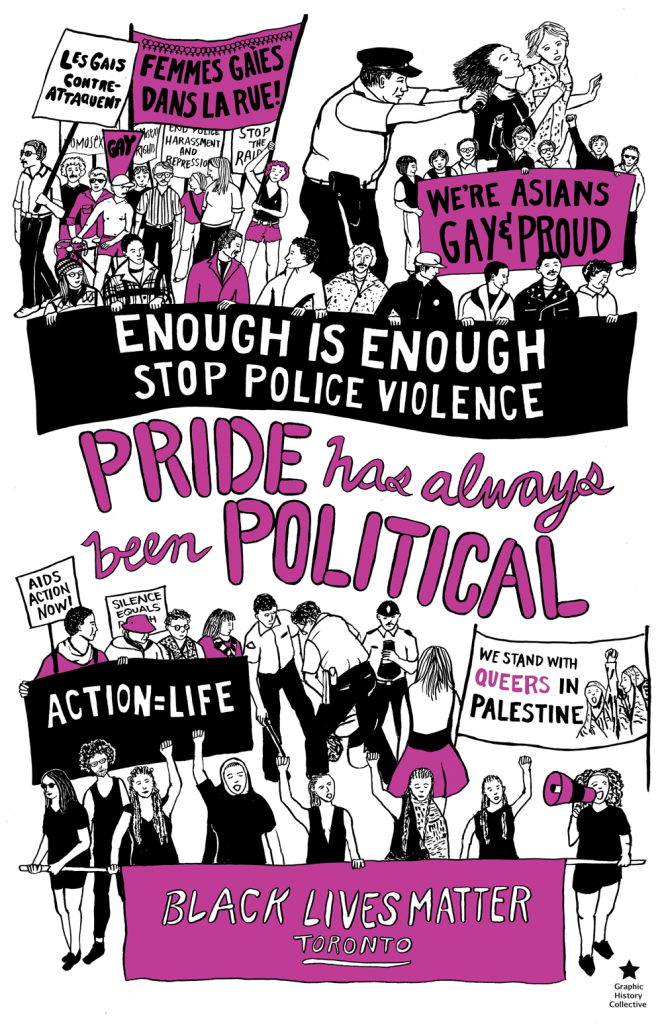
The struggle for queer liberation is bound up in the struggle for decolonization

The struggle for queer liberation is bound up in the struggle for decolonization.

The notion, as tweeted by Trump, that queer and trans folx living in the United States should be grateful that they “don’t live in a country that punishes, imprisons, or even executes” them is not only false, it perpetuates a colonial narrative that positions the US and other nations governed by white, western power structures as the civilized and all others as requiring civilizing.

For centuries colonial powers actively exported and imposed queer and transphobic statutes around the globe, and today continue to export missionaries, diplomats, corporations, and more that espouse these same views and maintain a colonial relationship.

Pinkwashing, using LGBTQ ‘window dressing’ to distract from oppressive policies or actions (to LGBTQ folx or otherwise), becomes a useful tool in promoting settler colonialism in Palestine and elsewhere; bolstering racist and Islamophobic narratives and actions; justifying military intervention in countries deemed by the US to be “backwards,” and more. Where queer and trans identities become a tool to maintain power and control over others, there can be no liberation.


(Image Credit: Active History / Kara Sievewright / Gary Kinsman)

Snuffing out the other at the border: The extreme Right’s heartless policies

The heartless are at work in various borders using various ways to exercise heartlessness. In the 2019 European elections, nationalists, populists, and the extreme right-wing elite came together (with the help of Steve Bannon) following current trends that brought authoritarian leaders to power. While the neoliberal system of austerity, hyper consumption and incarceration hadsomething to do with it, populists’ political discourses of have played the-fear-of-the-stranger score. 

The phrase “immigration crisis” triggers fear in places where migrants in processing centers on the borders are out of sight, but the real crisis is for migrants. They face crisis at home, trying to escape, and crossing borders. Then they face crisis as they arrive in Europe or the US. Crisis for migrants has a name: detention. During the European election campaign, Raphael Glucksmann, a leading candidate for one of the leftist lists in France, declared, “Some migrants in Hungarian jails are starving to death, because they don’t receive food.” He admitted that he pushed it by saying “to death” but the reality was well described in a report, published May 2019, by the Commissioner for Human Rights of the Council of Europe, Dunja Mijatovic.

While the report documents inaccessibility of “refugee protection,” the common thread for too many “democracies” is detention. The US has “iceboxes”, cells where migrant families are detained in freezing conditions with little to no medical assistance, resulting in children’s deaths. Hungary has its no-food plan and the cold. The report relates the conditions of living in the “transit zones,” another name to mask detention centers. 

The language used by the extreme Right, that is seeping into the language of mainstream media and people, masks the terrible human rights violations imposed on asylum seekers and immigrants arriving at the European and US borders. Language is key if we want to understand how the politics of suffering. are trivialized. In 2015, under Viktor Orban’s rule, Hungary changed its legal framework for asylum seekers. The new framework is migration without human rights, stepping on all international human rights obligations. Sound familiar? Every violation requires a language of justification. Here is the Hungarian version: Migrants arriving in Hungary are “free” to demand asylum although the status is almost impossible to attain. There are two places where people may file for asylum status in Hungary, both on the Serbian borders. These places are described as “place of accommodation” and called Transit Zones. According to the report: “The Commissioner considers that the systematic confinement of asylum seekers in the Transit Zones without time limit and effective access to remedy under an environment described by the CPT as `carceral’ qualifies as detention.” 

Asylum seekers cannot leave and do not receive food. This is why the French candidate, Raphael Gluksmann, described the situation in Hungary as a threat for all. When Hungary implemented its policy of food deprivation, cases were filed with the European Court of Justice (August 2018); only then did regular food distribution to migrants on the border resumed. Since then, food has been regular in the Transit Zones. Families with children are detained in Transit Zones, surrounded by rolls of razor blade wire. Extreme Right policy makers justify their actions creating inhumane conditions by pretending that they will deter asylum seekers or immigrants from arriving at their borders.

In the US-Mexico border, the separation of children from parents was justified in this way: Asylum-seekers should not have brought their children and undertaken the long and difficult journey to the processing center. The parents are blamed for putting their children’s lives in danger! Immigrants (distinctions between asylum seekers and immigrants have disappeared) are held in detention in such bad conditions that some decide to return to the dangerous conditions they left in the first place. Children were separated and kept in foster care before the child-separation policy was called into question. So much for extreme Right’s family values!

When applied to human beings, the word “illegal” persuades people that “illegals” do not have rights. In the US, many do not know that even if a person does not have proper documents, they still have rights under International Human Rights laws. The phrase “illegal immigrant” nullifies and renders invisible any human being without documentation, even asylum seekers. Trump and his followers describe asylum seekers and all Latin American immigrants as terrorists and rapists. The public has been fed on this narrative of fear since the 9/11 attacks. Now it has grown to the satiation point with the “crisis” at the border.

In Europe and the US, the heartless had an answer to justify heartlessness. The Hungarian response bluntly stated that their true mission is to protect their territory and punish those who commit offences/crimes. According to the government, anyone entering “illegally” endangers the territory. 

In France, the Defender of Rights, a Constitutionally authorized position, has attacked the French government for incarcerating children. A legal battle has taken place over the confinement of migrant families, with the higher courts ruling against the decision to keep migrant families in jail.  The number of migrant children kept in confinement is directly connected to national politics. The period with the lowest rate of incarceration of children covers Christiane Taubira’s time as Minister of Justice, since she believed in restorative justice. Meanwhile, in the US, with the wave of young Democrats voted into office in 2018, we see the beginnings of counter arguments to the extreme Right’s spewing of fear against the Other.

Today’s migrations occur in a context of wars, climate change, and over-exploitation of natural resources. As philosopher Elsa Dorlin recently suggested, we need to understand how exposing the murder of the Other at the border is based in necropolitics becoming necroliberalism. The Geneva Convention, the International Human Rights—these are eschewed by the Right through the language of fear and capitalist territorialism.

In the recent European elections, the populists, though divided, collected votes among disenchanted people. In France, for example, where incarcerated people vote, the majority of incarcerated people voted for populist parties, including the one that is clearly xenophobic. On the other hand, in the same elections, there was strong resistance to the heartless, coming from people organizing for environmental justice, gender ethnic class equality, migrants’ rights, and more.The heartless must be brought down.


(Image Credit 1: United for Intercultural Action) (Image Credit 2: Coordination Sud)

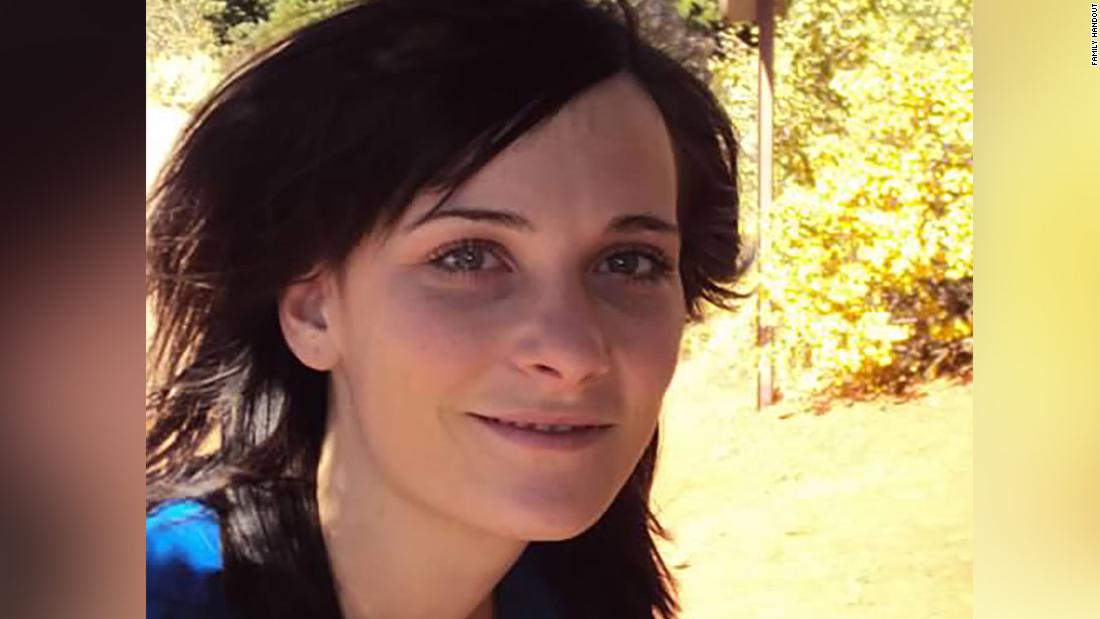
What happened to Kelly Coltrain? Just another death in Nevada’s jail system

Kelly Coltrain

On July 23, 2017, 27-year-old Kelly Coltrain was “found” dead on the floor of her cell in the Mineral County Jail, in Hawthorne, Nevada. This week, two years later, her family won a $2 million settlement and an agreement that a Federal judge would monitor the jail for the next four years. The family’s attorney noted that the federal monitoring was more important to the family than the money: “If we accepted just money, there was no guaranteeing that future situations for other prisoners would not occur and future tragedies would be around the corner.” What happened to Kelly Coltrain in the Mineral County Jail? The routine torture of women in jails across the country. Here’s a very partial list of women who have died in jails in the past few years, women whose death we have attempted to memorialize: Chuneice Patterson, Onondaga County Justice Center, New York, 2010; Amy Lynn Cowling, Gregg County Jail, Texas, 2010; Christina Tahhahwah, Lawton, Oklahoma, 2014; Madaline Christine Pitkin, Washington County Jail, Oregon, 2014;  Natasha McKenna, Fairfax County Jail, Virginia, 2015; Sarah Lee Circle Bear, Brown County Jail, South Dakota, 2015; Joyce Curnell, Charleston County Jail, South Carolina, 2015; Kellsie Green, Anchorage Correctional Complex, Alaska, 2016; Madison Jensen, Duchesne County Jail, Utah, 2016; Brianna Beland, Charleston County Jail, South Caroline, 2017. Add Kelly Coltrain to this list. Every one of these women died in agony, screaming and begging for care.

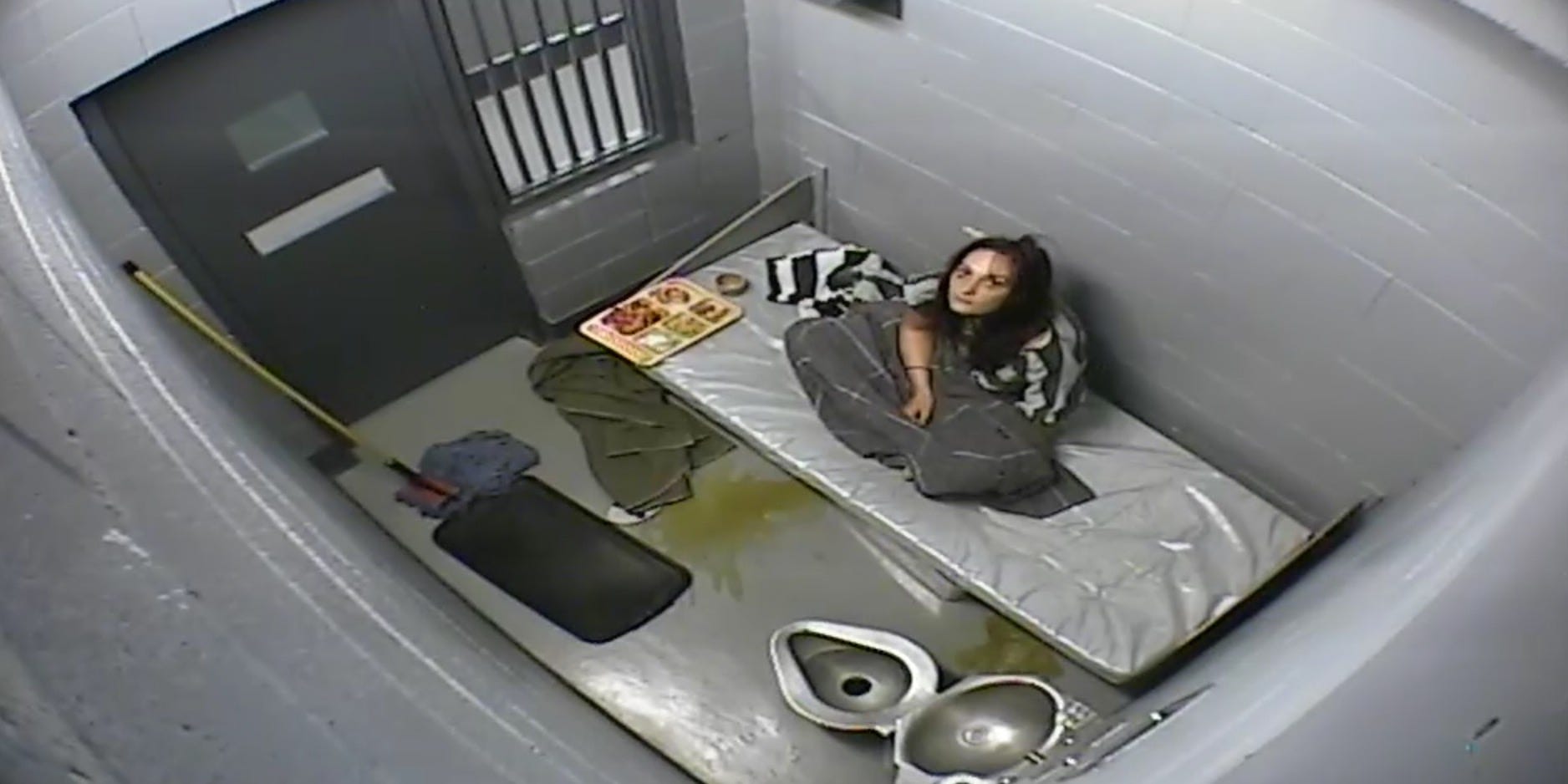
Kelly Coltrain, from Austin, Texas, was on her way to her grandmother’s 75th birthday celebration, in Reno, Nevada. Kelly Coltrain was stopped, in Hawthorne, Nevada, for speeding, and police found she had unpaid traffic or parking tickets. Kelly Coltrain had no criminal record. Bail was set at $1750, and so Kelly Coltrain sat in the Mineral County Jail. She told the staff she was drug-dependent, suffered from seizures, and would need medical assistance. The staff refused. Mineral County Jail is across the street from a hospital. The staff refused. Kelly Coltrain vomited repeatedly, refused to eat, trembled or lay perfectly still. The staff watched on video and refused to help. At some point, a staff member brought Kelly Coltrain a mop and told her to clean up the mess. Less than an hour later, Kelly Coltrain died, in a seizure. Kelly Coltrain lay, dead, on the floor for six hours. Finally, a staff member walked in, found Kelly Coltrain cold and inert on the floor, nudged her with his boot, went out, called his sergeant. Kelly Coltrain lay on the floor for another four hours. The staff did not call a paramedic. Kelly Coltrain lay cold, inert, in a fetal position on the floor and “nobody called for medical assistance.” 

Kelly Coltrain did not die nor was she “found” dead. She was murdered. The staff did not “fail” to pay attention or to care for Kelly Coltrain. The staff refused to pay attention, refused to care for Kelly Coltrain. Kelly Coltrain’s death was preventable, avoidable and foretold. Staff refused to listen, see, monitor, engage, respond, care. Staff refused to follow directives and procedures, as they had so many times before, without consequence, and so many jail staffs across the country do every day, especially if the incarcerated person is a woman, a woman of color, a working poor woman; a women living with mental health illness, addiction, or pretty much anything, and the list goes on.

How did the local authorities initially respond to Kelly Coltrain’s death: “It’s just really difficult for a small rural county like this to handle what is just a massive problem. There are so many people addicted to substances who end up going through withdrawal in the jail.” It was Kelly Coltrain’s fault. She shouldn’t have ended up in a small rural county jail. It was Kelly Coltrain’s fault. She should have known better. What if Kelly Coltrain’s family hadn’t persisted? Who would have known? Our Great Refusal is built of an infinite number of grimy little refusals, and meanwhile, in jails across the country, women in agony beg and scream for help, then lie in fetal positions on cold cell floors. When they are finally found, they receive the toe of a boot, and nobody calls for medical assistance.

Kelly Coltrain


(Photo Credit 1: CNN) (Photo Credit 2: Reno Gazette Journal)

Being a trans woman in a men’s prison means solitary confinement

At least 61,000 people on any given day are in solitary confinement in the United States. Every day, they spend 22-23 hours in a cell the size of an elevator. Most prisoners in solitary confinement spend months in solitary, with some spending years. This torturous practice leaves long-lasting damage and increases the likelihood of re-offending. The practice also disproportionately affects Latinx and African American populations.  

There are few studies about this, as prisoners are constantly left out of research; they are a population that remains invisible to the eyes of the public. There are serious problems with lack of data transparency and the fact that many prisons are closed off to observers. Many researchers are denied access to data and prisons, which allows for the extent of the use of solitary confinement and its impact on prisoners to remain understudied. 

The few studies that have been conducted show that solitary confinement doesn’t make prisoners more dangerous to other prisoners or guards, but it is more likely to make them a danger to themselves. A study conducted by the American Public Health Association reports that suicide is a major concern. The population studied includes 4,699 incarcerations between January 1, 2010, through January 31, 2013. The study found evidence of self-harm associated with solitary confinement even when put in confinement only once. 

Trans women in men’s prisons are continuously abused and face humiliation. Being sent to an all-male-detention center as a female often means automatic solitary confinement. They are dumped, alone, into tiny cells because they can’t be sent to women’s prisons. Prison systems are unsuitable for women and for trans women and men. 

Sonya Calico, a Latinx trans woman, was put in solitary confinement “for her protection.” She spent 9 months, 23 hours a day, in solitary. She began questioning her life, doubting herself, doubting everything, doubting her identity, doubting her sanity, doubting whether she would survive. Why was Sonya Calico in solitary? For the crime of being a trans woman.

A trans person should be able to enter the prison that most accurately represents their gender identity. While trans identity is increasingly recognized as a human right, in prisons it is still a managing tool. When prisoners are intentionally degraded and stripped of their humanity, the prison is only a site of punishment without any pretense of rehabilitation. 

By punishing trans women for being trans women, prisons further enforce discrimination and persecution. By keeping prison seclusion practices hidden, activists and scholars find it more than difficult to design evidence-based policies. Advocacy groups who want to address the enormity of this abuse find little to no evidence and data. The issue demands attention. Since it goes understudied, the public doesn’t know what’s going on in prisons, and especially in segregation units. Using a petition, reaching out to local politicians or even just using social medias to bring attention to the abuse is a step we can take, as an initial response. Data matters. Transparency matters. Trans women matter. 

(Image Credit: Buzzfeed)