Britney Spears and the Limits of Money

I have been ignoring #FreeBritney because I’m not a Britney Spears fan and there isn’t anything about her life I relate to. However, I forced myself to listen to her testimony. It is clear from her speaking style that she is in an intense state of trigger and trauma and is being ritually abused and gaslighted. I understand these signs in the voice that has so much to say that words can’t keep up, repeating phrases and thoughts because it doesn’t seem anyone is listening, speaking rapidly from the anxiety that all caring attention is illusory or time-limited: the sense that the time permitted to speak could end in the next second; and the tremor and shakiness of her articulation because words can’t hold or express the endless marathon of misery she continues to endure.

To be sure, there are things I don’t relate to, references to maids and ‘getting nails done.’ However, it is possible that her mentions of these speak to how abuse disorders personality to confuse non-essential things with essential ones such as the right to be heard, to work reasonable hours, to have privacy and to not be treated like an animal for medical experimentation.

It needs to be said that it’s highly unlikely that this would happen to a White cis-masculine celebrity. Spears is the more predictable victim of such manipulations because she’s an exemplar of cis-femininity in all of its emotional plain spoken nervousness; and because she speaks like a femmes teenager in the sense of neither taking nor imposing any authority with her words or tones.

Were it exposed that a cis-man musician/performer/entertainer was forced to work 70 hours per week, threatened, force-drugged and actively broken down, I believe the musician community would have expressed much more outrage. The expose would have carried with it the indignation of workers’ rights and exploitation rather than been dismissed (or engaged) as privileged ‘fluff.’

Also relevant is that wealth is only one axis in the formula towards avoiding precarity. It is crucial not to forget that for the not White, not cis-masculine, not able-bodied, not neurotypical (etc.), wealth and ownership might be far less potent for reducing exposure to risk. Note that these conditions cannot be classified as rare (or “minority”) given the prevalence of death threats and realized hate in circulation.

Moreover what Spears’s case shows is that the power of money has limits for many subjects. For the one who is denied autonomy with their own money weaponized against them is, during that period, not only not a capitalist and not powerful but without basic rights, even if they are housed and fed. As cases like this become exposed, they undermine a central myth of capitalism: that money guarantees freedom. Clearly it doesn’t if the social world around the wealthy person turns against and dehumanizes them.

This poses the question: If money is at least inefficient if not ‘dysfunctional’ on its own ideological terms, if ownership – the most sanctified and guaranteed of all Western rights – is this easily violable, then what kinds of sacred social promises would need to emerge in order to stabilize freedom in its stead?

(By Dora Bleu)

(Image Credit: Jean-Michel-Basquiat.org)

The Miserable Reality for Life Sentenced Women in Pennsylvania Seeking Commutation

The momentum for women in Pennsylvania to get commuted from their life without parole (LWOP) sentence has diminished.  Even with commuted lifer Naomi Blount hired to assist women filing their applications by Lieutenant Governor John Fetterman who heads the PA Board of Pardons (BOP) women are still being denied a merit review. This prevents them from getting a public hearing.  Life sentenced Sheena King and co-creator of The Women Lifers Resume Project of PA asks: “Why isn’t mercy extended more to women? Are we somehow less deserving than men?”

Without a doubt women serving LWOP in PA believe they are being further marginalized, revictimized by the judicial and political patriarchy resulting in their criminal behavior judged much harsher than men. They are seen as a greater threat to public safety and being totally irredeemable.  Even for a woman with a second-degree felony conviction 30, 40, 50 years ago the chances of her getting commutation is practically impossible.

  • Can a scent recalled nearly 30 years ago by someone who didn’t witness the murder be enough to deny a woman commutation? Yes!
  • Can a broken pane of glass that enabled a woman to walk away from an unsecured prison perimeter nearly 40 years ago be enough to deny a woman a public hearing? Yes!
  • Can a prison report by biased personnel deny a woman the support she may need to get a public hearing weigh enough to deny her this opportunity? Yes!
  • Are medically compliant women with a mental health diagnosis being denied a public hearing? Yes!
  • Are women who killed their infants during a postpartum episode nearly 40 years ago getting denied a public hearing? Yes!
  • Do women who are fragile octogenarians have a greater chance of commutation? No!

Before Fetterman arrived on the BOP grassroots advocates did statewide public campaigns to show their support for commutation. Since he came into office, advocacy has been less public: no more mailing in hundreds of postcards or printing t-shirts is required; social media has taken over. The rules have been tweaked to apply for commutation though it’s no less arduous. The various offices that represent victims have been put on notice to do your job-you got 90 days to find the victims to oppose commutation and you have to show your work.  So no more accusations by victims that have said we weren’t notified!

The BOP has been doing public hearings online since the pandemic began. As a result, I have noticed the absence of supporters giving testimony, lethargic testimony in support by staff at the prisons and rambling testimony by the victims with incorrect information. Even the BOP seems to be empowered by the lack of in-person testimony; more vocalization and pleading to members for a likeminded vote by other members. Since the BOP doesn’t meet as a body to discuss the merits of an applicant before voting Fetterman feels a last-ditch attempt to get to a public hearing by admitting that his yes vote comes from mercy! “Come on! This person is old and terminally ill!” To Fetterman this is consensus building. It never works. It’s just so pathetic and amateur to witness!

To raise the numbers of women getting commutation I feel can only occur if the BOP interviews each and everyone before the merit review. Like Sharon Wiggins once said, “How can I get commuted by writing a few paragraphs?” Commutation is the only way the state can release a life sentenced women unless she beats her conviction or her sentence is found to be unconstitutional and lastly, through medical parole where a doctor predicts her death within a year and is non-ambulatory.

(Ellen Melchiondo writes in the capacity as a co-founder of The Women Lifers Resume Project of PA.

Photo by CADBI-West depicts Tameka Flowers, Charmaine Pfender and Sarita Miller. Billboard image comes from stills in videos produced by Let’s Get Free and Women Lifers Resume Project: “You Deserve Better Than Prison” and “We Are More Than Our Worst Day” Videos can be viewed at www.wlrpp.org

Thanks to etta, Darlene and Elaine for their editing of this essay!)

The Elections Are Proving One Thing: Democrats Need to do Better – It’s Unlikely They Will

An Election Entertainment

Tuesday’s election should come as a warning sign for Democrats attempting to maintain power over the federal government. A full year of broken promises that have led to no positive changes in the lives of poorer Americans, and further disillusioning their left-leaning base. While Joe Manchin and other news pundits would blame those progressives for the losses, it is instead the fault of a Democratic Agenda that has been derailed by moderate and conservative Democrats funded by corporate donors that have stalled legislation that would have helped everyday people-it is a party with no sound policy base and victory that consistently cries Trump whenever a Republican attempts to seize power.

Now, it is true that Trump is a dangerous person-the riots and the calls to violence and a fascist overthrow of an entire country would obviously prove that-Democrats cannot blame Trump and Republicans for not being able to enact a progressive(ish) agenda that they campaigned on-that they went from state-to-state promising action on.

Elect Biden and receive $2000 immediately? A promise broken by semantics.

Cancel some student loan debt? No, create an extra repayment tier and use the return of the payments to bolster the idea that the economy is doing better. Even the $10,000 cancellation looks less likely from the Biden Administration.

Enact the John Lewis Voting Rights Act? Stalled twice in the Senate because of a filibuster that can be abolished, but unable to without the help of Joe Manchin and Krysten Sinema. So, voting rights is tabled.

An infrastructure bill that promises to deliver on paid parental leave, expanding Medicare to include dental and vision, while also working to lower drug costs? Stalled because of its price tag, with no such hesitation on spending when the military and the Pentagon need more money.

Police reform? No.

Comprehensive marijuana legalization reform? No.

A pathway to citizens for Dreamers and undocumented peoples in this country? Another broken promise.

A $15 minimum wage? Ironically voted down by the same senator whose hometown voted to raise their minimum wage.

These lists should not be allowed to continue. They represent every broken promise to people that were energized to vote for Biden and end the possibility of another four years of Trump, and violence from him and the Republican party. But complacency and campaigning on “at least we’re not Trump” will not help when you’re doing nothing to better the lives of the people that voted for you. Tuesday’s elections have proven it.

Terry McAuliffe was soundly defeated by Glenn Youngkin in Virginia, with the state’s House of Delegates moving to the full control of the Republicans. A campaign that was promoted by Biden, Obama, Harris, and every powerful democrat in the country. Lost spectacularly even though polls gave them a tie days before.

In New Jersey, Governor Phil Murphy narrowly eked out a win from Jack Ciattarelli, in a election that should not have been as close as it was-a Monmouth University poll had Murphy leading Ciatterelli by 10 points prior to election day. Even more powerful members of the state legislature lost their seats. Long-time Senate President Stephen Sweeney lost his seat to a Republican truck driver that spent a measly $153 on his campaign. A powerful state senator, which had amassed massive resources being a Norcross Democrat, lost so spectacularly to a Republican that is known for having racist messages on his Facebook page. He will now be a member of the state government, in the most diverse state in the country.

And while we should blame ignorant voters, the blame needs to also be placed at the hands of the Democrats, who for an entire year have down nothing with an agenda that is widely popular with both Republicans and Democrats; that have broken every single promise (or at least half-assed it) and spent more time campaigning on well, at least aren’t those other guys, right? Because that will not end will for Democrats in 2022, and then in 2024. And it will be the poor, and the oppressed, that must handle the fallout.

(By Nichole Smith)

(Image Credit: William Hogarth / Metropolitan Museum of Art)

Refugee Families Adjust to the U.S. After Fleeing Afghanistan

Soora and Abed Jawad

The Taliban seizing control of Afghanistan back in late August has caused thousands of Afghan families to leave everything they have ever known to flee the country due to concerns with their safety and wellbeing. These families did not have many choices; their options were to stay and live-in fear or escape to a new country. Although the latter appears to be the better option of the two, having to evacuate to a brand-new country to escape danger and violence can also be intimidating- especially when the new country is overseas, speaks a different language, and has different cultural values, norms and expectations. These factors make fleeing a country strongly affect families and their structures and dynamics, which has been the case for many of these Afghan families.

Due to most of Afghanistan’s neighboring countries – Uzbekistan, Pakistan, and Iran – closing their borders, over 100,000 Afghans were airlifted out of the country by the United States and their partners. About 65,000 of these refugees are being placed in the United States, though it is not clear how many families this number consists of. With Afghanistan sitting in the northern and eastern hemispheres of the world, it will take adjusting for these individuals and families to become situated with the culture and environment that stems from the United States being in the western hemisphere. In fact, Soora Jawad of the Jawad family interviewed by CNNeven went to express her surprise at all the greenery here in the U.S., something many U.S. citizens do not tend to think much of.

When discussing fleeing their native country, the Jawads say it feels like they are starting over. The family of three had very little money after arriving in the U.S., but Soora says this is what they had to do for the sake of their young daughter, after facing immense amounts of stress and being unable to eat due to worrying about their child.

The Jawads are now living in Virginia- one of the states welcoming the most amount of refugees, at about 1,166. The family found housing through one of the nine resettlement agencies supported by the Afghan Placement and Assistance program to provide resources for the Afghan families in need as they settle into the U.S. They were given comfort items by a refugee support group, including toys for their daughter and beds to sleep in- an upgrade from sleeping on the floor like they had to do when they first arrived.

However, the Jawads are now left jobless and must start paying their rent on their own after two months. Back in Afghanistan, Soora was nearly complete with her residency to become a heart surgeon and her husband Abid worked as an accountant- both high-paying jobs that promised financial stability that the family now does not have. They may be smiling in the interview but searching for jobs can impose great deals of stress and even strain on refugee families like the Jawads, as if leaving home with little to no clothes and toiletries and other belongings wasn’t enough.

The Jawads are just one family that fled from Afghanistan. Reality is, there’s plenty more, and not all have some of the advantages the Jawads have- most likely, not all are as highly educated as Soora and Abid are and many do not speak English like this family does, as well. And in this case, the entire family got to flee together, and it is reasonable to believe that this may have not been the case for all refugees. Lack of education, language barriers, and the splitting of families can all impact Afghan refugees and their families and the Shinwaris are an example of one that have been affected.

The Shinwari family is another Afghan family that recently fled their homeland due to the country’s current circumstance. Although this family has also been given resources upon arrival, the Shinwaris face many obstacles that the Jawads did not. Despite now living in a safer situation, the family is left with many concerns, including that they do not speak English, they cannot drive, and they do not have the education for work. Father Mohammed is having issues with his leg after being hit by bullets back in Afghanistan and Mother Madina also gave birth to a baby girl in the air while fleeing, as well.

On the other hand, families like the Mahrammis can be a symbol of hope for a better life for the Afghan families entering the U.S. in recent months. The Mahrammis arrived in the U.S. from Afghanistan back in 2017 and were met with large expenses, such as hospital bills and the need for a car for employment. They had to grow accustomed to the cultural differences between the two countries- in fact, the differences are so significant that father Hossein proposes an idea for a class about American culture to be offered to refugees. The concept of small talk with strangers – something we all do in our daily lives here in the U.S. – was brand new to this family and many other Afghan refugees.

Hossein describes knowing his children are receiving a great education and not fearing for his wife’s safety when she is outside alone as a great feeling. He appears very optimistic about the family’s future, as well. The Mahrammis now having educational, financial, and other opportunities here that they did not have in Afghanistan can improve their family structure and dynamic, and stories like this one can potentially, in a way, comfort the Afghan families who have not yet gotten on their feet here in the U.S, knowing the good that could possibly be in store for them.

With Afghans still fleeing the country and more than half a million expected to flee Afghanistan by the end of this year, there is no doubt that these families will continue to be greatly impacted in the U.S. and wherever else they may have to flee to because of their need to do so.


(By Raven Albert)

(Photo Credit: CNN)

What will it take to stop shackling women in childbirth?

On January 7, 2020, police in Dayton, Minnesota, in Hennepin County, broke into a home thinking a resident was involved in the purchase of a stolen snowblower. He wasn’t, but no matter. The police broke in. The house was occupied by a couple, both 26 years old, who were expecting the birth of their first child, in two weeks. The man was taken to jail and booked on charges that, after a year and a half, were dropped. The woman was taken, in handcuffs, and dumped in the Hennepin County Jail. There, staff ignored her pleas for help. When she described her excruciating back pains, she was told it was stress. When her waters broke, she had to prove she wasn’t lying, and then she was finally taken to the hospital, a few blocks away. Throughout the transport and most of the delivery, the woman was shackled. She is suing the local police and jail and others for violation of her Constitutional rights as well as denial of medical care. The jail says they take this all very seriously. Of course, they do. You can read the details of the story here. The thing is that, in 2015, Minnesota passed anti-shackling and pregnancy needs laws.

In 2015, Minnesota passed “An act relating to public safety; addressing the needs of incarcerated women related to pregnancy and childbirth”, which opens: “A representative of a correctional facility may not restrain a woman known to be pregnant unless the representative makes an individualized determination that restraints are reasonably necessary for the legitimate safety and security needs of the woman, correctional staff, or public. If restraints are determined to be necessary, the restraints must be the least restrictive available and the most reasonable under the circumstances. A representative of a correctional facility may not restrain a woman known to be pregnant while the woman is being transported if the restraint is through the use of waist chains or other devices that cross or otherwise touch the woman’s abdomen or handcuffs or other devices that cross or otherwise touch the woman’s wrists when affixed behind the woman’s back.” This act was passed unanimously.

At no time did anyone say that the woman in question was a threat or danger or a risk of flight. In fact, she was described by jail records as “cooperative with staff throughout the entire process.”

After a long and arduous labor, the woman gave birth to a healthy child … in a toxic environment. The father remained in jail for days; the traumatized mother went into depression. A month later, U.S. Customs and Immigration rejected her green card application, claiming she had been charged with assault. She had never been charged with assault … or anything else. She was cooperative with staff throughout the entire process.

The woman appealed the rejection and won the appeal.

The thing is that, in 2015 Minnesota passed anti-shackling and pregnancy needs law. In July 2021, the Minnesota legislature debated ending the shackling of juveniles in court. In August, the Minnesota Supreme Court issued a ruling that barred the use of handcuffs, shackles, and other restraints on juveniles in court. In 32 states and the District of Columbia, legislatures or courts decided to “prohibit the use of unnecessary restraints” on juveniles in court. The District of Columbia and 31 states prohibit or limit shackling pregnant women. What do these laws and court rulings mean when staff ignore them? What do they mean to those giving birth, their families and communities? As well, what do they tell us about the rule of law? Why do we have a greater investment in shackles and handcuffs than we do in law and justice? What will it take to break the chains, once and for all? It should not be this difficult to stop shackling women in childbirth. I should not be this difficult to stop shackling pregnant women. She was cooperative with the staff throughout the entire process.


(By Dan Moshenberg)

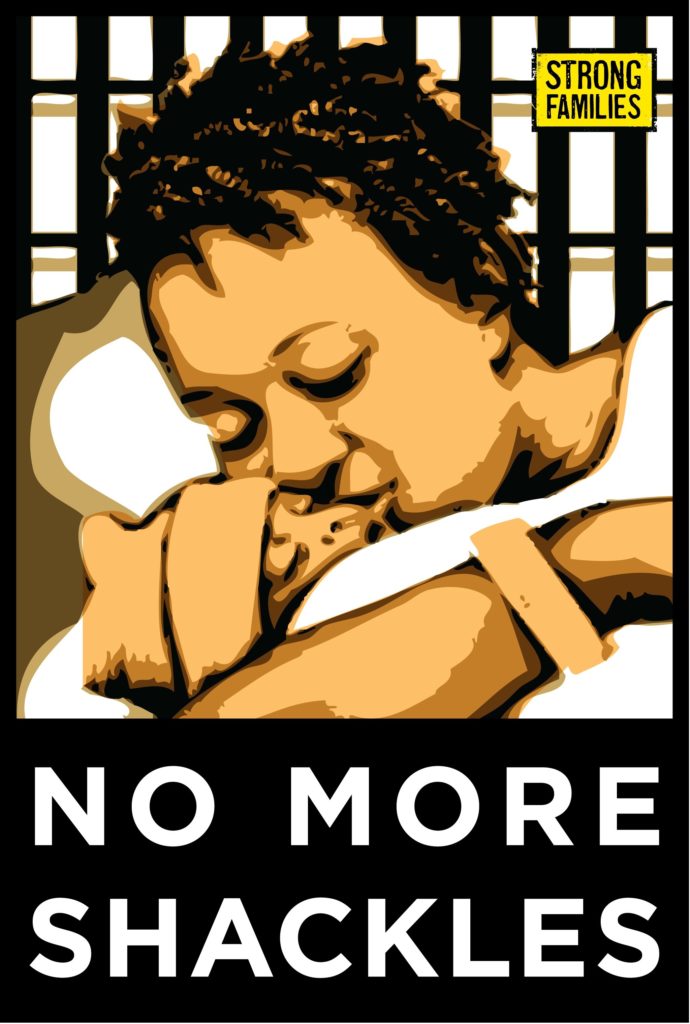
(Image Credit: Radical Doula) (Photo Credit: Kare 11)

Child labor never ended in America. It just waited for the right moment to strike back

The massive labor shortage has been something that’s eclipsed the national spotlight for the past six months. As COVID restrictions end, and people are leaving their homes more, shops have been desperate to employ people needed to meet demand.

Unfortunately, they aren’t doing much in the way of incentives to get people to work, or to handle the abuse customers will inevitably heap on them. During one of my classes discussing poverty in the United States, some of my students-mainly women who worked as servers-detailed uncounted levels of abuse, sexual harassment, and terrible management that they had had to contend with every shift.

During my own time as a grocery store worker, the entitlement from vacation goers, believing that I was constantly at the store 24/7 to service their needs was unbearable. And I, a 29-year-old, couldn’t handle it. So, I had to leave-I acknowledge that I was privileged to do so. Now I gleefully sing when I see Boomers complain because they must wait an extra ten minutes to check out since there aren’t enough cashiers. I know workers aren’t putting up with the “customer is always right” mentality that has rotted the minds of so many consumers in the US, and it puts a smile on my face.

Now, amidst a labor shortage that has both Democrats and Republicans-at least, those who care about the economy and not the millions of workers working for poverty wages-wringing their hands because with a labor shortage comes rich people not able to exploit more workers to make more money. It seems cutting people off from lifesaving unemployment benefits hasn’t been successful in incentivizing people to take on those exploitative jobs, huh?

The solution? Bring back child labor in the US!

Now, to be clear, child labor is still practiced inside and outside of the United States-and practiced outside of the country mostly because of the United States. The cocoa we eat in our chocolate bars is harvested from child labor. Children work within the garment industry to mass produce our cheap clothing. The farms we have our food grow on in America is cultivated by children. I can literally google child labor and x industry and more than likely, outsourced corporations will be gleefully using young children as workers to meet profit margins.

It would very well make great-and really horrible-sense to start easing up on federal child labor laws to create more workers to keep more businesses afloat. The fast-food chain McDonald’s in Oregon has been advertising their jobs to 14- & 15-year-olds to work at the restaurant, to plug up their shortage. And Wisconsin, despite the fact that their messaging is comedically villainous, has approved a standard allowing under-16 year old workers to work shifts past 9 pm, which is banned under federal guideline standards, and actively allowing later shifts on school nights so that “small businesses” can stay open to offset any lost revenue. Which means that employers can gently encourage(threaten) students to stay later, on school nights; I’m sure that that wouldn’t interfere with their classwork or grades, at all.

Child labor was never ended from the benevolence of politicians or robber barons. Workers fought for the right to keep their children home, and facing uprising, those in power folded. Now, in the face of providing living wages, better benefits, and allowing workers to organize, those same politicians and elites would rather exploit children in abusive jobs making poverty wages. And it will be the poorest youths who, desperate to help their families, will be burdened by the need to work. And they’ll be harmed by the system.

Maybe, if your business relies on exploitation to stay afloat, it shouldn’t be open. Maybe, if your profit and revenue is contingent on child labor, it should be burned to the ground along with the system that allowed you to profit for so long. Maybe children should not be burdened by a system of poverty and workers should be making a living wage, with health insurance and every benefit that their labor produces. If that’s not going to happen, the labor shortage should kill off every industry it touches. And I can’t wait for the day that happens.

(By Nichole Smith)

(Photo Credit: Business Insider / AP / Mary Altaffer)

England invented a new hell for women prisoners: gate sectioning


On Tuesday, October 19, 2021, the Justice Committee of the United Kingdom’s Parliament took “evidence on safety and wellbeing of women in prison” … or the absolute, radical and contrived absence thereof. Among the witnesses were Sandra Fieldhouse, Inspector, Leader of the Women’s Inspection Team, Her Majesty’s Inspectorate of Prisons; and  Juliet Lyon, Chair of the Independent Advisory Panel on Deaths in Custody. Juliet Lyon introduced the “Justice” Committee to the practice of gate sectioning: “The other thing that has arisen that I want to put down a marker about, which I think is mostly anecdotal, although I am sure it is happening, is what is called people being held at the gate, and then put under the Mental Health Act—and then the gate sectioning, which is the way it is referred to. There have been a number of incidents, particularly in relation to women, where they thought they were leaving—they were literally at the gate—and they have to be through that gate before it can happen: they are sectioned, taken away and put in secure care. That simply cannot be right. It is a very cruel thing to do, and it indicates that prison has been allowed to hold on to someone whose behaviour and health have been very poor, and they have been very damaged by it. Gate sectioning is occurring more readily …. It has got to be stopped. It is just not the right way to proceed at all.”

It has got to be stopped. It also has to be asked why it happens at all. Prison officials claim that the main reason is that there aren’t enough spaces in mental health facilities … and so they wait until the last moment, actually the moment after the last moment? To be clear, and one must visualize this, women who have been in poor health, often before prison and more often than not intensified by their stay in prison, even brief stays, are told, “Today, your term is up. You are free to leave.” They pack their belongings, say goodbye to their sisters inside, and head for the exit. Once they have taken a step beyond the exit, they are taken off. This is not about lack of resources. Somehow, magically, when women are released from prison, the beds appear. This is about cruelty, pure and simple.

It isn’t as if leaving prison, going through the gates, is easy for women. As Carolyn Harris, MP for Swansea East, noted earlier this year, “Over half of all women leaving prison have nowhere safe to go. They walk through the gate with three things: the paltry £46 prison discharge grant, a plastic bag full of belongings, and the threat of recall if they miss their probation appointment. For some, the simple fact that they have been in prison a long way from home means that they have no local connections when they are released. For others, who are victims of abuse, returning to their homes, and consequently the perpetrators, comes at a huge personal risk.”

In 2015, the English government established the Through the Gate program, which was supposed to address the issue of people moving back into the community. At that point, the services were poor to nonexistent. In 2017, an evaluation was published that found that people leaving after longer sentences were not prepared for release. In 2016, an evaluation found that people leaving after shorter sentences were not prepared for release. Both evaluations acknowledged the greater incidence of mental health issues among incarcerated women, especially PTSD. That was five years ago, and today … women are snatched at the gates and `sectioned’ off. Meanwhile, a report to Parliament on mental health in prison, submitted September 21, 2021, found “71% of women and 47% of men surveyed by inspectors in prison self-reported having mental health problems.”

Two years ago, the Governor of Low Newton prison is reported to have said, “We wouldn’t ask someone with a broken leg to hobble around waiting until release for treatment”. We wouldn’t,  but we do. In which circle of hell does gate sectioning appear?


(By Dan Moshenberg)

(Image Credit: Grace Wilson / Vice)

In England, austerity killed close to 60,000 additional people in four years as it targeted women

The current government of England and Wales has announced its intention to implement yet another austerity program. Last week, a research report came out that documented that England’s four year experiment with austerity, 2010 to 2014, resulted in an additional 57,550 deaths. The report opens: “The rate of improvement in life expectancy in England and Wales has slowed markedly since 2010. This decline has been most marked for women aged over 85 years and these people tend to be the most physically frail and/or disadvantaged.” Women. Later in the week, a second research study was published that documented that in the poorest urban areas of England, life expectancy since 2010 had dropped, while it had improved in the wealthier areas. After a granular reading of the data from almost 7000 middle-layer super output areas, MSOAs, or postal code areas, the researchers conclude, “The decline … began around 2010 in women in some MSOAs, has spread and accelerated since 2014 …. The decline in life expectancy was more widespread in women than in men.”

In 2008, the Secretary of State for Health asked Michael Marmot to chair an independent review to address health inequities in the United Kingdom. The Marmot Review was published February 2010. Last year, Michael Marmot released a ten-year review, which opens: “Among women, particularly, life expectancy declined in the more deprived areas of the country.”

For ten years, and more, it has been evidence-based public knowledge that austerity kills the poor, workers, people of color, immigrants, those living with disabilities, women. Study after study has demonstrated the impact of cutting social and public services on entire communities. Writ small, austerity is genocide, because its purpose is to wipe out entire local communities. Writ large, austerity is femicide, because, as a policy, austerity always reduces women’s life span and life expectancy as it increases the number of women’s deaths. To hell with austerity!

(By Dan Moshenberg)

(Image Credit: Artscamp / The Relitics)

I write the story of Mariana Ferrer with a broken heart and shaky hands

Trigger warning: graphic descriptions of rape

Mari Ferrer was once known as the Brazilian Kylie Jenner. A lifestyle and beauty influencer from Southern Brazil, she had landed a gig in a beach club in Florianópolis in late 2018—as a “social ambassador,” her job was to post about the club, the food, music, and attend parties with her guests. Not long after she was hired, Mari was drugged, taken to a secluded location, and raped by André Camargo de Aranha, one of the bar’s associates.

The case first gained attention when the story was shared on a Twitter thread in Portuguese in January of 2019 (read the thread in English here). It includes heartbreaking footage from the night of the rape, including text messages Mariana sends to friends she was with, begging for them to come pick her up. Their responses are nonchalant: “our dinner just got here,” “we’ll talk tomorrow.” She also calls her mother, sobbing, asking for her father, and saying, “nobody is really your friend.” According to the thread, after getting home, clearly out of it, her mother takes her to the hospital, where the infamous ‘rape kit’ is collected. She is injured and bleeding, and the rapist’s semen is found in her underwear.

Armed with evidence, Mariana goes to court, not once, but twice. The first time, her rapist is considered innocent because “there was no intent to rape.” Video footage from the Zoom trial goes viral, and in it, the defense lawyer, Cláudio Gastão, is seen verbally harassing the victim: “don’t come at me with these crocodile tears,” thank God I don’t have a daughter like you, and I ask God that my son doesn’t find a woman like you.” Among the evidence used by the defense are sensual pictures of Mariana, some edited to make her look more ‘vulgar.’

The trial footage garnered attention from the entire country, from celebrities to Brazilian former president Fernando Collor. A petition asking Gastão to be held accountable gathered over 4 million signatures. UN Women Brazil also released a statement in support of Mariana and against sexual violence against women. The National Justice Council opened an investigation on Gastão’s behavior. This is a repeated offense for him—Sandra Bronzina became a survivor at 13, and at 29, she shared her experience being harassed by Gastão when her rapist was on trial. Damares Alves, the Minister of Women and Human Rights, in a radio interview, condemned the defense lawyer’s behavior and stated that this type of behavior from the courts “is not normal.”

Mariana appealed. The newest decision, released in October of 2021, is that her rapist is, once again, innocent. According to the courts, there was a “lack of evidence” to support her claims that she had been raped.

Since she was raped, Mariana has dedicated her life to looking for justice. Her social media accounts have turned into a journal of her struggle, where she shares details from the shambles her life has become. She begs audiences to share her case with the public and receives a lot of support from sympathetic voices. However, there is also significant backlash. From the start, she has been painted as a liar, not only by her rapist, but also countless others who care to weigh in on the situation online. She routinely receives hate comments and death threats. Needless to say, her life and mental health have been destroyed.

Mariana plans on appealing again. On the meantime, the Brazilian Chamber of Deputies approved, in March of 2021, the “Mari Ferrer Law,” which protects sexual violence victims from harassment in legal trials. This is not the first time a law was created using the name of a survivor who did not receive justice—the Maria da Penha law was named after one of the most prominent names among domestic violence advocates in Brazil, a woman who survived two murder attempts from her ex-husband in the late 1990s. After years of legal procedures, he was also considered innocent by the courts, and walks free today.

When it comes to violence against women in Brazil, as well as many other countries, this is normal. The normal is for victims to be treated like defendants if they ever get as far as standing in front of a judge. Mariana is white, and wealthy enough to afford the legal services necessary to be where she is today, which is not good place to begin with. If she were poor, Black, and living in a favela, we would probably not know her name. She would be one more among the thousands, millions of faceless women who survived sexual violence in Brazil, and will never see any justice.

I write this story with a broken heart and shaky hands. How can we rely on a system that is not meant to protect us in the first place? A system that consistently privileges and protects abusers, rapists, criminals? All the weapons in this world are turned against us, so how can we live in it? I don’t know, but we still do. Mariana has tried everything, been shut down in the harshest ways, but she is still alive. Sometimes, like Mariana, the best women can do is survive and hope for the best. Hope for a day in which justice is not the exception, but the rule. While that doesn’t happen, we rely on each other—we hold each other’s hands, wipe each other’s tears, and take every victory as a glimmer of hope. Mariana hasn’t won yet, but I hope, at the very least, that she can find peace.


(By Beatriz Silva De Almeida Barros)

(Beatriz Silva De Almeida Barros is a Brazilian feminist activist, currently based in the United States)

(Photo Credit: Catarinas / Viviane Rocha)

The unconvicted women condemned to death by suicide in jails across the United States

The Federal Bureau of Justice Statistics released its report on suicide in local jails and state and Federal prisons from 2000–2019. None of it is good or surprising. Since its last report, the number of deaths by suicide among women in local jails in the United States increased by almost 65%: “The number of deaths by suicide among female local jail inmates increased from 124 to 204 deaths between the periods of 2000-04 and 2015-19, rising almost 65%.” What else is there to say? If the numbers and rates of suicide rise year by year, that means the system thinks this rising is a mark of success. And who are those women. 77% of those who committed suicide in local jails were awaiting trial. The report refers to these people as “unconvicted inmates”. Unconvicted. Unconvicted, a word that is not a word and expresses everything. Here are a few of those unconvicted women: in Texas, Sandra Bland, 28 years old, Tracy Whited, 42 years old; in Alabama, Kindra Chapman, 18 years old; in Massachusetts, Jessica DiCesare, 35 years old; in California, Wakiesha Wilson, 36 years old; in Washington State, Tirhas Tesfatsion, 47 years old; in Indiana, Ariona Paige Darling, 18 years old. They are survived by children, partners, parents. Like so many others, they were all unconvicted. Innocent until proven …

Unconvicted.

Yet again, another report discovers what we already knew, yet again we encounter the ordinary, everyday reality of necropower: “Contemporary forms of subjugation of life to the power of death (necropolitics) profoundly reconfigure the relations among resistance, sacrifice, and terror …. In our contemporary world, weapons are deployed in the interest of maximum destruction of persons and the creation of death-worlds, new and unique forms of social existence in which vast populations are subjected to conditions of life conferring upon them the status of living dead … Under conditions of necropower, the lines between resistance and suicide, sacrifice and redemption, martyrdom and freedom are blurred.”

When the State can report, as just another data point, “unconvicted inmates accounted for almost 77% of those who died by suicide in local jails during 2000-19”, we have moved beyond necropower. We are in the country of the unconvicted women condemned to die by suicide where justice is a line between who must be executed and who must commit suicide.


(By Dan Moshenberg)

(Infographic Credit: Prison Policy Initiative) (Image Credit: Tate Modern)