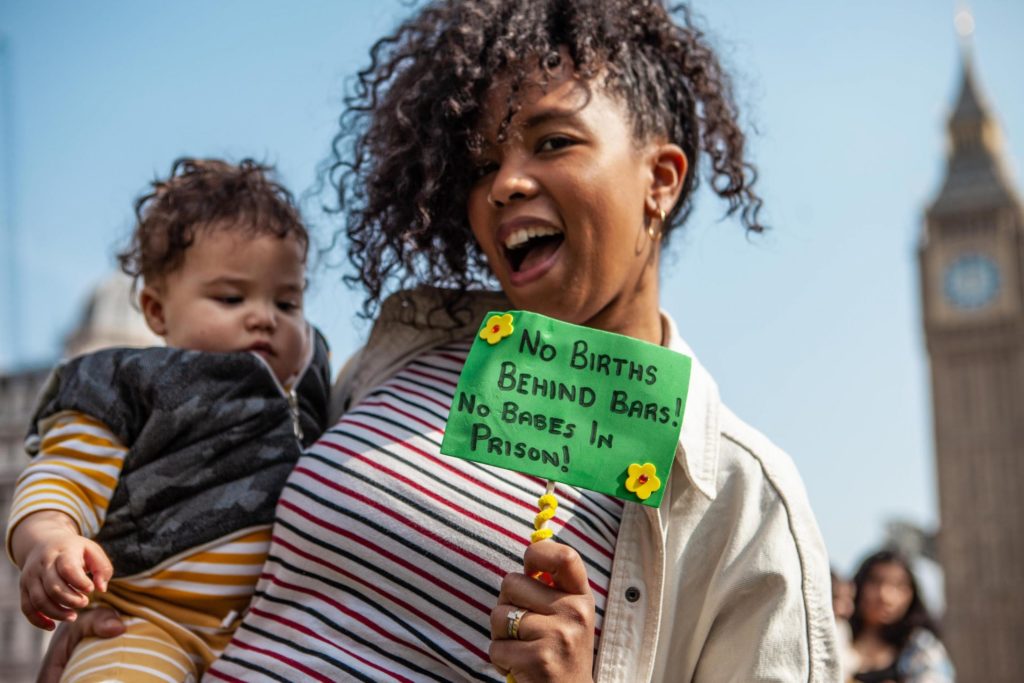
I will miss Politics and Prose, but my allegiance is with the workers

Dear Bradley Graham and Lissa Muscatine,

For over 29 years–the entire time I’ve lived in the DMV, and most of the bookstore’s existence– Politics and Prose Bookstore has been a haven and a lifeline for me. When my job relocated to a different part of town, I was less than thrilled about my longer commute, but soon realized the silver lining: Politics and Prose Bookstore was now on my way home! My partner and I have loved meeting there after work for author events; I’ve loved being able to stop in and find the perfect gift for a friend or loved one, or a new book I’ve been eagerly awaiting.

So I was extremely dismayed to learn today that the management of my beloved Politics and Prose Bookstoreis now resisting worker efforts to unionize, and has even hired the notorious law firm Jones Day to fight your workers’ efforts to ensure fair wages and working conditions. This is a betrayal of the inclusive values that Politics and Prose Bookstore has been known for.

I can no longer patronize Politics and Prose in good conscience, nor recommend it to my students, new colleagues, neighbors, and friends. I urge you to work with your staff and the union they are attempting to build. I urge you to stop antagonizing and intimidating your staff, and threatening both their livelihood and the many services they perform for your customers.

I will miss Politics and Prose, but my allegiance is with your workers.

Sincerely,
Abby Wilkerson

(By Abby Wilkerson)

(Photo Credit: Politics and Prose Workers Union / Twitter)

FCI Waseca did not fail to assure the safety of incarcerated women; it refused to do so

This week, Utah’s Legislative Auditor General submitted a performance of health care in Utah’s state prisons. The Auditor found “systemic deficiencies”: “The lack of follow-up and patient monitoring is a systemic concern that extends beyond the Covid pandemic.” Reading this report, it’s a wonder that anyone survives Utah’s prisons. In fact, they don’t. According to a report earlier this year, “people in Utah’s prisons were five times more likely to die of COVID-19 than the average Utahn.” While five times more likely is high, it’s not much higher than prisons across the United States, boasting four times the infection rate of the country’s general population. And then there’s FCI Waseca, a low-security Federal prison for women, located in Waseca, Minnesota. FCI Waseca houses 756 women, of whom, according to the latest number from the Federal Bureau of Prisons, 132 are currently infected with Covid. That’s the most of any Federal prison. The next in line is a Federal prison in Pollock, Louisiana, with 30 incarcerated people infected. FCI Pollock houses 1,556 incarcerated people. Less than 2% of FCI Pollock is infected with Covid; 17% of those in Waseca are Covid-infected.  Waseca accounts for 47% of all infected incarcerated people in the U.S. Federal prison system. These numbers provide the profile for “low security”.

At 199 Covid infections per 100,000, Waseca County has the highest rate of Covid infection of any county in the United States. Minnesota state prisons house 7,323 incarcerated people. Of that population, 95 are currently Covid infected, far less than 1%, although one prison, MCF Lino Lakes, 70 of its 911 incarcerated residents are Covid infected, a little under 8%.

Since the start of the pandemic, around 450 incarcerated women have tested positive for Covid. On Wednesday, December 8, the ACLU sued both FCI Waseca’s warden and the Director of the U.S. Bureau of Federal Prisons, claiming that the prison failed to take measures to contain Covid. FCI Waseca failed to release women with medical conditions to home confinement and failed to reduce the prison population sufficient for any kind of social distancing. That was no failure, that was refusal.

FCI Waseca is organized as dormitories with bunk beds kept close together. Everything is done in fairly tight common, social spaces. None of that was changed in any way in response to Covid. In August, a group of around 40 women was transferred from a facility in Oklahoma, a facility which was reporting Covid infections. The women from Oklahoma were placed in bunk beds in a unit with other bunk bedded women right next to them. Within weeks, most of the women in that unit tested positive for Covid.

What is there to say? FCI Waseca refused to address Covid, refused to respect women’s Constitutional rights to safety, refused to imagine an alternative to packing them in until it’s time to go. “Low security” should not be a death sentence nor should it mean being endangered. In fact, nothing should be a death sentence, but there we are. Two years into a pandemic, and we continue to cling desperately to the charnel house as the only way. If nothing else, by this point, perhaps people will stop saying, “The prison failed” to do this or that. There was no failure, there was only refusal, in broad daylight for all to see and without any remorse whatsoever.

(By Dan Moshenberg)

(Image Credit: Kayla Salisbury / The Marshall Project)

Today’s prison fire in Burundi was a preordained massacre

Gitega prison

In 1963, James Baldwin’s The Fire Next Time was published. At that time, Baldwin wrote, “There is a limit to the number of people any government can put in prison, and a rigid limit indeed to the practicality of such a course. A bill is coming in that I fear America is not prepared to pay.” A bill is coming in. A year earlier, in 1962, Burundi declared its independence from Belgium as well as its separation from Rwanda. This morning, at 4 o’clock, the Central Prison of Gitega, located in Burundi’s political capital, Gitega, `experienced’ an electrical short circuit which started a fire which, as of now, killed at least 38 and injured at least 69. That was no accident; that was a massacre, preordained and inevitable.

The Gitega prison, built by Belgians in 1926, is supposed to house a maximum of 400 people. At the time of the fire, according to the most recent count, there were 1539 `residents’. A building crowded to that extent, pandemic or no, is a death sentence. None of this is new or unexpected

Here are the numbers for the Burundian prison system, all from October 31. The prison system consists of 11 prisons and two juvenile facilities. The prison population was 12,749. The prison system’s official capacity was 4,194. At 297.5% of capacity, the entire system is a catastrophe, a fire, waiting, destined, to happen. Of that population, 50%, 6,245, were remand prisoners, people awaiting trial.

Since 2002, the number of women prisoners has risen every year. In 2002, 216 women were incarcerated. That made up 2.5% of the total prison population. In 2002, for every 100,000 Burundians, three women were behind bars. In 2021, 836 women were incarcerated, and they were lodged at the Gitega prison. This year, women comprised 6.7% of the Burundian prison population. This year, for every 100,000 Burundians, six women were incarcerated. Where are the women? Increasingly in prison.

Prior to the arrival of the Europeans, Burundi did not have confinement as a form of punishment or justice. The Germans brought prisons in the late 19th century, and the Belgians expanded on that, increasing the number of detained individuals by essentially criminalizing the native populations. Every year, more and more people were incarcerated, some having been convicted, others for administrative purposes. All were `native’ and therefore guilty. This was the system that built Gitega in 1926. Gitega was `the new prison’. Prisoners were separated by race, gender and social status: four dormitories were reserved for indigènes, including one for women; one dormitory for chiefs; four cells for European or Asian prisoners. The prison immediately exceeded capacity, and so was enlarged. It exceeded capacity again, and so was enlarged again. Finally, in 1947, it was expanded to its current size, capacity 400. Gitega has been fatally overcrowded ever since.

According to historian Christine Deslaurier, Burundian prison history has moved from “a mode of punishment to … trivialisation.” At the beginning of this century, the Burundian prison system celebrated its centenary “with the greatest indifference.” Today, that trivialization, that indifference, exploded in flames, and left scores of dead and maimed behind. A bill is coming in, is anyone prepared to pay?

(By Dan Moshenberg)

(Photo Credit: DW / AP)

From eSwatini to Sudan to Belarus to the United States and beyond, artists turn swords into …

“Yearning is the word that best describes a common psychological state shared by many of us, cutting across boundaries of race, class, gender, and sexual practice. Specifically, in relation to the post-modernist deconstruction of ‘master’ narratives, the yearning that wells in the hearts and minds of those whom such narratives have silenced is the longing for critical voice”.
bell hooks. Yearning: Race, Gender, and Cultural Politics (1990)

On December 6, 2021, the 32nd anniversary of the massacre of women students at the École Polytechnique de Montréal, as every day, artists around the world struggle against State violence to seek, find, create freedom, justice, peace, documentation, voice, reflection, memory, mourning, meaning and more. In eSwatini, artists struggle with erasure, locally and globally. In Sudan, both during and after the coup, if this is indeed after the coup, artists struggle with threats to freedom as well as to their own lives. In Belarus, artists struggle with imprisonment and persecution. In the United States, artists struggle with racist and racialized violence. In all four locations, and beyond and between, artists struggle to create democratic spaces that will themselves generate networks of democratic practice and shared yearning.

June and July 2021 saw mass protests across eSwatini and saw as well … very little. That is, while the State responded with intense police brutality, in some cases hitherto unknown forms of torture, the world looked elsewhere. Artists refused to accept the violence, the silencing by the national government, and the lack of concern of the global polity. As the protests and State violence erupted, local activists pulled out their phones and began filming. Then they consolidated their energies and resources into the eSwatini Solidarity Fund, and ultimately produced the documentary film, The Unthinkable. As university student and Fund volunteer Tibusiso Mdluli noted, “Our struggles have been sort of erased. I get the sense that people in the international community do not know so much about Swaziland.” With showings already held in the United States, Norway, Taiwan and South Africa, plus a broadcast on South African television, and more in the works, hopefully the erasure is beginning to dissipate.

In October, the military of Sudan conducted a coup, removing the Prime Minister, Abdalla Hamdok, and installing themselves, of course, in his stead. About a month later, after intense, daily, mass protests, Prime Minister Hamdok was `released’ and `reinstated’ … sort of … maybe. Artists refused to stand down after the coup and during the military regime and have refused to accept anything but a full removal of the military from the Executive branch of government and a clear and verifiable movement forward towards democracy. As Aamira explained, “We artists will be the first to be targeted if the military government continues in power. We are demonstrating in the streets, facing guns, unarmed. There is nothing to fear any more.”

During the reign of Alexander Lukashenko, life for artists and pretty much everyone in Belarus has been difficult and always under threat. In that environment, Natalia Kaliada and Nikolai Khalezin founded the Belarus Free Theatre, sixteen years ago. For that act of courage, Kaliada and Khalezin were forced into exile ten years ago. This year, the rest of the company has decided, or been forced to decide, to follow suit. Nevertheless, they persist in creating dramatic and existential spaces, which they stream into their native country, in which Belarussians can dream of and aspire to democracy and freedom.  As Natalia Kaliada explained, “We know we are stronger than the regime. The authorities are more scared of artists than of political statements. Everyone believes that things will change in Belarus, but for now the company needs to be safe. We ask the UK public to stand in solidarity with us at this most critical time in our history. Solidarity is crucial for our survival.” The struggle for democracy and freedom needs solidarity more than martyrs.

In the United States, over the past century, American artists have struggled with anti-Black violence, by the State directly or informally but firmly authorized by the State. Next month, in Chicago, an exhibition entitled “A Site of Struggle: American Art Against Anti-Black Violence” will open. The exhibition will begin with works from the anti-lynching campaigns of the 1890s and conclude with the founding of the Black Lives Matter movement in 2013. The organizers of this exhibition began working on it in 2016, in the aftermath of national protests, including those involving the deaths of Eric Garner, Michael Brown, Akai Gurley, Tamir Rice, in 2014; Freddie Gray and Sandra Bland, in 2015, as well as the massacre at the Emanuel African Methodist Episcopal Church, in Charleston, South Carolina, to name but a few; and in the midst of ongoing demonstrations that year involving the deaths of Alton Sterling, Philando Castile, Korryn Gaines, again to name but a few. Five years later, the exhibition is ready. According to its curator, Janet Dees, “‘A Site of Struggle’ employs art history to help inform our understanding of the deep roots of racial violence. From realism to abstraction, from direct to more subtle approaches, American artists have developed a century of tools and creative strategies to stand against enduring images of African American suffering and death. Contemporary artists taking on this subject are doing so within a long and rich history of American art and visual culture that has sought to contend with the realities of anti-Black violence.”

These four examples – artists from and of eSwatini, Sudan, Belarus, and the United States – were all reported on today. They all swim in long histories of local and global artistic refusal and resistance as well as confirmation and yearning. They all make the river by swimming and, in so doing, sustain our longing for critical voice.


(By Dan Moshenberg)

(Photo Credit 1: New Frame) (Photo Credit 2: Darryl Cowherd / Museum of Contemporary Photography / Northwestern Now)

In a victory for human dignity and hope, Botswana decriminalizes same-sex relationships

On Monday, November 29, Botswana’s Court of Appeal unanimously upheld an earlier 2019 ruling which had decriminalized same-sex relationships. In so doing, the court upheld judiciary independence, democracy, the centrality of Constitutionally protected and established rights, as it hammered another nail into the coffin of colonial and neocolonial law and culture. Within a 24-hour span, Barbados declared itself a full republic, with no need of an English Queen; Honduras elected its first woman president, and a democratic socialist at that; and Botswana rejected homophobia and the persecution of LGBTQI+ persons and communities. Talk about conjunctural moments, sing about decolonization.

Botswana gained formal independence from Britain on September 30, 1966. The new republic adopted the penal code written, largely by British hands, in 1964, a Penal Code in force to this day. Botswana’s Constitution was written in 1966. In the 1964 Penal Code, Article 164 addresses “Unnatural offences”. In particular Article 164, Sections a and c declare: “Any person who has carnal knowledge of any person against the order of nature; … or permits any other person to have carnal knowledge of him or her against the order of nature is guilty of an offence and is liable to imprisonment for a term not exceeding seven years.” This law and language formed part of the grand British imperial obsession with rooting out `carnal’ corruption in the colonies, an obsession that dated back to 1860. A prison term of no more than seven years is but one of the gifts the British left behind.

In 2016, Letsweletse Motshidiemang, a young gay man, applied to the High Court to have the laws repealed. He described growing up as a gay boy and then young gay man in Botswana, and argued, essentially, that the Constitution protected his right to be who he was and that Botswana itself had changed in the intervening decades. He relied on the Court to respect the Constitution, and he was not disappointed. On June 11, 2019, the High Court agreed and declared that the articles under discussion violated the Constitution, in substance and spirit. The Government appealed. This Monday, the Appeal Court, the highest court in the land, declared, “Those sections have outlived their usefulness, and serve only to incentivise law enforcement agents to become key-hole peepers and intruders into the private space of citizens.”

In previous cases, the Court of Appeal has consistently declared the Constitution a living document central to the democratic project. In 1994, in the Unity Dow case, the Court of Appeal declared, “The Constitution … cannot be allowed to be a lifeless museum piece … the courts must continue to breathe growth and development of the state through it … The primary duty of judges is to make the Constitution grow and develop in order to meet the just demands and aspirations of an ever developing society, which is part of the wider and larger human society governed by some acceptable concept of human dignity.” From Honduras to Barbados to Botswana, and beyond, this week has brought a victory for human dignity.


(By Dan Moshenberg)

(Image Credit: Jurist)

In Honduras, Barbados and beyond, women direct the conjunctural moment of hope

Xiomara Castro

On Sunday, November 28, 2021, Hondurans went to the polls and decided to move forward, rather than return to the past or remain in the corruption- and violence-soaked present. Hondurans voted, and in large number, for Xiomara Castro, the leftist Libre Party candidate. Castro’s victory was announced Monday, November 29, 2021. Meanwhile, at the stroke of midnight, November 29, 2021, the island country of Barbados will become the independent island republic of Barbados. This move from the last, and hopefully dying, whisp of colonialism to the full breath, and breadth, of autonomy and self-determination has been shepherded by Prime Minister Mia Mottley, of the Barbados Labour Party, and President Sandra Mason. At 12:01 am, November 30, Barbados becomes a fully independent republic. Since 1966, Barbados has celebrated November 30 as Independence Day, commemorating the day in which Barbados “was granted’ independence from the United Kingdom. This year, Barbados isn’t receiving independence, it’s seizing it.

Xiomara Castro is the first woman to be elected President of Honduras. Xiomara Castro is the first President to be democratically elected on a socialist platform. Castro has proposed a Constituent Assembly to rewrite the Constitution, a reinvigoration of international investigations of corruption, and a relaxation of some abortion restrictions. Castro has called for more independence for prosecutors. She has also called for reducing bank charges for remittances. Equally importantly, she has offered the country and the nation the prospect of unity across differences rather than the current State policies of intimidation, harassment, persecution, violence and death. Xiomara Castro has offered the vision and practice of participatory democracy, in which all sectors engage as mutual equal actors and in which no one, and no group, is excluded. On Sunday, Xiomara Castro explained, “For 12 years the people resisted, and those 12 years were not in vain. God takes time but doesn’t forget. Today the people have made justice.”

Barbadians have waited and prepared for full independence for decades, formally since 1966 but actually since the arrival of the British colonists who practically invented sugar plantation capitalism on the island of Barbados, which is to say first engaged in large scale enslavement of native populations in order to enrich `the Mother Country’, England. While discussions of removing the Queen from her position as head of state had long been simmering, 2020 saw a change: Black Lives Matter. In 2020, activists, organizers and just plain folk began demonstrating around the state of Lord Horatio Nelson, which stood in the heart of national heroes’ square. When earlier, activists had protested that Nelson was a leading proponent of the legitimacy and utility of slavery and the slave trade, the government turned the statue around, so as not to face the city. That was 1990. Thirty years later, the people said, “Enough! Thirty years is enough. Too much, in fact.” Last year, thanks to local Black Lives Matter activists, the statue came down. At its removal, Prime Minister Mia Mottley held up her phone, showed the crowds her screensaver, a picture of Bob Marley, and explained it was “to remind me always that the mission of our generation is the mental emancipation of our people”. That same day, Mia Mottley announced that in a year’s time, Barbados would remove the Queen as head of state and replace her with an elected President.

For Honduras and for Barbados, the road ahead is predictably different, but right now, on the island and the mainland, in these two `small countries’, the people have decided, and they decided to move forward, they decided to sing.

Won’t you help to sing

These songs of freedom?

‘Cause all I ever have

Redemption songs

Redemption songs

Redemption songs

Mia Mottley


(By Dan Moshenberg)

(Photo Credit 1: Reuters / Jose Cabezas) (Photo Credit 2: Global Voices / Timothy Sullivan / UNCTAD)


While Rittenhouse walks free, Chrystul Kizer awaits justice

Chrystul Kizer

Kyle Rittenhouse was acquitted of all counts of murder Friday, after moving across state lines and shooting three victims, killing two: Gaige Grosskreutz, Joseph Rosenbaum, and Anthony Huber. His release raises questions about who the justice system is built for-when someone with an AR-15 purposefully shows his weapon, and shoots people with abandon is freed, while in Kenosha another 17-year-old is facing murder charges, for killing her sexual abuser. Rittenhouse is a white boy, Chrystul Kizer a black girl.

She is still facing first degree homicide charges in the city of Kenosha, which carries an automatic life sentence, for killing Randall Phillip Volar III, a man who had been sexually abusing her for two years, when Kizer was a homeless teenager. She is still awaiting justice.

Volar III, a white man, had had prior evidence of abuse of young girls, already known to Kenosha police. He was arrested in February of 2018, after drugging and attempting to harm another 15-year-old. Police arrested him and then released him without bail. He remained free for weeks, while investigators found multiple videos of child abuse. On the day that Kizer acted in self-defense, Volar had drugged her and attempted to rape her. She killed him to get away.

The Kenosha police still want her in prison for life.

Volar should not have been freed when investigations found hundreds of videos of child abuse, including the ones he had filmed of Chrystul. Under federal law, Chrystul’s case should have been reviewed with her as a victim of trafficking (she was seventeen), and while it would be unclear whether she is entitled to the use of affirmative defense, the parallels with how the justice system is treating her-a victim of child sex-trafficking at the hands of an abuser-and Rittenhouse-a white boy who had clear intentions of going to shoot someone when he crossed state lines-is telling.

Her case is also revealing of a-hopeful-shift in how we discuss victims of child rape victims, “How her case is decided could shape how future crimes involving victims of trafficking are litigated—particularly those in which child victims of trafficking have killed their alleged abusers. In the past decades, those teenagers were painted by prosecutors as ‘child prostitutes’ who were out to rob their clients.

“But in recent years, courts, governors and state legislators have been reexamining such cases with a new understanding of the unique trauma child trafficking victims endure. Most of those cases have involved children of color.”

Chrystul won an appeal this past June, and instead of dropping the case, the state has requested that the Wisconsin Supreme Court review her case. Her ruling could have important implications for those survivors of child sexual abuse-and trafficking-who have killed their abusers in self-defense. If she loses, she faces, at minimum, a sixty-year prison sentence.

Whether she is successful, though, it remains clear that the criminal justice system was not built to be Chrystul’s advocate and would rather imprison her for life. And would defend Rittenhouse’s freedom tooth and nail.

(By Nichole Smith)

(Photo Credit: Washington Post / Sarah L. Voisin)

A day in the life of `return to normal’: Women bear the brunt

Bearing the brunt” is back. Ok, it never really left, but today’s iterations of bearing the brunt demonstrate that the `return to normal’ is here or at least just around the proverbial corner, and for many women that’s particularly bad news.

In South Korea, in the past two years, large Korean corporations sliced their workforce, ostensibly in response to the coronavirus pandemic, although how firing people improves their chances of surviving a pandemic remains an open question. Nevertheless, who bore the brunt of those cuts: “Women took the brunt of the job reductions as they accounted for 67 percent of those laid off.” It’s not all doom and gloom. Although many full-time employees lost … everything, others were hired as “non-regular workers”. That’s not `market forces’ at work. That’s old fashioned corporate greed.

In South Africa, and across southern Africa, food insecurity aka hunger has stalked the landscape, largely due to climate change induced droughts, land oligopolies, Covid, and more. Who suffers most directly? “Women and girls bear the brunt of undernutrition, international conference told”. How does this happen? In food crises, women and girls reduce their food intake. Additionally, in many households, men and boys get preference, including access to food. Women often find it more difficult to access food, sometimes due to insecurity in public places, other times due to restrictions on women’s movements in public. In these situations, women’s food consumption is stigmatized. This is what bearing the brunt looks like on an average day. This is what return to normal means.

Globally, to no one’s surprise and as reported from the outset of the pandemic and its political economy, women have been positioned to be most vulnerable to the conditions of both public health and economic, political, social devastation: “Women bore brunt of social and economic impacts of Covid: Women were particularly affected by loss of income and education, rises in domestic violence, child marriage and trafficking, and responsibility for caring for children and sick relatives.” In other words, the world pretty much stayed the same … only worse: “Many countries lack social protection for many groups, from women and children to migrants and refugees. Those groups have been worst affected by the Covid pandemic, and unless things change, they will continue to bear the brunt of crises, and be the least likely to recover from them.” Who bears the brunt? Women. Girls. Women and girl migrants. Women and girl refugees. Girls. Women. Welcome to normal.

Finally, in the United States, a report, released today, examined the situation of low-income renters in the United States during Covid. In particular, the study focused on households receiving federal assistance in the form of Temporary Aid for Needy Families, TANF, and the Supplemental Nutrition Assistance Program, SNAP: “Surprisingly, our research shows that low-income households already getting federal support may be more vulnerable to eviction than their counterparts who receive no social benefits … More households getting SNAP and TANF fell behind on rent, and those getting SNAP had a higher chance of being evicted.” Those getting SNAP had a higher chance of being evicted. Who are “those”? Women: women of color, women with disabilities, women elders, immigrant women. In 2018, 63% of nonelderly adult SNAP recipients were women. 61% of SNAP households with children were headed by a single adult. 91% of those adults were women. 33% of adult SNAP recipients was a woman of color. You know when women really bear the brunt? When their presence is ignored, avoided, forgotten, erased. Welcome back to normal. Same as it ever was.

(By Dan Moshenberg)

(Image Credit: Shonagh Rae / The New York Times)

Farmers in India have been protesting for a year: Friday they won

After a year of protests by farmers in India, Prime Minister Narendra Modi has announced that he would repeal the infamous agricultural laws, which had sparked the protests last November.

Most of the farmers in the demonstrations hailed from the northern Punjab and Haryana states-two of the biggest agricultural producers in the country. The farmers raised major concerns that the law-which was signed September of 2021, introduced market reforms to the farming sector, a move that the smallholder farmers argued would favor large corporate farms, devastate the earnings of many of the poorer farmers, and leave those who, “hold small plots of land behind as big corporations win out.”

The fear is that the new legislation will leave the farmers poorer, at a time where Modi had attempted to reinvent India as a “hub for global corporations.” The bill is also not clear on whether the government will continue to guarantee prices for certain essential crops, which would leave small farmers open to large agrobusiness competition; farmers had already voiced concerns as the government attempted to liberalize the farming markets and move away from a system of farmers selling only to a government-sanctioned marketplace, which would have left them at the mercy of corporations without any legal obligation to pay them the guaranteed price. Clauses in the legislation almost guaranteed that the farmers were on their own-including one that would have prevented them from taking contract disputes to court, thus having no means of redress apart from bureaucrats.

The subsequent protest had been the biggest since Modi claimed power in 2014 and erupted at a time of economy and social insecurity, with laws that were deemed discriminatory and a botched COVID-19 response. Dozens of farmers have died during the process, one from the police during a demonstration in January when protestors stormed the Red Fort in the capital’s center, and others from either suicide, bad weather from the demonstrations, or COVID-19.

While Modi has promised a repeal of the law, farmers and their unions are not backing down. Samyukt Kisan Morcha, the group of farm unions organizing the protests, said, “It welcomed the government’s announcement but that the protests would continue until the government recommits to the system of guaranteed prices. The protesters had long rejected a government offer to suspend the laws for 18 months.”

The announcement came on the day of the Guru Purab festival, where Sikhs celebrate their founder Guru Nanak’s birthday. The laws have been particularly alienating to the Sikh community and come after Modi attempted to discredit the protesters as being motivated by religious nationalism. The move to repeal the law on Guru Purab, amidst an important election cycle, while most definitely Modi’s government attempting to do damage control, is nonetheless a decisive win for poor farmers whose annual income is 20,000 rupees or $271.


(By Nichole Smith)

(Photo Credit: Altaf Qadri / AP)

Thina lomhlaba siwugezile! We have cleansed this earth! Sing freedom!

I am missing the times when the unions gave us hope. When workers’ struggles against capitalist exploitation, our people’s struggle for liberation from colonial rule and the struggle for a true people’s education were the same struggle. When the union truly “made us strong”. When the union and the liberation organisation and the youth or women’s movement were the same organisation not because they had the same name but because they understood the struggle to be what today feminists call “intersectional”. Where the oppression of workers, black people, provision of gutter education, were seen as tools of the same exploitative trade – racial capitalism, colonial domination, and of course patriarchy. Ah the Patriarchy! May we never stop mourning the ways in which our virtuous struggles for liberation gave black women the shortest end of the stick and then stabbed them on the back with it. We must erect eternal monuments for this betrayal’s remembrance!

For all her life, my mother was a worker. When she no longer worked in the masters’ and madams’ kitchens, she worked on other “factory” sites. She loved this song (not necessarily this version). I first heard it sung by her when I visited her back in those days when we lived in Ciskei and she in South Africa. Yes, lollest LOL, under De Klerk’s party’s rule she and I (geographically separated by the distance of a handful of football fields) were “citizens” of different “nation states”. Lollest LOL!

She was her own kind of activist in the kitchens and masters’s bedrooms and the streets. In her own kind of way, she knew and practiced the fine art of resistance finely.

Later, she and I would laugh through tears about how we recycled (perverted in her language) this song for feminist struggle, changing it to say “Kudala sisebenzel’a madoda, kudala sisebenzel’ipatriarchy, bafazi mas’manyane, elilizwe lelethu!”.

I come from a family of workers (workers of the land, chicory and pineapple pickers, mine-workers, “kitchen” workers, garden workers, child workers, healing workers…).

For that reason, this song will always have a deep meaning in my life. In it the spirit of my mother lives. So does the story of my family and the belief in the power of a united people’s resistance!

At this time, may our ancestors of light give us the grace for the ghosts of our dark history to leave us peacefully, allow us to bury them in peace. And for this, may our souls one day find the kind of peace that will help us truly rejoice while singing “Thina lomhlaba siwugezile”! Of course, that’s if there will be any mhlaba left with all these planet-wrecking choices we make over and over.


(By Siphokazi Mthathi)