Responsibility, in three acts: dead and dying, disappearing, diminishing

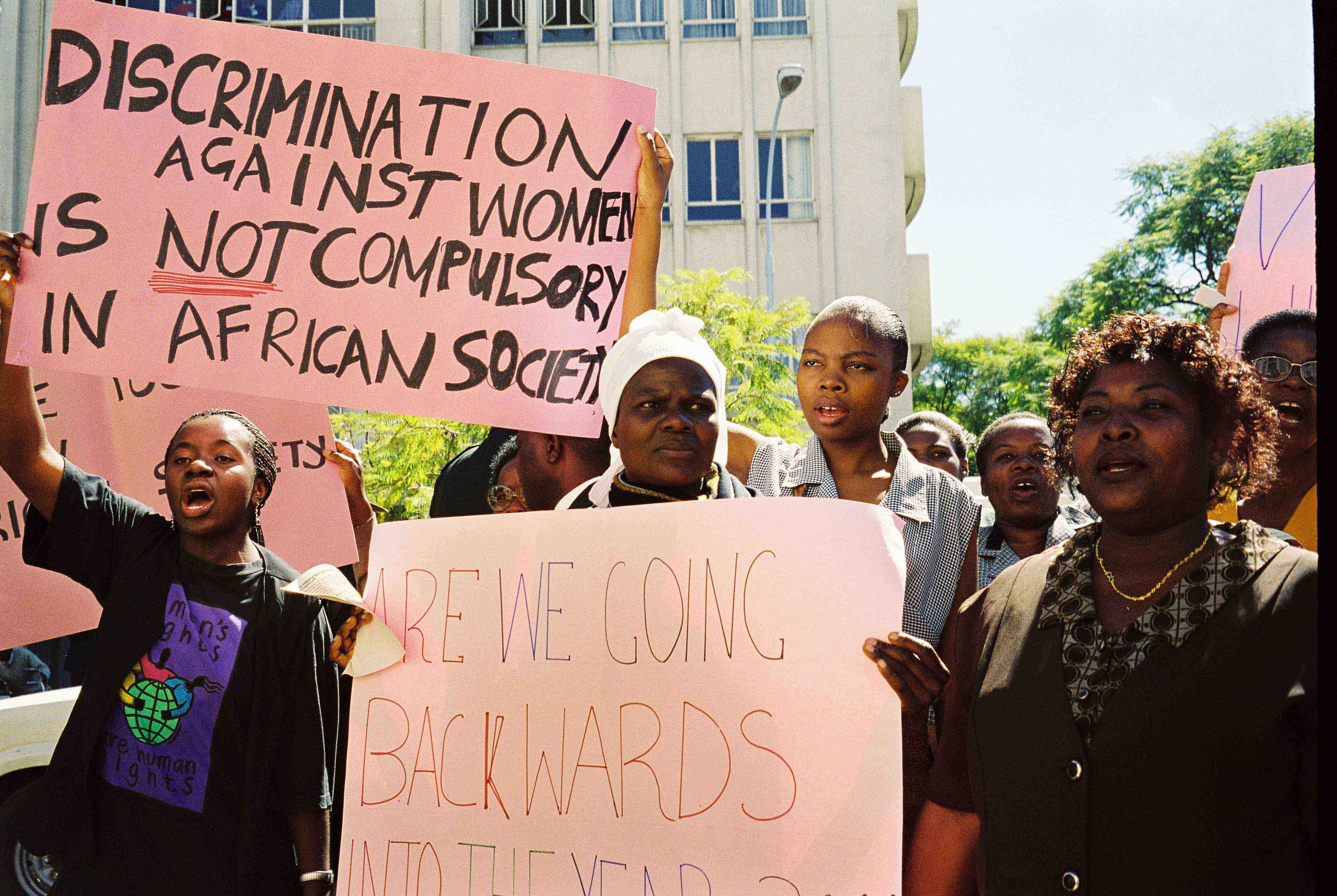
Zimbabwe. One looks anywhere for hope, for a change, for something new. FePEP, the Feminist Political Education Project, has been meeting in Pretoria. Here’s part of their press release prior to the meeting: “Today, Zimbabwean feminists caucus with women activists from the SADC region to break through the Zimbabwean political impasse and begin the implementation of the Global Political Agreement (GPA). In their meeting with SADC facilitator Thabo Mbeki, at 4pm, they will hand over their resolutions, with actions to move the current Zimbabwean question forward. During the day long meeting, prominent activists from across Africa including Liberia, Kenya, Swaziland and South Africa will give input on strategies of negotiated settlement and transitional arrangement.” Is there hope in a meeting with Thabo Mbeki?

Is there hope for real and positive change when so much stays the same, or gets worse. IRIN reports that a sense of dread pervades the country; the BBC reports that cholera is so intense that Zimbabweans will not shake hands any more; Open Democracy reports on a new theater of war in Zimbabwe, one consisting of `enforced disappearances’, which seems a curiously genteel phrase:; and the Mail & Guardian reports first that Tsvangirai has yet again said he will leave the talks on forming a government of national unity, and then that Mugabe says that he will “never, never, never surrender”, that Zimbabwe is his. In other words, absolutely nothing new. But wait, it gets better, which is to say, worse. The Mail & Guardian also reports that the bullets and guns that allow the regime to chant, never surrender never never surrender, those come from the Democratic Republic of Congo. They do not come through the DRC, they come from the DRC. And so we have moved from blood diamonds to blood guns.

Could things get worse? They could. In Indonesia, according to today’s New York Times, part of the country is vanishing in a mud bath, a spewing seeping horror movie montage of a mud volcano, that was created by Lapindo Brantas drilling for natural gas and piercing a pressurized aquifer. Oops! And now ordinary people are left destitute, and without much aid from government or from international agencies, and here’s the best part, because it’s a man-made disaster. They say the mud could seep and bubble, boil and trouble, for decades.

In China recycling is an art form. Chinese elders in particular bring this great resource, this art, with them to the United States. New America Media reports that, when they arrive with this art form, they are ridiculed, in good times, and attacked and robbed, in not so good times … like now. This practice of collecting cans strikes me as connected to domestic labor. These elders clean the earth of the detritus of others, and how are they repaid? They are described as being caught between a rock and a hard place. It would be better to see them as seized and placed beneath a heavy rock and a heavier boulder.

Reporting on the Indonesian `disappearances,’ the Times notes that “the debate over responsibility has severely limited the payments.” Who takes responsibility for the dead and dying in Zimbabwe, for the disappeared in Indonesia, for the diminished in the United States? Who takes responsibility for ending debates over responsibility and instead living responsibility? FePEP provides one answer: women talk with and take care of each other. The State built by men must just follow.

(Photo Credit: Mercedes Sayagues/IPS)

Democracy? We think it would be a good idea

Today’s Guardian reports on headscarf politics, American style: “Georgia judge jails Muslim woman for wearing headscarf to court”. Here’s the nub: “Judge Keith Rollins of Douglasville, Georgia, yesterday ordered Lisa Valentine, 41, to jail after she refused to remove her scarf before entering the courtroom, citing rules governing appropriate dress. Last week, Sabreen Abdulrahmaan was forced to leave Rollins’s court before her son’s probation hearing because she would not remove her scarf.” Time to reread Joan Wallach Scott’s Politics of the Veil, in which is dissected the French laws concerning Muslim women’s coverings. Same questions as in Georgia. Why headscarves and not beards, for example. But more to the point, why jail? Why women? Why Black women? Why now?

Meanwhile, according to “Afghan women fear a retreat to dark days” in today’s Christian Science Monitor, Afghan women are dealing with dealing with the Taliban, dealing with dealing with the government dealing with the Taliban, dealing with dealing with international ngo’s who simply can’t get the concept of sustainable work for women,  and these women ask the world not to forget them. Too late. The point is not that Georgia is Afghanistan. The point is that from Georgia to Afghanistan women fear a retreat to dark days because they experience the darkness, through violence, through persecution, through imprisonment, through threats of all of the above and more.

Across the United States, sex workers find a similar state of dark threat, often at the hands of clients, as often at the hands of the police and the courts. Sometimes the police harass and beat, other times they look the other way. In either case, sex workers find themselves fearing the darkness … at noon and otherwise. So, yesterday, dozens of sex workers marched through the streets of downtown Washington, demanding respect from police, demanding acknowledgement. “Sex Workers Criticize Law Enforcement” concluded with a reflection by Leila, a 24 year old women from San Francisco: “Alone, we’re just prostitutes on the corner and no one respects us,” she said. “Together we are a political movement, and we can change things.” Amen.

In “What is postcolonial thinking?”, a long and interesting interview in Esprit,  translated and reproduced in Eurozine, Achille Mbembe locates postcolonial thinking as opposing a post-ethical securitized world. Although he mentions women, as part of a list of disenfranchised and oppressed sectors, women don’t play a large role in his analytics. What if securitization of the world were to be understood as precisely about gender construction and constitution? What if, when discussing the U.S. attempt to act without morality or excuse, one were to see this move as a traditional tool in the rhetorics of patriarchy? Mbembe argues that “postcolonial thought is…a dream: the dream of a new form of humanism, a critical humanism founded above all on the divisions that, this side of the absolutes, differentiate us. . . . The thinking of the postcolony…is a thought of responsibility and life, seen through the prism of what belies both. It is in the direct lineage of certain facets of black thought (Fanon, Senghor, Césaire and others). It is a thought of responsibility, responsibility in terms of the obligation to answer for oneself, to be the guarantor of one’s actions. The ethics underlying this thought of responsibility is the future of the self in the memory of what one has been in another’s hands, the sufferings one has endured in captivity, when the law and the subject were divided.” Where are law and subject divided, almost universally? At the threshold to the so-called familial household as constructed by patriarchal rule of law, that states that the household is a kingdom unto itself. Fanon, Senghor, Césaire, yes, but also Ba, Head, Saadawi, Vera, and others, women who have written about the enduring captivity.

Mbembe concludes with a meditation on U.S. hyper-hegemony, what E.P. Thompson used to call exterminism: “Historically, successive US governments have claimed to build universalism and promote democracy on the basis of crimes that are presented as so many earthly fulfilments of God’s law and divine providence….Mercy has no part in his laws and precepts. He is a jealous and unforgiving god, swift to destroy and forever requiring human sacrifice.”

Democracy American style has no room for mercy, no room for forgiveness, no room for patience, no room for Muslim women, no room for Black women, no room for sex workers, no room for postcolonial thinking, no room for humans, no room for the human.

The dangerous politics of market radicalism“, in Open Democracy, reminds us that the market eschews politics, and ethics, for profit, and reminds us that the market as protector of democracy “was accompanied in much of the Anglosphere by a mounting reliance on coercive social-control mechanisms, one illustration of which is the existence of the highest levels of prison populations in the democratic world.” The highest levels of prison populations in the democratic world. Democracy. I’m told it’s a beautiful thing. I wouldn’t know, but I think it would be a good idea.

(Photo Credit: Global Fund for Women)

Thanks to all the predators

For those of us following prison/carceral issues, this is one way in which Madoff affects the work. This period will have been bracketed between “Brownie, you’re doing a heck of a job” and “Bernie, you’ve done a helluva job.” Thanks to all the predators who make this world possible.
See ya, Dan

Statement of Robert Crane, President of the JEHT Foundation, on behalf of the Foundation’s Board of Directors

Posted under General News on Monday, December 15, 2008

The JEHT Foundation, a national philanthropic organization, has stopped all grant making effective immediately and will close its doors at the end of January 2009. The funds of the donors to the Foundation, Jeanne Levy-Church and Kenneth Levy-Church, were managed by Bernard L. Madoff, a prominent financial advisor who was arrested last week for defrauding investors out of billions of dollars.

The Foundation was established in 2000. Its name stands for the values it holds dear: Justice, Equality, Human dignity and Tolerance. It supported programs that promoted reform of the criminal and juvenile justice systems; ensured that the United States adhered to the international rule of law; and work to improve the voting process by enhancing fair representation, competitive elections and government transparency.

The JEHT Foundation Board deeply regrets that the important work that the Foundation has undertaken over the years is ending so abruptly. The issues the Foundation addressed received very limited philanthropic support and the loss of the foundation’s funding and leadership will cause significant pain and disruption of the work for many dedicated people and organizations. The Foundation’s programs have met with significant success in recent years – promoting change in these critical areas in partnership with government and the non-profit sector. Hopefully others will look closely at this work and consider supporting it going forward.

Contact:
Robert Crane, President and CEO
JEHT Foundation
212-965-0400
rcrane@jehtfoundation.org

http://www.jehtfoundation.org/news/

3rd Conversation of the Transnational Network on Women’s Issues

On Saturday, Nov 8th, from 10:30am-12:00pm, ANGELA HEWETT, PRIYA MURTHY, and TRAM NGUYEN, will speak about “Women in the Political and Electoral Processes” at the 2nd conversation of the Transnational Network on Women’s Issues.

Angela Hewett is a Virginia voter registration canvasser.
Priya Murthy is the Policy Director at South Asian Americans Leading Together (SAALT).
Tram Nguyen is the Associate Director at Virginia New Majority.

To join in person, please go to George Washington University Phillips Hall, Room 107, 801 22nd St, NW, or Towson University Cook Library 404A, Towson, MD, 21252.

To join us by phone, please email transfem@c4twi.org.

To view the flyer for the event, please click here:

nov-8_transnational_network_flyer_revised (DOC)

Visit http://ctwiei.ning.com/group/tnwi to hear the podcast of our previous talks.

2nd Conversation of the Transnational Network on Women’s Issues

On SATURDAY, OCT. 4, from 10:30-12:00pm, RAJ PATEL and UMA ASHER will speak about the “Global Food Crisis, Women, and Feminist Uses of Media” at the 2nd conversation of the Transnational Network on Women’s Issues.

Uma is a journalist with the Times of India, Mumbai, India, and Raj is the author of “Stuffed and Starved: The Hidden Battle for the World Food System.”

To join in person, please go to George Washington University Phillips Hall, Room 411, 801 22nd St, NW, or Towson University Cook Library 404A, Towson, MD, 21252.

To join us by phone, please email transfem@c4twi.org.

To view the flyer for the event, please click here:

FLYER Oct 4 Transnational Network on Women\’s Issues (DOC)

Welcome to WIBG

Welcome to the recently launched WIBG website!

WIBG is a feminist activist – research project that seeks to document, analyze and change the status and condition of women by focusing on the neoliberal economic global development of prisons, households, and cities.

We look forward to conversation, collaboration and confabulation!

If you have any ideas, comments or questions, please contact Kelly (kellycooper3@gmail.com), Cathy (eisenhower@gelman.gwu.edu) or Dan (dmoshenberg@gmail.com).