“Please don’t waste me”: Women, Mal(e)development, and Environmental Injustice

Majora Carter

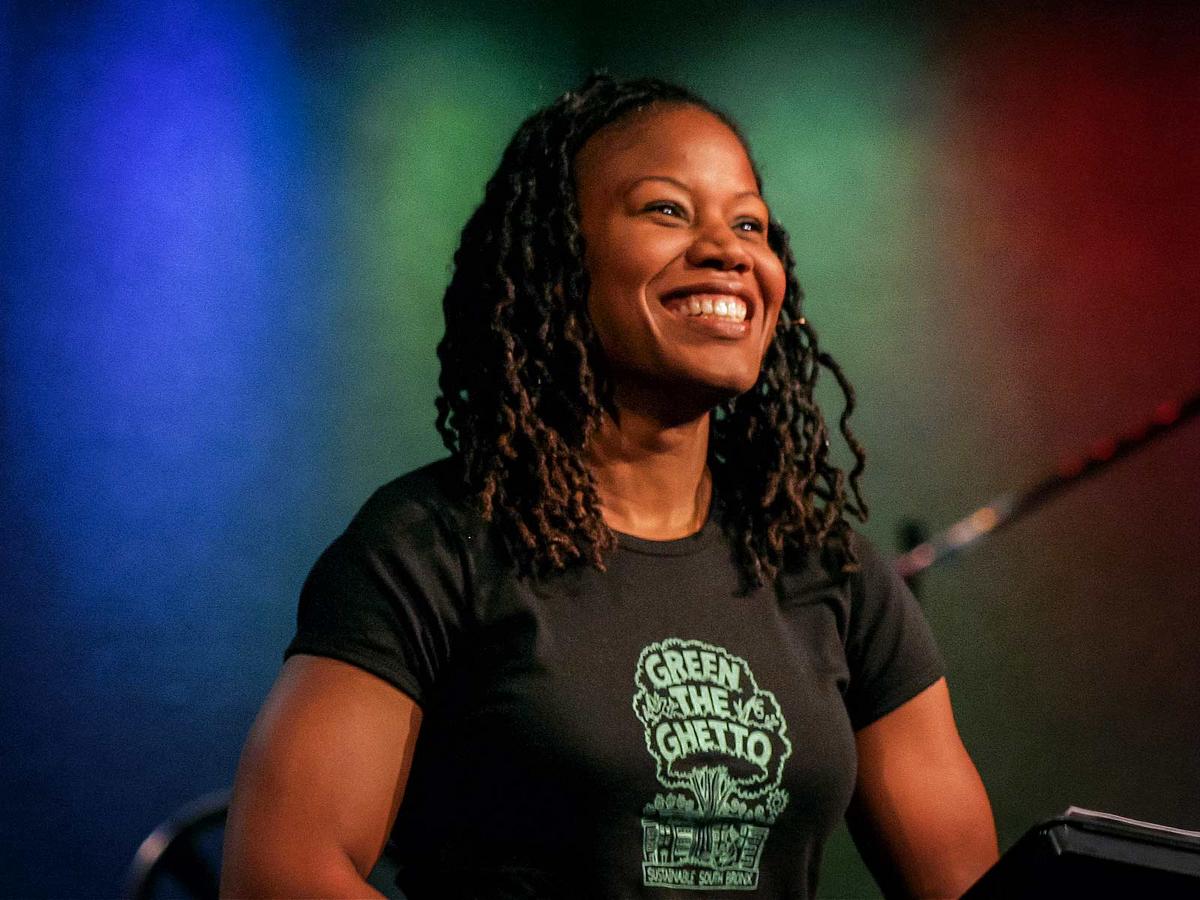
In response to Kelly Cooper’s “Develop or Die”, I would add that the West’s self-image as a proponent of sustainable development also hides the realities of the environmental injustice within its own communities. As Majora Carter explains in her excellent talk, “Greening the Ghetto”, being forced to develop AND die is not something that just happens in less developed countries.

In the United States, race and class reliably predict one’s environmental health risk, with Black residents being twice as likely to have air pollution as their number 1 health risk and 5 times as likely to live within walking distance of power plants or chemical treatment facilities. Where Carter lives in the South Bronx, city planning has caused 40% of NYC’s commercial waste to end up in her neighborhood and, as a result, 1 in 4 children there have asthma. “From a planning perspective, economic degradation begets environmental degradation which begets social degradation. The disinvestment that began in the 1960s set the stage for all the environmental injustices that were to come- antiquated zoning and land-use regulations are still used to this day to continue putting polluting facilities in my neighborhood,” says Carter. In “Women’s Survival Economies and the Questions of Value”, Rachel Riedner writes about urban gardens in many parts of the world. Majora Carter’s South Bronx grassroots organizing also involved creating NYC’s first green and cool roof demonstration project- a roof covered with soil and living plants that could retain up to 75% of rainfall.

Although the environmental justice movement in the US has exposed serious race and class disparities related to pollution and health risk, until recently there was not much focus on how these issues affect women’s health. According to Jill Gay, “Few studies of pesticide exposure have been done concerning women. Farm women are often not classified as farmers but as farmers’ wives, excluding them from large studies of pesticide-induced cancer.” Still, evidence indicates that women are put at increased risk for environmental health problems for a number of reasons, including socio-economic status and gender roles. The Committee on Women, Population, and the Environment combines scholarship and activism to address these issues, pointing out that “Everywhere in the world, women do different work, in different places, and they fill different social roles, than do men. Women everywhere have primary responsibility for meeting the daily needs of their families. This often means that, literally, women are in the front lines of exposure to toxins in the environment. Because of their social location, (which also often has a real locational correlate), women are much more likely than their male counterparts to have early and prolonged exposure to water-borne pollutants, pollutants in the food chain, and household pollutants including indoor air pollution”. Yet, as you may have noticed, there is a growing concern in public media and discourse about the impacts of pollution on men’s health, especially in reference to male fertility- prompting discussion about the “vulnerability” of male reproduction, as in a recent article by Environmental Health News, entitled “Fish study proves “the pill” is NOT man’s best friend”.

Meanwhile disadvantaged groups of women continue to be pressured into coercive sterilization through programs like C.R.A.C.K. (“a national population control organization [in the US] that offers a $300 cash incentive to people who are addicted to drugs and alcohol to undergo a form of long-term (and often dangerous) birth control or permanent sterilization. C.R.A.C.K.’s tactics disproportionately targets poor women, incarcerated women, and women of color”.

Unlike the message propagated by the BBC and other media programs, the best examples of sustainable development come largely from outside the West. As others have pointed out here, women play a vital role in conserving the genetic diversity of crops like maize (as a 2002 study conducted in Guatemala by the UN and the International Plant Genetic Resource Institute established). Majora Carter’s inspiration came from Bogota where mayor Enrique Peñalosa “thinks cities in the developing world are at a critical moment where they can learn from the mistakes of industrialized nations and choose to develop in a way that is more people-friendly” and that “for these cities to prosper, they must provide happiness for their citizens”.

In the West, this is still a rare sentiment- as Carter says in her talk: “That development should not come at the expense of the majority of the population is still considered a radical idea here in the US, but Bogota’s example has the power to change that”. Mayor Peñalosa created walkways and bikes lanes, libraries, parks, and public plazas, planted trees, and produced one of the most efficient mass transit systems in the entire world, resulting in significantly reduced littering and crime rates. Carter notes that “His administration tackled several typical urban problems at one time and on a third world budget at that. We have no excuse in this country…”. Near the end of her talk, Ms. Carter argues for a bottom-up approach that incorporates grassroots movements into the development decision-making processes. Her words could apply equally well to the need for women’s involvement: “of the ninety-percent of the energy that Mr. Gore reminded us that we waste every day, don’t add wasting our energy, intelligence, and hard earned experience to that count….Please don’t waste me”, she says.

(Photo / Video Credit: TED)
Women’s survival economies and the questions of value

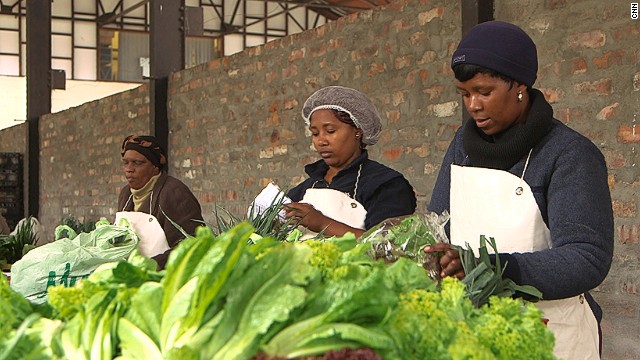
In Cape Town, South Africa, women are growing community urban gardens to sustain themselves, their families, and their communities in the face of food vulnerability. As one woman says, “I had no choice. I had to start farming because I had no money to buy vegetables from the shops. I also realized that if we farmed as a group, we would have more than enough food to eat and that we could generate an income from selling the rest.” Some of this produce grown in the gardens is sold but much of it is used to feed families and add nutrition to family’s diets. These gardens are, in part, a response to the current global food crisis but they’re also part of particular ongoing legacies of racism and apartheid where rural populations were moved to cities.

Maria Suarez, a Costa Rican journalist, who gave a talk in Washington, DC with Just Associates on January 26th, calls rain harvesting and urban community gardens “survival economies” or “care economies” where women improvise, share, generate, develop relationships, draw upon old and new knowledge, to sustain themselves and their families. Women create survival economies in the face of increasing economic inequality and impoverishment and food insecurity. Survival economies are built on women’s relationships with each other, within communities, and are tied, but not directly, to formal economy or formal market systems. Home gardens and rainwater collection does not receive a wage but rather goes directly to women and their families and members of the community. A better term might be women’s survival economies: alternative economic systems where women create ways to survive that are not directly part of market economies in response to pressures from neoliberalism.

The urban gardens are a response to local and global food crisis but they’re created from women’s shared knowledge, and shared labor to make and create their own lives, their family’s and community’s lives, outside of the market economy. In response to Suarez’s talk, someone in the audience asked her how we might find alternative models to the market economy which, in the neoliberal era, has impoverished women and their families. Suarez responded that we need change the ways we see “value”. “Value”, she says, is when our work, or creativity, and our lives are turned into money. In a market economy, only things that can be turned into money are “valuable,” anything else (like household work or raising children, garden growing, or any work is that is unwaged) is not “valuable.” When our dominant economic and discursive models see “value” as just money or markets or waged labor, we don’t value (in the other meaning of value which is to find something worthwhile or meaningful) economic structures and relationships that women live by. In this context, we might also note with William Aal, Lucy Jarosz, and Carol Thompson that in the context of the global food crisis and the inefficiency of commercial production, “small-scale urban agriculture in the form of community gardening is becoming increasingly important in seasonal food supplies and local forms of food security.”

Aal, Jarosz, and Thompson also point out that in predominant analysis of the global food crisis, women’s voices are not sought out or valued. As they argue, “The barefoot woman bending over her cultivated genetic treasure is not ‘scientific’, even though such farmers have cultivated genetic biodiversity over thousands of years. These free gifts do not fit into the corporate logic behind commercial agriculture, where only profit can be an incentive, not curiosity nor sharing. Yet indigenous knowledge provides us with all our current food diversity and is the basis for 70 per cent of our current medicines. Americans, for example, need to know that every major food crop we use today was given to us by Native Americans. In contrast, commercial agriculture makes a profit by depleting the gene pool, the result of valuing only very specific traits” What would it mean to talk about how urban space is used in the context of the global food crisis and women in the same paragraph? What would it mean to value women’s knowledge, women’s ingenuity, women’s labor, and, women’s lives?

Activist and eco-feminist Vandana Shiva writes about women in India who over generations have developed knowledge of seed diversity. Shiva advocates an approach to the food crisis that values the experience and knowledge of women.  The values – the ethics that women live by and, also, the different relationships to survival, for themselves and for their families – that women have developed that are outside dominant language and mechanisms of market economy. The independence, creativity, and shared knowledge that women have are, Shiva says, something worth preserving. In response to corporate efforts to patent seed knowledge that women have developed in India, Shiva says: “We will never compromise on this great civilization, which has been based on the culture of sharing the abundance of the world and will continue to maintain this trend of sharing our biodiversity and knowledge. We will never allow your culture of impoverishment and greed to undermine our culture of abundance and sharing.”


(Photo Credit: CNN)

Develop or Die

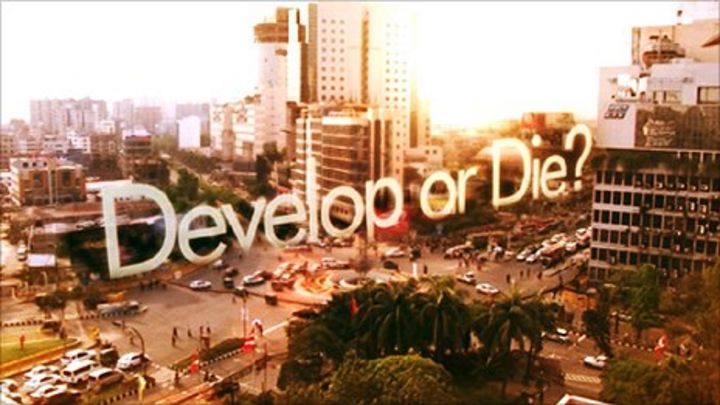
A refrain keeps repeating in my head: ¨Develop or Die. Develop or Die.¨ I heard that haunting, yet attractively alliterative, phrase on BBC a few weeks ago. Because the cryptic words have been stuck in my head, I began to contemplate whether I would/should chose to die or develop, whatever that means.  However, when I finally searched the BBC website, I realized that develop or die was not a question being posed to me, the viewer. ¨Develop or Die¨ is the name of a ¨new series on BBC World News tackling the challenge now facing Asia; how to develop their economies whilst at the same time handling the growing pressure from the West to protect the environment.¨ (I have not seen advertisements for the show on BBC Mundo, which is in Spanish and tends to cover mainly Latin American headlines, but I digress.) 

In contrast to my initial interpretation, BBC presents ¨develop or die¨ not as a question, not even a rhetorical one, but rather a bottom line, a global imperative concerning Development, capital D. The series presents an opportunity for viewers of BBC (in English) to think about the challenges faced by Asia, as if all or even most of ¨Asia¨ faces the same challenges and risks. ¨Filmed on location in India, China, Indonesia, Malaysia, Vietnam. . .[and] Mumbai,¨ the series discusses tensions between the West’s desire to protect the environment through sustainable development projects, and Asia’s supposedly ravenous desire to achieve ¨development¨ through any means possible, regardless of ecological costs.  This uncomplicated rendering of a historical (needless to say gruesome) East-meets-West dichotomy is a little, well, irresponsible, to say the least; perhaps perverted would be a better word? 

The marketing of the series is symptomatic of how mainstream news presents development as something the West chooses for the non-West.  That is, individual news watchers in the global North are represented as permitting/allowing un- or underdeveloped throngs in other parts of the world to work toward achieving a developed lifestyle according to a linear development schema that the western governments have already discovered, perfected, and continue to enjoy.  Given the influence and power that multinational and transnational companies possess to shape and influence not only domestic public policy, but also the decisions of international and supranational governing entities, the idea that the ¨challenge to develop¨ exists over there in Asia is a bit shortsighted.

To continue the popular theme of developed people in the West making choices for everyone else, I note an interesting story from Democracy Now!: ¨Hampshire College Becomes First U.S. College To Divest From Israel.¨ The college ¨has become the first of any college or university in the U.S. to divest from companies on the grounds of their involvement in the Israeli occupation of Palestine,¨ including Caterpillar, General Electric, ITT Corporation, Motorola.¨ For more companies that are ¨directly involved in the occupation,¨ such as General Mills, Ace Hardware, Pizza Hut, Chemonics International, Hewlett Packard, Chevrolet, RE/MAX, check out Who Profits, a database organized by The Coalition of Women for Peace.

As the happy, content, free-market-loving West considers the consequences of development in underdeveloped countries, it turns out the story is a little more complicated. While divestment plays an important role in the shifting processes of globalization, media portrayals of ethical business practices often propagate dominant discourses of development as beginning in the global North/West and undulating out to the rest of the world.  As mainstream pundits continue to ponder not only what it means to develop, but also the who, what, when, where, and how of development, transnational feminists work to understand what it means to develop or die—often develop AND die—in Asia, Palestine, Israel, Darfur, Sudan, Zimbabwe, Iran, Burma, the Mexico-U.S. Border, and beyond.


(Image Credit: BBC)

The Security of Sex: Inaugural Edition

In case any of you may have missed it, January was a big month in the District of Columbia.  A new American President and government were sworn-in to much ado and it was celebrated with a larger than life level of pomp, circumstance and security.  It seemed as if every newscast, article and discussion on the inauguration was incapable of discussing anything else, but what was actually meant by “security”? The obvious security presence involved the area immediately around the National Mall, which was cordoned off, surrounded by thousands and National Guardsmen/women, patrolled from above and regulated.  However, the geography of security expanded far beyond the areas around the mall and affected much more than was necessary for general safety of the Mr. Obama and the invading throngs here to see his inauguration.  Those living and working within the district realized that security was just as, if not more so, concerned with regulation as safety.  The two have actually been conflated; something, which becomes apparent through debates regarding the closing of bridges linking Virginia to DC.

Making this more apparent is actually the exercise of section 104 of the District of Columbia’s Omnibus Public Safety Emergency Amendment Act of 2006, which allows the Chief of Police to designate “Prostitution Free Zones”. The area around 5th and L St, NW was declared a PFZ and heavily regulated by MPD during the inauguration period.  Such a name insinuates that perhaps that when such places have not been designated or any areas beyond “the zones” may be considered legal areas of prostitution. Alas, they are not and the absurdity of this designation has not been lost on commentators including Jay Leno, who seems to be in the minority of people aware of the law.  Prostitution within DC is criminalized; a person receives a $500 fine and 1-90 days imprisonment for the first offense with the punishment graduating in severity from there with each additional arrest. 

So what is a “Prostitution Free Zone”?  Anyplace “where the health or safety of residents is endangered by prostitution or prostitution-related offenses” may be declared a “zone” for up to ten days using taped signs and banners.  This means that “any group of two or more persons congregating on public space for the purpose of engaging in prostitution or prostitution-related offenses” who haven’t dispersed after being warned may be arrested on site and be fined $300, imprisoned for up to 180 days, or both (there is a list of acceptable group activities).  While normally one must be caught engaging in the act, these zones require no such proof for individuals to be arrested.

These penalties and targeting seem excessive for an act in which no one is physically harmed; they do after all include mandatory imprisonment.  Yet, DC Chief  of Police Charles Ramsey  justified the institution of the “Prostitution Free Zones” and quickly rebuffed the idea that prostitution may be a “victimless crime” saying, “nothing could be further from the truth for those residents who must endure the presence of prostitutes and their paraphernalia in our neighborhoods”.  He goes on to congratulate the city in combating “the presence of brazen street walkers in many of our communities” which is a “serious problem”.  While I’m sure that brazenness is in fact quite serious, it hardly seems an argument to justify such restrictions on movement, congregation and labor.  It also seems oddly reminiscent of justifications for “Black Codes” after the Civil War.  Such a comparison, however, seems less odd when you notice that Chief Ramsey seems to be talking solely about street workers, who are primarily woman-identified, low-income and African-American, as opposed to those who work primarily in brothels, massage parlors or out of their homes.  These are the people targeted by “the zone”.  This law and the continued focus on punishing prostitution within DC is yet another way in which the law has been utilized to regulate Othered bodies and continues to regulate black bodies.

Ironically, despite all this talk about extreme security due to the swearing in of the first African-American president in U.S. history: the inauguration of Barack Obama still only utilized half as many security personnel as the 2005 inauguration of George W. Bush.  The true irony? These numbers only refer to those personnel who were dealing immediately with those entering the city and the mall, it does not include the task forces sent to “clean-up” the city for the throngs.  While war was being waged on sex workers, as it continues to be, tourists and locals alike gathered in the millions to see hope personified and sworn-in, to physically see their government transition to one which respected basic human and civil rights, one based in the community organizing and that might actually repeal some of the sexual Puritanism of the last eight years.  Yes we can! But why aren’t we, really?

(Photo Credit: The Kojo Nnamdi Show / Daniel Lobo)

Narco Wives vs. . . . Regular Wives?

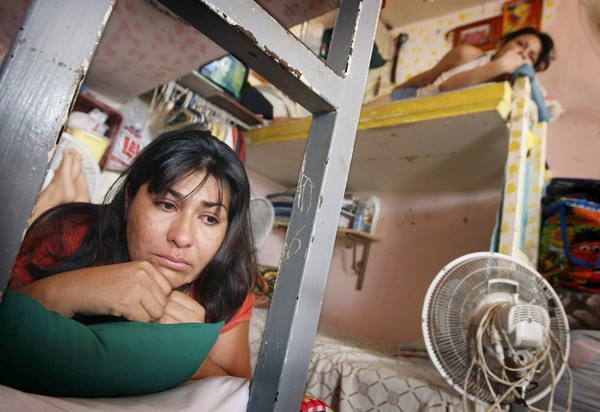
Gulf News recently published a story on Mexican narco wives (check out the picture). ¨Narco-¨ is a prefix that continues to gain currency in international news about Mexico, but the recent outburst of reporting around narco wives is particularly interesting in terms of how women are portrayed in relation to el narcotráfico. Certainly, there has been reporting around Mexican women and drug trafficking, but the Gulf News story offers a particularly egregious (not to mention garish) depiction of Mexican women. After describing the ascension of Sinaloan beauty pageant winners into the highest levels of narco life, the article ends curiously saying that ¨these women become untouchable.¨ What, exactly, is it about these women that makes them untouchable? Who determines what can and cannot be touched? The article is about, well, women, right? It says so in the title. However, no women´s voices are recounted in the story, and their supposed choice to enter narcodom is the only piece of information that hints at an agentic existence. In fact, the article reduces the wives to silenced beauties or narco arm charms, at best.  Still, the last word lingers uneasily: untouchable. If they cannot be touched, what does it mean to be touched?

Amidst these women´s secluded yet treacherous lives, Mexico, which was recently named a potential failed state, ¨is fighting for its survival against narco-terrorism”. As organized crime dominants headlines about Mexico, los narcotraficantes are not the only ones making money in Mexico; the empires of Carlos Slim, who controls most of Mexico´s telecommunications and is the second richest man in the world, and Walmart, which owns multiple supermarkets and cheap restaurants in Mexico, continue to boom. While international news would have us think that Mexico is full of narcos running wild, women, especially those in urban and suburban areas, perform the quotidian chores required to maintain their households and take care of their families. Filing through grocery stores with their children, middle, lower, and working class women finger through cilantro, t-shirts, packages of Wonder tortillas, bottles of Ajax. When the women return home, either they or domestic workers, who are overwhelmingly underpaid women, sort through and wash carefully selected produce and clean the house. Indeed, the Mexican household hardly goes a day without encountering in some way the effects of the decisions of Slim, Walmart, narcotraficantes, and México-U.S. policies.

From narco nails to the price of tortillas, Mexican women continue to navigate shifting geographies of consumerism, security, and survival that shape the contours of the global household.

(Photo Credit: Women’s UN Report Network)

Bordering on peace: Save Zimbabwe Now!

School’s out for summer
School’s out forever
School’s been blown to pieces

No more pencils
No more books
No more teacher’s dirty looks

Out for summer
Out till fall
We might not go back at all

School’s out forever
School’s out for summer
School’s out with fever
School’s out completely

Welcome to Zimbabwe, where even Alice Cooper becomes a prophet. The schools of Zimbabwe are closed. One more organ shuts down. Here’s a week in the death of a nation and a map of the borderlands.

Zimbabwe is not dying. No. Zimbabwe is being choked by killing off its health services. Zimbabwe is being violently kidnapped, disappeared, tortured, til death do us part. Zimbabwe is being negotiated to death, while schools stay closed. Do not confuse dying with murder.

The year ahead looks even bleaker, without seed or with reduced international aid. 10 out 13 million people live in abject poverty … in a land filled with natural riches. Zimbabwe has become a `factory for poverty’. Zimbabwe has entered the business of poverty production. Zimbabwe can give you a great deal on cholera and is willing to consider reasonable offers for hunger. It’s the sale to end all sales.

Have the people of Zimbabwe suffered enough yet? Suffered enough for what? As Zimbabwean Pastor Wilson Mugabe said last week, “We have become beggars … yesterday we were people who could feed the whole of Southern Africa. Hear us, we have suffered enough.” Who measures and weighs the suffering, who decides who lives, who dies, who suffers, who cries? Zimbabwe is a lesson, a curriculum. Zimbabwe closes schools, and thereby teaches the region and the world: “This is a lesson to our region. We came together to liberate ourselves, but now [we see] that power can pervert you to become precisely the opposite of what led you to become a freedom fighter. This is a lesson to other liberation movements in our region.”  The people of Zimbabwe have suffered enough.

Over the last five months, tens of thousands have fled Zimbabwe for South Africa. Zimbabwe inflation is at 6.5 quindecillion novemdecillian percent. Is that really a number? Zimbabwe cholera death soars past 2700. It will rise to 3000 by week’s. Just another day in the death of a nation. Life in Zimbabwe is `precarious’. The women of Zimbabwe have taken to the roads. Many, such as the members of the Kubatana Cooperative, sell goods by the side of the road. For women in Zimbabwe, life is not only precarious, it’s perilous. Jennie Williams and Magodonga Mahlangu are sort of released from prison; Jestina Mukoko and her comrades remain in Chikurubi Maximum Prison, and everyone wonders about those disappeared who are “still missing.” Then Chris Dhlamini and six others, abducted and then `revealed’ in Chikurubi, were reported as misplaced. Misplaced. In Zimbabwe today, reporting that the person you abducted and then smuggled into prison without any charges is now missing, that’s called transparency. We need a new Zimbabwe dictionary that will explain the words, transparency, currency, death, negotiation, hunger, hope. We need a new Zimbabwe. Zimbabwe has been `misplaced.’

Desperate children and women flee Zimbabwe for the bleak horror show that is Musina, South Africa. For the children, life in Musina is precarious and perilous. For the women: “While the stories of the refugee children are troubling — with penury in Zimbabwe being exchanged for penury here — many of the more horrifying stories in the city involve the rapes of helpless women.” They are not helpless, they managed to cross the border. For Zimbabwean women, life is more than precarious and more than perilous.

The SADC talks on Zimbabwe fail. Joy Mabenge of the Institute for Democratic Alternatives for Zimbabwe, concludes, “”The pronouncement that the political talks are dead is likely to trigger mass protests. For now the masses are trapped and indeed arrested in false hopes of either an inclusive government or a transitional authority being consummated. The nation has reached a tipping point and what the ordinary people are waiting for is in historical terms the 28 June 1914 Sarajevo assassination of the Archduke Franz Ferdinand to trigger some sort of coordinated civil disobedience.” Now that’s a democratic alternative. Meanwhile, the school system is in total collapse. Teachers can’t afford to teach and so sell goods on the street. Women teachers , women who were business owners, traders, accountants, secretaries and PAs, police, they cross the borders, into Zambia, Mozambique, Botswana, and enter the sex work industry. Last year, 30,000 Zimbabwean teachers left the educational system; 10,000 now live in South Africa.

The killing of Zimbabwe includes the story of borders. It is a story of neighboring nation-states equating security with peace, and so closing their borders. It is a story of distant nation-states claiming that national sovereignty, borders, is the basis of the rule of law. The only crisis, the only emergency, that supersedes national sovereignty, the rule of borders, is military. So, SADC dithers. The UN dithers. All nation-states dither.

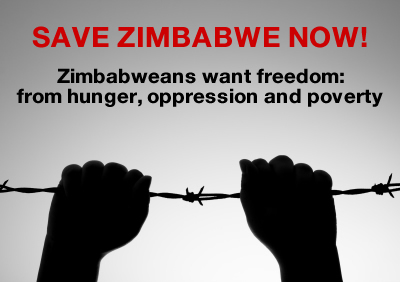
The world dithers, and Zimbabwe continues to be killed. Zimbabweans keep crossing the borders out. But who crosses in? Recently, people have started to question the sanctity of those borders, the logic of outflow. In the past week, with the launch of Save Zimbabwe Now, something new emerged. Save Zimbabwe Now has called on people of conscience to engage in a personal collective action, fasting and monitoring. Yesterday, Nomboniso Gasa of the South African Commission for Gender Equality and a member of Save Zimbabwe Now, put governments on notice that people of conscience, people who want Zimbabwe to be free today from hunger, oppression and poverty, would be monitors. The test for competency to become a monitor is trust. Not a blue helmet worn nor a civil service exam passed: “by sheer silence… they condone what is happening – so what basis do we have to trust them!” Trust.

As Graca Machel said at the launch of the Save Zimbabwe Now campaign, Zimbabwe is a lesson. Even when the schools are closed. Yvonne Vera knew this, the lesson that is Zimbabwe. Her last novel, The Stone Virgins, ends on a double note of education. On one hand, there’s Nonceba, who is remarkably educated: “there are not many people with a good high school certificate in the city. She has an advantage. Education for everyone is being constantly interrupted by the war. Schools close down. They remain closed. Especially, the mission schools located in rural areas. Nonceba has an astounding capacity for joy.”

And there’s her partner, Cephas: “His task is to learn to recreate the manner in which the tenderest branches bend, meet, and dry, the way grass folds smoothly over this frame and weaves a nest, the way it protects the cool livable place within; deliverance.”

The schools must be opened today, the hospitals and clinics as well. People must have access to their own and their shared capacity for joy. At the same time, the cool livable place within must be learned. The borders must be opened so that exile is not confused for deliverance. Save Zimbabwe now, not from itself but rather from those who are murdering it.


(Image Credit: Save Zimbabwe Now Campaign / Twitter.com)


Bordering on peace: Mexico and the United States

How is the border story told? Let’s look at Ciudad Juárez as an example. Reporters Without Borders and the Centre for Journalism and Public Ethics (CEPET) released a report this week that “points out that the deployment of many federal personnel – civilian and military – to this major drug-trafficking stronghold has not made the city any safer and has even exacerbated the violence.” The deployment of federal personnel exacerbates violence. Gaza, meet Ciudad Juárez.

But El Paso, just across the river, is safe. Why? For some, it’s the new immigrants, “who tend to be cautious, law-abiding and respectful of authority”, as well as Fort Bliss and a heavy police presence. Why does military and civilian presence in El Paso reduce violent crime, but increase it in Ciudad Juárez ?

A recent New York Times article ends with Marisela Granados de Molinar, who “was an office manager at the Mexican attorney general’s office in Juárez, but lived for decades in El Paso with her husband, Jose A. Molinar Jr.”. For decades, she crossed the border. In December, giving her boss a lift to El Paso, her car was riddled with bullets. Her boss “wanted to visit Wal-Mart.” Her husband reflected, “She was never afraid. She thought she wasn’t important enough for them to care about.” Not important enough to kill.

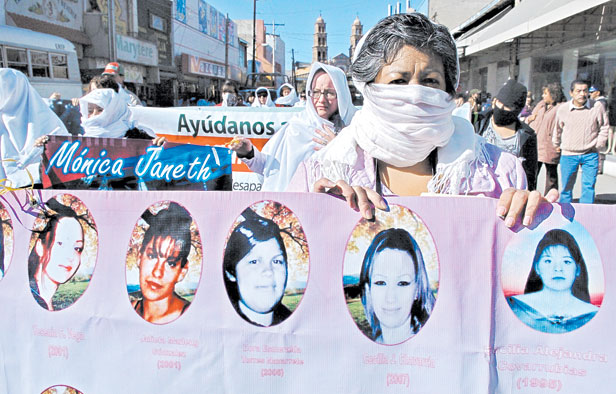
This is an old story, the story of murdered women not important enough to kill. Ask the mothers of the disappeared of Ciudad Juárez. They’ll tell you, it’s an old story: “On the same day Barack Obama was inaugurated as the first African-American president in U.S. history, an old story was repeating itself in Ciudad Juárez, Mexico, across the river from El Paso, Tex. Staging a caravan through the violence-ridden city, a new group of mothers of disappeared young women brought public attention to the cases of daughters who have gone missing since January 2008. Holding a rally at the downtown cathedral, the mothers demanded their daughters be returned home alive. . . . All of the disappeared young women are teenagers who went to school or worked for a living, and most were headed to downtown Ciudad Juárez, the scene of numerous disappearances since the 1990s.…At least 29 new cases of women who have disappeared in Ciudad Juárez since January 2008 are pending… The latest rash of women’s disappearances coincides with violent upheavals in the criminal underworld, increased seizures of drug loads, changes in political administrations, and deployments by the Mexican army or federal police. Since 1995, several groups of relatives have thrust the issue of their missing daughters and sisters into the international spotlight. Mass protests, which reached their zenith in 2003-04, prompted the administration of former Mexican President Vicente Fox to create new government bureaucracies, including a special commission on violence against women in Ciudad Juárez and a special prosecutor’s office. Both agencies were widely criticized for failing to clear up numerous disappearances and femicides. Since Mexican President Felipe Calderon assumed power in December 2006, the two agencies have become virtually invisible. Meanwhile, murders of women officially reached all-time heights in Ciudad Juárez last year, when at least 86 women were slain; many homicides were connected to the narco war that claimed more than 1,600 lives overall. Women´s murders have continued into 2009.”

It is an old story, but it’s not the whole story. Scholars and activists have addressed the femicide of Ciudad Juárez as local and national, the old story which must be told, and also as transnational, the story of the border town under neoliberalism, of the Mexican border town under NAFTA. Laura Carlsen this week noted that NAFTA begat the Security and Prosperity Partnership which begat the Merida Initiative, or Plan Mexico, which militarizes, well, everything and everyone south of the Rio Grande. Plan Mexico claims to impede transnational criminal activity, which, of course, only flows south to north. And the south-to-north “contagion” justifies militarization of civilian zones: “the militarized approach to fighting organized crime, couched in terms of the counterterrorism model of the Bush administration, presents serious threats to civil liberties and human rights. In Mexico, this has already been clear particularly among four vulnerable groups: members of political opposition, women, indigenous peoples, and migrants”. All those murdered ones not important enough to kill. Women are women, and women are members of the opposition and indigenous peoples and migrants.

NAFTA reordered the borderlands, in particular for women. Many have written on this. From Shae Garwood’s “Working to Death: Gender, Labour, and Violence in Ciudad Juárez, Mexico” to Melissa W. Wright’s Disposable Women and other Myths of Global Capitalism to Kathleen A. Staudt’s Violence and Activism at the Border: Gender, Fear, and Everyday Life in Ciudad Juárez, the myth of the disposable women is fused to the reality of the indispensable women. The murders and disappearances of women was never “merely” individual or local. The Juárez femicide is part of the historical moment, the moment of NAFTA, of economic and political restructuring. Women responded with new organization and action. Women of the border town Ciudad Juárez know that militarizing the police brings more violence against women. Their state of terror comes from gangs, police, soldiers, partners, and employers. For Staudt, violence against women is the overarching problem at the border.

Violence against women is the border. Everything of the border must be understood in the context of violence against women. Irma Maruffo gets it: “Women do not enjoy the freedom of secure transit in the city, and this is a right and a responsibility of political authorities and the legal system.” The regime of state and the rule of law stand accused. The Mexico – U.S. border has been redrawn by NAFTA, by the State, the Law and the Market, that value `national security’ over women’s freedom. The inequalities of that border generate and gender violence. Open that border, and make freedom and peace, rather than security, a priority and goal.

(Photo Credit: Borderland Beat)

Announcing a new feminist journal: Women In and Beyond the Global, WIBG

Women In and Beyond the Global, WIBG, a peer-reviewed online journal

Women In and Beyond the Global, WIBG, is an open access feminist project that analyzes and works to change the status and conditions of women in global households, prisons, and cities. WIBG involves activists, academics, information specialists and others. WIBG has established a blog site, www.womeninandbeyond.org, and, in collaboration with the Center for Transnational Women’s Issues, a monthly seminar. We are pleased to announce our newest project, a new peer reviewed, open access online, international feminist journal: Women In and Beyond the Global, WIBG.

WIBG will publish interdisciplinary analyses, creative expressions, reports from the field, interviews, and artworks. The journal will create a common space for activists, academics, and information specialists to share their work and views, to interact with one another, and to change, in whatever way, the world.

WIBG intends to support and encourage publication around the globe. Our current Editorial Committee includes the following: Kelly Cooper, Cuernavaca, Mexico; Cheryl Deutsch, Mumbai, India; Cathy Eisenhower, Washington, DC, U.S.A.; Dan Moshenberg, Washington, DC, USA; Siphokazi Mthathi, Cape Town, South Africa; Rachel Riedner, Washington, DC, USA. We invite others to apply to become members of the Editorial Committee.

On February 1, we will circulate the call for papers for our first issue. Stay tuned.

If interested, please contact Dan Moshenberg, dmoshenberg@gmail.com, or Cathy Eisenhowercathy.eisenhower@gmail.com


Bordering on peace: Gaza

In the continuing sunshine of the inauguration of Barack Hussein Obama, Susan R. Benda, a DC-based lawyer, reflects on the embracing impact on her own son, a pre-teen raised by a single mom: “The doors of his imagination have swung open, and his sense of his place in the world has changed.” Doors of imagination, perception, and possibility swung open this week, personal doors that had stood closed for generations, that had been closed for so long many had forgotten they existed, had forgotten they were doors at all, many had come to accept the doors as walls, solid, immutable, opaque. People learned to open doors again, people learned to pass through again, people learned to cross thresholds again.

Some doors still remain closed, however, and they are called borders. This series, “Bordering on peace,” will offer stories concerning women pushing against the closed door common sense of nation and nationalism. We begin with four: Gaza, Mexico/United States, Zimbabwe, India/Pakistan. You are invited to contribute your own.

For Rewa Zeinati, Gaza is a place where only the dead are allowed to dream of peace:

Heavy

(Gaza 2009, day 13)

A child’s head rests on the rubble
Body-less,
Hair plastered on her face, eyes closed,
Dreaming of peace that comes too late.

Peace that comes too late is defined by time. Time, in Gaza, has always been something different: “Time there does not take children from childhood to old age, but rather makes them men in their first confrontation with the enemy.” Peace comes too late because it has no passport, it has no papers, and so is blocked at the borders, the borders that only the Israelis manage, the borders that Israelis have controlled and sealed.

Time there makes children into men. And the women? Of course, women in Gaza have been devastated by the violence; the stories abound. But there’s another story, that of Palestinian women organizing as the rockets descend on their homes, as told by Islah Jad “Many women in Gaza have risked their lives to save the besieged ‘targeted’ groups in Gaza. Women, through their mass mobilization, managed to save many houses from being demolished by Israeli artillery. Women are mobilized to provide vital emergency services for women in Gaza, women are also active in the media and mass communication to make their voices heard against this war.” This war, like the ones before it, will end. But peace that comes too late will not be allowed across the borders, and the tunnels are being sealed.

[Tomorrow “Bordering on peace: the U.S. – Mexico border”]

(Photo Credit: AP)


5th Conversation of the Transnational Network on Women’s Issues

On Saturday, Feb 7, 10:30-12:00, Lisa Rabin and Catherine Berrouet of George Mason University

 will speak about

THE CULMORE LITERACY AND POPULAR EDUCATION PROJECT: MELDING COMMUNITY AND UNIVERSITY KNOWLEDGES IN NORTHERN VIRGINIA” 

at the 5th Conversation of the Transnational Network on Women’s Issues.

To join the conversation in person, please go to George Washington University Phillips Hall, Room 411, 801 22nd St, NW, or Towson University Cook Library 404A, Towson, MD, 21252.

To join us by phone, please email transfem@c4twi.org.

To view the flyer for the event, please click here:

Feb-7 transnational_network_flyer

Visit http://ctwiei.ning.com/group/tnwi to hear the podcast of our previous talks.