Protection: when the powerful offer protection, women know

The day after Obama won the Presidential election, The New York Times wrote that Obama won a decisive victory because “he saw what is wrong with this country: the utter failure of government to protect its citizens”. At the time, I wrote that protection was the wrong goal, that from India to Haiti to Zimbabwe to the Democratic Republic of Congo to Ciudad Juárez, and the Mexico-US borderlands more generally, the powerful offer protection to those they call citizens, and ignore women’s demands for democratic, full and mutual engagement, for the right and capacity to dream and love in public as well as in private. The powerful offer protection as a means to ignore women.

That was November 2009. It’s January 2010, time to consider, again, protection. Not the protection that follows mass devastation, such as in Haiti. Nor the protection that follows extreme violence, as with the massacre near Jos, Nigeria. Nor the protection of legislative and other forms of hate campaigns, as in the current anti-gay Bill in Uganda, where we are all being protected from the threat and scourge of same-sex love and sexuality.

Instead, consider two linked national – global moments in which the powerful few claim to offer the gift of protection to the citizens of the nation.

The World Cup is coming to South Africa. Across the country, “the question of how to deal with sex workers grows louder”. What exactly is the problem, the to-deal-with, with sex workers? Because sex work is illegal, the issues of health and safety for both clientele and workers remain insoluble, and the rights and well being of the sex workers remain distant: “Sex work is illegal in South Africa. Cape Town-based Sex Worker Education and Advocacy Taskforce (SWEAT), has been campaigning to decriminalize sex work for the past 12 years, said spokeswoman Vivienne Lalu. 

Rights activists say legalizing sex work would protect the workers and their clients from HIV and abuse; there are moves afoot to review the Sexual Offences Act. But, Lalu says, `We are still some years away.’”

Legalizing sex work would protect the workers, not because the law, given by the powerful, would afford protection, but because the entire issue would move from the realm of sexuality to that of workers. Once sex work in South Africa, as anywhere, is legalized, sex workers can unionize, can create their own formal, autonomous, sanctioned spaces, alliances, affiliations. Workers, and especially women workers, don’t seek protection. They demand the right to association. They demand respect for the dignity of their individual and collective labor. That is the reason that the lead up to the World Cup in South Africa has been marked by so many protests. Across South Africa, the poors, largely women, have rejected the promise and offer of protection, in the form of forced removals for their own good, and instead have called for housing, public services, education, and health care.

The Olympics are coming to Canada, and so Canada, British Columbia in particular,  anticipates an increase in sexual assaults during the 2010 Olympics, and, of course, all the money has been spent on `security’. The buildings and international `visitors’ must be protected.

But British Columbia had enough money recently to outsource welfare-to-work to a company called WCG International HR Solution. WCG is a subsidiary of Providence Service Corporation, based in Tucson, Arizona. WCG billed the government for `no-shows’. This is business as usual. When you outsource `helping’, women and children are the first casualties. This is not new information. It’s been available to British Columbians since at least 2005, when Policies of Exclusion, Poverty & Health appeared, sharing stories of 21 women who did not seek protection but rather struggled and organized for change. Instead of change, they got the Olympics and the gift of protection: evictions, clinic closures, increased police presence.

When the promise of protection comes from the powerful, it is always fatal, first to women and children, then to everyone and every thing else. Women know the pitfalls of powerful protection. Women know, in their bodies, the economies of extraction, theft, exploitation and abuse. Change from below seeks material equality, space, time, and it begins and ends with women. Protection from the powerful is what it always has been, an insurance policy forced upon people by extortionists.


(Image Credit: http://sites.psu.edu/jld5710/2013/02/03/cartoons-are-a-powerful-medium/)
What is left: after solitary confinement in schools

Prison is a bad place for children. Solitary confinement is worse yet. Extended solitary confinement is lethal. These are not surprising statements, and the news that underwrites them, though dismaying, is not particularly shocking.

Immigration detention centers in the US, such as the Eloy Detention Center in Arizona, run by Corrections Corporation of America, or the Reeves County Detention Center, run by GEO, are lethal, fatal black holes for all residents. Joe Arpaio’s jail in Maricopa County is only the best known example of humiliation and terror against all Latinas and Latinos, irrespective of status, and which results in increased anxiety and mental health problems for Latina and Latino children.

And it is estimated that more than 60 of those held in Guantanamo were under 18 when they were arrested and sent to Cuba.

In England, Yarl’s Wood Immigration Removal Centre is so terrible for children that the entire nation is now considered unsafe for children of immigrant parents, including those seeking asylum and refuge. The place literally drives children mad.

Juvenile centers in the United States report that sexual abuse of prisoners, by other prisoners and, more, by staff, is off the charts. In 2008 – 2009, in more than a few juvenile detention centers, a recent study suggested that nearly one out of every three prisoners suffered some sort of sexual abuse.

When children go to prison, how are they educated? According to some, they’re not at all. California is being sued in a federal class action case for failing to educate youth in their `probation camps.’

These are terrible and tragic and all too familiar. Prison is a bad place, after all. Bad things happen.

Those bad things that happen to children are not restricted to prisons. Take “seclusion rooms”, for example: “Seclusion is the involuntary confinement of a student alone in a room or area from which the student is physically prevented from leaving. This includes situations where a door is locked as well as where the door is blocked by other objects or held by staff.”

This happens in schools all over the United States.

In the state of Georgia, public schools have “seclusion rooms,” solitary confinement cells. The doors are double bolted on the outside: “Seclusion rooms are allowed in Georgia public schools provided they are big enough for children to lie down, have good visibility and have locks that spring open in case of an emergency such as a fire. In 2004, Jonathan King, 13, hanged himself in one such room, a stark, 8-foot-by-8-foot “timeout” room in a Gainesville public school.” Time out. When schools put children into solitary confinement, what time is left?

What is left for Jonathan King’s parents, so many years later? Pain, anguish. Only now is Georgia finally responding by considering a law that protects all students from seclusion and restraint. It only took the State legislature six years … equal to almost half of Jonathan King’s entire life.

In May 2009, the Missouri state legislature passed a law giving the school districts two years in which to devise written policies governing the use of seclusion rooms. Before that, there were no policies, only the practice of solitary confinement of school children without a single written guideline or rule. This is now an issue in the upcoming GOP primary for State Senate. One candidate sees restrictions on solitary confinement of children as a violation of local sovereignty.

Florida state legislators are also considering a bill to restrict the use of restraint and seclusion. There are seclusion rooms all over the state school system, from elementary on up. Up til now, there has been no written policy.

Not surprisingly, solitary confinement is of particular concern to parents of children living with disabilities. Here are two stories from Florida:

When a twelve year old girl with autism repeated names of movies, shoved papers off her desk or waved her arms and kicked her legs toward approaching teachers, they responded by grabbing the eighty pound girl, forcing her to the ground and holding her there. This happened forty-four times during the 2006-07 school year.  She was held once for an hour, and, on average, twenty-two minutes at a time.  At least one incident left her back badly bruised.

When a seven year old girl, diagnosed with autism and bipolar disorder had her head pushed to the floor, the parents discovered several other frequent inappropriate uses of restraint and seclusion. The county where they live leaves it to individual schools to write their own policies on restraint or seclusion use.

These come from a 2009 report issued by the National Disability Rights Network: School is not supposed to hurt: Investigative Report on Abusive Restraint and Seclusion in Schools.  The stories come from all over the United States.

On the cover is the picture of a lovely, smiling seven year-old girl, from Wisconsin:

A seven year old girl was suffocated and killed at a mental health day treatment facility when several adult staff pinned her to the floor in a prone restraint.  This child, who was diagnosed with an emotional disturbance and Attention Deficit Hyperactivity Disorder, died because she was blowing bubbles in her milk and did not follow the time-out rules regarding movement.

Greenfield School District, outside Milwaukee, Wisconsin, applied to use Federal stimulus funds to build seclusion rooms in elementary and middle schools. The Wisconsin Department of Public Instruction recently rejected the application, instructing all school districts in the state that stimulus funds and special education funds not be used for that purpose. Greenfield is disappointed.

School is not supposed to hurt. It’s not only the children sent to isolation who suffer. What are the other children in the classrooms, in the hallways, in the school offices, who witness these acts and know of these rooms as part of the norm, what are they being taught? What becomes of a generation of child witnesses to torture?


(Video Credit: Vimeo/StopHurtingKids.com)

Black Looks: Haiti Cherie

Haiti Cherie

What word can encompass stretch its arms and wrap them around
A day when the world returns to the dust it was
Before we fashioned orderly chaos and became free
The First Negro Republic raises weakened arms to wipe
The Ash
From its eyes water and ash to mould human tragedy
What word can encompass… we have asked before
Encompass passion itself when it screams whimpers
Haiti mwen
Haiti nou
Nou la épi zot

The word that encompasses has not yet been created
Bondyé ki pa bon
The word cannot be found
Under the rubble of ash and water edifices
Buildings made from tears and dust that crumble into a void of screaming and loss
A hellish void of independence and burnt out communication lines sparking revolting revolutionary pain
And yet is Haiti so epic that
Hurricane-proofed we sink into the earth from which
Yo di
We came
The dead in the streets and the word cannot be found the dust will not settle for the word to be found
She hides in the folds of warm pervasive stench heavy and loud as shattered eardrums
She cavorts with criminals buried under police stations and wives caressing newborns to deep deep sleep

Reveal yourself, word!
One hundred French citizens buried beneath a thousand Haitian bodies
Ki té ké soucouri corps mwen
And they keep coming
The hits
The hits
Les coups n’arrêtent pas
What more do we ask but to find the word that can
That will
Reach long arms around the day when God gripped us in His loving hands
And shook and shook
Finality
He set us down gently like lambs beautiful black sheep and
Poured ashes onto our heads?

Annie Quarcoopome

Annie Quarcoopome writes at Black Looks. This poem appeared on Black Looks, January 13, http://www.blacklooks.org/2010/01/haiti_cherie_.html

Abstract Space: While the air is still warm

Abstract Space:  While the air is still warm

While the air is still warm
while beads of sweat still trickle down between
the blades of my shoulders
and my fingers still smell of you
while my husband is out driving, grim faced
kicking up dust somewhere
fists around the steering wheel
loveless and cold
while the approaching clouds have not managed to seal me in yet
this listless and sad day that wants to lie back in your arms
would do anything
and I mean anything
to bring you back
while the birds seem to be free, lining up on telephone poles
and the day ends and the lights switch on
and my best dress hangs in the cupboard
I will touch myself.


What is left: solitary confinement

“After the bars and the gates
and the degradation,
What is left?”

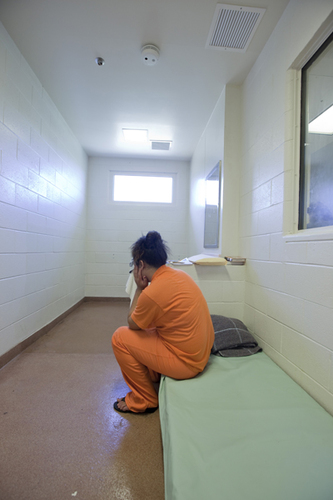
Maria Benita Santamaria is a 35 year old transgender woman. In June 2009, she was arrested in northern Virginia and charged with possession of methamphetamine.  In August she pleaded guilty. She was sent to Central Virginia Regional Jail, a men’s prison. The prison placed her in solitary confinement, for “her own protection”. At the end of December, a U.S. District Judge ordered her removed to a federal prison with treatment facilities and counseling for transgender prisoners.  When the holiday seasons intruded, the judge had Santamaria placed in a medical wing until after the end of the festive season. After six months in solitary, what is left?

“After the lock ins and the lock outs
and the lock ups,
What is left?”

For the last two years, Santamaria has undergone hormone treatments in preparation for sex change surgery. That stopped in August. According to the prison staff, while in solitary, Santamaria was treated as a prisoner on punitive lockdown. She left her cell one hour a day, she showered three times a week.

“I mean, after the chains that get entangled
in the grey of one’s matter,
After the bars that get stuck
in the hears of men and women,

When the jail guards talked to or about Santamaria, they called her `it’. She considered suicide. She pleaded to be returned to the general population.

“After the tears and disappointments,
After the lonely isolation,
After the cut wrist and the heavy noose,
What is left?”

Maria Benita Santamaria said take me out of solitary confinement and put me in the general population, where I will most likely be raped. Maybe I’ll survive. It would be better than this.

“Like, after you know that god
can’t be trusted,
After you know that the shrink
is a pusher,
that the word is a whip
and the badge is a bullet,
What is left?”

Across the United States, prison guards call transgender prisoners `it’, and worse. Across the country and around the world, prisoners are placed in solitary confinement for long periods … “for their own protection”. After long terms in isolation, what is left?

“After you know that the dead
are still walking,
After you realize that silence
is talking,
that outside and inside
are just an illusion,
What is left?”

Virginia also operates four `facilities’ for women: Deerfield Work Center for Women; the Central Virginia Correctional Unit #13; the Virginia Correctional Center for Women; and Fluvanna Correctional Center for Women. In June 2008, the four prisons held about 2220 women, of which Fluvanna held 1200.

“I mean, like, where is the sun?
Where are her arms and
where are her kisses?
There are lip-prints on my pillow—
i am searching.
What is left?”

Fluvanna boasts a Pen Pals program, and prisoners can work for the Virginia Correctional Enterprises as optical Braille transcribers or as tailors. But there’s more to Fluvanna, much more.

“I mean, like, nothing is standstill
and nothing is abstract.
The wings of a butterfly
can’t take flight.
The foot on my neck is part
af a body.
The song that i sing is part
of an echo.
What is left?”

Reports have been coming out of Fluvanna that women who `appear to be lesbian’ (short hair, baggy clothes) have been segregated and put in a `butch wing’. A no-touching policy has been instituted. Women walk single file everywhere. Access to religious services has been curtailed. And this: “a woman writes that a mentally ill inmate was kept in solitary confinement for months. `When it’s time for her to take her shower, she is lead, shackled and naked, down the hall, with a dog leash attached to her shackles, by a male guard.’”

“I mean, like, love is specific.
Is my mind a machine gun?
Is my heart a hacksaw?
Can i make freedom real? Yeah!
What is left?”

In March 2009, Dr. Atul Gawande argued, “Public sentiment in America is the reason that solitary confinement has exploded in this country, even as other Western nations have taken steps to reduce it. This is the dark side of American exceptionalism. With little concern or demurral, we have consigned tens of thousands of our own citizens to conditions that horrified our highest court a century ago. Our willingness to discard these standards for American prisoners made it easy to discard the Geneva Conventions prohibiting similar treatment of foreign prisoners of war, to the detriment of America’s moral stature in the world. In much the same way that a previous generation of Americans countenanced legalized segregation, ours has countenanced legalized torture.”

“I am at the top and bottom
of a lower-archy.
I am an earth lover
from way back.
I am in love with
losers and laughter.
I am in love with
freedom and children.”

In 1974, Assata Shakur, a New Jersey prisoner, was one month pregnant. She was taken to Roosevelt Hospital, and shackled to a bed for 10 days. Then she was moved to Middlesex County Jail for Men, and kept in solitary confinement for four months. She was extradited to New York, to Rikers Island, where `the treatment’ continued.

On September 10, Assata Shakur went into labor, and, on September 11, gave birth to Kakuya Amala Olugbala Shakur. When Shakur returned to Rikers Island, she was shackled, beaten, put into solitary confinement for a month. Finally, she was released from `punitive segregation: “So I was no longer locked. Just in jail. And separated from my child.”

And she wrote the poem, “Leftovers – What Is Left”, for her daughter. Parts of that poem run through this reflection.

“Love is my sword
and truth is my compass.
What is left?”

What is left? Solitary confinement.

Solitary confinement is the vital organ of the body politic of prison. When you read that the death penalty might be dropped from the anti-gay bill in Uganda or that capital punishment may finally come to an end in the United States, remember this: solitary confinement is torture, and it defines prison.


(Photo Credit: Richard Ross/SolitaryWatch.com)

Uganda is … a jambula tree grows in Kampala


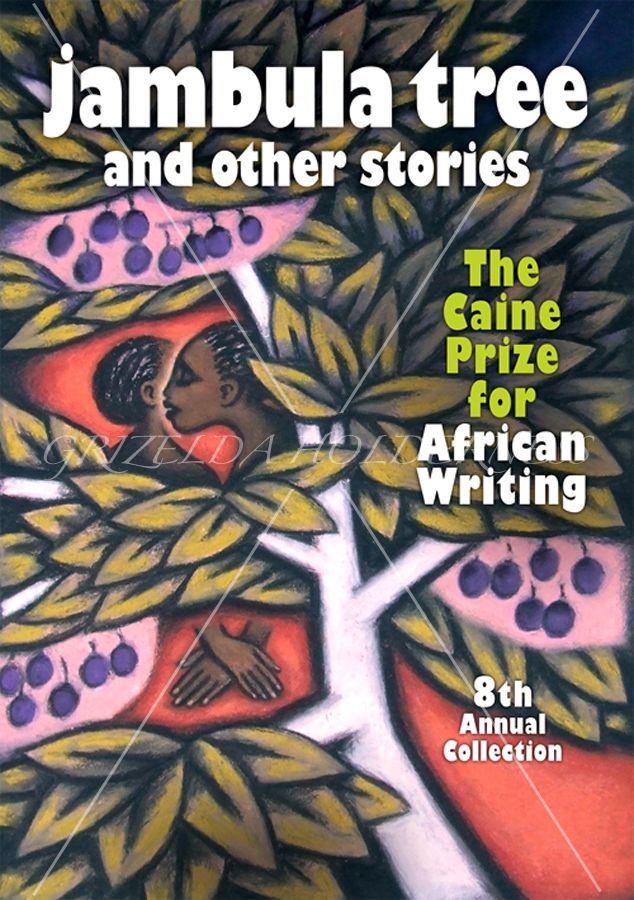
Jambula Tree” is an award winning short story written by Ugandan writer Monica Arac de Nyeko. It won the 2007 Caine Prize for African Writing, the preeminent prize on the continent for short fiction.  Arac de Nyeko is the first and thus far the only Ugandan to have won the coveted prize. Arac de Nyeko is also a member of FEMRITE, the Ugandan Women Writers’ Association.

“Jambula Tree” tells the story of two adolescent girls, Anyango and Sangu, who, for a time at least, `prefer’ one another. When their love is discovered, Anyango is sent abroad to boarding school, Sangu stays behind and becomes a nurse who leads a solitary life. The story is a letter written, perhaps delivered, perhaps never sent, by Sangu to Anyango on her return.

Their love is a jambula tree: “It had grown so tall. The tree had been there forever with its unreachable fruit. They said it was there even before the estate houses were constructed. In April the tree carried small purple jambula fruit which tasted both sweet and tang and turned our tongues purple. Every April morning when the fruit started to fall, the ground became a blanket of purple.”

The jambula tree is a real tree with real fruit and real cycles, and it is also the possible, the dream of shared love that extends in time to before the constructed spaces of human society and perhaps will continue beyond the lifetime of those spaces. It is part of the world, part of the earth, part of the sky, part of our story.

And yet …

“According to the framers of the Bill, a girl who prefers a girl is more dangerous to the society than officials who robbed millions of dollars meant to treat aids, malaria and tuberculosis patients in 2004,” wrote Joachim Buwembo in The East African, earlier this week.

Joachim Buwembo is a journalist of some renown, who has lived, worked and written in East Africa for decades. Currently a Knight International Journalism Fellow, working in Tanzania to improve coverage of poverty and development issues in that country, Buwembo has Managing Editor of The Monitor; founder of the Tanzanian newspaper, The Citizen; Kampala Bureau Chief for The East African; and editor of The Sunday Vision. Before that, he was a high school teacher in Uganda and Kenya. He has dedicated his life has to education through critical journalism and national debate. Joachim Buwembo is, by all accounts, a knowledgeable man, an experienced man.

Yet, with all that experience and knowledge, until recently Joachim Buwembo had had no opinion – good, bad or indifferent – about gay men, lesbians or homosexuality and had no reason to have an opinion. But times have changed: “Today, a Ugandan cannot run away from giving an opinion about homosexuality, after the national parliament was petitioned in a formal motion to prescribe draconian measures including the death penalty for the act.”

In this week’s op-ed piece, “Why we cannot turn a deaf ear to Uganda’s homosexuality Bill”, Buwembo uses reason to take apart the will to kill that underwrites the Bahati Bill. He has two main points. First, any addition to a penal code presumes a crime that can be judged, based on evidence and knowledge. In Uganda, very few can judge gay men, lesbians or homosexuality because very few actually have sufficient information, and even fewer know what the actual crime is. Second, there are real criminals and scoundrels about, men and women who have massacred and who have plundered. They go free.

That is Buwembo’s argument. Some see the argument as a bit of sanity and calm in a season of national gay panic and anti-gay hysteria. Others hear and read his as a `dispassionate voice…amidst all the nonsensical hype.”

But Buwembo is also a storyteller. He tells two stories. The first is the story of a dialogue: “In my many years of existence, I first recognised a homosexual only three years ago. I say ‘recognised’ and not ‘identified’ because I only have her claim as ‘proof’.” Where do nuanced differences between recognition and identification sit in the pogrom that is being planned for gay, lesbian, transgender, bisexual and intersex Ugandans, and for their friends and loved ones? Who will adjudicate identity? Who will send Joachim Buwembo to prison for not reporting on a woman who claimed a lesbian identity as her own?

The second is the story of  two girls, the dangerous ones, the girl who prefers a girl, the girl who is preferred by a girl. I have been thinking of those two girls since I first read of the Bahati Bill and, even more, since I first read the Bill itself. For its target is the jambula tree, and all those who tell or read its stories.

The Bahati Bill violates human rights. At the same time, it attempts to silence the stories and murder the storytellers. Not the gay, nor the lesbian, nor the straight, not the this nor the that storyteller, but all storytellers. It means to stifle and kill creativity and creation itself. Who will send Joachim Buwembo and Monica Arac de Nyeko to prison, or to the gallows, for having written human stories of human spirit, love, and being?  Would we not rather taste of the purple fruit of the earth than swim, and drown, in the red blood of our sisters and brothers?


(Photo Credit: http://www.grizeldaholderness.co.uk)

Black Looks: Uganda: To live without fear and in peace

Victor Mukasa

December 26th, 2009

Victor Mukasa of SMUG Uganda shares his experience as human rights defender and gives an overview of the criminalisation of LGBTI people across Africa. Finally he calls on everyone where ever they are to publicly denounce the anti-homosexuality bill which is before the Ugandan parliament. There are reports that President Museveni will intervene to stop the passing of the law. This cannot be relied on as for one thing he has yet to make public statement on the Bill. He has been vehemently homophobic in the past and there is no reason to imagine this has changed. Even the Archbishop of York has only managed a mild criticism of the bill though he claims to be working “behind the scenes” together with the Archbishop of Canterbury. Nonetheless his opposition seems to be based on the fact that laws are already in place and not an outright condemnation of the criminalisation of LGBTI people. This is pathetic and unacceptable from someone who is the second highest Anglican Bishop in the UK and a Ugandan by birth.

“As a background to my presentation, I would like to bring to your attention that 38 countries in Africa criminalize sexual acts between persons of the same sex under sodomy laws. These laws are in some states inherited by their colonial masters and for some Islamic states, these laws fall under Sharia law. The penalties for breaking these laws range between imprisonment for one year to life and in some countries, for example, Sudan and Northern Nigeria the penalty is death.

Recently, some African states, such as Burundi and Rwanda that did not have sodomy laws in their penal code acts have made efforts to include these laws. Burundi has managed to achieve this, while in Rwanda, a revision of the penal code act in which homosexuality is criminalized has been tabled in Parliament and could be passed as law soon. Uganda and Nigeria too have recently proposed legislation that further exacerbates already alarmingly harsh penalties for homosexuality.

In states that do not criminalize homosexuality and even in South Africa, the only country in Africa whose constitution recognizes sexual orientation and gender identity, LGBT people are increasingly facing violence and hate crimes. In most of these countries, religion is the instrument of oppression……….

I appeal to you all, to extend your human rights promotion work to all the corners of the earth. We cannot claim that we have been successful in our human rights work when people are still killed because they are gay, transgender, intersex, albino, indigenous, black, or poor. More urgently, as a Ugandan homosexual and transgender person, on behalf of all Ugandan LGBTI people, I appeal to you all to publicly denounce the anti homosexuality bill that is before Parliament.
”Continue Reading

Sokari Ekine writes and organizes at Black Looks: http://www.blacklooks.org/ . This post appeared originally at http://www.blacklooks.org/2009/12/to_live_without_fear_and_in_peace.html


(Photo Credit: Advocate)

Ota Benga: On Christmas Day, but it could be any day: Abahlalibase Mjondolo (AbM) 5

On Christmas Day, but it could be any day: Abahlalibase Mjondolo (AbM) 5
Sat, 12/26/2009 – 20:08

Reading about what has happened at Kennedy Road Settlement in Durban
makes me wonder. More like wondering and wandering from society to
society, from places in history and geography. Has capitalism become the
greatest laundering scheme, the greatest organized gang?

Going back to some of the most predatory roots of capitalism, one finds
children split from their families by the slave hunters. That was the beginning
of the splitting of humanity. A splitting apart long before Chinua Achebe saw it
with the arrival of the colonizers in Things Fall Apart. In spite of the endless
onslaught, healing has been going on, more often than not unseen, unheard
of among the pharisaic promoters/distributors of pacifying rewards.

Healers are always close by if one can see/hear/feel them
Spirit, breath, pen is all it takes
Ayi Kwei Armah helps those without go to
Healers in forests, healers in deserts,
They are everywhere
HealersbaseMjondolo
same as
AbahlalibaseMjondolo

Is it true, so goes one story,
That abahlali can turn up in your bank
Dry up your account?
Make the owner feel how it feels to be without money
In a land of honey
For the Richest of the richest
Who make money
Out of nothingest
Have decided to get rid of Abahlali
Before they desertify their bank accounts

For centuries the splitting went on
cooked in history books through
names always chosen by the same chefs:
Slavery, abolition, enlightenment, civilization
Capitalism, progress, Christianity,
Colonialism, apartheid, peace, development, competition, globalization, terror
some of these names were once sorted out by one of the greatest chefs of all,
under the name la grammaire des civilisations (later, in 1994, translated in
English as A History of Civilizations).

La grammaire des civilisations does not mention the splitting of humanity
despite the genocidal sequences of the 20th century whose names have not
been forgotten, but are fading fast…just like humanity:
Herrero, Armenians, Congo Free State, Nankin, Holocaust,
Hiroshima/Nagasaki, Indochina, Rwanda, DRCongo.

In the eastern part of DRCongo:
Violence, rape against women, babies
followed by unthinkable atrocities.
Committed just for the sake of might is right always.

And so, now, in the hearts, veins and brains of the land of Sobukwe, Biko,
Madiba,
Splitting of humanity has been taken to a new level
reminiscent of darker and darkest times

Questions arise:
Germany in 1933? Kolyma/gulag tales?
Nankin? Kassinga? My Lai?
Hiroshima/Nagasaki by other means?

Questions arise:
For what?
In the name of what?

In the name of the richest of the richest
At Kennedy Road/Durban
The answers came:

Showing the poorest of the poor
They are nothing unless they submit
To the most powerful, the most brutal
If they do not submit
They shall be silenced
Forever if necessary

Healing, once said S’bu Zikode,
Is more powerful than any lethal force.
Is the GAH (Gang against healing)
Trying to prove all of the AbahlalibaseMjondolo wrong
AbM is like a young baby, born in 2005
Being raped till it submits to might is right

Questions arise
Will the sun still rise?
We had been promised a new dawn
quickly
Re-baptized renaissance
Quickly evaporated
Has everything been inverted?
Will the sun still rise in the East?
Is the West willing to set?

Accelerated, from splitting to the next stage
With the help of the nuclear mentality
Reducing humanity to dust
Hoping that healers
Shall be pulverized in the process.

Questions arise:
Where is the world headed for when
Apartheid has been relayed by former victims
To make it sweater on the
Richest of the Richest
and harsher on the
Poorest of the Poorest?

Questions cannot be silenced:
Could it be that splitting has now entered its most lethal phase
Gone beyond the point of no return
Saying no to Reconnecting with the Disconnected
As called for by Ayi Kwei Armah
In his Eloquence of the Scribes?

Keep listening
To answers coming
From the quiet ones
Keep listening to
Abahlali relaying
The silenced ones

These words almost did not see the light of day
It moved out of sight on October 18 2009
With apologies
Salvador, Bahia, Brazil, December 25, 2009

Jacques Depelchin


(Abahlali baseMjondolo is the South African shackdwellers’ movement.

“On Christmas Day, but it could be any day: Abahlalibase Mjondolo (AbM) 5” first appeared on the Ota Benga site Thanks to Ota Benga, Abahlali baseMjondolo, Jacques Delpechin and Raj Patel for their ongoing work and collaborations.)


(Photo Credit: Dear Mandela / YouTube)

Dennis Brutus died quietly in his sleep today

Dennis Brutus died quietly in his sleep today:

“Statement from the Brutus Family on the passing of Professor Dennis Brutus

“Professor Dennis Brutus died quietly in his sleep on the 26th December, earlier this morning. He is survived by his wife May, his sisters Helen and Dolly, eight children, nine grandchildren and four great-grandchildren in Hong Kong, England, the USA and Cape Town.

“Dennis lived his life as so many would wish to, in service to the causes of justice, peace, freedom and the protection of the planet. He remained positive about the future, believing that popular movements will achieve their aims.

“Dennis’ poetry, particularly of his prison experiences on Robben Island, has been taught in schools around the world. He was modest about his work, always trying to improve on his drafts.

“His creativity crossed into other areas of his life, he used poetry to mobilize, to inspire others to action, also to bring joy.

“We wish to thank all the doctors, nurses and staff who provided excellent care for Dennis in his final months, and to also thank St. Luke’s Hospice for their assistance.

“There will be a private cremation within a few days and arrangements for a thanks giving service will be made known in early January.”

(Thanks to Patrick Bond for circulating this.)

For many, young, old and anywhere in between, Dennis has been a presence, a gentle and insistent education into the beauty of the persistent struggle for social justice and into the need to remember that social justice emanates from and builds on love, laughter, beauty, understanding, sharing, humanity.

Dennis first came to the attention of many with his collection Letters to Martha & other Poems from a South African Prison. Here’s one of those poems, “Letter 18”, dated 20 December 1965. Hamba kahle dear greatly daring poet hamba kahle sala kahle.

“18

I remember rising one night
after midnight
and moving
through an impulse of loneliness
to try and find the stars.

And through the haze
the battens of fluorescents made
I saw pinpricks of white
I thought were stars.

Greatly daring
I thrust my arm through the bars
and easing the switch in the corridor
plunged my cell in darkness

I scampered to the window
and saw the splashes of light
where the stars flowered.

But through my delight
thudded the anxious boots
and a warning barked
from the machine gun post
on the catwalk.

And it is the brusque inquiry
and threat
that I remember of that night
rather than the stars.

20 December 1965”


(Image Credit: quba.co.za)

Abstract Space: Pinned

I have pinned an anatomical drawing of myself to my heart, the way my mother would pin the seams of a dress together before she ran it under the machine.
I put my fingers to the words “labia minor” to the word “clitoris” my hand over the word “vagina.”
I might feel like fucking, I might not. It is my choice isn’t it? 

Well I remember when I wanted it, I remember when I didn’t. In detached marriages with the sighing sheets and dented sat upon sofas.
Me spread wide in the pages of a pornography magazine, and how am I to know what teenage boys and men everywhere are thinking when they see me, like this? I can’t censor their thoughts, can’t say you know I didn’t mean this, but I can’t really help it anymore. Sticky debasing blurred fingers, and right now in thousands of boy bedrooms they are coming all over me. 

In the living room with the TV on I am told to pout a little more, to push my breasts out, and now to smile seductively as I drape myself over an automobile. I sell the medicines too, I pretend to care that you have the flu, as you think it must be that way, it always has been and always will. But really, I don’t care. Smile sweetly they say, look concerned.
I do the washing for you too, as I juggle my high-powered job and motherhood and looking after you and your underwear you still have not got around to washing yourself. I am to represent nurturing and goodness as I pop an instant meal into the microwave.
Are you not bored? I am. I have fallen asleep on the sofa, I am snoring in a manner you would call unbecoming of a lady. I would sleep forever if my mothers who fought for universal suffrage and equal rights, my mothers who burned their brassieres had not woken me up, pulled me by the ear and said “it is not over yet, we can say it has become worse, much worse, a world full of complacent tired women.”
I get up and take your dinner plate to the kitchen. Later I let you talk dirty to me. This must mean that I am liberated then?

You take the most destitute of me from the forgotten corners of the earth, so that they will dance pretty circles around you, gyrate their hips and sit on your laps, while you stuff money into their rhinestone crotches. I wrap myself around poles so you can feel good about yourself, so you can play with yourself in the dark while you slurp at your drink.

I bring nations together at sports events, in tight little skirts, with my long legs and my cleavage, my provocative moves. I make it more interesting for the spectators.
Why do you always need me to do this for you, why do you always embarrass me this way, use me this way, why is this the only thing you can ever come up with, when you think of me?

In the beginning had I had the chance I would be someone different I know. Never a product to sell, to swell the crowds, never an attraction to push up the profits. You would never assume that my only reason for being here in this world, was for you-to serve you.

Once, I might have cared about you, I might have even loved you, the possibility of a different kinder you.

Now, I am over-exposed, over-stimulated, sold. I feel nothing anymore. I feel nothing for you.

Megan Voysey-Braig

Megan Voysey-Braig is a South African writer, author of Till We Can Keep an Animal (Jacana, 2008), winner of 2007/2008 European Union Literary Award, shortlisted for the 2009 Commonwealth Writers’ Prize – Africa, longlisted for the 2009 Sunday Times Fiction Prize. She currently lives in Berlin. This is the first piece in her series for Women In and Beyond the Global.