Letter To The Decent Guy

Dear Mr. Decent Normal Guy,

For a long time, I’ve been longing to have this talk with you, but was at a loss for the right words. I wanted to ask you stuff in a respectful and cordial manner, a manner that encourages dialogue and open answers. I wanted to be able to trust in the safety of your goodness, to bare my soul and be vulnerable with you without my twitter account being hacked or overwhelmed with cyber aggression. The last thing I want is to attack you, for I need your strength and solidarity more than ever.

Let’s talk about the issue of violence and abuse towards women. I need to ask you certain questions, I need to know where you stand on this.

You are the good husbands, sons and fathers. The men we love, who make us proud. The men we dream of marrying, the heroes we hope our sons will become. You are the breadwinner and the job holder; the decent guy who supports, respects and honors women. The man who pulls his weight at home.

Still my question is about a problem that also concerns you. It concerns the plethoric display of violence, abuse and undiluted misogyny which the “bad guy”,  your fellow specimen of the male species, (let’s call him) your evil twin, has been dishing out to women worldwide.

You know, for a long time, I was convinced that you and your brother are not identical at all. It seemed easy enough to tell you both apart. You were as different as night and day.

But today I am not so sure I know who you are. I can no longer blindly vouch for the honor of your convictions. Today, in this age of internet anonymity, the situation has changed. Thanks to the wonders of internet your brother and you now deploy the same avatar. One can no longer tell you apart.

It is hard to say where one brother ends and the other begins. I thought I knew you so well; that I would always recognize you inspite of any given circumstances.

Today I have come to realize that I don’t know you at all. I can’t in all certainty identify what you stand for, it seems you and your brother have morphed into a bizarre siamese entity.

Recently, I saw the Tedxwomen video of Anita Sarkeesian. It was about cyber harassment and misogynism. The magnitude of rape threats, murder threats and other acts of cyber aggression channelled to this woman was staggering. The lengths to which hundreds of men went, to try to make her life hell makes one speechless.

I wonder at the identity of the guys who did this.  Are they the same guys as the rapists in the Congo, South Africa and Srebrenica? Of course not. Those are the “bad” guys. Those are the savages. The monstrous, kingless, uninitiated creatures who have never learned that the quality of a true warrior lies in the fact that he is a protector of boundaries and is in service to a purpose greater than himself. These gruesome and pathetic manimals, these wretched creatures enslaved by testosterone and madness. These underachievers, losers who evolution left behind. Surely, these blights on humanity can’t be “our” men, right?

Uhm…. wrong.

I wish the answer was all that easy and concise.

You, the normal men, are the guys who did all that stuff to Ms.Sarkeesian. You, the very same decent guys we are married to, the same guys who call us mom and grandma, the very ones who work in offices beside us and raise our kids together with us. You, the guys we make love to at night, the guys who take out the trash in the morning. You, the normal, decent, savage, good, bad guy. Of course there is no evil twin. You are all of it; he’s all contained in You.

For as far back as history goes, women have been struggling with issues of gender equality. We have fought to obtain every right, every privilege, every square inch of equality that we possess today. It was never handed over freely, it has been an eternal struggle with you.

Granted, you have supported us along the way and without you, the struggle would have been futile. It was you, the decent man, who convinced the other men to open their eyes, to expand their intellect, to hasten their evolution so as to comprehend the urgency of our plight.

Today females all over the world are still victims of grand scale violence and abuse. Today women all over the world are regrouping and fighting back by educating themselves; by empowering one another and externalizing these issues. Women have made this problem a women’s issue and men like you have supported us from the sidelines.

But you know what?

What I miss the most in this whole violence-from-men-against-women-issue; what profoundly breaks my heart, is the absence of the avalanche of outrage from normal men like you. How come this male perpetrated problem is perceived by all as a women’s issue? Why aren’t men rising up in masses, hitting the streets and taking a stand against this horrific misrepresentation of their gender?

Why are decent normal men like you not publicly rising up in multitudes and redefining manhood and saying: “We don’t want to be associated with these monsters!” Why aren’t men teaching their sons, brothers and peers what real manhood is all about?

Why aren’t men volunteering their time en masse, in service to their communities to intensely re-educate and initiate boys into what real, hate-free manhood is all about? Why aren’t the decent men voluntarily spreading the gospel, going to- and speaking up in prisons, educational centers, sport clubs and offices?  Where are the male evangelists preaching love and respect of women to their fellow men?

Why do female crisis- and domestic violence centers exist worldwide and not one male-initiated prevention center? Why on earth is this male generated problem still a women’s problem?

We are your mothers and your sisters. Your daughters; for crying out loud! We are in this together, as your only partners on the planet. According to an ancient african proverb, “When the eyes weep, the nose cannot fail to join”. We need you as much as you need us. How can you claim to love us and yet stand at the sidelines, watching your brothers maim and destroy us? Don’t you care about us at all?

Aren’t we worth fighting for?

Until men make this a MALE problem, until you, the decent guy, stops being an accidental tourist, until you step out of the secondary supportive role, into the primary protagonists’ role; unless you take the full responsibility for this culture of violence towards women,  I am afraid that all the efforts we women have been making will never be more than that and misogynist inspired violence will never end.

It is alright to try to cure the “symptoms” of an illness: making women self aware and empowered: battered women’s shelters and assertivity classes, pepper spray and self defence lessons; blah, blah, blah.  But the crux of the problem, the missing link in this issue sadly remains the absence of primary male involvement and the fact that enough men do not feel enough outrage, shame and compassion to own and prioritize this issue.

Yes I know that even women are violent too, that there are enough cases of women battering men. This too is very wrong. Nevertheless, compared to the magnitude of the atrocities that men have and are perpetrating, these cases are practically non-existent.

I believe that until men wake up with the burning conviction that these acts are an insult to manhood and everything humanity stands for; until most men evolve to a level of compassion where the wellbeing of humanity becomes priority number one; until the unlikely hero, the unobtrusive decent guy, steps into the gaping vacancy and assumes his cataclysmic role in the process, there will never be an end to rape and violence towards women.

Chinello Ifebigh

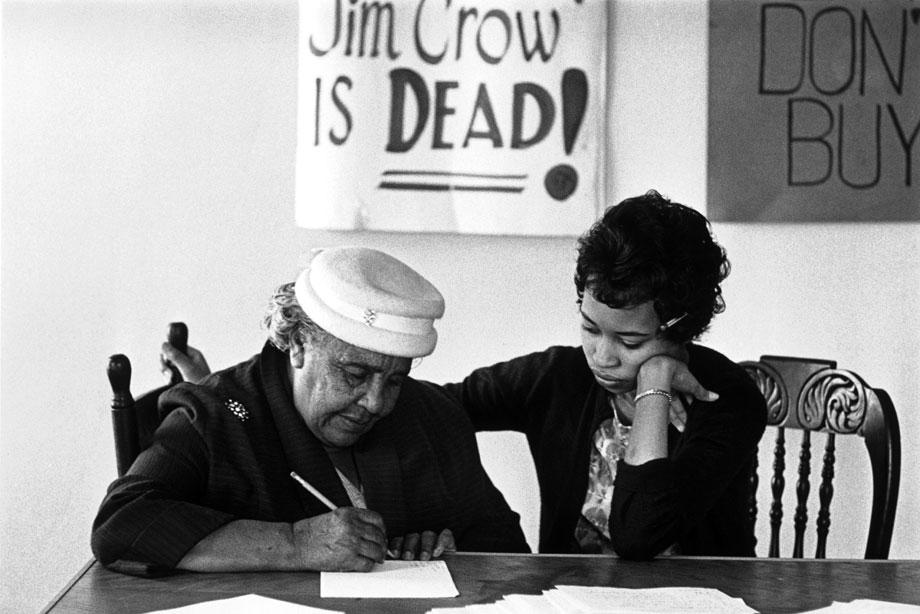
Virginia’s war on women of color

Earlier this week the Virginia House of Delegates refused to restore the rights of nonviolent felons who have paid their debt to society … again. Governor Robert F. McDonnell had made re-enfranchisement a priority of his final year in office. The Governor spoke compellingly of “a nation that believes in redemption and second chances.” His Republican confreres in Richmond were not impressed.

Virginia is one of four states that permanently bars felony offenders from voting or running for office. At present, only the Governor can restore those rights, and that takes a long time, a great deal of work, and, not insignificantly, the commitment of a Governor who thinks it’s worth the time and effort. Most don’t.

In Virginia, as elsewhere, the disenfranchisement of former felons stems from, and adds to, centuries-old histories of racial and ethnic exclusion, oppression, and State violence. Approximately 378,000 Virginians, or 6.8 percent of the Commonwealth, fall under the `felony’ ban. This lifelong ban affects one of every five African Americans in Virginia. That’s no accident. That’s public policy.

These numbers are particularly noxious when one recalls that sixty percent of Virginia felony convictions do not merit jail time, and many are for nonviolent offences.

The lifelong voting ban in Virginia has always been an assault on African Americans immediately, and on communities of color, more generally. In recent years, however, it has also been a weapon in a war against women of color.

The so-called war on drugs has targeted women of color, in particular through conspiracy laws. These laws basically catch women for the crime of intimate relationships with someone involved in the drug trade. The women often, perhaps usually, receive extraordinarily harsh sentences. In Virginia, the case of Santra Lavonne Rucker is illustrative. Her boyfriend was thought to be a major dealer, in Virginia and New York. Rucker was charged with him, as an accomplice, and convicted, despite what many think was flimsy evidence of her actual involvement. But here’s the kicker. Rucker was sentenced to life, lives actually, in prison. Despite overwhelming evidence that, at most, she was a bystander, she was sentenced as a major kingpin in a statewide conspiracy. Santra Lavonne Rucker is still waiting to see the light of day.

Malinda Jenkins, of Lynchburg, Virginia, discovered that, thanks to drug conspiracy laws, absolutely ordinary everyday interactions between intimate partners can result in a narcotics prosecution. Jenkins was brought in with her boyfriend and others. Despite the agents’ testimony that they had never witnessed her or knew of her having any relationship to any drug deals, Jenkins was convicted with the whole crew. On appeal, her conviction was reversed because there was no evidence. It wasn’t insufficient evidence. It was nonexistent evidence.

These are just two cases, but they speak to the last thirty years of the war on drugs and its impact, nationally and in Virginia. In Virginia, being convicted of a drug offense can mean a lifelong ban on welfare benefits as well as a lifelong ban on voting. For women and their children, the ban on welfare has meant an impossible life. This has particularly affected Virginian women of color. That’s no accident. That’s public policy.

Since 1990, Virginia has had one of the highest increases in time served by prisoners and keeps people in prison for longer than most states. This is true for those convicted of nonviolent as well as violent offenses. Only recently has the State, with the establishment of the Virginia Criminal Sentencing Commission, begun to address the possibility of diversion and alternative sentencing. As is so often the case, the Commission was a result of prison overcrowding in the Commonwealth. Nationally, prison overcrowding has often resulted in men being released much earlier than women for exactly the same offense. The State simply needed the men’s beds more than the women’s.

The Virginia Criminal Sentencing Commission applies a point system to each prisoner to establish `risk’ of recidivism. For drug and fraud offenses, women are deemed a much, much better `risk’ than men, nine times better. For larceny, men are a somewhat better risk, about 1.5 times better. In December 2012, these numbers translated as follows: 635 drug cases for review; 951 fraud cases; 185 larceny cases. In the overwhelming number of cases, then, women are a much better prospect for anywhere but behind bars. That’s according to the Commonwealth of Virginia.

It’s time to return the right to vote to those who have paid their debt, especially when much of that debt is the result of legerdemain. It’s time to stop the war on communities of color. It’s time to stop the war on women of color. Do it now, Virginia.


(Photo Credit: Eve Arnold/Magnum Photos/Slate)

In the camps, the women sigh, “O brave new world”

A key plank of Australia’s asylum policy is deterrence. What happened to asylum being the key plank of asylum policy? Deterrence in this instance means “offshore camps”, particularly on the islands of Manus and Nauru Islands. Manus Island is part of Papua New Guinea, where a trial opened today to challenge the legality of the “processing camps”. The charge is that the Papua New Guinean law does not allow for detention without any charge. Detention camps. Processing camps. Or, as Marianne Evers said of the camp on Nauru, “I actually liken it to a concentration camp.” Not surprisingly, the Australian government takes offense at the likening, “I think invoking concentration camp is a disgrace.” Calling the camps on Manus Island and Nauru Island “concentration camps” is a disgrace, but the camps themselves … are fine?

No.

Last week, New Matilda published three sets of letters by women asylum seekers currently imprisoned on Manus Island. The women are from Iran, Pakistan, Sri Lanka, Afghanistan. They describe terrible hardships in their homelands, terrific struggles to get to Australia, and then debilitating, crushing conditions on Christmas Island and then on Manus Island. They describe the dire mental health crisis that sweeps through the camps, especially among the younger men who are increasingly suicidal. They write about their struggle for safety for themselves and their children. They write a great deal about their children. They describe the life draining out of their children within the universe of trauma that constitutes the detention camp. They describe the cultures and public policies of violence against women in their homelands that compelled them to leave, to seek personal safety and dignity.

The United Nations Refugee Agency, UNHCR, issued a report last week on Manus Island, based on a January visit. The agency confirms the reports of the women asylum seekers. The physical conditions are “harsh”. The living quarters have no privacy, which is a particular concern to parents of girls; are unbearably hot; and have grossly inadequate sanitary facilities. And that’s the family compound. The conditions in the compound for single male adults are worse.

The conditions are generally and specifically traumatic. They breed mental health crises on an individual, collective and structural basis. For the adults, it’s terrible. For the children, it’s crushing.

The UN list of dehumanizing conditions goes on, but here’s the point. This is what happens when deterrence is a key plank in asylum policy. Since Australia began “offshore processing” its asylum seekers, have the numbers gone down? Absolutely not. They’ve risen, incrementally. Does that mean the policy hasn’t worked? According to the State, it means the State hasn’t arrived at the proper balance of harsh and brutal. When the Australian government can match the brutality the women, children and men have fled, then it will have arrived at what it considers to be an appropriate asylum program.

Australia has invested political capital, national identity, and hard cold cash in brutalizing asylum seekers. They have sought partners. First they turned to Papua New Guinea, and this week, they turned to New Zealand. Australia sees asylum seekers as another `opportunity’ for regional free trade agreements. This time trade is in battered bodies and dreams.

Why can’t asylum, rather than deterrence, by the key plank of the asylum policy? What would it take to move the concept of the right to asylum to the center of all asylum policy? Ask the women asylum seekers on Manus Island. Repeatedly, they say they fled violence but they sought peace. Peace, rather than `security’, must govern asylum policy.

Meanwhile, the women who sought peace sit in the harsh camps on the remote islands, look at their children, look at themselves, look at the guards, look at where they’ve come to and where they’re probably going, if the State has its way, and they sigh, “O brave new world, that has such people in’t.”

(Photo Credit: Al Jazeera)

French prison workers win the right to labor protection!

Until now in France, being employed while incarcerated was not placed under labor protection of the civil society. Instead, it was regulated by the prison system. There was no work contract and wages were as much as three times less than minimum wage. On Friday, a court decision changed all that, placing prison workers’ protection under the regime of regular labor laws.

While in jail as a remand prisoner, Marilyn Moureau worked for a phone company. She was laid off for having placed personal phone calls during her work time. In the language of prison management, she was “déclassé” (displaced), a term designed to mark the difference between prison labor and `real’ work. She took her former employer to the Labor Relations Board (prud’homme) and charged them for not respecting proper employment procedures. She won and got everything that is guaranteed by law for workers, including damages and compensation.

This is an important decision because it asserts that work is work whether workers are incarcerated or not. Labor rights should apply to every worker, including prisoners. It also states that people must keep their civil visibility while in jail or prison.

Moreau’s lawyer declared, “It is a great day for all the prisoners of France … an historical decision!”  Let’s hope it inspires the struggle fight to induce changes in worker protection around the world.

(Photo Credit: Nouvel Obs / Thierry Creux / MaxPPP)

On outrage


I cannot write about Anene Booysen. Many others are, and are doing so eloquently. But I do wonder about outrage. The national response to the horrible violence against Anene Booysen has been described as outrage. When does outrage occur?

How many women and girls must suffer violence and abuse to cross the threshold of outrage? How many men must engage in violence and abuse before the horizon of outrage is breached?

I ask this because I don’t recall outrage being expressed when both the Rape Crisis Cape Town Trust and the Saartjie Baartman Centre for Women and Children faced imminent closure last year. Yes, there were individuals and groups who jumped and organized, but there was no great surge of outrage at what would surely follow the simultaneous closure of the two most successful and most important resources in the Western Cape for those seeking help, support, community in the midst of suffering violence.

Remember, Rape Crisis is the oldest center of its kind in South Africa. In a recent two-year period, it served over 5000 rape survivors. And when it served the survivors, it served their loved and loving ones, their friends, their communities, and their neighborhoods. It served the whole of South Africa, one healing empowering person at a time.

Likewise, Saartjie Baartman has been working out of Manenberg to change the world by changing the area. The Centre, open for ten years, is a one-stop service shop: 24-hour shelter, short and medium residential care, childcare, counseling, legal advice, education and mentoring, and more.

Both Rape Crisis and Saartjie Baartman have played lead roles in research, advocacy, and mobilizing around women’s rights generally. They offer a place for women to hear their own voices, to have their voices heard, to have their voices joined and amplified, to have their voices translated into action.

Both Rape Crisis Cape Town Trust and the Saartjie Baartman Centre for Women and Children are indispensable, and not only for the women and children, and men, who come in looking for help. For the entire country and beyond. Who leapt to organize when the two, in one fell swoop, faced closure? The usual suspects. Not `the nation,’ not the State, nor was Twitter alight with outrage.

Along with protests and uprisings and expressions of outrage, all of which are terrifically important, let there be outrage for the condition of those people and organizations that have worked and are working now to change the world, to transform society, to create a place in which women and children and men can live in peace and joy. Support Rape Crisis Cape Town Trust and the Saartjie Baartman Centre for Women and Children. It’s never too late. Do it now.


(Photo Credit: Local Media Unpacked)

Welcome, asylum seeker, to the society of the queer spectacle

In the United Kingdom, gay asylum seekers increasingly feel pressured to prove they are gay. In the last three years, the United Kingdom Border Agency rules, and application of rules, for those seeking asylum based on persecution of sexual minorities in their home countries have changed.

Previously, the policy was one of `discretion’, in which gay asylum seekers’ applications were rejected because, it was felt, the asylum seeker merely needed to act with greater discretion. If she or he was tortured, it was her/his fault. If she or he was killed, again, her/his fault. If she or he was kicked out of family and community and left to suffer the ravages of the streets, she or he should have known better. It was a policy of shut up, go away.

In 2010, a Supreme Court decision changed that. In the case of HJ(Iran) and HT (Cameroon) vs. Secretary of State for the Home Department, an Iranian gay man feared imprisonment and lashing, while a Cameroonian gay man was terrorized by his neighbors. The Court rejected discretion: “An interpretation … which denies refugee status to gay men who can only avoid persecution in their home country by behaving discreetly (and who say that on return this is what they will do) would frustrate the humanitarian objective of the Convention and deny them the enjoyment of their fundamental rights and freedoms without discrimination. The right to dignity underpins the protections afforded by the Refugee Convention.”

Since then, with mounting austerity-led, privatization-pushed campaigns by the State to close the non-existent asylum pipeline so as to protect the country from the non-existent tsunami of asylum seeking detritus, that compassionate “opening” has been translated into a cross between a peep show for the State.

Gay? Lesbian? Transgender? From a dangerous, toxic place, which could be your household, could be your neighborhood or `community’, could be your country, because you’re gay or lesbian? Prove it. Hunted down by the State and/or Civil Society because of your sexual minority status? Prove it. If you don’t have the scars to prove it, well … show us some skin.

It’s the society of the spectacle, in which gay and lesbian asylum seekers, who have not only suffered so much but have had to work strenuously to finally make it to “safe haven” are told they must labor some more … now to prove their sexual identity. In 1967, Guy Debord described a new society of the spectacle, in which labor and capital were shifted from production of goods to production of spectacle. He began writing and thinking of an “integrated spectacle (that) has transformed the world economically … using police methods to transform perception”. In 1992, Debord wrote: “The same formidable question that has been haunting the world for two centuries is about to be posed again everywhere: How can the poor be made to work once their illusions have been shattered, and once force has been defeated?”

How? Make them work to prove their claims to identity. Make them work to prove their claims to existence. This is where the spectacle of queer asylum seekers makes economic sense.

A lesbian woman from Uganda fled for her life to the UK. Upon arrival, “the UKBA officials wanted me to prove that I was lesbian but they wouldn’t tell me how I could.” Her application was denied. She spent months in Yarl’s Wood. She brought copies of Ugandan newspapers that called for her murder if she should be seen in Kampala. These were disregarded. Finally, she was given asylum. But first she had to do all the work. The State said no, sat back, and watched.

There all sorts of legal debates about the implications of the Supreme Court decision, touching on `queer cases’ and the law, the legal meaning of discretion, where lines should and shouldn’t be drawn, assessment protocols for LGBTQ asylum seekers, good sense and common sense, the centrality of LGBTQ rights on the map of human rights, the rights of gay men and lesbians to live freely, openly and on equal terms. The list goes on.

But there’s something else, something not of the courthouse but rather of the everyday world of work. Major investments are made in prisons and their outlying service networks for asylum seekers. It costs money to house a Ugandan lesbian asylum seeker for months. It costs money to threaten her with deportation, day in and day out. Major profits emerge from those investments. At the same time, there’s a newer form of extraction, that of making the asylum seeker work to prove identity claims. So … welcome gay man, lesbian woman. You have traveled so far and struggled so much. Welcome to your new workhouse, your new poorhouse … your body, your self, the new, and not so new, queer spectacle.

Where’s the outrage at the forced powerlessness of pregnant women?


According to a recent study, as described in a post here last month, in the United States, being a person is tricky business if you are pregnant, poor, or a woman of color. That study responds to two sets of interrelated events: [1] the effort to pass laws that give a fetus the constitutional right of a person, thus far passed in 38 states; and [2] the increased number of arrests and incarceration of pregnant women.

The study raises many questions, ranging from the conceptualization of protection, including medical care, based on the socioeconomic status of the pregnant woman, to the concept of fetus personhood. Fetus personhood was embedded in the Roe v Wade decision in its discussion of a woman’s right to terminate her pregnancy as “not absolute, and … subject to some limitations…. A State may properly assert important interests in safeguarding health, in maintaining medical standards, and in protecting potential life.”

Pregnant women have been incarcerated with greater frequency because of the establishment of a process that renders them available and appropriate to incarceration. The study identifies that process through the records and examination of the incarceration of pregnant women in the United States between 1973 and 2005. In every case the bases of arrest was the protection of the personhood of the fetus.

Being-pregnant, then, has become being-powerless. At one level, this is not new. In Beggars and Choosers, Rickie Solinger recounts how officials used White pregnant teenagers to fuel the adoption business: “Beginning in the late 1940s, community and government authorities together developed a raft of strategies some quite coercive, to press white unwed mothers to relinquish their babies to deserving couples” (70). Those teenagers were presented as “mentally disturbed” because they failed to have a husband to protect them, “a proof of neurosis,” making them potential bad mothers. The same authorities singled out and removed unwed Black teenage mothers from any public assistance, intensifying their already precarious situation.

In both cases the personhood of the young woman was reduced to being a carrier in which the state had a prevailing interest of control and protection. In this historical context, the Roe v Wade decision allowed the same ambivalence to be developed concerning the personhood of all women, with the invisible hand of the state ready to take over a woman’s right to control her body.

The study emphasizes the responsibility of the perverse effects of this lack of clarity of the woman’s existence as a person with regard to women’s versus fetus’ personhood. These effects created an insidious web of laws, which have led to the mounting incarceration of pregnant women. The fact that 38 states passed feticide or similar laws that have justified the arrest of pregnant women is no accident.

As we saw with Aaron Swartz’s suicide prompted by the violence of the American justice system, no campaign with celebrities and intellectual was organized to defend an individual who tried to defend our rights. In the case of both incarcerated pregnant women and Aaron Swartz, the outcry is limited and will probably remain so, thanks to the combined power of the State and a Civil Society that bends to corporate needs and wishes. Every day in this country, women are imprisoned because they are less important, they have less being-in-the-world, than something called the protection of “potential life.” Where is the outrage?


(Image Credit: The Atlantic / Lauren Giardano)

How can feminists counter `salvation’ lies?

A student group held a presentation of the movie Half the Sky, based on the book of the same name.  The movie stars journalist Nicholas Kristof, as he and special celebrity guests travel around the world, “saving” women wherever they go.

As many other feminists and activists have written, Half the Sky, and Kristof’s writing in general, are extremely problematic.  It reeks of racism and imperialism.  To celebrate the white savior narratives that Kristof propagates, especially in a university setting where it is given authority, is most unfortunate.

The film was followed by a panel discussion of experts from NGO’s, international organizations, and the academy.  One of the panelists was from The Girl Initiative for Results and Learning (GIRL), sponsored by Nike and Xerox.  The panelist spoke forcefully about the good that comes out of projects like Half the Sky, about how women in “developed” countries should “help” women in “undeveloped” countries, and that the women of the latter category need to be “empowered.”  She mentioned these women must endure honor killings, widow burning, forced trafficking, and other crimes of supposedly backwards cultures.

At no point did this panelist, or any other panelist, talk about the structural forces that affect and shape women’s lives globally; forces like structural adjustment programs from the IMF, so-called development programs from the World Bank, and militarism meant to “save” women in the Third World.  At no point did the panelists talk about the agency of supposedly trafficked women as sex workers.

Meanwhile, companies like Nike and Xerox, that fund research for The Girl Initiative for Results and Learning, have a history of violating women workers’ rights and attacking workers’ rights in general. When asked if it was a conflict of interest to accept money from companies that exploit women for funding her research, the GIRL panelist replied, “I firmly believe that companies like Nike just want their women workers to be rich enough to buy their products.”

For fans of Half the Sky, the endpoint of women’s empowerment is this: women’s bodies become just another accumulation strategy under neoliberalism.  If white people can’t save Brown women, then global capital will.  This endpoint becomes just another story that people like Nicholas Kristof fit nicely into yet another book, movie, or column. How can feminists counter such lies?

Writing about Half the Sky, a sex worker recently remarked that “it is crucial for journalists to confirm every piece of information they receive before sending it to print. I wanted to point out how easily such fabricated narratives can proliferate into the mainstream consciousness if reporters do not exercise caution…Sex workers are not part of the problem. We are part of the solution.”

Feminist researchers and storytellers must oppose the myths that circulate in global patriarchy and global capitalism that construct Third World women as needing to be saved. They must expand their methodologies to include and foreground those women most affected by globalization and structural violence. They must recognize and foreground the organizing and labor those women are engaged in. Theories and solutions must emerge from collaborative and collective conversations. Then, feminist researchers and storytellers can tell the truth. Women are organizing everywhere. Everywhere, women are working to create a better world and a whole sky.

We don’t need Nicholas Kristof.  We don’t need Half the Sky.  We all have other stories to tell.


(Photo Credit: Salon)


Is Marie Therese Njila Nana a human being? Are you?

Subjected to the trials of Job, Marie Therese Njila Nana has survived with dignity, and is rewarded, by the United Kingdom, with prison and worse.

Nana is from Cameroon. In her area, her family was fairly prominent. When Marie Therese Nana converted to Pentecostalism, her family took, bound her, tortured and beat her. She fled to another part of the country, joined a local Pentecostal Church, and tried to begin a new life.

She lived in that town for ten years. Then the Church decided she must marry a Church elder. Nana refused, and was forced to move again, to avoid violence.

She met a man from another tribe, whom she married. Her family discovered this and sent nine masked family members to her house. They beat her.

Her husband left for Germany, for work. Threats, and worse, from Church and family escalated. Marie Therese Nana tried to reconcile with her family. She returned home to meet with her parents, or so she thought. Her family held her for days, beating her senseless and humiliating and degrading her, all in an attempt to `purify’ her. Then they took her to the police, where she was further beaten.

Marie Therese Njila Nana then fled, to England, where she applied for asylum. Which was denied. The Home Office claims that Marie Therese Njila Nana can return safely to Cameroon, because there are `support services’ available. Not the police, notoriously corrupt and violent and beyond reproach. Her family has proven its capacity to reach her anywhere in the country. The Pentecostal Church as well is all over the place. And her name is known. But somehow the United Kingdom Border Agency has decided that Marie Therese Njila Nana is not a true candidate for asylum.

And so they sent her to Yarl’s Wood, where she has been for the last nine months. Nana describes her experience in Yarl’s Wood as torture. According to doctors, she is clearly suffering from trauma, and has received no medical attention. To the contrary, guards have taunted and harassed her.

This is not surprising from an agency that commonly and blithely uses forces on pregnant prisoners. This is not surprising from an agency that, in report after report, is found to treat prisoners with abuse, violence, and viciousness. Prisoner after prisoner reports that the staff treats them “like dogs”, like animals. Marie Therese Nana puts it succinctly: “English people need to know that there are concentration camps in their country where aliens are tortured and oppressed.”

And now, the United Kingdom plans to send Marie Therese Njila Nana back to Cameroon. What’s the reward an African woman gets for having survived violence after violence after violence? More violence.

Marie Therese Njila Nana asks, “Am I a HUMAN BEING? I ran from my country to save my life and I just seek asylum. After destroying me mentally more than 8 months now they plot to send me back to my killers.” But the real question is this, “Are we human beings?” Only concerted and collective action to stop the flight, and all the flights, will do, if we want to answer, “Yes. Yes, we are human beings.”

(Photo Credit: Muse / bensmawfield)

Aaron Swartz and Pussy Riot: two cases of crime and punishment

Never in my life did I imagine that I would say the things that I am about to say here, that I would be making somber conclusions of disappointment, bitterness and criticism; conclusions based upon viewing the case of Aaron Swartz’s tragedy from a comparative, international point of view.

For 8 months last year I was actively monitoring, organizing protests, and giving presentations about and on behalf of the unfairly arrested and imprisoned Russian feminist political protest performance art group Pussy Riot (PR).

For those who are not familiar or don’t remember what happened with this art collective, let me briefly review the circumstances of Pussy Riot’s case:

Outraged by Vladimir Putin’s shameless usurping of constitutional powers and self-nominating for the third term Presidency of Russia, Pussy Riot staged a 46 second-long performance of a satirical protest song at the Moscow’s Temple of Christ the Savior, which was followed by a now iconic viral video.

A few days later in early March 2012, three members of the group were arrested. They faced charges of hooliganism and causing offense to believers, which carried a maximum punishment of up to 5 years of hard labor. They were also pressured to publicly repent and admit their guilt.

The trial of Pussy Riot women became a mockery of justice, with the Russian constitution and basic common sense trampled by judge and prosecutors. While members of the group refused to admit any wrongdoing, they offered their apologies to insulted believers, in case their feelings were indeed offended.

The trial was surrounded by an unprecedented loud and high profile international campaign in support of the arrested artists, in which numerous A-list celebrities such as Yoko Ono, Madonna, Sting, Paul McCartney, Bjork, and philosophers Henry Bertrand-Levy and Slavoj Zizek spoke out on behalf of the arrested. Pussy Riot received an International LennonOno Grant for Peace, were nominated for the Sakharov and Kandinsky prizes, and a documentary showcased at Sundance Festival and since purchased by HBO was made about them.

Despite the international uproar and clear lack of criminal intent, the artists were sentenced to 2 years of hard labor in punitive colonies. Perhaps the uproar helped to reduce the term of confinement to 2 years. One Pussy Riot member was later freed on a technicality, and two are still serving their term in Putin’s gulag.

As Pussy Riot’s farcical trial was going on, my American colleagues and I – artists, musicians, journalists, activists, and academics – sincerely believed that Putin’s regime was the most unfair, vindictive, unjust and oppressive of non-third world countries. We believed that we – Americans – could look at Russians from the vantage point of our democratic tradition, our trust in the rule of law and justice for all, and pity those poor Russians. We assumed that what happened to Pussy Riot in Russia could never happen in the U.S.A.

Even though I knew who Aaron Swartz was while fighting for justice for Pussy Riot, I never heard about his persecution by the bullying U.S. Attorney for Massachusetts Carmen Ortiz, on behalf of the U.S. government. I was not familiar with his legal ordeal happening right here in our very own country.

When I learned about the prosecution of Aaron and his resulting suicide I was filled with shock and shame. It was hard to believe that Putin’s oppressive, authoritarian legal machine went easier against 21st century Russian political dissenters, than the U.S. legal system went against Aaron Swartz!

But the facts were astonishing: Pussy Riot never looked at 35 to 50 years in jail, and were only sentenced to two years, and so far all of the collective’s members have survived their ordeal.

Aaron Swartz, in our democracy and under our newly elected “good” democratic president, was subjected to prosecutorial bullying and harassment, lack of flexibility, compassion and understanding on the part of the overreaching and vengeful U.S. Attorney Carmen Ortiz, an appointee of our “good” president.

Suddenly it was apparent that in the race to brutally persecute political activists, Russia came in second.

It used to be that when Russian dissidents were persecuted by their government, they turned to America for help. But to whom could American dissidents turn? Who was there to help beleaguered Americans? For American dissidents like Aaron Swartz the world was a hopeless and lonely place, and the cavalry led by Madonna and Sting was never coming to the rescue.

Of course the comparatively lenient treatment of Pussy Riot by the court could be explained by the traditional stupidity and slow-mindedness of the Russian judicial system, which in its retarded inefficiency was unable to unleash the full power upon the punks of Pussy Riot, but hey! That was their luck, luck that Aaron Swartz did not have.

Let me be specific about comparing the action of Pussy Riot to the action of Aaron Swartz, as on the surface they seem quite different. From a cultural point of view, Pussy Riot’s guerilla performance and Swartz’s urban guerilla action of stealing JSTOR’s data through MIT’s computer closet both contained classical elements of political action and performance art. While Pussy Riot can be viewed as bona fide conceptual performance artists, Aaron’s alleged “crime”, his alleged “felony” was also nothing more than a jest, a performance action, antics meant to attract attention to the lack of protection of scholarly data, and to the notion Aaron passionately believed in: that scholarly data, such as that found on JSTOR, has to be free for all. It was a calculated, deliberate performance action involving an elaborate scenario with real life props: penetrating the closet, installing the computer, hacking MIT and JSTOR’s systems, and complete with a carnivalesque disguise: a bike helmet as a mask, followed by his arrest and the subsequent return of the stolen data.

The benevolence of Aaron’s action was underscored by the fact that his attempt to hide his identity behind a bike helmet was rather laughable, buffoonish, and he eagerly returned the stolen data as his point had been made. He never planned to personally enrich himself as a result of his actions. He rather used his act as a pulpit, a soapbox to attract attention to the issues he considered vitally important for him and for society.

Like Pussy Riot he was ready to put his comfort on the line for his beliefs, and like Pussy Riot he took upon himself the role of “holy fool,” of obscene jester and naïve savant speaking truth to power from the pulpit of his idealistic innocence.

In conclusion I would like to share one rather somber observation regarding Aaron and the hacker community. Yes, there was a great deal of chest beating and outrage among the members of the geek community upon learning of Aaron’s tragic death. Yes, he was popular and beloved, but where were they, the almighty hackers en masse supporting him the way artists and musicians came to support Pussy Riot? Where were the international celebrities and anarchists and cyberpunks and philosophers, NGOs and pro bono lawyers? How come he was quietly tortured to death in the plain view by Carmen Ortiz and her henchmen?

One answer is that Aaron was a strange bird – neither entrepreneur millionaire nor a guerilla hacker. He was an effete, sensitive, rich, successful, famous child of the elite, almost corporate, almost like another Sergey Brin and Mark Zuckerberg. Almost, but not quite, as he was a political activist, a “holy fool” speaking truth to power, a Don Quixote tilting at windmills. He was a dreamer and a radical.

But as a radical he was not a cyber-anarchist like Anonymous, he was not a barricade fighter. He was unique and therefore utterly alone.

And one can also say sadly that an effete, depressive, intellectual computer whiz kid is no match to seasoned political artists such as Pussy Riot, Ai Wei Wei, Banksy, or professional political activists like Julian Assange. He was not made or trained to withstand the incredible psychological pressure the American justice  system can unleash  upon  an individual. He was fragile and he broke. He “fought the law and the law won…” to paraphrase Sonny Curtis and the Clash.