A tale of two (billion) women farmers


Mwajuma Hussein

In two days, in Jakarta, Indonesia women farmers from all over the world will gather under the banner slogan, “Sowing the seeds of action and hope, for feminism and food sovereignty!

Close to 2 billion women, out of a global population of around 7 billion, depend on agriculture for their livelihood. For those women, these are the best of times, these are the worst of times. Herein is one tale of two women farmers in these times.

Mwajuma Hussein is a 75-year-old woman farmer in the Geita Region of Tanzania. In 2007, she and all the residents of her small rural farming community, Mine Mpya, were evicted from their homes and lands to make way for the Geita Gold Mine, operated by AngloGold Ashanti, a South African mining corporation. They were forced out and have lived since, for close to seven years, in a “cluster of makeshift tents constructed from plastic sheeting and bits of wood and metal.” As Mwajuma Hussein remembers, “[One day in 2007] I was attacked by police at 5am.  They arrested three people and beat them, and then they dumped us here.” In the bitterest of ironies, the residents sometimes call their “cluster” Sophiatown, and other times they call it Darfur as well.

Women make up a large and increasing part of the agricultural work force of Tanzania. On the one hand, men are leaving to work in the cities or in the mines. On the other hand, women play an integral role in agricultural production and ensuring household food security. Women are in charge of farm labor, especially subsistence crops; child care; food preparation; water retrieval; household maintenance; caring for the sick; building and holding community together. Women run the farms … up to a point. Women do not have formal decision-making authority over land use and earned income, and they have at best tenuous land rights. For widows, the situation is even more precarious.

What happens to the women farmers of Mine Mpya now? They become day laborers. Where life was difficult before, especially for women, it is now reduced to the hardship, and practical impossibility, of purchase-based survival. Where before, women ensured that the household had enough food to live, enough water to function, and enough social connections to weather almost any storm, now that’s all gone.

Phindile Nkosi is also a woman farmer, in the Mpumalanga Province of South Africa. She has a share of Elukwatini Farm, in an arrangement with the upscale mega-market Woolworths. Woolworths set up Elukwatini Farm this way: 13 farmers farm 1 hectare each. Those who succeed get more hectares. The others are out. Phindile Nkosi now farms 3 hectares, and employs five full-time workers. It’s good for her, for her children, for the region.

As Phindile Nkosi explains, “There have been no jobs in the area since the mines closed down 15 years ago. But Woolworths has helped us to help ourselves and the community. When my neighbours saw how poor I was, living in a mud house to what I am now, they too want to start farming. For my children as well it’s been good.”

Phindile Nkosi is a single mother of four. With the profits from selling tomatoes to Woolworths, she has managed to build a home and to send her eldest through university.

Are “Sophiatown” and Elukwatini signatures for the worst of times and the best of times? Yes and no. In both Geita Region and Mpumalanga Province, women farmers are responsible for sustaining food production and reducing household food insecurity. The hand that rocks the cradle tills the fields. In both Geita Region and Mpumalanga Province, the mining industry devastated the agricultural sector at large and the political economy of women’s lives.

Most critically, both stories point to the utter refusal of the State to address women farmers. Mwajuma Hussein was not removed from her home by mining security guards.  Police removed her. Phindile Nkosi did not live in a wasteland created by the mine’s closure. She lived in a wasteland created by State policies of “non-intervention”. A little over ten years ago a study reported that rural women in South Africa were “isolated, confined and marginalized through the non-interactive government policies on rural areas.” Since then, rural women in South Africa have become more active and engaged in farming and in farm work, no thanks to any `interaction’ from the State.

In Tanzania and in South Africa, the rural zones are treated by the State as empty space, and, for the State, the women who inhabit that empty space don’t exist. If they’re lucky, a `beneficent’ corporation will come to their empowering rescue. If they’re not, they end up in Sophiatown – Darfur. Either way, where is the State?

Phindile Nkosi

(Photo Credit 1: IRIN / Zahra Moloo) (Photo Credit 2: Business Day)
“A Bunch of Marginal Marauders” or Millions United under an ‘Overlapping Consensus’ to Topple Down the Government?

It has been almost a week since scores of protestors initiated a resistance movement (#DirenGezi) against the incumbent government and its anti-democratic discourse and practices. What had begun as a peaceful sit-down against the demolition of Gezi Park by a few hundred unfolded into massive anti-government demonstrations by hundreds of thousands, even millions across the country. The number of protestors has been soaring ever since despite or maybe due to the spontaneous and dynamic nature of the demonstrations. So has the level of police brutality and violence.

I was in Taksim and Beşiktaş the last few days starting from morning hours till late at night. I was one of the many who suffered from excessive police brutality, and I dare to say, state terrorism. The first water cannon and tear gas attack came in Siraselviler Street in Taksim, where we could at least seek shelter in side streets and nearby cafes, restaurants and houses. In Beşiktaş, however, we were caught unprepared and had nowhere to escape when the police tanks (known as TOMAs, or social intervention vehicles) marched towards unarmed and peaceful protestors and began firing tear gas bombs and water cannons randomly and incessantly at us. I saw thousands trying not to run over fellow protestors while running for their lives. I saw hundreds vomiting tear gas even hours after the TOMA attack, me being one of them.

But who are all these people anyway, suffocating under the thick smoke of tear gas? Why have they gone out to streets in the first place? Who mobilized them? Are they really “a bunch of marginal marauders… manipulated by the opposition” as the Turkish Prime Minister claims?

The simple answer is, NO!

Yesterday, at Gezi Park, my sister and I walked around the park and made spontaneous interviews with fellow protestors that we randomly picked, just to find out ‘who we were’. Amongst those that we talked were Kemalists, socialists, communists, ultra-nationalists, gays and lesbians, Armenians, Kurds, supporters of the Republican People’s Party (CHP), supporters of the Felicity Party (Saadet Partisi), women wearing headscarves, revolutionary Muslims, fans of big football clubs, just ordinary people of all ages, identities and socio-economic backgrounds. Except for the members of a few political party groups, no one had invited or mobilized them. Not all of them shared the same political ideology. To the contrary! Some held completely rival political views with other fellow protestors. Some were not politically oriented at all and did not refrain from admitting that. Most of them were participating in a mass demonstration for the first time in their lives, had brought their children, grandchildren or grandparents with them.

However, all of these protestors had a common denominator: there was ‘an overlapping consensus‘, albeit a silent one, uniting those that represented different ‘comprehensive doctrines” as John Rawls would put it, or who did not champion any doctrine. This is an overlapping consensus on the urgency to topple down the incumbent government and put an end to its anti-democratic practices. This is an overlapping consensus on the urgency to rebuild solidarity and re-forge social bonds amongst fellow citizens, which were long severed.

Turkish Prime Minister keeps saying, “… this is not merely about a couple of trees.. ” Ditto, Mr. Erdogan! Of course it isn’t. Looking at the past few days, I can safely say that it never actually was about a couple of trees. Just as it was never about “a bunch of marauders manipulated by” anyone! Millions are out there filling the streets of Turkey demanding you to step down.

Pin back your ears, Mr. Prime Minister!

Or else, it will be too late!


Recognizing Virginia’s “non-violent felon” women voters

Great news from Virginia: “In a major victory for voting rights, Virginia’s Republican Gov. Bob McDonnell has announced he will automatically restore voting rights for people with nonviolent felony convictions. His decision will eliminate the two-year waiting period and petition process that currently disenfranchises thousands of nonviolent felons who have completed their sentences and satisfied all the conditions of their punishments. According to the Sentencing Project, 350,000 Virginians who have completed their sentences remained disenfranchised in 2010.”

Last year the Sentencing Project reported that 350,000 Virginians fell under the felony disenfranchisement regime. Virginia is one of six states where more than seven percent of the adult population is disenfranchised. Virginia is one of three states in which at least 20 percent of African Americans is disenfranchised. That’s three states – Florida, Kentucky, Virginia – out of fifty. Virginia is one of the seven states in which more than 7 percent of the adult population is disenfranchised.

The key phrase is “people with non-violent felony convictions.”

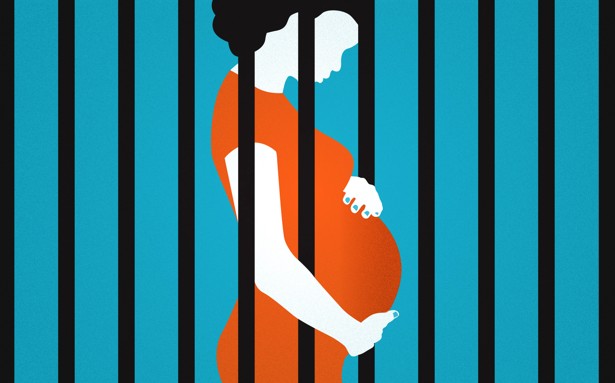
While it’s not particularly surprising that the gender of “people with nonviolent felony convictions” goes unnoticed, it’s worth noting. The majority of formerly incarcerated women in Virginia are “nonviolent offenders” … and are women of color.

In his letter to the Secretary of the Commonwealth, the Governor, not surprisingly, ignores the gender and racial component: “I believe that a person who is a non-violent felon, and has served his time as well as probation or parole, and fully satisfied all court costs, fine, restitution, and other court-ordered conditions, should be able to regain his civil rights and resume his life as a fully engaged member of society.”

Before you think this is too fine a point, the Commonwealth of Virginia Restoration of Rights page doesn’t speak of the restoration of his rights. It speaks of the restoration of his or her rights. The her matters.

Most of the press joins the Governor in ignoring the her side of rights restoration. Most, but not all.

For example, Benjamin Jealous suggested: “If you’re a drug addict and you’re poor, you tend to go to prison. You’re rich, you tend to go to Betty Ford, right? Or the equivalent. And when you go in, if you’re a woman—and that’s been sort of the huge increasing demographic over the last 20 years—your kids go to foster care. Well, you don’t get your kids out of foster care when you get home from prison. You get them home—you get them out of foster care when you get home from prison and find a job and can keep it. And for formerly incarcerated people, they find that they have this kind of scarlet “F” on their forehead, where it’s almost impossible in many places to get a job, where you can’t vote in places like Virginia, where—one woman spoke passionately yesterday about what it was like to be speaking to the Republican Women’s Club and asked to sign a petition for somebody who wanted to run for office, and be interrogated about why you couldn’t sign it, and finally have to sort of re-out herself as somebody who, on her worst day, had done something wrong and become a felon. And so, this is how we put people in—you know, kind of push people out of our society while having them live right amongst us.”

In Virginia incarcerated women are the huge increasing demographic for the last two decades, and the overwhelming majority are in for non-violent offenses. Since 1990, Virginia has had one of the highest increases in time served by prisoners and keeps people in prison for longer than most states. Recently the Commonwealth established the Virginia Criminal Sentencing Commission to address the possibility of diversion and alternative sentencing.

The Virginia Criminal Sentencing Commission found that for drug and fraud offenses, women are a much, much better `risk’ than men, nine times better. For larceny, men are a somewhat better risk, about 1.5 times better. Most recently, these numbers translated as follows: 635 drug cases for review; 951 fraud cases; 185 larceny cases. In the overwhelming number of cases, then, women are a much better prospect for anywhere but behind bars. That’s according to the Commonwealth of Virginia.

Virginia has taken a historic first step. It’s not quite a leap, but it’s an important step. Now, revoke the lifelong ban on access to welfare. Virginia still has a complete lifetime ban on welfare receipt for formerly incarcerated people. Less than a third of the states have such a ban. That ban targets women, and especially women of color, most directly and intensely.

At the same time, invest in diversion programs. Keep those convicted of non-violent offenses out of prison. Do it now, Virginia.


(Photo Credit: Eve Arnold / Magnum Photos / Slate)

Turkish Spring has begun: People shout “Against Fascism we stand shoulder to shoulder”

A Norwegian agency has provided live coverage that shows police violence around the French Consulate side (entrance of Taksim Square). In front of them you can hear the people trying to enter the square. We were there yesterday as well.

Welcome to Turkey, welcome to Turkish Spring.

Since yesterday, Turkish people have been rising up and protesting. It started three days ago or so, with a sit-in protest by the public against the government’s unlawful plan to take Taksim Gezi Park and turn it into a residence and shopping mall. Protesters who were camping there were attacked with pepper gas at 5 am the day before. This led to public protests at Taksim and all over Istanbul, starting and continuing as a complete public and spontaneous protest of what all protesters call “the Turkish government’s fascist actions till this moment”. These latest of these include restrictions on the sale and promotion of alcohol. The prime minister explained that this was in line with religious orders, and that two drunken/alcoholic men permitted alcohol into the country, which seems to refer to Kemal Ataturk and Ismet Inonu, leaders of the Turkish Republic. Some big stores have already condemned the government’s actions and announced they will not put a store in the shopping mal. A court stopped the mall/residence bill last night last night, yet the court will also hear from the Minister of Culture to make its final decision.

I joined the protest at Taksim yesterday. None of us could actually reach Taksim Square, which was completely closed off to public by police continuously shooting pepper gas. But people remained, in all the arteries that led to the square in groups, pushing to enter the square, supporting each other, and protesting. Even blocks away from the center, we felt the presence of pepper gas, our eyes and throats burning. There was and still is great solidarity among people helping each other with lemons, vinegar clothes and milk. Divan Hotel and Harbiye Military Complex opened their doors to people who were injured, showing a solidarity of military and industrial sectors to this movement and that the escalated police violence is not accepted by many parts of society who might have been more silent or neutral previously.

We left Taksim around 10 pm and then returned at 12 am with a ferry full of people from the Anatolian side. We kept shouting slogans such as “shoulder to shoulder we stand against fascism” “the government shall resign!” and “everywhere is Taksim, everywhere there is resistance”

People came out to the streets, again completely organically till 4 am in all parts of Istanbul and Turkey.

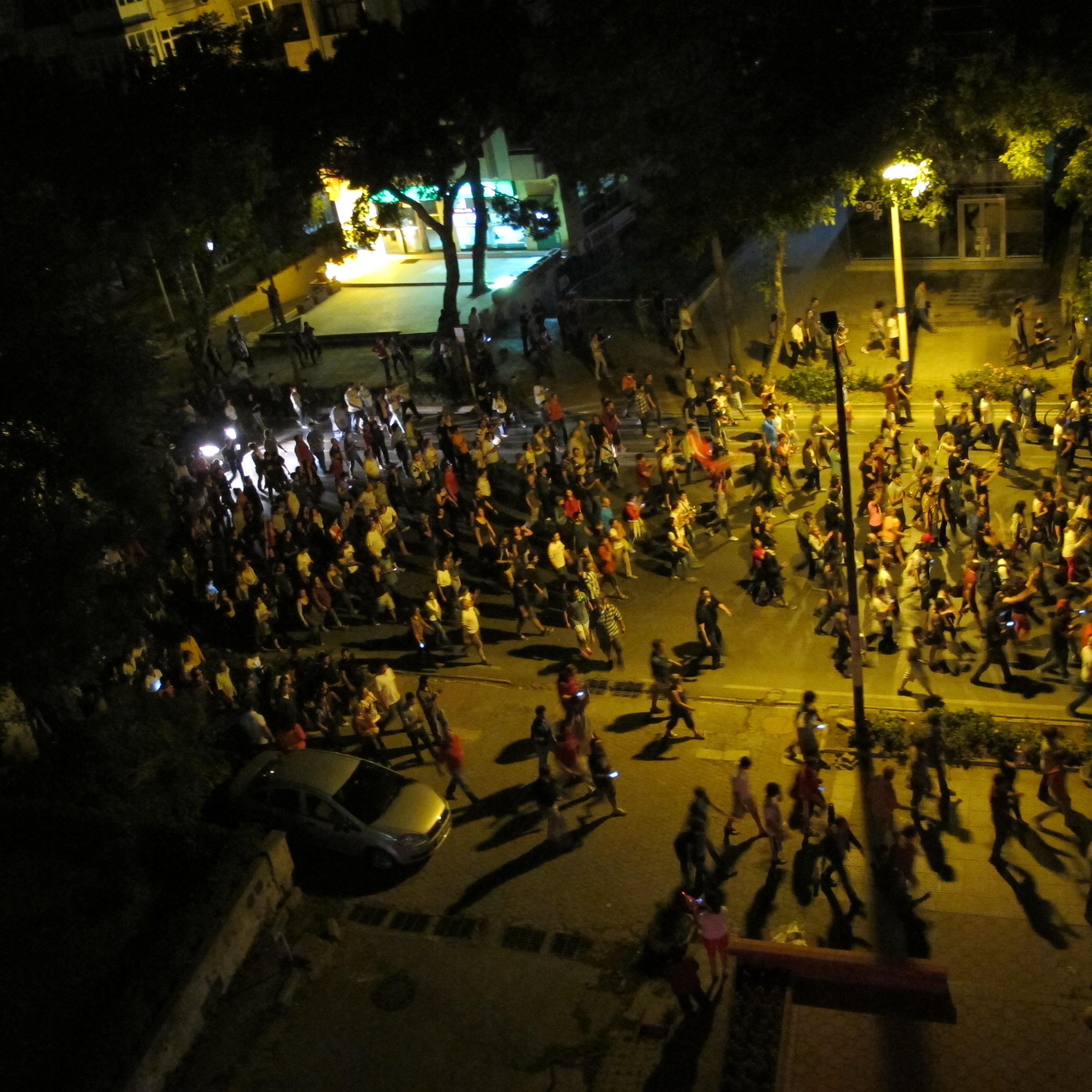
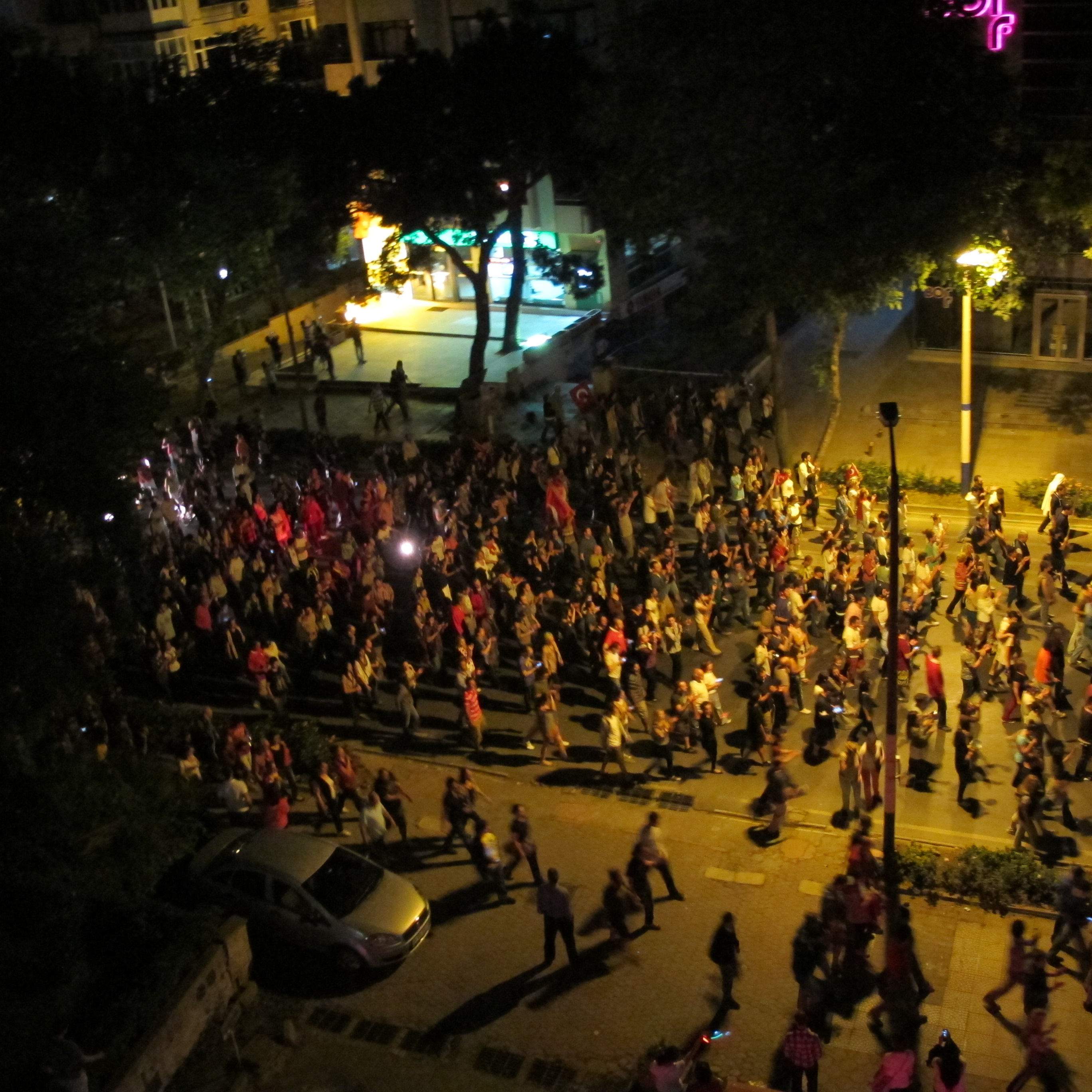
I include here pictures from our street, Bagdat Street, a main avenue in the Anatolian side, where I would think about 10,000 walked, honked horns, and raised a great noise. I learned on the news this morning that they passed the Bosphorous Bridge on foot and cars, to the European side, where they were pepper gassed at Besiktas.

The protest continues today. The government shut down some means of public transport, and so people can’t gather and cross to the European side. Interestingly, Turkish mainstream media is not covering this much at all. There should have been live coverage in every channel.

This is a public movement, which the Turkish government will try to frame as provoked violence by what they have previously called “marginal groups”. The movement belongs to no organized group, there are groups in it from the left to the nationalist right, but no one takes dominance, and there are people from all walks of life and political persuasions. I saw many young people, middle-aged people, mothers with teenage children, everyone. All joined in bringing an end to what we see as a government which is trying to bring an Islamic type of rule (that I would call a neoliberal Islamic rule), and restricting its people’s rights and heavily injuring or killing those who use their civil rights to protest.

Please share and make sure all international media cover this mass movement and pressures the Turkish government to stop its violence against its own people.

Ayse Dayi
Founder and Collective Board member, Center for Transnational Women’s Issues

Cambodia is not Bangladesh, and Asia is not a country!

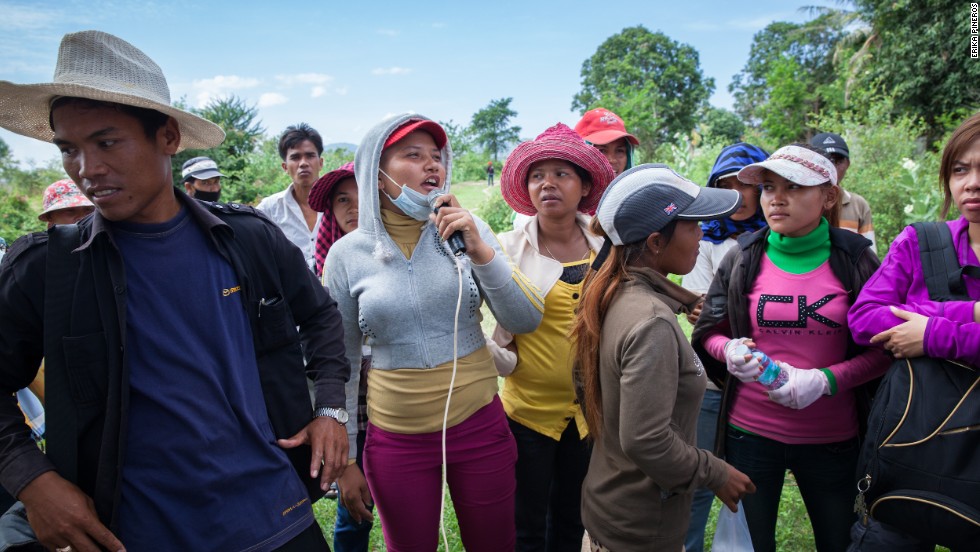
A week ago, thousands of mostly women garment workers in Cambodia blocked a national highway for a half hour. This week, about 3000 mostly women garment workers at the same factory, a factory that produces clothes for Nike, again sat down in protest. This time they were met with stun batons. Over 20 women were hurt, and so the international press showed up.

To their credit, the international press did note that the workers were “mostly female”. But then, the articles would veer into a curious geography: “A series of deadly incidents at factories in Bangladesh, including the collapse of a building last month that killed more than 1,000 people, has focused global attention on safety in factories in Asia makes goods for Western companies.”

Cambodia is not Bangladesh, and Asia is not a country.

From 1974 to the end of 2004, the global garment industry was ruled by the Multi Fibre Arrangement, or MFA, which was designed “to protect” so-called developed countries from the over-productive barbarous hordes of the emerging so-called developing countries. The MFA was basically a global quota system. In January 2005, all that came to an end, and the global garment industry was relocated under the rules of the WTO and the General Agreement on Tariffs and Trade, or GATT. What happened next? Just what you expected: “The result of the end of the Multi-fibre Arrangement was a dramatic redistribution of the allocation of global apparel production. For example, in 2000 China contributed to 24.8 percent of world apparel exports, Cambodia’s share was 0.6 percent, and Mexico’s was 4.6 percent. In 2008, the Chinese market share of world apparel exports increased by 50 percent, as compared to 2004, and it constituted 38.8 percent of the global apparel trade. The Cambodian market share doubled over the same time period and accounted for 1.2 percent of world apparel exports. However, the Mexican share declined threefold in that period, and in 2008 it constituted only 1.4 percent of world apparel exports.”

There were no real surprises in the new world order. Competition among exporting countries drove prices down. Those who were prepared for the change, such as China and Cambodia, saw their national fortunes improve. That doesn’t mean the lot or lives of workers improved, but the national economies grew.

Everyone involved knew that the super majority of garment workers are women. Every study and every theoretical model stated that both in the short term and in the long term putting garment production under the WTO and GATT would be bad for women workers. But the national economies, and the free market, had to grow. The women workers would just have to deal with the price they must pay for everyone else’s success and justice.

In Cambodia, apparel exports account for more than two-thirds of total manufacturing exports, and garment workers make up about a third of the industrial work force. More than 80% of garment workers in Cambodia are women. Post-MFA changes meant that women’s salaries, short term, would decline, and, long term, that the wage gap between women and men would increase. The growing wage gap is part of the program for the future, and part and parcel of `development.’

So, this sounds like Bangladesh, but it’s not.

Between 1999 and 2004, the United States and Cambodia had a deal. If Cambodia demonstrated improved factory working conditions, it could send more to the US markets. Cambodia sends almost all of its exports to the US and Europe, and so this was a big deal. The ILO monitored the conditions through something called Better Factories Cambodia, or BFC. BFC increased individual factories’ US export quotas. It also engaged in capacity building with State, labor and management stakeholders. Cambodia established an Arbitration Council to deal with labor disputes. Many workers’ health and safety conditions improved. Of course problems remained, such as involuntary overtime and lack of childcare facilities, but a growing labor movement addressed them. Along with two decades of industrial garment industry hyper-expansion, Cambodia witnessed the emergence of hundreds of unions, of thousands of organized and wildcat actions, of an increasingly entitled and powerful women workers’ movement.

Women garment workers in Cambodia and in Bangladesh pay a heavy price for the global garment industry. But then … women workers everywhere pay a heavy price for economic growth as for economic decline. For that reason, it’s important to locate the story of the Cambodian women workers more accurately. They are industrial women workers, and they are struggling for exactly the same things that industrial women workers in the Europe and in the United States are struggling for: better pay, better working conditions, dignity, respect, autonomy, power.

A month ago, Better Factories Cambodia released its annual report. The number one issue is fire safety. In the past year there has been “a large drop in compliance.” On the factory floor, the owners are cutting corners and endangering women workers’ health, well-being, and lives. In the national context, the owners are cutting women’s salaries, “because of the economic downturn”, and are widening the wage gap between women and men. Just like in the United States.


(Photo Credit: CNN)

From field to fork, the feeders are fed up … and organizing


Wendy’s shareholders met in New York this week. Shockingly, they didn’t meet at a Wendy’s but rather at a posh hotel somewhere in midtown Manhattan. They were met by farmworkers, “convened” by the Coalition of Immokalee Workers (CIW). The CIW Fair Food Program has organized and lobbied, with great success, for fast-food chains to pay an additional cent for every pound of tomatoes, which would double field workers’ salaries. Pretty much all the chains have signed on — McDonald’s, Subway, Burger King and Taco Bell. In 2005, Taco Bell led the way on signing, under the leadership of their CEO at the time, Emil Brolick. Of the majors, only Wendy’s is an outlier. Guess who’s the current CEO of Wendy’s. You guessed right: Emil Brolick. Irony? Farce? Tragedy? No, it’s just business as usual.

The farmworkers were not the only workers on the streets and in the corridors of the Wendy’s convocation. Local fast-food workers, organized by Fast Food Forward, also showed up and threw down. Fast Food Forward recently documented that wage theft in the fast-food industry is the hidden crime wave of the day. According to their study, 84% of fast-food workers had experienced one wage theft in the past year. Two-thirds had experienced wage theft twice in the past year. Almost half had experienced wage theft three or more times in the past year.

And who are these workers? Overwhelmingly people of color, largely women. Tabitha Verges works at a Burger King in Harlem and went on strike last month. In a recent interview, Tabitha Verges explained, “I do it all. I do three or four jobs. I take orders, I make the orders. I work the cash register. I say, ‘Have a good day.’ I do the inventory. I take out the trash. I get down and scrub the floor. I don’t think $7.25 is nearly enough.”

Elsewhere Tabitha Verges elaborated: “I’m tired of being taken advantage of, working hard doing a three or four person job when there should be other employees there doing the job with us… iIm fed up. I’m so fed up. It’s not right for us to be busting our hump everyday making $7.25 an hour. I myself make $120 a week. I have to provide myself with food, clothes, a roof over my head. My rent is over $700 a month. I’m backed up on my bills. I have to pay Con Edison. I don’t have enough to even survive for the basic necessities in my household… I’m working full time. It’s not right and it’s unfair.”

It’s not right and it’s unfair. What are the good people of Wendy’s waiting for, apart from dessert and drinks after the speeches? From field to fork, the feeders of the United States are fed up. They’re fed up with the common sense that accepts the not-right and the unfair. They’re fed up with the racism, the sexism, the slave wages, the daily abuses. They are tired and fed up with the assaults on personal and individual dignity, on family and community, the assaults on humanity. That’s the reason fast-food workers on strike carried signs that read, “I AM A MAN” and “I AM A WOMAN.” Tabitha Verges is fed up. All the Tabitha Verges’ are fed up. The Burger Kings and the Wendy’s better watch out.


(Photo Credit: The Nation / AP / Mary Altaffer)


My name is Adrienne Kambana. I am the widow of Jimmy Mubenga


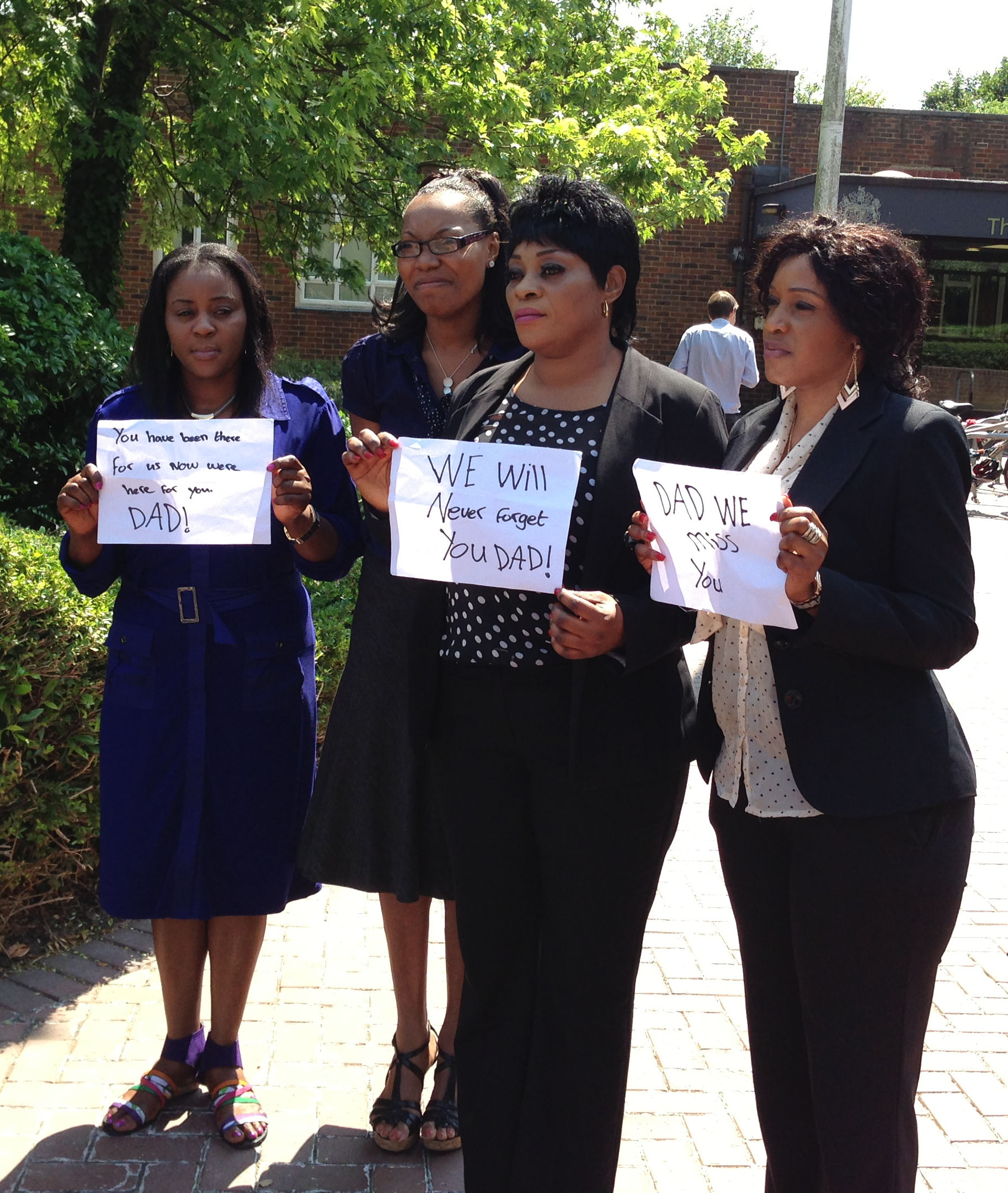
Last Tuesday, a woman appeared before judge and jury, and she sobbed: “My name is Adrienne Kambana. I am the widow of Jimmy Mubenga and the mother of our five children. Jimmy Mubenga was a good father… [and] a good husband… He had never been in trouble with the police before. He had never done anything wrong. When he was arrested he was in the wrong place at the wrong time. An argument started and Jimmy got caught up in it. Jimmy was convicted of an offence of causing actual bodily harm and he was sent to prison in March 2006. Although I was not a witness to what happened, I was present at the trial where he was found guilty. He told me, `I was innocent’ and I believed him. This was the first time he had ever been away from the children. By April 2007 he had served his sentence but he was detained under immigration powers. He remained detained until June 2008 when he was granted bail. It was during this time that Blessing was conceived. Jimmy instructed a solicitor and tried to challenge the deportation because he wanted to stay with his family… I was asked by the police to tell them about the phone calls I had with Jimmy on 12 October 2010… He said, “I’ll call you back” and he did not call me back. That was the end of the story.”

That was the end of the story.

The so-called liberal democracies festoon themselves with inquests as if these carnivals of `the rule of law’ equal justice. They don’t.

The current manifestation is “the Jimmy Mubenga inquest,’ taking place now in London. On October 12, 2010, Jimmy Mubenga boarded a plane for Angola, in the custody of G4S guards. Within 50 minutes, Jimmy Mubenga was dead. During those 50 minutes, Mubenga repeatedly asked for help and received none. He begged, he screamed, he called out, “They’re going to kill me.” And they did.

And now we `discover’ that the G4S security guards had racist jokes on their phones. While that is `unfortunate’, mobile phones did not kill Jimmy Mubenga, nor did a few racist guards, be they privately employed or working for the State. Jimmy Mubenga was killed by State policy. He was killed by the very entity that is now `conducting an inquest’ in full view.

While the possibility of arriving at something like the truth of the event of Jimmy Mubenga’s death is important and worthwhile, it does not constitute justice. Jimmy Mubenga is dead. The children can’t stop crying, the widow can’t stop crying. If there were justice, Jimmy Mubenga would be alive.

Only a fundamental structural change – one that never again criminalizes, cages, and executes `the strangers among us’ – would begin to arrive at justice. Jimmy Mubenga’s death, like that of Ashley Smith in Canada and so many others around the so-called `free world’, are part of State policy, not the errant acts of individuals.

Adrienne Kambana concluded her remarks, sobbing: “Jimmy has gone forever. We need justice. Justice will help Jimmy rest in peace. This will prevent the situation from happening again. Justice will give the other passengers on the plane peace of mind about what happened. Justice will protect people in the future because I don’t want anyone to be in my shoes. Justice will help my children not to feel angry about what happened to their father. Justice will help me to live a long and healthy life so that I can take care of our children. I need justice, especially for my daughter who did not get the chance to know her father. We will never forget Jimmy.”

The inquest is expected to continue for eight weeks.


(Photo credit: IRR.org.uk)

Senate Masupha’s struggle for equality

Senate Masupha

On Thursday, Lesotho’s Constitutional Court found that Senate Masupha can’t be a chief because she is someone’s daughter. In so doing, the Court demonstrated how `women’s empowerment’ can be used to deny women power and equality.

Senate Masupha’s father, David Masupha, was a chief. David Masupha died, and his wife, Senate’s mother, ‘Masenate, became chief.  Senate Masupha is the first-born child of David and ‘Masenate Masupha. ‘Masenate Masupha died. Senate claimed the chieftaincy, and the situation thickened. Brothers jumped in and claimed that Basotho tradition precluded the daughter from assuming the chieftaincy. Senate replied that this was both nonsense and a violation of her constitutionally guaranteed rights.

And so Senate Masupha challenged the constitutionality of the exclusion of women from chieftaincy.

On Thursday, the brothers won. So did the fathers, uncles, sons, male cousins, male friends and acquaintances and male strangers. Women lost, or at least suffered a temporary setback.

According to many reports, Lesotho has made strides to correct gender inequality and inequity. According to some, Lesotho ranks better than the United States and the United Kingdom on gender equality. 95% of women are literate. Women predominate in the job sector, seem to have ample and rising representation in the highest levels of government. In recent years, Lesotho abolished marital power. So, things are on the move.

But movement goes in both and all directions. The judge decided that Senate Masupha had no case because her mother had been able to assume the chieftaincy. Therefore, since the mother was a woman, women were not discriminated against. Too bad for those women who are daughters.

But really, it’s ok, because women are `empowered’, according to the court judgment: “It is … to be noted that Lesotho has performed well internationally in the campaign for gender equality. It has 58% women in local government, which is more than the 50% requirement. It has also surpassed the initial 30% target for women in decision-making bodies set by SADC. It is ranked number 40 globally in compliance. Our judiciary is also suitably representative in both the Magistrates Court and the High Court…If it could be argued that Lesotho is in fact lagging behind in its policies of equality between the sexes, that may be a fair comment; but it has equally not abolished the death sentence on the basis of the right to life; neither does this country consider itself bound by the principles of the rights of gay people to the extent of allowing same sex marriages. Many countries in the world have not yet developed to that stage. This is not unique at all. It may be that the time will soon come to allow these developments and accede to those principles as well, but the customs, culture and conceptions of the community must always be considered and each country must be allowed to make its choices in this respect. This is the true meaning of independence and self-determination of nations. It is the role of the other two arms of Government to see that is done without breaching the law.”

First, Lesotho is empowering `women’ and so the woman Senate Masupha must simply wait to become one of those `women.’ Second, Lesotho may be behind on equality of the sexes, but it’s also behind on capital punishment and on LGBTI rights, and so it’s all… good? Third, this is what independence and self-determination looks like. You can just about hear the demonstrators in the streets, chanting, “This is what independence looks like! This is what self-determination looks like! Whose streets? Our streets … except, of course, for our daughters.”

The three-strikes policy here is clear. Lesotho has hit the gender and sexual tipping point. Women are sort of equal, and so can’t be discriminated against. What’s good for the mothers will have to do for the daughters.

On the one hand, this is a matter of jurisprudence in one small mountain kingdom. Senate Masupha will appeal, and contemporary African history is on her side. In recent years, courts in South Africa, Botswana, Ghana, Kenya, Nigeria, and Tanzania have all faced similar cases, and have all decided to strike down prohibitions against women becoming chiefs and against women being able to inherit. Lesotho has temporarily chosen another path.

On the other hand, the judgment is a lesson in the pitfalls of development-speak. Metrics of equality that measure this country’s gender gap against that country’s miss the core aspect of equality. Equality is absolute. Either women and men are equal or they are not. That’s it. There are no gradations. There are no qualifications that have the mothers equal but the daughters not. The judge’s decision was not echoing some traditional Basotho `culture’. To the contrary, the judge was invoking precisely the terms of international and global assessment.

Women’s `empowerment’ without the absolute of gender and sexual equality is nothing more and nothing less than an alibi. Ask Senate Masupha, ask Tabitha Phaloane who suffered a similar fate. The struggle continues.

(Photo Credit: Mail & Guardian / PK)

A gynecologist faces the epidemic of guidelines for teenage girls


In the United States, a recent set of guidelines for teenage girls’ reproductive health has been released, declaiming various ages for marketing “healthy reproductive practices”.

There is a burgeoning recently of updated guidelines that fix teenage sexual health and life. These include: Chlamydia testing advised for the sexually active adolescent starting as young as 10; LARC (long acting reversible contraception) recommended as first line contraception for girls as young as 14; Plan B available over the counter for 15-18 year olds; HPV vaccination beginning at 12 years of age; and delaying pap smears until the age of 21.

We should wonder: why teenage girls, and why now?  The answer is simple. Teenage girls are engaged, and embedded, in a range of ages and activities that make them targets for the for-profit medical industry.

Why does the Plan B over the counter availability start at the age of 15, while the newly designed, streamlined IUD chose 14 years for its recommendation?  Why is the newly patented DNA testing for Chlamydia, that is not perceived as sensitive as the old culture, being promoted as an inescapable test for girls on birth control for acne?  Meanwhile, pap smears that have proven to be the most effective method to diagnose HPV infection leading to cervical cancer are being withheld until 21 regardless of the woman’s sexual history.

Tests are being indiscriminately assigned by guidelines on a time frame with no connection to the needs of the girl.  Doctors are told to follow these guidelines that are based on studies with a positive cost/benefit ratio to the system. The underlying system is not driven by the art of medicine, which demands patients and doctors to talk to each other on an intimate level. Products, devices, and profit margins are the driving force. This epidemic of guidelines keeps teenagers disconnected, fragmented and voiceless.

Once again, in the great scheme of population control, privatization of services and a dearth of social protection, these guidelines have the greatest negative effect on the most vulnerable: teenage girls. In this scheme, girls’ sexuality is not linked to being or becoming a woman (and how is that defined?), but rather something comparable to a package.

The teenage girl is treated as a health package with no prospect of becoming a woman, and yet somehow is treated “like an adult” inasmuch as girls suffer restrictive reproductive health care and reproductive health rights. What does the future hold for teenage girls in this regime, that they are meant to become increasingly and more intensely marginalized women?

(Photo Credit: NARAL Pro-Choice Oregon / Facebook)

Fetal homicide, death penalty, and the neoliberal agenda

Last Monday, three young women who had been missing for about a decade were able to escape from their sequestration in Cleveland, Ohio. Ariel Castro, the kidnapper, has been arraigned on seven charges for kidnapping and rape. He could also face the death penalty for fetal homicide, by causing miscarriages on his victims. Cuyahoga County Prosecutor Timothy McGinty explained, “The law of Ohio calls for the death penalty for those most depraved criminals who commit aggravated murder during the course of a kidnapping.”

When I first read this, I felt that this was justified. I was outraged by the suffering those women had to go through, and I was relieved that there was a way to punish him by taking his life as he had denied them of their own lives for so long. But then I realized my initial reaction went against everything I believed in, and I was appalled. I have always been adamantly against the death penalty. How can we strive for a just and humane society if our response is to kill criminals? And the argument the prosecutor is using to have him face the death penalty is that he “committed aggravated murder” of unborn fetuses. Looking back, I think that what caused my initial reaction was fear. Fear that this kind of atrocity can happen. Just knowing that these women had been sequestered and tortured, I felt that this could have been me; it was a direct attack on my person as a woman. And I wanted them to take his life away. I was suddenly going to trust the American justice system to decide who can live and who must die. After all, doesn’t he incarnate evil for beating up his daughters’ mother and for abusing women?

What I should be afraid of is the precedent the prosecutor will set if Ariel Castro gets the death penalty. Pregnant women are already being imprisoned throughout the country for `endangering the lives’ of their fetuses. If the precedent is set, will women be in danger of facing the death penalty for having an abortion or a miscarriage?

At the same time, Ariel Castro getting the death penalty sees the abuse of the three women through only one lens, that of their fecundity and womanhood. Why is it that the daily suffering, threats, violence, rapes, trauma, and inhumanity those women were subjected to are not seen as being more important than those unborn fetuses? The violence and abuse they went through is normalized, the press is shocked but not outraged. Instead, the biggest crime was to prevent the birth of those children.

Our understanding of this unfathomable tragedy is constructed around this country’s politics on women’s reproductive rights and the personhood debate instead of seeing it as another example of dehumanized violence. Why can’t we give these women more respect by focusing on their survival? Instead of focusing on their bodies as reproductive vehicles, why can’t we focus on them as women whose spirits enabled them to live and survive?

We need to be more careful and not let our emotions control the way we understand the media construction around such events, no matter how nightmarish they might be. As women, we are vulnerable to neoliberal policies, such as feticide laws, that aim to control our bodies. As citizens, we should question a society that still resorts to the death penalty. For the past week, the phrases fetal homicide and death penalty have been covering up the news nationally and worldwide and they are part of the neoliberal agenda to instill fear in all of us and to reiterate our vulnerability in the face of evil, embodied by Ariel Castro this week. But we need to remember that, just like all of us, Ariel Castro is a member of this society. He does not incarnate evil; he embodies the violence and misogyny of our society.

(Image credit: The Atlantic / Lauren Giardano)