Jamaican Christine Case, 40, died on Sunday at Yarl’s Wood

Jamaican Christine Case, 40, died on Sunday at Yarl’s Wood. Nothing to be seen here; move along; just another Jamaican woman in Yarl’s Wood. “One more dead body behind the walls of Britain’s detention centres.” One more dead woman. That’s all.

Officially Christine Case died of a massive pulmonary thromboembolism, but fellow prisoners tell a different story. They say Christine Case was denied medical assistance. It’s also been claimed that local National Health Service doctors who offered assistance to distressed prisoners after Case’s death were turned away.

Serco runs Yarl’s Wood. Serco claims they have “24-hour, seven-day urgent medical cover on site at Yarl’s Wood.” And yet … Christine Case is dead.

Some say Christine Case called for help, as she was feeling severe chest pains, and that the `care’ she received was paracetamol, a mild analgesic for minor aches and pains. Not for severe pains, and especially not for severe chest pains.

Emma Mlotshwa, of Medical Justice, noted: “We are shocked but not surprised to hear of this tragic death. Any death in immigration detention is avoidable as immigration detention is optional. Our volunteer independent doctors have seen an alarming number of incidents of medical mistreatment. The only thing we are surprised about is that there have not been more deaths.”

People have questions. The immigration minister promises, yet again, yet another investigation.

Meanwhile, Yarl’s Wood is in lockdown. Yarl’s Wood is a house of women’s fear and women’s mourning … and women’s solidarity.

Four years ago, almost to the day, women prisoners, asylum seekers all, at Yarl’s Wood organized a massive hunger strike. 35-year-old Jamaican asylum seeker Denise McNeil was identified as a `ringleader’, moved to another prison, and placed in solitary. The Yarl’s Wood women hunger strikers took the calculus of violence and turned it on its head. They said they are better than that, they are women, fighters used to fighting, peacemakers used to making peace, and no one decides that it is right for them to be slaughtered.

The world paid attention … for a minute.

Twenty-one years ago immigration officers killed Jamaican Joy Gardner, 40, as her five-year-old son and her mother watched. What has changed since then? The killing now takes place behind walls and bars.

For some, the handling of women asylum seekers at Yarl’s Wood `puts the UK to shame.’ It does, but it does more than that. It shames the world, where this is the allotted fate for far, far too many women. Black women. Immigrant women. Women.  A woman died that night.


(Photo Credit: Handout / BBC)

If rape isn’t in the guard’s job description, the jail is off the hook

A woman prisoner in West Virginia says she was raped 17 times by a Regional Jail Authority “correctional officer”. She sued both the officer and the Regional Jail Authority. She sued the jail for negligence in hiring, supervising, training and retaining said officer. The jail asked to be dropped from the suit because sexual assault is not in the scope of his duties. Rape is not in his job description, and so …

A lower court agreed with the woman. Last week, the West Virginia Supreme Court voted 4 – 1 in favor of the West Virginia Regional Jail and Correctional Facility Authority. The woman is called AB, the officer DH. The Supreme Court majority ruled: “We find that D. H.’s alleged acts fall manifestly outside the scope of his authority and duties as a correctional officer. There can be no question that these acts, as alleged, are in no way an `ordinary and natural incident’ of the duties with which he was charged by the WVRJCFA. Respondent has failed to adduce any evidence bringing these alleged acts within the ambit of his employment beyond merely suggesting that his job gave him the opportunity to commit them. As such, we conclude that the WVRJCFA is entitled to immunity for respondent’s claims based on vicarious liability for D. H.’s acts.”

There you have it. Rape is not in the job description, and so the Jail is “entitled to immunity.”

Supreme Court Chief Justice Robin Davis offered the dissenting opinion: “In order to find that the Regional Jail is immune from liability when female inmates are raped with impunity by correctional officials, the majority opinion recast our law on qualified immunity in such a manner as to make it now virtually impossible for any state agency, not just the Regional Jail, to ever be held accountable for tortious conduct committed by employees within the scope of their employment. I do not make this accusation lightly… To add insult to injury, the majority opinion also has concluded specifically that liability cannot be imposed on the Regional Jail merely because it did not have any regulations designed to protect female inmates from being raped. According to the majority opinion, such regulations `easily fall within the category of ‘discretionary’ governmental functions.’ The majority opinion requires a rape victim to specifically point to `a ‘clearly established’ right or law with respect to . . . supervision[.]’ In the final analysis, under the majority opinion, the Regional Jail simply has to bury its head in the sand and never promulgate any regulation designed to protect the bodily integrity of female inmates to ensure its continued impunity from liability… The majority opinion promotes and rewards `gross negligence and deliberate indifference’ to the constitutional right of female inmates to be free of sexual assaults. But, the State cannot be granted absolute immunity merely because no regulation was violated when its employee raped an inmate seventeen times. Just what will it take to protect women from such assaults? Simply put, the Regional Jail was grossly negligent in not having regulations in place that would have protected the plaintiff from being alone with any male correctional officer on seventeen separate occasions.”

Just what will it take to protect women from such assaults? As reports from the Julia Tutwiler Prison for Women reveal, this is not an isolated incidence. What if judges considered the `immunity’ of correctional staff before sending women to prison and jail for the slightest perceived offense? What if judges stopped targeting girls for prison and stopped punishing girls for non-status offenses? What if we turn this darkness into light? Just what will it take?


(Photo Credit: MediaMatters.org)

In Greece, from debt to prison to death

Once upon a time, in 2010, a crisis was discovered in Greece. It was called a public debt crisis. Actually, it was orchestrated by very private interests, including a few American hedge funds and some German interests. The list of financial sector beneficiaries is very long.

Anyway, the Neoliberalists of the European Union sent the Troika to the rescue. The Troika established a dictatorial rule of austerity measures that indebted the population itself. Workers and small business owners suddenly had to pay the exorbitant interest rates established by the market. Actually, there were no structural problems in Greece, but the European leaders closed their eyes on the arrangements made by the Greek ruling class with the help of Goldman Sachs … as long as they produced profitable returns for the investors.

In 2013, the Greek government of Antonis Samaras passed a series of laws to make the population pay into a new, “modernized” tax system. For instance, previously had had no local taxes. The law changed all that. The net result of the new laws was to criminalize anyone who owed at least 5 000 € ($6 890) to the State.

Waves of new inmates hit the already overpopulated prisons. A recent video filmed by a prisoner at the Aglos Pavlos Prison Hospital, in the notorious Korydallos Prison, unveiled the revolting conditions. For instance, the camera is directed at a man lying on a bed, he shows his gangrenous legs; and the voice says: “They will cut off both of his legs. He comes for 8 months here because he owes some money to the government. He cannot walk. He came with two feet and he will go out with no feet.”

This video made the news and drew the attention of Liliane Maury Pasquier (Switzerland, SOC), the rapporteur on “Equal access to health care” for the Parliamentary Assembly of the Council of Europe, or PACE. She expressed grave concerns, noting that 200 sick inmates, many with highly contagious diseases, lived in a place made for 60 people. She added: “In such conditions, it is impossible to ensure that prisoners receive appropriate treatment, not to mention the fact that overcrowding obviously contributes to the spreading of contagious diseases, thereby endangering the lives of all prisoners in the hospital.”

In 2013 the Parliamentary Assembly adopted Resolution 1946 (2013), “Equal access to health care.” The Resolution states that inequalities in access to care particularly affect vulnerable groups, including the poor and those in detention. As the video demonstrates, the Troika has continued to apply its austerity measures with dire, and fatal, consequences for the population, and especially prisoners.

The cynical and methodical process of dehumanization in Greece is also orchestrated by the state. A 90 years old woman with Alzheimer left her home and became disoriented. Policemen found her and took her to the police station in order to help her find her family. Instead of her family, they found that she was registered on the computer as owing 5,000€ to the tax administration. They transferred her to jail where she went into a state of panic and became more disoriented. Finally, her niece was informed of her whereabouts. However, she was not released, thanks to other laws that labeled her a criminal. Moreover, the overload of work has kept her in detention. She suffered from various injuries for falling from her cell’s bed. Her mental condition meant nothing to the State. This is not an isolated case. Another elderly woman was recently arrested for owing money she didn’t even know she owed.

Who are the real criminals? Impoverishment is normalized. Prison is used to fragment Greek civil society and to eliminate all kinds of opposition to the growing inequalities.

The origin of this destruction is erased as the President of the European Commission, José Manuel Barroso, recently declared that the “sacrifices” of the Greeks “open the gate to a better future for themselves.”  He should read the report of Lilliane Maury Pasquier who requested “immediate improvements” in hospital facilities in prison. After visiting Greece she decried the negative impact of austerity measures on access to health care in general.

Once again, prisons contribute to the fabric of inequality and dehumanization in a debt economy. They are brutal tools of power.


(Video Credit: Les Observateurs France 24 / YouTube)

In Chile, women shut down Monsanto’s Law

Good news! Women across Chile organized, mobilized and shut down, at least for now, the dreaded Monsanto Law. The law would have given multinational corporations the power to patent seeds they discover, develop or modify. For small and mid-sized farmers, which is to say for the rural 99%, this would have been catastrophic. It would have been disastrous for Chile’s `seed heritage’ as well. Women lead the campaign to stop the law, and last week, the government withdrew the bill.

On Monday, March 17, Secretary General to the Presidency Ximena Rincón announced the withdrawal. Rincón had long been a leading critic of the bill, both in Parliament and in government more generally.

ANAMURI, Asociación Nacional de Mujeres Rurales e Indígenas or the National Association of Rural and Indigenous Women, was a central organizer and mobilizer in the campaign. ANAMURI co-director Alicia Muñoz explained, “All of the resistance that rural organizations, principally indigenous communities, led during these past years was a success. We were able to convey to the parliament how harmful the law would be for the indigenous communities and farmers who feed us all. Big agriculture, or agro-business is just that, a business. It doesn’t feed our country.” In their organizing and mobilizing, ANAMURI explicitly linked the capitalization and commoditization of food and of seeds to capital and to patriarchy. Repeatedly, they stressed that the right to food and the struggle for biodiversity is part of the women’s liberation struggle in Chile and everywhere.

Camila Montecinos, of GRAIN, focuses on biodiversity and food sovereignty. Her organization worked with CLOC, la Coordinadora Latinoamericana de Organizaciones del Campo, to organize rural women, workers, and indigenous communities to educate the members of government and the general population as to what is at stake, and again not only for Chile: “This struggle has not ended. Certainly the agrobusiness sector is going to lobby fiercely. We’re ready for that. Sometimes Chile looks like one of the most submissive countries, but if we can win here, others can win elsewhere where similar laws are in place.” In Argentina, for example, women like Sofía Gatica are leading a similar campaign against Monsanto and Monsanto Laws.

Lucía Sepúlveda, of Rapal, la Red de Acción en Plaguicidas y sus Alternativas or Alliance for a Better Quality of Life/Pesticide Action Network, has been organizing to stop the destruction of small farms and the resultant production of rural food deserts, in the heart of the farmlands. At the same time, when the bill was pulled, Sepúlveda reminded the women around her that it was originally Michelle Bachelet, in 2009, who originally presented the bill to Parliament.

After years of organizing, cajoling, mobilizing, and meeting, Bachelet’s emissary pulled the bill for reconsideration. At the same time, Bachelet announced this week her intention to establish a Ministry for Women and Gender Equality. Alicia Muñoz noted that ANAMURI has been organizing and lobbying for this Ministry since the advent of democracy in Chile.

In Chile, women are on the move: in the government, the fields and factories, the schools, the households and the streets: “We won because we organized an enormous collective effort and massively broadcast and shared our position.” In the words of an earlier Chilean popular movement, “¡El pueblo unido, jamás será vencido!”


(Image Credit: ANAMURI)

For Nozuzile Mankayi, the struggle continues

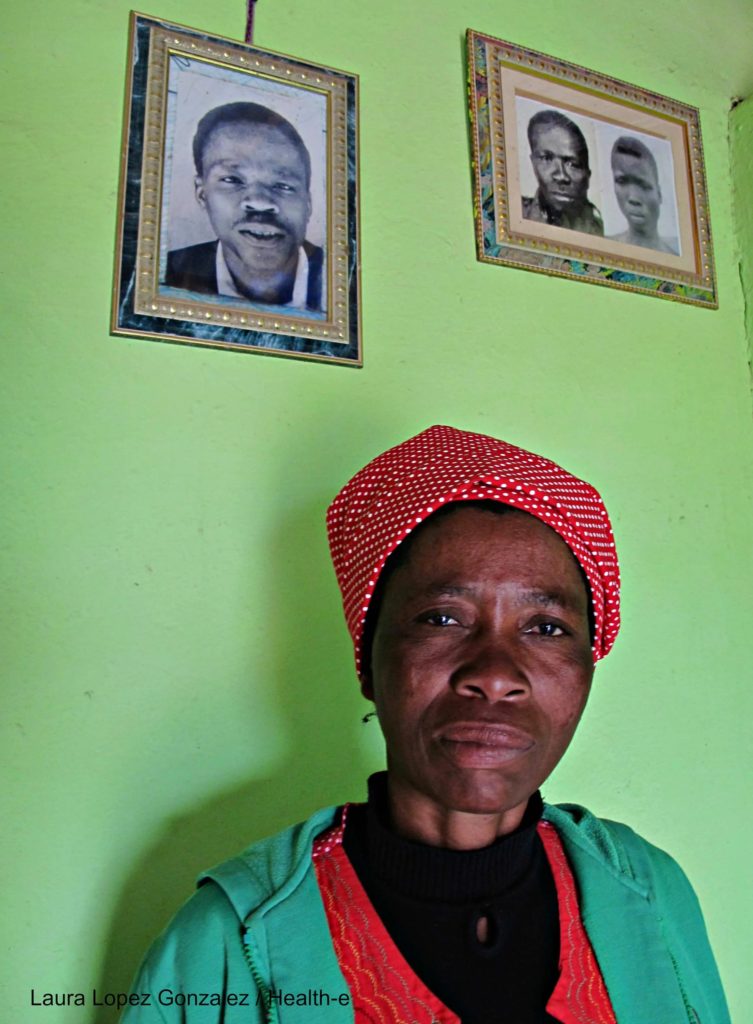
Nozuzile Mankayi

Nozuzile Mankayi is a gold widow.

Her husband, Thembekile Mankayi, spent 1979 to 1995 working underground in the Vaal Reefs gold mine, in South Africa. In 1993, Mankayi contracted pulmonary tuberculosis. He received treatment, improved slightly, and then suffered a recurrence, and had to leave. When he left, he was paid a mere R16,000 for his troubles. In 2006, he was diagnosed with silicosis.

In 2006, Thembekile Mankayi sued AngloGold Ashanti Ltd. for 2.6 million rand. He sued for dignity. Four years later, in August 2010, the Constitutional Court heard the case. Seven months later, March 2011, the Constitutional Court decided in Thembekile Mankayi’s favor.

Thembekile Mankayi died one week before the decision was announced.

It’s been three years, and his widow, Nozuzile Mankayi, has not received a single penny.

The South African compensation system is designed to strangle and choke gold widows to death. First, they have to submit their respective partner’s bodies to a post mortem. For many families, cutting open the body is forbidden. So, women have to be prepared to withstand often intense opposition and worse.

Second, women survivors receive far less than their partners would have.

Jenni Williams, of the Women’s Legal Centre, has argued, “The women who take care of miners are doing unpaid care work. At the moment we are developing a strategy around what would be the best way to litigate around this, but for now we are saying that unpaid care work should be recognised in the context of damages claims, but also in government planning and budgeting. There needs to be recognition that women contribute towards the economy in that they are working for free, which means that there is a saving. In other words, where you had to hire a nurse to look after the sick person, you would have the wife or daughter doing this for free. In terms of this class action suit, what we are proposing is that part of the damages award is a trust that is set up that acknowledges the saving that the mining companies would have by virtue of the fact that these men’s partners and daughters are going to look after them … The court should take that into account when they look at the damages claim because the person doing the harm is actually benefiting from the woman’s unpaid care work.”

It has been said, “Half the harm that is done in this world is due to people who want to feel important.” All the harm addresses women. When miners are attacked, in their lungs by dust and in their chests by bullets, women carry them, through the long day’s night and to the graveside. The persons doing harm benefit from that. They benefit from women’s unpaid labor and used up lives. They benefit from the tragedy of others deemed unheard and unseen: women.

Thembekile Mankayi waged a mighty campaign against predators who ultimately exploded and collapsed his lungs. Nozuzile Mankayi will not stay unheard or unseen. For her, and for the more than 200,000 former gold mineworkers and gold widows now engaged in a class action suit, the struggle continues.


(Photo Credit: Laura Lopez Gonzalez / health-e.org.za)

Thais Moreira and Yashika Bageerathi: faces of democracies’ new witch-hunt


From the perspective of the State, young asylum seekers and young undocumented residents are the same. They are not supposed to be `here’. They are not supposed to speak up, and certainly not for themselves. Under no circumstances are they to succeed. Unkempt citizens of the unwashed criminal classes, they are to stay in the shadows … as shadows. This week, , in France, and Yashika Bageerathi, in England, are the faces of democracies’ new witch-hunt, and they reveal that a specter haunts Europe.

Thais Moreira is a 20-year-old student who came to France, from Brazil, in June 2009. She came with her mother. Since her arrival, Moreira has been a model student, resident, everything. She has fully integrated herself into her neighborhood, school, and new country. In mid February, she went to the local police station for `regularization.’ According to French law, if one has been in the country for five years and has completed three years of schooling, one can apply for residence papers. Some bureaucrat decided that Moreira had only arrived in France in 2010. And so, on March 7, she received the dreaded OQTF, or Obligation de quitter le territoire français. The letter gave her 30 days to leave the country.

Yashika Bageerathi is 19 years old. With her mother, younger sister and brother, a 16-year-old Bageerathi arrived in England in 2012, fleeing physical violence from a family member in Mauritius. Last week, Yashika Bageerathi was informed that, since she was now of majority, her case had been separated from that of the family, and her application for asylum was denied. She was to report to Yarl’s Wood. She was sent to the airport where, apparently, British Airways refused to give her passage. This seemed like a reprieve … until the State responded to the young woman’s appeal to not be separated from her family. The Home Department’s replied, “Fine, the whole family’s denied asylum, and you’re all going back to Mauritius.” That’s where the situation sits now.

In both Thais Moreira’s and Yashika Bageerathi’s cases, students and staff mobilized and organized. They have protested, marched, organized Twitter campaigns (check out #FightforYashika), organized petitions, and more. They have raised a mighty ruckus. And they are asking questions, especially about “the yawning gap between official rhetoric against immigrants “who do not fit” and the violent reality of expulsion and deportation.”

From the Dreamers in the United States to Thais Moreira in France to Yashika Bageerathi (and before her, Lorin Sulaiman) in England, young people, students all, are protesting the witch-hunt that is immigration policy. And it’s not just those students who are asylum seekers or undocumented residents. It’s their friends as well, the students they study, play, and live with. They confront State viciousness with hope and creativity. They oppose State callousness with love. Who’s the teacher and who’s the student now? Stop the democracies’ witch-hunt. Empty the immigration prisons. Stop the deportations … now!


(Photo Credit: http://www.comunidadebrasileiranafranca.com)

Mississippi is burning to kill Michelle Byrom

Central Mississippi Correctional Facility

Kill the pig. Cut her throat. Bash her in.

Michelle Byrom may, or may not, be executed this Thursday, in two days. She currently sits on death row in Central Mississippi Correctional Facility, in Pearl, Mississippi. Mississippi has three State prisons. All women `offenders’ end up in CMCF. In 1996, Mississippi hosted 807 women prisoners. By 2001, it boasted 1,445 incarcerated women. Today, according to the State’s March 2014 `fact sheet’, Mississippi’s prisons and jails hold 2,233 women behind bars. 900 women live, and die, in Central Mississippi Correctional Facility.

In 1999, someone killed Edward Byrom, Sr. By all accounts, Byrom Sr. was a vicious, abusive man, who tortured his wife, Michelle, and forced their son, Edward Byrom Jr, known as Junior, to live in the lowest rungs of hell. Physical abuse, mental and emotional torture, and sexual exploitation were the daily, and hourly, fare in the Byrom household.

The State decided that Junior and a friend had been part of a murder-for-hire plot hatched by Michelle Byrom. When Byrom was killed, Michelle Byrom was in the hospital for double pneumonia. Junior has confessed, at least four times, to having actually murdered his father. Something snapped, he picked up a gun and shot him. Michelle Byrom has been diagnosed “with borderline personality disorder, depression, alcoholism and Muenchausen syndrome, a serious mental illness that caused her to ingest rat poison to make herself ill.” And, of course, her counsel, by all accounts, was somewhere between dreadful and criminally negligent.

Observers have waxed literary in describing the case. For example, Warren Yoder, executive director of the Public Policy Center of Mississippi, said, “John Grisham couldn’t write this story … In any reasonable world, this would be a short story by Flannery O’Connor. Instead, it is happening now in our Mississippi.”

Why is Mississippi burning to kill Michelle Byrom. For that, better to turn to Lord of the Flies. Mississippi hasn’t killed a woman in 70 years, and Mississippi can read the writing on the wall. Soon, capital punishment will come to an end, even in Mississippi, a national leader in executions. That recognition feeds the fire. Facts be damned, along with presumption of innocence and shadows of doubt. The beast needs blood.

The details of Michelle Byrom’s life are hard and disturbing, but the substance, and stench, of Mississippi’s burning is far worse. Stop the execution of Michelle Byrom. Stop all the executions.


(Trip Burns / Jackson Free Press)

Women reject foreclosure, austerity, debt


On Friday March 21, Linda Tirelli, an attorney defending homeowners from foreclosure, and Kevin Whelan, of Home Defenders League in Minneapolis, were interviewed on Democracy Now about recent revelations concerning Wells Fargo’s shady dealings in foreclosures.

A recent internal Department of Justice document disclosed that the DOJ deemed mortgage fraud as low and often no priority. Its claims of success were wildly overstated, and its claims of concern were flat out false.

At the same time, a recently revealed Wells Fargo internal document, issued just one week after the allegedly historical national mortgage settlement, shows that Wells Fargo instructed its lawyers to fabricate documents that would lead to homeowners’ foreclosure on homeowners. This program targeted primarily people of color and the most vulnerable.

At one point in the Democracy Now interview, Juan Gonzalez asked Kevin Whelan, “Can you put this in a national context of the mortgage crisis? Here we are now, six years into the home mortgage crisis that crashed the entire economy.”

Lenders’ mortgage fraud did far more than produce a mortgage crisis. By means of a manufactured crisis, the neoliberal approach of crashing economies increased and expanded the financial grip on civil society. Austerity measures led to the foreclosure of entire countries like Greece, and especially the foreclosure of women. Women’s organizations in Europe have demanded to a clear assessment of the impact and logic of austerity measures.

Wells Fargo lawyers fabricated false documents in order to plunge the most vulnerable into dependency and debt.  Entire, vibrant communities were thrust into poverty and desperation. Likewise, austerity measures were fabricated to form false promises to resolve a “crisis” that have hurt women first and foremost and have also moved many into destitution.

Across Europe, women have been marching against the austerity measures and crying loudly that precariousness is not their societal projects.

Since 2012, Femmes d’Europe en route contre la dette et l’austerité  (European Women in route against the debt and austerity) have organized events to denounce the privatization of public services. And they are still demonstrating. Health care, reproductive care and women’s health have been particularly viciously targeted. These various forms of privatizations are being felt heavily by women in Great Britain, Hungary, Greece and elsewhere. Moreover, the failed US model of private health care is being pushed in places where the public system was efficient and better served its purpose.

Women against Austerity have not received the attention that they should for the same reasons the subprime crisis and the criminal manipulations of the financial sectors in the United States have been underplayed. The illegitimacy of the foreclosures and the austerity measures are the expression of the same ascending power of debt: “Debt constitutes the most deterritorialized and the most general power relation through which the neoliberal power bloc institutes its class struggle.” And, I would add, its gender struggle! The struggle continues!


(Photo Credit: CADTM)

In Spain millions march for dignity

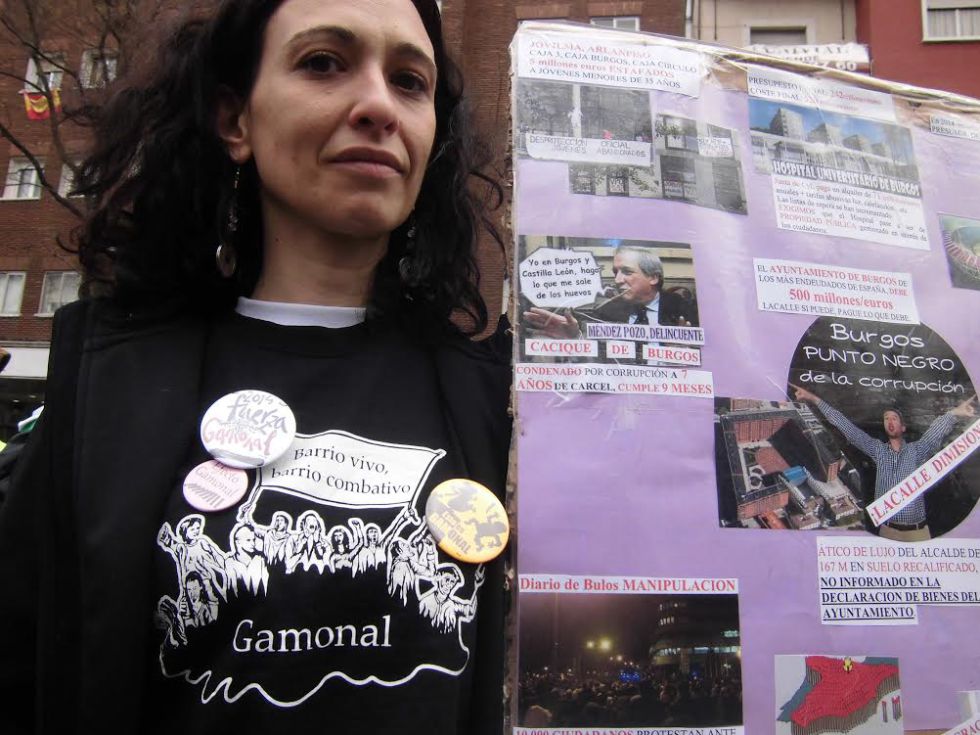
Belèn Calvo

“I came because I have dignity.”

As many as two million demonstrators converged on Madrid this weekend to reject austerity and support individual and collective dignity. For the past month, eight columns have been on the move, and Saturday, they met, as the Marches for Dignity flooded the streets and captured the imagination of the Spanish people.

Marchers and supporters have demanded no more payment of the debt; no more cuts; no more Troika; and bread, work, shelter (and roses) for all. While they have specific policy demands, such as a law establishing a basic income and an end to all evictions, the heart of the mobilization has been to demand an end to State terror and a concerted effort to build dignity. To march, and to work, for dignity is to reject the politics of fear and terror.

The marchers’ manifesto demanded equal rights for women, migrants, people of color, members of LGBTIQ communities, elders, the poor, workers, dissidents, and more. More to the point, they have demanded an end to the assaults and a beginning to real democracy and real dignity.

Women have been prominent across the sectors. Women have led the anti-eviction movement, and they have led and populated all other movements as well, from mining communities to farm communities to urban communities, from factories to schools to clinics. Women like anti-eviction activist Mamen Ruiz argued that women had been pushed to the brink, and beyond, and that now is the time. Women like Virginia, a government employee, marched to protest the astronomically rising tax rates and the new, stringent anti-abortion laws. Women like teacher Belén Calvo came because, in her words, “I have dignity.”

Women marched to secure an end to sexual violence and exploitation. They argued that women had long struggled with and organized to secure the right to live without male violence and the right to family planning. Under the Troika’s constant assault on women, and almost everyone, violence against women has intensified. Violence has intensified against women of color, immigrant and migrant women, women workers, women students, women seeking medical assistance, and the list goes on.

Outside of Spain and the usual suspects, the Western media has barely covered the largest protest in recent Spanish history, except to note that they ended with some clashes between police and a very small number of demonstrators. Whether police or protesters began those clashes remains debatable. What is clear is that the only `news fit to print’ is violence, however incidental.

For the international news media, austerity is the new normal. Meanwhile, anti-austerity resistance is gaining ground in Greece, Cyprus, Ireland, Portugal, Spain. Much of the prison resistance organizing in the United Kingdom, United States and Australia is anti-austerity at its core. Much of the protests about public service in South Africa are as much about the State’s austerity development program as the shoddy service. In each instance, women are at the core of organizing. In each instance, women echo Belén Calvo: “I come because I have dignity.”

The message is clear. End the reign of terror and torture that passes for austerity. Remember, we each and all came because we have dignity.


(Photo Credit: El Pais / J.J.G.)

For women farmworkers of Immokalee NOW IS THE TIME!

In Florida’s tomato fields, and across the United States, women tomato pickers and farmworkers – such as Lupe Gonzalo, Silvia Perez, Nely Rodriguez, and scores of others – are organizing a quiet revolution, by waging a raucous, joyous, ferocious struggle. Welcome to the tomato fields of Immokalee, Florida. Welcome to the future.

The Coalition of Immokalee Workers has been organizing, representing, testifying, winning and consolidating farmworkers’ power for twenty-one years. In that time, the organization itself has matured. A key part of its growth has been the formation of the Immokalee Women’s Group and the recognition of women as a central sector in the struggle for farm worker’s rights, dignity, and power.

Recognizing women’s centrality has meant recognizing that the struggle for rights, dignity, and power is a community wide struggle rather than strictly a `shop’ issue. While exorbitantly expensive, predatory housing affects everyone, women carry the greater load of both dealing with rent payment and of maintaining the household. Women attend more to health care, child care and children’s well being, food provision in food deserts amidst the farmlands, and the list goes on. Women keep the daily train of the everyday moving along.

At the same time, women in the fields face their own special circumstances. Rampant, and often illegal, use of pesticides and lack of both information and safeguards imperils women’s health in particular ways. Sexual abuse at work attacks women daily.

The women of Immokalee have declared NOW IS THE TIME! They reject the planned catastrophe of lethal housing, fatal indebtedness, wage slavery, sexual abuse and exploitation. They reject the harvest of shame and the fields of abjection. They organize hope.

On Saturday, March 8, International Women’s Day, the women of Immokalee wrote and delivered a letter to Wendy’s, which has thus far refused to sign the Fair Food agreement, “Hear the voice of the woman, who today dares to defend her dignity in the fields. A new day is coming to Florida’s fields, with the Fair Food Program. It guarantees that the dignity of women is respected. We have to keep fighting, and we have to keep shouting, at Wendy’s and other corporations, that the hour has arrived. NOW IS THE TIME!”

On the following Saturday, Lupe Gonzalo, CIW farmworker and organizer, spoke directly to Publix, which has also not signed the Fair Food agreement; to supporters and to the world: “We want to say to Publix that as women, we will not even consider allowing sexual violence to continue in Florida’s fields or the agricultural industry.  We will not take one step backward.  We will only continue forward.”

We will not take one step backward. Lupe Gonzalo has been recognized as “a powerful voice” for justice. She is. Her power is the power of women, rejecting sexual abuse and all forms of exploitation. Her power is her capacity for affirmation, her ability to reach and teach others around her, and especially women, to affirm themselves, individually and collectively, and to “feel proud to walk, to march, to demand justice, to demand respect for ourselves, for our families, for our children, for future.”

As one CIW woman farm worker noted, two years ago, “Our history is not written in any books. I don’t think there’s enough paper to capture the daily life of a woman in the struggle, fighting to provide for her family. We as women want to move forward, so that tomorrow our children will not have to suffer as they do today.”

The future is now. NOW IS THE TIME!

(Photo Credit: Forest Woodward / Facebook)