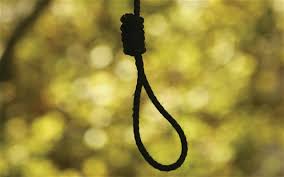
Trauma and violence have become the global school curriculum


Paballo Seane, 19, was buried recently: “Paballo Seane, 19, a Grade 12 pupil at Cefups Academy, which is on a farm 11km outside Nelspruit, died in hospital over a week ago after allegedly being sjambokked by a teacher. She was buried on Saturday in her home town, Bloemfontein, in the Free State.”

Since Paballo Seane died, or was killed, former students of the Cefups Academy have reported their memories of sjamboks as a fairly regular “pedagogical tool.” Parents are threatening to take their children out of the school, and Mpumalanga Premier David Mabuza has said if corporal punishment was used, the academy will be closed.

Will it be closed?

This is not the first time Cefups Academy has run into precisely this trouble. In 1999, Simon Mkhatshwa, the school’s founder, was convicted for sjambokking a teacher.

South Africa’s Deputy Minister of Higher Education Mduduzi Manana, a graduate of Cefups Academy, describes Simon Mkhatshwa as a “typical traditional man who believed that what must happen at school was teaching and learning and nothing else”.

Is the sjambok teaching, learning, or nothing else?

The violence done to Paballo Seane in school by a staff member is no anomaly, neither in South Africa nor around the world.

Across the United States, schools use so-called seclusion rooms, which are solitary confinement cells. Teachers are not supposed to use the rooms for punishment, but they do regularly. More often than not, the children believe that their punishment was not apt and normal, because teachers are fair and just. And so they don’t tell their parents. Not surprisingly, the majority of children are living with disabilities.

Suffer little children, and forbid them not, to come unto me: for of such is the kingdom of heaven? No longer.

And in India, in the state of Madhya Pradesh, the State Commission for Protection of Child Rights “has written to state government to make it mandatory for teachers to sign an undertaking against torture to students.” This is due to a spike over the last two years in complaints of torture of students by school staff.

Teachers need to sign a document that says they will not “undertake” the torture of students?

The gender dynamic of staff violence has yet to be studied conclusively. What is known is that the experience is traumatic, hurts deeply and lasts forever. Trauma and violence have become the global curriculum.

Last week, Kathleen Dey, of Rape Crisis Cape Town Trust, urged South Africans not to use Women’s Day, August 9, as an alibi for hiding from precisely violence against women. This week, on August 12, the world `celebrated’ International Youth Day. Think of that, and think of Paballo Seane dying under the lash of a sjambok. Think of the girls across South Africa, the United States, India and around the world who suffer violence in the one place that is meant to help precisely girls advance in this world and the next: school. Remember Paballo Seane and all the girls, and then do something.


(This is part of a collaboration between Rape Crisis Cape Town Trust and Women In and Beyond the Global. The original, very different version can be found here. Thanks to Kathleen Dey and all the staff and volunteers at Rape Crisis Cape Town Trust for their great and urgent work.)

(Photo Credit: Lowvelder)
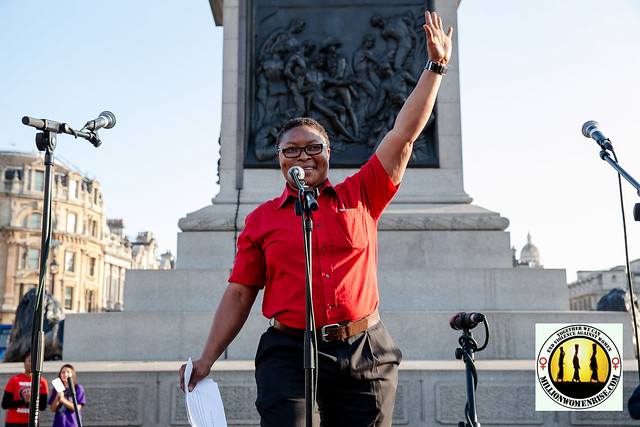
Now you have touched Aderonke Apata, you have struck a rock, you will be crushed!

The United Kingdom tried to crush Nigerian lesbian, feminist, asylum seeker Aderonke Apata. Big mistake. They threw her into Yarl’s Wood, the notorious prison for women asylum seekers and migrants. She organized and mobilized. They tried to cast doubt on her claim of being a lesbian. She looked at them with pity, and then provided evidence. They tried to silence her. She founded Manchester Migrant Solidarity, aka MiSol, “a convergence space for migrants (including asylum seekers, economic migrants etc.) and non-migrants, offering practical and social activities for mutual support, empowerment and solidarity.” MiSol joined with WAST, Women Asylum Seekers Together; and Safety4Sisters to make clear there is only way forward: Shut Yarl’s Wood.

The State tried to turn Aderonke Apata into a spectacle, then into a cipher, then into a ghost. Each time the State failed, or, better, each time Aderonke Apata succeeded in organizing, mobilizing, articulating, shouting, whispering, speaking, singing, being heard and being fearless.

At a #ShutDownYarlsWood demonstration in June, Apata explained, “This wasn’t people speaking for other people, we heard women telling their own stories about what goes on in Yarl’s Wood. … Conditions in there are very bad, with poor healthcare, abuse and bad treatment, when these are women who have experienced imprisonment and torture before … Many women develop mental health problems that they didn’t have before. The prison environment brings back bad memories. There is no reason to detain these women in prison, for this is what Yarl’s Wood is …This is going on in our backyards, and yet people do not know about it. When they find out, they are enraged … We will speak with a louder voice until it is heard and continue to make more noise about Yarl’s Wood until it is shut down.”

Apata’s asylum case, and status, is still pending. Nevertheless, and because irony is decidedly not dead, Aderonke Apata, this past week, made the shortlist for a National Diversity Award, in the Positive LGBT Role Model category. In the eyes of some, Aderonke Apata is a hero, and the State is condemned.

Awards are nice, acknowledgement of one’s work is great, action is the best. End the United Kingdom’s current witch-hunt against African lesbians, against African women asylum seekers, against African women generally. Shut down Yarl’s Wood. Don’t delay, don’t pretend it’s complicated. It’s not. The “conditions in there are very bad.” Every day Yarl’s Wood is open, women living trauma are forced to engage with their past traumas wrapped into new ones, with the pain intensifying by the second. Every day Yarl’s Wood is open, women who sought help are exploited and then exploited again more intensively. It’s not complicated. Shut down Yarl’s Wood, because it’s bad and wrong, and every day it’s open, we are steeped deeper and deeper into guilt and shame. All of us are. Shut down Yarl’s Wood. Do it today.


(Photo Credit; Flickr.com)

Sexual Offences Courts Matter, and Here’s Why


August is Women’s Month in South Africa, and so last week, to launch Women’s Month, and presumably `to honor’ women, two judges of the Pretoria High Court reduced to 20 years the life sentence of a man convicted of having repeatedly raped an 11-year-old girl, a girl he says he regarded as “a daughter.” The judges reduced the sentence because they determined that the 11-year-old girl “seemed to be a willing partner.”

What? What?!?

According to South African law, not to mention common sense, an eleven-year-old child is never a willing partner to anything. An eleven-year-old girl cannot give consent to sexual contact, and nobody gives consent to sexual violence. Period.

From start to finish, the decision is all wrong, and, yet again, one can only be outraged and, yet again, foment and rage and lament the betrayal. Or …

Or one can consider this abysmal case as the proof, if one were needed, that greater attention must be paid to serious investment in Sexual Offences Courts.

Alison Tilley began the week by asking, “Did you know we have only fifteen functioning sexual offences courts?” Last August, the Ministerial Advisory Task Team on the Adjudication of Sexual Offence Matters launched its Report on the Re-Establishment of Sexual Offences Courts. After a year of study, the task team issued a strong and clear report, with direct and clear recommendations: “In the final analysis, the report makes a clear finding that there is a need for the re-establishment of Sexual Offences Courts in South Africa … The Department must give priority to the immediate upgrading of the 57 regional courts that have been identified as being resourced closest to the Sexual Offences Court Model. This upgrading process must be done against available resources, and must commence in the 2013/2014 financial year.”

The original plan was to have 22 functioning courts by the end of 2013/2014 financial year. There are 15.

In South Africa, sexual offences courts began in 1993. By the end of 2005, there were 74 sexual offences courts. Little by little, the courts were closed because of “budget constraints.” The budgets weren’t `constrained.’ The legislators decided, with their wallets, that protection of the vulnerable just doesn’t matter all that much. It’s happened before, it’s happening again.

Last year, the discussion of Sexual Offences Courts was impelled by the torture of Anene Booysen. This year, perhaps, it will be moved by the judicial violence done to an eleven-year-old girl raped by a man who thought of her as “a daughter” and by a court, and court system, who didn’t think of her at all.


(This is part of a collaboration between Rape Crisis Cape Town Trust and Women In and Beyond the Global. The original, slightly different version can be found here. Thanks to Kathleen Dey and all the staff and volunteers at Rape Crisis Cape Town Trust for their great and urgent work.)


(Photo Credit: Local Media Unpacked)

Hiding behind Women’s Day. Again.

I remember as a child going with my mother to register our domestic worker for a pass book. Two women and a child going to a place far from home to wait in a queue to deal with men behind counters who told us what to do and who represented a violent system. This would have been in the early 1970s, almost 15 years after women protested the pass laws in their march to the Union Buildings in 1956. Now we have a day to celebrate those women and everyone seems to have forgotten that protesting against structural violence was what their march was all about. This is what we should never forget: that we were a country that deliberately oppressed people, restricting their movements and keeping them from their own power.

Today the oppression of women and of poor women in particular continues. We may not be able to say that it is entrenched in our laws the way the apartheid system was but I worry that Women’s Day actually becomes a way to forget, to hide from and to obscure the very real issues that we face today. In an atmosphere of celebration it seems wrong to stand up like the evil fairy at the princess’s birthday party and say, “We are not free.” To invade the corporate pamper day and say, “Our rape statistics are some of the highest in the world. This needs to change.” To stand on the platform at the ceremony to honour women’s achievements and say, “What have we not achieved?”

One of the effects of this watering down of the real issues is that the public forget about the individuals, organisations and communities that do deal with the reality of rape and violence against women every day. Everyone wishes the ugly problem would simply go away. Let’s not taint the celebration with doom and gloom. Also of course, let’s not leave men out. I’ve heard so many people say, “Why don’t we have a Men’s Day?” as though this were the commercial opportunity of Valentine’s Day, Mother’s Day or Father’s Day. And then there is the lure of the dream, “Let’s find the solution to this scourge and move forward.” I would like to find that solution. I fear it may just be a dream.

At the Rape Crisis Cape Town Trust we are certainly not in the business of chasing dreams. We don’t have the time. We don’t have the people. We don’t have the money. What we do have are a group of extraordinarily committed women who work every day to make sure that change happens. The change that one woman makes when she comes out of a counselling session and says to herself, “It was not my fault. I did not deserve this.” She sees that she can heal. Or the change that a group of peer educators make when they stand in front of the assembled teachers and learners of their school and say, “Don’t be ashamed to report rape. You were not to blame even if you were wearing a short skirt on that day. A skirt is not an invitation to commit a crime.” They see that they can change the hearts and minds of others. Or the change that a government makes when it drafts a law that says it will empower the victims of crime with information, with counselling, with a proper tracking system for cases in the justice system and with joint planning between government departments to ensure well coordinated, cost effective services. It sees that it can provide a deterrent.

Women’s Day is a day to commemorate. To remember and to show respect. This need not be without celebration but that celebration should include an action that gives tribute and that ties the past to the present in service of the future. Otherwise it is just another holiday or an opportunity to commodify women. Join us as we march from St George’s Cathedral to the Artscape Theatre on Saturday 9 August 2014 at 9.30am but don’t let it stop there. Take your #mydoekselfie every Friday and share it with your friends on Facebook but don’t let it stop there. Make your own extraordinary commitment. It is not for me to say what that should be but let it be something that moves you, something that allows you to change. To change in a way that frees you and a woman that you know. Something that makes her feel safer, more respected, better supported and more free to make her own choices and decisions. Don’t hide. Speak out. Make just one change.

(This is part of a collaboration between Rape Crisis Cape Town Trust and Women In and Beyond the Global. The original can be found here. Thanks to Kathleen Dey and all the staff and volunteers at Rape Crisis Cape Town Trust for their great and urgent work.)

(Photo Credit:  Daily Maverick)

The Women of Marikana invite you to bear witness to their lives


SIKHALA SONKE: The Women of Marikana i
nvite you to bear witness to their lives in Marikana in August 2014

Re: site inspection and speak out by the women of Marikana, 12 August 2014

WHAT? A site inspection of Wonderkop, Marikana followed by a brief speak-out in which the women of Marikana and widows will testify to their ongoing pain and experience of injustice. They will talk about what they want to change in their lives.WHO? Ministers and Parliamentarians, the Office of the Premier in the North-West province, representatives of Chapter Nine bodies, prominent civil society leaders and cultural workers.

WHEN? Tuesday 12 August at 11am outside the main entrance to the Wonderkop Stadium.

Nearly two years has passed since the massacre of striking mineworkers in Marikana on 16 August 2012. Media and public attention has since been focused on the Farlam Commission and, more recently, on the five-month plus strike action on the Platinum belt. Eyes have long been turned away from day-to-day life in Marikana, and the distant rural villages and towns from which some of the mineworkers, killed in the massacre, originate and where their surviving families remain.

As we approach the two year anniversary of the Marikana massacre, it is an appropriate time to ask:

–     Are the Lonmin workers and community members living in conditions any better than two years ago? What has Lonmin done to improve lives? What has the local municipality done?

–     What justice has there been for the widows of Marikana and the families of the mineworkers that were killed? Has there been any compensation for their grievous losses? How are these families being supported by Lonmin and government?

–     Do workers and the community feel that justice has been served in the past two years?

The women of Marikana – organised as Sikhala Sonke – invite you to bear witness to their living conditions, their continued suffering and their acute feeling that justice for workers, for widows, for the community as a whole has not been served.

Please RSVP or send your queries to sikhalasonkejustice@gmail.com. You may also phone ThumekaMagwangqana on 084 714 0111.

We look forward to meet you on the 12th August in Marikana,

Sikhala Sonke


SIKHALA SONKE: The Women of Marikana

Site Inspection and Speak Out, 12 August 2014

Programme

10:30am           Gather at tent erected close to the Wonderkop Stadium, Nkaneng, Marikana

11:00am           Welcome, why we are here and outline of programme for the day (Sikhala Sonke)
Bishop Jo Seoka – opening words and prayer

11:15am            Depart for site inspection (Sikhala Sonke)

12:15pm            Conclude site inspection at assembly point
Testimonies from women and widows of Marikana
Remembering Paulina Masuhlo (Sikhala Sonke and family of Paulina Masuhlo)
Reading of Sikhala Sonke letters to government

1:00pm            Responses from invited guests and other organisations gathered in solidarity
Reading messages of solidarity

1:50pm            Closing words and prayer – Bishop Paul Verryn
Refreshments and departure


(Photo Credit: Sikhala Sonke – Mama Marikana)


Cleaners: A handful of women show the way!


Following 11 months of relentless hard struggle, 595 public sector cleaners have become the embodiment, the symbol, the soul, the life itself of the most determined resistance against the politics of austerity in Greece. These women have become “political subjects” and the leadership of the current resistance movement in its entirety, having the guts to face up to such powerful enemies as the Greek government, the Central European Bank, the European Commission and the IMF.

For 11 months of struggle, these cleaners have set themselves against the government and the TROIKA and become their main enemy, having short-circuited the implementation of the austerity measures and having a constant presence on the political scene through the mass media. Meanwhile, the opponents of the politics of austerity still treat these fighting cleaners as though they are not political subjects.

From the moment the Troika-imposed austerity measures appeared, the women came out en mass onto the streets, and their resistance displays its own dynamic, with its own specificit rich in political lessons.

In the four years of austerity politics which have transformed Greece into a pile of social, economic and above all human ruins, few amongst us have spoken of the lives of the women and even less about their struggles against the diktats of the TROIKA. It was therefore to be expected that public opinion would be shocked by this exemplary fight, executed exclusively by women. But is this fight really so shocking?

Women have participated en mass in the 26 general strikes. In the “movement of the indignant” they occupied city squares, set out camps, demonstrated. They mobilised at the front line for the occupation and the independent running of ERT. Acting in an exemplary manner, they became the soul of the strike committees of the universities’ admin staff against the “reserve pool” policy, (ie those to be sacked after 8 months, at 75% of their normal salary). 25 000 public servants, majority women, will be the victims of staff cuts in the public services. Women alos form the vast majority of the volunteers in the Solidarity Movement and the self-managed solidarity health structures that are trying to deal with the human crisis and the collapse of health services.

The mass participation of women in the resistance movements against the demolition of the welfare state and against the politics of austerity is not surprising, and it did not happen by accident. First of all, women find themselves at the eye of the austerity storm. The dismantling of the welfare state and of its public services is damaging their lives; forming the majority of the civil servants and of the main users of public services, women are doubly hit by all cuts. They have therefore one thousand reasons not to accept this historic deterioration of their living standards, akin to a return to the 19th century.

It is true that at the beginning women were not differentiated as “women – political subjects”, participating as they were in the same demands and the same forms of action with the men within the various movements. They were simply participating in large numbers.

However, already within the framework of the pioneering struggle against gold extraction at SCOURIES in Chalkidiki, taking on the Canadian multi-national ELDORADO GOLD, the women were rapidly being differentiated through their specific forms of action and their radicalism. The press and popular perceptions ignored the significance of their gender identity in the way they were fighting, but not the police did. Quite the opposite, the MATs (Greece’s special riot control police units) targeted mainly women, using savage and selective measures in order to terrorise the whole population through them and eradicate any form of disobedience and any resistance movement.

Women were imprisoned, legally persecuted, and subjected to violence and humiliation, even “sexual” degradations specifically adjusted to their bodies and their gender.

In the following year women took more initiatives and developed their own forms of action.

It all started when, in order to implement the harshest part of the austerity program and comply with the terms imposed on it by the “lenders”, the government targeted, in advance of anybody else, the cleaners at the Ministry of Economic Development, the Inland Revenue and the Customs offices. It placed them on “reserve lists” since last August (which means that for 8 months they would be paid only three-quarters of their salary of 550 Euros per month, and then be sacked).

The government followed the same tactics as in SCOURIES. It started by targeting the weakest and those with the least chance of getting support, ie the cleaners, to be followed by the bulk of the employees, the 25,000 civil servants to be made redundant. And it was timed at the moment when the resistance movement was getting exhausted after the relentless austerity measures, with many activists getting demoralised, depleted and forced to try and solve their own problems individually.

The government believed that, with this group of workers, ie poor women, of “lower class”, pay levels around 500 euros per month and, as they assumed, not very intelligent (which explains the origin of the cleaners’ slogan “we are cleaners, not idiots”), they could sort them out quickly and squash them like worms.

The target was to privatise cleaning work as a gift to the private cleaning contractors. These mafia-like contractors, known as tax-evasion champions, would then re-employ them at c200euros per month (ie 2 Euros an hour), with almost non-existent security and no employment protection rights, practically equivalent to slave labour.

These women, sacked from their jobs, sacrificed to the man-eating tendencies of the TROIKA, these women of 45 to 57 years of age, many mothers in single parent households, divorcees, widows, over-indebted, with children, unemployed husbands, or caring for disabled dependants, with no access to “early” pensions after 20 years, and without a chance of finding another job, decided not to give in. They decided to take control of their lives in their own hands.

And so we’ve got a handful of women who decided to change the established forms of action adopted by the traditional trade unions. Some have taken the initiative and organised themselves for themselves, with a group of cleaners at their core, who had already fought battles 10 years ago and won significant victories. They have worked hard and they have woven a web that has acquired national dimensions.


(Photo Credit: CADTM.org)

Why the Pope’s Domestic Worker Tweet Matters

Leading domestic worker organizations and thousands of people from around the world praised Pope Francis last week after he tweeted a message of support for domestic workers to his 4.3 million followers. “May we be always more grateful for the help of domestic workers and caregivers; theirs is a precious service,” the tweet read. Since then, at least 5,100 people have shared the message with their followers.

The fact that millions of people could see the pope’s message is reason enough for domestic workers and advocates to be excited about it. It could inspire employers and lawmakers to consider their roles in the treatment of domestic workers. But even more important is what the tweet represents: concern and commitment from a global leader who has a unique ability to raise awareness and influence public opinion – in a way that could lead to policy and culture change. And that’s why the tweet matters.

Views on the papacy and Catholicism aside, Pope Francis undeniably speaks to a large, global audience. There are an estimated 1.2 billion Catholics worldwide, primarily in Latin America and Europe. As Jack Jenkins of the Faith and Progressive Policy Initiative argues, “the pope has a built-in listening audience that rivals that of most heads of state… he has the opportunity to push issues into the global spotlight just by mentioning them in his public addresses.” This is significant for a workforce often considered invisible.

The pope’s built-in audience also includes and is magnified by the media. In March, Pew Research Center released the results of an analysis of U.S. media coverage of Pope Francis’ first year and found that he appeared in nearly 50,000 stories in top digital news outlets, ranking fourth most popular among international leaders – behind President Obama, South African leader Nelson Mandela (who died in December) and Syrian President Bashar al-Assad.

The potential for the pope’s global audience and news-making ability to generate support for domestic workers seems obvious, especially among Catholics. But media scholars have also long argued that the media itself has an agenda-setting effect, which means it can make topics more salient for the public and lawmakers simply by covering them. This media effect, combined with the newsworthiness of the papacy, could make the pope’s messages and support of domestic workers even more influential.

The popularity and favorability of Pope Francis (including on Twitter) is also significant. In the United States, for example, two-thirds of the public overall and more than eight in 10 Catholics favor him. He was named TIME’s “Person of the Year” in 2013. And there are some signs that he receives more media coverage than his predecessor did, and that coverage of him spikes when he makes statements about social issues.

In many ways, the pope is also in command of a messaging and public policy influencing machine. As Jenkins notes, popes’ opinions are “typically reflected in the work of the church hierarchy,” in part because they can appoint like-minded bishops that can advocate in a variety of ways. The U.S. Conference of Catholic Bishops, for example, engages in public policy debates and endorses legislation. Its support of a federal domestic worker bill of rights or legal protections for domestic workers could generate increased support from lawmakers and the public.

Finally, and importantly, Pope Francis’ concern for domestic workers has been expressed in more ways than this tweet. He made similar comments in a weekly address in June and during a recent interview. The “dignity of labor” has been described as one of his top three social issues. And in 2013, he discussed the challenges surrounding decent work in today’s global economy and the significance of the International Labour Organization’s Domestic Worker Convention with the director general of the agency.

As it turns out, ensuring dignity for domestic workers is personal for Pope Francis. His family employed a domestic worker when he was a child and he admired her greatly, even seeking her out later in life and visiting her the decade before she died. To this day, he says he wears a medallion she gave him as a reminder of her. This strong, personal commitment and his global influence make him an especially powerful ally for the domestic workers’ movement.

There are, of course, limitations to the pope’s ability to inspire widespread policy and culture change. Some people will always disagree with the pope and the church, and his influence is most likely limited to Catholics and Catholic countries. But these limitations do not diminish the overall significance of a pope speaking out about such a critical and global issue.

Last week wasn’t the first time Pope Francis reminded the world of the need to treat domestic workers with dignity and respect, and it won’t be the last. Those 108 characters matter because they just might represent great potential and promise for a sustained papal effort to shed light on the importance of domestic labor and the rights of the tens of millions of women who perform it. Catholic or not, that’s reason to celebrate.


(Photo Credit: Twitter / International Domestic Workers Federation)

Rosemary Margaret Khumalo died last month


Rosemary Margaret Khumalo, affectionately known as Makhumalo, died last month: “Rosemary Margaret Khumalo died on death row on the 15th of July at Chikurubi Maximum Prison before the Constitutional application to set aside her death sentence could be heard by the Constitutional Court.” Khumalo, 59-years-old, had spent the last 15 years on death row.

Human rights lawyer Beatrice Mtetwa commented, “Being on death row for an unduly long period is a violation of one’s rights. I do not know why she was on death row for such a long period time. Either someone did not know what they were doing or they did not want to execute her. It is a blow on the justice system of Zimbabwe.”

Chiedza Simbo, director of the Zimbabwe Women Lawyers Association (ZWLA), said, “It is with immense sadness that ZWLA celebrates the role Rosemary Margaret Khumalo played in defending the rights of women embodied in the new Constitution of Zimbabwe,”

Rita Nyamupinga, Director of Female Prisoners Support Trust (Femprist) reflected: “Makhumalo was so brave even after being sentenced to death she could smile and share her story without any reservation. She used to say ‘I am telling you because this place is not good, wanzvaka? (you hear?) with a Ndebele accent. She was in there from 1999 when she was sentenced to death for murder. All she wished for was to be released if they could not hang her. She said she had repented but could not bear the torture any longer. She was so prayerful, at times we would fail to pray but she would encourage us to soldier on … Every time we parted she would remind us not to take long before visiting her. At times we would take our time because of the after effects of the previous visit. In February 2014 after the Presidential Amnesty we all thought Makhumalo was eventually going but it was never to be.”

In many ways, Makhumalo’s story is typical of death penalty countries. Sentenced to death, she then waited, often in solitary isolation, for the hangman to come. He never did. The reasons for her long stay are unclear. On one hand, Zimbabwe is a de facto death penalty abolitionist country, largely due to the inability to find someone to actually conduct the executions. On a different, but not opposite, hand, the vast majority of those on death row are poor. As Women’s Coalition of Zimbabwe chairperson Virginia Muwanigwa noted: “We want the death penalty to be removed from our constitution and our laws completely. One important reason for this is that it is mostly poor people who often get hanged.”

As in Zimbabwe, so in the United States and elsewhere. A recent US court ruling found that the main cause for death row delays is the State’s foot-dragging and underfunding of its indigent defense system.

But Rosemary Khumalo’s story has a twist. Last year, Zimbabwe passed a new Constitution, which exempts women, men under 21, and everyone over 70 from the death penalty. The new Constitution also does away with mandatory sentencing. For Khumalo and Shylet Sibanda, the only other woman on death row, this seemed promising. They appealed to courts and were denied their appeal because of lack of “urgency.” Khumalo appealed directly to the Presidency, on five occasions, and was rejected twice, and didn’t hear back on three other occasions.

Her lawyers argued from the basis of human and Constitutional rights and due process. Rosemary Khumalo pleaded as a woman, as a human being. She did not say she was innocent. She said she had repented. Those around her confirmed the substance of that claim.

Rosemary Khumalo was so close to release and so very far from freedom. In her last years, she lived with dignity, which is hard won in the killing conditions of Chikurubi. The years were hard, but the real story is not the long years. It’s death row: “‘I am telling you because this place is not good, wanzvaka? (you hear?).” Remember: this place is not good. Remember Rosemary Margaret Khumala, affectionately known as Makhumalo.

(Photo Credit: Nehanda Radio)

Kasha Jacqueline Nabagesera: “I am no longer criminal, today we have made history”

Kasha Jacqueline Nabagesera

Some days the news is good. Today, that’s the case from Uganda. Last December, when the Uganda Parliament passed `ethics laws’, that, using the most vague and hence lethal language, threatened the LGBT communities with life in prison while also outlawing miniskirts, Kasha Jacqueline Nabagesera, founder of FAR-Uganda, Freedom and Roam Uganda; Julian Pepe Onziema and Frank Mugisha, leaders of SMUG, Sexual Minorities of Uganda; joined forces with Professor Joe Oloka-Onyango, MP Fox Odoi-Oywelowo, veteran journalist Andrew Mwenda, Prof. Morris Latigo, Dr. Paul Nsubuga Ssemugoma, indigenous civil society organizations, the Human Rights Awareness and Promotion Forum (HRAPF) and the Centre for Health, Human Rights and Development (CEHURD). Together, they sued the Attorney General. Today, they won. The constitutional court declared the passing of the anti homosexuality bill into an act as null and void.

Kasha Jacqueline Nabagesera and all the activists know the struggle is not over. They know that the LGBT communities, and especially their leaders, will be attacked with even greater vehemence. According to Kasha Jacqueline, “Many people are going to retaliate and attack community members. People are going to retaliate — not just the members of parliament and anti-gay groups and religious leaders, but in the community as well.”

But they know something else as well. You only win by pushing back and pushing forward. Kasha Jacqueline knows in advance that the government will petition the decision, as it did instantly. She knows that same-sex relationships, again still codified in the most ambiguous and hence lethal language, is still illegal. But she knows as well the great work of having faced down the State, the President, the Parliament, and everyone else who said she must just die, and the sheer joy of hearing the phrase “null and void.” The actions of those who would nullify her, of those who cast her into the void, are now null and void.

And Kasha Jacqueline Nabagesera can laugh and cry and say, “I am no longer criminal, today we have made history for generations to come”. Some days, thanks to the work of women like Kasha Jacqueline Nabagesera, the news is good. Today is one of those days.


(Photo Credit: https://orgs.law.harvard.edu/womeninspiringchange/)


Cell extraction: Torture from sea to shining sea

From Tennessee and California, this week, people and groups are charging, in court and in the streets, that something called “cell extraction” is killing and torturing prisoners, children, loved ones: “In the insular world of correctional institutions, it is known as cell extraction, the forcible removal of a prisoner from a cell by a tactical team armed with less-lethal weapons like Tasers, pepper spray and stun shields.”

On one hand, standard “cell extraction” becomes particularly problematic when so much of the prison population is living with mental illness and so few, as in practically none, of the prison staff is trained to recognize, much address, a mental health episode. The story of Charles Jason Toll is a case in point.

Charles Jason Toll was 33, diabetic and living with mental illness. One hot August night, in Riverbend Maximum Security, in Tennesse, where Toll was in solitary confinement, guards rushed into his cell, pushed him to the floor, handcuffed and shackled him. When he repeatedly begged, “I can’t breathe”, he was told, “You wanted this.” A little while later, he died.

Charles Jason Toll was in prison for a parole violation. Why was he in solitary? Why did no one in charge know his medical history?

Part of Charles Jason Toll’s story is the vindictive system in which a slip can send you down a hole from which there is no escape, and that’s the plan.

Toll’s mother, Jane Luna, is suing Tennessee for having killed, and tortured, her son. Jane Luna didn’t even know her son was arrested until she received notice of his death.

Meanwhile, “Videos made public in California last fall showed corrections officers at state prisons dousing severely psychotic inmates with large amounts of pepper spray before forcibly removing them from their cells, images that a federal district judge, Lawrence K. Karlton, who ordered the release of the videos, termed `horrific.’”

Earlier this week, ten civil rights groups filed a complaint concerning the San Diego juvenile detention centers and their use, especially during cell extraction procedures, of pepper spray.

One story involves a girl who reported, to her attorney, that she had suicidal inclinations. “The girl sat on the bunk in her cell in one of San Diego County’s female juvenile-detention units as staff members explained that she was being placed on suicide watch. They told her she had to strip naked in front of them—including in front of a male staff member. She refused, twice. So, they sprayed her in the face with pepper spray, then shut the door to her cell. Two minutes later, they asked if she was going to cooperate. She refused, and they sprayed her a second time and again shut the door. Minutes later, they opened the door and sprayed her again. She vomited. They then sprayed her yet once more. After the fourth blast of pepper spray, the girl finally submitted. Probation staff ordered her to crawl out of the cell, where they handcuffed her, forcibly removed her clothing, cut off her shirt and bra, strip-searched her, put her in a gown and placed her in solitary confinement for 48 hours.”

There is a special punishment, a special hell, for girls and young women who refuse the advances of the State.

(Image Credit: San Diego City Beat)