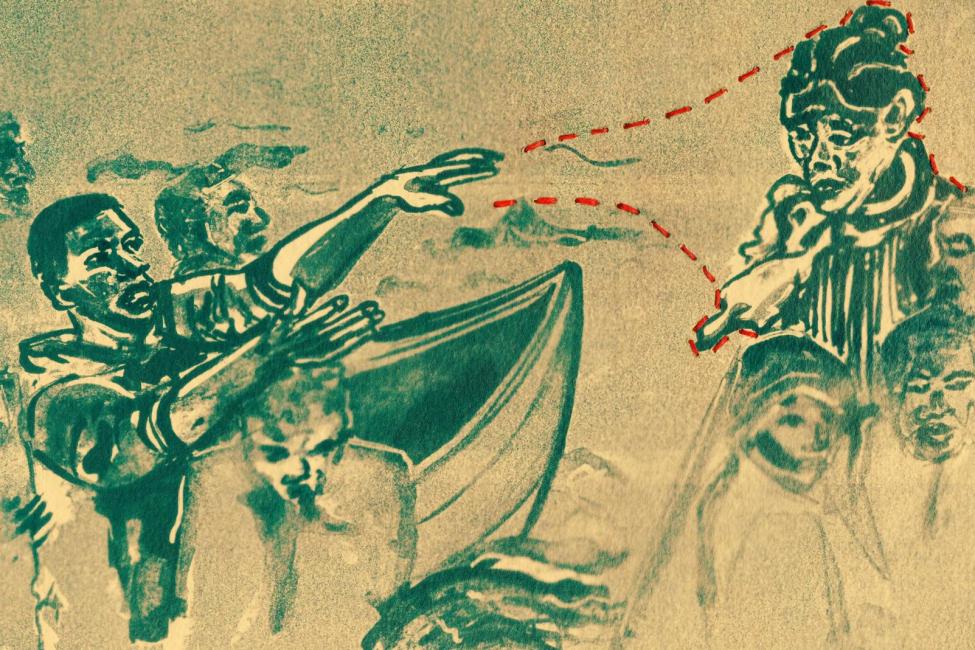
Mass tragedies involving migration have increasingly become normalized

Thousands of family members continue to search for a missing migrant.

This is how 2021 ends. A boat filled with 120 Rohingya Muslim women, children, men – 60 women, 51 children – was on its way from Myanmar to Malaysia. Those in the boat hoped that when they reached Malaysia, they would be given sanctuary. On Sunday, the boat engine failed and the boat started to leak, off the coast of Indonesia. At first, the Indonesian government wouldn’t let the refugees in. Finally, after days of international and local pressure, on Wednesday, the government relented and gave permission, but, they explained, only because the situation on the sinking, overcrowded boat was “severe”. Today, Friday, the boat was towed into harbor, and people began to disembark. The rescue, in heavy rain and high seas, took a grueling 18 hours. Why does a government have to explain rescuing people from a sinking boat? Because they are refugees, women, Muslim, Rohingya, and the list goes on. This is how 2021 ends, much as the previous ten and more years.

On December 25, in three separate incidents, three boats filled with refugees capsized. At least 31 people died, and, as of now, scores of people on those boats are still missing. It is the worst Aegean death toll since October 2015.

The next day, December 26, close to 30 people washed ashore in Libya, refugees who had tried to cross the Mediterranean, just so much flotsam from another shipwreck. These corpses capped a week in which at least 160 people, migrants, drowned in shipwrecks off the coast of Libya.

A month earlier, a boat filled with migrants sank somewhere in the English Channel. At least 27 people died. That is the single biggest recorded loss of life in the English Channel. One witness, a refugee who was in another boat that happened into the same waters soon after the first boat sank, recalled, “Our boat was surrounded by dead bodies. At that moment my entire body was shaking.”

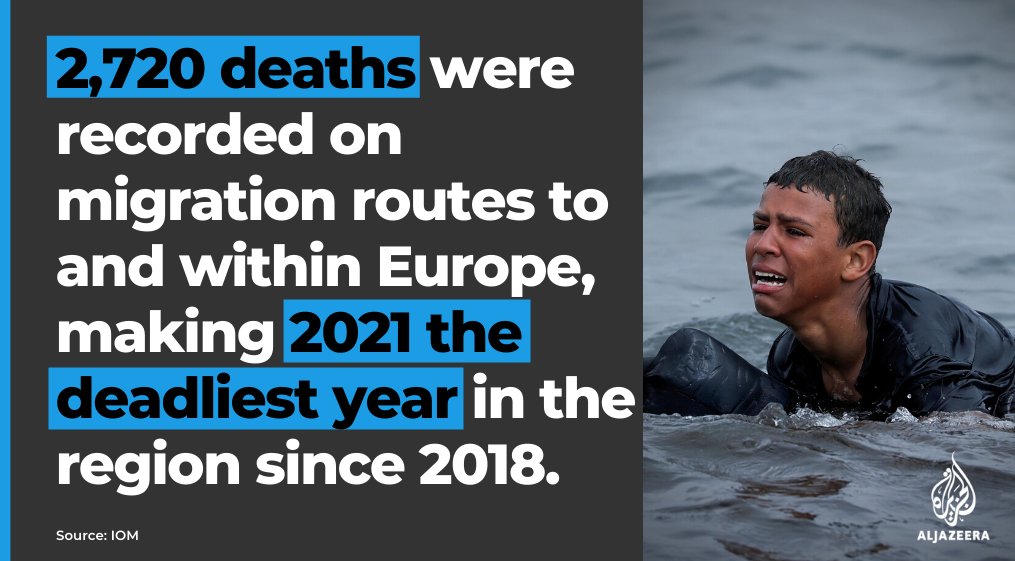
The UN High Commissioner for Refugees that from January to November more than 2,500 people have died in the Mediterranean or in the Atlantic, on their way to the Canary Islands. The International Organization for Migration reports that, as of early December, the 2021 death toll for migrants during migration journeys had surpassed 4,470. They assumed the final tally would be considerably higher, given the lag in time between deaths and the reports thereof. The death toll last year was 4,236. The death toll at the Mexico – U.S. border was already 651, higher than in any year since they started recording, 2014. More migrant deaths were recorded in South America than in any previous year. Europe saw historical highs in migrant deaths. The Atlantic route to the Canary Islands saw the highest death toll in over a decade. According to the IOM, “Mass tragedies involving migration have increasingly become normalized.”


(By Dan Moshenberg)

(Image Credit: IOM / Salam Shokor) (Photo Credit: Al Jazeera / Twitter)
Abuse is not normal. Harassment is not normal.

The women who took down Larry Nassar

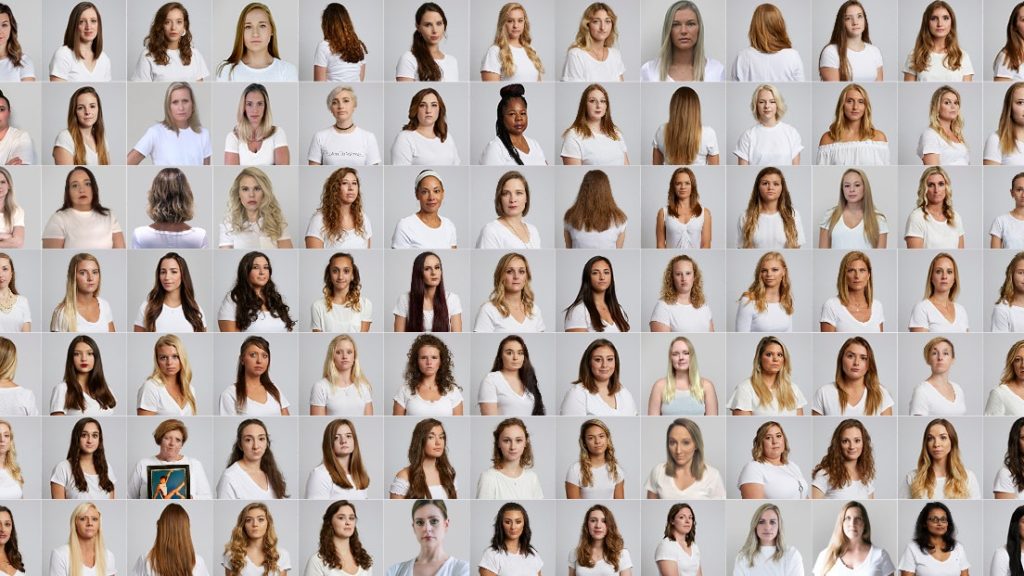
As the year ends, I find myself frequently turning to my own experiences in gymnastics, particularly being so proximal to Larry Nassar’s practice. Within the last few weeks, a settlement was reached for the survivors of Larry Nassar’s sexual abuse. At this point in time, there are over 500 women who have come forward about their assault and abuse at the hands of Nassar. For more than 14 years, USA Gymnastics was aware of Larry Nassar’s abuse of young female athletes. Complaints were made at every level—to parents, club, college, and olympic level coaches, and even to the association itself. On every single level, these young athletes were shut down and denied, made to believe they had misconstrued his care for them as abuse. Not only did USAG turn a blind eye to Nassar’s sexual abuse, but through the FBI’s slow response time, they also failed these athletes. This harrowing display of strategic inefficiency, as Sara Ahmed discusses in Complaint! as one of the causes for the long periods of time where complaints receive no response, resulted in the abuse of hundreds more young women at the hands of Nassar. In their non-responsiveness, those in power chose the side of the oppressor and failed these young women.

It was not just those who failed to adequately respond to the complaints at fault. It is all members of the system—particularly coaches, that instill to their gymnasts that abuse (verbal, emotional, and physical) is normal. Abuse is not normal. Harassment is not normal. Whether it be in the sport of gymnastics or in academia, the normalization of violence against women is causing immeasurable harm.

(By Jordan Dopp. Jordan Dopp, from Ann Arbor, Michigan, was a competitive gymnast in her hometown for 14 years.)

(Photo Credit: Glamour / Jason Schmidt)

The world is ruled by women who fight: The Sudanese women’s revolution continues

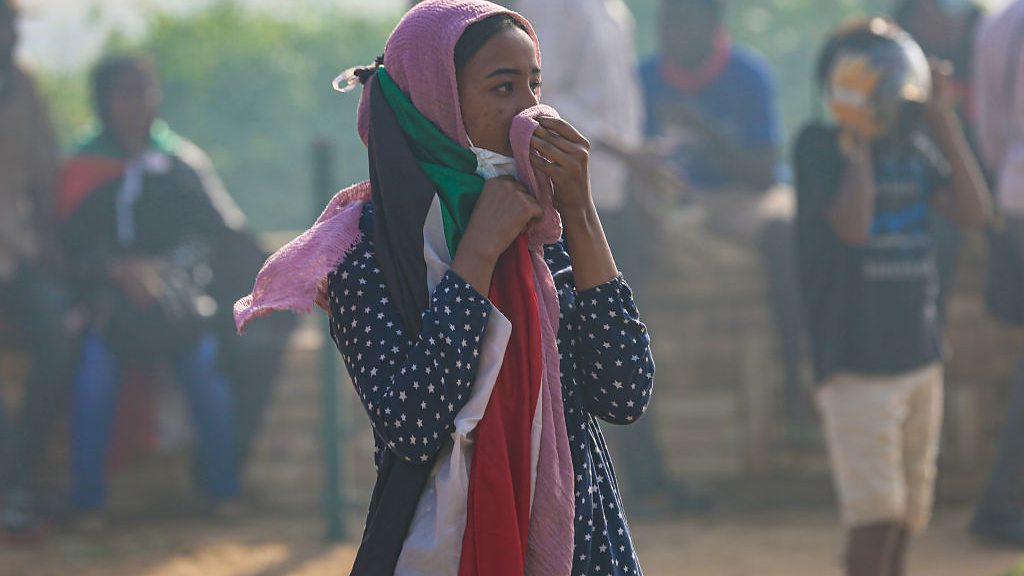
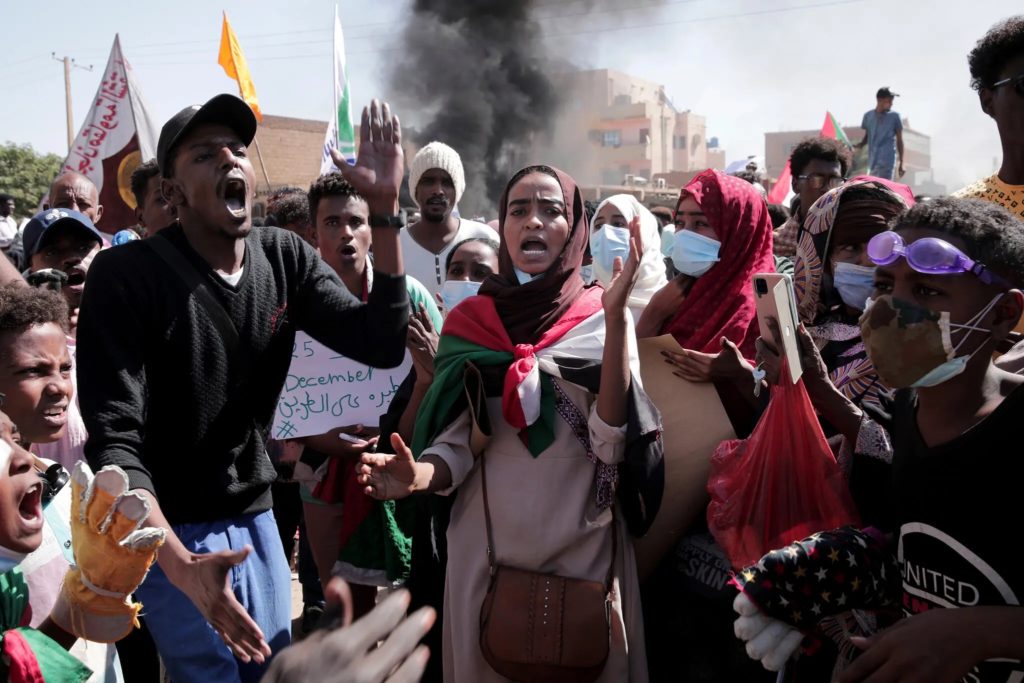
Yesterday, December 25, hundreds of thousands of protesters, led and impelled by women and youth, took to the streets of Khartoum, demanding freedom, full democracy, a revolution. This was the tenth major demonstrations in the past two months. These protests have gone on, lled and impelled by women and youth, for the past thirty years, demanding full democracy, freedom, a revolution. Women and youth, leading, demanding, grasping freedom and justice: this is what democracy looks like. The government cut communications, blocked roads, fired tear gas, arrested scores, injured who knows how many.

In Sudan, on December 19, 2018, women took to the streets to protest a precipitous rise in bread prices. Those protests persisted and grew. As so often in food uprisings, the price of food was the visible spark that revealed an undergrowth of fire, and, as so often, women set and sustained the spark. Three years later, Sunday, December 19, 2021, women led protests of hundreds of thousands to commemorate the 2018 uprising, the spark they set, and to demand much more than a `return to civilian control’. Women in the streets of Khartoum and beyond demanded full rights, equality, freedom and justice for women, youth, everyone. They government responded with live bullets and sexual violence against women. According to numerous reports, security forces raped 13 women and girls that day. In the following days, women returned to the streets to demand justice. Actually, they had never left the streets.

Shaihinza Jamal explained, “We are here to put pressure so that this could stop happening. We will not allow such things ever to happen, and we can stop them.” Women protesters chanted, “They won’t break you! They won’t break us!” Jihan el-Tahrir, longtime Sudanese feminist activist, added, “Because women’s role in mobilising the Sudanese society is well-known, one approach long adopted by the regime has been breaking the society by breaking women.”

These are the daughters of a long line of Sudanese women demanding freedom and democracy. RememberJune 2012, when women students responded to astronomical increases in transportation and food prices? A few university women students took to the streets, shouting “Girifna!” “Enough is enough!” Within days, their small demonstration inspired a sandstorm, which was met with severe State repression. Remember the Sudanese women of June 2012? Remember September 2013, when, again in response to austerity measures this time involving gasoline prices, women took to the streets? Again, those protests turned into a national crisis, which, again, was met by severe repression. Remember the Sudanese women of September 2013, and the Sudanese Women’s Union of the 1950s and 1960s, and the Sudanese who have organized continually from the 1950s on, for women’s autonomy and national dignity? Well, they’re back, and they remember. They remember every detail of their history; they are the guardians of the revolution.

In a mass demonstration in late October, women carried signs reading, “Total civil disobedience. The decision of the people.” In a recent smaller, silent protest in Khartoum, Rayan Nour held a sign that declared, “The world is ruled by a woman who fights”. She explained, “My mom always taught me to not let anyone take my rights away from me and for me to get that by my hand if I had to and not wait for anyone to get it for me …. The first protest was called in the newspaper protest of the whores and the gays. And I was like, OK, whores, gays, let’s go.” Mothers, daughters, whores, gays, OK, let’s go. They’re back and they remember not only the past but the future. The world is ruled by women who fight.


(By Dan Moshenberg)

(Photo Credit 1: BBC) Photo Credit 2: New York Times / AP  / Marwan Ali)

No end to the torture: Throw the children into solitary, lock the door, walk away

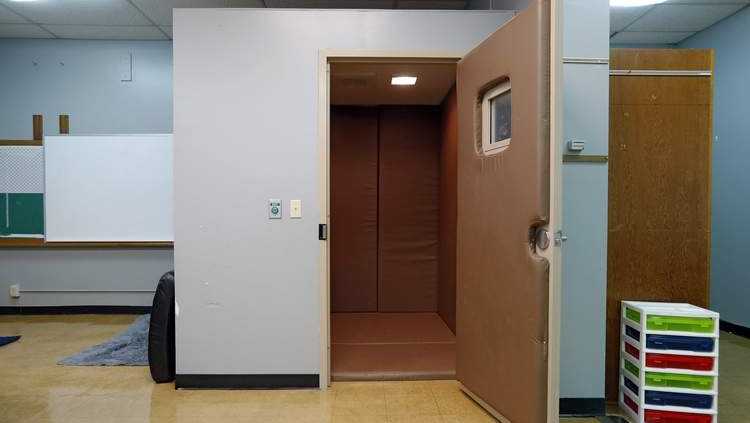
A seclusion room in a Cedar Rapids elementary school: padded walls, a window, a door that locks from outside

Another year ends with stories of children, young children, being thrown into `seclusion rooms’, solitary confinement chambers, in schools across the country. What exactly are children meant to learn, the ones thrown into solitary, the ones watching their classmates and friends go into solitary? What’s the lesson plan, the educational goal? Why are we so invested in seclusion and restraint of children, generally, and of children living with disabilities, particularly? What terrible crime have these children committed that entire systems invest so much in maintaining practices that clearly constitute torture?

In November, U.S. Department of Justice investigators conducted on-site inspections of schools in Cedar Rapids, Iowa. They also demanded thousands of documents. This story begins in 2017, when a parent complained at the abuse her daughter suffered. Apparently, the girl wouldn’t stop crying, and so she was placed in a seclusion room. In the 2019-2020 school year, elementary school children were tossed into seclusion 237 times. In October, 2020, the Department of Justice notified the Cedar Rapids School District that they were opening an investigation.

In 2018, the U.S. Department of Education released a report on school climate and safety for 2015 – 2016. It found that Iowa rates had doubled. For example, in 2013, 23 school districts in eastern Iowa had 2514 reported instances of seclusion or restraint. In 2015, that number rose to 4,904. A 2018 Iowa State report described Davenport as in “systemic non-compliance” of Federal laws concerning the education of students living with disabilities. According to the report, the situation for students of color in Davenport was particularly dire, systemically so. Both of Iowa’s U.S. Senators called for a Federal investigation into the use of seclusion rooms. Davenport’s U.S. Representative Dave Loebsack called for a ban on seclusion rooms.

In 2017, a complaint was filed against the Iowa City school district, charging that the district’s use of seclusion rooms violated Federal law, primarily because parents don’t know that the seclusions rooms existed and were being used and because the use of seclusion rooms is broader and more `ordinary’ than the law allows. During the 2013-14 school year, most of the students dumped into solitary confinement were students with diagnosed disabilities and individualized education plans. Half of the students with education plans who were sent to seclusion rooms were Black. Other than students with education plans, ALL of the students dumped into seclusion rooms in the 2013 – 2014 were Black. Black students comprised about 19% of the school population.

Cedar Rapids is no outlier, not in Iowa, not in the United States. December 31, 2020, the Department of Justice settled with North Gibson School Corporation in Princeton, Indiana, where “students as young as five years old were secluded and restrained improperly and repeatedly, resulting in days, and sometimes weeks, of lost instructional time.”

On October 24, 2021, the U.S. Department of Education and the Saco School District, in Saco, Maine, reached agreement to resolve restraint and seclusion compliance. Saco’s not a big school district, but it boasts big seclusion numbers. From 2017 to 2020, Saco schools engaged in 392 incidents of seclusion. Of that number, 324 involved children in K-2. 83% of those thrown into solitary were children 5 to 7 years old. After extensive investigation and negotiation, they `reached agreement.’

On November 24, 2021, Fairfax County Public Schools, in northern Virginia, reached a settlement with parents of children living with disabilities and advocacy groups to ban all seclusion in all its schools by the beginning of school year 2022 – 2023. This ends a suit that was filed in 2019, after a local news station reported that the county routinely put children with disabilities in seclusion rooms and routinely failed to report the incidents.

A week later, on December 1, the U.S. Department of Justice reached a settlement with the Frederick County Public School District “to address the discriminatory use of seclusion and restraint against students with disabilities …. The investigation, opened in October 2020, revealed thousands of incidents of seclusion and restraint in just two and a half school years. Although students with disabilities make up only 10.8% of students enrolled in the district, every single student the district secluded was a student with disabilities.” When the settlement was reported, many expressed shock, demanded answers, called for responsibility. The county’s school superintendent resigned quickly, and was given $800,000 in compensation. In 2017, that county superintendent was named Superintendent of the Year by the state association of school superintendents.

Every report, every agreement and settlement, evokes shock. How can people be shocked when there are thousands of incidents, as many as ten a day, in small towns and big counties? That the government has returned to some sort of vigilance concerning the systematic abuse and torture of children is welcome, inasmuch as it’s better than inaction. But the real need here is a soul searching, no holds barred transformation. We torture children. We cannot be shocked by that. We send children into days, weeks, of solitary confinement because … they can’t stop crying. And we call that education.

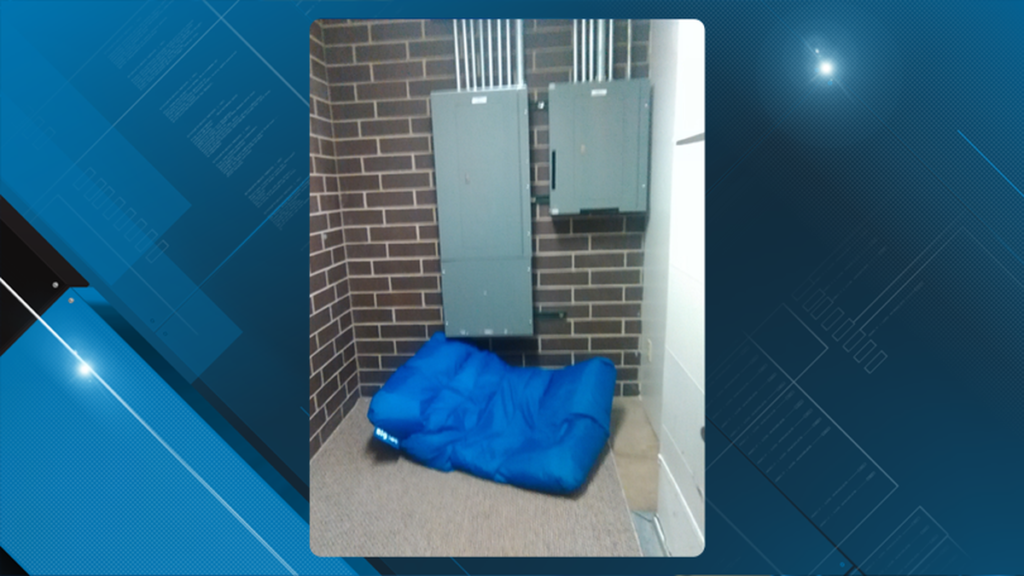
A seclusion room in another Cedar Rapids elementary school


(By Dan Moshenberg)

(Photo Credit 1:  KCCI / Liz Martin/The Gazette)) (Photo Credit 2: KCRG / (Josh Scheinblum)


The de-coercion of care work

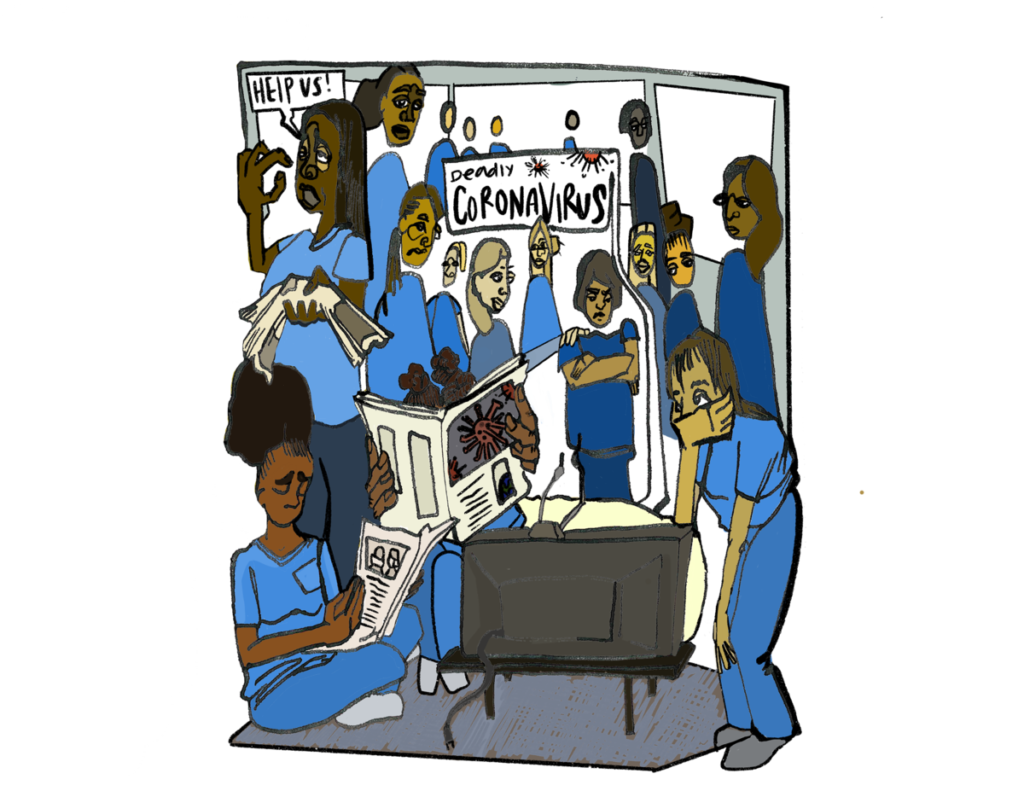
The COVID-19 pandemic has brought an onslaught of irrepable damage to individuals and society as a whole. Additionally, the pandemic also exposed gaps in society that can no longer be ignored. One such gap is the role of labor unions on the workforce. Labor unions have been on the decline in recent decades in the US. But, amidst the recovery from the pandemics, more and more workers are demanding fair wages, comprehensive benefits, and better working conditions.

Recent headlines on the unionization of the first Starbucks in the US sparked a conversation on the politicization of care work. The act of caring, being a caregiver, and care in itself is hyper political. Care, for the welfare state, is a means to sustain the system of capitalism. As concerns the investments of the capitalist state in the act of caring, feminist economist Nancy Folbre explains, “Capitalist institutions create powerful incentives to maximize short run profits by exploiting unpriced public goods crucial to the sustainability of the social and natural environment.” Capitalism exploits workers to sustain itself, with the promise of providing care for them in return. Care workers – from Starbucks employees that serve us the coffee to start our days to the teachers that educate the next generation of leaders to the domestic workers that maintain our homes – are severely underpaid and ignored in the grand scheme of the political economy. Service industry carers, from companies like Starbucks, Kellogg’s, and Amazon, are rejecting the forced silence imposed on them by the welfare state and are fighting to de-coerce the hyper politicization of their existence by unionizing. Despite capitalist backlash, these care workers are changing the game for carers across the world.

These service industry carers are exposing a truth that feminist migration experts have been grappling with for decades, how to gain workers’ rights for domestic workers. In the United States, labor laws and constitutionally protected rights have explicitly excluded agricultural workers, prison laborers, and domestic workers. This has complicated domestic workers’ fight for de-coercion, but it does not make the fight impossible.

Care workers face coercion through the welfare state that traps them in a system of exploitation. To solve this issue, care work must be de-coerced. Undoing the ties of coercion allows care workers to tackle the politicized nature of care work and demand their own rights. The process of de-coercion can mean many things for the multiple intersectional identities and populations that make up care workers. But all in all, they must all center care workers. South African sociologist Shireen Ally has described how South Africa’s landmark legislation Sectoral Determination Seven for the Domestic Worker Sector gave domestic workers rights and privileges that they never had before, but it all came in vain because the legislation was not passed with domestic workers at its core. De-coercion must be centered around the day-to-day realities of domestic workers throughout the world and incorporate their opinions and beliefs. As political scientist and sociologist Emma Dowling states, “Care workers are experts. Their experience, knowledge and skill are crucial to designing and developing better care infrastructures that give care workers more control over their work. This requires a real democratization of workplaces and a voice for care workers.” The domestic workers that raise our children, clean our homes, and sustain the capitalist economy deserve a seat at the table of their own lives. They deserve to proclaim their wants and needs and feel like the world at least hears them. While the welfare state has shown it does not care, the rest of us should.

(By Evelyn Boateng-Ade)

(Photo Credit 1: Red Pepper / The Voice of Domestic Workers) (Photo Credit 2: Women’s Strike)

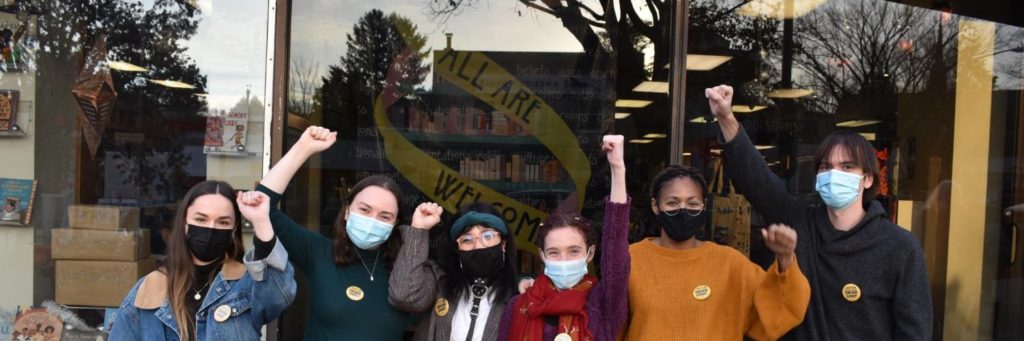
I will miss Politics and Prose, but my allegiance is with the workers

Dear Bradley Graham and Lissa Muscatine,

For over 29 years–the entire time I’ve lived in the DMV, and most of the bookstore’s existence– Politics and Prose Bookstore has been a haven and a lifeline for me. When my job relocated to a different part of town, I was less than thrilled about my longer commute, but soon realized the silver lining: Politics and Prose Bookstore was now on my way home! My partner and I have loved meeting there after work for author events; I’ve loved being able to stop in and find the perfect gift for a friend or loved one, or a new book I’ve been eagerly awaiting.

So I was extremely dismayed to learn today that the management of my beloved Politics and Prose Bookstoreis now resisting worker efforts to unionize, and has even hired the notorious law firm Jones Day to fight your workers’ efforts to ensure fair wages and working conditions. This is a betrayal of the inclusive values that Politics and Prose Bookstore has been known for.

I can no longer patronize Politics and Prose in good conscience, nor recommend it to my students, new colleagues, neighbors, and friends. I urge you to work with your staff and the union they are attempting to build. I urge you to stop antagonizing and intimidating your staff, and threatening both their livelihood and the many services they perform for your customers.

I will miss Politics and Prose, but my allegiance is with your workers.

Sincerely,
Abby Wilkerson

(By Abby Wilkerson)

(Photo Credit: Politics and Prose Workers Union / Twitter)

FCI Waseca did not fail to assure the safety of incarcerated women; it refused to do so

This week, Utah’s Legislative Auditor General submitted a performance of health care in Utah’s state prisons. The Auditor found “systemic deficiencies”: “The lack of follow-up and patient monitoring is a systemic concern that extends beyond the Covid pandemic.” Reading this report, it’s a wonder that anyone survives Utah’s prisons. In fact, they don’t. According to a report earlier this year, “people in Utah’s prisons were five times more likely to die of COVID-19 than the average Utahn.” While five times more likely is high, it’s not much higher than prisons across the United States, boasting four times the infection rate of the country’s general population. And then there’s FCI Waseca, a low-security Federal prison for women, located in Waseca, Minnesota. FCI Waseca houses 756 women, of whom, according to the latest number from the Federal Bureau of Prisons, 132 are currently infected with Covid. That’s the most of any Federal prison. The next in line is a Federal prison in Pollock, Louisiana, with 30 incarcerated people infected. FCI Pollock houses 1,556 incarcerated people. Less than 2% of FCI Pollock is infected with Covid; 17% of those in Waseca are Covid-infected.  Waseca accounts for 47% of all infected incarcerated people in the U.S. Federal prison system. These numbers provide the profile for “low security”.

At 199 Covid infections per 100,000, Waseca County has the highest rate of Covid infection of any county in the United States. Minnesota state prisons house 7,323 incarcerated people. Of that population, 95 are currently Covid infected, far less than 1%, although one prison, MCF Lino Lakes, 70 of its 911 incarcerated residents are Covid infected, a little under 8%.

Since the start of the pandemic, around 450 incarcerated women have tested positive for Covid. On Wednesday, December 8, the ACLU sued both FCI Waseca’s warden and the Director of the U.S. Bureau of Federal Prisons, claiming that the prison failed to take measures to contain Covid. FCI Waseca failed to release women with medical conditions to home confinement and failed to reduce the prison population sufficient for any kind of social distancing. That was no failure, that was refusal.

FCI Waseca is organized as dormitories with bunk beds kept close together. Everything is done in fairly tight common, social spaces. None of that was changed in any way in response to Covid. In August, a group of around 40 women was transferred from a facility in Oklahoma, a facility which was reporting Covid infections. The women from Oklahoma were placed in bunk beds in a unit with other bunk bedded women right next to them. Within weeks, most of the women in that unit tested positive for Covid.

What is there to say? FCI Waseca refused to address Covid, refused to respect women’s Constitutional rights to safety, refused to imagine an alternative to packing them in until it’s time to go. “Low security” should not be a death sentence nor should it mean being endangered. In fact, nothing should be a death sentence, but there we are. Two years into a pandemic, and we continue to cling desperately to the charnel house as the only way. If nothing else, by this point, perhaps people will stop saying, “The prison failed” to do this or that. There was no failure, there was only refusal, in broad daylight for all to see and without any remorse whatsoever.

(By Dan Moshenberg)

(Image Credit: Kayla Salisbury / The Marshall Project)

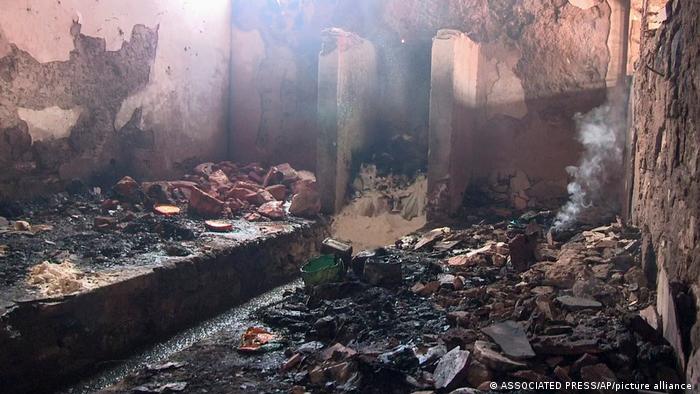
Today’s prison fire in Burundi was a preordained massacre

Gitega prison

In 1963, James Baldwin’s The Fire Next Time was published. At that time, Baldwin wrote, “There is a limit to the number of people any government can put in prison, and a rigid limit indeed to the practicality of such a course. A bill is coming in that I fear America is not prepared to pay.” A bill is coming in. A year earlier, in 1962, Burundi declared its independence from Belgium as well as its separation from Rwanda. This morning, at 4 o’clock, the Central Prison of Gitega, located in Burundi’s political capital, Gitega, `experienced’ an electrical short circuit which started a fire which, as of now, killed at least 38 and injured at least 69. That was no accident; that was a massacre, preordained and inevitable.

The Gitega prison, built by Belgians in 1926, is supposed to house a maximum of 400 people. At the time of the fire, according to the most recent count, there were 1539 `residents’. A building crowded to that extent, pandemic or no, is a death sentence. None of this is new or unexpected

Here are the numbers for the Burundian prison system, all from October 31. The prison system consists of 11 prisons and two juvenile facilities. The prison population was 12,749. The prison system’s official capacity was 4,194. At 297.5% of capacity, the entire system is a catastrophe, a fire, waiting, destined, to happen. Of that population, 50%, 6,245, were remand prisoners, people awaiting trial.

Since 2002, the number of women prisoners has risen every year. In 2002, 216 women were incarcerated. That made up 2.5% of the total prison population. In 2002, for every 100,000 Burundians, three women were behind bars. In 2021, 836 women were incarcerated, and they were lodged at the Gitega prison. This year, women comprised 6.7% of the Burundian prison population. This year, for every 100,000 Burundians, six women were incarcerated. Where are the women? Increasingly in prison.

Prior to the arrival of the Europeans, Burundi did not have confinement as a form of punishment or justice. The Germans brought prisons in the late 19th century, and the Belgians expanded on that, increasing the number of detained individuals by essentially criminalizing the native populations. Every year, more and more people were incarcerated, some having been convicted, others for administrative purposes. All were `native’ and therefore guilty. This was the system that built Gitega in 1926. Gitega was `the new prison’. Prisoners were separated by race, gender and social status: four dormitories were reserved for indigènes, including one for women; one dormitory for chiefs; four cells for European or Asian prisoners. The prison immediately exceeded capacity, and so was enlarged. It exceeded capacity again, and so was enlarged again. Finally, in 1947, it was expanded to its current size, capacity 400. Gitega has been fatally overcrowded ever since.

According to historian Christine Deslaurier, Burundian prison history has moved from “a mode of punishment to … trivialisation.” At the beginning of this century, the Burundian prison system celebrated its centenary “with the greatest indifference.” Today, that trivialization, that indifference, exploded in flames, and left scores of dead and maimed behind. A bill is coming in, is anyone prepared to pay?

(By Dan Moshenberg)

(Photo Credit: DW / AP)

From eSwatini to Sudan to Belarus to the United States and beyond, artists turn swords into …

“Yearning is the word that best describes a common psychological state shared by many of us, cutting across boundaries of race, class, gender, and sexual practice. Specifically, in relation to the post-modernist deconstruction of ‘master’ narratives, the yearning that wells in the hearts and minds of those whom such narratives have silenced is the longing for critical voice”.
bell hooks. Yearning: Race, Gender, and Cultural Politics (1990)

On December 6, 2021, the 32nd anniversary of the massacre of women students at the École Polytechnique de Montréal, as every day, artists around the world struggle against State violence to seek, find, create freedom, justice, peace, documentation, voice, reflection, memory, mourning, meaning and more. In eSwatini, artists struggle with erasure, locally and globally. In Sudan, both during and after the coup, if this is indeed after the coup, artists struggle with threats to freedom as well as to their own lives. In Belarus, artists struggle with imprisonment and persecution. In the United States, artists struggle with racist and racialized violence. In all four locations, and beyond and between, artists struggle to create democratic spaces that will themselves generate networks of democratic practice and shared yearning.

June and July 2021 saw mass protests across eSwatini and saw as well … very little. That is, while the State responded with intense police brutality, in some cases hitherto unknown forms of torture, the world looked elsewhere. Artists refused to accept the violence, the silencing by the national government, and the lack of concern of the global polity. As the protests and State violence erupted, local activists pulled out their phones and began filming. Then they consolidated their energies and resources into the eSwatini Solidarity Fund, and ultimately produced the documentary film, The Unthinkable. As university student and Fund volunteer Tibusiso Mdluli noted, “Our struggles have been sort of erased. I get the sense that people in the international community do not know so much about Swaziland.” With showings already held in the United States, Norway, Taiwan and South Africa, plus a broadcast on South African television, and more in the works, hopefully the erasure is beginning to dissipate.

In October, the military of Sudan conducted a coup, removing the Prime Minister, Abdalla Hamdok, and installing themselves, of course, in his stead. About a month later, after intense, daily, mass protests, Prime Minister Hamdok was `released’ and `reinstated’ … sort of … maybe. Artists refused to stand down after the coup and during the military regime and have refused to accept anything but a full removal of the military from the Executive branch of government and a clear and verifiable movement forward towards democracy. As Aamira explained, “We artists will be the first to be targeted if the military government continues in power. We are demonstrating in the streets, facing guns, unarmed. There is nothing to fear any more.”

During the reign of Alexander Lukashenko, life for artists and pretty much everyone in Belarus has been difficult and always under threat. In that environment, Natalia Kaliada and Nikolai Khalezin founded the Belarus Free Theatre, sixteen years ago. For that act of courage, Kaliada and Khalezin were forced into exile ten years ago. This year, the rest of the company has decided, or been forced to decide, to follow suit. Nevertheless, they persist in creating dramatic and existential spaces, which they stream into their native country, in which Belarussians can dream of and aspire to democracy and freedom.  As Natalia Kaliada explained, “We know we are stronger than the regime. The authorities are more scared of artists than of political statements. Everyone believes that things will change in Belarus, but for now the company needs to be safe. We ask the UK public to stand in solidarity with us at this most critical time in our history. Solidarity is crucial for our survival.” The struggle for democracy and freedom needs solidarity more than martyrs.

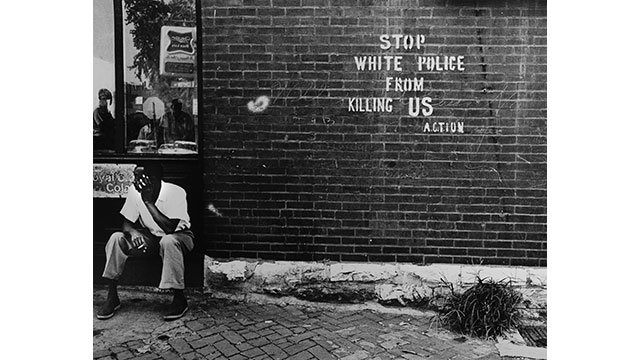
In the United States, over the past century, American artists have struggled with anti-Black violence, by the State directly or informally but firmly authorized by the State. Next month, in Chicago, an exhibition entitled “A Site of Struggle: American Art Against Anti-Black Violence” will open. The exhibition will begin with works from the anti-lynching campaigns of the 1890s and conclude with the founding of the Black Lives Matter movement in 2013. The organizers of this exhibition began working on it in 2016, in the aftermath of national protests, including those involving the deaths of Eric Garner, Michael Brown, Akai Gurley, Tamir Rice, in 2014; Freddie Gray and Sandra Bland, in 2015, as well as the massacre at the Emanuel African Methodist Episcopal Church, in Charleston, South Carolina, to name but a few; and in the midst of ongoing demonstrations that year involving the deaths of Alton Sterling, Philando Castile, Korryn Gaines, again to name but a few. Five years later, the exhibition is ready. According to its curator, Janet Dees, “‘A Site of Struggle’ employs art history to help inform our understanding of the deep roots of racial violence. From realism to abstraction, from direct to more subtle approaches, American artists have developed a century of tools and creative strategies to stand against enduring images of African American suffering and death. Contemporary artists taking on this subject are doing so within a long and rich history of American art and visual culture that has sought to contend with the realities of anti-Black violence.”

These four examples – artists from and of eSwatini, Sudan, Belarus, and the United States – were all reported on today. They all swim in long histories of local and global artistic refusal and resistance as well as confirmation and yearning. They all make the river by swimming and, in so doing, sustain our longing for critical voice.


(By Dan Moshenberg)

(Photo Credit 1: New Frame) (Photo Credit 2: Darryl Cowherd / Museum of Contemporary Photography / Northwestern Now)

In a victory for human dignity and hope, Botswana decriminalizes same-sex relationships

On Monday, November 29, Botswana’s Court of Appeal unanimously upheld an earlier 2019 ruling which had decriminalized same-sex relationships. In so doing, the court upheld judiciary independence, democracy, the centrality of Constitutionally protected and established rights, as it hammered another nail into the coffin of colonial and neocolonial law and culture. Within a 24-hour span, Barbados declared itself a full republic, with no need of an English Queen; Honduras elected its first woman president, and a democratic socialist at that; and Botswana rejected homophobia and the persecution of LGBTQI+ persons and communities. Talk about conjunctural moments, sing about decolonization.

Botswana gained formal independence from Britain on September 30, 1966. The new republic adopted the penal code written, largely by British hands, in 1964, a Penal Code in force to this day. Botswana’s Constitution was written in 1966. In the 1964 Penal Code, Article 164 addresses “Unnatural offences”. In particular Article 164, Sections a and c declare: “Any person who has carnal knowledge of any person against the order of nature; … or permits any other person to have carnal knowledge of him or her against the order of nature is guilty of an offence and is liable to imprisonment for a term not exceeding seven years.” This law and language formed part of the grand British imperial obsession with rooting out `carnal’ corruption in the colonies, an obsession that dated back to 1860. A prison term of no more than seven years is but one of the gifts the British left behind.

In 2016, Letsweletse Motshidiemang, a young gay man, applied to the High Court to have the laws repealed. He described growing up as a gay boy and then young gay man in Botswana, and argued, essentially, that the Constitution protected his right to be who he was and that Botswana itself had changed in the intervening decades. He relied on the Court to respect the Constitution, and he was not disappointed. On June 11, 2019, the High Court agreed and declared that the articles under discussion violated the Constitution, in substance and spirit. The Government appealed. This Monday, the Appeal Court, the highest court in the land, declared, “Those sections have outlived their usefulness, and serve only to incentivise law enforcement agents to become key-hole peepers and intruders into the private space of citizens.”

In previous cases, the Court of Appeal has consistently declared the Constitution a living document central to the democratic project. In 1994, in the Unity Dow case, the Court of Appeal declared, “The Constitution … cannot be allowed to be a lifeless museum piece … the courts must continue to breathe growth and development of the state through it … The primary duty of judges is to make the Constitution grow and develop in order to meet the just demands and aspirations of an ever developing society, which is part of the wider and larger human society governed by some acceptable concept of human dignity.” From Honduras to Barbados to Botswana, and beyond, this week has brought a victory for human dignity.


(By Dan Moshenberg)

(Image Credit: Jurist)