The Republic of Chikurubi


What passes today for good news from the government of Zimbabwe? The 100-trillion dollar note? No. The rate of deaths from cholera exceeding the rate of inflation, having topped 2000? Not even close.  “The twisted arithmetic of crumbling Zimbabwe” that makes burials out of reach of ordinary peoples’ economies? Nope. Give up?

Good news in Zimbabwe is the release of two-year old bandit terrorist Nigel Mutemagawo, abducted, held in custody for 76 days, held at Chikurubi Maximum Security Prison for close to two weeks: “Medical reports show that during his abduction and continued detention for charges of banditry and terrorism, two year-old Nigel was assaulted and denied food and medical attention by his captors.” Two years old. Talk about early childhood education. Not to worry, though. The news isn’t all good. Nigel’s parents, Violet Mupfuranhehwe and Collen Mutemagawo, remain `in custody’, and Nigel was sent to MDC officials, “who are total strangers.” Zimbabwe has figured out both the national security issue and child care. Democratic socialists, take note.

Jestina Mukoko appeared in court Thursday, January 15: “Jestina Mukoko, a well-known human rights campaigner in Zimbabwe, was forced to kneel on gravel for hours and was beaten on the soles of her feet with rubber truncheons during interrogations, she said in a sworn statement recently submitted to a court in Zimbabwe.” Not to fear, the rule of law still presides in Zimbabwe: “Zimbabwe’s director of prosecutions, Florence Ziyambi, said Thursday that Mukoko’s rights were not violated by her detention.`She can ask for remedies and compensation for the ill treatment she claims she went through,’ Ziyambi said.” In 100-trillion dollar notes, no doubt.  It’s a good thing that Zimbabwe’s Attorney General had already declared Mukoko a national and societal threat and had said that she would stay in jail, no matter what the courts decide.

While the Big Parties do and don’t negotiate, people, ordinary extraordinary, are changed, perhaps forever. Beatrice Mtetwa said of Jestina Mukoko, after her two court appearances on Thursday: “It’s like she’s no longer the same person they took away.” She is no longer the same person they took away.

Where was Jestina Mukoko taken? Where was Violet Mupfuranhehwe taken?  “All the female detainees, including the former ZBC broadcaster, are being held in solitary confinement in the male section of the notorious Chikurubi Maximum Security Prison – an area of the prison reserved for only the hardest of criminals.” Perhaps this is the government’s plan, to change the name and substance of the country from Zimbabwe to Chikurubi: worthless money, rampant disease, collapsed infrastructure, feuding gangs committed to interminable conflict. Sounds right.

What if every country were renamed according to its most notorious prison? The Republic of Zimbabwe could become the Republic of Chikurubi. The United States of America could become the United States of Guantanamo. The Republic of Turkey could become the Republic of Imrali. The Republic of Indonesia could become the Republic of Nusakambangan. The Commonwealth of Australia could become the Commonwealth of Christmas Island. The possibilities of translation are endless. They form a chain, an archipelago, around the globe. Where were Jestina Mukoko and Violet Mupfuranhehwe taken? The Republic of Chikurubi. Where did they go? That remains to be seen.

(Photo Credit: Reuters / Philimon Bulawayo)
“Mugabe’s wife raids bank vaults”: who built the vaults?

The headline reads: “Mugabe’s wife raids bank vaults”. Remember Brecht’s poem about the worker who reads history, which ask, “Young Alexander conquered India. He alone?” She alone?

Grace goes shopping, Bob goes for `reflection.’ What does he see when he looks in the mirror? Who does he see? Does he see the starving, the dying, the tortured? Does he see Jestina Mukoko? Reporters Sans Frontieres do. They wrote yesterday to “Tomaz Salamao, the executive secretary of the Southern African Development Community (SADC), urging his regional organisation to put pressure on President Robert Mugabe’s government to release journalist and human rights activist Jestina Mukoko as soon as possible. As soon as possible is always too late. Ask the citizens and residents of Gaza. Ask the citizens and residents of Zimbabwe.

The Times today posted a Civicus video made largely in Zimbabwe over the Christmas holiday. It’s called `Inside Zimbabwe’. Not a single woman is interviewed. They must have all been in Malaysia shopping. But it does have some great lines: “South Africa is acting like a condom to Robert Mugabe.”

Who built the bank vaults? Not Grace, not Bob, not the South African government nor the South African corporations, not SADC. Cooks, domestic workers, farmworkers, and others. As soon as possible is always too late.

 (Photo Credit: Civicus)

Everyone is astounded: Chadian women making freedom

Africa may face centuries of poverty. Social Watch has developed a basic capabilities index  that shows that economic growth does not necessarily produce drops in poverty levels. In fact, “the basic needs required to escape poverty persists; even more, it is increasing, in spite of impressive economic growth in most developing countries.”  Meanwhile, according to the Social Gender Equity Index, “More than half the women in the world live in countries that have made no progress in gender equity in recent years.” And this has nothing to do with lack of resources. It’s about decisions that governments, that people in government, mostly men, make … freely.

Everyone is `astounded’: “Reed Brody, a campaigner with Human Rights Watch, said it was `astounding’ that 60 percent of the world’s countries have made no progress in recent years in expanding female access to education. He called for increased investment in the realisation of basic entitlements as part of a `human rights stimulus package. When you free women from the discrimination and poor health that they face in their daily lives, you unleash the powers of half of humanity to contribute to economic growth,’ he said ‘.” `Free women’ to become productive laborers; `free women’ to sell their free labor freely? At the heart of the human rights version of women in the world is precisely this liberal bourgeois capitalist model: the problem with women is women aren’t free laborers.

As long as freedom is viewed as an economic term, as long as freedom is `justified’ because it produces and reproduces `economic growth’, there will be no freedom. But don’t worry. Global warming will lead to a perpetual food crisis. In the by and by of the perpetual food crisis, we will all be free to starve. According to climate researcher David Battisti, “This is going to unfold in the next 100 years.” So, the developing world need not worry about basic this and gender that. Time is no longer of the essence, time has become the substance.

Where is all this food not going? According to Mike Davis, to urban slums in the global neoliberal metropole. For Davis, the failed state is more often than not a failed city, and the role of empire is to figure out what do about the failures: “The most interesting thing happening right now is the joint efforts of the US and Brazil in Port-au-Prince, Haiti. I would argue that the US sees that effort as a possibility to test and develop strategies to stabilise cities by means of security measures, city planning and social efforts.” The militarization of social space is not new, and, as women have known for centuries, it emerges as much from boardrooms and bedrooms as it does from war rooms. There must be something more interesting.

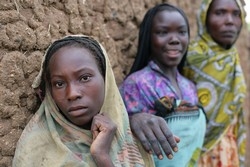
How about this: a hundred or so women in Chad, carrying knives and sticks and who knows what else, march through the streets, organize, take charge, do things. Cécile Moutouba. Larlem Marie. Others who chose to remain anonymous. Freedom.

Freedom, not because it’s economically viable, but because it’s freedom. The refusal to accept bare life, the refusal to accept extermination, the refusal to accept violence, the refusal to accept `the acceptable’, the refusal to accept failure. These hundred or so women in Chad are making freedom, and that production is as real as any goods production, as any economic growth that doesn’t pull women out of poverty or anything else.

(Photo Credit: Unicef/Giacomo Pirozzi)

Root Shock, 2009

Two novel and not so novel forms of urban renewal in the new and renewed year.

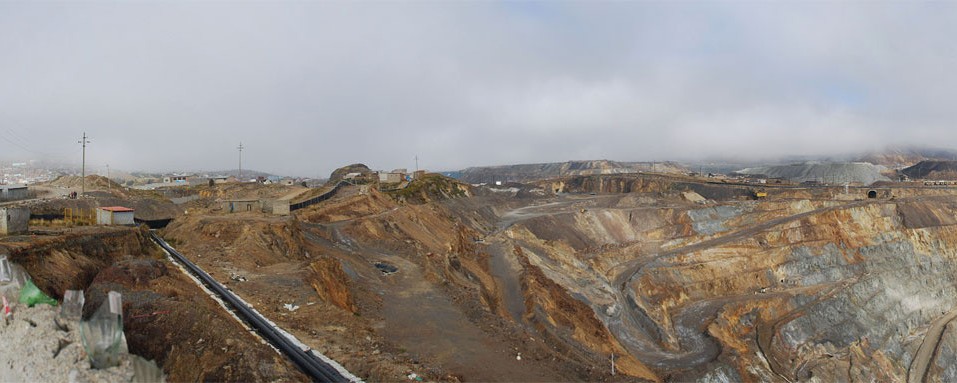
One: Have a pit mine gobble up your city.  Along the way, try to make sure that 82% of women of childbearing age (what is that anyway?) have high levels of toxic substances in their blood. That’s what happening in Cerro de Pasco, in the central highlands of Peru. Right to the city? More like dart to the heart of the city. Not to worry, though, the McMansion trend — buy a house, tear it down, build a monster, piss on your neighbors — is slowing down.

Two:  Try a few weeks, maybe more, of aerial bombing attacks followed by ground invasion. That’ll clear out that seedy city center you’ve wanted to redevelop for so long. In Gaza, Filipinas, mostly married to Palestinian residents, refuse to leave and decide to stay. Both. GMA News describes this as “`love’”. Their quotation marks. I won’t get into that, but it is interesting that they also feel compelled to note that only one of the Filipinas is an overseas Filipina worker. So? Do domestic workers not establish roots, merely because they `only’ stay for five or ten or twenty or fifty years? Really? Anyway, a reminder, as if you needed it, that Gaza is like everywhere else: local and transnational. And that like everywhere else, women make important, and diverse, decisions and take action.

Mindy Fullilove, in Root Shock: How Tearing Up City Neighborhoods Hurts America, and What We Can Do About It, describes the racial politics of `blight’ and `urban renewal’ legislation and policy in the United States. Welcome to Cerro de Pasco, where women’s blood is being poisoned, welcome to Gaza City, where, given an opportunity, women under attack decide to stay and refuse to leave. Welcome to urban renewal, January 2009.

(Photo Credit: Vice/Arthur Holland Michel)