Must punishment mean prison? Why are you asking?


In a recent television interview, Christiane Taubira, France’s Minister of Justice, was questioned about her personal philosophy of justice: “Is the mission of justice to punish delinquents?” The journalist repeated the question in different forms, emphasizing the word “punish”. Finally, the journalist added “some may feel that for you, an efficient justice system would put reeducation and reinsertion at the center?” Taubira answered immediately, “Why are you asking me this question?”

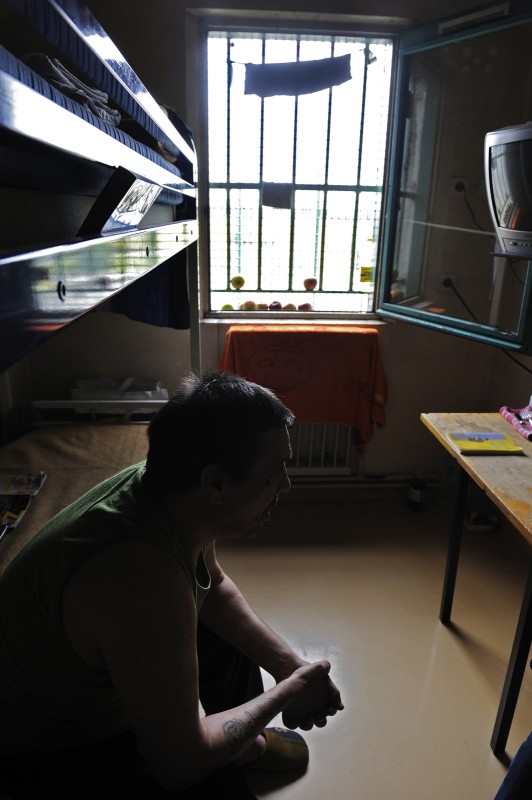
Does the act of punishing mean sending someone to prison, as the journalist repeatedly suggested?

Why pose such a question to Taubira? Because she has taken a strong stand against using public funds to contract private companies to build new prisons. These contracts would have eaten up 50% of the budget devoted to the penal system. Instead Taubira has abandoned this way and is instead toward using the funds for alternative sentencing programs, programs that have been proven to be more efficient in reducing violence.

These questions reappear in an emerging climate of crisis. While many magistrates, such as  Serge Pertolli, have argued “prison has never resolved anything in crime control,” the idea that the society must punish with prison is securely imbedded in the privatization of public services.

This is all relatively new for France. After World War II, the State’s power and right to punish existed in the service of rehabilitation. As Denis Salas explains, at that time, “what counted was to defend the delinquent in danger of exclusion in his or her own society.”

Today’s penal populism is built on opposite concepts. The victim and delinquent don’t belong to the same society, and social and economic situations have no relevance any more. Instead fear, largely fueled by the instability of economic crisis, should govern society.

Moreover, the project of penal populism is attached to the larger neoliberal project, which has impoverished many and deprived the society of its social structure through the privatization of social responsibility. The crime rate has not increased in France. In fact it has decreased, but violence is not on the decrease. Violence is gendered, marked and inflected with a neoliberal and patriarchal system of intimidation, which leads to societal destabilization through the disintegration of social cohesion in a globalized economy without a human face.

If we are to think about addressing root causes rather than merely astutely selected consequences, we must attend to the impoverishment and destitution of the notion of civil and societal care with messages of competition that have excluded so many.


(Photo Credit: Huffington Post)

Prisoners have visitors in France and in many other European countries

Prisoners have visitors in France and in many other European countries. The prison visitors are volunteers who respond to prisoners’ requests to have visitors. As a prison visitor explained: “We are not contracted, we are not entertainers, we come to share and we don’t come to judge the act that sent this person to prison but to meet with the person who is beyond the act. The act is his or her business, our goal is that this person breaks free from the spiral of losing self esteem.”

How does it work? When a person is incarcerated, he or she is informed about the possibility of having a prison visitor assigned, and then the prisoner has to send a request to the prison authorities.  The prison visitor commits to visit the prisoner regularly. The visit is confidential, takes place in cells reserved for meetings with lawyers, and may last from 45 minutes to one hour and thirty minutes.  For the detainee, this moment with the prison visitor is one rare instant without surveillance.

The association of prison visitors, ANVP, was created in 1932 and became state approved in 1951. It presently counts over 1500 members, not enough, they say, to guarantee the ideal ratio of 1 visitor per 20 prisoners. The president of the association, himself a prison visitor, explains that they are always looking for and recruiting volunteers. The age required is between 21 and 75 years old, and it takes about 2 months to be accredited after an interview and a police background check, followed by six months of probation with more training.  The main quality expected is to be able to listen: “We are here to listen. We are the wind coming from the outside.”

For prisoners in France, the outside world continues to exist and detainees remain full citizens. As Stephanie Balandras, director of “Les Baumettes” women’s prison in Marseille, explained, prison visitors “ensure that a detainee remains a citizen”.

In a democracy, everyone with citizenship has the right to vote. In France, as in most democracies in the world, detainees retain the right to vote. The right to vote is recognized by the European Court of Human Rights and the Council of Europe as an essential right in a democracy; its suppression is incompatible with a true democratic system of governance.

Among the 47 countries of the European Council, 19 have no restrictions on civic rights for detainees, 21 have some restrictions, mostly decided in court, and 7 states suspend the right to vote for detainees.

Meanwhile, in the United States prisoners lose their civic rights when convicted. Writing on the extension of the robotized war with the development of the American drone program, Barbara Ehrenreich quoted the US Secretary of Education who reported in 2010 that “75% of young Americans between the ages of 17 to 24 are unable to enlist in the military today because they have failed to graduate from high school, have a criminal record, or are physically unfit.” As African Americans fill the American prisons, they are losing their civic rights in greater proportion than Whites. There are no prison visitors to listen to them or help them retain a sense of belonging as they are pushed further to the margins.

According to Denis Salas, “The principle of human dignity is the reference on which lies the right to bend state power.” As one prison visitor put it, this principle has to come from the outside to the inside: “The prison visitor’s objective is to make each detainee aware of her or his own riches and deficits, and to help him or her to build their own project for the future”.

Let’s imagine more prison visitors in the United States, people who would help make American prisoners more visible, retain and develop their own humanity, and have their civic rights restored.


(Image Credit: Sentencing Project)

Evolution of a scandal in France

Christiane Taubira announces new penal reform plan

Christiane Taubira announces new penal reform plan

Last Saturday the dispute between Minister of the Interior Manuel Valls and Minister of Justice Christiane Taubira concluded …  at least for now. First, Taubira responded to Valls’ letter by debunking the manipulation of numbers and ideas that were the basis of his attacks on her reform agenda. In so doing, Taubira underlined the dangers of exploitation in penal populism.

Then she announced the main points of her penal reform proposal. She called for an end to the “enfermer, enfermer sans cesse” (lock up, ceaselessly lock up) doctrine of the past 10 years when Nicolas Sarkozy was, first, Minister of the Interior and, then, President. In a speech to Europe Ecologie Les Verts, Taubira described these as ten years that had damaged French society, ten years of constant social tension, “of martial discourses, of great threats, of intimidating virility”.

The crux of Taubira’s reform is repeat sentences. About 58% of the offenders in France re-offend.  In response to this crisis, she proposed alternative sentencing, known as probationary sentencing, for any sentences under five years. Probationary sentencing would be used at the discretion of the judge.

Taubira further announced the official end of mandatory sentencing. She explained that her approach to reform is both serious and rigorous. To that end, she introduced a social component that would limit the “sorties seches” (or “dry releases”), releases that offer absolutely no personalized support.  The vast majority of releases from prison are of the “dry” variety.

In Europe, most sentences are short, anywhere from a few months to a few years. Nevertheless, the shock of incarceration, the shock at the series of humiliations, is enormous. Then the shock of being released without support is equally enormous and is considered a kind of second sentence. One third of the people in sheltered housing have been in prison before. Taubira amassed an array of measures and means to foster personalized assistance for former prisoners.

What lies behind Christiane Taubira’s announcement is a clear sign that we are witnessing the end of the pile of devastating penal laws passed in the last 10 years. Most, if not all, have just increased the tension between justice and society and increased the sentiment of malaise and insecurity.

The instrumentalization of victimhood in the political arena has changed the role of justice and served to construct a penal populism.

The latter has been used in the United States for political and economic purposes. It hurts and renders many people and communities more vulnerable. One should be particularly wary of the multiplication of laws after intense media coverage of crimes. For instance, the murder of Laci Peterson, eight months pregnant, in 2002 brought the Unborn Victims of Violent Act in 2004. Ever since, numerous pregnant women have been threatened and often wrongly convicted by this act. The consequences for pregnant women are dire, especially for poor women, and have affected reproductive rights in general.

The real scandal is the spread of poverty and social fractures, the real junction between the ruthless neoliberal global market and the population.

Christiane Taubira has to deal with a public opinion whose sentiment for “security” has been stirred up by the previous government, which shook the social solidarity system with its neoliberal privatization of public services. She is demonstrating that there is a way to get out of this logic of reactionary repressive system of punishment. In the end, she quoted the poet Rene Char “stupidity likes to govern…” She added that her goal is to destroy the methods that led to increased incarceration and have endangered the true security of a society.


(Photo Credit: Sebastien Calvet / Libération)

Prison is torture!


Amid all the discussions of prison, people on the outside only rarely hear the voices of  the prisoners themselves. In a series of interviews with prisoners, Le Monde and the France Culture program  “24 hours in prison” attempted to give a somewhat autonomous audio space to those voices.

The arrival in prison is always a traumatic event. Hugo (56 years old now) describes his first arrival in prison, when he was only 16. He returned years later and spent 29 years altogether in jail. At 16, he was terrorized and felt deeply the foreign gaze that scrutinized his naked body with a simultaneous purpose of watching and penetrating. During the strip search, he was indeed penetrated. He felt that his body was being thrown to the lions.

The search is a form of punishment, says Helene who spent 11 months in pretrial custody. Hafed explains that he always accepted getting undressed but always refused what he calls “les à côtés”, the things on the side that are all kinds of penetrating searches. He paid for his resistance with many stays in solitary confinement. Djemel adds that there is nothing more humiliating than the search.

Helene remembers solitary confinement as a place where the image of the self disappears: “You are alone truly alone; nobody else is there.”

Solitary confinement is another humiliation within the punitive system that erases personality as it destroys prisoners’ bodies. Helene recalls that she started to lose her hair immediately after her incarceration. Her hair would stay in her hands; she cut her hair short with little school scissors.

Hugo says that he has 5 upper teeth and 6 lower teeth left. He adds, “Most of the people who land in prison are already poor and arrive with dental problems and living in confinement just aggravates the problems.” He admits that he even pulled some with a fork.

The body is malnourished in prison, thanks to the mediocre quality of the meals served by Sodexo. In 2009, the Sarkozy administration contracted with Sodexo to serve 27 French prisons. Prisoners often have to buy at excessively high cost additional food to ameliorate their poor ordinary diet.

“In 2003 before I had my problems. I weighed 75 kg. Now I am 50 and weigh 54 kg. Prison makes you ugly! Because you are in a constant state of humiliation,” explains Hugo.

Sport is often a way for prisoners to remedy the effect of the penal environment. Hafed explains: “You lift weights… In that way, you wipe clean the windows and let the backroom turn to trash.”  The body becomes even more mutilated. “Sport is not a matter of harmony,” explains Djemel, “You are in constant brutal relationship with sports.”

In France, as elsewhere, there are a large number of suicide attempts in prison: “Your body is in prison. You cut yourself to attract attention,” says Hugo. Desperation from the humiliating process entails mutilation but cutting is also a way to assert one’s personality and existence when facing the impossibly heavy and brutal weight of the penal system.

These prisoners’ testimonies are there to remind everyone that prisons today are designed to break their bodies and minds. As one prisoner said, “Prison is torture!”


(Photo Credit: Le Monde)

Scandal in France! Prison as a last resort!

Christiane Taubira explains prison

Scandal in France! August 5th, at the beginning of the sacrosanct vacation month for the French, three “delinquents” who had not yet served their full sentences were released, due to lack of space in the overpopulated French prisons. The three men had been sentenced to 2 to 3 months in prison for light offenses. The decision to remit their time in prison was made by the public prosecutor department of Chartres/Dreux, in the western part of France.

Some politicians from the right decided to use this story to denounce the approach taken by the current Minister of Justice Christiane Taubira that departs from the previous government. Taubira wants to reform the system of sentencing, rather than keeping incarceration as the central remedy for all social problems.

Under Sarkozy, the State used the imagery of (in)security to call for tougher punishments on behalf of the victims. It developed a policy of prison expansion and the use of incarceration as incapacitation, along the lines of the United States penal system. Laws such as minimum mandatory sentences, until that time unknown in France, were proposed and passed, guaranteeing 4000 additional bodies every year on the assembly line to prison. These additional prisons ensured a smooth transfer of funds to private prison contractors, in particular Sodexo.

Christiane Taubira responded to her critics by denouncing the previous policies that created the current prison overcrowding crisis. But things got complicated when a letter by the current Minister of Interior Manuel Valls, who is in charge of police, to President Francois Hollande was leaked. In the letter expresses, Valls disagreed with his colleague Taubira, asserting that the individualization of sentence and the reduction of prison sentencing through alternative sentences should not be applicable for recidivists for whom he demanded tougher laws.

Manuel Valls voices a populist approach that tends to eliminate the individualization of sentencing, therefore edging closer to the American system of mass incarceration. Denis Salas, a law professor at the magistrate institute in France, argues for the importance of individualized procedure to avoid the mechanical effect of a law that prescribes incarceration as an unavoidable, or mandatory, sentence.  He explains: “The shock of incarceration, detention on remand, then the first incarceration as most of the suicidal attempts occur in the first weeks of imprisonment have irreversible effects.” Moreover, many reports have concluded, including the recent report “Conférence de Consensus de prevention de la recidive” (consensus conference on the prevention of recurrent offenses), that prison does not help prevent the recurrence of offenses. The report was handed to the current Prime Minister last February and contained 12 recommendations for better penal public policies that all call for reestablishing human dignity, rather than tougher laws.

If the real goal is to break the cycle of repeating offense, one can only encourage Christiane Taubira to continue her work to sustain a society that sees prison as a last resort. A repressive police force and criminal justice system only serves the market economy, erasing the lives of individuals and collectivities as it strips bodies of very social existence. In this `debate’ between human dignity and mass incarceration, where exactly is the scandal?

(Photo Credit: http://www.lemonde.fr)

In France, mandatory minimum sentences kill

A cell in Longueness Prison

The Council of Europe‘s recently published Annual Penal Statistics officially reveal that European prisons are overcrowded. The report looks at 47 countries of the pan European organization, including the EU countries. The report coordinator, Marcelo Aebi, explained that every country, except Russia, sent data that seemed valid. The numbers may be valid, but the interpretations bear scrutiny. For example, in the calculation of the prisoner-to-space ratio, each country seemed to assess the need for space differently.

Space is never a neutral issue. In penal space, bodies are manipulated, processed and intentionally humiliated. They are confined with no horizon in sight, both figuratively and literally. With bodies piling up in the global prison, the prospect of “rehabilitative” policies and practices becomes ever more distant. Media promotion of insecurity linked with neoliberal austerity measures that trivialize public services have played a major role in passing tough-on-crime legislation, particularly mandatory minimum sentences. This happened in many European Countries, including France under the administration of Nicolas Sarkozy, 2007 to 2012.

The results are clearly visible in France’s prisons today. French prisons are still overcrowded, as are those in half of the European countries. Under the Sarkozy government, judges were encouraged, rewarded, for sending people to jail or prison. Mandatory minimum sentences for recidivist and the obsessive tough-on-crime attitudes pressured judges to sentence for more years. Between 2007 and 2012, 4000 years of incarceration were added every year. According to the president of the conference of prosecutors, while the current executive branch exerts less direct pressure, as long as the mandatory minimum sentences remain in place, little will change.

More importantly the rate of suicides in prison has increased tremendously, with 15.5 for 10,000 prisoners in France and a European high of 29 per 10,000 in Luxembourg. While the conditions before were difficult, today the length of pretrial detention contributes to the escalating suicide rate. This means that much of the overcrowding has nothing to do with “rates of crime”, since many of those being held are awaiting trial. France has a high rate of pretrial detentions compared to other European countries, although still much lower than the United States. The issue of pretrial detention is a key to understanding the rising suicide rate, since most suicide attempts occur at the beginning of detention. When it comes to suicide, the distinction between pretrial and convicted is moot.  All that matters is being behind bars.

The Observatoire International des Prisons (OIP) published the story of Martial, who chose to be sent to solitary confinement rather than `share’ a cell with another prisoner. He requested a single cell, which is impossible in Longueness Prison. Longueness was built for a maximum of 196 prisoners. It currently warehouses 380 prisoners. There are no `singles’.

This situation must change!

Christiane Taubira, the current French minister of justice, has pledged to make prison the last resort. As Marcelo Aebi has acknowledged, this is a good but too small step, especially since it doesn’t affect the rest of the European countries and their overpopulated prisons.  Instead, Aebi has called for a new approach that reduces the length of sentences and relies much more on alternatives. Aebi argues that the cost of keeping someone in jail (85Euros/day in pretrial detention in France) is high compared to supporting decent housing: “It would cost society less to invest in prevention, from early childhood and adolescence, which would keep us from having almost 2 million Europeans (1, 828 000) in prison.” The global lockdown costs lives, money, well-being, the future. We need to interrogate the relationship between economic crisis, austerity and rates of incarceration.

In all of this, let’s not forget the women, who are overlooked in these statistics, perhaps because 95% of the prisoners are men. None of the articles and reports used for this blog statistically addressed or qualitatively discussed the fate of women prisoners. Where are the women in the French, and the European, lockdown?

(Photo Credit: Michel Le Moine / Divergence)

Around the world, women say, “Hell no!”

Vinegar Revolution

Around the world, women are loudly, softly, even silently rejecting the `advances’ of repressive regimes, from Turkey and Greece to Senegal and Brazil, women are saying, “Hell no.” The State says vacate, and women say, “No, we’re staying.” The State says move on, and women say, “We’ll just stand still for a while.” The State says, “Come to our big event”, and the women say, “No, and here’s why.” The State says, “Ok, come on in,” and women respond, “You know what? After the way you’ve treated me, you can keep your so-called invitation.”

When the Greek state tried to close the ERT television station, workers, women like Maria Kodaxi, refused to move. Across Turkey, women refused to accept the violence of the State and, one by one and then in tens and hundreds, became “duran kadin”, standing women. In Greece and Turkey, the struggle continues.

As Turkey gave the world Gezi Park and #durankadin, Brazil this week gave the world … vinegar. Vinegar uprising. Vinegar revolt. The salad revolution. Police thought they’d quell and dispel a relatively small group of protesters with tear gas, batons, and violence. Instead of quell, they got rebel. Where there were tens, a million marched and more are on the move. And vinegar became the symbol of resistance and solidarity. It’s a good week for new symbols that match new forms of action.

Carla Dauden is one Brazilian woman engaged in protest, and she is not going to the World Cup. Dauden is a young filmmaker, a native of Sao Paolo, and the director, producer, narrator and face of “No, I’m not going to the World Cup.” Part of her reason is an ethical calculus: “Now tell me, in a county where illiteracy can reach 21%, that ranks 85th in the Human Development Index, where 13 million people are underfed every day and many people die waiting for medical treatment, does that country need more stadiums?” As of this writing, over 2.5 million people have watched and listened, and maybe heard, Carla Dauden explain why she is saying, “No”.

In Senegal, Bousso Dramé is not going to Paris. Bousso Dramé is, by any standards, an accomplished woman, whatever that means. The World Economic Forum thinks she’s a “global shaper”: “a proud African, committed Senegalese citizen and vibrant young woman.” Dramé works for the World Bank, has many advanced degrees, speaks many languages. She recently won a national spelling bee. Part of the prize was a round trip ticket from Dakar to Paris and back. When Dramé went to the French Embassy to apply for her visa, she was treated like dirt, “as less than nothing.” This abuse happened repeatedly, and was visited upon her by a number of embassy personnel. And so, when Dramé finally, finally was informed that she had finally been approved for a visa, she write an open letter to the French government saying, “No, thank you.”

Dramé said no not only in her own name, but in the name of Senegalese across Europe, of Africans across Europe: “If the price to pay … is to be treated like less than nothing, I prefer to reject this privilege altogether… I wanted to put forth a symbolic act for my Senegalese brothers and sisters who, every day, face being crushed in the embassies of Schengen zone.”

From Turkey to Greece to Brazil to Senegal and France, the particulars may change, but the dance is the same. And women across borders, in studios, parks and streets, videos, embassies, consulates, and open letters, are saying, “Hell no.”

(Photo Credit: Reuters)

Plenty of reasons to be outraged

Jessica Valenti started a recent address with a question that she said a young man asked her: “Why are you so angry?” She immediately said that she was not angry but sad and exhausted. Then after enumerating a series of laws and actions against women and reminding the audience that the Hyde Amendment has nullified the Roe decision for many financially vulnerable women, she finally admitted that she is angry: “I am angry that forty years after Roe, women are still fighting for recognition of our basic humanity.”

The fact is that there are plenty of reasons to be outraged.

A recent study demonstrates that, in the United States, many actors are eager to deny women their basic humanity and access to care and are already doing great harm to pregnant women thanks to recent legislation that put a pregnant woman in a lower rank than a fetus.

The feticide laws have encouraged and required health providers to inform police of pregnant patients who had problems with drugs. Many providers comply with these demands quite easily, especially when their patients are African Americans and/or poor. In many instances, for women patients, and especially for African American women patients, there is no medical confidentiality.

Why are so many American doctors ready to relinquish their medical ethical responsibility toward their women patients? A court can put a fetus in protective custody with a guardian to the fetus being appointed by a court decision requiring “the fetus to be detained…and transported” to the local hospital for “in patient treatment and protection.” The care of the mother is not considered, whether by health care providers of the pregnant woman or whether by the court.

Where are medical ethical rules for women like Laura Pemberton who wanted to have a vaginal delivery after having had a C-section? Her doctor used a court order to perform the surgical procedure. Pemberton was strapped and hauled off to a judge who decided her fate. Neither she nor her husband was allowed legal assistance.

In case after case, pregnant women who have sought help for reasons ranging from problems with drugs to requesting vaginal birth as the first option have been threatened and persecuted instead of being helped, and all of this with the approval of their own health care provider.

Where are the social workers and social programs to support women with the problem of drug addiction? Instead, their lives are torn apart even more?

Astonishingly, already inadequate access to health care is threatened during pregnancy, especially, but not only, for women who live in precarious conditions. They need to be listened to in order to receive the most appropriate care. Instead of receiving health care, they get prison.

Absurd situations have been created to intimidate and even terrorize pregnant women.  Sometimes the State goes to unbelievable lengths. For example, one woman was imprisoned because she “did willfully and unlawfully give birth to a male infant”.   In its absurdity, the wording of the official court document shows the profound disdain for the life of the pregnant woman

Sending pregnant women to prison in the name of protection of the personhood of the fetus while prenatal care provided by the state to incarcerated women is notoriously inadequate, if not absent, is absurd … and criminal.

There is an alternative.

Under the Nazi occupation of France, authorities commanded French doctors to report any wounded person. The board of the newly formed French Medical Association responded immediately:

“The President of the French Medical Association takes this occasion to remind every colleague that when called to assist the sick or the wounded, there is only one mission to fulfill and that is to deliver care. Respect for professional confidentiality is a necessary condition for the trust those who are ill have in their physicians. No administrative reason whatsoever exists that allows you to free yourself from this obligation.”

This declaration was sent to every doctor in the country. It became the nonnegotiable rule of ethics. It still is. This declaration is engraved on marble and is visible in the hall of the French Medical Association building in Paris. It is also taught in medical school to future doctors who would have eventually to fight for their patients’ protection. To this day, medical confidentiality is key and protects patients, even in court.

Doctors, nurses and other medical and social workers should be protecting women, who deserve the care they need. Instead, they have become `providers’, removing their human responsibility that the French doctors once understood to be their unbreakable ethical duty. Alternatives to state brutality already exist. Being ethical sometimes demands resistance to inhuman laws.


(Photo Credit: Charlotte Cooper / Flickr)

French prison workers win the right to labor protection!

Until now in France, being employed while incarcerated was not placed under labor protection of the civil society. Instead, it was regulated by the prison system. There was no work contract and wages were as much as three times less than minimum wage. On Friday, a court decision changed all that, placing prison workers’ protection under the regime of regular labor laws.

While in jail as a remand prisoner, Marilyn Moureau worked for a phone company. She was laid off for having placed personal phone calls during her work time. In the language of prison management, she was “déclassé” (displaced), a term designed to mark the difference between prison labor and `real’ work. She took her former employer to the Labor Relations Board (prud’homme) and charged them for not respecting proper employment procedures. She won and got everything that is guaranteed by law for workers, including damages and compensation.

This is an important decision because it asserts that work is work whether workers are incarcerated or not. Labor rights should apply to every worker, including prisoners. It also states that people must keep their civil visibility while in jail or prison.

Moreau’s lawyer declared, “It is a great day for all the prisoners of France … an historical decision!”  Let’s hope it inspires the struggle fight to induce changes in worker protection around the world.

(Photo Credit: Nouvel Obs / Thierry Creux / MaxPPP)

From Paris to Baltimore, our prisons are full but empty of sense

Christiane Taubira

The majority left French Senate has rejected the 2013 budget for Social Security presented by the socialist government. Amazingly, right wing and communist senators joined forces to vote the budget down, although not for the same reasons. The Communists opposed the austerity measures arguing that they add up to social injustice whereas the right wing senators would like to have more austerity and reduce the social/health care welfare that is one of the pillars of French society.  Despite this seeming setback, many hope that social security and the French Health Care system will remain a key part of a societal structure of public service.

To understand the reason for this hope, we must turn to the justice department and its rhetoric of welfare and criminalization. The previous ministers of justice under the presidency of Nicolas Sarkozy, inspired by the American approach of “le tout incarceration” (every thing converges into incarceration), had planned to build more prisons. In order to fill these new cells, the Sarkozy’s justice department designed a series of programs, including charging youth as adult; instituting immediate sentencing which often meant no jury and little time for the accused to prepare for trial; and introducing mandatory sentences. In 2007, a bill requiring minimum mandatory sentencing for repeated offenders passed. And so the prisons and jails filled up.  At the same time, under the rule of austerity, a series of welfare programs were cut.

After the election of a socialist president, Francois Hollande, his justice minister, Christiane Taubira, presented a “new penal politics of the government”. She broke with the policies of her immediate predecessors. She sent an official memorandum to all public prosecutors recommending sentencing reduction and favoring alternative sentences. As for repeated offenders she said, “All decisions must be personalized, including for repeated offenses.” She went on to clearly delineate the limits of mandatory sentencing and as well as its ultimate suppression.

Taubira went further and refused the logic of immediate trial, responsible for one third of the 66 748 people incarcerated in France, and asked the public prosecutor to stop using it. Christiane Taubira declared: “Nos prisons sont pleines, mais vides de sens.” “Our prisons are full, but empty of sense.” Her predecessors were eager to send people to jail; their motto was “tough on crime.” In the past 10 years the tally of prisoners increased by 20,000, creating “inhuman conditions” as was noted by the European committee for the Prevention of Torture (CPT), which also recommended “a zero tolerance of ill-treatments” by police officers. Christiane Taubira wants to remedy these conditions by quickly reducing the number of people in French prisons recognizing that incapacitating people in over-populated cells only creates more precarious lives.

Meanwhile, in Baltimore the debate about the construction of a new juvenile detention center rages, with no signs of a change in paradigm. Juveniles may be tried as adults, and the majority of women in prisons are single mothers. Meanwhile, welfare support is shrinking. Where is the Commission in Baltimore that will declare zero tolerance of ill treatment of the city’s most vulnerable?


(Photo Credit: Liberation / Bertrand Langlois / AFP)