Covid Operations: Where is the State that practices grace?

For many religious and faith-based communities, these are days of thanks and reflection. Easter. Passover. Ramadan. Days of grace, days of saying grace. Where is the State of grace, where is the nation-State that practices, that is made of practices of, pardon, forgiveness, clemency, mercy? Where is the nation-State whose actions form a daily and constitutive prayer of grace? Where is the State that is grateful for humanity?

Here’s some news from the past day or so. Predictably, the national iterations of the global lockdown has “resulted” in a spike in domestic violence, especially in home-based violence against women and girls: ZimbabweSouth Africa,  Trinidad and TobagoMexicoIndiaChinaFranceSpainItaly,  across the United States, and around the world. This spike was predictable, and national governments did nothing, often did less than and worse than nothing, to address the “shadow pandemic”. In many ways, the reporting naturalizes the situation. Boys will be boys, men will be men, women will be beaten and sacrificed. It’s a shame, but really … what can we do? We can shut off access to reproductive health, GBV survivors’ support, and HIV testing. We can do that. While some have noted the ways in which individual national responses “are failing women”, the situation is more direct, aggressive and violent. Nation-States have sacrificed women, en masse and particularly, reprising the femicidal practices of witch hunts, replete with sanctimonious speeches of rule of law, morality and faith. These are days of thanks and reflections, days of grace.

Where is the State that practices grace? While Governors and individual state Departments of Correction debate releasing prisoners to avert a prison-based massacre, at the national level, the United States government has “quietly” ended asylum processes and sped up deportation proceedings. In the past couple weeks, the United States has expelled 6,300 “undocumented migrants”, including unaccompanied children. Children at the border are being turned away rather than turned over to shelters. Children already in shelters are being forced to go to court, often without any legal representation, and then are shipped off like so much cargo. First, we reiterate the witch hunt, then we repeat the human cargo ships of the slave trade. And then we say grace. 

A while ago, Korean-American poet Emily Yungmin Yoon also reflected on how `we’ say grace, how the nation-State says grace:

Say Grace

In my country our shamans were women
and our gods multiple until white people brought
an ecstasy of rosaries and our cities today
glow with crosses like graveyards. As a child
in Sunday school I was told I’d go to hell
if I didn’t believe in God. Our teacher was a woman
whose daughters wanted to be nuns and I asked
What about babies and what about Buddha, and she said
They’re in hell too and so I memorized prayers
and recited them in front of women
I did not believe in. Deliver us from evil.
O sweet Virgin Mary, amen. O sweet. O sweet.
In this country, which calls itself Christian,
what is sweeter than hearing Have mercy
on us. From those who serve different gods. O
clement, O loving, O God, O God, amidst ruins,
amidst waters, fleeing, fleeing. Deliver us from evil.
O sweet, O sweet. In this country,
point at the moon, at the stars, point at the way the lake lies,
with a hand full of feathers,
and they will look at the feathers. And kill you for it.
If a word for religion they don’t believe in is magic
so be it, let us have magic. Let us have
our own mothers and scarves, our spirits,
our shamans and our sacred books. Let us keep
our stars to ourselves and we shall pray
to no one. Let us eat
what makes us holy.”

Amen.

(Image of Lantern Tree by Georgia O’Keeffe: Wadsworth Atheneum)

Covid Operations: I want to talk about compassion … and the compassionate state

i want to talk about gratitude.
i want to talk about compassion.
i want to talk about respect.
how even the desperate deserve it.
                                    Lenelle Moise

Haitian American poet Lenelle Moise begins her poem, “quaking conversation”, as follows:

“i want to talk about haiti.
how the earth had to break
the island’s spine to wake
the world up to her screaming.

how this post-earthquake crisis
is not natural
or supernatural.
i want to talk about disasters.

how men make them
with embargoes, exploitation,
stigma, sabotage, scalding
debt and cold shoulders.”

I want to talk about compassion. Like “kind”, “compassion” was once an active, transitive verb, meaning to have compassion on and with. You could compassion someone, we could compassion one another. Today, compassion is supposed to suggest that we suffer together, that seeing the suffering of another, one suffers if not identically equally. I want talk about compassion and ask, “Where is the State that is compassionate? That suffers with the suffering?”

Here’s some news from the past 24 hours. Law enforcers kill and brutalize during SA lockdown. Still in South Africa, municipalities defy Covid-19 eviction moratorium. Those evicted want to know how can children wash their hands if they’re homeless? National governments watch and do nothing concerning overcrowded, toxic conditions in refugee `camps’ in Greeceimmigrant detention centers, prisons, and jails across the United States and elsewhere. Corporations force workers to show up for work and then provide little to no protection and no consideration or benefits: AmazonTargetFedEx. Meanwhile gig workers, casual workers, `informal’ workers across the country experience erasureUndocumented workers become the new generation to live Silence = Death, which begins as Invisibility = Death. Exclusion is a death sentence. We continue to debate who is an essential worker, essential workers continue to die. Meanwhile, across the United States, Coronavirus is “ravaging Black communities”; African Americans are “dying at an alarming rate during the pandemic”. This is a partial list of less than 24 hours in the day in the life. Exclusion = death. It always has.

In the current state of exception, we must dream, demand, and create exceptional states, states that refuse the necropolitical, exclusionary diktat of acceptable collateral damage. At the end of March, as the death tolls rose and rose, Spain extended unemployment benefits to domestic workers. While it’s not perfect, it is an expansion of rights and recognition by the State. In South Korea, the city of Ansan decided to extend “livelihood security support benefits” to all residents, including foreign residents. Again, it’s not perfect, but, again, it is an expansion of rights and recognition by the State. Anything less is a death sentence. A status quo built on exclusion is a death sentence and always has been. We must talk about compassion and we must work to build a compassionate State. I want to talk about compassion. 


(Image by Mimi Zhu: National Museum of Women in the Arts)

The women held hostage in Yarl’s Wood demand freedom now! #ShutYarlsWood

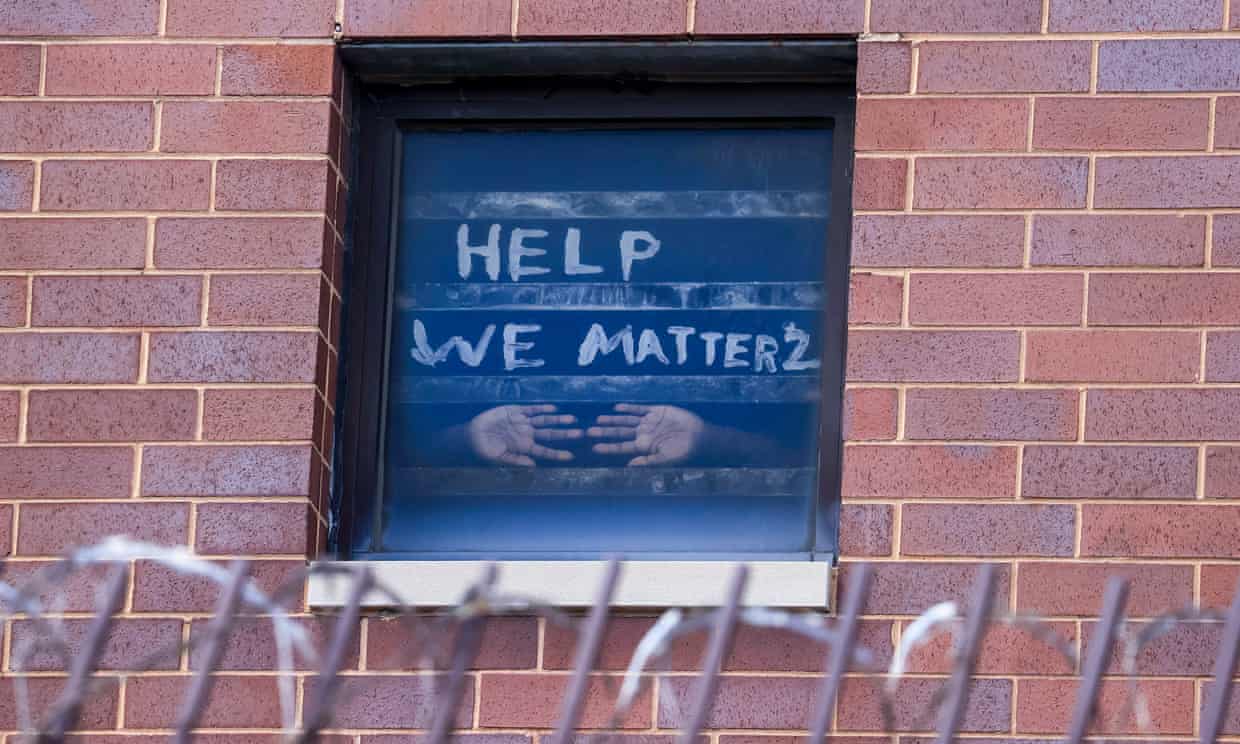
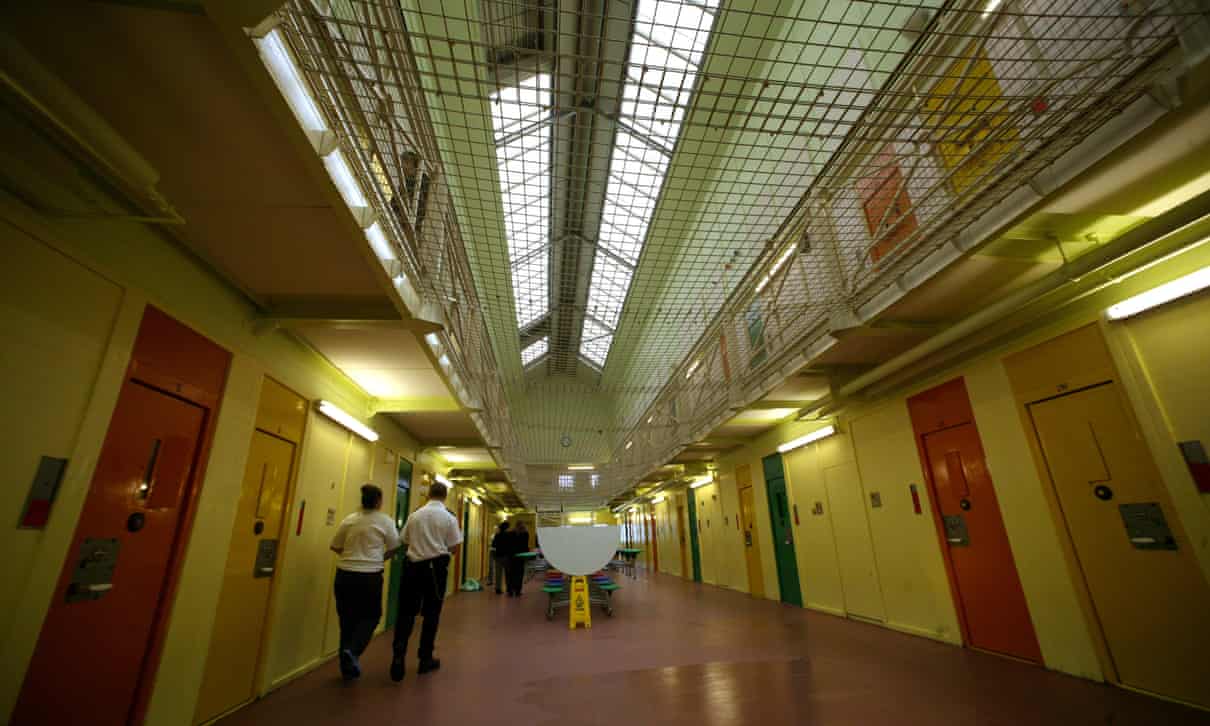
England built a special hell for women: Yarl’s Wood. This week, women held in Yarl’s Wood, where last week a “resident” tested positive for Covid-19, sent a petition to Movement for Justice By Any Means Necessary, demanding their release immediately: “Free us all now!!! Shut Down the Detention Centre!”.

The petition reads:

“1. COVID-19 IS IN YARL’S WOOD, OUR VISITS HAVE BEEN CANCELLED, WE ARE ISOLATED AND OUR MENTAL HEALTH IS SUFFERING.

2.  SOME OF US HAVE ASTHMA, HIGH BLOOD PRESSURE & OTHER CONDITIONS THAT MAKE US MORE VULNERABLE TO COVID-19, AS WELL AS BEING SCARED FOR OUR OWN HEALTH, SCARED FOR OUR FAMILIES ON THE OUTSIDE AND WE WANTED TO BE WITH THEM.

3. WE CANNOT GET THE HEALTHCARE WE NEED IN DETENTION, THEY JUST GIVE US PARACETAMOL. SERCO CANNOT KEEP US SAFE. PEOPLE WILL DIE.

4. IT IS IMPOSSIBLE TO DO SOCIAL DISTANCING IN OUR WINGS, WE HAVE NOT HAD ANY TRAINING ON HOW TO USE THE MASK AND GLOVES THEY GAVE US.

5. OUR SOLICITORS CANNOT VISIT US AND OUR BAIL HEARINGS ARE BEING CANCELLED AND MOVE TO PAPER DECISIONS. WE ARE DENIED JUSTICE. 

6. WE CANNOT BE PUT ON FLIGHTS ANY TIME SOON BECAUSE OF THE TRAVEL RESTRICTIONS.

7. IT IS INHUMAN AND UNJUST THAT WE ARE HELD IN DETENTION DURING THIS PUBLIC HEALTH CRISIS. SOME OF US HAVE COMMITTED NO CRIMES, ALL OF US WITH CONVICTIONS HAVE SERVED OUR TIME AND EVEN LONGER BECAUSE OF DETENTION.

8. HUNDRED HAVE BEEN RELEASED IN THE PAST TWO WEEKS, BUT IT IS TAKING TOO LONG.

FREE US ALL NOW!!! SHUT DOWN THE DETENTION CENTRE! ”

Twenty-seven of approximately thirty women in one wing at Yarl’s Wood signed the petition. 

In 2015, the Chief Inspectorate of Prisons for the United Kingdom found that Yarl’s Wood failed to meet the needs of vulnerable women. Yarl’s Wood didn’t fail, it refused to meet the needs of vulnerable women, because it refuses to recognize the humanity of any women. Every year since 2015, the situation has worsened and intensified, and then came Covid-19. Every day, more women are sent to Yarl’s Wood, during the pandemic. How impoverished must the United Kingdom be in every way conceivable that it cannot absorb some 300 or so women with a few children? How poor a nation. Release the women from Yarl’s Wood immediately. Shut it down, once and for all. Refugees and asylum seekers are not, and never have been, the crisis. The crisis is our inhumanity, racism, xenophobia, misogyny, nationalism. The time for concern and for discussion is over. The time for justice, and for reparations, is upon us and long overdue. Shut Yarl’s Wood down; do it now … in the name of health! FREE THEM ALL NOW!!! SHUT DOWN ALL DETENTION CENTRES!


(Photo Credit: BBC.com) (Image Credit: Detained Voices)

Covid Operations: Be a force of kindness, not of might. Close the detention centers!

“For with what judgment ye judge, ye shall be judged: and with what measure ye mete, it shall be measured to you again.”  Matthew 7

South Africa is in the second day of a 21-day lockdown, monitored and enforced by the police and armed forces, as well as neighbors, family and other less threatening people. Before sending the armed forces to wander the streets where people live and, for the rare few, work, President Cyril Ramaphosa urged the army to “be a force of kindness and not of might. Deliver your duties in a way that does not violate our people’s rights either intentionally or unintentionally.” Be a force of kindness, and not of might. On the same day that invocation of kindness was reported, it was also reported that the city of Swakopmund, in Namibia, would provide free water to those living in its informal settlements. The day before it was reported that Namibia’s capital city, Windhoek, would reconnect “defaulters’ water”. We are awash in stories of kindness and unkindness, and we will be judged by the deeds we do and the words we say and write. At the same time, so many of the reports of “acts of kindness” are individual acts, acts within and of civil society writ large, and not acts of the state. While individual acts matter terrifically, as we have learned to our detriment in the United States, the nation-State must be the State as well as the nation. 

Be a force of kindness, not of might. Tell that to ICE and its supporters. On March 21, ALDEA-The People’s Justice Center in Reading, the Rapid Defense Network in New York, and the Refugee and Immigrant Center for Education and Legal Services, or RAICES, in San Antonio, Texas, representing scores of children, sued the U.S. Department of Homeland Security and the U.S. Attorney General. Their suit opens: “This case presents the question of whether the government can recklessly expose Petitioners … to conscious shocking risk of exposure to contracting the deadly Covid-19 virus in the midst of a global pandemic by failing to take the most minimal precautions to prepare for the all too foreseeable catastrophe in crowded family detention. The answer is no.” Berks. Dilley. Karnes. The answer is no.

In the three so-called family detention centers, people are living in close quarters with little to no attention to sanitation or hygiene, “a tinderbox that, once sparked, will create a crisis that threatens the lives of women, men and children”. In Dilley, a pregnant Honduran woman, identified as O.M.G., stays with her 4-year-old daughter, who has started coughing, “I must be close to others all the time. I fear for my life, and the life of my daughter and unborn child.” In Berks, a 5-year-old was taken to the hospital after weeks of coughing. According to Bridget Cambria, Executive Director of Aldea, that girl won’t be the last child whose health is endangered at Berks, “Children can’t social distance on their own. They’re going to put things in their mouth. They’re going to touch other children. It’s not like people can go to a different room to be by themselves.

Across the country, the stories of immigrant detention come to the same conclusion, “It’s basically torture.” And it’s not only women and children being tortured. This week, the ACLU of Pennsylvania sued to release elderly and infirm `detainees’, more like hostages, from immigrant detention centers. In San Diego, people seeking asylum end up in “the Icebox”, “La Hielera”, where the temperature is kept intentionally extremely low, and of course it’s overcrowded. From sea to shining sea … 

There is a saying in Zulu, “Umuntu ngumuntu ngabantu”. A person is a person through other people. Ubuntu. I am because you are. I am because, together, we are, mutually, reciprocally. Once upon a time, a long long time ago, the word “kind” was an active, transitive verb, meaning to treat kindly or with good will. You could kind someone, we could kind one another. Once upon a time, a long long time ago … 


(Image Credit: Velaphi Mzimba / Everard Read – Cape Town) (Video: YouTube)

Nicoletta Dosio: “I will carry to the end with joy”

Nicoletta Dosio

Nicoletta Dosio is a 74-year-old Italian activist, feminist, Communist who, in 2012, protested against the Turin – Lyon high speed rail project, TAV. At the end of last year, Nicoletta Dosio was arrested, tried, and convicted to a year in prison, in Turin. From her prison cell, Nicoletta Dosio has written, “I’m fine, I’m happy with the choice I made because it is the result of a just and beautiful cause, the NoTav struggle which is also the struggle for a different model of society and stems from the awareness that the present world is not the only possible world. I feel collective solidarity and personally experience what a fighting family is. The support and affection you showed me when I was arrested, and the demonstrations whose echos reach me from afar, confirm that I made the right choice, which I will carry to the end with joy. I tell the other inmates about you, I tell them that the solidarity given to me is for all the women and men locked behind these brutish walls.”

Italian novelist, poet and translator, Erri De Luca, has written an open letter to Nicoletta Dosio:

Rome, March 23, 2020

Dear Nicoletta,

In these days, I reread. Once again, I have Rosa Luxemburg’s letters on my lap, the letters she wrote from Berlin prison. In one, addressed to Mathilde Jacob on February 7, 1917, Rosa recounts the cry of the chickadee, tss-vi, tss-vi. She knows how to imitate it so perfectly that the chickadee approaches her bars.

Rosa writes, `Despite the snow, the cold and the loneliness, we believe, the chickadee and I, that spring is on the way.’

And so here we are, in the days that announce that winter has ended. You were secluded in prison, and by some mysterious solidarity, an entire people locked themselves in their homes. The streets are empty, the North of Italy is emigrating to the South, and families fill the balconies. The economists have vanished, and the medical doctors are in charge.

Standing in my field, I watch the trees in bud. In Italian, the word for “bud” and “gem” is the same, “gemma”. For us, the buds are precious stones, and Spring is a necklace of jewels open to all who know how to appreciate them.

Here, now, in the name of politeness, people are staying away and avoiding one another.

But for you, in your prison cells, there is not enough room to turn in. People with pneumonia lack air, you are all forced to breathe and gasp together. The overcrowded, criminally overstuffed prisons have become laboratories of suffocation.

But the valley for which you fought and for which you are in prison continues to produce and breathe its own political oxygen, which rises from within the community, which strengthens its fibers, and thus gives the right of citizen to those whom the authorities have treated as feudal subjects. Treated as a rebellious province, your valley continues to refuse the rape of its territory.

Your inflexible and indomitable calm is that of your community. It emerges manifest when a people awaken.

I am proud to be able to address you, dear Nicoletta, as a close friend, proud to be one with you.

I wait for you here, and I promise you that, when you leave that prison, you will find the same union and the same spring.

Fervently yours,
Erri De Luca

(Translated by Dan Moshenberg)

(Photo Credit: Nicoletta Dosio)

Covid Operations: How is this (not) unprecedented? Let us count the ways …

“They knew that their country’s devastation—before the earthquake as now—was not inevitable. They knew that traditional “recovery” would fail to recover much of anything except the previous inequities. They knew that reconstruction could be, had to be, grounded in democracy, where all had a say. And they were organizing.”
                                             Beverly Bell. Fault Lines: Views Across Haiti’s Divide

The emergence and efflorescence of Covid-19 has produced its own distinct discourse: social distancing, flatten the curve, social isolation, care mongering, and the list goes on. Words matter, rhetoric matters. One term that has been recirculated through the interpretive landscape of dismay, disorder and governmental dithering is to claim that everything is unprecedented … and so how could we have known? This claim of unprecedence has resulted in some curious contortions. For example, the stock market collapse is both unprecedented and the worst since 1987. The pandemic itself is unprecedented and the worst since the 1918 pandemic, the so-called Spanish flu. Well, which is it, unprecedented or the worst since? It doesn’t matter, because the claim of everything being unprecedented, rather than seriously and existentially dire, is always already an alibi. What is the alibi, and were we all really completely unaware?

For decades, political economist after political economist has warned that neoliberal models of development, and in particular austerity, would leave the world with severely diminished health care systems and seriously stretched economies. Four decades of slow to no growth and just in time production chains have produced “lean economies” which [a] only work for the very rich, [b] widen inequality rapidly and increasingly, and [c] increase risk. How did `we’ emerge from the infamous 1987 crash? The infamous Greenspan Put, in which the Fed “injected liquidity” into the market. What that means is that speculators are protected from risk and so are encouraged to take even riskier investments. The very opposite of no pain, no gain, this solution is All gain for a few, all and intense pain for everyone else. That was how `we’ emerged from 1987 … 1997 … 2000 … 2008. Unprecedented? Hardly.

Four years ago, Rob Wallace’s Big Farms Make Big Flu was published. Recently, Wallace noted, “The real danger of each new outbreak is the failure –or better put—the expedient refusal to grasp that each new Covid-19 is no isolated incident. The increased occurrence of viruses is closely linked to food production and the profitability of multinational corporations. Anyone who aims to understand why viruses are becoming more dangerous must investigate the industrial model of agriculture and, more specifically, livestock production. At present, few governments, and few scientists, are prepared to do so. Quite the contrary. When the new outbreaks spring up, governments, the media, and even most of the medical establishment are so focused on each separate emergency that they dismiss the structural causes that are driving multiple marginalized pathogens into sudden global celebrity, one after the other … There are no capital-free pathogens at this point … The capital-led agriculture that replaces more natural ecologies offers the exact means by which pathogens can evolve the most virulent and infectious phenotypes. You couldn’t design a better system to breed deadly diseases … These companies can just externalize the costs of their epidemiologically dangerous operations on everyone else.” The other term for the Greenspan Put is moral hazard, “any situation in which one person makes the decision about how much risk to take, while someone else bears the cost if things go badly.” That’s Paul Krugman writing, in 2009, about the crash of 2008. Unprecedented? No.

Despite the experience, and warning signs, of both SARS and Ebola, the lessons for health care were ignored in favor of profit. Cut workers’ access to health benefits, both by directly slicing health care benefits and transferring large sectors of the labor force to precarious `self contractors’. Defund public health and privatize health care as extensively and deeply as possible. Invest in pharmaceutical research that generates maximum profits and whatever you do, stay away from research in preventive medicine. Big Pharma “loves to design cures. The sicker we are the more they earn.” Keep the system `lean’ and `efficient’, meaning no extra beds, no extra anything. This is the legacy of austerity, and it has been widely criticized, certainly 40 years ago at the beginning of the period of neoliberal development, but with greater insistence, research and documentation over the past ten years. Unprecedented? Nope.

The claim of “unprecedented” is an alibi to the same extent that it provides ideological cover for the same old same old. This is not about gotcha; this is about how we understand “reconstruction”. Many are, rightly, concerned that nation-State governments will declare a State of Emergency or a State of Disaster and thereby erode civil and human rights. Even if that does not happen, we must pay critical attention to those who call for a “return to normalcy”, which would mean a `return’ to growing inequality, decreasing access to decent health care, mounting evictions, increased incarceration, increasing hunger, and more and more unprecedented pandemics.


(Image credit: NPR)

Covid Operations: Stop intoning “bearing the brunt”

The emergence and efflorescence of Covid-19 has produced its own distinct discourse: social distancing, flatten the curve, social isolation, care mongering, and the list goes on. Words matter, rhetoric matters. One phrase that has been recycled through the interpretive landscape of dismay and disorder is “bearing the brunt”. Let’s consider that.

“Bearing the brunt” has blossomed in the past few weeks. How Women Will Bear the Brunt of This Pandemic. “Perhaps the greatest economic lesson the U.S. will glean from the coronavirus is not only that slow-acting fiscal policy leaves the vulnerable more vulnerable. It’s also that any fiscal policy, slow-acting or not, without the gender lens leaves women to bear the brunt of a financial crisis.” “Poverty experts said that in times of natural disasters and large-scale emergencies, low-income families who are already living on tight budgets with overdue bills, unstable housing, poor health care and unsteady employment often bear the brunt of the pain.” “The lowest-wage workers will bear the brunt of the layoffs.” “Together, we can create systems built to ensure that low-income communities and communities of color do not repeatedly bear the brunt of acts of nature like the coronavirus, or the human-made acts of inequitable laws and policies.” “As more countries fight to curb increasing numbers of Covid-19 infections, a virus of fear is sweeping the globe – and the most vulnerable in our communities are bearing the brunt of it.” These are just a few examples from the last few days.

Individually, the statements are incisive, perceptive, critical, but taken together, they suggest something else, a way in which the phrase “bearing the brunt” is meant to suggest that the author is somehow both insightful and compassionate. We care about those bear the brunt … don’t we?

Three articles in one day: “Black women bear the brunt of domestic violence”; “lesbians bear the brunt of military discharges”; “children bear the brunt of the deepening economic crisis”. Those three articles appeared in one day … in October 2009. On another day, in December 2009, we learned that in KwaZulu Natal urban women bear the brunt of AIDS, while in Honduras, women bear the brunt of human rights abuses. In 2010, when food prices soared, analysts explained that the poorest would bear the brunt.

Last year, the climate crisis produced a crop of brunt bearings. In a just a few weeks, the following appeared. “Bangladesh’s rural families bear the brunt of climate change … Households headed by women are under even greater pressure.” “Women bear the brunt of extreme weather events because they lack economic, political and legal power.” “Women and children often bear the brunt of water shortages.” “The female population is more likely to bear the brunt of natural disasters.” “In less-developed regions, it falls to women to gather food and water for their families. If crops can’t grow, those women will lose both their livelihoods and their food source. At the same time, as extreme weather events become more frequent, huge populations of women and families are forced to leave their homes. Women will bear the brunt of the crisis.” “It is the world’s most vulnerable people who are made to bear the brunt of climate change, though they are the least responsible for causing it, and are ill-equipped to deal with the consequences.” “Feminism helps me understand what underpins our climate crisis — systems like extractivism, patriarchy, and capitalism. Feminism helps us see the genderdifferentiated impacts of climate breakdown and how women disproportionately bear the brunt of the harm.” “Women farmers bear the brunt of the crisis—and may be the key to limiting its impact. But that’s only possible if there is gender equality in the agriculture sector.” “Those with fewer resources are bearing the brunt of the crisis, and many of the world’s poorest are women. In times of scarcity it’s often mothers who go without to make sure their families can eat. When extreme weather hits, because women still primarily look after children and the elderly, they are the last to evacuate; leading to higher female death tolls. Around 90% of the 150,000 people killed in the 1991 Bangladesh cyclone were women.”

What does “bearing the brunt” mean, and why must women and children fulfill that role? Can community exist without some group, and specifically women and children, bearing the brunt? A brunt is “an assault, charge, onset, violent attack….The shock, violence, or force (of an attack)…. The chief stress or violence; crisis.” To bear can mean so many things, from carry to bring forth fruit or offspring, but when it comes to bearing the brunt, it means “to suffer without succumbing, to sustain without giving way, to endure.” Bearing the brunt is an acceptable facet of everyday life and, as such, is a perversion of any sense of justice or wellbeing. Women “bear the brunt” in a social, economic, political order in which peace, wellbeing, justice, prosperity, joy are understood as military engagements. In that world, rights are hollow, reconciliation is empty, and love is abandoned. This is not unprecedented. To the contrary, it is us, and has been for decades.

(Image Credit: Al Jazeera / Muhammad Ansi / John Jay College)

Covid Operations: What happened to a half century of mass incarceration? Covid-19

In the past week, news agencies and advocacy organizations have discussed the role of prisons and jails in spreading the novel coronavirus. Some are longstanding advocates for just solutions to the incarceration crisis; others, especially news agencies, are just now `discovering’ that prisons, jails and immigration detention centers form an archipelago of infectious morbidity and mortality. Headlines from the past three days include: To Arrest the Spread of Coronavirus, Arrest Fewer People.  Visits halted in federal prisons, immigration centers over virusHow Coronavirus Could Affect U.S. Jails and PrisonsPrisons And Jails Worry About Becoming Coronavirus ‘Incubators’Our Courts and Jails Are Putting Lives at RiskTo contain coronavirus, release people in prison. In Virginia, the Legal Aid Justice Center noted, “Adults and youth held in Virginia’s prisons, jails, and detention centers are particularly vulnerable to the spread of disease and deserve to be protected with adequate sanitation and medical care or, if possible, be released.” England and Wales developed “emergency plans to avoid disruption” in their prisons. Also in England, immigrant advocates called on the government to release hundreds of immigration detention center detainees, noting, “There is a very real risk of an uncontrolled outbreak of Covid-19 in immigration detention”. In France, prisoners, supporters, staff, and advocates are concerned and see no way out of coronavirus running rampant through the prison system.

While this attention is welcome, the question that lingers, and haunts, the current carceral controversy is, “Why now?” Public health researchers have long documented prisons’ role in the spread of infectious disease. From a public health perspective, prisons so dangerous because they’re overcrowded and their systems of care provision, such as they are, have intentionally gone from bad to worse. A half century of mass incarceration married to a global programme of austerity has left us with prisons waiting to pump out HIV and AIDS, TB, Ebola, SARS, opioid addiction, and now Covid-19. 

Earlier this year, a special issue of The Lancet began as follows, “About 11 million people are currently being held in custody across the globe and more than 30 million individuals pass through prisons each year, often for short but disruptive periods of time .… The health profile of the detained population is complex, often with co-occurring physical and mental health disorders, and a backdrop of social disadvantage. Detention can also expose people to new and increased health risks, yet the profiles of the population behind bars and their health needs have often been neglected.”

Last year, The Lancet editorial board noted, “The sheer scale of imprisonment in the USA and its unequal burden on people from minority and poor backgrounds raises concerns about its impact on the health and wellbeing of the national population …. Being in prison worsens several health outcomes and might even drive the spread of disease.” Elsewhere, medical researchers noted, “There is a growing epidemic of inadequate health care in U.S. prisons. Shrinking prison budgets, a prison population that is the highest in the world, and for-profit health care contracts all contribute to this epidemic.”

Inadequate health care in prisons across the globe is the growing pandemic that preceded the current pandemic. Where are the women in this pandemic scenario? Women are the fastest growing prison population. What does that “growth” look like? “As adults, women who are incarcerated have enduring reproductive health issues such as unintended pregnancies, adverse birth outcomes, cervical dysplasia and malignancy, and sexually transmitted infections. Women who are pregnant or parenting a newborn during their incarceration are at high risk for poor outcomes, and just like individuals in the community they need prenatal care, supports with labor, postpartum bonding, and breast-feeding support. Women who have returned to the community or are under community supervision face similar health issues as women who are incarcerated and may lack access to care.”

Repeatedly, public health researchers have described the situation in prisons and jails as a crisis. For women – and especially women of color and poor women – that crisis stretches across their lifespan in two ways. First, the health consequences of even short stays in detention endure a lifetime. Second, detention itself lasts a lifetime: “Over 1.2 million women in the United States were on probation, parole, or incarcerated in jail or prison facilities at the end of 2015, the most recent year for which data are available.”

The decades of mass incarceration, in which women have consistently been the fastest growing prison population, are built on systemic neglect. While the current pandemic is in no sense an opportunity, it is a moment in which we can turn that neglect on itself and pay attention, not only to this particular instant but to the decades that prepared the ground, toxically, for it. Immigrant detentionjailprison are always bad for health. The only route to a healthy world is decarceration.

(Image Credit: Prison Policy Initiative)

Will Florida and South Carolina stop shackling women (prisoners) in childbirth?

State legislatures in both Florida and South Carolina are considering bills that would outlaw shackling of women prisoners in childbirth. On one hand, it’s about time. On the other hand, which is the same hand, prison is so deeply imbedded into the fabric of the United States that questioning, much less transforming, any aspect of carceral practice requires a radical change in vision. As Angela Davis noted, in 2003, “The prison is considered so natural and so normal that it is extremely hard to imagine life without them.” So natural and so normal have prisons become in the national social landscape and consciousness that it is necessary to debate, at length, whether or not women in childbirth should be shackled. And so we wait attentively for the good news from both Florida and South Carolina.

Although federal law prohibits shackling pregnant prisoners, that law does not cover state and local prisons and jails, not to mention immigrant detention centers. Currently, 23 states allow for shackling women in childbirth. In a recent study of perinatal nurses who had cared for pregnant and postpartum women prisoners, nurses explained that the reason given for shackling women in childbirth was “adherence to rule or protocol.” When the nurses advocated for the shackles to be removed, the number one reason, by far, for denial was “rule or protocol.” In other words, the prison system has rules and protocols that say it’s ok to shackle women in childbirth, and so women prisoners in childbirth must be shackled. Period. 

A different recent study of pregnancy outcomes in U.S. prisons from 2016 to 2017 concludes, “Being in prison or jail during pregnancy can be a difficult time for many women, fraught with uncertainty about the kind of health care they might receive, about whether they will be shackled in labor, and about what will happen to their infants when they are born. Some pregnant women in custody may experience isolation and degradation from staff and insufficient pre-natal care … Data from our study can be used to develop national standards of care for incarcerated pregnant women, advocate for policies and legislation that ensure adequate and safe pregnancy care and childbirth, develop alternatives to incarceration for pregnant women, pro-mote reproductive justice, and encourage broader attention to the reproductive health needs of marginalized women and their families.” As of now, there are no national standards of care for incarcerated women, and there is no requirement to collect data from prisons and jails, much less immigrant detention centers. In a world of intensive and extensive surveillance, prisons and jails constitute a black hole archipelago of opacity. For women, that means a world of pain and suffering.

Florida’s legislature is considering the Tammy Jackson Healthy Pregnancies for Incarcerated Women Act. Last year, Tammy Jackson gave birth, alone, in a cell in the North Broward Jail, in Pompano Beach. The law would ban shackling pregnant women prisoners; invasive body cavity searches; and the use of solitary confinement. It would also require medical examinations at least once every 24 hours. 

South Carolina’s legislature is considering a bill that would ban the shackling of incarcerated pregnant women who are in labor. Additionally, the new law would restrict restraint of pregnant women prisoners to handcuffs only: “A person officially charged with safekeeping of inmates, whether the inmates are awaiting trial or have been sentenced and confined in a state correctional facility, local detention facility, or prison camp or work camp shall not restrain by leg, waist, or ankle restraints an inmate with a clinical diagnosis of pregnancy. Wrist restraints may be used during any internal escort or external transport. The wrist restraints shall only be applied in the front and in a way that the pregnant inmate may be able to protect herself and the fetus in the event of a fall. This provision also applies to inmates not in labor or suspected labor who are escorted out for Ultrasound Addiction Therapy for Pregnant Women or other routine services.” When State Sen. Dick Harpootlian, D-Richland, heard that women in South Carolina are shackled in childbirth, he said, “I think this is a shock that we continue to still shackle pregnant women”.

This is us. We cannot be shocked or surprised at the shackling of women in childbirth. In both Florida and South Carolina, dignity is invoked, specifically dignity for incarcerated women. Think of how far we have fallen that not shackling women in childbirth is considered dignity. I hope that both Florida and South Carolina do pass their respective bills into law, and I hope that we will work for a better understanding of dignity. 

(Image Credit 1: Radical Doula) (Image Credit 2: New York Times / Andrea Dezsö)

Stella Nyanzi: “Teach the nation poetry” #FreeStellaNyanzi

Stella Nyanzi

On Thursday, February 20, Ugandan queer and women’s rights feminist activist and founder of the Pads4girlscampaign Stella Nyanzi walked out of Luzira Maximum Security Prison for Women, after having served fifteen months of an eighteen-month sentence. Stella Nyanzi had a question: “Why was I in court for all these months? Why is the current regime of Uganda oppressing Ugandans who are expressing their constitutional rights? I am the voice for the opposition of Uganda. Museveni must go. Yoweri Museveni you are on notice. I give you notice, Museveni. You can do whatever you want. We are ready for you, Museveni. We are tired. Stop oppressing Ugandans. It’s important for us the opposition to find bases of unity that are going to help us in our solidarity against the current regime. Why was I in prison because I wrote a poem? Because I expressed my deep disinterests and disgust of the NRM [National Resistance Movement] regime? Is it because I told the current illegal president of Uganda that I really want him to go? Museveni is sending so many opposition activists to prisons – for what?” 

In 2017, when Stella Nyanzi spent 33 days in prison for a Facebook post, we asked “Where is the global outrage at Uganda’s abuse of Stella Nyanzi?” We continue to ask. Stella Nyanzi was able to walk out of prison because a judge ruled that her earlier trial was improper and improperly conducted, because thousands of supporters inside Uganda and some outside rallied, and because Stella Nyanzi refused to submit. While inside, she organized, protested, wrote poems, shared insights, worked towards freedom. As she did upon leaving Luzira, every day Stella Nyanzi posed the questions, and the crisis, of freedom, equality, justice, for all and in particular for women. 

Now that Stella Nyanzi is out of prison, and who knows how long that will last, now, as before, is the time for organizing. People should write to their newspapers and call in to their radio stations and make sure the word gets out and around. Those who teach should teach … teach the story and lessons and name of Stella Nyanzi. Those who read should read … read the words Stella Nyanzi has written, listen to her speeches, and share them. And those who hear and listen and read and share must (learn to) write poetry. 

While in Luzira women’s prison, Stella Nyanzi wrote poems which have been collected in a volume, entitled No Roses from My Mouth: Poems from Prison, available here. Here’s one:

TEACH THE NATION POETRY

Teach the nation poetry. 
Deployments of anti-riot police 
Cannot shoot tear-gas at rhymes 
Nor disperse the rhythm of our poems. 

Teach the nation poetry. 
Forgotten masses will pack our pain in stanzas 
That will pierce the core of the tyranny.
Raw poems hit harder than your platitudes. 

Teach the nation poetry. 
Handcuffs cannot contain the potency of poems. 
Arrest warrants cannot disappear memorised verse 
Poetry can never be detained in gaol. 

Teach the nation poetry. 
Investigating detectives and crime solvers 
Cannot decipher metaphors, similes or symbols 
Their charge sheets will never make sense. 

Teach the nation poetry. 
To write, recite and interpret it.
Poems of the oppressed will oppress the oppressor. 
Poems will transport us to freedom.

Poems of the oppressed will oppress the oppressor; poems will transport us to freedom. Teach the nation poetry … to write, recite and interpret. #FreeStellaNyanzi


(Photo Credit 1: The Guardian / Reuters) (Image Credit: Brittle Paper)