#ShutDownBerks: The Mothers of Berks launch a hunger strike


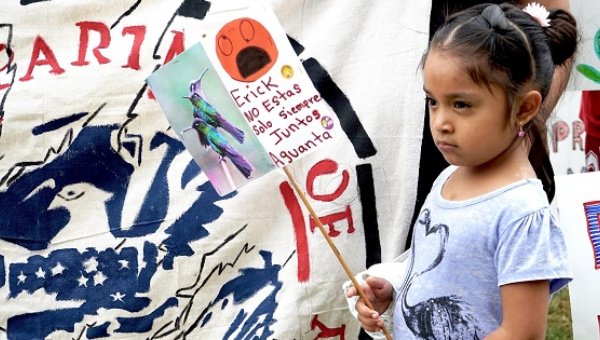
This week, twenty-two women held in the Berks County Family Detention Center launched an indefinite hunger strike. After so many violations of their dignity and of the humanity of their children, the Mothers of Berks, las Madres Berks as they call themselves, still believe in humanity, not only their own but that of their captors, and so, after the violence and lies and campaigns designed to teach them despair, they continue to write open letters and to launch new campaigns. They continue to wage hope. This week, hope is a hunger strike, to the death if necessary.

The women continue to say that peace, love and justice will prevail over violence. The violence comes in many ways. The State forces the women into prison. The State forces the women’s children into prison. It forces the women to watch the children suffer. Then, the State lies. More than lies, it covers the women and children in ever intensifying blankets of lies, as it attempts to poison the very concepts of asylum, refuge, and humanity with lies.

The Madres Berks’ letter reads, in part:

“The Immigration Department has made a public announcement stating that in family detention center parents and children are detained no longer than 20 days.

WE WANT TO DISPROVE THIS INFORMATION!!

We are 22 mothers who are detained at Berks Family Residential Center being mothers who have been from 270 days to 365 days in detention with children ages 2 to 16 years old, depriving them of having a normal life, knowing that we have prior traumas from our countries, risking our own lives and that of our children on the way until we arrived here, having family and friends who would be responsible for us and who are waiting for us with open arms and that immigration refuses to let us out. Seeing these injustices, we have decided to go on an indefinite hunger strike until we obtain our immediate freedom because all of us left our countries of origin fleeing violence, threats and corruption that not even the government of each of our countries in Central America can control.

On many occasions our children have thought about SUICIDE because of the confinement and desperation that is caused by being here. The teenagers say BEING HERE, LIFE MAKES NO SENSE, THAT THEY WOULD LIKE TO BREAK THE WINDOW TO JUMP OUT AND END THIS NIGHTMARE, and on many occasions they ask us if we have the courage to escape. Other kids grab their IDs and tighten them around their necks and say that they are going to KILL themselves if they don’t get out of here. The youngest kids (2 years old) cry at night for not being able to express what they feel. For a long time, the children have not been eating well, but they have never paid attention to our complaints about the food until now.

We are desperate and we have decided that: WE WILL GET OUT ALIVE OR DEAD.If it is necessary to sacrifice our lives so that our children can have freedom: WE WILL DO IT!”

The women signed the letter as “Mother with … “; for example, “Mother with 6-year-old-daughter with 365 days in detention.” 22 women; 25 children, ranging in age from 2 to 16; six children are four and under. 47 women and children share 5923 days behind bars, almost 16 years. This is the bitter math of democracy today. This is, and cannot be, our truth. The women of Berks say they deserve freedom today, and they say their captors deserve to set them free.

Someone once wrote,

“The ministers lie, the professors lie, the television lies, the priests lie.
What are these lies?
They mean that the country wants to die …
These lies mean that something in the nation wants to die.”

The Mothers of Berks refuse to die, though they are ready to do so for their children … and for ours. They are the part of the nation that wants to live, that wants to move from the violence and trauma to the better math of democracy and justice, which is that of love. #ShutDownBerks #EndFamilyDetention #Not1More


(Photo Credit: Telesurtv)

Canada built a special hell for women: the Nova Institution for Women

Camille Strickland-Murphy, left, and Veronica Park, right

On April 24, 2015, Veronica Park died in the Nova Institution for Women. On July 28, 2015, Camille Strickland-Murphy killed herself in the Nova Institution for Women, committed suicide. On October 31, 2006, Ashley Smith, a “troubled teenager,” was shifted from youth custodial services to a federal women’s prison, the Nova Institution for Women, in Truro, Nova Scotia. From there, over the next year, Smith was transferred 17 times, and subjected throughout to full body constraint, shackles, and extended solitary confinement. On October 19, 2007, Ashley Smith hanged herself while seven guards watched and did nothing. The State was “shocked”. Some said, “Ms. Smith’s death should haunt Canada.” It didn’t and, as the corpses of Veronica Park and Camille Strickland-Murphy demonstrate, it hasn’t. The death of women prisoners haunts absolutely nothing. Last week, the families of Veronica Park and Camille Strickland-Murphy sued Canada’s federal correctional service for “negligence.” Rather call it torture. This play unfolds in three acts: the deaths, the after-death, and the darkness gathering.

Act One: Veronica Park and Camille Strickland-Murphy die.

Veronica Park entered Nova Institution for Women on August 14, 2014. Her family says she suffered from mental health issues, which they attribute to having been sexually and physically abused as an adult. She took to self-medicating and became addicted. In prison, she continued to self-medicate. Prison staff responded to her “situation” by throwing her, three times, into “segregation”, where she spent a total of 22 days. In the weeks before her death, Veronica Park went to the clinic seven times. She was clearly sick. On April 23, 2015, Veronica Park went twice to the clinic, where the nurse recorded a sore throat, cough, body aches and shortness of breath, and sent her on her way. The next day, Veronica Park was found incapacitated, gasping for air. She was taken to hospital, where she was diagnosed with a serious case of pneumonia. By 4:30 pm, Veronica Park was dead.

Camille Strickland-Murphy entered Nova Institution for Women on November 10, 2014. Strickland-Murphy had been in Nova before, at the age of 19. At that time, she had been beaten twice, by other inmates. Her family says that Strickland-Murphy’s mental illness began then, with untreated concussions. She began having seizures, fainting spells, and periods of loss of consciousness. The State responded with “segregation”, seven times totaling 23 days. When Camille Strickland-Murphy returned to Nova, her condition was worse. She was engaging in self-harm, which, again, resulted in segregation In February, she cut her face, and was found in a pool of blood. In March, she set her leg and room on fire. On July 20, she attempted suicide, and was sent to hospital. She was then returned to the Nova Institution for Women. On July 28, Camille Strickland-Murphy killed herself.

Who really killed Veronica Park and Camille Strickland-Murphy?

Act Two: The State abuses the families of Veronica Park and Camille Strickland-Murphy.

When Veronica Park and Camille Strickland-Murphy asked, directly and indirectly, for help, they were sent into segregation. Segregation means no family contact and that one’s security changes from medium to maximum. The families say they were never told about their loved ones’ deteriorating conditions. No one in either family knew how bad the situation was. How could they, when Veronica Park and Camille Strickland-Murphy were in and out of “segregation”? After the deaths, the State met the families’ various requests for information, both on what happened and what follow-ups were going on, with stone dead silence. According to Kim Pate, of the Canadian Association of Elizabeth Fry Societies, when the Park family asked for more information, “they were told it was protected. It is outrageous.” There’s no outrage here, and Ashley Smith does not haunt the Canadian justice or prison system. The State kills women in prison, and then “protects” information. According to the family, the investigation into Veronica Park’s death didn’t even begin for a full four months.

Act Three: The darkness gathers.

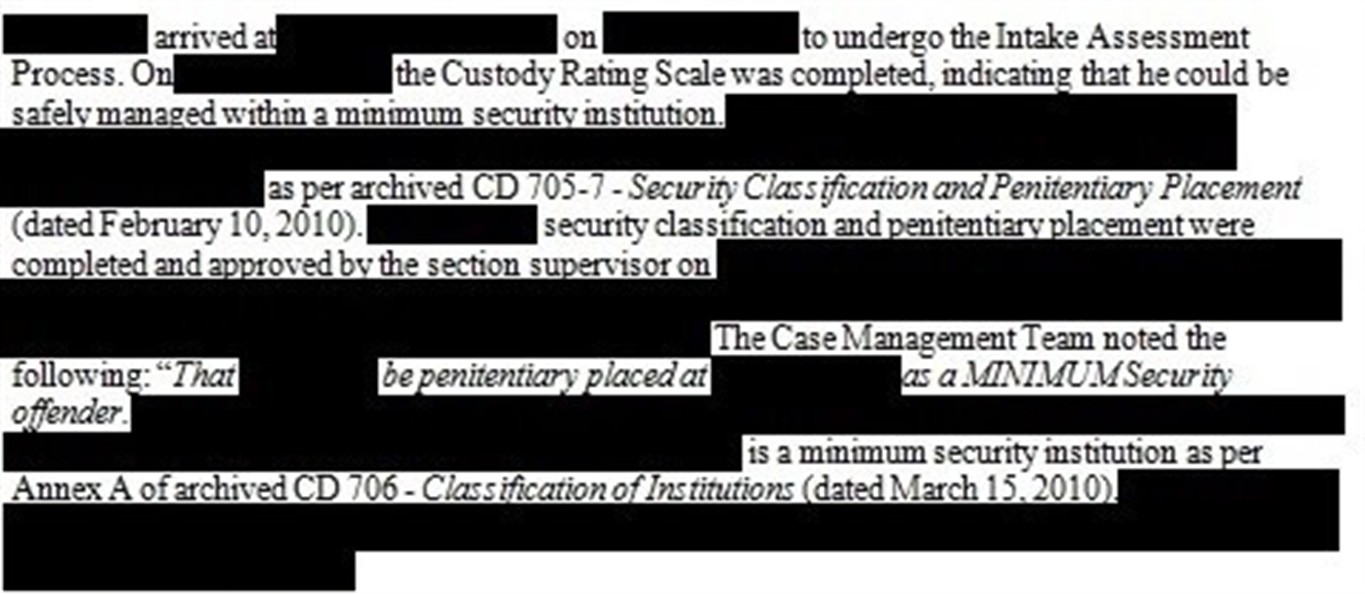
Howard Sapers, the federal prisons ombudsman, released a report last week on how Canadian prisons deal with families after prisoners have died “in custody.” Investigative reports are consistently blacked out. Sometimes whole pages are missing. This repeats the treatment prior to the death, when the prisons don’t inform families. Prisons treat the families callously and worse. One man told the prison he would be coming to view his family member’s body on a certain day. When he arrived, he was told, for the first time, that his family member had been cremated. Later, without any notice, the ashes were couriered to him: “They cremated him and they sent him by Purolator…sending someone in the mail…it’s just not right.” It’s just not right. Sapers’ report is titled In the Dark.

Ashley Smith died, or was killed, nine years ago. In the interim, the darkness has gathered and thickened. In the name of Veronica Park, Camille Strickland-Murphy, and Ashley Smith, no more red flags, reports, inquiries or commissions. It’s time, it’s way past time, for action. Close the Nova Institution for Women. Close all places where segregation and isolation are the protocols for healing. Build spaces that are actually for women. Anything else is just not right.

A report to a family on their loved one’s death


(Photo Credit 1: CBC News) (Photo Credit 2: News 1130 / Office of the Correctional Investigator)

#RememberKhwezi! Re-establish the Sexual Offences Courts … now!

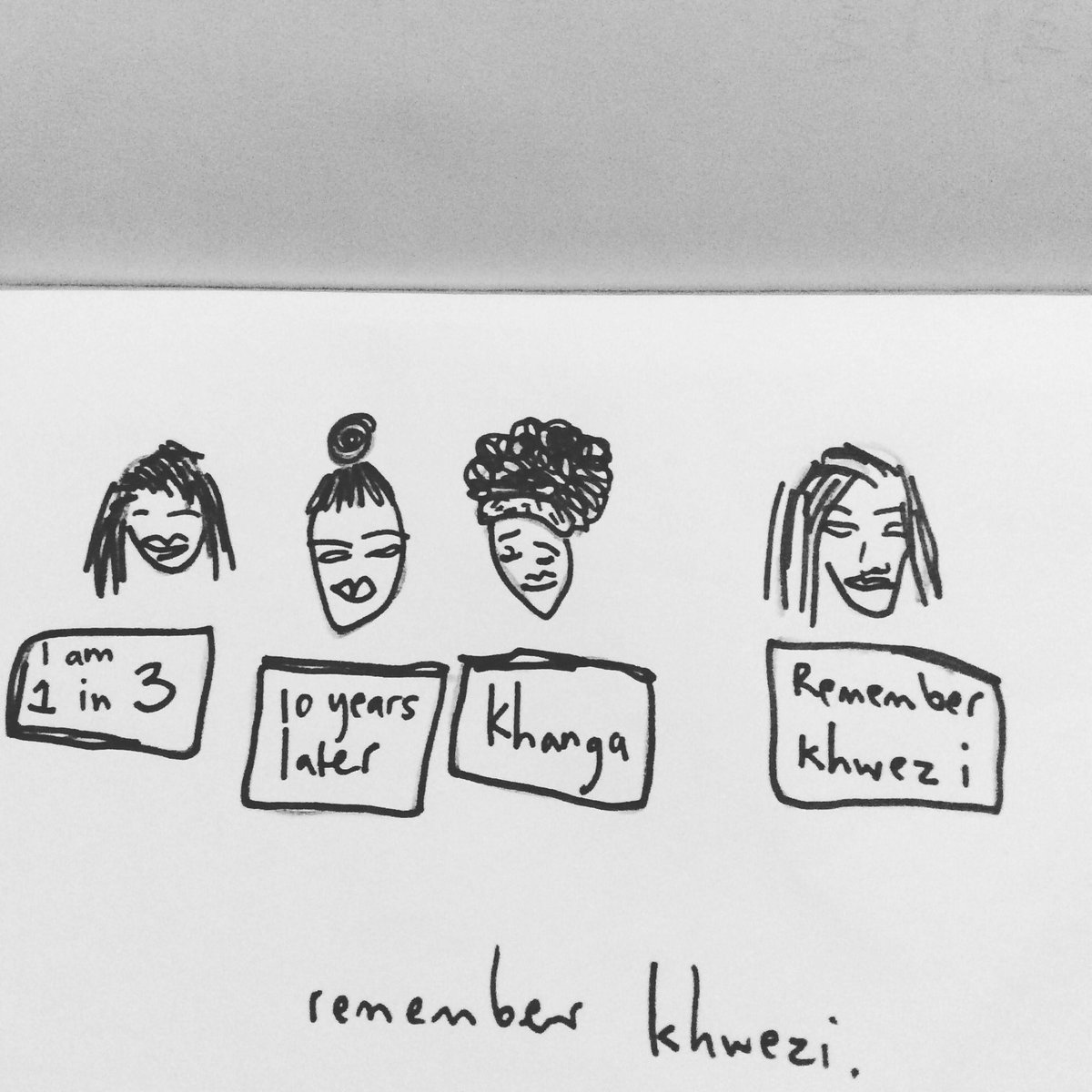
“I’m one in 3,” one placard read, referring to a claim that one in three women in South Africa will be raped in her lifetime. “10 years later”, “Khanga” and “Remember Khwezi”. Rape trials don’t ever go away for those who are the complainants. They don’t go away for those who are the family and loved ones of the survivor, and for many in the criminal justice system, they also suffer vicarious trauma. Trials are hard. They take their toll. The silver bullet solution in rape cases is re establishing the so-called Sexual Offences Courts. Sexual Offences Courts are designed to deliver survivor-centred justice with specialised services, specialised infrastructure and specialised personnel.

The idea is simple enough. Take every single link in the criminal justice system affecting rape survivors and make sure it holds the survivor in the system. From the very first report, through meeting the detective, to the first interview with the prosecutor. Make sure everyone is trained in all the special laws and processes you need to implement to get the rape kit, and survivor, the accused and the other evidence and witnesses in court. Make sure the magistrate and prosecutor know not just about the rules, but how trauma affects witnesses. Children testify through CCTV cameras and an intermediary, and don’t have to look at the accused, or deal with inappropriate questions from the defence attorney. Keep the survivor functioning and in their job, taking care of their kids, making sure counseling is available when and where they need it. Prevention of STIs, and pregnancy.

The Ministerial Advisory Task Team on the Adjudication of Sexual Offence Matters (MATTSO) released the Report on the Re-establishment of the Sexual Offences Courts by the Department of Justice and Constitutional Development’s Ministerial Advisory Task Team on the Adjudication of Sexual Offences Matters (MATTSO) in 2013,which recommended the re-establishment of Sexual Offences Courts.

This report led to important amendments to the Act, being the insertion of a section which authorises the Minister to designate certain courts to exclusively hear sexual offences matters. This set of amendments has yet to be brought into operation. A set of regulations has been drafted in accordance with the amendment of the Act. These regulations have been distributed for input in 2015, but no final version has been promulgated yet. 43 Sexual Offences Courts have been established ahead of the legislation coming into operation, according to the Department of Justice.

Many people have no idea Sexual Offences Courts exist, and certainly no idea how the rules are different in that court. So they don’t monitor how the courts are functioning. They do need to monitor them, as in any complex system requires monitoring by people who know what’s going on. But this is a process that involves survivors of violence who are often reluctant participants in the process. They don’t want to be reminded of the events that have led them there, and they don’t want to relive them. They don’t want to answer questions about where they were, and why, and how sober they were, and whether they were ‘friendly’ with the accused. Monitoring whether the court is being run properly is well beyond what can be asked of them.

It’s also, startlingly enough, beyond organisations that are specialists in the area, and that’s because we don’t actually know what the absolute requirements are for such a Court. The principles are clear – specialised services, specialised infrastructure and specialised personnel. However, getting all three working together requires inter sectoral co operation between the Department of Justice, the National Prosecution Authority, and the magistrates.

Without the framing law in place, its harder than herding cats. We have Tutuzela Care Centres, which are a one-stop shop for reporting sexual offences. Doctors, police, and counselors are all there as first responders. We have courts that have the right infrastructure, and we have courts that have specially trained prosecutors. There are also magistrates who work in specialized courts, although they tend not to have a list of cases, which are only sexual offences. What we don’t have is a clear picture of where this is all happening at the same time. So it’s possible to have a court with a specialised prosecutor, but not the right infrastructure. Or a Tutuzela Care Centre with no sexual offences court.

It may be for those who monitor the courts to come up with some rule of thumb, which allows civil society to declare which courts are in fact sexual offences courts. Like free and fair elections, the ones who are outside the system are well placed to observe the successes and failings of the system. Civil society will be launching a campaign this week to hold the state to account on their promises. But ultimately, a high degree of awareness of the rules, and a high degree of compliance is always part of a system working well, and we need to establish those rules before we can say the sexual offences courts are the criminal equivalent of free and fair.

Maybe it wouldn’t have made a difference for Khwezi. But it might well have. There is enough evidence of better conviction rates in those courts, and lower secondary and vicarious trauma to make it worth continuing to work, link by link, to make that chain of conviction work. #rememberkhwezi

(A slightly different version of this article first appeared at The Daily Maverick. Thanks to Alison Tilley for sharing this here.)

(Photo Credit: Greg Nicolson / The Daily Maverick) (Image Credit: Twitter / Lady $kollie)

Welcome to the Islamophobic Terrordome of Closely Watched Trains and Planes

Faizah Shaheen was detained for reading a book

In late July Faizah Shaheen was returning to England, from her honeymoon, when she was detained and questioned, under terror laws, at Doncaster Airport. Her crime was [a] being a Muslim woman [b] who, two weeks earlier, had been reading a book, Malu Halasa’s award winning collection, Syria Speaks: Art and Culture from the Frontline. This week she announced she now intends to make formal complaints against the police and the airline. Yesterday, in India, Taufiq Ahmed, a Kashmiri man, was pulled off a train at Sagar railway station in Madhya Pradesh, arrested and jailed on charges of sedition. His crime was [a] being a Kashmiri man [b] who had commented on, forwarded and “liked” some “anti-India” posts on Facebook. Welcome to the Terrordome … Can’t wait for the state to decide the fate So this jam I dedicate.

Faizah Shaheen and Taufiq Ahmed join the lists of “Muslim” individuals who have been subjected to humiliation, interrogation, and detention. Here’s a partial, very partial, list from the last twelve months or so. The list is very partial, first because so much of the world, for example Kashmir, goes unreported and, second, because the so-called anti-terror laws created an ever expanding zone of night and fog.

In November 2015, Maher Khalil was kept from boarding a plane because he was speaking with a friend in Arabic.

In December 2015, Mohamed Ahmed Radwan was kicked off a plane, in Charlotte, North Carolina, because he made an air attendant “uncomfortable.”

In March 2016, Mohamad and Eaman Shebley and their three children were removed from a plane in Chicago, after having asked for help with a child’s booster seat.

In April 2016, Khairuldeen Makhzoomi, a university student and asylee, was removed from a plane, in Los Angeles, because he was speaking Arabic.

At the end of May 2016, Tahera Ahmad, a chaplain at Northwestern University, was on a flight from Chicago to Washington, DC. She asked for an unopened can of soda, and was denied. She was told the can could be used as a weapon. The passenger next to her asked for an unopened can of beer, and was given one. When she protested the disparity in treatment, she was insulted by passengers and crew.

In May, Guido Menzio, “with dark, curly hair, olive skin and an exotic foreign accent”, was temporarily escorted off a plane when the passenger next to him decided that something was just not right. He was scribbling something in an inscrutable script. Surely he was writing in Arabic. In fact, Menzio, who’s Italian and a world-renowned mathematician, was working out some differential equations.

The list, of names and of forms of discrimination, goes on. As Tahera Ahmad explained, “This isn’t about me and a soda can. It’s about systemic injustice that is perpetuated throughout our community.” Systemic injustice is perpetuated throughout our world; it is the new foundation. The system of that injustice is terror itself, and it does more than touch this individual or delay or detain that one. It swallows what little shreds are left of democracy, and makes democracy into its own image. It intensifies as it expands the sphere of violence and fear.

I’ve been wonderin’ why
People livin’ in fear
Of my shade
(Or my hi top fade)
I’m not the one that’s runnin’
But they got me on the run
Treat me like I have a gun
All I got is genes and chromosomes
Consider me Black to the bone
All I want is peace and love
On this planet
(Ain’t that how God planned it?)

Ain’t that how God planned it?


(Photo Credit: The Guardian)


AUSTRALIA IS NOT SHOCKED BY THE ROUTINE TORTURE OF WOMEN ASYLUM SEEKERS ON NAURU

A woman asylum seeker on Nauru discusses the abuse she’s suffered

Australia is “shocked” by the routine torture of women and children asylum seekers (October 2015). Australia is NOT shocked by the routine torture of women asylum seekers on Nauru (June 2016). It’s August now, so here goes: AUSTRALIA IS NOT SHOCKED BY THE ROUTINE TORTURE OF WOMEN ASYLUM SEEKERS ON NAURU. Is anybody listening? Does anybody care? Another month, another devastating report on the systemic torture of women, children, men asylum seekers, by the Australian government, in Nauru. The language is strong, the pictures distressing, the analysis trenchant, the conclusion clear … yet again. The government denies everything, people claim shock and dismay; the women and children and men prisoners on Nauru continue to suffer intense degradation and torture, all according to plan. None of this is new, and, in that redundancy, none of us is innocent. We share the shame … or we will, someday.

This week’s report, Australia: Appalling abuse, neglect of refugees on Nauru: Investigation on remote Pacific island finds deliberate abuse hidden behind wall of secrecy, is a collaboration between Amnesty International and Human Rights Watch. Reiterating the kinds of torture imposed on women has become a kind of asylum pornography. Once a month, belly up to the window, plunk in your currency, and wait for the curtain to rise and the show to begin. The stories are exactly the stories one has come to expect: abuse, sexual coercion and violence, abysmal health care, absent mental health care, filthy living conditions, despair, despair, despair.

What is somewhat specific to Nauru, but barely, are the extremes to which the Australian government has gone, both in terms of cruelty and secrecy. As Anna Neistat, Amnesty’s Senior Director for Research, noted, “Australia’s policy of exiling asylum seekers who arrive by boat is cruel in the extreme. Few other countries go to such lengths to deliberately inflict suffering on people seeking safety and freedom.” Michael Bochenek, Senior Counsel on Children’s Rights at Human Rights Watch, added, “Australia’s atrocious treatment of the refugees on Nauru over the past three years has taken an enormous toll on their well-being. Driving adult and even child refugees to the breaking point with sustained abuse appears to be one of Australia’s aims on Nauru.”

Australia and Nauru have colluded in building “a wall of secrecy” not only around the conditions of life, and death, among asylum seekers, but they’ve managed to weave that wall into the fabric of the asylum seekers’ lives and community as well as that of the nation: “The Australian government’s offshore operation on Nauru is surrounded by a wall of secrecy, with both Australia and Nauru going to great lengths to prevent the flow of information off the island. Service providers and others who work on the island face criminal charges and civil penalties under Australian law if they disclose information about conditions for asylum seekers and refugees held offshore. Nauru has banned Facebook on the island and has enacted vaguely worded laws against threats to public order that legal experts fear could be used to criminalize protests by refugees and asylum seekers. Journalists in particular face severe restrictions on entry, with an $8,000 non-refundable visa fee and a protracted application process. Nauru has granted visas to just two media outlets since January 2014. Other requests have been rebuffed or met with no response. UN officials have been denied entry or in some cases have concluded that a visit would be impractical due to severe limitations on their access.”

What starts in Nauru spreads to the entire nation. According to another report issued this week, “Almost half the deaths in immigration detention over the past five and a half years remain unsolved, including two deaths from 2013 and three deaths from 2014 … Since January 2011, 21 people have died in immigration detention, including 18 in onshore detention. The death toll could be higher, as the figures do not include all stillbirths, infants who died in hospital shortly after birth, or miscarriages of people in immigration detention. The Department of Immigration and Border Protection refused to answer questions about infant mortality and miscarriages among detainees and a Freedom of Information request was rejected, despite new claims women detained at Nauru suffer from a high rate of pregnancy complications … Of the 18 deaths in onshore immigration detention since the beginning of 2011,two occurred at the Curtin detention centre in WA, two at Yongah Hill in Northam (WA), two at Phosphate Hill on Christmas Island, four at Villawood in NSW, two in Sydney IRH, and one death each in Darwin, North West Point facility in NSW, Melbourne ITA, Maribyrnong IDC in Melbourne, Wickham Point IDC outside Darwin, and Scherger IDC in Weipa, Queensland. Six of the resolved cases were suicides. Of the 10 unresolved deaths, two were on Manus Island and one on Nauru, two at Yongah Hill, one at Villawood, one at Darwin, one at Phosphate Hill, one at Melbourne, and one at North West Point.”

Australia declared war on refugees and asylum seekers and then weaponized the bodies of women, children, and men who had already come to Australia seeking haven. They are just so much materiel meant to be used up or left behind, like shrapnel or land mines. It’s happening across Australia; it is Australia. AUSTRALIA IS NOT SHOCKED BY THE ROUTINE TORTURE OF WOMEN ASYLUM SEEKERS ON NAURU. Can you hear me now?

Refugee children protest their relocation to Nauru


(Photo Credits: Amnesty International)

Whether they vote or not, the excluded, oppressed and routinely killed are NOT stupid!

If previous trends continue, millions of people will choose not to vote on 3 August in the local elections across South Africa. According to Eusebius McKaiser people abstain from voting because they either think voting will not make a difference, or they think it will implicate them morally in a system they do not agree with. These reasons are ‘stupid’, according to McKaiser.

It is breathtakingly arrogant to judge people stupid without knowledge of their goals, and, unlike McKaiser, I do not presume to know the goals of the millions who will not be voting. It is however necessary to say that it is not at all stupid to refrain from doing something you believe will not change anything. To do or not do something for moral reasons, even if it affects you materially in bad ways, only seems stupid to people who believe material self-interest should always be the only or main motivation for political actions.

Perhaps it is more important to remember that there are good practical reasons to abstain from voting for an important group among those who are staying away from the polls. In their case we have a good idea of what their goals are, because they have been articulating it since at least the elections of 2004. I am referring to the various social movements and protest groups that have arisen against the neoliberal capitalist approach of the state and taking positions like ‘no land, no vote’ or ‘no housing, no vote.’ Examples of these movements include the Landless People’s Movement and the Anti-Privatisation Forum.

While the early post-2000 social movements have become much weakened or defunct, their line of thinking has continued to find resonance. The latest group to take it up powerfully is organizing under the hashtag #IamSpoilingMyBallotWithMyBlood in the Cape Town township of Bonteheuwel. This campaign is led by a group of activists mainly associated with the Joint Peace Forum. They are resisting the waves of gang violence that killed thousands of Bonteheuwel residents with the complicity of the police and politicians of all stripes.

The most important idea behind the actions of these activists is that the system oppresses them to such a degree that they need to build movements as alternative sources of power capable of fighting the system as a whole. This does not mean voting and working within the system is morally wrong or does not make any difference. It means that the changes possible within the system still leave people trapped in the hellhole Bonteheuwel has become. It is also based on the calculation that whoever is in power of those on offer, people are better off when they have strong grassroots movements.

Far from being stupid, the decision to refrain from voting serves this movement building agenda perfectly. As we learned from boycotting the tricameral parliament and other Apartheid institutions, building effective liberation movements require foregoing the marginal benefits of working within the system, in favor of the more important benefits of drawing a clear line between oppressor and oppressed. McKaiser cannot see this, because his watered down liberalism tells him we have the best possible form of democracy. Those excluded, oppressed and killed routinely, beg to differ. It’s stupid to think of them as stupid.

(This series is about the unbreakable link between means and ends in politics – the tyranny of politics.)

(Image Credit: IOL)

CCA Sets Its Sights on Profiting off Reentry Programs in California, Nation-Wide

Beginning this month, the Correction Corporation of America (CCA), one of the nation’s largest for-profit Prison corporation, will earn $4 million dollars a year from the state of California for operating 120 bed San Diego “residential reentry facility” as part of the state’s Male Community Reentry Program. This comes 3 months after the company secured a contract with the Federal Bureau of Prisons to consolidate two federal reentry programs into one privately owned 483-bed location.

This is not the CCA’s first foray into San Diego’s residential reentry service sector, the company purchased two halfway homes for $36 million dollars in 2013. The familiar troubles of CCA operations took its toll almost immediately. As Mark Bartlett, a former CCA guard at one of the company’s residential reentry programs who recently began a hunger strike in protest of the state’s contract with CCA, recently explained, “It’s turned into a business where they’re cutting corners on everything. Whether it’s with cutting staff on payroll, cutting food, the lack of nutrition, cutting programming.” With their new contract, it appears the state of California (no stranger to egregious conditions within their prison systems) has no desire to improve the lives of those held in their correctional systems and forgo successful reentry for a cheaper method.

The privatization of residential reentry programs is bad news for those being released from incarceration. The list of CCA’s transgressions, cost-cutting, and inhumane treatment of workers and prisoners goes on, and on, and on, and on. Meanwhile, their stocks have risen 25% this year. While some in the criminal justice reform and prison abolition movement do not view privatization as a problem worse than publicly run prisons (a point I will concede partially, as our publicly run prisons are no walk in the park), the thought that investors are profiting from the imprisonment and failed rehabilitation of human beings creates a moral quandary that renders the end of private correctional companies a fight equally important and separate from the fight to reform (or perhaps abolish) prison as we know it today.


(Photo Credit 1: Grassroots Leadership) (Photo Credit 2: ShadowProof)

Australia’s “I can’t breathe” moment … or not


Last night, Australians watched in horror as the investigative journalism series Four Corners showed the torture and abuse of children in a so-called juvenile justice facility in the Northern Territory. The show opens: “The image you have just seen isn’t from Guantanamo bay…. or Abu Ghraib.. but Australia in 2015… A boy, hooded, shackled, strapped to a chair and left alone. It is barbaric. This is juvenile justice in the Northern Territory, a system that punishes troubled children instead of rehabilitating them – where children as young as 10 are locked up and 13 year olds are kept in solitary confinement. Most of the images secured by Four Corners in this investigation have never been seen publicly. They are shocking – but for the sake of these children who are desperate for the truth to be known, we cannot look away.” It may “shocking” but none of it is new. We have known all along.

At a number of points in the near hour-long documentary, children are heard to plead, “I can’t breathe. I can’t breathe.” To no one’s surprise, their pleas go unattended, or worse, their pleas incite the guards to further and more intense violence. From Staten Island to Berrimah, where the Don Dale Youth Detention Centre is located, “I can’t breathe”. Eric Garner haunts the world … to no one’s surprise.

To no one’s surprise, a majority of the children in the video and center are Aboriginal. To no one’s surprise, Indigenous incarceration in Australia is rampant.

To no one’s surprise, this very torture of Aboriginal children in custody had been reported, and largely ignored, last year. It takes a video to document the destruction of a child.

When indigenous leader Nova Peris was a Senator, she raised this very issue in Parliament, and now she asks, “How many more royal commissions do Aboriginal people have to get excited about? There was a lot of hope when the royal commission into Aboriginal deaths in custody was done, yet barely any recommendations were implemented. In 1997, the Bringing Them Home report about children in out-of-home care gave us hope, but what actually happened there, if anything? No-one listened. These kids need rehabilitation, they don’t need torture: hate breeds hate, they need to know that there is life outside. Over the years people brushed these kids off, calling them ‘little bastards’. These are kids as young as 11 years old, how are they even thinking criminal activities. Let’s look at the underlying issues here.”

To no one’s surprise, the Indigenous Affairs Minister ignored earlier reports of abuse. They didn’t “pique” his interest.

So now, the Northern Territory Minister has been fired; the “shocked” Prime Minister has called for a Royal Commission; and the guards in the video are still guarding the very children they were taped abusing.

Abu Ghraib. Guantanamo. Eric Garner. The new Gulag Archipelago, same as it ever was. We all share Australia’s shame. I can’t breathe. I can’t breathe. I can’t breathe. I can’t breathe. I can’t breathe. I can’t breathe. I can’t breathe. I can’t breathe. I can’t breathe. I can’t breathe. I can’t breathe. I can’t breathe.


(Image Credit: Fastcodesign) (Photo Credit: ABC Four Corners)

The nation-State of Jane Doe: Torture in Texas


Welcome to the nation of Jane Doe, where State violence forces women into anonymity. Last week, two Jane Doe cases garnered national attention. In one case, a rape survivor was jailed for more than a month to “ensure” she would be present at her rapist’s trial. In the second, a U.S. citizen was forced to undergo body cavity searches at the U.S. – Mexico border. Meet Jane Doe; she is the face, body and name of citizenship in the United States today.

Last Thursday, “the ACLU of Texas and the ACLU of New Mexico announced a record settlement in which U.S. Customs and Border Protection (CBP) paid a New Mexico woman $475,000 for illegally subjecting her to vaginal and anal searches after she was detained at the Cordova Bridge point of entry in El Paso … Last year the University Medical Center of El Paso paid the same woman — referred to in the lawsuit as Jane Doe to protect her privacy — a $1.1 million settlement for its collusion in the invasive searches.”

Jane Doe’s story began in 2012, as she crossed the El Paso’s Cordova Bridge from Mexico to the United States. A drug-sniffing dog alerted border agents that Jane Doe was carrying drugs. The agents conducted a strip search at the station, using a flashlight to examine her genitals and anus. Finding nothing, the agents sent Jane Doe to University Medical Center, where Jane Doe was forced to undergo observed bowel movement, an X-ray, a speculum exam of her vagina, a bimanual vaginal and rectal exam, and a CT scan. There was no warrant and Jane Doe never consented to anything. Finding nothing, border agents gave Jane Doe “a choice”: sign a medical consent form or pay for the hospital “services.” Jane Doe refused to sign, and received a bill of $5,488.51.

Jane Doe sued and last week won. According to Rebecca Robertson, legal and policy director for the ACLU of Texas, “This result could not have been achieved without Ms. Doe’s courage and perseverance. Had she succumbed to the threats of CBP agents and remained silent, who knows how many others might have suffered a similarly despicable experience.”

In another case, in 2013, a different Jane Doe was raped, in Houston, Texas. This Jane Doe lives with bipolar disorder. Three years later, in December 2015, Jane Doe was testifying against the man who raped her. Midway through her testimony, she broke down. Initially, Jane Doe was involuntarily committed to a psychiatric ward. Once “stabilized”, Jane Doe was sent to the Harris County Jail, where she stayed for 28 days. Why was Jane Doe sent to jail? The court had a holiday break coming up, and so the prosecuting attorney dumped Jane Doe in jail so that she would complete her testimony. Jane Doe “was imprisoned in the hellhole of the Harris County Jail for no reason other than being a rape victim who struggles with a mental disability.”

Jane Doe is suing Harris County, Texas, for the abuse and torture she experienced in jail. During her month in jail, Jane Doe was assaulted, insulted, verbally abused, demeaned, and worse. She was put in with the general population, even though there is a mental health unit in the jail. After all of that, Jane Doe did exactly as she had done all along. She cooperated with officials and completed her testimony in January.

Jane Doe was in the same county jail as the man who raped her: “Her rapist was not denied medical care, psychologically tortured, brutalized by other inmates, or beaten by jail guards,”

This is the State of Jane Doe where two women, all women, become one and the same. Their suffrage and citizenship is violence and torture: sexual, psychological, physical, spiritual, economic, political. Welcome to the State of Jane Doe, no country for women.


(Image Credit: Moviefone)

A victory for Prisoners’ Rights in Zimbabwe!

Once again Veritas, a nongovernmental organisation based in Zimbabwe, which provides information on the work of the Parliament of Zimbabwe and the Laws of Zimbabwe and makes public domain information widely available has succeeded in advancing human rights through the Constitutional Court.  This time the rights are those of prisoners who have been sentenced to life imprisonment.  Yesterday 19th July, 2016 in a landmark judgment in the case of Makoni v Commissioner of Prisons and Another, brought by Veritas, the Court ruled that life prisoners will now be eligible for release on parole like all other prisoners.

The parole system allows the Minister of Justice, on the advice of a Board, to grant prisoners early release from prison before they have fully served their sentences.  Prisoners can be released on parole on various grounds – for example humanitarian reasons – that they have become too old or ill to be kept in prison, or, that their good behaviour in prison shows that they have reformed and will not return to a life of crime.

Only one class of prisoner was completely debarred from release on parole:  prisoners sentenced to life imprisonment.  Under section 115 of the Prisons Act the Minister was permitted to release any prisoner on licence – i.e. on parole – “other than a prisoner who has been sentenced to death or to imprisonment for life”.  What this meant was that however young a person might have been when sentenced to life imprisonment, he [and they were almost all male] would remain in prison for the rest of his life.

It was this that Veritas challenged in the Constitutional Court, arguing that sentencing someone to prison with no hope of release violated the person’s dignity and amounted to cruel or inhuman punishment in contravention of section 53 of the Constitution.

The key question for the CC was what standard to apply in determining prisoners’ rights. A high standard would mean that more prisoners’ rights will be recognized in practice. A lax standard, would mean placing a burden on prisoners that is difficult to meet, which might mean that prisoners’ rights are more theoretical than real. In this case it seems the CC has marked out a distinct approach to the question of prisoners’ rights. The CC has abandoned a cautious approach and deference to prison administration. This is a hallmark of a CC that is really trying to take a progressive approach.

The Constitutional Court agreed with Veritas’ arguments.  In a unanimous judgment delivered by Judge Patel J the Court decided that:

  • The Constitution ushered in a departure from the old approach to punishment, which emphasised retribution, towards one of social re-integration and rehabilitation of prisoners.
  • “Whole life imprisonment”, i.e. imprisonment for life without the possibility of release, constitutes a violation of human dignity and amounts to inhuman and degrading treatment or punishment in breach of sections 51 and 53 of the Constitution.
  • The power of the President to order the release of life prisoners under his power of mercy in terms of section 112 of the Constitution is entirely discretionary and cannot be enforced or questioned by courts of law.  As such it does not afford adequate redress for the purpose of enforcing such prisoners’ fundamental human rights under the Constitution.
  • There was no justifiable reason, based on the public interest, to distinguish between life prisoners and other prisoners in the matter of parole; hence the exclusion of life prisoners from the parole process contravened their right to equal protection and benefit of the law under section 56(1) of the Constitution.

The court accordingly ordered that, until the Prisons Act was amended to bring it into line with the Constitution, its provisions should be applied so as to extend the right of parole to every prisoner, including those sentenced to imprisonment for life.

This case highlights the limitations of the archaic Prisons Act in its failure to respond to and redress human rights abuses and the need for redress to protect and advance the status of prisoners’ rights.

The judgment is a landmark in the advancement of human rights in Zimbabwe.  It serves as a reminder that prisoners, however heinous their crimes may have been, are human beings entitled to humane treatment. This decision of the Zimbabwe Constitutional Court is a contribution to the progressive constitutional jurisprudence which the court is building up for Zimbabwe.


(Image Credit: Veritas)