India’s Supreme Court Says NO! to rape in “child marriage”


Today, Wednesday, October 11, 2017, is International Day of the Girl Child, inaugurated by the United Nations in 2012. According to UN Women, “There are 1.1 billion girls in the world, and every one of them deserves equal opportunities for a better future.” In India today, the Supreme Court took a small step towards empowering girls when it declared that sex with a “child bride” is still rape. This decision overturned Exception 2 of Section 375 of the Indian Penal Code, which declared that, although 18 is the age of consent, sex with a 15- to 18-year-old girl who is one’s wife is … just marriage. A better future begins with a better present.

There are 1.1 billion girls in the world. According to a recent report, around 12 million children in India were married before the age of 10. Of that 12 million, 7.84 million were girls; 65% of those in India married under the age of 10 are girls. Meanwhile, in 1978, India outlawed so-called “child marriages”, and did so again in 2006.  In many areas of the country, little to nothing has been done to enforce the ban.

Kriti Bharti is a children’s rights advocate and rehabilitation psychologist, based in Rajasthan, which in any given year has among the highest rates of so-called “child marriage” in the world. In 2011, Bharti established the Saarthi Trust, to help young girls figure out ways to avoid being married off. Quickly, she realized that education was not enough, and so she developed a new, additional strategy: child marriage annulment. Since 2011, Kriti Bharti has annulled and prevented hundreds of child marriages. In response to today’s court decision, Bharti says it’s a start but there’s more work to be done: “A minor girl being abused by her husband will tell her mother: ‘I’m feeling pain. [Sex] is uncomfortable. Please help me’. But mothers say: ‘It’s your destiny. You are a female so you have to go through this.’”

It’s not destiny, and it’s not marriage. Under the old law, if a 17-year-old boy and girl engaged in consensual sex, that was statutory rape, but if a 50-year-old man raped his 15-year-old “wife”, that was all fine. That is not marriage.

Women’s groups have announced that they will now focus on marital rape. Poonam Muttreja, Executive Director of the Population Foundation of India, said, “This is a timely and positive step in the right direction for the discourse on marital rape and the subject of consent. I would urge the courts to take cognisance of the predicament of adult women who live in fear of rape or sexual violence at the hands of their spouse and in the security of her home.”

Today is International Day of the Girl Child. After decades of struggle, harm, and femicide, the Indian Supreme Court decided that raping girls is wrong. It is a small step forward … for millions and millions of girls. When millions and millions of girls step forward as one, the earth trembles.


(Photo Credit: Girls Not Brides)

They said she must wait

Lady Skollie. Kind of, sort of united we stand. the ups and downs of competitive sisterhood.


They said she must wait

They said she must wait
until the pain gets worse

so did that place where
a certain rank of humanity
rewards itself hugely
for keeping others
in their place

management refuses
to let a worker go
to the clinic
she miscarriaging
at a till

so says a social media circular
adding that her union refused
to take up a case of abuse
saying they only deal
with labour relations
(and not with human rights abuses)

They said she must wait
until the pain gets worse
so says that place where
a CEO’s annual bonus
beggars belief

They said she must wait
until the pain gets worse

How long still

Not yet Uhuru

(Photo Credit: Art Africa)

Namibia: Tell Jerry Ekandjo that violence against women and girls is not a joke!

Jerry Ekandjo is Namibia’s Minister of Youth, National Service, Sport, and National Service. On Wednesday Jerry Ekandjo rose in Parliament and told the members that Namibia should respond to the high rates of teenage pregnancy by “reintroducing” the practice of taking pregnant teenagers, binding them in grass, and setting them alight. This would serve as a warning to other girls and young women. Namibian social media exploded in protest. On Thursday, Jerry Ekandjo tried to explain: “I made a joke that in the past, those who fell pregnant before they were married were rolled in grass and set on fire, leading to the name ‘oshikumbu’, to set an example to others. Is that something worth publishing in the newspaper. I was just joking. I did not mean that people must be burned in reality for falling pregnant. I am a joking person.” Whether Jerry Ekandjo is, or is not, a joking person is irrelevant. Violence against girls and women is not a joke.

In his various recent studies of young Namibians’ perceptions of sex, sexuality, HIV and AIDS, Pempelani Mufune, former head of the Department of Sociology at the University of Namibia, noted that young people today use“oshikumbu” as “slut” and “bitch”, a derogatory name for a never-married-woman-with-children. Under the smoke screen of tradition, Jerry Ekandjo appeals to violence against women as acceptable in the service of the nation.

Jerry Ekandjo made his statement in response Elma Dienda, a member of Parliament and a teacher, who urged her colleagues to rethink policies on teenage pregnancy. Dienda called for real sex and reproductive health education in schools and she called for an end to denying pregnant students the opportunity to sit for exams. Ekandjo’s response was, first, that pregnant students must be punished more harshly, and then he launched into his Oshikumbu Manifesto.

In 2000, Jerry Ekandjo was Namibia’s Home Minister. In an address to 700 new graduates of the police academy, Jerry Ekandjo to the new officers that they should “eliminate” gay and lesbian people “from the face of Namibia.” As this week, activists and many in Parliament then were also enraged.

On the same day Jerry Ekandjo “explained” his statement, Pakistani activist writer Rafia Zakaria explained women’s empowerment: “The term was introduced into the development lexicon in the mid-1980s by feminists from the Global South. Those women understood `empowerment’ as the task of `transforming gender subordination’ and the breakdown of `other oppressive structures’ and collective `political mobilization.’”

Elma Dienda understands that women’s empowerment means transforming gender subordination, and that it’s no joke. Keeping women and girls out of school is no joke. Threatening violence against women and girls is no joke. According to Namibia’s Ministry of Education, in 2015, 1843 girls left school because of pregnancy; in 2016, that number more than doubled, reaching 4000. That is no joke.

In November, SWAPO, the majority party in Namibia, will hold its congress. Most people think that Jerry Ekandjo will run for SWAPO President. If he wins, he would almost certainly become the next President of Namibia, and that is no joke. Tell Jerry Ekandjo, and all the leaders of the world, that violence against women and girls is not a joke!

(Image Credit: Namibian)

Charlottesville or University of Virginia: The Locations of White Supremacy (1)


The narrative that occurred during Brexit and the election of Trump that continues with regards to the “Unite the Right” rally in Charlottesville is that “educated people” understand the evils of racism while White supremacy is solely owned by a White working class. But the idea that those with a privileged University education are immune or exceptional is not a given. The violence, cruelty and hate that has appeared in recent and not-so-recent shootings or trolling seems to serve as a screen against which scholars, professionals, and/or the wealthy and prestigious hide their own contributions to social containment and control, and worse.

This kind of hiding halts and dismantles any inquiry into how supremacy gets preserved. Neither racism nor toxic masculinity have been completely eviscerated by any group to date, even if the strategies, methods and frequency of these things differ drastically among different groups. Some activism contexts, and a myriad of campus political movements, have recognized neo-fascism on the Left and within universities, covert forms of maintaining White power, and conflicts of interest when fighting on behalf of imperialized social bodies, identities, cultural realities and genders.

At the “Unite The Right” rally in Charlottesville, The University of Virginia appears repeatedly painted with a broad brush, as if the entire University had, without exception, participated in the counter-protest. I wonder about the role of fraternities, and faculty members and administrators who support them, and budget cuts for departments that analyze historical conflicts or engage social reality. UVA is a locus for producing famous and powerful White people. Even if now the entire University is against Trumpism and its White supremacist supporters, I believe those who practice eugenics, Great White Man reading practices in literature and history, and legalized date rape, among other examples, owe an explanation for how this transformation into an anti-Nazi university en totale came about. How do such miracles occur?

I raise three examples as practices that abound not just at UVA but in many university contexts. First, UVA’s history of eugenics, its “American scientists [who] pushed for the perfection of the human `gene pool’ by influencing the reproductive process” supports arguments of segregation, and justifies violence against and dehumanization as ‘sub-normal’ particular populations whose social conditions of despair and privation are occluded by statements about intrinsic or genetic inferiority. Though eugenics gets dismissed as a history healed by progress, schools of essentialism, the under criticized realism of biology, and speculations as well as the science of DNA remain ongoing obsessions, with DNA uniquely rendered as the profound and concrete analysis of life-being. No stably funded science-critical fields seem to exist to trace the social implications of the genealogies of these sub-fields.

Second, “Great Man Theory” pertains to the order of works and knowledge, most obviously in literary studies where meaning is explicitly granted in relation to authorship, but also in practices that span many disciplines, including history and the sciences. The order of authorship produces a category of special, elite, privileged (usually White, male, often imperializing) figures whose work is read and re-read, from which entire communities that influenced and cultivated them are erased. Ideas ordered around ‘great’ people simplify the reality of social existence, and misleadingly produce, stabilize, and sanitize a supreme actor while erasing the uneven and multi-dimensional thicket of an ever-discoverable social reality.

Third, ‘legalized rape’ refers to a legal system that values and devalues evidence in an order that nullifies the wishes, limits and corporeal autonomy of survivors who are most often of a class of people such as cis-women, people of non-conforming genders, disability, people of color, and those designated to provide informal and exploited labor in prisons, in domestic contexts, and as undocumented workers. The more networked and privileged the rapist, the more the law does not apply to him.

Days after the rally, UVA English Professor Mark Edmundson wrote an opinion piece that broke the crowd down into three types: antifa, fascist and “peace and justice people.” In his telling, the antifa and the fascists are both extremists, each with some good, bad and comedic qualities. He doesn’t align himself within these groups except as basically critical of Donald Trump, though not critical of Trump’s “violence on all sides” phrase, which he agrees with. Edmundson’s position of exteriority in which racism should be condemned, but that the expressions of rage it produces is no better than that which initiates it, aligns with white privilege. The position of his article is almost neutral. For many in the classes of people who fear for their lives in the presence of threatening expressions, a mild temperament such as Edmundson’s may not be an option. He mildly acknowledges this kind of experience but does not meet or encounter it in any sincere way. His statements are un-critical of “freedom of speech,” with ‘speech’ being the supreme right with little exploration of its uses for endangering much more concrete freedoms of those people this right was not written for. What does it mean for a UVA English professor of administrative power to permit and concur with Trump’s whitewashing of life and death matters?

The Nazi March’s main organizer, Jason Kessler, is an alum of the University of Virginia. Richard Spencer attended UVA for undergraduate work. Neither of these men qualify as White working class if education is the gold standard for defining pedigree. Neither of them appear to be the types who can be ignored because, as Edmundson puts it, “they can only spell cat on the third try.” And what does it mean for a highly-celebrated teacher such as Edmundson to suggest that the uneducated can or should be dismissed?

We must not turn a blind eye to the role University administrators have played in producing the current situation, or the role of universities in sanctioning supremacist political stances and forms of being-in-the-world. What is the social role of the Humanities and Social Sciences and why have they been so fully disempowered?


(Photo Credit: The Guardian / Lois Beckett)

For the Nameless

For the Nameless

I would speak for Eudy if I had to
And Khwezi
But all the others I cannot name
My memory refuses to hold so much sorrow
For years I blamed menopause
For years I wrote in response to every news of another dead hero
“I am sorry for you but I have ceased to weep.
I ran out of tears years ago”
Only action left
As each one died and comrades broke one after another from the strain
Seeking refuge in drugs, alcohol or sex
Preferably all at the same time
As the circle of those still standing grew smaller and more wounded
We surrounded ourselves with prayer and gathered in a circle with our backs facing each other
And each time one more fell
I dedicated myself to struggle

Now recently i noticed myself still standing
For the second time a genocide survivor
And others healing, getting back up, brushing themselves off
I found hope
Growing like a flower in the center of the circle where we once stood
Rooted in love
Soil Black and comely
Rooted in God/de Herself

I loved you every one, my siblings
I will honor your memory in dance
When I one day have the strength to remember your names

Final resting place for Musa. “You’ll never be forgotten”

(Photo Credit 1: Daily Maverick/ SAHA) (Photo Credit 2: inkanyiso / Zanele Muholi)

Puerto Rico Needs Help, Not Tweets from a Narcissist

Mayor Cruz wades through flooded streets looking for residents in need

A mayor from United States’ territories should not have to beg for aid from the president and the government, but San Juan Mayor Carmen Yulin Cruz had to do just that in the face of a humanitarian crisis in Puerto Rico after a catastrophic hurricane decimated the small island on Sept. 20th, with very little in the way of a recovery effort to relieve the island.

“I am begging you. Begging anyone that can hear us to save us from dying,” Cruz pled during a press conference on Friday. “If anybody is out there listening, we are dying. And you are killing us with the inefficiency.”

Has Trump responded to such dire requests? Have the pleas from Cruz gone unanswered, or is the administration up to task with helping American citizens-because yes, they are-to recover from a devastating hurricane that has destroyed power grids in the region, decimated homes, and shuttered hospitals because of the damage?

What we have seen from the administration is blatant lies upon lies. From Homeland Security Secretary Elaine Duke calling relief efforts in Puerto Rico a “Good News Story” to Donald Trump going on a rampage of tweets vilifying the San Juan mayor, voicing doubt that the country’s debt burden would interfere with relief efforts to this: “Such poor leadership ability by the Mayor of San Juan, and others in Puerto Rico, who are ot able to get their workers to help. They … ” “… want everything to be done for them when it should be a community effort. 10,000 Federal workers now on Island doing a fantastic job.”

The Trump administration has used this rhetoric to stereotype Spanish speaking people since the beginning of his campaign. Hashing racist ideology that communities of color are lazy, asking for handouts, or demanding things be done for them; they, the other, are leeching off a system that should only benefit Americans (except for the fact that they are Americans). It’s an unacceptable rhetoric to be able to demonize people because they are not equally working just as hard in recovery efforts even though they are the victims of the hurricane disaster. Yes, help should be given to them, unequivocally, without anything asked of them in return.

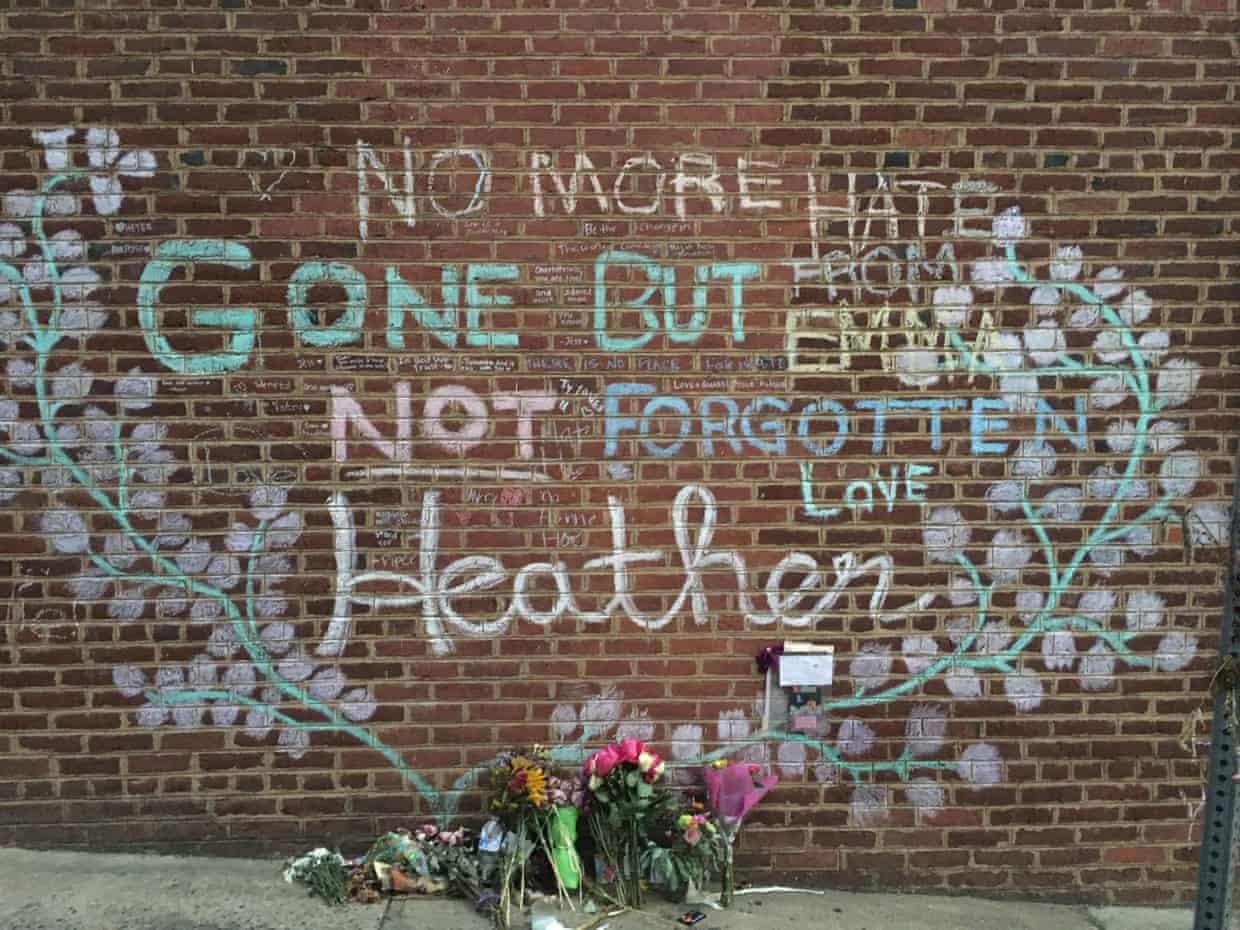
This is Trump pandering to his base: white supremacists who only got a mild scolding whilst carrying torches to preserve their racist history, who were called good people even as they carried swastikas alongside the Confederate flag and killed a woman brave enough to stand against their bigotry.

This is Trump attacking people who are critical of him, labeling them as other and as others they are bad. He is separating himself and his base from the others, dividing an already perilously partisan country. Puerto Rico needs help, it needs resources and funds from the government to help begin rebuilding, and not a slipshod excuse for a relief effort enmeshed in racially charged language.

Trump and his administration claim that relief efforts are well underway. That is simply not the case. Citizens of Puerto Rico, along with the mayor, have criticized the president by delaying reconstruction and rescue efforts, and failing to successfully meet the needs of the island’s inhabitants.

Mayor Carmen Yulin Cruz may have borne the brunt of Trump’s lambasting, but she is far from backing down from the fight to secure the safety of her citizens. Trump will once spend his weekend away from the White House, golfing, and Cruz continues to be at the forefront of the relief efforts, working to make sure that citizens of San Juan are safe and secure. She is the woman at the forefront of the struggle for resources, demonstrating what good leadership is. Trump’s response to Puerto Rico will become his legacy, on top of the racist, sexist, xenophobic and divisive policies that will mark his first nine months of office. Today one only needs to look to women to see what true leadership is like.

To help the citizens of Puerto Rico, consider donating or volunteering your time to these organizations: Time.com

Bustle also has a list of organizations that are working to help women impacted by Hurricane Maria as well.

(Photo Credit: Inverse)

Mexico City: The femicide of earthquake and the feminism of recovery

On September 19, 2017, Mexico City was upturned by a powerful earthquake. Reports suggest that the quake killed 330 people nationwide. In Mexico City, 198 people lost their lives. Of the 198, 127 were women, 71 were men. This is the altogether predictable and planned mathematics of earthquakes, and of “natural disasters”. As with human stampedes, earthquakes have a morbid gender ratio, during the event and after.

Who are the women who died? The earthquake struck at 1:14 in the afternoon. Thirty-four buildings collapsed. Many of them were apartment buildings. According to Mexican sociologist Patricio Solis, the reason for the preponderance of women among the dead is straightforward: “the segregation of women and of gender roles.” First, many apartments were destroyed, and in the early afternoon, the residents were housewives and domestic workers. Second, a major garment sweatshop building collapsed, and its workers were almost all women. Third, a school collapsed, and its workers were predominantly women.

None of this is new. In the 1985 Mexico City earthquake, textile “factories” collapsed, and women workers perished. The factory building that collapsed this time had survived the 1985 earthquake. It was one of the few. It was well known to the authorities. It was well known that hundreds of women, many of them undocumented, worked for criminally low wages there. It was well known that the passageways and stairs were too narrow to accommodate everyone, should the need arise. One newspaper called the collapse and deaths “industrial homicide” and “state crime”. They should have included “industrial femicide” among the charges. Thus far, the government has remained silent.

None of this is new. A study published in 2007 considered “natural disasters” in 141 countries from 1981 to 2002: “We find, first, that natural disasters lower the life expectancy of women more than that of men. In other words, natural disasters (and their subsequent impact) on average kill more women than men or kill women at an earlier age than men … Second, the stronger the disaster (as approximated by the number of people killed relative to population size), the stronger this effect on the gender gap in life expectancy. That is, major calamities lead to more severe impacts on female life expectancy (relative to that of males) than do smaller disasters. Third, the higher women’s socioeconomic status, the weaker is this effect on the gender gap in life expectancy. Taken together our results show that it is the socially constructed gender-specific vulnerability of females built into everyday socioeconomic patterns that lead to the relatively higher female disaster mortality rates compared to men.”

In 2000, the Pan American Health Organization studied the increased and mass produced vulnerability of women and its toll in natural disasters and disaster relief. In 2002, the World Health Organization did as well. In 2005, Oxfam reported on the tsunami’s impact on women. And the list goes on. There is no surprise in the gender of earthquake mortality rates. We were told for over a decade, and we did nothing. We did less than nothing. We built more unsafe workspaces, and we segregated the working day ever more fiercely. We wear the dead in the filaments of our clothing.

After the buildings collapsed, women from across Mexico rushed to the streets of Mexico City and, in many parts, led the rescue efforts, searching for loved ones and strangers in the rubble. Self-described feminist brigades rushed to the factory in the Colonia Obrera. As Mar Cruz explained, “The people in this factory are women, and they are immigrant women in a country where they are very much discriminated against, in a country that doesn’t care much about them. Knowing the treatment that they face in the factories, it was up to us as feminists. We are women defending women. We have demanded our right to defend our female comrades and their human rights.” Dominique Draco added, “We are here as feminists because we are fed up with being murdered. Femicide is one way of killing us, but this is also a way of killing us: in a collapsed building that doesn’t have proper working conditions.”


(Photo Credit: Animal Politico/Manu Ureste)

In jails and schools across the United States, children suffer solitary confinement

The isolation cell in the juvenile pod at Onondaga County Justice Center

Across the United States, children in elementary schools are being placed in what are called seclusion rooms, a euphemism for solitary confinement. Across the United States, children in juvenile detention are also regularly placed in solitary confinement. Recently a parent in Phoenix, Arizona, expressed dismay at a “seclusion room” in her son’s elementary school. At the same time, in upstate New York, the Onondaga County Legislature voted unanimously to ban youth solitary confinement across the county criminal justice system. While the decision of the Onondaga County board is welcome news, it came as the result of years of organizing from civic and community organizations. Why are we so comfortable with dumping children into boxes, and who are we, who do we become, if we continue to let the practice continue and become every day more normal?

The Phoenix story is both straightforward and bent. Stephanie Vasquez picked a bilingual language immersion school with a good academic reputation for her son. One day, while taking her son to his classroom, she noticed a child, sitting in a windowless room, or closet, that was partially painted black, and had only a desk and chair. Stephanie Vasquez had worked for years as a middle school teacher and then worked as a volunteer teacher in a local women’s prison, and so she recognized the scene: “I was a little taken aback at first. Psychologically, I can only imagine what it does to a young child. It’s solitary confinement, just on a child level … The school-to-prison pipeline is a real thing to me. Having been a teacher for eight years, and then going to Perryville — the correlations between the two are eerie.”

Stephanie Vasquez asked the school about the space, and she was referred to their website, where she learned that those punished for “disruptive behavior” are sent to the room for a maximum of 15 minutes, to which Vasquez responds, “I don’t think it should happen at all … How long should they really even be in a confined black space? Probably never.”

It’s eerie … and altogether commonplace.

The Onondaga County Justice Center opened in 1995, and from its inception to today, the County has described the jail as a “state-of-the-art” facility. Community activists have differed with that description. They pointed to the agonizing death of Chuneice Patterson, in 2009.

Last year, the New York Civil Liberties Union and Legal Services of Central New York filed a suit against the Onondaga County Sheriff’s Office practice of placing 16- and 17-year-olds in solitary confinement at the Justice Center.  They charged that between October 2015 and August 2016, the Onondaga County Justice Center dumped 80 teens, mostly youth of color, into solitary confinement. In January, the civil rights division of the United States Department of Justice gave formal support to that lawsuit. In February 2017, a Federal judge ordered a halt to the practice. In June, the New York Civil Liberties Union and Legal Services of Central New York arrived at a settlement with the Onondaga County Sheriff’s Office, and in September, the Legislature voted unanimously to ban the practice.

Why does it take so much time and energy to stop torturing children? Stephanie Vasquez saw a child in a closet and knew it was solitary confinement. Others saw “the box” at Onondaga and knew it was a cage. Stephanie Vasquez knew children were being treated as prisoners; and others knew child prisoners were being treated as animals; and the sequence of alchemical transmutation continues straight to hell. In both Arizona and New York, the specific institutions claim to be state-of-the-art, and they are. They were designed by the best in the field. What does that say about our art? Where is the art in dumping children into closets, boxes, and cages? How long should a child be in a confined black space? Never.

Those in isolation are allowed one hour a day in this `recreation’ space.


(Photo Credits: Syracuse.com)

Scotland: 400 children tortured, buried in unmarked mass graves, and no crime was committed

Inside the orphanage

From 1864 to 1981, children were sent to the Smyllum Park Orphanage, in Lanarkshire, Scotland, where they were routinely tortured, sexually abused, and then dumped into unmarked graves. The orphanage was run by the Daughters of Charity of Saint Vincent DePaul. The sisters who died received proper funerals, complete gravesite and headstone. Close to 12,000 children stayed, and suffered, in the Smyllum Park Orphanage. In 2003, two survivors, Frank Docherty and Jim Kane, found what they thought might be a mass grave of Smyllum. They pushed the Daughters of Charity for some answers. In 2004, the order responded that they thought 120 children had died in the orphanage. Frank Docherty and Jim Kane suspected those figures were low. They continued to push. Earlier this year, both Frank Docherty and Jim Kane died. This past Sunday, the BBC and Scotland’s Sunday Post published the results of a joint investigation, and they claimed over 400 children are buried in that gravesite. As of Tuesday, the police have said that there was no evidence of criminal activity, but they will continue to investigate any allegations. If the activity was not criminal, what then was it? Ordinary?

In 2013, Andi Lavery founded White Flowers Alba, a group that advocating for Smyllum Park Orphanage survivors. After reading through the death certificates gathered by the reporters, Lavery said, “Why should they be dying from starvation? Why should they be dying from treatable infections? Why should they be dying from beatings?” These are not “rhetorical” questions. Andi Lavery, and others, want answers.

Marie Peachey is now 54 years old. She, her brother Samuel and sister Brenda suffered the orphanage from 1964 and 1969. Marie Peachey has suffered ever since. In 1997, she went to the police with allegations of abuse, but they said it had happened too long before. In 2003, she tried to sue the Daughters of Charity, but was told, again, that the events had happened to distantly in the past. In 1998, Marie Peachey was diagnosed with post-traumatic stress disorder. Today she says, “It is awful to think of all of those poor children buried and forgotten. We have endured years and years of secrets and lies about this and everything else that went on at Smyllum. The truth must come out. It was a horrible being there. I was routinely beaten.”

Theresa Tolmie-McGrane entered the Smyllum Park Orphanages in 1968. She was six years old: “Every child was beaten, punished, locked in a dark room, made to eat their own vomit and I would say that most of us had our mouths rinsed out with carbolic soap.” Theresa Tolmie-McGrane describes sexual abuse, physical violence and systematic psychological torture. One nun in particular tried to break the girl-child down: “She almost made it such that I didn’t get to university. She did everything she could to sabotage. I’ve never met someone who tried to destroy another person in such a systematic way. Thank God she didn’t succeed.” Theresa Tolmie-McGrane left the orphanage at 17, went to university, and today is a practicing psychologist in Norway.

The Scottish Child Abuse Inquiry is investigating the case. From members of government to the Church and beyond, everyone is shocked at the tragedy. For decades, survivors have told their stories, to no avail. For decades, family relatives of those children demanded answers, to no avail. To their dying days, Frank Docherty and Jim Kane demanded what the White Flowers Alba demand: accountability, redress, and the restoration of dignity. Frank Docherty and Jim Kane died without seeing any of that.

This story hearkens to the story of Tuam, in Ireland, where infants and children born in the institution were ‘buried’ in septic tanks. From Tuam to Lanarkshire and beyond, people ask, “Who throws dead children into an unmarked grave?” Who? Everyone. In the process of modern `nation building’, some bodies have value and others have less than none and end up in trash heaps, septic tanks, unmarked graves. There was is no secret and there is no surprise here. The activity was not criminal, it was altogether ordinary.


(Photo Credit: Sunday Post)

Reform of the labor code in France threatens increased precarity for women


In France, a tumultuous election season has brought to power a new president Emmanuel Macron and a new majority in the parliament from his new party. During his campaign, he presented himself to be neither from the left nor for the right therefore creating the image of the impartial candidate the best capable to reform the country and restore the place of France as a competitive and innovative country. In the communication era, language is everything. The master words were innovation and liberation. He wanted to place the beginning of his presidency under the aegis of decisiveness to mark his difference with his predecessor Francois Hollande accused of being a weak president. As Ministers of the Economy and Labor, respectively, Emmanuel Macron and Myriam El Khomri passed the first bills that changed the balance of power between unions and employers in France.

France has a labor code in which various labor protections negotiated by workers and gained since its inception in 1910 have been registered as laws. Over the past decades the labor code has been presented, especially by the MEDEF (the French Employer Federation), as a heavy book getting heavier making it proportionally responsible for a “heavy” unemployment rate. Although some simplifications of the code could be necessary, the direct link between unemployment and the labor code has never been established. Nonetheless, Emmanuel Macron made reform of the labor code one of his priorities, a way “to liberate France’s energies.” Did his election give him a clear mandate for such drastic action? No, especially since many voted for him in the second round of the election to bar the extreme right wing candidate, Marine Le Pen, from becoming president.

The question of high unemployment rate remained central to the presidential campaign. The idea that the employers were afraid to hire because it was too difficult to fire employees because of the labor code was constantly hammered. More recently, the language of flexibility in labor laws has been associated with the notion of labor well-being. Once again the variable of adjustment in profit making is labor.

We should question the position of women’s employment as it is a magnifier of the inequalities in the distribution of work in a society.

Before the summer a bill was passed to allow this reform to be enacted by decrees. Then, the government of Edouard Philippe (Macron’s Prime Minister) with his Minister of Labor and Unemployment, Muriel Pénicaud, started a three-months-negotiation process with every union including the French Employer Federation MEDEF. Although unions appreciated the process, some were wary at the start that the liberal imprint of this government will force negative transformations of the labor code. The general secretary of Force Ouvrière, (Workers’ Force), who had opposed the previous labor law of the previous government noticed that this government had a real desire to negotiate with the unions. Was it a clever move to lower resistance or a sincere desire for dialogue? In all these negotiations, women’s employment conditions were not taken directly into account.

Because France has a high rate of women fully employed compared to neighboring countries that have moved to more partial time work system, will this reform level down women’s employment? This reform claims to bring flexi-security to the labor market, will it fulfill the promise of the second term for women workers?

In the 1990s, when Germany underwent an even more radical reform of its labor laws, putting “business first” switched most of the burden of social contributions to the employees as opposed to the employers.  The official justification was to reduce the unemployment rate. Germany did that with the creation of 4 million jobs but without changing the number of hours worked, 58 billion hours. The reform created “minijobs”, part time work with lower wages and no social protection. We have seen this in the United States. As a result, women have been over-represented in these jobs, increasing gendered precarity in Germany. In contract, France has fewer working poor than Germany today, while Germany boasts one of the highest pay gaps between women and men is Europe today.

French officials claim that they will not implement exactly the same measures as in Germany, but the extension of the use of fixed-term contracts as opposed to permanent contracts belongs to the same thinking. Women are overrepresented in this type of contracts. This means the possible renegotiation of maternity leave, days off for sick children, work conditions for pregnant women, to name but a few.

The reform with its clear commitment to put “business first” rejects the Nordic model which insists on “fair” social and gendered negotiations. When choices have to be made between profit making and the well-being of women employees, women lose.

At the same time, the reform threatens to reduce the importance of currently functioning committees created to protect women’s rights against gender disparity and harassment in the workplace. The reform cuts the financing of the councils that monitor the progress made by companies in reducing inequalities between women and men.  Additionally, the cap in the labor court put on compensation for illegal layoffs undermines the power of the labor court to protect workers against abusive employers’ behaviors.

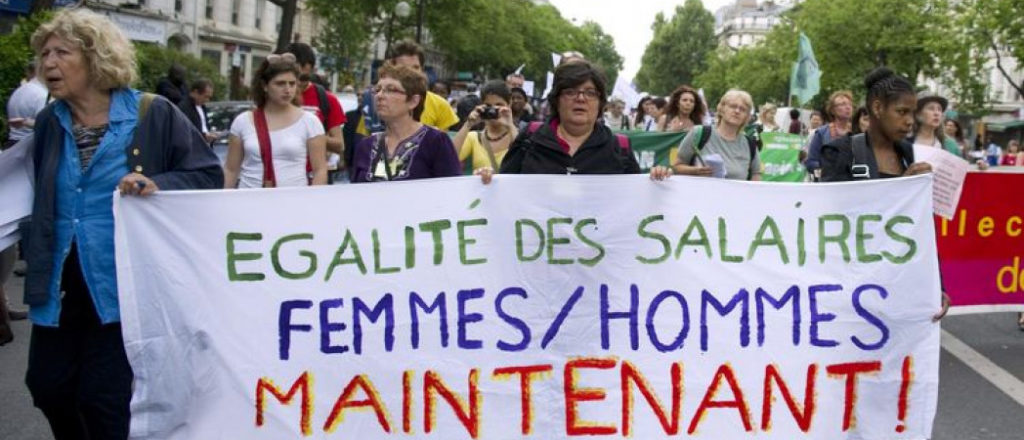
Fifty feminist organizations called on their members to join the September 12th mass demonstrations of against the labor code reforms. They emphasized that there have been three deceptive actions from this government for women’s rights. First candidate Macron promised to keep a full Minister of Women’s Rights in his administration with the same level of budget as before. The Minister has been downsized to a State Secretariat. Second the Minister budget was cut by 27%. The third deception is a “labor code reform” that threaten increased precarity for women who are already make up the majority of those employed in lower wage jobs. They demand that the president Macron respects his engagement toward women’s rights.


(Photo Credit 1; Le Monde) (Photo Credit 2: L’Humanité / Miguel Medina / AFP)