Incarcerated women like myself practice Hygge on a daily basis

Since our slightly less urbane and definitely not gluten-free ancestors performed magic by discovering fire, the desire to be cozy has become innate for far more than just survival. I had no idea the love of coziness had a name: all I knew was that it was one of my reasons for existence, and there was nothing better after a long day than to don my favorite sweatsuit, taking care to look as lumpen, misshapen, and questionably inhuman as possible. I would heat up a fluffy blanket in the drier, grab a hot beverage of choice, and delve into whatever I was currently reading along with my mother, who was an avid reader as well. Apparently a love of reading is hereditary. Oddly enough, I only discovered the sense of comfort and well-being I adore so much has a name, Hygge, while in prison, which I learned reading an article in Time magazine. Thanks, Time!

After reading the article, I quickly asked a loved one to order me a copy of “The Little Book of Hygge” by Meik Wiking– the CEO of The Happiness Research Institute based in Copenhagen. I was charmed by the book’s enriching techniques and suggestions as to how to make your life more “hyggeligt”; areas included lighting, ‘togetherness’ and socialization, food and drink, clothing, and the furnishings of your home. What inspired me the most is how incarcerated women like myself practice Hygge on a daily basis, in spite of our oppressive, restrictive environment.

Hygge practices are highly individualized and unique for everyone, and behind prison walls they are as well. Some of my favorite Hygge practices mirror what brought me comfort at home. When I’m not busy, I still love to change into my favorite sweatsuit and crawl into bed with a book, and I enjoy listening to music, effectively tuning out my environment. Every night to wash off the sweat of the day I take a long, sauna-like shower; as the steam envelops me and the hot water massages my muscles, I am able to relax and unwind, let go of whatever worries and emotions have been gnawing at me throughout the day.

I’ve observed, fascinated, as my peers knit luxurious scarf and hat sets, blankets, mittens and gloves, and, my personal favorite, socks, that appear professionally made. Not only is wrapping yourself in these soft, woolen, colorful items comforting and the definition of Hygge, but the very act of knitting and crocheting is, as well. I’m sure I would find it very soothing if I had the patience.

In addition to our artistic creativity not being stultified, we women prisoners have proven ingenious in regards to our cooking abilities. What could be more Hygge than prison-made macaroni and cheese, lasagna, spaghetti and meatballs, stromboli, chicken stir fry, or cheesecake? Maybe a lot of things, but still.

Though activists like myself may be ardent in our belief that an environment such as prison is one that no human being deserves to be confined in, America continues to incarcerate more people than any other country, making us a Prison Nation. Human beings having the uncanny gift of resilience and adaptation, many of us incarcerated individuals adapt to the situations we are in, and try to make the best of them. However, no amount of positivity and humanity we prisoners bring to the penal system, no amount of “reform” that lawmakers vow but never quite seem to put into action, will ever mitigate the Draconian, cruel, backwards mentality that human beings are disposable and should be thrown away when we make bad choices instead of teaching us to make better ones.

Comfort can be a great thing– but Noam Chomsky warned us about its illusions.

I remain fully aware of the life I helped to take while strumming my guitar, watching a movie, playing chess, or participating in sports here in prison: most days the guilt threatens to swallow me whole. I’m sure many of my peers experience similar feelings of remorse. Prison isn’t filled with monsters. It’s filled with people like you and me, who have made terrible decisions. It isn’t an ugly place; you can find beauty and compassion if you know where to look. If you are ever in Muncy, Pennsylvania, I’ll gladly show you.


(Photo Credit: Ms. Magazine)

Decolonizing Education: Life of Freedom, Light of Liberation

Black girls are criminalized in school for the way they wear their hair, and these oppressive policies are just one way the colonized education system is intertwined with the criminal justice system. On May 15th2017, two Black girls who attend Malden Charter School in Boston were given detention, pulled from their sports teams, and told they could not go to prom because of wearing box braids to school. The dress code policy at their school says that “students cannot wear drastic or unnatural hair colors or styles such as shaved lines or shaved sides or have a hairstyle that could be distracting to other students (extra-long hair or hair more than 2 inches in thickness or height is not allowed). This means no coloring, dying, lightening (sun-in) or streaking of any sort. Hair extensions are not allowed.” School administrators explain that the hair policy in the dress code aims to foster a culture of education rather than fashion or materialism. But “hair arrangement is a [historically significant] mode of African art,” so why are students being told to reject this part of their culture? At the same time, several schools in South Africa have put restrictions on students with natural hair. For example, the Pretoria High School for Girls told their students to “fix” their hair if they were wearing it naturally. There were also restrictions on corn rows, dreadlocks, and loose braids. This led to school protests in 2016 by students claiming that administrators did not want to accept the fact that they were African. The natural rules were finally suspended in this one high school, but only after a protest and a petition that had over 25,000 signatures.

Across the United States and around the globe, young girls face restriction of education because of oppressive western standards of beauty used as the ideals in schools. These policies are proof that colonialism is driving our education system and criminalizing the identities of non-white students. The colonized nature of our education system contributes directly to the school-to-prison pipeline. As more students are suspended or expelled because of oppressive policies, the more likely they are to come in contact with the criminal justice system. A report done by the National Women’s Law Center that focused on public schools in Washington DC found that Black girls are 20.8 times more likely than White girls to be suspended. Additionally, students suspended or expelled for a discretionary violation are three times more likely to be in contact with the criminal justice system within the year. Colonialism and racism lie at the core of certain school policies, which in turn pushes kids out of school and into prison.

It is easy to claim that education is a tool for liberation because it provides limitless opportunities to individuals. But what standards are expected to be met in order to achieve those opportunities? We must begin restructuring our education system as a way to decolonize our institutions in order to combat mass incarceration plaguing women across the globe. This restructuring needs to reevaluate both school policies and curriculum ensuring that history is not taught selectively, but instead is inclusive of all identities. Decolonization involves looking at formal systems of education and questioning why we accept them as the universal standard for academia. Why are school systems aiming to standardize the way students thrive as intellectual beings instead of creating interdependence and collaboration among several forms of intelligence? Decolonizing our systems requires us to challenge our notions of what we deem academic. As we do this we will see how art-based education has been written off as an “extra-curricular” rather than essential part of education. Arts-based education teaches students how to connect with theories using emotions and creativity. Furthermore, arts-based education, like storytelling and craft are at the core of certain non-western cultures. When thinking of decolonizing our education in order to decriminalize our society, remember that people connect through words and feelings more than theories and figures. Envisioning decolonized institutions where the diverse systems of knowledge that students bring to classroom is celebrated and not criminalized is essential to thinking about steps toward collective liberation, so I leave you with my own attempt:

Light of Freedom, Light of Liberation

Ajetha Nadanasabesan

To be unfree
is to be big,
in a tragic,
tragic way
that makes us
bask in the grief
of the pink
morning light.

this light reminds
us of the mourning
of another day where
soles on the black
pavement can quickly
be rearranged to be
black souls on the
pavement.

To be unfree
coerces sense of self
to grow large because
the panic of the red
white and blue
lights is more
terrifying that
the black shadows
of hurricane.

To be liberated
is to be small
in a special,
special way
that makes us
feel connected
to the vast indigo
evening light.

this light reminds us
that the mourning
will still come
but like the way
the salt kisses
the tide,
it’ll be restorative,
it’ll be collective,
it’ll be larger than

self.


(Photo Credit: Newsweek / Max Rossi / Reuters)

My first Feminism lesson

My first Feminism lesson:

So in the 80’s there was a famous Soweto Rape Gang called “Jackrollers”. They would go to discos’s parties and take women at gun point to sleep with them without their consent. So this particular day at my home which was a Shebeen run by mother, three women came running hiding themselves under the beds and behind wardrobes. My mother rushed to the door and I was right behind her. She was greeted by a gun from one of the Jackrollers who was demanding her to bring out the women that ran into the house. My mother’s response was NO.

The gang leader asked if my mom was willing to die for the women she did not know and the response from that Nkwanyana queen was .” It is unfortunate that they had to run into this house because even if I do not know them, but as a mother I am not willing to give them over to you just because you have a gun. Maybe if they went next door but they chose this house and that is unfortunate for you because your gun pointing at me will not let me hand them over to you”.

I was scared to death but later became strong after seeing this old woman who was standing up against a gang of rapists that have held the whole of Soweto at ransom.

For me that was feminism in action given by one and only Queen of my heart 90 years old Audrey Babhekile Nkwanyana- Magwaza.

This lesson will never go away, it has always been in my mind but most importantly in my heart.


(Photo Credit: Brand South Africa)

Australia, England, the United States build a global place of torture for migrant children: Tear it down!

Recently the war on children intensified to formally include torture. Australia kidnapped a 17-year-old boy clearly at risk of suicide and dumped him and his mother in Nauru. England faces a law suit for its “catastrophic failure” when it dumped a 16-year-old Vietnamese survivor of labor trafficking into immigration detention, Morton Hall Immigration Removal Centre, where he was sexually assaulted. There was no catastrophic failure. There was hostile environment hatred and torture. This week, the United States announced that it would separate immigrant asylum seeking parents and children at the border. According to reports today, the government plans on sending the children to military bases, mostly in Texas. As two psychologists noted today, “The practice of separating families at the border is morally reprehensible and — based on the science — goes against international and U.S. law, because the suffering it inflicts constitutes torture of children.” One shouldn’t need a psychologist to know that the detention of children is bad for them. One shouldn’t need a psychologist or a pediatrician. One need only be human.

Fatemah and her 17-year-old son, Hamid, have been on Nauru for more than five years. Fatemah needs critical heart surgery. She has been waiting 18 months for the surgery. She refused to leave her son behind. Finally, two months ago, both were transferred to Taiwan. While in Taiwan, Hamid was examined. He suffers severe mental illness “caused and exacerbated by his detention.” Against all doctors’ advice, on Tuesday, before sunrise, Fatemah and Hamid were returned to Nauru.

Fatemah described the situation: “I’m a single mother of a 17 year old son. For 17 years I have been both mother and father to him. I fled from violations and insecurity caused by the Iranian government, but I never imagined that me and my son’s spirt would be wounded so deeply at a place of torture made by the Australian government … Look at what the Australian government has done to us! My son says to me, `Let’s attempt suicide together’ … He believes the only way to freedom is in death. I have sympathy for all the mothers and their children who live in Nauru. We are preyed on and our lives are subjected to cruelty … I don’t know what to say about the way the Australian government has treated us. I have been officially accepted as a refugee but still live in a tent. If I was imprisoned as a criminal in a third world country, that government would provide me with basic facilities … I only have these questions for you. Are you treating Australian murderers, rapists and smugglers the way you treat us? Have you kept them in 50 degree heat in a tent where water is dripping from the roof? … How many more people will be sacrificed before the Australian government realises the way it treats us is a crime?”

In England, in 2017, 44 children were detained. Of the 44, 20 were 11 or younger. Of the 44 children, 11 were deported: “The other 33 were put through the ordeal of imprisonment without any `departure’ at the end of it.” That’s the current overall situation. Last week, the story of H, a Vietnamese youth, emerged. At the age of 16, H was trafficked to work on a cannabis farm, in England. He was abused, violated, deeply hurt. Finally he was arrested, charged, convicted, sent to a young offenders’ institution and then on to Morton Hall, where, in 2016, he was sexually assaulted by his cell mate. The staff at Morton Hall did nothing to assist or support H, nor did they investigate. Only when attorneys began calling, recently, did Morton Hall begin to begin an internal inquiry.

H explains his situation: “My time in immigration detention was awful. After this incident, I was really paranoid that other detainees would hurt me all of the time. I felt scared all the time and I found it very difficult to sleep or eat. Morton Hall staff do not protect the detainees. Although terrible things have happened to me in the past, the effect of immigration detention made this even worse.”

This week, the United States announced it would intensify and increase the separation of immigrant children and parents. The government claims that, since October 1,  700 or so children were separated from their parents. Recently, the numbers have risen, and the State promises a steep increase. Mirian, 29 years old, and her 18-month-old child fled violence in Honduras. She reached the border, hoping for asylum, and her 18-month-old baby was taken away: “I had no idea that I would be separated from my child for seeking help. I am so anxious to be reunited with him.”

This is our world: a place of torture where nation-States take children from their parents and dump both in separate hell holes, all in the name of national integrity. The policies are cruel and criminal. When will we stop the torture of the innocents? Who will pay for the damage done to their psyches and souls? How many more will be sacrificed?


(Photo Credit: New York Times / Hope Hall / ACLU)

The Hidden Victims of the Medicaid Work Requirements: The Native Population

The Trump administrationsignaled in January that they would allow states to impose Medicaid work requirements for any able-bodied individual who can work. The administration has approved such waivers to implement work requirements for Medicaid in three states; nearly ten other states are seeking such requirements. Despite having devastating effects on those in poverty who rely on Medicaid to survive, there is another group of individuals that Trump has targeted with work requirements; the native population.

The administration has attempted to reclassify native tribes as a race rather than separate governments, and exempting them from Medicaid work rules would be illegal preferential treatments. The Health and Human Services Department has argued that “such an exemption would raise constitutional and federal civil rights law concerns.”

Seema Verma, administrator for the Centers for Medicare and Medicaid Services confirmed in January that the HHS believes that tribes are a race and not a separate sovereign government, thus not exempting them from Medicaid work rules.

The decisionignores the centuries old treaties that have been in place since the times of President George Washington, reaffirmed by both Republican and Democratic presidents like Clinton, George W. Bush, and President Obama. Constitutionally, native populations are protected as separate nations. Tribes also maintained that they have precedent when it comes to health care exceptions, as Native Americans do not have to pay penalties for not having health coverage under the Affordable Care Act’s individual mandate.

Mary Smith, who was acting head of the Indian Health Service during Obama’s administration and a member of the Cherokee nation, fired back, “The United States has a legal responsibility to provide health care to Native Americans. It’s the largest prepaid health system in the world—they’ve paid through land and massacres—and now you’re going to take away health care and add a work requirement?”

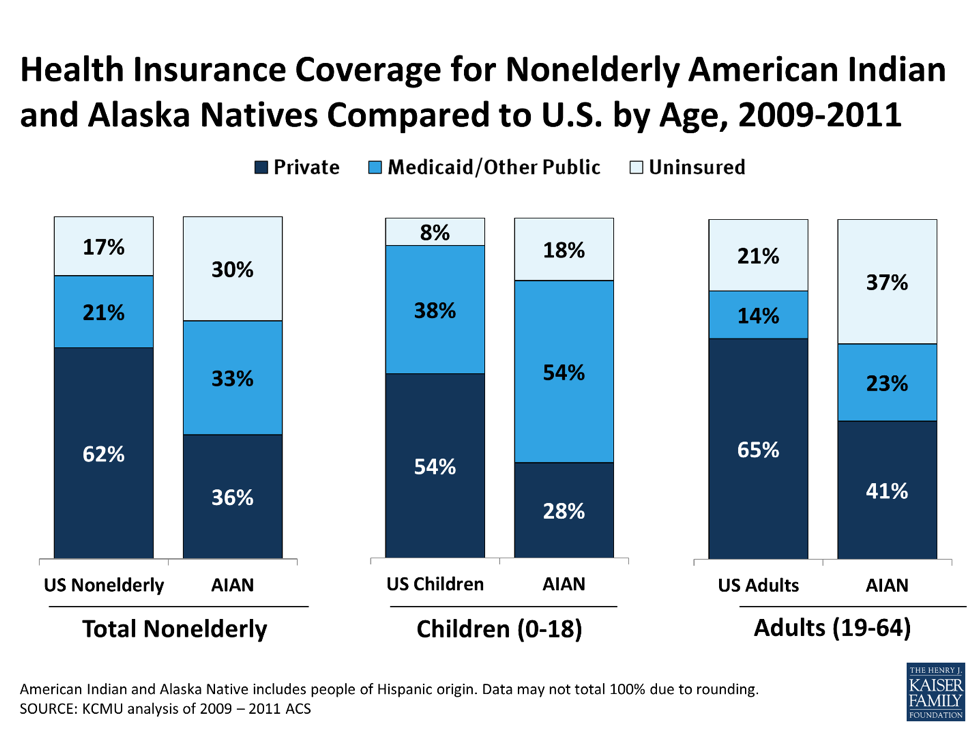
The Chair of the Tribal Technical Advisory Group, tribal leader W. Ron Allen,warned that without the exemption, “the Indian health system will not survive.” Most of the indigenous populations rely heavily on Medicaid resources, as unemployment and poverty on reservations are nearly three times the nation’s average (as high as 12% in 2016) since jobs are scarce. Lower federal spending on the Indian Health Service has also made many indigenous peoples reliant on supplemental Medicaid to fill in coverage gaps.

Arkansas, Kentucky, Indiana and ten other states who either have or are asking to impose work requirements on Medicaid recipients, have more than 620,000 Native Americans who could be severely impacted by the requirements. More alarmingly, more states could be heading towards demanding work for continuation of Medicaid insurance. Some states, like Arizona which has asked for permission to exempt Native Americans from their proposed work requirements, could have the exemption rejected by federal officials. With the current administration looking towards full welfare reform, which nearly 3 million Native Americans rely on, it would be disastrous to indigenous groups living on reservations.

Though it is the latest attack on the native population in the country, it is not an isolated one from Trump. Last year’s proposed budget from the White House significantly cut funding from the Indian Health Service (which thankfully didn’t pass). This year, the White House budget proposed eliminating popular initiatives like the decades-old community health representative program, essential for the native community.

Last month, HHS Secretary Alex Azar and Deputy Secretary Eric Hargan skipped HHS’ annual budget consultation with tribal leaders in Washington. Last year, then-HHS Secretary Tom Price joined in the meeting. Azar canceled last minute, and Hargan fell ill, leaving Associate Deputy Secretary Laura Caliguri to participate in their place.

The HHS’ civil rights office—while rejecting the Medicaid exemption—simultaneously announced new protections sought by conservative religious groups. The new protections would give health care workers who don’t want to provide abortion care, treat transgender patients seeking to transition or provide other services, a license to discriminateunder religious or moral grounds.

Work requirements are only the beginning of the devastating effects an entire overhaul the welfare state would have on Native Americans. Having already shouldered the burden of America’s colonizing spirit, they will suffer from losing any protections that the country has given back in a pitiful act of reparations.

Women as villains (Part 2)

When I was 13, I entered a toxic, unhealthy relationship with a military man years my senior. Unsophisticated and inexperienced in relationships and insecure, I misinterpreted the red flags of an abuser to be signs of his love for me. When my mother learned of our relationship, she tried to do her duty as my mom, protector, and best friend, because she loved me unconditionally and without reserve. Her attempts to end the relationship prompted us to eventually consider murder as our only way to remain together.  Even then, I still was envisioning my mom supporting us at the wedding of our dreams, to demonstrate how naive and out of touch with the gravity of the situation I was at the time.

Afterwards, it was a media frenzy, and I was portrayed to be more of a monster than my codefendant was, in spite of the fact that he was the one who committed the physical act. The media devoured the salacious nature of our relationship, and played up every juicy detail they could, taking every angle. They didn’t care that a tragedy had occurred: a mother’s life was taken senselessly, for no reason; a family had been torn apart, was devastated and would never be the same. A father had suddenly lost both his wife and daughter, a brother his sister and mother in one fell swoop. Another family lost their son and brother as well. The media didn’t care to ask what drove a normal, healthy, bright young girl to help murder her own mother. They only wanted to sensationalize and exploit a tragedy to sell papers, re-victimize a victimized family.

So where does the woman-blaming theme come into play in my case? Both the prosecution and the media — and even my (female) judge — took the stance that I alone was the puppet master, that I manipulated my unsuspecting codefendant into committing murder. That he was so blinded by his love for me, so wrapped up by my lies, feminine guiles and irresistible powers of seduction that he was powerless against me: putty in my hands. My intellect was used against me, my articulation and eloquence thrown in my face; even my opinions and ability to express my views on religious, social, and political issues – positive attributes, now signs of witchcraft, evidence of guilt. If this would have happened a few hundred years ago, I would have gone up in flames.

I took full accountability and ownership for my role in my mother’s murder. My mom, my family deserve that, and I couldn’t live with myself without doing the right thing. What offended me wasn’t my unconscionable actions being scrutinized in the public eye. What bothered me was the media not viewing my codefendant and me in an equal light, not seeing our case for what it was. My codefendant and I were equally responsible for my mother’s death. We both had choices, decisions, and we made the wrong ones. To pretend now that we weren’t responsible, culpable, or had a choice is cowardly and dishonest.

I would do anything to bring my mom back, but I can’t. So now it is up to me to be truthful about how things escalated to that point, educate society about such tragedies, try to prevent other young women from entering abusive relationships like the one I was in, as they all end in tragedy and disaster. It is incumbent on me to make my mother proud, to let her passing not have been in vain and make the rest of my family proud as well. I’m determined to show society how much I, an “evil” woman, have changed.

I’m surrounded by other ‘nasty,’ ‘evil’ women like myself every day, whose situations may differ greatly from my own, though our stories are the same. We’ve all been labeled the marked, untouchable, scorned woman by society for what we’ve done, or, in some cases, failed to do. The tragedy remains to be, in my opinion, a lack of understanding. If the experts, judge, and prosecutors in my case would have tried to understand the deep-rooted insecurities from my physical flaws I was dealing with as the time and the dynamics of my relationship with my ex-boyfriend, they could have gained the insight to apply to other teenage girls in similar situations to myself, but they didn’t. In regards to my peers serving life for killing their newborn babies, as an example, if their prosecutors would have made the effort to understand the pressures each of them were under in their individual situations, fear for some, the fact it was an accident and they didn’t know what do for others. Once again, the prosecutors didn’t. Like me, these women were labeled with disgust, scorn, out of a lack and refusal to try to understand, and they were hastily thrown away like used condoms. Years later, many of them have proven they are deserving of second chances, though in my opinion, that isn’t something they should have to prove. Generally, justice should assume people are capable of change and rehabilitation; only in the absolute worst of the worst, rarest of cases should it not, and only for the safety of community and society.

The sentence of 35 years to life that I accepted at such a young age sends society the message that I, and others like me, are incapable of change, disposable and not worth rehabilitating while still vital. This is a narrative I’ve already defied and will continue to prove wrong for the rest of my life. Never mind me; what message does it send to our youth? ‘If you make a terrible decision, we the state will throw your life away, you will no longer be worth anything.’ Children, especially teenagers, need to feel supported. The knowledge, even if it is subconscious, that they are disposable to the state will reinforce what negative feelings about themselves they have.

I definitely have the propensity to be a ‘nasty,’ ‘evil’ woman, a royal bitch. I own it. Every other woman I know has that same proclivity as well, as does every man to act in the same way, and every person regardless of the gender or sex they identify as. Good and evil exist in us all, but it’s up to each of us to choose what kind of individuals we want to be. How we want to treat fellow humans is a decision me must make ourselves. Don’t allow your assigned gender or the popular culture to dictate how you treat others. Think for yourself; do what feels rights. Write your own narrative. Be nasty.


(Photo Credit: Ms. Magazine)

Women as villains (Part 1)

Bitch, tramp, slut, whore, witch, skank, home wrecker, tease, prude. These are just a few examples of the plethora of derogatory terms used to describe women. Despite the progress women and feminism have made, there is still a long way to go before gender equality is achieved.

A prevailing theme throughout history, and one that still dominates today, is that of the ‘evil’–or in more 21st century political terms-‘nasty’ woman. I’m no historian, only a lover of history, but I’ve been able to discern the oppressive, patriarchal narrative in early cultures from areas all around the globe. Intrinsic to this belief is that all men are rarely capable of committing atrocities or behaving badly on their own: they are always motivated, inspired, or encouraged by woman, whether that woman is involved in or privy to the man’s plan’s and actions is moot.

Looking at the animal kingdom doesn’t portray women in a more favorable light, either. Konrad Lorenz, a Nobel Prize-Winning ethologist described a behavior common among females in many species of ducks. The female duck runs to the very edge of her partner’s territory with the intent of provoking another duck, and then runs back to her partner, egging him on to fight for her. Talk about instigating!

Take the Biblical story of Adam and Eve in the Garden of Eden, for instance. It’s a prime example of the perceived innocence and blamelessness of the male, being taken advantage of and misled by the corrupt, beguiling female. Poor Adam surely would have never taken a bite of the forbidden fruit and Eve not tempted him into doing so! Their mutinous actions, according to the Bible, resulted in humanity’s sinful nature, in our division from the perfect image of God. In this religious text, the finger of blame is undeniably pointed at Eve for man’s fall from grace. This woman blaming isn’t unique to biblical times.

Today, when women are victimized by rape, the questions are always asked: “what was she wearing?” “Was she alone?” “Was she drinking?” When a woman falls victim to domestic violence and abuse, questions like the following are posed: “Did she provoke him?” “Why didn’t she leave?” “Why didn’t she ask for help?” “Was she cheating?” “How was their relationship othewise?” I’ve often heard men make jokes about how, upon learning of a woman’s unfaithfulness or unsatisfactory cooking or cleaning abilities, she was “asking for it.” Though their comments may be in jest and I can always take a joke, I believe their humor reveals their true sentiments towards women.

When members of society ask these unnecessary questions after a woman is victimized, it perpetrates the illogical, false notion that somehow she was at fault, and that men cannot help or control themselves when in reality they can. The idea that men are enslaved and impotent to their raging hormones and sexual impulses is preposterous: they are sentient, self-controlled human beings who are ultimately responsible for making choices, deciding how to act each and every moment of their lives to the same degree that women are. Men aren’t pigs, animals; slavering, salivating creatures whose simple logic is overridden by the sex organ protruding between their legs. They have the ability to choose to degrade, to objectify, or to respect women, and the importance of that choice should be instilled in them from an early age.

Though men are often considered to be purely sexual beings who can’t control themselves, they often get a pass from society: almost like dogs that hump everything in sight. The behavior may be disgusting and repulsive, but they’re dogs; it’s what they do, so you excuse them.

Women don’t get the pass for being inherently ‘evil’ like the guys tend to. We got burned at the stake centuries ago, accused of practicing witchcraft. We have naked images of ourselves leaked by our vengeful former flames for the world to see on social media. We’re not taken as seriously as men are in positions of power when we deserve to be. When a man commits a crime with a woman, the blame is often put on the woman for corrupting or misleading the man, or the woman is portrayed to be the mastermind of the crime regardless of is she was or not.

I can relate to the latter personally. The feelings of guilt and remorse that haunt me due to my involvement in the mother’s murder will never diminish or fade.


(Photo Credit: Ms. Magazine)

El caso de la “Manada” en España … No es abuso, es violación!

La sentencia que se acaba de hacer pública sobre el caso de la “manada” en España (la violación de cinco jóvenes a una chica de 18 años en los San Fermines de 2016 en Pamplona) ha puesto sobre la mesa importantes y alarmantes cuestiones convirtiéndose en un tema de debate a nivel nacional, que está traspasando nuestras fronteras para desembocar en un NECESARIO debate a nivel internacional.

El código penal vigente en España hasta la fecha “exige” la resistencia CLARA de la víctima para que una violación sea tipificada como tal, manteniendo vivos los más rancios mitos machistas y falsas creencias sobre la violación y la forma en la que es juzgada la conducta de las victimas antes, durante y después de la violación, que han alimentado el inconsciente colectivo de nuestra sociedad durante generaciones. De tal modo que se sigue haciendo recaer sobre la víctima la carga de la prueba “exigiendo” que quede documentada su clara negativa a la conducta pretendida y finalmente ejecutada, asumiendo que si la mujer no expresa un explícito “no” dio así su consentimiento implícito, cuando el único mensaje que todo hombre debería aprender desde la cuna -y los jueces juzgar siguiendo esta premisa-, es que solo cuando una mujer dice “si” explícitamente está otorgando su consentimiento, todo lo demás es un rotundo “no”, ya que de no ser así sería un consentimiento siempre viciado por la explícita o implícita intimidación que posibilita el desequilibrio de poder entre hombres y mujeres en una sociedad patriarcal y machista como la española.

En el comportamiento de la víctima de la “manada” -analizado en base a los 96 segundos de los videos que los violadores compartieron para alardear de su comportamiento con sus “amigos” en clave misógina y que fueron mostrados en la sala del juicio- los jueces concluyen que no se aprecia “violencia o intimidación” de una víctima que se muestra durante todo el tiempo paralizada y manejada por los cinco agresores. Una “intimidación” que los jueces no aprecian y que “necesariamente” ha de estar presente para que los actos fueran catalogados como agresión sexual (violación) y se impusiera la pena de 22 años solicitados por la fiscalía. Siendo finalmente tipificados los comportamientos juzgados como “abuso” (con el voto particular de uno de los jueces defendiendo la absolución de los cinco agresores) y rebajada así la condena a 9 años de prisión a cada uno de los imputados (de los cuales ya han cumplido casi dos años en prisión preventiva y una vez cumplida ¾ partes del tiempo de condena podrán beneficiarse de su incorporación al tercer grado penitenciario, que les permitirá estar hasta 16 horas por día fuera de la prisión en un régimen de semilibertad).

Las reflexiones que se derivan de esta sentencia arengan como nunca hasta ahora la necesidad de una urgente reforma de nuestro código penal, que el Ministro de Justicia ya se ha adelantado a proponer, y ya se ha nombrado la comisión encargada de hacerla efectiva, una comisión que está formada por 20 HOMBRES juristas. Sin duda una decisión muy desafortunada, no solo porque incumple el propio ordenamiento jurídico vigente en este caso la Ley de Igualdad de 2007 que exige la paridad en todas las comisiones y órganos de gobierno, sino porque una vez más muestra como el patriarcado sigue ejerciendo con mano de hierro el poder DE DECISIÓN y de forma específica sobre asuntos que apelan de forma tan sensible al bienestar y la libertad de las mujeres.

Esta sentencia muestra además indiscutiblemente el absoluto desconocimiento de los jueces de la “manada”  (dos hombres y una mujer) y previsiblemente de la mayor parte de la judicatura quienes no reciben formación específica sobre estos temas ni antes ni durante el ejercicio de sus responsabilidades como jueces, de cómo opera el “cuerpo” y la “mente” de una persona ante una situación que amenaza su integridad física, por descontado la psíquica, cuando se siente acorralada por cinco jóvenes en el rincón de un portal, envalentonados por la superioridad numérica y liderados por el que llevando tatuado en su cuerpo “la fuerza del lobo reside en la manada” ejerce de macho alfa indiscutible de la violación múltiple. No nos engañemos la violación no es un acto sexual, es un acto de violencia e intimidación con la que se busca el sometimiento y humillación de las víctimas a través del que el/los agresores obtienen el “placer” de sentirse superiores y poderosos.

Por tanto la violencia contra las mujeres en general y la violencia sexual en  particular nos habla del desequilibrio de poder entre hombres y mujeres en sociedades patriarcales y misóginas en las que las mujeres son relegadas al “segundo sexo” en palabras de Simone de Beauvoir, y cosificadas y objetivizadas para el uso y disfrute del placer masculino. Y mientras las sociedades en su conjunto no se comprometan con una rotunda transformación de su modelo de valores y creencias a través de una verdadera coeducación en la igualdad en la que los contenidos sobre sexualidad y genero estén incorporados a los planes de estudio desde la educación infantil, y siguiendo esta estela toda la sociedad se haga cómplice de este cambio, las mujeres seguiremos siendo víctimas de violaciones y en los juzgados las mujeres serán una vez más revictimizadas, cuestionándose y juzgándose nuestros comportamientos mientras nuestros agresores seguirán sin ser condenados.

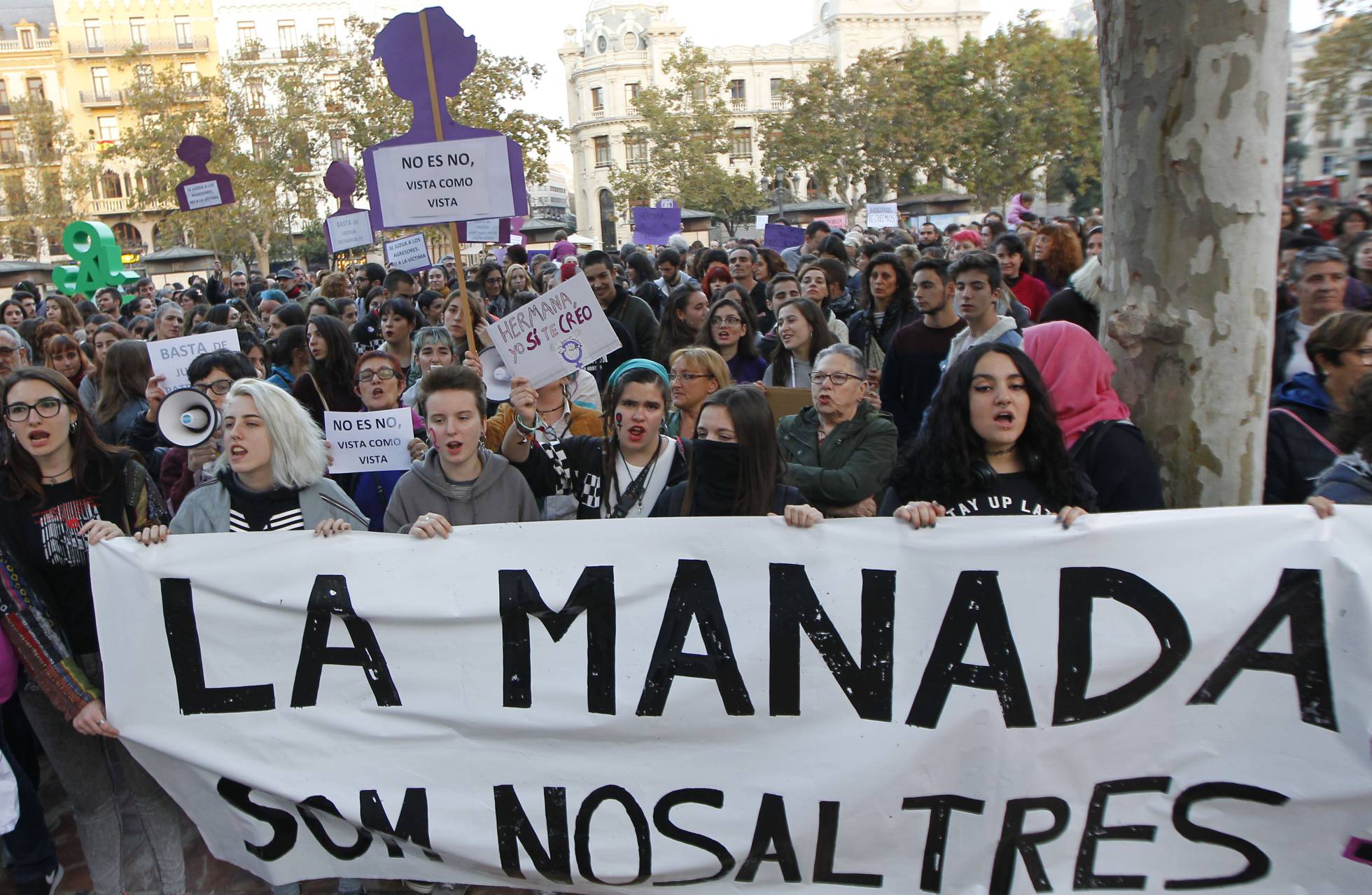
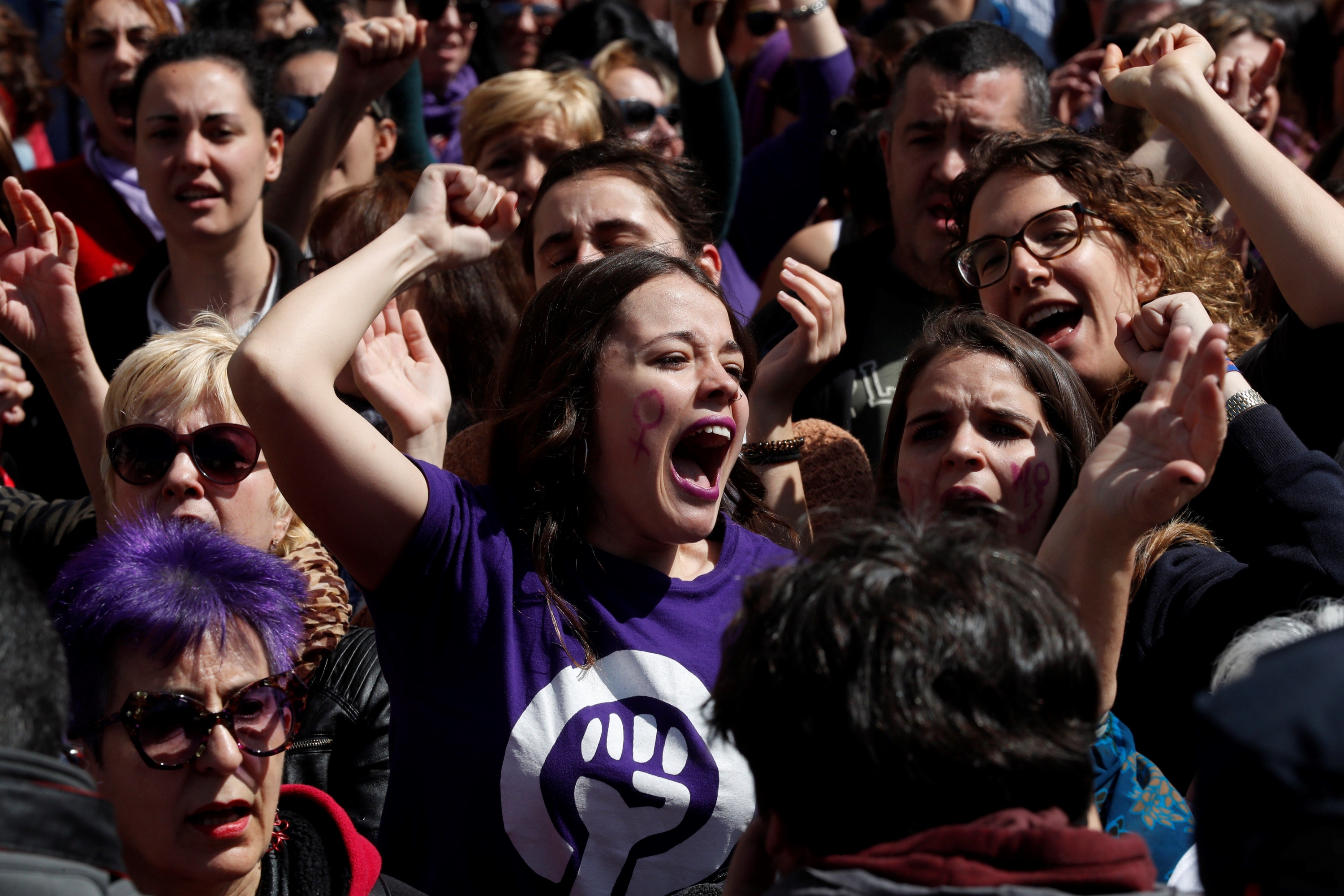
La sentencia de la “manada” está desatando una ola de indignación y protestas que han llenado las calles en España de mujeres y también hombres (que ejercen un modelo de masculinidad que trasciende el modelo heternormativo tradicional), para decir alto y claro: “ESTO NO ES ABUSO, ES VIOLACION”. Una indignación que ha venido alimentada por el hartazgo de las mujeres españolas con la violencia machista y las desigualdades que en sus formas más hostiles, pero cada vez más en sus expresiones más sutiles, compromete el bienestar y la vida de todas las mujeres y en mayor medida de aquellas en las que se entrecruzan otras categorías (relativas a la raza, etnicidad, orientación sexual o clase social).

Un hartazgo que se hizo patente en las masivas manifestaciones feministas del pasado 8 de marzo, sin precedentes en la historia española. Y la onda expansiva de esta indignación está traspasando nuestras fronteras. Desde la Comunidad Europea como desde Naciones Unidas se han sumado las críticas y preocupación por una sentencia que no protege adecuadamente a las víctimas de la violencia sexual que sufren las mujeres y que sigue apuntalando el status quode una sociedad patriarcal y profundamente sexista, y las mujeres españolas están enarbolando la bandera de un enérgico BASTA YA.


(Photo Credit 1: El País / Jose Jordán) (Photo Credit 2: Público / EFE / Chema Moya)

Why does the English government hate Yvonne Williams and Yvonne Smith?

Hostile environment

Why does the English government hate Yvonne Williams and Yvonne Smith? Yvonne Williams is 59 years old, Black, a grandmother, a Jamaican-born immigrant with no family left in Jamaica. Yvonne Williams has been in England since 2002. She has been the primary carer for her grandchildren. She has also tended to her 82-year-old mother, who arrived in England in 1962. Yvonne Smith is 64 years old, Black, a grandmother, a Jamaican-born immigrant with no family left in Jamaica. Yvonne Smith has been in England for twenty years. She has been the primary carer for her 92-year-old father, who arrived in England in 1957. Both Yvonne Williams and Yvonne Smith spent the last nine months in Yarl’s Wood, and both were informed last week that they were to be deported any day now. In the past four days, both Yvonne Williams and Yvonne Smith were released from Yarl’s Wood, but the cloud of deportation, intimidation and abuse still hangs over them. What horrible crime have these two blameless Black grandmothers committed? Migrating while Black; living while Black.

The English government has hated so very many women of color, women whom they’ve dumped into Yarl’s Wood, terrorized, and then either `released’ or deported. In the past year, that list includes Kelechi Chioba,  Erioth MwesigwaShiromini SatkunarajahIrene ClennellChennan Fei, Patricia Simeon, Opelo Kgari, Florence Kgari, and Paulette Wilson. Paulette Wilson is 61 years old, Black, a grandmother, a Jamaican-born immigrant who arrived in England at the age of 10, in 1968.

After World War II, England needed labor and so `encouraged’ migration from the Empire and the Commonwealth nations. It passed the British Nationality Act of 1948 which gave citizenship to anyone living in the United Kingdom and its colonies and offered the right of entry and settlement. In June 1948 the HMT Empire Windrush brought 492 people from Jamaica to England. The generation of Afro-Caribbean women, men, children who went to England, to rebuild the country, is known as the Windrush Generation. Paulette Wilson, Yvonne Williams and Yvonne Smith are members of the Windrush Generation.

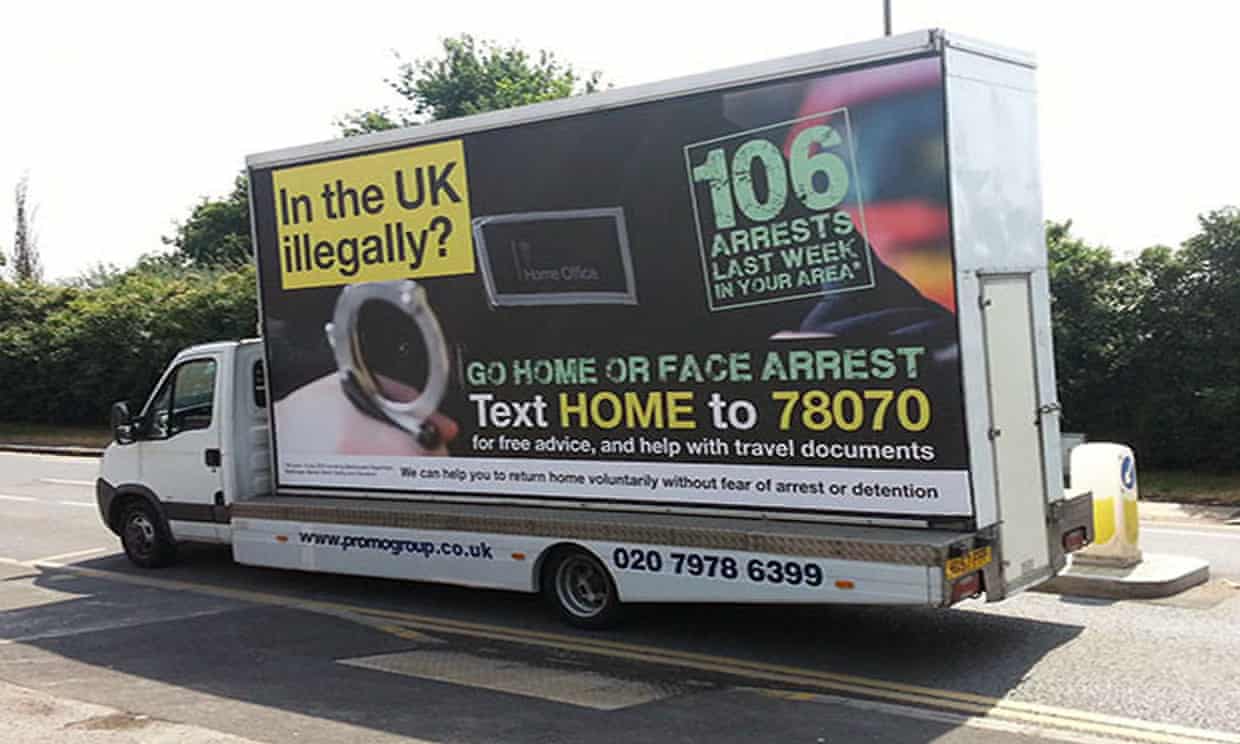
In 2012, then Home Secretary Theresa May revealed her “hostile environment” plan: “The aim is to create here in Britain a really hostile environment for illegal migration.” In 2014, that plan became law. The problem is that the Windrush generation, including their children, are legal. Being legal doesn’t mean one can’t be, or become, criminalized, especially if one is Black. Recently, the Home Department revealed that it kept “`ambitious but deliverable’ removal targets.” With that revelation, and the flood of stories of Windrush individuals and families, the so-called Windrush Scandal erupted. Now the State has apologized … sort of. Now the State claims that citizenship will endow to members of the Windrush generation, all members of Commonwealth nations who came during the same period, and children of the Windrush Generation. Meanwhile, Yvonne Smith is still being told she might be deported.

The ”hostile environment” is a hateful environment. Its use of health service data to restrict immigration is “a very bad idea”, and intentionally so. The “hostile environment” has spread to other countries in the European Union and to the criminalization of migrants, immigrants, and those who support them: “The hostile environment permeates deeper and it’s very easy once a destabilising environment has been established for it to permeate through the layers to a very low level indeed.” Abusive and violent men are using the “hostile environment” to threaten, control and hurt their partners. None of this is surprising. The “hostile environment” is designed as a reign of terror, which targets women particularly.

It permeates through the layers to a very low level indeed. Hostility identifies its “target” as an enemy. Not an outsider nor a stranger, but an enemy. A “hostile environment” is a declaration of war, and this particular war is being waged on the bodies of elder Black women. Ending the “hostile environment” policy is a small, and necessary, step. The larger step would be to recognize that the “hostile environment” is a “hateful environment”, and then, having named the violence as hatred, address the hatred. Why does the English government hate blameless Black elder women  Paulette Wilson, Yvonne Williams and Yvonne Smith? The hostile environment. It’s not hostility; it’s hatred.

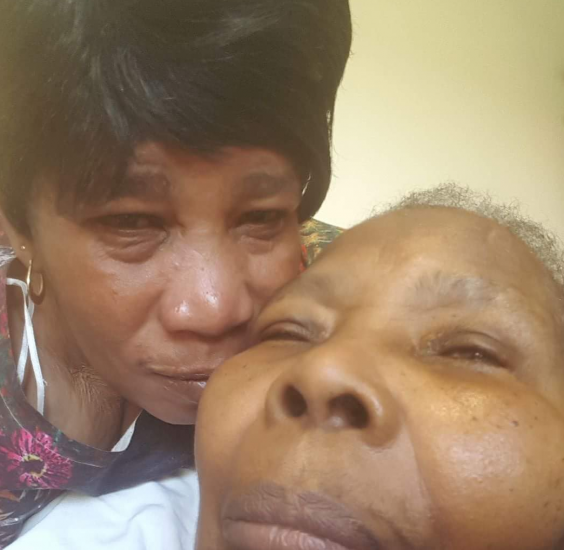
Yvonne Williams visits her mother

(Photo Credit 1: The Guardian / Home Office) (Photo Credit 2: Independent)

New Jersey Must End the Slaughter of Black Mothers

While touting a more progressive and feminist agenda than his predecessor, New Jersey Governor Murphy signed the Diane B. Allen Equal Pay Act, which will expand the protections of the state’s existing wage and hour law and amend the New Jersey Law Against Discrimination to make discrimination in wages on the basis of any protected class an unlawful employment practice. The law should be applauded as a step in the right direction to fix the state’s pay gap disparity. However, New Jersey falls horrifically short when it comes to another women’s issue: maternal health. The maternal health of New Jersey’s women is one of the worst in the country; pregnancy-related deaths, while they are progressively climbing in the United States, is double the national average in the Garden State. Ranking 47thout of 50 in maternal deaths, according to America’s Health Rankings, a report by the United Health Foundations, in New Jersey 37 women die, on average, for every 100,000 live births. The national average is 20.

The disparities for black women in the state are even more grotesque, with African-Americans in New Jersey five times more likely than white women to die from pregnancy related complications. New Jersey’s maternal mortality remains worsethan that of Mississippi(26.5 deaths per 100,000 live births). While New Jersey has one of the lowest infant mortality, the racial gap between Black and White infants is one of the largest in the country. Black babies in New Jersey are three times more likely to die before their first birthday than White babies.

According to a proclamation celebrating the state’s first ever Maternal Health Awareness Day, the leading causes of pregnancy-related death include cardiovascular disease, pregnancy-related heart failure, embolism, septic shock and cerebral hemorrhage. Other factors include obesity, chronic health conditions such as diabetes and hypertension, lack of prenatal care, and drug use.

Members of Murphy’s cabinet have highlighted their concerns about the disparity and have proposed ways to help reduce it. Dr. Shereef Elnahal, the Department of Health Commissioner, and Carole Johnson, Commissioner of the Department of Humans Services, have pledged to improve data collection and modernize government systems to provide more efficient, better quality of care that results in fewer racial disparities in general. They also promised to better coordinate government services to help address housing, transportation, nutrition, and other social factors that have a tremendous impact on the health of vulnerable residents.

Toxic racism, especially in northern New Jersey, plays a significant factor in the inequalities between Black and White women, one that transcends economic or healthcare access. New Jersey only has 15% percent Black population, yet they are the worse off for many of the state’s current health, economic, and criminalization issues. Wealthy, well-educated Black women with quality healthcare experience poorer outcomes than White women, regardless of their economic or social status. Improving the current trends of lack of care for Black women requires greater awareness, but changes in healthcare policy also need to be addressed.

Finally, New Jersey’s Black population is overwhelmingly in poverty, far beyond their White counterparts. The state average rate of poverty is 10.9%. For Whites, it’s 8.3%; for African-Americans the rate is 19.7%. For Black women in New Jersey, poverty is a reproductive rights crisis. Poverty leads to lack of pre-natal care, which contributes directly to one of the highest maternal mortality rates in the United States. New Jersey must address universal access to real healthcare for all. Otherwise, the issue of maternal mortality will continue to besmirch the reputation of the Garden State.

(Infographic Credit: Pix 11)