My freshman year at University of Nigeria, Nsukka, or UNN, a guy almost raped me

Busola Dakolo

My freshman year at University of Nigeria, Nsukka, or UNN, a guy almost raped me. He threatened to bring out a gun, he slapped me, he said I could scream as loudly as I wanted, no one would come to help me. Apparently, unbeknownst to me, he had a reputation for being a rapist so “whoever went to his room was asking for it.” Years before then, I was still in high school, our family physician whom I called uncle, touched me up on his examination table. Years before then, I was in elementary school then, my mother’s cousin cornered me in the kitchen and squeezed my non-existent boobs. The UNN guy, let’s call him EE, is now some sort of ‘evangelist’ in Lagos; the physician is still practicing, somewhere in Europe; my mother’s cousin is dead. It’s been many years, but I’ve never forgotten. I also never told my mother until many, many years after the fact. People saying they don’t believe Busola Dakolo because she’s only now telling her story should take several seats behind. There are reasons why sexual assault victims in our society keep quiet. 

For one, ours is one where the culture of victim blaming/shaming is entrenched. To be raped is to become ‘damaged goods.’ EE raped with impunity because he knew the consequences, socially (and culturally), were worse for his victims than it would be for him. Victims found themselves in the uncomfortable position of protecting him so they could protect themselves. No one really expected justice from the authorities (school or police) in any case. Had he succeeded in raping me, I’d have told my brother (only so that my brother could organize to have him beaten up).Even if I had had the courage to walk around campus with the scarlet letter on my forehead, the shame we force rape victims to carry, I would have thought of reporting him to authorities as an exercise in futility. 

In the past days, I’ve read heartbreaking stories on my twitter timeline: a father beating his daughter for “allowing herself to be raped”; a mother beating her daughter for reporting that she was touched inappropriately by an older relative etc. etc. etc. I remember, a few years ago, reading of a man who forced his daughter’s rapist to marry her to “wipe away the shame.” 

Years ago, I took a break from Osuofia after I watched ‘Osuofia Speaks French’ where the character marries his rape victim (by whom he has a son), and her parents and friends, happy for her, tell her she’s no longer a “fallen woman” and “Now, your son is no longer a bastard.” That has long been the dynamics of rape in our society: the power to give and to rehabilitate rests with the criminal. 

However, things seem to be changing. It’s been heartening to hear stories of parents who’ve acted like they should; to see that there seems to be a movement determined to force offenders to answer for their crimes; that there is a new generation of Naija parents raising children to understand that there is no excuse for rape, and therefore the shame of the crime belongs ONLY to the criminal. Soon, we will break down the wall of undeserved shame that walls victims in and emboldens offenders. The future is bright #MeToo


(Photo Credit: Nigerian Tribune)

What happened to Robin Arraj? Cuyahoga County “Justice”

The Cuyahoga County Jail, located in the Cuyahoga County Justice Center in downtown Cleveland, Ohio, is a bad place. It’s “problem-plagued” and marked by “inmate deaths and inhumane conditions”. Today, people protested the “inhumane” conditions as well as Cuyahoga County’s failure to do anything about those conditions. It was the U.S. Marshals who described the conditions as “inhumane”. That was November 2018. Eight people died in that jail in 2018. A woman prisoner fell in a puddle of water from a leak that had gone on for days. No one did anything about the leak. The prisoner, Tammy Decosta, fell, hit her head, told officials she was having trouble with her eyesight, officials did nothing. Tammy Decosta is now legally blind… and suing the county. Prisoners are strapped to chairs and beaten. The beatings are videotaped. Nothing happens. This is Cuyahoga County Jail, where Robin Arraj “died” in 2017. Last week, Robin Arraj’s family sued the Cuyahoga County Jail, located in the “Justice” Center. What happened to Robin Arraj? Justice.

Terrance Dubose is 47 years old and lives with mental illness. He is an inmate at Cuyahoga County Jail. On July 16, 2018, he was strapped to a chair and beaten, punched in the face numerous times. He was left in that chair for hours. The officer who punched him did the same thing to a woman prisoner, Chantelle Glass, in 2012. Nothing happened to that officer. Terrance Dubose is still housed in Cuyahoga County Jail. Robin Arraj is still dead.

In June 2017 Robin Arraj, 51 years old, entered Cuyahoga County Jail. She was supposed to stay there three days. Three days. She “was found unresponsive” on her first day in the jail. Robin Arraj was living with and being treated for opioid addiction. She was prescribed methadone. She informed the staff of her medical needs. The State “failed”, refused, to give Robin Arraj treatment, and so she went into withdrawal, became hypertensive, and “was found unresponsive”, one day into a three-day sentence. 

The Cuyahoga County Jail determined that Robin Arraj died “of natural causes.” There was nothing natural in her death. The overcrowding of the jail was not natural. The “inhumane” conditions were not natural. The refusal to provide appropriate treatment are not natural. They’re criminal.Now lawmakers call for reform, intensified oversight, and unprecedented scrutiny. Where were they during the years of institutional inhumanity and violation of Constitutional and human rights as well as dignity and decency? Nowhere to be seen. And so, as so often, it is left to the family and other loved ones to carry the burden, to sue the State to get a little bit of justice in the name of their loved ones who were sacrificed on our modern-day altars. What happened to Robin Arraj? Absolutely nothing out of the ordinary. Cuyahoga County Justice happened, and it’s happening across the United States.

(Photo Credit: Cleveland.com)

How do heartless leaders win elections? Part 2: India and beyond

In India, although Modi failed to deliver on election promises of economic growth, he drew public through hypocritical arguments about the importance of protecting the Hindu nation against Pakistan. The elections came at a crucial time when two Indian Army pilots captured by the Pakistani military were released back into India. The fanfare around their release gave the BJP and Modi enough momentum to stoke nationalist fires. Parties associated with the BJP had already done plenty to fan communalism through social media, and so Pakistan’s capture of the pilots created the means to continue nationalist messaging in public spaces to keep the fervor at fever pitch. The supremacy of the far-right Hindu nationalists is becoming widespread and overt in its reach under the Modi government. Modi openly articulates his allegiance with the Rashtriya Swayamsevak Sangh, RSS, and its divisive nationalism and Hindu militancy.

Besides masking economic growth with nationalism, Modi and the BJP have used the figure of the woman as a symbol of nationalism. This ploy has been enacted since before India’s struggle for independence from British rule. In the last election, Modi promised that he would make sure women had rights but did nothing to curb violence against women. While the BJP under Modi talks about Hindu womanhood and protecting women, drawing upon the religious trope of worshiping goddesses, we see the government’s hypocrisy in turning a blind eye to the rape of young women and children, particularly in Muslim, Adivasi and Dalit communities. Witness the rape and murder of an 8-year-old Muslim girl by 9 Hindu youth, four of them police officers; the crime was politicized and although the rapists were charged, Hindu right-wing protesters, Modi silently lending them support, wanted the rapists exonerated: “Some of the staunchest defenders of the suspects in the girl’s killing have been high-level officials in Mr. Modi’s party. Analysts said this was consistent with how the party has operated for years.”Throughout the country it has become an increasingly onerous task for any sexual abuse victim to get justice. 

While the government won re-election based on national security, the country has become unsafe for women, Muslims and Dalits. Dissenting voices are in danger of being assassinated, as we have already seen in the murder of prominent journalists and writers for their critique of the government: Narendra Dabholkar, Govind Pansare, and M.M. Kalburgi, Gauri Lankesh and many more.

While abortion is legal up to 20 weeks, many women around the country do not have access to safe abortions. Maternal deaths from pregnancy and abortion continue to plague the country. A recent report from Mumbai showed a sudden dip in the numbers of abortion among girls 13-15. While this may sound like a good thing, a senior gynecologist from one of the BMC hospitals thinks that the dip could mean that young girls may be getting unsafe abortions. No statistics are available on the number of abortions as a result of the abortion pill. In short, unsafe abortions are prevalent, including self-selective abortion, which is unlawful.

What does all this mean? Within a neoliberal philosophy we see an increase in right-wing political parties in Europe and in India. Many scholars have made connections between this current political climate with the 1930s as the EU has gone through various turbulences that have exposed the fragility of the principle of democracy in society. In his book “Recidive,”(Recurrence), Michaël Fœssel uses press and journal articles to analyze the dynamics that prevailed in the year 1938, noting, “I didn’t research 1938 with 1940 in mind, but rather with 2018 and the years before.” He remarks that French women in 1938 were mostly invisible; one would have thought that France was inhabited only by men “whose only ambition was to become chief.” Men forbade women to vote until 1944, which is a significant difference compared to 2019. In addition, Fœssel observes that in 1938 many principles were challenged. France had passed new labor protection laws and progressive social laws 2 years earlier. In 1938, with a new government elected on negative campaigns to restore order, the goal was to weaken social protection and the new rights of middle and lower classes. Although women were not allowed to vote, two women held ministry positions in the previous government, and still progress stopped there. With the more conservative government of 1938, women were sent back to the private home and family duty. 

In a time of crisis, we observe the reoccurrence of these discourses of rights and protections reductions, making the vulnerable more precarious and supporting right-wing messages of nationalism and dominant powers. Besides the obvious differences between both electoral situations (in India and in the EU), the commonalities are important to identify. 

For the time being, patriarchy as a system of control and accumulation has reinforced its power. The heartless leaders are patriarchal leaders. Their networks of influence have, through social media, disseminated their discourses using the mythology of virility to legitimize inequality between genders and unleash intolerance toward everyone outside of their normative view of human society. They have successfully eliminated the ethics of reciprocity and care from the political discourse. The destruction wrought by climate change that affects the most vulnerable in society is a casualty in this patriarchal power grab in the elections in Hungary, Poland, Italy and India. Ending the power of the heartless demand constant criticism of the patriarchal order that outrageously begets inequality and suffering. 


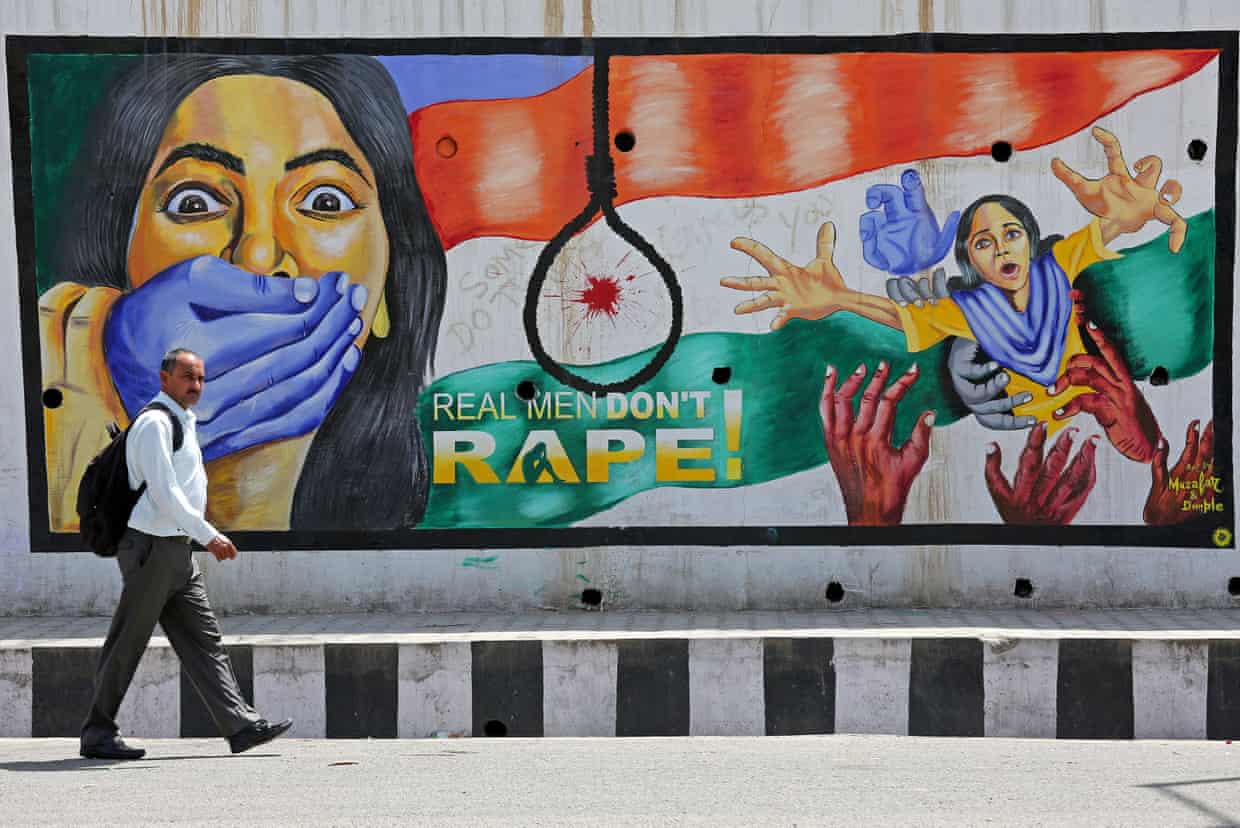
(Photo Credit: Reuters / Mukesh Gupta / The Guardian)

From February 2018 to May 2019, four women have died at HMP Styal. Who cares?

“In the United Kingdom, forty per cent of sentenced women serve three months or less, and yet somehow manage to `harm themselves’ at a rate of three incidents per inmate. Women prisoners’ self harm is neither epidemic nor outbreak. It’s life. It’s part of the harm of being a woman in a neoliberal political economy. The Corston Report: a review of women with particular vulnerabilities in the criminal justice system, a review of women with particular vulnerabilities in the U.K. criminal justice system, said as much in March, 2007. Behind the Corston Commission Report sits HMP Styal, `one of the largest women’s prisons’ in the U.K. Between August 2002 and August 2003, six women died at Styal … That was then. This is now. February 27, 2009:  `The chief inspector of prisons has warned of more deaths at Styal women’s prison if services for vulnerable inmates do not improve…. John Gunn, brother of Lisa Marley, who died at Styal in January last year, asked: `How many more women have to die before something is done?’” That was then, ten years ago, to the day. This is today: From February 2018 to May 2019, four women have died at HMP Styal: Nicola Birchall, 41, February 2018; Imogen Mellor, 29, June 2018; Christine MacDonald, 56, March 2019; Susan Knowles, 48, May 2019. None of the deaths was treated as suspicious. BBC News reports, “The latest HM Inspectorate of Prisons’ report, in May 2018, was positive.” 

Here is what “positive” looks like: “95% of women said that they had problems on arrival. 53% said they had a problem with illicit drugs on arrival and 27% had an alcohol problem. 72% reported having a mental health problem. There were 735 incidents of self-harm in the six months to March 2018. Four women were transferred under the Mental Health Act in the six months to March 2018. 65% of women released who were not on home detention curfew did not have sustainable accommodation. Some women had been in and out of custody up to 11 times in 12 months.” Positive.

According to the most recent Safety in Custody Statistics, England and Wales, the general picture for incarcerated women, including remand prisoners, is equally grim: “Self-harm trends differ considerably by gender, with a rate of 570 incidents per 1,000 in male establishments (with incidents up 25% on the previous year) compared to a rate of 2,675 per 1,000 in female establishments (an increase of 24% in the number of incidents from the previous year). In the 12 months to December 2018, the number of self-harm incidents per self-harming prisoner was 4.0 for males, and 8.3 for females, increases from 3.5 and 7.0 respectively in 2017.” The majority of self-harm happens to those who have been in custody 31 days to 3 months. 

The latest Inspectorate report on HMP Styal was positive concerning the prison’s attempt to follow recommendations from earlier reports, but the situation remains dire, and that’s the point. The individual deaths of Nicola Birchall, Imogen Mellor, Christine MacDonald, and Susan Knowles are suspicious, as are the high rates of self-harm. 

In 2007, Baroness Corston noted, “There are many women in prison, either on remand or serving sentences for minor, non-violent offences, for whom prison is both disproportionate and inappropriate. Many of them suffer poor physical and mental health or substance abuse or had chaotic childhoods. Many have been in care … I have been dismayed at the high prevalence of institutional misunderstanding within the criminal justice system of the things that matter to women and at the shocking level of unmet need … There can be few topics that have been so exhaustively researched to such little practical effect as the plight of women in the criminal justice system.”

That was 2007, sparked by conditions in HMP Styal. It’s 2019, and still few topics have been so exhaustively researched to such little practical effect as the plight of women in the criminal justice system. Every death, injury, harm, unmet need, vulnerability is suspicious and should be treated as such. What happened to Nicola Birchall, Imogen Mellor, Christine MacDonald, and Susan Knowles? Nothing. There is nothing celebrate here.


(No More Prison)

Welcome at last to the 21st century

Welcome at last to the 21st century

so wrote a colleague-past
at my reportage of now
having one of those devices
you see folks walking 
into stationary poles with

is it any good
I enquire
as it seems
I have not been

I hear there is
running water
electricity even
and plentiful
(so politicians say)

Welcome at last to the 21st century
where you can see
hunger on a world scale
from local Bonteheuwel
to the beyonds of Syria
and darkest Africa too 

the 21st century
where humanity
behaves as though
there is another
planet to go and ruin

the 21st century
where women
and children too
would want there 
to be another planet
to shelter from the storm

there is illiteracy
and innumeracy too
on this man-trashed sphere
most especially down here
Africa South way

Welcome at last to the 21st century


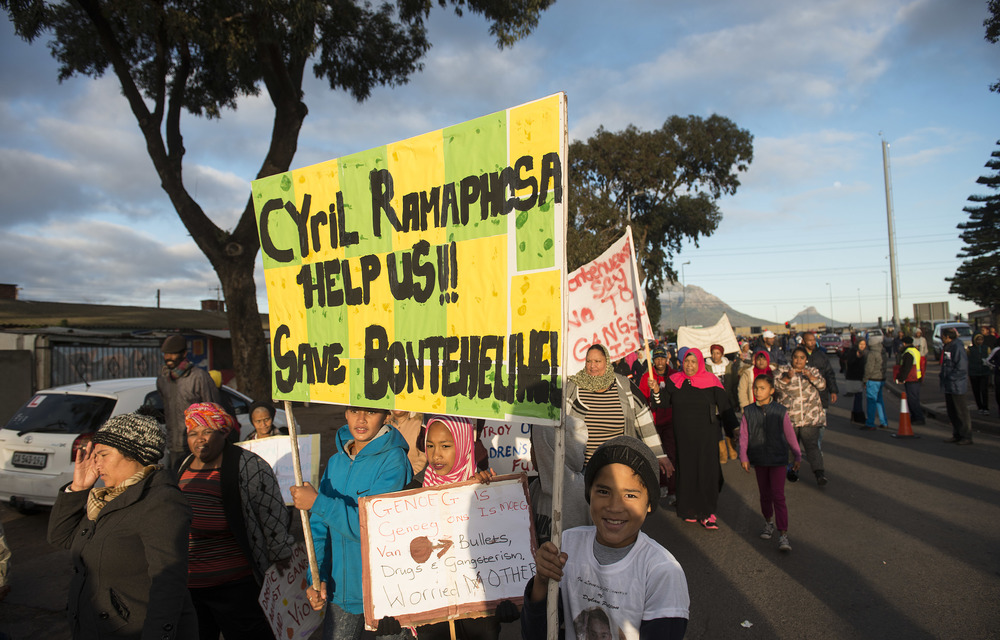
(Photo Credit: Mail & Guardian / David Harrison)

How do heartless leaders win elections? Part 1: In Europe

In the past month, around the world, heartless populist leaders have had successes in numerous elections. The Indian election occurred over 6 weeks, with 900 million registered voters, and 63 percent actively voting. The European elections were organized in 28 countries to renew the European Parliament where European laws are discussed and passed or not. It comprises 751 Members of the European Parliament, or MEPs. The European Elections presented a great danger for women and minorities. European populist groups have organized since 2013, creating a structure called “Agenda Europe”, promising to “restore the natural order”. This fabricated argument about a “natural order” is precisely unnatural and threatens violence against women, minorities and Nature.  Despite all its shortcomings, the European Parliament has, in general, over the years pushed for more progressive laws. In response, the current generation of heartless leaders have developed ultra conservative doctrines to curtail any possibility for inclusive and progressive evolution.  

As political scientist Rosalind Pollack Petchesky has noted, “Abortion acquires political volatility in periods when the social position of women generally is under siege.” Today, access to sexual and reproductive health has been challenged by the heartless leaders even in places where one would have thought these rights inalienable. The heartless movement materialized with neoliberal austerity measures and structural reforms. Neoliberalism opportunistically aligns itself with various strandsof neoconservatism and religious fundamentalism. 

Heartless populist leaders bear common features: an opportunistic mind guided by big data algorithm systems and an unfettered desire for power. They use nationalist – racist messages through social media without concern forethics or veracity. Theirtargets have included immigrants, feminists, Romas, Muslims, and more. The European and Indian elections have brought these neoliberal, conservative, propagandist, and rights-unraveling elementstogether. In Europe a resistance has also strongly emerged. In some countries, Socialists and European Green parties gained seats. Meanwhile populist parties having difficulty agreeing to form one group in parliament; their divisions appear deeper than expected. 

In France, the populist party, Rassemblement National, RN, finished with less than 1 % ahead of the center liberal party. Marine Le Pen’s RN party list led by Jordan Bardella garnered votes from the popular discontent represented by the Yellow Vest movement, mostly a vote of rejection of the liberal doctrine of the current President Emmanuel Macron. The surprise came from the Greens who became the third party ahead of the regular conservative and socialist parties. The German Green party became the second party in Germany this time, ahead of the populist party. Spain, Portugal, Sweden, the Netherlands and Denmark sent more socialist and social democrats to the parliament with, again, a representation of the Green party.    

In Poland, the extreme right-wing/populist Law and Justice party (PIS) won 45.6% of the vote, sending 26 MEPs to the European Parliament, while the opposition European Coalition (Social Democrats) won 17 seats and the leftist coalition obtained 8 seats. The Law and Justice party increased its representation compared to the previous European election. Their conservative campaign was based on imaginary Polish values which included strict control of sexual and reproductive rights, reducing health services for women.  Although Polish women have had total access to abortion until 1993, conservative religious leaders in Polish politics have made Poland one of the European countries with the most restrictive laws on abortion. Currently, each year 150 000 Polish women get back-alley abortions. Women in Poland have organized to block a total ban on abortion. The PIS based its campaign on repetition of social media slogans against immigration, supporting family values and energy independence. Actually, they implemented the most xenophobic and anti-women’s rights policies, including lowering protection against domestic violence, reducing access to contraception, and keeping coal energy production, refusing to comply with reducing CO2 emissions according to the Paris Agreement. 

In Hungary, Viktor Orban’s ruling party won a landslide victory with 52.3%, giving 13 seats to Orban’s EEP, 7 seats to the opposition and 1 seat to the Fascist party. When Viktor Orban was first elected, only 3% of the Hungarian population thought that immigration was an issue. Orban’s domination took off when he met Arthur Finkelstein, an arch conservative Jewish American homosexual, just to challenge common assumptions. Finkelstein has built a discreet career using invisible parallel means of communication, such as negative messaging in public spaces and social media. He has been behind many elections of conservatives around the world from Ronald Reagan to Benjamin Netanyahu. The Hungarian slogan for the European elections was similar to the Polish one. Women had to curtail their desire for emancipation to serve the great country of Hungary, migrants had to back off from entering the country, and environmental issues were irrelevant in comparison with the rebuilding of Hungary’s great past.

In Italy, Matteo Salvini, the leader of the Italian right-wing party ‘The League,’ and current co-vice Deputy Premier and Minister of Home Affairs, won the most seats with 34,3%,which gave ‘Identity and Democracy’ 28 seats. Luigi Di Maio, the leader of the anti-establishment Five Stars movement, with whom Salvini shares executive power, received 17,1% of the votes, or 14 seats. Nicola Zingaretti, leader of the democratic party, came in second with 22,7%, or 19 seats. These elections strengthened Salvini’s power in Italy. At the last European election in 2014, The League only received 6.2% of the ballots and sent 5 MEPs to Brussels. His success is based on his ability to «speak to people’s guts. » Bordering the Mediterranean Sea, Italy is the main land of arrival, and often a place of transit, for migrants and refugees traveling by sea and seeking asylum in Europe. Salvini based most of his political program on the urgency of fighting immigration and the right to defend oneself against migrants who are supposedly more violent. The League, supported by Steve Bannon, extended its power by producing fake news, thanks to social media. Negative messages annihilated the discourse on climate change: Italy is not sending an MEPs of the European Green Party.

The League’s political agenda rests on ‘replacement theory.’ This approach claims to protect «the traditional family» against the danger of abortion, divorce, contraception, and gender equality. Salvini pretends to protect women, thanks to one of the Five Stars movement’s legislative initiatives: the code red laws, protective measures against domestic violence. Italy has one femicide every two days.


(Image Credit: European Views)

What happened to Tanya Day? Nothing. Just another Aboriginal woman died in police custody

Tanya Day and her granddaughter

In Australia, for Aboriginal women and their families, the wheels of justice do not turn at all, but they do try to grind the people into dust. On December 22, 2017, Tanya Day, a 55-year-old Yorta Yorta grandmother, “died of traumatic brain injuries” in police custody, in the Castlemaine Police Station, in Victoria, Australia. Next month, the coroner is expected to release her report. Tanya Day’s family and supporters have asked the coroner to consider systemic racism. as a cause of death. If the coroner agrees, a new standard may have been set. Whatever the coroner decides, Tanya Day – like Cherdeena WynneMs Dhu, and scores of other Aboriginal women– did not “die” and was not “discovered”. Tanya Day was killed in police custody. Harrison Day, Tanya Day’s uncle, died in police custody, also in Victoria. Harrison Day died, or was killed, June 23, 1982, 37 years to the day. From 1987 to 1991, the Royal Commission into Aboriginal Deaths in Custody met to discuss Harrison Day’s death and those of 99 other Aboriginal women and men. They issued a raft of recommendations, of which more than 30% have never been implemented. After Ms. Dhu’s death in custody, in 2014, promises were made but Western Australia has not introduced a single law emerging from the circumstances of Ms. Dhu’s death. From Harrison Day, in 1982, to Tanya Day, in 2017, to today, the line of murders of Aboriginal women and men in custody is direct and genocidal.

By all accounts, Tanya Day was a vivacious, lively, politically engaged woman. She was an activist who campaigned to stop the deaths of Aboriginal women and men in prison. At the time of her death, she was actively helping the family of Tane Chatfield, a young Indigenous man who died in police custody. She was also on what her family calls a health craze, involving regular exercise and healthy diet. On December 5, 2017, Tanya Day boarded a train to Melbourne. According to her family, she had not been drinking regularly, but on that day, she had. She fell asleep on the train. When the conductor awakened her for her ticket, she was confused. There is no report that she was aggressive. The conductor called the police. The police took her off the train and took Tanya Day to the Castlemaine Police Station. The charge was public drunkenness. The police called the family to come fetch her. By the time they arrived, Tanya Day was hospitalized. She died seventeen days later. 

Tanya Day fell in her cell in the police station five times, which caused traumatic brain injuryShe lay, alone, on the floor for hours. Tanya Day should never have been in that police station. The Royal Commission into Aboriginal Deaths in Custody strongly recommended doing away with public drunkenness laws. Subsequent scholarship and experience have supported that recommendation, pretty much uniformly. The laws that criminalize public drunkenness remain on the books. As one human rights advocate noted, “Most Victorians have committed the offence of public drunkenness.” If Tanya Day had been White, she would have been allowed to stay on the train and sleep it off. Even if not, someone who needs assistance to stand belongs in an emergency room, not a police station cell. Australia has known all of this for decades, formally, and has done less than nothing. That kind of inaction is a key ingredient to genocide as to femicide. What happened to Tanya Day? Australia. 


(Photo Credit: ABC News Australia)

In Cambodia, woman farmer Hoy Mai says NO! to the theft and devastation of her land and life!

Hoy Mai

This week, Cambodian woman farmer Hoy Mai has appeared in a Thai court, where she has filed suit against Thai sugar company Mitr Phol, Asia’s largest sugar producer. Hoy Mai, now 56 years old, has been waging a mighty campaign against the Goliath corporation for two decades, a campaign for land, life and justice. This week’s court case is considered a landmark case. If the court decides in Hoy Mai’s favor, thousands of displaced farmers could benefit. The story begins in October 2009, in the northwest province of Oddar Meanchey, in the throes of the Khmer Rouge violence. In one of the most violent areas in Cambodia, Angkor Sugar Company, a subsidiary of Mitr Phol, evicted 119 households. Since that day, Hoy Mai has fought for restitution, first, and justice, for herself and her neighbors.

According to the Cambodian Center for Human Rights, “Hoy Mai’s family and 118 other households in Bos village, Oddar Meanchey province, were forcibly evicted in October 2009 as part of an ELC [Economic Land Concession] granted to Angkor Sugar Company. Their homes were burnt down and they lost all their belongings and farmland. Despite promises that she would receive another plot of land, she received neither land nor compensation, leaving her and her children homeless and destitute. Hoy Mai, at the time five months pregnant, was charged with violation of the Forestry law and jailed for eight months after trying to appeal to the authorities in Phnom Penh. She went into labor in the prison where she was forced to stay for three days and two nights until she was taken to the hospital. Only a few hours after she gave birth to her baby she was taken back to jail. For two months, she nursed her son in the prison with terrible sanitary conditions and sharing the cell with seven other women. Eight months after her detention, Mai was brought before a judge. Instead of a fair trial the court told Mai that she would be released only when she signed an agreement to with- draw all claims to her land in Bos village and accepted replacement land.”

The Khmer Rouge is gone, but the damage remains, as does Mitr Phol. From 2009 to today, Hoy Mai has refused to accept that situation: “We want compensation so we can rebuild our homes and farm our land. We hope the court will give us justice.” Hoy Mai and her attorneys have hit upon the idea of going to Thailand, where Mitr Phol is based, and instituting a class action suit there. Hoy Mai demands compensation, restitution, recognition, acknowledgement, truth and justice. It’s that straightforward.

In 2014, Hoy Mai explained what she and her neighbors wanted and expected from the State: “We want them to help us get our land back so we can live like before.” In 2016, Hoy Mai explained that she and her neighbors planned to return to their own lands: “Whether the governor allows us back or not, we will still go to our land. We are scared, but we have to struggle. We experienced being evicted. So we are not afraid.” This week, Hoy Mai said, “They took our land. I lost everything. My children did not go to school and I had no farming land … I survive by the day … For us, it [the land] is our life.”

In Cambodia, for the past twenty years, woman farmer Hoy Mai has said NO to the theft and devastation of her and her community’s land and lives. Hoy Mai joins rural women and women farmers in PeruIndiaEcuadorLiberiaGhanaMalawi, and around the world in demanding justice not only for herself and her community, but for women farmers and rural women everywhere. Mitr Phol may be the fifth largest sugar producer in the world, but Hoy Mai knows that justice is larger, wider and deeper than any corporation. “For us, it is our life.”


(Photo Credit: Leonie Kijewski / Al Jazeera)

Isolation Rooms and “The Feral Child”: What Impact Does Social Deprivation Have On Children?

Earlier this year, a young student in the United Kingdom attempted to take her own life in an isolation room at her school where she had quietly spent her days for more than a month. The child, whose identity has not been disclosed, lives with mental health issues as well as an autism spectrum disorder. 

Isolation rooms have become a common form of punishment for students in the United States as well as in the U.K. Often, the children who are sent to spend their days alone and in silence, without stimulus, in these spaces have autism spectrum disorders or other special learning needs. 

While there is little scientific evidence to track the impact that days spent in quiet isolation have on developing minds, anyone familiar with child psychology knows that a lack of socialization and stimulus is detrimental to development. In fact, a landmark case in developmental psychology directly deals with the results of being kept in isolation early in life. 

In 1970, thirteen-year-old Genie Wiley was discovered by social services in her family home in California, where she had spent most of her life in isolation, locked away in a small room. Genie’s father often tied her to a chair and discouraged her from speaking, crying or making any noise at all. 

When Genie was finally taken out of isolation and taken into the care of psychologists, the thirteen-year-old tested on the mental level of a one-year-old. She was originally thought to be autistic. She was mute and incontinent, and only responded to her own name and the word “sorry.” Her mannerisms were described as rabbit-like and she was branded as “the feral child”.

Genie’s case is most well-known for the insight it provided into the process of language acquisition. Although she was a strong non-verbal communicator, psychologists struggled to teach her language, and especially grammar, suggesting that she missed the critical window of language learning. However, Genie’s extreme case also shows the drastic impacts that a lack of socialization and stimulus can have on a child. 

After working with psychologists, Genie became able to communicate with drawings and did well on intelligence tests. She grew to enjoy music and learned to play. However, after years spent in isolation, she was never able to communicate or socialize normally. Eventually, research funding ran out and she was sent to live in a foster home, and little is known about what happened to her since. 

Genie’s case was a drastic one. She was abused and kept in near complete isolation for a decade. Yet, she demonstrates that putting a child away in isolation is not a neutral action. It is a punishment that instills its own kind of trauma, particularly for developing children. This trauma is heightened for children on the autism spectrum or others who may have difficulties socializing with their peers and yet schools often use isolation rooms as a “dumping ground” for exactly this kind of student.

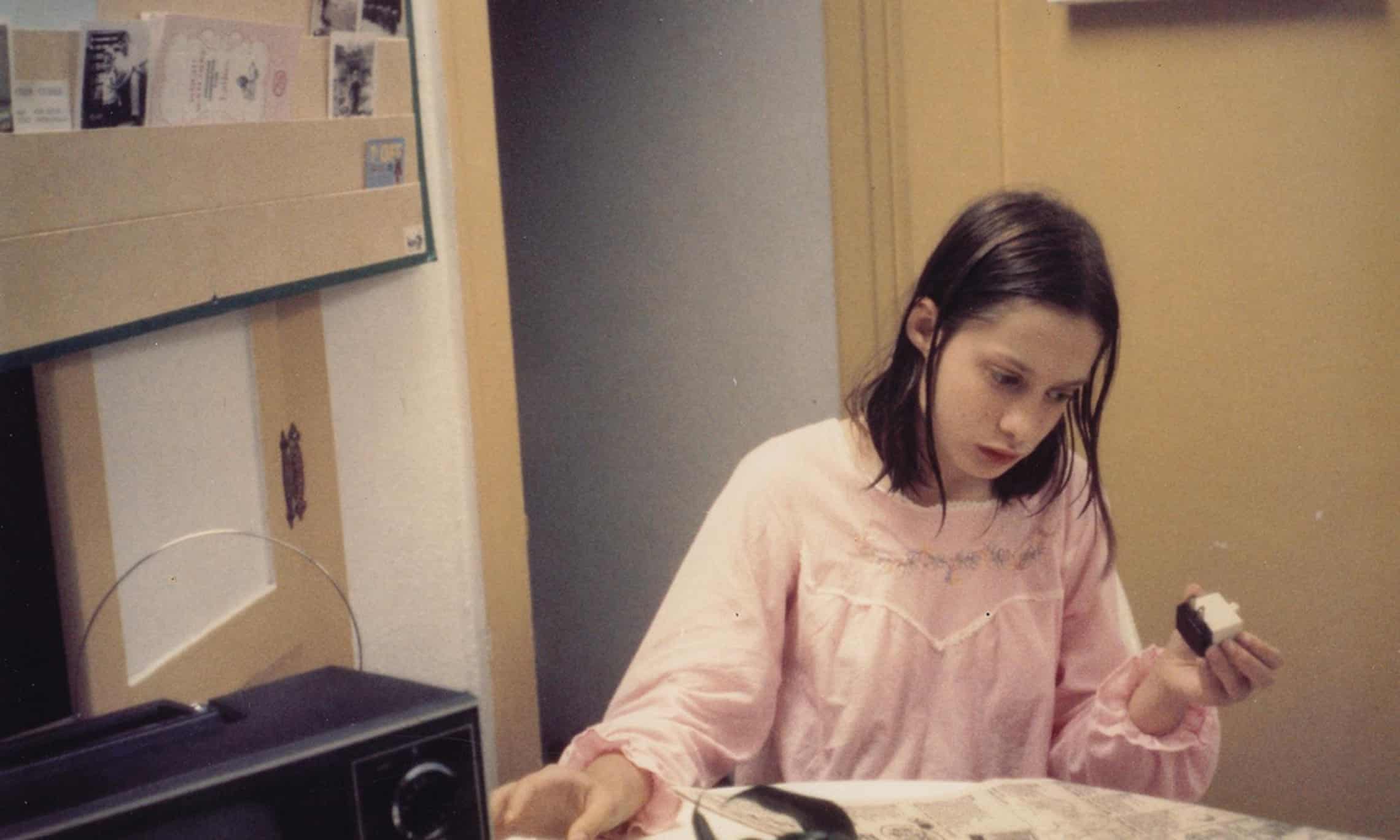
Genie Wiley

(Photo Credit 1: Cambridgeshire Live) (Photo Credit 2: The Guardian)

Sankofa: In Memory of Gil Scott Heron Now Eight Years Gone

Winter in America

Sankofa: In Memory of Gil Scott Heron Now Eight Years Gone

Warn me to battle not monsters, Gil
You gazed into the Abyss
And now you have become it.

I see you shining as I gaze at the Abyss also gazing

And trying not to become what I see.

Your body was dust and into dust it has returned.

Now I can hear the stones singing
Whenever I put my ear to the ground.

Songs of revelation and revolution
Rebirth and regeneration
I too am dust
Your poetry breathing life into me.

Earth

A million people in the streets of Hong Kong hear your songs
Umbrellas and heart
Verses bear spray and ballistic shields
Rubber bullets
And heavy riot sticks
For now their government listens
I mean
Could a million Chinese be wrong?

Trans activists reading the names of the fallen of their community
Telling their stories of hidden violence
Hear your songs.

Strike a pose for the Latinx who died on Rikers Island
Because she couldn’t raise $500 in bail money for a misdemeanor.
Her kindred also found dead on the streets of Texas
And beheaded on courthouse steps in Mexico.

Choiceless families of choice, don’t forget them after Pride month.

Speak no evil?

Larry Kramer already told us that silence equals death
Don’t forget how to act up.

It is good to go back to get what has been forgotten.

Names of kindred on heart shaped Stones
Left on Potter’s Field on a New York island
Or sewn on blankets presented on the National Mall
Now archived in Smithsonian Museums.

Remember the names
The stones
The blankets
And, most importantly the people.

Angry protestors in Tennessee hear your songs
The heads of 24 policemen provided the percussion section
Another officer involved shooting.

Let the earth be my weapon before it becomes my womb
Let me be judged by twelve
Before I am carried out by six.

Water

Thirsty people seeking asylum hear your songs
So do the the Samaritans on trial for leaving them water in the desert
Facing 20 years in prison for acts of federal felony compassion.

For compassion’s sake they chant “No More Death”
A deadlocked jury still can’t decide between the spirit of the law
And the laws letters.

The dying continues:
The body of a six year old girl from India is found in the desert.

How did she get there?

And, who have we become?

Japanese Americans say history is repeating itself.
Interment camps reopening
With the same justification
National insecurity.

Mr. Sulu, we are still a long way from the Starship Enterprise
Our four-year mission is just to get an Orange Man’s foot
Out of America’s assAnd to boldly get back to
Where we were before.

It wasn’t good; but it was better
And better is good
Shout out Barack Obama
I understand you better now.

“Don’t it always seem to go
That you don’t know what you got‘
Til it’s gone.”

To those out there who still know how to throw a rock,
Light a fire
And make a gas mask out of
A wet handkerchief and human saliva I say:

Teach the children
They won’t find these skills on YouTube
Or Instagram.

Presenté, keepers of our memories.

Can you dust off your light sabers one more time
In this inelegant age of random blasters?
As the dying continues.

See no evil

Laura Engram defending white nationalisst on Fox News
While American war criminals are considered for presidential pardons.

But no one yet found guilty of polluting the drinking water in Flint Michigan.No one guilty of the deaths in our border prison camps.

5200 ICE detainees are quarantined with suspected cases of Mumps and Chicken Pox

The Hieleras becoming hot zones.

Fire

And just who blew up the oil tankers in the Gulf of Oman anyway?
Are we being prepared for an October surprise in June?

Who will harvest that bitter fruit come September?

Men set themselves on fire in Washington D.C.
And I think of Buddhist Monks in Vietnam in 1963
And lately Monks and nuns witnessing for Tibet
Middle Path adherents taking the belief in the impermanent
To an extreme
You only get to do that once!
Burn baby burn.

Air

I hold up this candle next to your sun, Gil.
All of the songs you sang still work.
Which means how we are living here in America doesn’t.

Justice is blind still holding the scales of Libra.
But she is standing on an inclined plane
The pan that represents me and mine
Always the lighter of the two.

Once the question was:
Are there two separate and unequal justice systems in America?

Now the question is:
How many unequal Justice systems does America have?

Or, Is that just me being optimistic?

Avoiding the question
Is there a justice system at all?

Pardon my chagrin
Pardon my skepticism
Pardon me while I have to explain to young black men
That there is no pardon for playing with toy guns in a city parks.

Or selling loose cigarette to make ends meet.

Pardon me while I tell women that rape can be used as a tool of war Without an international outcry.

Or if I say Excusez-moi — will you think me more educated and therefore less of a target?

Na!

Camo-hiding Huxtable affectations do not work better then
A Kevlar vest
A helmet
And a good gas mask.
You could ask Sandra Bland
I mean, if she were alive.

Pardon me when I question that our answer to gun violenceis not reporting the shooter’s name on the news.

Hear no evil.

Pardon me when no matter how hard we try to prevent copy cat killings The killing continues.

I guess the non-copy cats must think they have come up with an amazingly original idea!

Pardon my invective.

Pardon my anger.

And pardon me for taking a bite out of you, Gil
To write this poem
There are no new ideas
Just ideas that are well stolen
From the past that is prologue.

Or, call it Sankofa looking back as I fly forward through time.

I feel so lost.

I’m just reaching back to help me on my journey forward.

May justice stand on a firm foundation.

May there be a level playing field to calibrate the scales of justice.

Take your thumb off of the scales
And keep your foot off of the earth’s neck
So we can all breathe again.

Hear no evil.

Why do I forget what I should remember
And remember what I should forget?

Hermann Hesse said that if I listened to the blending of all the outcries
I would hear OM the word of words.

I’m not that good yet.

But I can still hear you, Gil
In the rocks and stones and from the Abyss.
When I put my ear to the ground.

(Image Credit 1: OkayPlayer) (Image Credit 2: Berea College)