Canada’s Highway, Prisons, Foster Homes, and Schools of Tears

The Ashley Smith inquest continues. Ashley Smith was a 19-year-old woman prisoner who troubled the government of Canada too much with her constant acting out and suicide attempts, and so, finally, was allowed to commit suicide while seven guards stood and watched.

The guards, four women and three men, have now testified. They all say their hands were tied; they were only following orders. They’re very sorry, even anguished, for how Ashley Smith died. They know they failed her, they know the State failed her. They were misinformed. They were told Ashley’s problems were “behavioral not mental.” Behavioral not mental is code for in control of one’s actions. When the madwoman in the attic is a 19-year-old in solitary confinement, somehow she becomes `sane.’ The guards say they knew something was wrong, but the doctors had told them otherwise. It was a victory of military discipline over human and common sense.

Some ask, “How does an 18-year-old end up doing serious time in a federal prison for throwing crab apples at a postman?” Others wonder if Ashley Smith’s death was suicide or murder. Did Ashley Smith die or was she killed?

The Ashley Smith inquest continues, and Ashley Smith is still dead.

Here’s another question. Is Ashley Smith’s experience an isolated one? How does Canada treat its troublesome children? Three current reports suggest that the treatment of Ashley Smith is more common public policy than exceptional horror.

One study documents “ongoing police failures to protect indigenous women and girls” in Northern British Columbia. This “failure to protect” includes gang rape, torture, abduction, and a whole menu of violence. This “failure to protect” has contributed to the construction of what many call the Highway of Tears, as has the national government’s `failure’ to care about the lives of indigenous women and girls. That’s not failure. That’s refusal, and it’s an aggressive public policy, not an omission or lack of action.

A second study follows a 13-year-old Aboriginal child from cradle to cage. Taken from his parents at an early age, he was tossed from one foster home to another. Most of them were abusive environments. The one foster parent who actually cared and tried to take care of the boy couldn’t get help from the State, and so had to give the child up. When the boy turned eight, and was in a residential facility, the staff started disciplining him by calling in the police. And so began his life of being Tasered, followed by time in prison.

His story is a common one. In British Columbia, of children and youth `in care’ more enter into the juvenile criminal justice system than graduate from high school. One in six youth in care have been in youth custody. Close to one-third of the youth in the juvenile justice system is Aboriginal, which pretty much accords with the adult prisons. As above, so below. That’s equality in a prison State; that’s public policy.

An unpublished study reports that more than 3000 Aboriginal children died in Indian residential schools. Children died of disease, malnutrition, and accidents. Children froze to death. From the 1870s to the 1990s, 150,000 First Nations children were forced through the meat grinder of “civilizing” instruction, and at least 2% of them died in house. The names of 500 of the 3000 dead are still unknown. What is known is that in 1917, the Department of Indian Affairs stopped reporting the deaths and death rates of Aboriginal students in residential `care’: “It was obviously a policy not to report them.”

In each instance, from the 3000 Aboriginal children to the one Aboriginal child to hundreds of missing Aboriginal women and girls to Ashley Smith, the State responded with silence, followed by denial.

The Highway of Tears is not a road to nowhere. It leads to the Prisons of Tears, to the Foster Homes of Tears, to the Schools of Tears. Ashley Smith’s suffering is part of the brutal disposal of children in a world in which care is forced to surrender to the business of security as usual.


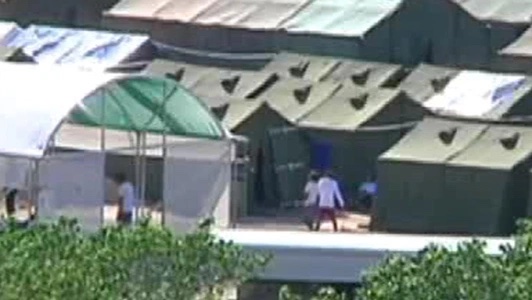
(Photo Credit: cbc.ca/highwayoftears.ca)
Virginia’s war on women of color

Earlier this week the Virginia House of Delegates refused to restore the rights of nonviolent felons who have paid their debt to society … again. Governor Robert F. McDonnell had made re-enfranchisement a priority of his final year in office. The Governor spoke compellingly of “a nation that believes in redemption and second chances.” His Republican confreres in Richmond were not impressed.

Virginia is one of four states that permanently bars felony offenders from voting or running for office. At present, only the Governor can restore those rights, and that takes a long time, a great deal of work, and, not insignificantly, the commitment of a Governor who thinks it’s worth the time and effort. Most don’t.

In Virginia, as elsewhere, the disenfranchisement of former felons stems from, and adds to, centuries-old histories of racial and ethnic exclusion, oppression, and State violence. Approximately 378,000 Virginians, or 6.8 percent of the Commonwealth, fall under the `felony’ ban. This lifelong ban affects one of every five African Americans in Virginia. That’s no accident. That’s public policy.

These numbers are particularly noxious when one recalls that sixty percent of Virginia felony convictions do not merit jail time, and many are for nonviolent offences.

The lifelong voting ban in Virginia has always been an assault on African Americans immediately, and on communities of color, more generally. In recent years, however, it has also been a weapon in a war against women of color.

The so-called war on drugs has targeted women of color, in particular through conspiracy laws. These laws basically catch women for the crime of intimate relationships with someone involved in the drug trade. The women often, perhaps usually, receive extraordinarily harsh sentences. In Virginia, the case of Santra Lavonne Rucker is illustrative. Her boyfriend was thought to be a major dealer, in Virginia and New York. Rucker was charged with him, as an accomplice, and convicted, despite what many think was flimsy evidence of her actual involvement. But here’s the kicker. Rucker was sentenced to life, lives actually, in prison. Despite overwhelming evidence that, at most, she was a bystander, she was sentenced as a major kingpin in a statewide conspiracy. Santra Lavonne Rucker is still waiting to see the light of day.

Malinda Jenkins, of Lynchburg, Virginia, discovered that, thanks to drug conspiracy laws, absolutely ordinary everyday interactions between intimate partners can result in a narcotics prosecution. Jenkins was brought in with her boyfriend and others. Despite the agents’ testimony that they had never witnessed her or knew of her having any relationship to any drug deals, Jenkins was convicted with the whole crew. On appeal, her conviction was reversed because there was no evidence. It wasn’t insufficient evidence. It was nonexistent evidence.

These are just two cases, but they speak to the last thirty years of the war on drugs and its impact, nationally and in Virginia. In Virginia, being convicted of a drug offense can mean a lifelong ban on welfare benefits as well as a lifelong ban on voting. For women and their children, the ban on welfare has meant an impossible life. This has particularly affected Virginian women of color. That’s no accident. That’s public policy.

Since 1990, Virginia has had one of the highest increases in time served by prisoners and keeps people in prison for longer than most states. This is true for those convicted of nonviolent as well as violent offenses. Only recently has the State, with the establishment of the Virginia Criminal Sentencing Commission, begun to address the possibility of diversion and alternative sentencing. As is so often the case, the Commission was a result of prison overcrowding in the Commonwealth. Nationally, prison overcrowding has often resulted in men being released much earlier than women for exactly the same offense. The State simply needed the men’s beds more than the women’s.

The Virginia Criminal Sentencing Commission applies a point system to each prisoner to establish `risk’ of recidivism. For drug and fraud offenses, women are deemed a much, much better `risk’ than men, nine times better. For larceny, men are a somewhat better risk, about 1.5 times better. In December 2012, these numbers translated as follows: 635 drug cases for review; 951 fraud cases; 185 larceny cases. In the overwhelming number of cases, then, women are a much better prospect for anywhere but behind bars. That’s according to the Commonwealth of Virginia.

It’s time to return the right to vote to those who have paid their debt, especially when much of that debt is the result of legerdemain. It’s time to stop the war on communities of color. It’s time to stop the war on women of color. Do it now, Virginia.


(Photo Credit: Eve Arnold/Magnum Photos/Slate)

In the camps, the women sigh, “O brave new world”

A key plank of Australia’s asylum policy is deterrence. What happened to asylum being the key plank of asylum policy? Deterrence in this instance means “offshore camps”, particularly on the islands of Manus and Nauru Islands. Manus Island is part of Papua New Guinea, where a trial opened today to challenge the legality of the “processing camps”. The charge is that the Papua New Guinean law does not allow for detention without any charge. Detention camps. Processing camps. Or, as Marianne Evers said of the camp on Nauru, “I actually liken it to a concentration camp.” Not surprisingly, the Australian government takes offense at the likening, “I think invoking concentration camp is a disgrace.” Calling the camps on Manus Island and Nauru Island “concentration camps” is a disgrace, but the camps themselves … are fine?

No.

Last week, New Matilda published three sets of letters by women asylum seekers currently imprisoned on Manus Island. The women are from Iran, Pakistan, Sri Lanka, Afghanistan. They describe terrible hardships in their homelands, terrific struggles to get to Australia, and then debilitating, crushing conditions on Christmas Island and then on Manus Island. They describe the dire mental health crisis that sweeps through the camps, especially among the younger men who are increasingly suicidal. They write about their struggle for safety for themselves and their children. They write a great deal about their children. They describe the life draining out of their children within the universe of trauma that constitutes the detention camp. They describe the cultures and public policies of violence against women in their homelands that compelled them to leave, to seek personal safety and dignity.

The United Nations Refugee Agency, UNHCR, issued a report last week on Manus Island, based on a January visit. The agency confirms the reports of the women asylum seekers. The physical conditions are “harsh”. The living quarters have no privacy, which is a particular concern to parents of girls; are unbearably hot; and have grossly inadequate sanitary facilities. And that’s the family compound. The conditions in the compound for single male adults are worse.

The conditions are generally and specifically traumatic. They breed mental health crises on an individual, collective and structural basis. For the adults, it’s terrible. For the children, it’s crushing.

The UN list of dehumanizing conditions goes on, but here’s the point. This is what happens when deterrence is a key plank in asylum policy. Since Australia began “offshore processing” its asylum seekers, have the numbers gone down? Absolutely not. They’ve risen, incrementally. Does that mean the policy hasn’t worked? According to the State, it means the State hasn’t arrived at the proper balance of harsh and brutal. When the Australian government can match the brutality the women, children and men have fled, then it will have arrived at what it considers to be an appropriate asylum program.

Australia has invested political capital, national identity, and hard cold cash in brutalizing asylum seekers. They have sought partners. First they turned to Papua New Guinea, and this week, they turned to New Zealand. Australia sees asylum seekers as another `opportunity’ for regional free trade agreements. This time trade is in battered bodies and dreams.

Why can’t asylum, rather than deterrence, by the key plank of the asylum policy? What would it take to move the concept of the right to asylum to the center of all asylum policy? Ask the women asylum seekers on Manus Island. Repeatedly, they say they fled violence but they sought peace. Peace, rather than `security’, must govern asylum policy.

Meanwhile, the women who sought peace sit in the harsh camps on the remote islands, look at their children, look at themselves, look at the guards, look at where they’ve come to and where they’re probably going, if the State has its way, and they sigh, “O brave new world, that has such people in’t.”

(Photo Credit: Al Jazeera)

On outrage


I cannot write about Anene Booysen. Many others are, and are doing so eloquently. But I do wonder about outrage. The national response to the horrible violence against Anene Booysen has been described as outrage. When does outrage occur?

How many women and girls must suffer violence and abuse to cross the threshold of outrage? How many men must engage in violence and abuse before the horizon of outrage is breached?

I ask this because I don’t recall outrage being expressed when both the Rape Crisis Cape Town Trust and the Saartjie Baartman Centre for Women and Children faced imminent closure last year. Yes, there were individuals and groups who jumped and organized, but there was no great surge of outrage at what would surely follow the simultaneous closure of the two most successful and most important resources in the Western Cape for those seeking help, support, community in the midst of suffering violence.

Remember, Rape Crisis is the oldest center of its kind in South Africa. In a recent two-year period, it served over 5000 rape survivors. And when it served the survivors, it served their loved and loving ones, their friends, their communities, and their neighborhoods. It served the whole of South Africa, one healing empowering person at a time.

Likewise, Saartjie Baartman has been working out of Manenberg to change the world by changing the area. The Centre, open for ten years, is a one-stop service shop: 24-hour shelter, short and medium residential care, childcare, counseling, legal advice, education and mentoring, and more.

Both Rape Crisis and Saartjie Baartman have played lead roles in research, advocacy, and mobilizing around women’s rights generally. They offer a place for women to hear their own voices, to have their voices heard, to have their voices joined and amplified, to have their voices translated into action.

Both Rape Crisis Cape Town Trust and the Saartjie Baartman Centre for Women and Children are indispensable, and not only for the women and children, and men, who come in looking for help. For the entire country and beyond. Who leapt to organize when the two, in one fell swoop, faced closure? The usual suspects. Not `the nation,’ not the State, nor was Twitter alight with outrage.

Along with protests and uprisings and expressions of outrage, all of which are terrifically important, let there be outrage for the condition of those people and organizations that have worked and are working now to change the world, to transform society, to create a place in which women and children and men can live in peace and joy. Support Rape Crisis Cape Town Trust and the Saartjie Baartman Centre for Women and Children. It’s never too late. Do it now.


(Photo Credit: Local Media Unpacked)

Welcome, asylum seeker, to the society of the queer spectacle

In the United Kingdom, gay asylum seekers increasingly feel pressured to prove they are gay. In the last three years, the United Kingdom Border Agency rules, and application of rules, for those seeking asylum based on persecution of sexual minorities in their home countries have changed.

Previously, the policy was one of `discretion’, in which gay asylum seekers’ applications were rejected because, it was felt, the asylum seeker merely needed to act with greater discretion. If she or he was tortured, it was her/his fault. If she or he was killed, again, her/his fault. If she or he was kicked out of family and community and left to suffer the ravages of the streets, she or he should have known better. It was a policy of shut up, go away.

In 2010, a Supreme Court decision changed that. In the case of HJ(Iran) and HT (Cameroon) vs. Secretary of State for the Home Department, an Iranian gay man feared imprisonment and lashing, while a Cameroonian gay man was terrorized by his neighbors. The Court rejected discretion: “An interpretation … which denies refugee status to gay men who can only avoid persecution in their home country by behaving discreetly (and who say that on return this is what they will do) would frustrate the humanitarian objective of the Convention and deny them the enjoyment of their fundamental rights and freedoms without discrimination. The right to dignity underpins the protections afforded by the Refugee Convention.”

Since then, with mounting austerity-led, privatization-pushed campaigns by the State to close the non-existent asylum pipeline so as to protect the country from the non-existent tsunami of asylum seeking detritus, that compassionate “opening” has been translated into a cross between a peep show for the State.

Gay? Lesbian? Transgender? From a dangerous, toxic place, which could be your household, could be your neighborhood or `community’, could be your country, because you’re gay or lesbian? Prove it. Hunted down by the State and/or Civil Society because of your sexual minority status? Prove it. If you don’t have the scars to prove it, well … show us some skin.

It’s the society of the spectacle, in which gay and lesbian asylum seekers, who have not only suffered so much but have had to work strenuously to finally make it to “safe haven” are told they must labor some more … now to prove their sexual identity. In 1967, Guy Debord described a new society of the spectacle, in which labor and capital were shifted from production of goods to production of spectacle. He began writing and thinking of an “integrated spectacle (that) has transformed the world economically … using police methods to transform perception”. In 1992, Debord wrote: “The same formidable question that has been haunting the world for two centuries is about to be posed again everywhere: How can the poor be made to work once their illusions have been shattered, and once force has been defeated?”

How? Make them work to prove their claims to identity. Make them work to prove their claims to existence. This is where the spectacle of queer asylum seekers makes economic sense.

A lesbian woman from Uganda fled for her life to the UK. Upon arrival, “the UKBA officials wanted me to prove that I was lesbian but they wouldn’t tell me how I could.” Her application was denied. She spent months in Yarl’s Wood. She brought copies of Ugandan newspapers that called for her murder if she should be seen in Kampala. These were disregarded. Finally, she was given asylum. But first she had to do all the work. The State said no, sat back, and watched.

There all sorts of legal debates about the implications of the Supreme Court decision, touching on `queer cases’ and the law, the legal meaning of discretion, where lines should and shouldn’t be drawn, assessment protocols for LGBTQ asylum seekers, good sense and common sense, the centrality of LGBTQ rights on the map of human rights, the rights of gay men and lesbians to live freely, openly and on equal terms. The list goes on.

But there’s something else, something not of the courthouse but rather of the everyday world of work. Major investments are made in prisons and their outlying service networks for asylum seekers. It costs money to house a Ugandan lesbian asylum seeker for months. It costs money to threaten her with deportation, day in and day out. Major profits emerge from those investments. At the same time, there’s a newer form of extraction, that of making the asylum seeker work to prove identity claims. So … welcome gay man, lesbian woman. You have traveled so far and struggled so much. Welcome to your new workhouse, your new poorhouse … your body, your self, the new, and not so new, queer spectacle.

Is Marie Therese Njila Nana a human being? Are you?

Subjected to the trials of Job, Marie Therese Njila Nana has survived with dignity, and is rewarded, by the United Kingdom, with prison and worse.

Nana is from Cameroon. In her area, her family was fairly prominent. When Marie Therese Nana converted to Pentecostalism, her family took, bound her, tortured and beat her. She fled to another part of the country, joined a local Pentecostal Church, and tried to begin a new life.

She lived in that town for ten years. Then the Church decided she must marry a Church elder. Nana refused, and was forced to move again, to avoid violence.

She met a man from another tribe, whom she married. Her family discovered this and sent nine masked family members to her house. They beat her.

Her husband left for Germany, for work. Threats, and worse, from Church and family escalated. Marie Therese Nana tried to reconcile with her family. She returned home to meet with her parents, or so she thought. Her family held her for days, beating her senseless and humiliating and degrading her, all in an attempt to `purify’ her. Then they took her to the police, where she was further beaten.

Marie Therese Njila Nana then fled, to England, where she applied for asylum. Which was denied. The Home Office claims that Marie Therese Njila Nana can return safely to Cameroon, because there are `support services’ available. Not the police, notoriously corrupt and violent and beyond reproach. Her family has proven its capacity to reach her anywhere in the country. The Pentecostal Church as well is all over the place. And her name is known. But somehow the United Kingdom Border Agency has decided that Marie Therese Njila Nana is not a true candidate for asylum.

And so they sent her to Yarl’s Wood, where she has been for the last nine months. Nana describes her experience in Yarl’s Wood as torture. According to doctors, she is clearly suffering from trauma, and has received no medical attention. To the contrary, guards have taunted and harassed her.

This is not surprising from an agency that commonly and blithely uses forces on pregnant prisoners. This is not surprising from an agency that, in report after report, is found to treat prisoners with abuse, violence, and viciousness. Prisoner after prisoner reports that the staff treats them “like dogs”, like animals. Marie Therese Nana puts it succinctly: “English people need to know that there are concentration camps in their country where aliens are tortured and oppressed.”

And now, the United Kingdom plans to send Marie Therese Njila Nana back to Cameroon. What’s the reward an African woman gets for having survived violence after violence after violence? More violence.

Marie Therese Njila Nana asks, “Am I a HUMAN BEING? I ran from my country to save my life and I just seek asylum. After destroying me mentally more than 8 months now they plot to send me back to my killers.” But the real question is this, “Are we human beings?” Only concerted and collective action to stop the flight, and all the flights, will do, if we want to answer, “Yes. Yes, we are human beings.”

(Photo Credit: Muse / bensmawfield)

Tahrir meant liberation. It still does. Ask the women

In 2011, the women of Egypt pushed Hosni Mubarak out of power. One of those women was Sanaa El-Seif, who at the time was 17 years old. She moved to Tahrir Square, with friends. With a fellow classmate, Ziad Tareq, she created a space in which to produce a regular newspaper, for distribution in and beyond Tahrir Square. In so doing, Sanaa El-Seif pulled together and then retied all sorts of insurgent and revolutionary trains: feminist organizing cultures, women’s organizing cultures, youth organizing cultures. Centuries of revolutionary broadsheets, reading clubs, manifestoes, samizdat, night schools, you name it, came together in the work of Sanaa El-Seif.

Mubarak left office. The world media, by and large, left Tahrir Square, except for those regular moments of implosion, and Sanaa El-Seif stayed. She stayed as so many women have, to push the revolution forward, to materialize real transformation in Egypt now.

Sanaa El-Seif, now 19, says it simply and directly: Staying matters. This is not about disputes between exiles and those who stayed in whatever site. It is about staying with the energies of change, staying with the promises of building autonomous transformative spaces, communities, nation, and worlds.

Today is January 25, 2012, two years later. Two years is a short time and an impossibly long one as well. Many debate today the progress and the reversals of `Egypt’ since Tahrir Square became, for a short while, the center of a universe.

Two years ago, Tahrir meant liberation. It still does. Ask the women.

In the last year, women have assessed the situation on the ground and have organized, and continue to organize. A national women’s movement is slowly but decidedly taking place, at times quite publically, at other times in the shadows. But the point is that it’s a national women’s movement, one that was in many ways impossible prior to 2011 because of the State ideological and surveillance apparatuses.

Women whose names gained prominence in the 2011 Tahrir manifestations are still there, today, in the marches and protests. Women like Mona Seif, co-founder of the No To Military Trials For Civilians campaign. Seif has been challenging the military at every step, and, even more, has been challenging and attacking the militarization of civil society, of State, of intimate spaces, of everything. That challenge to militarization emerges from and returns to decades of Egyptian women and feminist thinkers and activists, such as Doria Shafik and, of course, Nawal el Saadawi.

Every day women including Nehad Abul Komsan, director of the Egyptian Center for Women’s Rights; union activist organizer and leader Abir Ibrahim; Mozn Hassan, Director of Nazra Center for Feminist Studies; women’s rights activists Yara Sallam and Asmaa Gomaa; `revolutionary-turned-activist’ Nada Wahid; women graffiti artists Aya Tarek and Hend Kheera; and anti-violence organizer Eba’a El-Tamami work to create new spaces, new publics, for women, for autonomy, for freedom and power, for dreaming and doing.

Someone recently described the `Woman in the Blue Brassiere’ as “all too actual, real, and bodily, not just a symbol, but a flesh-and-blood human being who becomes virtual and goes viral, returning within a few days to haunt the real space of Tahrir Square as the banner of the Egyptian women’s movement.”

She does not haunt. She stays. The work of the revolution stays as it moves forward and expands, under the banner of the Egyptian women’s movement. Tahrir means liberation. Ask the women.


(Video Credit: YouTube.com)

Swaziland closes a pregnancy to prison pipeline


Vuyesihle Magagula is 21 years old and seven months pregnant. In December of last year, her mother, Shell Dlamini, went to Court and had her daughter committed … to prison. Vuyesihle’s boyfriend, Colani Dlamini, then informed Vuyesihle’s father, Zephaniah Magagula, about Vuyesihle’s incarceration. Vuyesihle’s parents are separated.

Vuyesihle Magagula sat for a month in Mawelawela Correctional Facilities for a month. There never was a charge against her. There never was a claim that she had committed any crime or broken any law.

Today, January 22, 2013, the High Court ordered Vuyesihle Magagula to be released from prison. The Court agreed with Vuyesihle’s father that his daughter was of sound mind and had not been charged with any offense. Therefore her imprisonment was a violation of Chapter III of the Constitution of Swaziland, “Protection and Promotion of Fundamental Rights and Freedoms.”

The Court also agreed that prison is not a good place for pregnant women.

Prison is not a good place for pregnant women nor for women who have not been charged with a crime.

Swaziland has 12 prisons. Mawelawela is the one for women. The Swazi prison system is full to bursting, with government reports that there’s no more room at that inn. Much of the overcrowding is made up of prisoners awaiting trial. Something like 25% of prisoners are remand prisoners. But they’re treated exactly the same as convicted prisoners, sharing the same cells, occupying the same time. Torture is common, beatings are common, and rape is common as well. Juvenile offenders and juveniles awaiting trial, children, are often thrown into the adult prisons. There aren’t enough beds, and so what is a State to do?

Of the twelve prisons, Mawelawela isn’t the worse. It’s not overcrowded. Around 15% of its prisoners are awaiting trial. Some children are living with their mothers at Mawelawela. They’re not in special wards. As elsewhere, juveniles and `detainees’ are part of the general population. On the other hand, Mawelawela is said to be “clean”. That’s something, right?

Mawelawela may not be the worst place, but it’s not the right place. Prison is not a place for `wayward girls.’ Vuyesihle Magagula is not the first to be sent to prison for `protection.’ Last December, as she sat in prison, His Majesty’s Correctional Services Commissioner, Mzuthini Ntshangase, announced that prison was open to unruly and naughtly children. Send them over to us, and we’ll teach them. Ostensibly, girls like Nomthetho and Tebenguni are given `a second chance.’

A second chance. Swaziland has the world’s highest incidence of HIV, with 43% incidence of HIV among pregnant women. Vuyesihle Magagula is the face of HIV in Swaziland, and, whether or not she’s HIV+, prison is not a solution to anything.

In the last ten years, infant mortality in Swaziland has increased by 26%. Maternal mortality has increased by 160%. And somehow, in this landscape of mathematics and morbidity, prison is a second chance?

Around the world, `troublesome’ and `troubled’ girls, girls like Ashley Smith in Canada, are sent to prison … for their own good. Ashley Smith died while seven guards watched. They were only following orders. Let’s apply the common and juridical sense of the High Court of Swaziland to the world. Prison is not a good place for pregnant women. Prison is not a good place for children. Prison is not a school, mental health facility, or resource for stressed parents and strained communities. Invest in children. Close the prisons, and open schools, clinics, community centers, and libraries. Do it now.


(Photo Credit: pikerslanefarm/Flickr)


Woman is the first environment


Canada’s Globe and Mail asks, “What’s behind the explosion of native activism?” Their answer? “Young people.” As usual, the answer hides as much as it reveals.

The explosion of Native activism, organizing, and sheer presence across Canada, has been ignited and inspired by Chief Theresa Spence and by the four women founders of Idle No More — Jessica Gordon, Nina Wilson, Sylvia McAdam, Sheelah McLean. These five women are not behind the explosion. They are the explosion.

At the same time, the fire that continues is indeed made up of young Native people, specifically, young Native women. The Globe and Mail focus on Erica Lee, a former student of Sheelah McLean, and Tala Tootoosis, a Facebook friend of Nina Wilson’s, suggests as much.

Young Native women have always been organizing. One example would be Jessica Yee Danforth, who describes herself as a “multiracial Indigenous hip-hop feminist reproductive justice freedom fighter!” Founder and Executive Director of the Native Youth Sexual Health Network, Yee Danforth is also the editor of Feminism for Real: Deconstructing the academic industrial complex of feminism, and a maker, shaker, and movement builder.

In 2011, on her way to the UN Climate Change Conference COP 17, Yee commented, “Climate change, for us, is a central issue because it has to do with what’s going on in our lands and our territories. And the way that we think about climate change is very broad. …When things impact our land and our air, they simultaneously impact our people and what’s going on in our communities. And for us, we understand that if we’re going to be talking about environmental issues of any sort, that woman in fact is the first environment. …What climate change is doing is not allowing our women to have healthy pregnancies. It is creating situations where there’s more violence in our communities, because of industry, for example. …We’re talking about issues of genocide. We’re talking about issues of survival of our peoples. And I know that we’re going to have some uncomfortable conversations even with organizers in our own communities this week, who just want to see this as a land-only issue or as an air-only issue and not understand that women being the first environment or the simultaneous, intersecting effects are really critical.”

What does this have to do with the current explosion of `raw energy’? Everything. Women are the first environment. Native women, young Native women and Native women elders, have always known this. When Jess Housty, a young Heiltsuk woman Idle No More organizer, explains, “I believe it’s in the best interests of people who care about the environment to support this,” she is invoking woman as the first environment. When Innu elder Marie Louise Andre Mackenzie explains, “I will always protect my land and my language,” she too understands, and teaches, women as the first environment. The Native women who researched and gathered stories of the hundreds upon hundreds of Aboriginal women and girls “missing” across Canada, and buried and lost in Canadian national policy. When those Native women refused to let their sisters go, refused to treat them as less than nothing, they understood, and insisted, that woman is the first environment.

These Native feminisms and feminists continually engaged and continually write deeper maps as they deepen and broaden the world. Behind the explosion of Native activism lies centuries of Native women’s resistance and emancipatory organizing and mobilizing. Right now, daily, across Canada and beyond, Native women, and in particular young Native women, are lighting the flame and taking it forward. Woman is the first environment. Remember that.


(Photo Credit: Rabble)

Prison and the war on (pregnant) women

A new study appeared today that describes yet another front on the prison side of the war on women in the United States: pregnancy. The study, Arrests of and Forced Interventions on Pregnant Women in the United States, 1973–2005: Implications for Women’s Legal Status and Public Health, reports on 413 cases over four decades in which “a woman’s pregnancy was a necessary factor leading to attempted and actual deprivations of a woman’s physical liberty.” “Deprivation of physical liberty” means forced incarceration. Some women were kept in psychiatric wards against their will; others were kept in jails and prisons against their will. In each case, part of the point of the confinement was that the woman’s will doesn’t matter because, effectively, it doesn’t exist. For the authors of the report, this is part of the war-on-women fetal personhood movement. It’s built on centuries old traditions of `protecting’ women from themselves, and of course protecting children from their mothers.

Now, not all children need protection. 231 cases originated in the South. That’s a whopping 56% in one region. South Carolina is Number 1 with 93 cases. That means almost a quarter of all the cases come from one state, and, to make the map even more glaring, 34 of those 93 cases from two contiguous counties. Florida comes in second with 56. In Florida, 25 of the cases came from one county, 23 of which came from two hospitals: Sacred Heart Hospital and Baptist Hospital. Women `need’ protection.

And who are these women who need protection? 71% of all `protected’ pregnant women were represented by indigent defense. Class was the great unifier in this group. Across the board, an overwhelming majority of the women in each racial/ethnic and age category was low- or no-income.

59% were women of color, of whom 52% were African American. In South Carolina, African Americans made up 30 percent of the state’s population, and made up 74 percent of the caseload. Of course, this mirrors the national numbers, where African American women make up almost 13% of the general population, and 33% of women prisoners. African American women’s rate of incarceration, nationally, is four times that of white women.

60% of the `protected’ pregnant women were 21 – 30 years old.

Women make up the fastest growing prison population in the United States. It’s a key part of the war on women, and as we know, war is not healthy for children “and other living things”.


(Video Credit: YouTube.com/DemocracyNow.org)