Dan Moshenberg

Dan Moshenberg is an organizer educator who has worked with various social movements in the United States and South Africa.

African women smallholder farmers haunt the G8 … and The Guardian

In 2012, the G8 launched the New Alliance for Food Security and Nutrition, which, controversially, gave agribusiness a seat at the African farming table, right next to governments and aid donors. Agribusiness had always been there, but now the arrangements of hand holding and pocket filling would be formalized. Despite promises of the `new’, transparency around the arrangements did not increase. If anything, the world of African food security and nutrition transactions became murkier.

This week The Guardian ran a series of articles on the New Alliance. Many see the Alliance as colonialism with a neoliberal face. First, the aid processes become increasingly privatized and imbedded into the workings, and failings, of markets. Second, the contractual and policy decisions are not only made behind closed doors, they’re made in settings that prohibit any direct involvement of smallholder farmers. Neither the Alliance nor The Guardian seems to care that smallholder farmers in Sub-Saharan Africa are overwhelmingly women. What’s not new here? Millions of women workers rendered invisible … again.

Ten African countries signed agreements that `open’ them to greater foreign direct investment. The countries are Benin, Burkina Faso, Ethiopia, Ghana, Ivory Coast, Malawi, Mozambique, Nigeria, Senegal, Tanzania. The national commitments involve land and water; seeds; tax; finance; infrastructure; food security or nutrition; and other. Ten countries signed 209 commitments. Of those ten countries, only Benin made any commitments to women, and those two commitments are, at best, vague: “Design and set up a gender-based information and communication system to prompt behavioural change in the agricultural and rural sector.” “Improve how gender is addressed when designing, implementing, monitoring and evaluating projects/programmes and activities in the agricultural sector.” As of yet, the progress on these is listed as “Unknown.”

The Guardian reported on Malawian smallholder farmers being kept in the dark on Malawi’s commitments; on Tanzanian smallholder farmers’ concerns that the new alliance will only turn them into cheap labor for the new, large farming corporations; and on Ghanaian smallholder farmers’ mixed reactions. The Guardian doesn’t mention or quote any women smallholder farmers.

Women comprise as much as 80% of African subsistence farmers. In Burkina Faso, gardeners and smallholder farmers are overwhelmingly women. From palm oil production in Benin to cocoa production in Ghana to general smallholder production in Tanzania, women predominate in numbers but not in access to resources or control. In Malawi, women make up almost 70% of the full time farmer population. Every major multinational agency has issued a report on the centrality of women in agriculture to any food security agenda. Repeatedly, reports demonstrate that women constitute the majority of smallholder farmers in Sub-Saharan Africa, and yet have little to no access to land tenure or to State or international assistance. Those reports also suggest that extension services automatically look to men as `change agents.’

Women farmers are a majority of the adult farming population. They are not part of the picture. They are the picture. They are not part of the story. They are the story. When you see the picture, when you read the story, if you don’t see and read about women farmers, write to the authors and tell them, “No women farmers, no justice.”


(Photo Credit: Wikipedia.org)
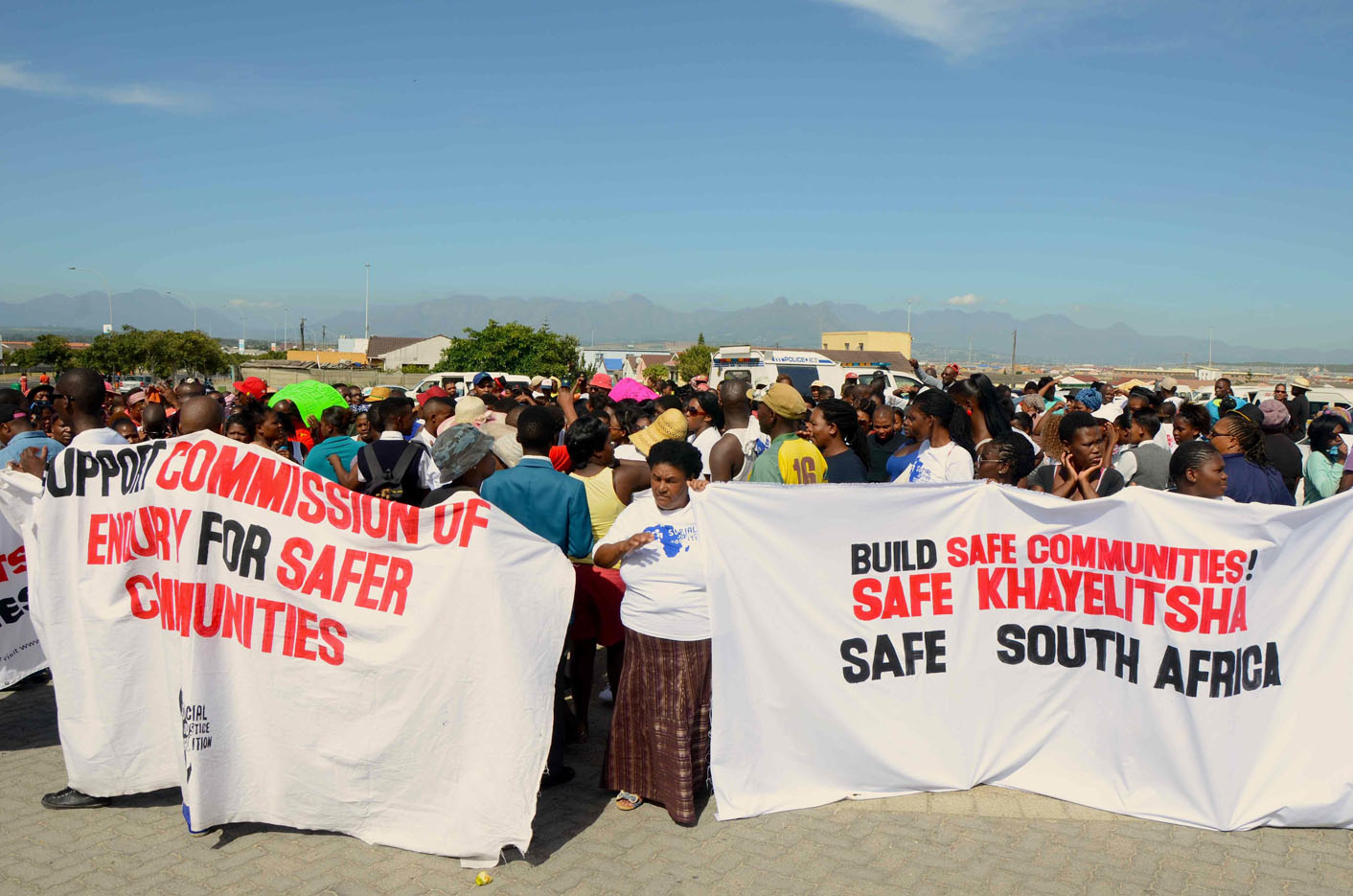
Cry the beloved Khayelitsha (Commission)

South Africa is currently awash in commissions of inquiry. There’s the ongoing and perhaps never-ending Marikana Commission. Today we read there’s to be a new commission of inquiry into the Tongaat mall collapse, last November. And there’s the Khayelitsha Commission of Inquiry into allegations of police inefficiency in Khayelitsha and a breakdown in relations between the community and police in Khayelitsha.

While women are significant participants in the Marikana and the Tongaat events and commissions, women are in many ways the subjects of the Khayelitsha Commission. This is not surprising, given the nature of the inquiry. The Commission’s mandate isn’t to get to the bottom of a tragic event, but rather to investigate and get to the texture of decades long dissolution of everyday life.

In the 1980s, the State built Khayelitsha and has continued to do so ever since. Part of this construction has involved the establishment of a State of sexual tyranny. That State of sexual tyranny has come forth in the testimony of Khayelitsha residents to the Commission.

The Commission began in response to a complaint lodged by the Women’s Legal Centre, representing the Social Justice Coalition, Treatment Action Campaign, Equal Education, Free Gender, Triangle Project, and Ndifuna Ukwazi. That complaint was lodged in 2012. The Social Justice Coalition had been organizing hard for two years prior for an investigation into the situation of justice administration in Khayelitsha. As the complaint noted, “Since 2003 the civil society organisations have held more than one hundred demonstrations, pickets, marches and other forms of protest against the continued failures of the Khayelitsha police and greater criminal justice system. The organisations have also submitted numerous petitions and memorandums to various levels of government in this regard. There have been sustained and coordinated efforts from various sectors of the Khayelitsha community for action to be taken by government agencies, including the police, to improve the situation.”

For over a decade, intensifying police incompetence, corruption, violence, and disregard for the local population went hand in hand with `vigilante justice’. In 2012 alone, 20 `vigilante’ collective killings were reported in the area. The struggle for space and for citizenship was running with blood and smoke. In the struggle for safe space and full citizenship, women, again, have been key. As the Women’s Legal Centre complaint noted, “Girls and women are frequently beaten and raped whilst walking to and from communal toilets or fetching water from communal taps close to their homes, while domestic abuse poses a threat to the safety of many women within their own homes. Between March 2003 and March 2011 there has been a 9.36% increase in the number of reported sexual crimes reported in Khayelitsha.”

Throughout the decades, women have kept their eyes on the prize. Khayelitsha is home. They should be able to live, and love, at home without fear of violence. Their children, partners, parents, friends, neighbors should as well. Through the use of public funds and private security forces, Cape Town has established `improvement districts’ … in the central city, inner southern suburbs, Sea Point and Green Point. Not in Khayelitsha. The women know that, and they don’t accept it.

Funeka Soldaat, founder of Free Gender, recounted her story of being raped, because she is lesbian, in 1995. She went to one police station, where nothing happened. Finally, without her statement being taken, she was taken to a hospital and dumped outside. The hospital said she needed a statement, and so she walked to Khayelitsha Site B police station, all of this right after having been raped. There she was treated disrespectfully, she felt because of her sexual orientation, and no statement was taken. Finally, literally barefoot, she walked home and went to sleep. The rest of the story is pain, healing, organizing. As to the police: “Khayelitsha police appear to lack the energy, will and intent to provide a service to LGBT [people].”

Malwande Msongelwa described what happened when she found her brother, stabbed to death at a bus stop. She called the police, and they didn’t come. She called again, and they finally came, but did nothing. Worse, they refused to get out of their cars: “The police do not care about people… [they] will only come out if there are drugs. Then they will come out with 10 cars …They do not even care if you are injured… If the ambulance hasn’t arrived they won’t touch you. They wait in their car… I don’t trust the police.” Her brother lay on the ground for six hours. The crime scene was never investigated.

The stories continue. Ms. Nduna describes how a police van hit and dragged one of her children. This was the fifth child in the area to suffer harm, and worse, at the hands of a police vehicle. What happened? “We buried and there was nothing still.”

The harrowing stories of violence, of police inaction and worse, of vigilante action and worse, occur in a framework of radical hope. Phumeza Mlungwana, Secretary General of the Social Justice Coalition, put it simply and directly: “Most of Khayelitsha is policeable.”

Witness and after witness explained that lights, presence, a diversity of site appropriate techniques, a committed and engaged and respectful police force are what are called for. It’s not rocket science, and it’s not impossible. The women of Khayelitsha know that. They know, from experience, that when the work of struggle accompanies the work of mourning, they can make things happen. The Commission itself is a step along that path. The struggle continues.

(Photo Credit: Kate Stegeman / Daily Maverick)

Lampedusa nowhere, Lampedusa everywhere


The plan was, and is, simple. Cut off routes for migration; create one “forced route”, an impossible route. If anything goes wrong, blame it on the dead. Call it Plan Lampedusa.

The only problem is that those who moved through Lampedusa refuse to die, vanish, or accept. Welcome to the Lampedusa Charter, welcome to Lampedusa in Hamburg. Welcome to Lampedusa … everywhere.

A week ago or so, over three hundred immigration and asylum activists met, on the island of Lampedusa, to write a new Lampedusa Charter. The 300 included representatives from Lampedusa in Hamburg, the Moroccan Social Forum, and Terre Pour Tous, a Tunisian organization of relatives of migrants and shipwreck victims. The Charter rejects the forced route to Europe. The authors of the Charter reject the erasure of their lives, their humanity, and their stories.

For Europe, and beyond, Lampedusa has become the spectacle of tragedy. Regularly, Africans, by the boatload, drown or “are saved” off its shores. But the news media never seem to question why those shores? Why are there so many drowning off the shores of Lampedusa? And what happens to those who pass through, on to the continent?

Lampedusa in Hamburg offers one response. In early 2013, about 300 West African men made it to Hamburg. They survived the treacherous trip through Libya. They survived the impossible journey across the Mediterranean. They made it through Lampedusa and onto the mainland, and finally made it to Hamburg.

The 300 applied for asylum and ran into obstacles, many of which derived from EU regulations. And so they organized. They organized Lampedusa in Hamburg. They organized solidarity networks. Football clubs supported them. Bar bouncers protected them from racist attacks. The State did nothing. Then the “Lampedusa tragedy”, the death of over 300 African refugees, happened in October 2013. Hamburg declared “danger zones”, meaning specified areas in which police could demand anything of anybody, without any proper cause or due process. Lampedusa in Hamburg, and its allies, responded with mass demonstrations. Finally, the State relented … somewhat. The danger zones were disbanded. Lampedusa in Hamburg still lives under threat of deportation.

In Hamburg, African refugees and asylum seekers joined with others in the local Right to the City movement. They organized for the universal right to stay. From squatters to homeowners and apartment dwellers in suddenly chic neighborhoods to residents in areas facing `redevelopment’ to asylum seekers and refugees, people organized to combat racism, gentrification, exclusion, inhumanity.

Lampedusa in Hamburg, and its allies, are rewriting the narrative of immigration and citizenship, as they re-draw all sorts of maps. No amount of crocodile tears over the tragedy of Lampedusa can wash away the reality of Lampedusa. And that reality is that Lampedusa is everywhere. Migrants, immigrants, irrespective of their status, carry the portal of entry with them forever. Those who have passed through Lampedusa, they are forever citizens and bearers of Lampedusa. The plan was Lampedusa nowhere. Instead, the reality is Lampedusa everywhere. And the residents of that reality are organizing, demanding the right to stay.


(Photo Credit: Getty Pictures / Express.co.uk)

Prison means business … for real

A report came out yesterday suggesting that probation in the United States is big, predatory business. The report opens: “The United States Supreme Court has ruled that a person sentenced to probation cannot then be incarcerated simply for failing to pay a fine that they genuinely cannot afford. Yet many misdemeanor courts routinely jail probationers who say they cannot afford to pay what they owe—and they do so in reliance on the assurances of for-profit companies with a financial stake in every single one of those cases.”

Women figure prominently among the lists of the abused and caged. Here’s a typical story. Judge James Straight, a Justice Court judge in Bolivar County, Mississippi, remembers a woman who called his court, weeping. She claimed probation officers, who worked for Judicial Correction Services or JCS, had threatened to have her jailed for a bill of $500. Working a low-paying job, she had struggled to keep up with her payments. When she offered to pay $200, the probation officer said she had to pay it all. So the woman, frantic, called the Judge. His clerk looked into the matter and found that originally the woman had been fined $377, for driving without a valid license. More to the point, she had paid off the entire amount, but still owed JCS about $500 in fees.

Four years ago, a major report came out detailing the rise of the modern debtors’ prison. Across the country, people would end up in prison because they couldn’t pay minor fines or fees, `legal financial obligations’, or LFOs … in the business. Some jails charge prisoners $12 entry fee, $60 a day for room and board, and then reimbursement for medical and other services. You have to pay to play. The Saginaw County Jail, in Michigan, charged people $12 to get out of jail. It was called an “administrative fee.” Women in Michigan have been charged as much as $10,000 in “tether fees”, the price of parole supervision. At a little under $100 a week, and that was in 2010, it was a bargain. Of course, nonpayment of these fees went straight to credit bureaus, and so the vicious circle, or noose, wound ever tighter around each woman.

Eight years ago, in 2006, there was the case of Ora Lee Hurley, who owed $705 in fines, a fine she had incurred in 1990. Hurley was sentenced to 120 days in jail, and then to more jail. The Judge ruled that Hurley had to stay in confinement until she paid her fine. So, Ora Lee Hurley stayed in custody at the Gateway Diversion Center, which is neither a gateway nor a diversion and not much of a center. Five days a week, Hurley left the center and went to work. She earned about $700 a month, of which she paid $600 a month, to the State of Georgia, for room and board, and $52 a month for public transportation. As a result, Ora Lee Hurley stayed a prisoner for at least eight months beyond her sentence. During that time, she earned over $7000, almost all of which went to pay for `room and board.’ If it hadn’t been for the Southern Center for Human Rights, who petitioned for her release, Ora Lee Hurley would probably still be confined today.

Prison means business, yesterday, four years ago, eight years ago. While reports are useful, it’s time. Across the United States, women face new structures of debt designed to send them into cages that then turn them into walking ATMs. End that debt, open those cages.


(Image Credit: Southern Center for Human Rights)

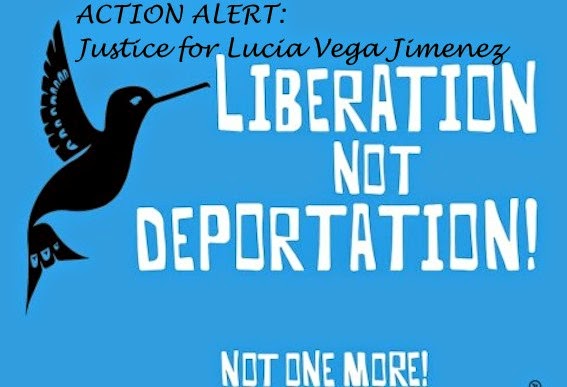
Who tied the knot that killed Lucia Vega Jimenez?

42-year-old Mexican immigrant Lucia Vega Jimenez died on December 28, 2013. On December 20, she was found hanging from a shower stall in the `immigration holding center’ at the Vancouver airport. Apparently, she had been hanging, without oxygen, for at least 40 minutes, before she was cut down and sent to hospital. Who tied the knot? Canada. The global system of `immigrant detention’. Everyone.

Everything about Lucia Vega Jimenez’s story is familiar. And it doesn’t end with her death.

In 2010, Jimenez had applied for asylum in Canada, was rejected and deported. She returned to Canada in the Spring of 2013, got a job, off the books, as a hotel cleaner, kept her head down and her nose to the grindstone. Described by a friend as a `ghost’ in Vancouver, Jimenez worked and saved money to send home to her ailing mother, sister and her sister’s three children. In late December, she was picked up for not paying bus fare, and then was flipped over to `the authorities.’ They shuttled her off to jail, and then to the holding cell, a private facility in the basement of the airport, and there she ended her life. While in detention, the money she’d saved `disappeared.’

The CBSA did not release any information for almost a month, and the `information’ has been obstructionist and opaque. So, the world asks questions.

A reporter asked: “How often were detainees checked? Were those checks visual inspections? Were there cameras monitoring the cells? Does the CBSA put out press releases at the death of a detainee (which has happened several times in the past), and is there legislation that bounds the agency to announce the death of a detainee? What is the CBSA policy regarding visitors to the YVR [Vancouver International Airport] holding center? Are lawyers, family, friends, John Howard Society, religious counsel, etc. allowed in?”

No answer was forthcoming.

Friends and advocates want to know what happened. Why did no one see Lucia Vega Jimenez for at least 40 some minutes? The Mexican government wants to know what happens to its citizens in `holding centers’. The Mexican Consul-General, Claudia Franco Hijuelos, has a particular interest: “She was fearful of going back to Mexico – not to the country, but specifically to some domestic situation that she might face. That is why we provided some options for her of transition houses where she might be housed. She considered the options and she chose one of those options. Everything was set for her to fly directly to that city in Mexico where the transition house would receive her.” According to the Consul-General, Vega “seemed to be accepting the situation.”

What happened? The questions of time – how long it took to find Vega, how long it took to `report’ her death – are part and parcel of the structure of gendered indignity for immigrant women. Four years ago, a study on health, access to services and working conditions for undocumented migrants in Canada noted: “The effects of being non-status are invariably gendered. Non-status women have been noted to be extremely vulnerable to poverty, unemployment, poor and unstable living conditions, danger, exploitation, abuse, and high risk or complications during pregnancy. Lack of status limits women’s ability to access information, seek social assistance, counseling or health care, which contributes to their reliance on unsafe and underground employment or informal networks to obtain housing … Generally, non-status women have also been noted to experience more language barriers, social isolation, and fear, in addition to lack of control over partner abuse and the effects of this on their children. In relation to policies, regularization programs and other immigration policies have been noted to reinforce dominant power relations that consequently subjugate women as dependents of their opposite sex partners.”

Lucia Vega Jimenez lived, and died, the life of the undocumented women immigrant. Precarious doesn’t begin to cover it. But she persevered. And the State? The State chose to “reinforce dominant power … that subjugates women.”


(Image Credit: http://sanctuaryhealth.blogspot.com)

I hear the banging of the doors and the sound of their keys

Women for Refugee Women’s latest report, Detained: Women Asylum Seekers Locked Up in the UK is hard and all too familiar reading. Women seek asylum because they have been tortured, raped, persecuted, and they are imprisoned and tortured anew.

Over 85% of the women interviewed said they had been raped or tortured. Over 50% said they had been persecuted for the crime of being a woman. Close to 20% said they had been persecuted for being lesbians. Almost all the women described despair at and depression in detention. More than half had contemplated suicide. About a third had been on suicide watch while in immigration prison. Around 40% of women asylum seekers who have been detained have spent more than a month behind bars. Almost all the women said male staff had guarded them. Half of the women said male staff had verbally abused them.

And then there’s this: “Home Office statistics released for this report show that of the 1,867 women who had sought asylum and who left detention in 2012, only 674, or 36%, were removed from the UK. The others were released into the UK. Our research suggests that this unnecessary detention has an ongoing impact on the mental health of vulnerable women.”

Here’s how Cameroonian asylum seeker Lydia Besong, a two-time resident of Yarl’s Wood and now a formally acknowledged refugee, describes “ongoing impact”: “When I left detention, Yarl’s Wood followed me to Manchester. Sometimes I feel like I’m in a trance, I feel I hear the footsteps of the officers, I hear the banging of the doors and the sound of their keys. Even though I’m out of detention, I’m not really out – I still have those dreams.”

Alice, a Cameroonian lesbian, experienced “appalling sexual violence” in Cameroonian prisons. When she was hauled off and thrown into prison in the UK, those experiences returned, with a vengeance: “There is no law in detention. You feel that the guards apply the law according to their mood and prejudices. They inflict their own feelings on the women in there and there is nothing to stop them. Yarl’s Wood is a lawless place … I would honestly die rather than go back to Yarl’s Wood. I know these people are doing a job but at times it seems as if they are actually bad people who have stopped regarding us as human beings. I have told this story because I want this treatment of women to stop. I don’t want others to go through what I went through. I am still trying to recover from what happened to me not only in Cameroon but in Yarl’s Wood.”

Story after story, history is a nightmare from which she is trying to awake.  Yarl’s Wood is filled to choking with law: the law of State violence, torture and terror. Meltem Avcil knows of the terror and the law. In 2007, at the age of 13, she, and her mother, were locked up in Yarl’s Wood for three months. At that time she had lived in England for six years. As far as Avcil knew, she was a British schoolgirl. Then the State came to teach her a lesson: “They knocked on the door so hard. Even now, if I hear the door knocked so hard, I panic. My best friend was sleeping over. Eight men surrounded a house of three women and dragged us out.”

In 2010, Avcil organized the campaign to end the detention of immigrant children. Now she’s organizing to end the detention of women asylum seekers. She’s started a petition: “Every year, hundreds of women who come to this country to seek safety from persecution are being detained in Yarl’s Wood detention centre in Bedfordshire.  Research by Women for Refugee Women shows that the majority of these women say they have experienced rape, sexual violence and torture in their home countries. The impact of detention on women is devastating. Many become depressed and suicidal. These women have not committed any crime, and yet they are being locked up indefinitely. We are asking you to ensure the government stops detaining women who have come to this country to seek asylum. Women’s asylum cases can be considered while they live in the community. We are also asking you to ensure that no male staff are employed at Yarl’s Wood detention centre in roles where they come into contact with women, and that allegations of abuse made against staff are properly investigated. It’s possible to create an asylum process which treats women who have survived rape and torture with dignity and humanity. They deserve a fair hearing and a chance to rebuild their lives.”

You can sign the petition here. Women deserve a fair hearing and a chance to build and rebuild their lives.


(Image Credit: Women for Refugee Women)

In Colombia, Fernando César Niebles Fernández died today


Fernando César Niebles Fernández died today … or was it Monday. It’s hard to tell. Anyway, he didn’t die. He was murdered.

This past Monday, January 27, a fire broke out in the Modelo prison, in Barranquilla, on the Caribbean coast of Colombia. By day’s end, ten prisoners were reported dead, over 40 injured, many seriously. Today, the death toll rose to 11.

The fire has been described as an inferno, but the real inferno, the real hell, is the prison itself. Designed to hold around 400 prisoners, at the time of the fire, Modelo held close to 1200. The cellblock where the fire broke out was designed to hold 196. At the time of the fire, it held 716 That’s 265 percent of capacity. Modelo was and is a death trap, pure and simple. Colombia prison system is at almost 200 percent capacity.

When the fire broke out, it was thought to be a conflict between different groups. And so the staff shot tear gas into the cells and that was that. As the fire intensified, the bars remained closed. The inferno was not the fire. The inferno was `protocol.’

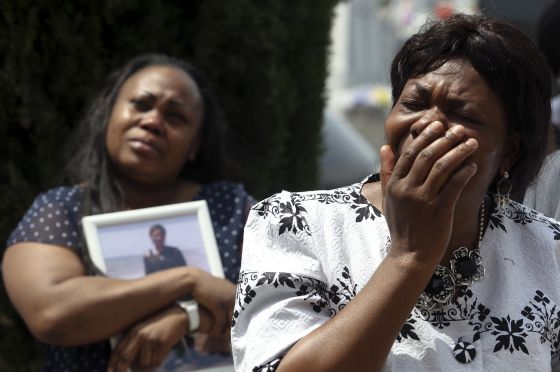
And now? The stories of the families pour forth, with photos and videos and words, words, words. Mothers and fathers, like Rocío Cantillo Torres  and Atanasio Mutis, wait for their sons. Sisters, wives, daughters, friends, neighbors, strangers wait for news, wait for death. Modelo was and is inferno. The event of death is important, but the death itself was long foretold. Who could survive such conditions?

And today, it’s Mercedes María Suarez’s turn. She’s Fernando César Niebles Fernández’s mother. Her son lived with severe mental health issues, caused by a road accident four years ago. He needed help. Instead, he got prison. It’s a common enough story. She weeps for her son, and asks how the State could have done this, could have come to this pass.

The ordinariness of the story of Fernando César Niebles Fernández and Mercedes María Suarez doesn’t reduce the suffering, the personal and individual tragedy, but don’t let anyone tell you it’s a national or historical tragedy. It’s not. It’s happened too many times, in Colombia and Brazil, in January, and around the world. Stuff the prisons to beyond bursting and what do you think will happen? The deaths at Barranquilla, like the deaths earlier this month in Maranhão in Brazil, were no accident. They were public policy. As James Baldwin once argued, “It is not permissible that the authors of devastation should also be innocent. It is the innocence which constitutes the crime.”

There will be more fires, and some day the fire, the fire next time, will not be the fire of the criminally innocent: “God gave Noah the rainbow sign, No more fire, the fire next time!” But today, weep for Fernando César Niebles Fernández, weep with Mercedes María Suarez.


(Photo Credit: El Universal (Colombia))

Who killed Samba Martine? We all did

Samba Martine died, or was killed, on December 19, 2011, in the Aluche immigrant detention center in Madrid. This week, a Spanish court ordered her case to be reopened, stating that Martine’s death “could have been avoided.” That’s putting a fine point on it. Samba Martine was killed. She was killed by the Spanish government. She was killed by a global immigration detention gulag that has little to no rules, even less enforcement of the few rules it has, almost no accountability, and so little transparency as to be opaque. Except to the prisoners who continue to die … avoidably.
Here’s one version of Samba Martine’s story, as presented last year to a European Parliament Commission: “On 19 December 2011, a Congolese citizen, Samba Martine, died at the Aluche immigrant detention centre in Madrid. According to the Spanish Ombudsman’s 2012 annual report, her death was due to a lack of communication between institutions, which meant that she was not given the right treatment as someone with the human immunodeficiency virus (HIV). The immigrant held at Aluche had been diagnosed as HIV-positive at the Melilla temporary detention centre for immigrants but was transferred to the Aluche immigrant detention centre in Madrid without the latter centre being given any information whatsoever about her health status. This meant that at Aluche she was diagnosed with different illnesses and the centre’s doctors treated her on the basis of the different diagnoses without realising that she was HIV-positive, which consequently led to her death … The case of Samba Martine shows that the lack of coordination between the Aluche immigrant detention centre and the Melilla temporary detention centre for immigrants led to a diagnostic error which meant that she was not given the essential treatment for her illness, which indirectly caused her death. In addition to this case, there is the case of Idrissa Diallo and many other immigrants who have lost their lives in immigrant detention centres in Spain, suggesting that human rights … are being systematically violated.”

Samba Martine did not die of a `lack of coordination’. She was killed. She was killed by a program that targets immigrant women, and especially African women.

Samba Martine was held at Aluche for 38 days. From the day she arrived to the day she died, she complained of severe headaches, perineal irritation, stomach pains, and more. She went to the on-site medical facility, such as it is, and was given little to no treatment. Finally, the pain was so severe, they decided to send her to the hospital, only after debating whether to send her in a police car or ambulance. Hours later, Samba Martine died, alone, in pain.

Who died that night? 3106. A number, not a person. Cause? Cryptococcal infection … the second most common AIDS-defining illness in Africa. What crime did she commit? None. `Officially’, Aluche isn’t a prison. In fact, it’s worse. Next to Aluche, standard Spanish prisons look almost decent.

Samba Martine is not an exception. The notorious CIE, the Centro de Internamiento de Extranjeros, is filled with Sambas. Women, and especially African women, suffer particular indignities and violence. A litany of `failures’ and `omissions’ will now ensue. The prison clinic is private. The prisons don’t communicate with one another. The prison staff is inadequately trained. None of these describe what happened.

Samba Martine was not failed by anyone. She was killed. She was killed by the State, in this instance Spain, and she was killed by the world that sustains black holes, militarized borders on every corner, and dispensable surplus populations.

On June 2, 2012, six months after she died, Samba Martine was buried in a cemetery in Madrid. Her mother, Clementine, came from Canada. She knew her daughter’s death was neither accident nor failure. It was murder. She knew. We all killed Samba Martine.


(Photo Credit: elpais.com)

Healthy Births for Incarcerated Women: Women are the etc.


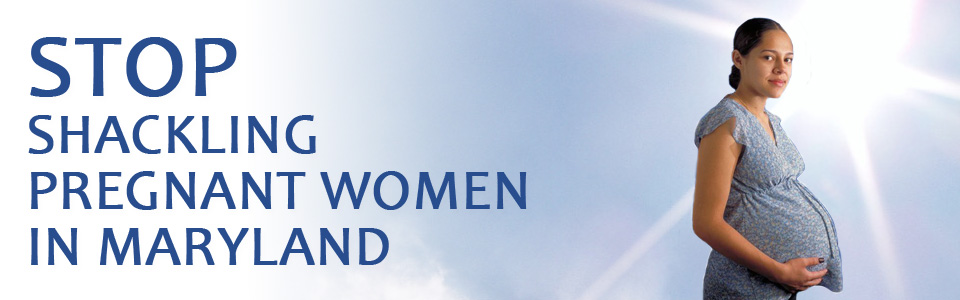
In Annapolis today, the Maryland House of Delegates Judiciary Committee is scheduled to conduct hearings on HB27, the Healthy Births for Incarcerated Women Act. Delegates Mary L. Washington, Ariana B. Kelly, and Barbara A. Robinson sponsored the bill. Its synopsis reads: “Prohibiting the use of a physical restraint on an inmate while the inmate is in labor or during delivery; requiring the medical professional responsible for the care of a specified inmate to determine when the inmate’s health allows the inmate to be returned to a correctional facility after giving birth; prohibiting, with specified exceptions, a physical restraint from being used on a specified inmate; requiring a correctional facility to document specified use of a physical restraint; etc.”

Etc. Women are the etc.

Across the United States, women are being imprisoned at a high rate, higher than any other group, according to some reports. From 1977 to 2004, Maryland `enjoyed’ a 353 percent increase in women going to prison. Maryland has one women’s prison, in Jessup. In Jessup, the women prison population breaks down as follows: 53 percent are Black women; 46 percent are White women. (Almost ¾ of Maryland’s prison population is Black, while only 30% of Maryland’s population is Black.)

Most of the women are in for drug-related offenses. Many are in for longer terms, `thanks’ to Three Strikes and mandatory sentencing policies.

Mary Washington introduced a similar bill last year, which was so watered down in committee that it was gutted of any serious content. Hopefully this year’s bill will fare better. Washington has been working with the ACLU of Maryland; Power Inside, a Baltimore group that “serves women impacted by incarceration, street life and abuse”; law faculty from the University of Maryland Law School; students from the University of Maryland – Baltimore County; members of Women In and Beyond the Global; and others.

According to Washington, “One of challenges that these women face is that they are permanently scarred, emotionally and in some ways physically, from being restrained during pregnancy and during birth.”

Maryland is one of a number of states in which legislators are trying to ban the shackling of pregnant women prisoners. In each state, part of the struggle is that women are the etc. Opponents suggest security and flight risks; they share anecdotes of prisoners who have escaped while in hospital. Those anecdotes never involve women, much less pregnant women, much less women in labor or childbirth. Last year, when those anecdotes were presented to the Judiciary Committee, no one mentioned that salient issue.

Women are the etc.: women of color, working women, women prisoners, women. The Healthy Births for Incarcerated Women involves all women, any woman, every woman.


(Photo Credit: DaretobePowerful.com)

Delma Jackson demands justice


Delma Jackson’s husband, Miguel Jackson, is a prisoner in the notorious maximum-security section of the notorious Georgia Diagnostic and Classification Prison, in Jackson, Georgia. Georgia Diagnostic and Classification Prison, GDCP, houses Georgia’s death row and maximum security for men. Troy Davis was executed at Georgia Diagnostic and Classification Prison. It’s notorious big.

In 1995, Miguel Jackson was convicted of armed robbery. It was his first offense, and he waived a jury trial. According to Delma Jackson, “He was convicted and sentenced by Judge William Daniel under the Georgia Seven Deadly Sins law. Judge Daniel was unfamiliar with the new law and he somehow thought that Miguel would be eligible for parole after 10 years. The seven deadly sins law states that parole is not an option if convicted of one the seven deadly sins.” In 1995, Miguel Jackson was 20 years old.

In December 2010, Miguel Jackson was involved in the historic Georgia prison mass strike. At that time he was in Smith State Prison. On December 31, according to eyewitnesses, photographs and, finally, video evidence, Jackson was handcuffed and beaten by two guards. He was taken to hospital, taken care of sort of, and returned to Smith State Prison. The next day, Delma Jackson and Miguel Jackson’s mother went to the prison to visit Miguel. They were denied entry. They were told to go home and not worry. From then on, no one could see Miguel, not his wife, not his mother, not his attorney. On January 4, 2011, he was moved to maximum security in GDCP.

Jackson complained that he was suffering as a result of the beating. He received little care, and the care he received seems to have been poor. So, on June 11, 2012, after 18 months in maximum, Miguel Jackson decided to stop the world. He and nine other prisoners went on a hunger strike, declaring that they were “starving for change.” Delma Jackson explained, “Georgia is the most locked up state in the country, per capita …These men are more than inmates. They are human beings.  They are someone’s son, husband, father, brother, uncle, and grandfather. Imagine if it were your loved one that was being treated worst than an animal.”

At first, Georgia denied there was anything going on. Then it minimized the scale and depth of the strike. Finally, it more or less admitted that there was indeed something going on. On July 26, Miguel Jackson ended his hunger strike.

In June, all inmates on hunger strike lost visitation “privileges” for a couple weeks. Delma Jackson’s were restored in early July, and then, on July 18, they were rescinded, indefinitely. Delma Jackson was under a permanent banning order.

Throughout the hunger strike, Delma Jackson had been the loud and proud voice and face of the hunger strikers. When she found out that she had been banned, she sued the prison warden and other staff members. Last week, U.S. District Judge Marc Treadwell ruled that, during the hunger strike, the warden and staff were entitled to `qualified immunity’ for their actions. But once the strike was over, so was the immunity. The judge found that the prison warden and his staff had violated Delma Jackson’s right to freedom of speech … and more: “This is of particular concern to the Court. Issues related to conditions inside the SMU [Special Management Unit] are broader than those affecting only this Plaintiff. Justified or not, there has been plenty of criticism of how SMU inmates are treated. If the Defendants decided to make an example of the Plaintiff by permanently suspending her visitation privileges because they did not like what she had to say about their prison and its administration, they have not only retaliated against her but have moved to chill the speech of others who are concerned about the manner in which prisoners are housed in the SMU. As the Plaintiff’s counsel stated at oral argument: “It’s not just what it did to Ms. Jackson, [it’s] what it does to all protests all over the state. If you think something is wrong in the prison system, you’re going to remember Delma Jackson: Delma Jackson got her visitation taken away because she spoke up. That’s what’s going to be sent out there as the message.”

Delma Jackson is demanding justice, and no prison warden is going to shut her up or down. That’s what’s going to be sent out there as the message.


(Photo Credit: San Francisco Bay View)